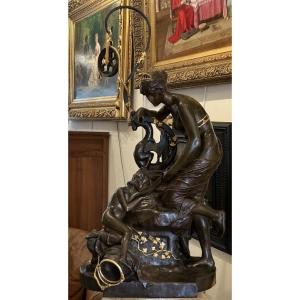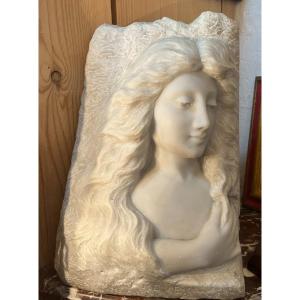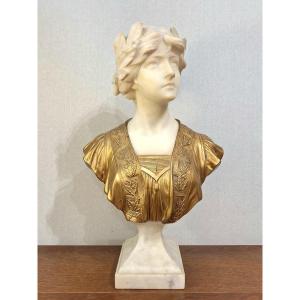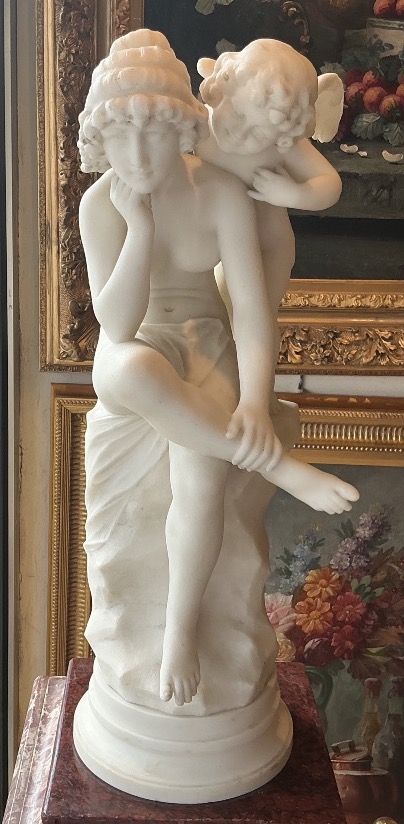
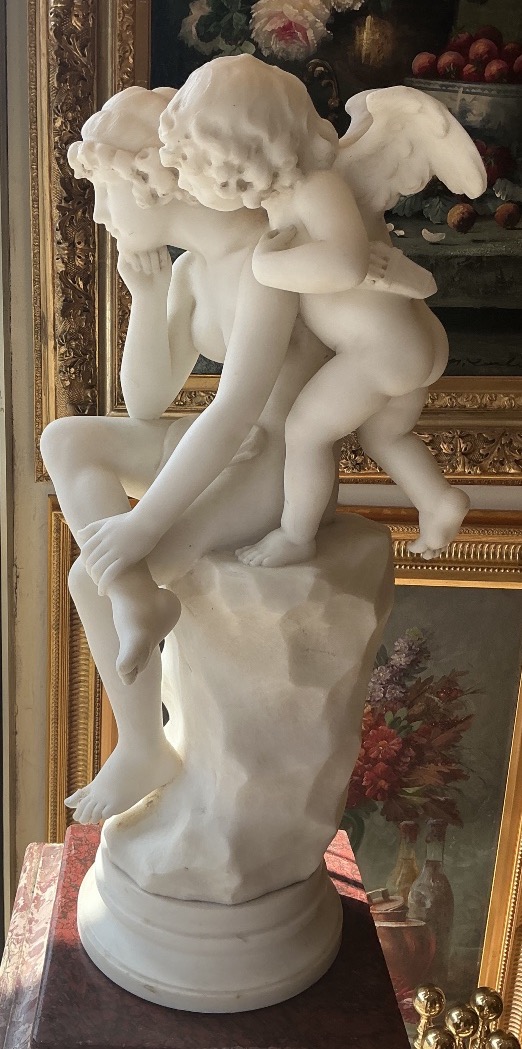
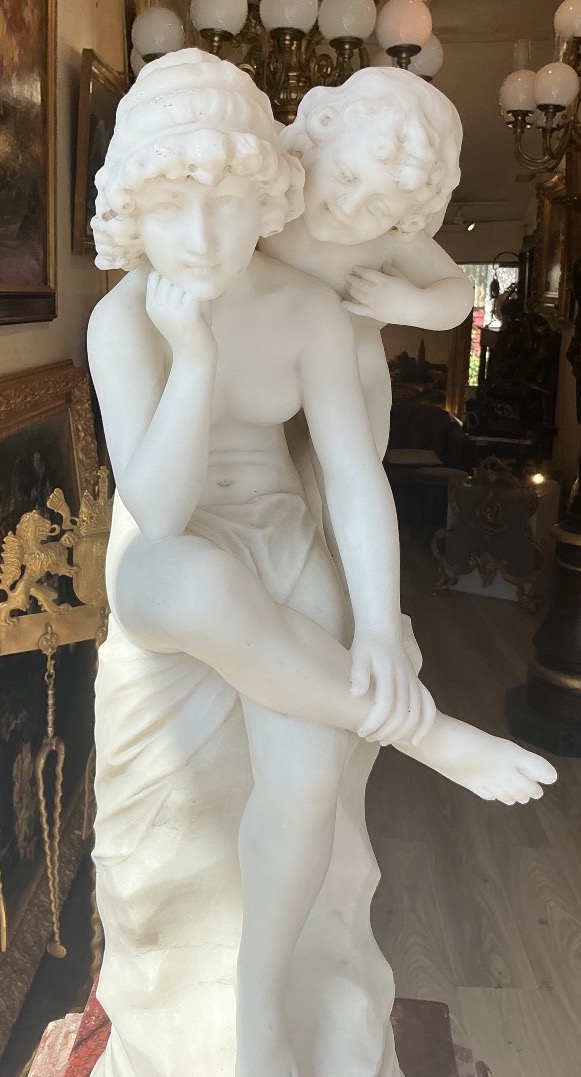
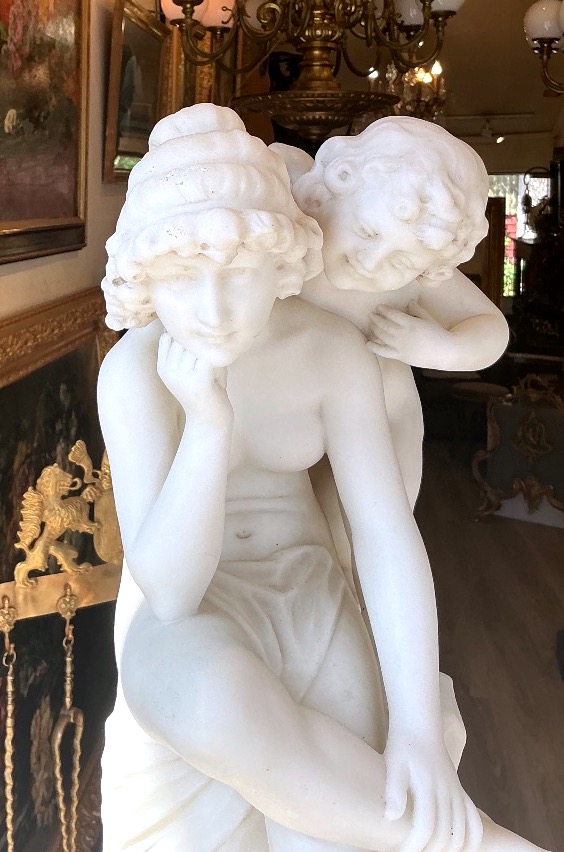
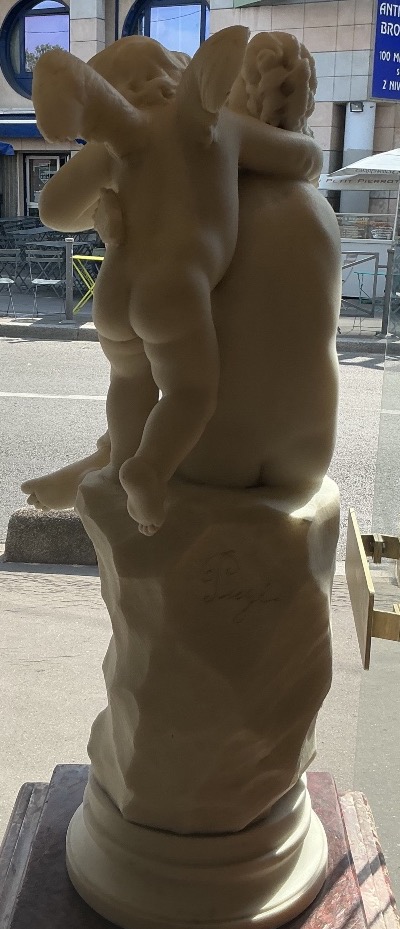


Carrara Marble Sculpture By Guglielmo Pugi (1850–1915): “the Revelation,” Signed On The Back
Guglielmo Pugi, born in 1850 in Fiesole (Tuscany, Italy) and died in 1915, was an Italian sculptor and a leading figure of Art Nouveau in Italy.
Biography Young Girl with a Butterfly(1902), Almaty, Central State Museum of Kazakhstan.From 1870 until his death, Guglielmo Pugi lived in Florence, where he ran a sculpture studio with the help of his two sons, Gino and Fiorenzo. The firm, named “Guglielmo Pugi e Figli,” worked primarily for export, particularly to the United States. Later, the two brothers took over the business under the name “Fratelli G. e F. Pugi.”
WorkGuglielmo Pugi’s work, typical of Art Nouveau, is characterized by direct carving on alabaster and Carrara marble (primarily white or veined). Notable among his works are the Monument to King Humbert Ier, a bust adorning the main square in Fiesole, as well as numerous groups and portraits, some of which are housed at the Museo storico dell’alabastro in Volterra. Several of his sculptures were exhibited at the 1901 Pan-American Exposition in Buffalo, as well as at the 1904 World’s Fair in St. Louis.
Public Collections- Arlon, Gaspar Museum, Collections of the Archaeological Institute of Luxembourg: Madonna, white marble bust[1].
- Bust of a Young Boy, marble, circa 1900–1910, Joseph Déchelette Museum in Roanne
Period: 19th century
Style: Art Nouveau
Condition: Perfect condition
Material: Marble
Diameter: 20 cm
Height: 64 cm
Reference (ID): 1782112
Availability: In stock