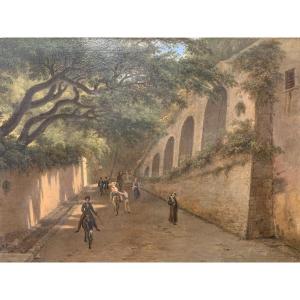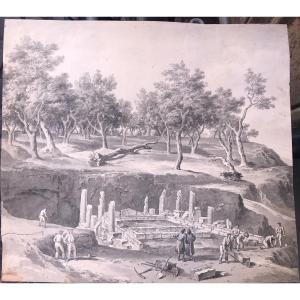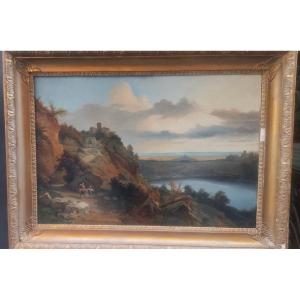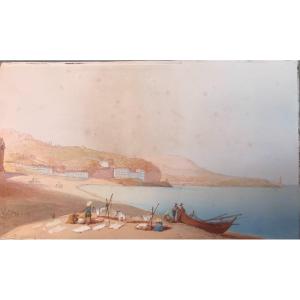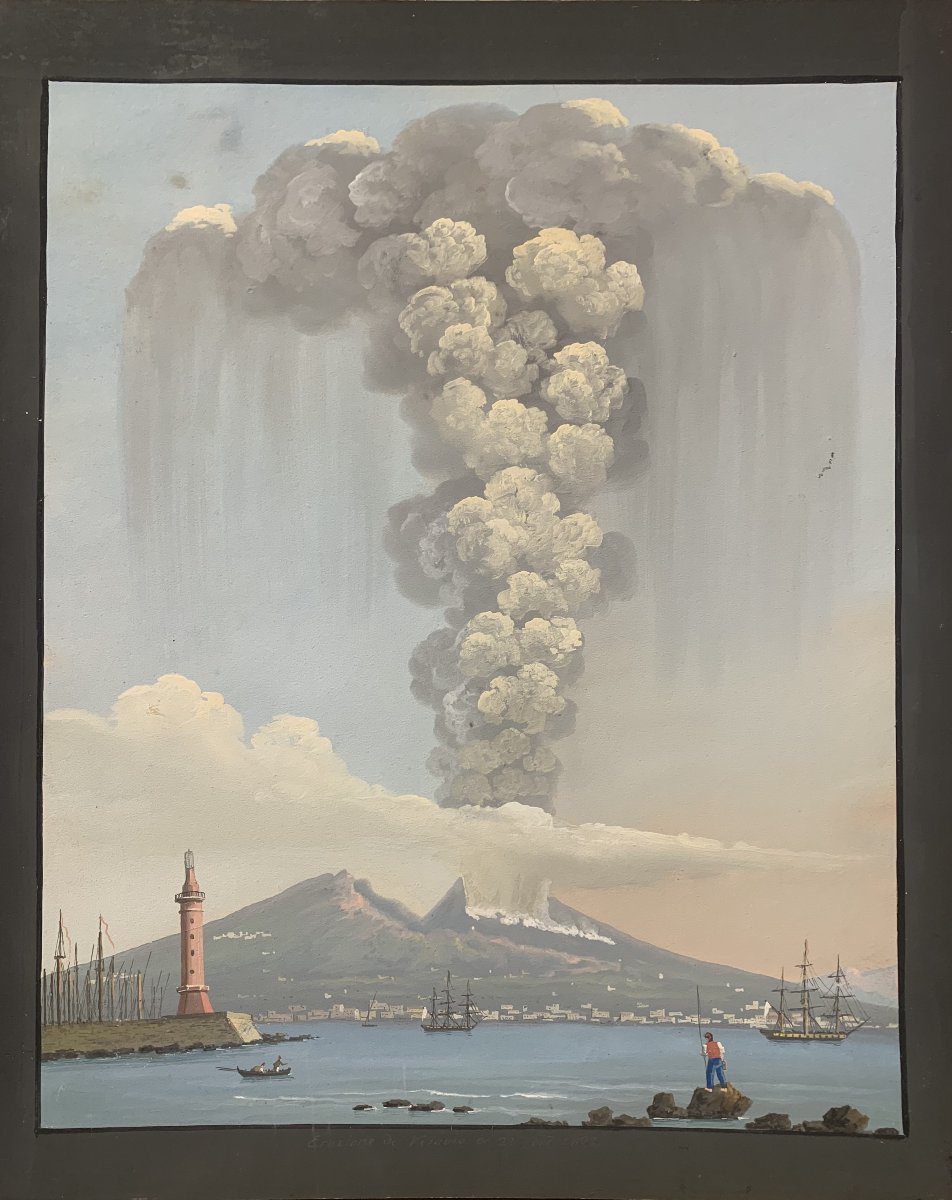
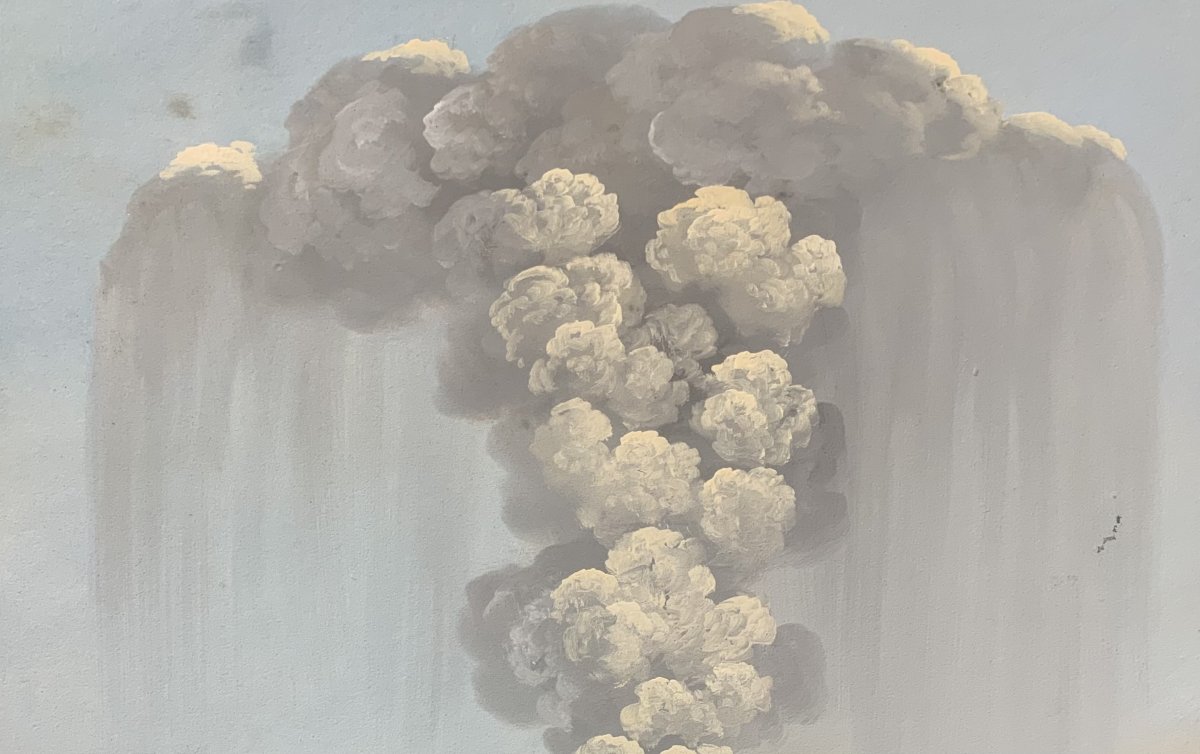
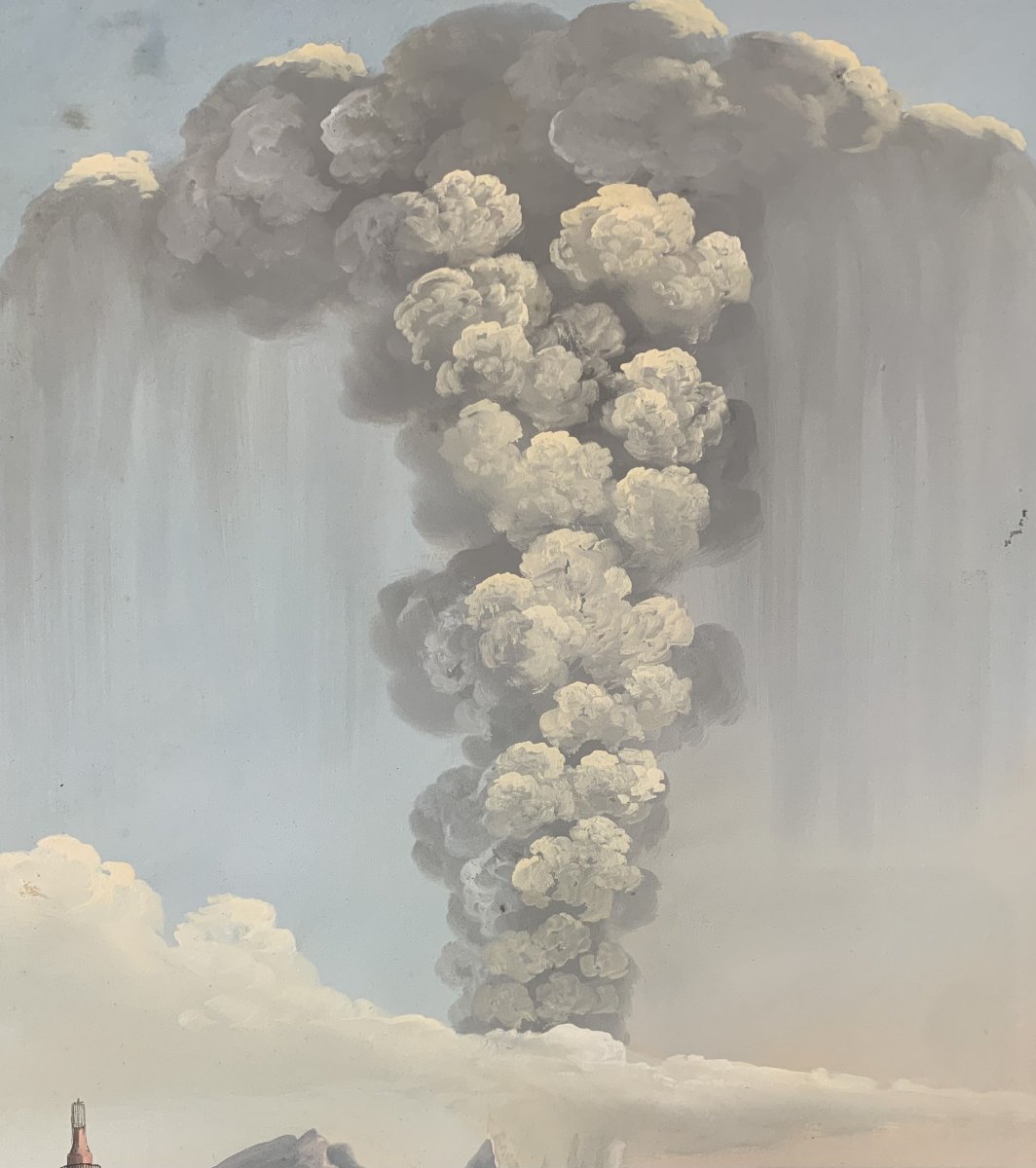
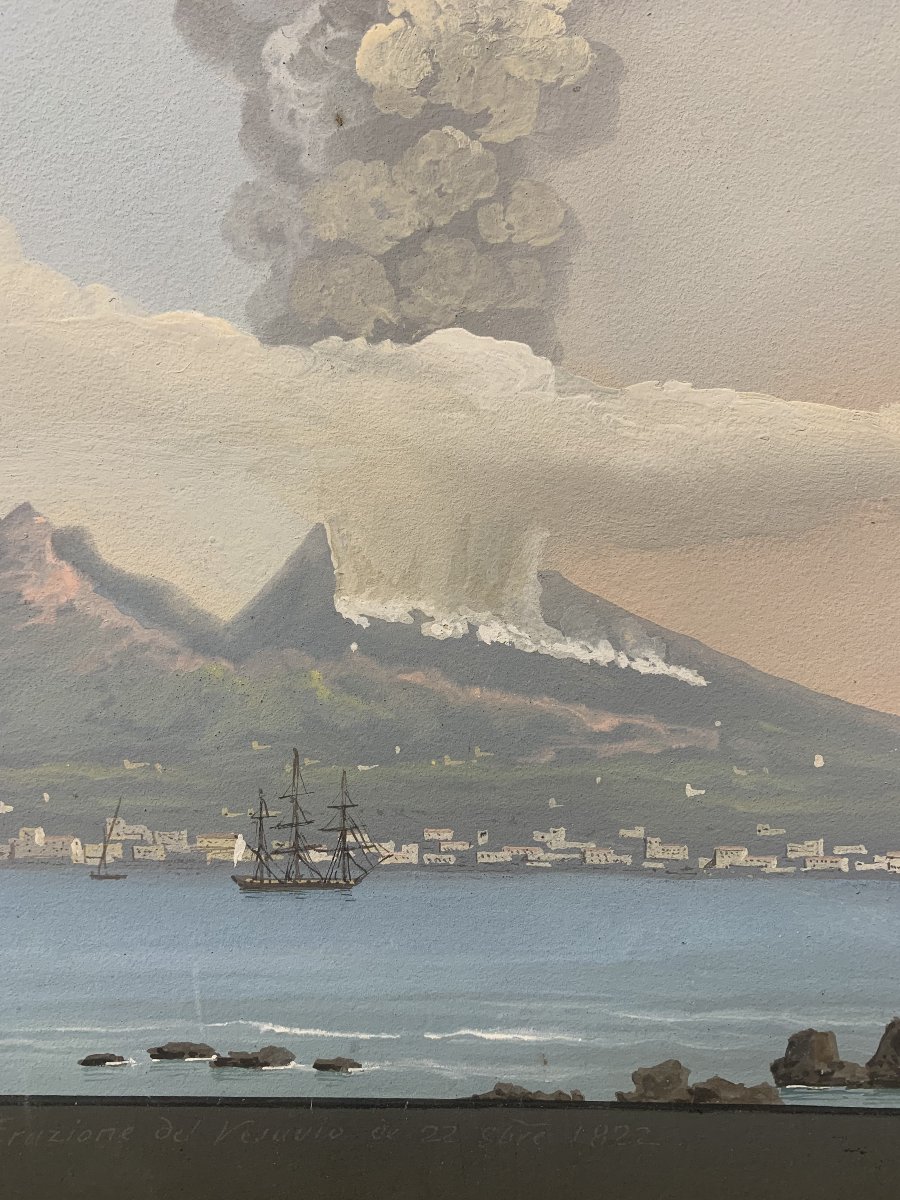
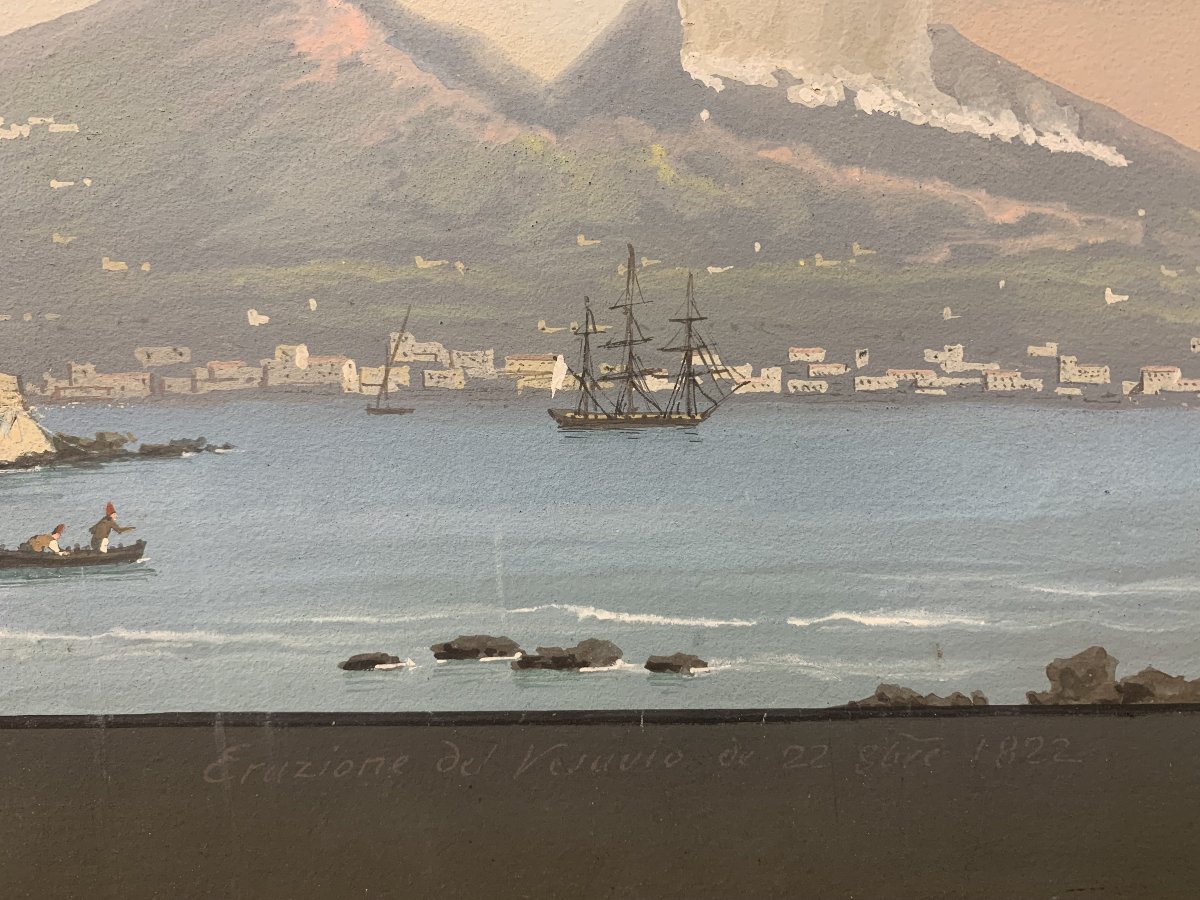
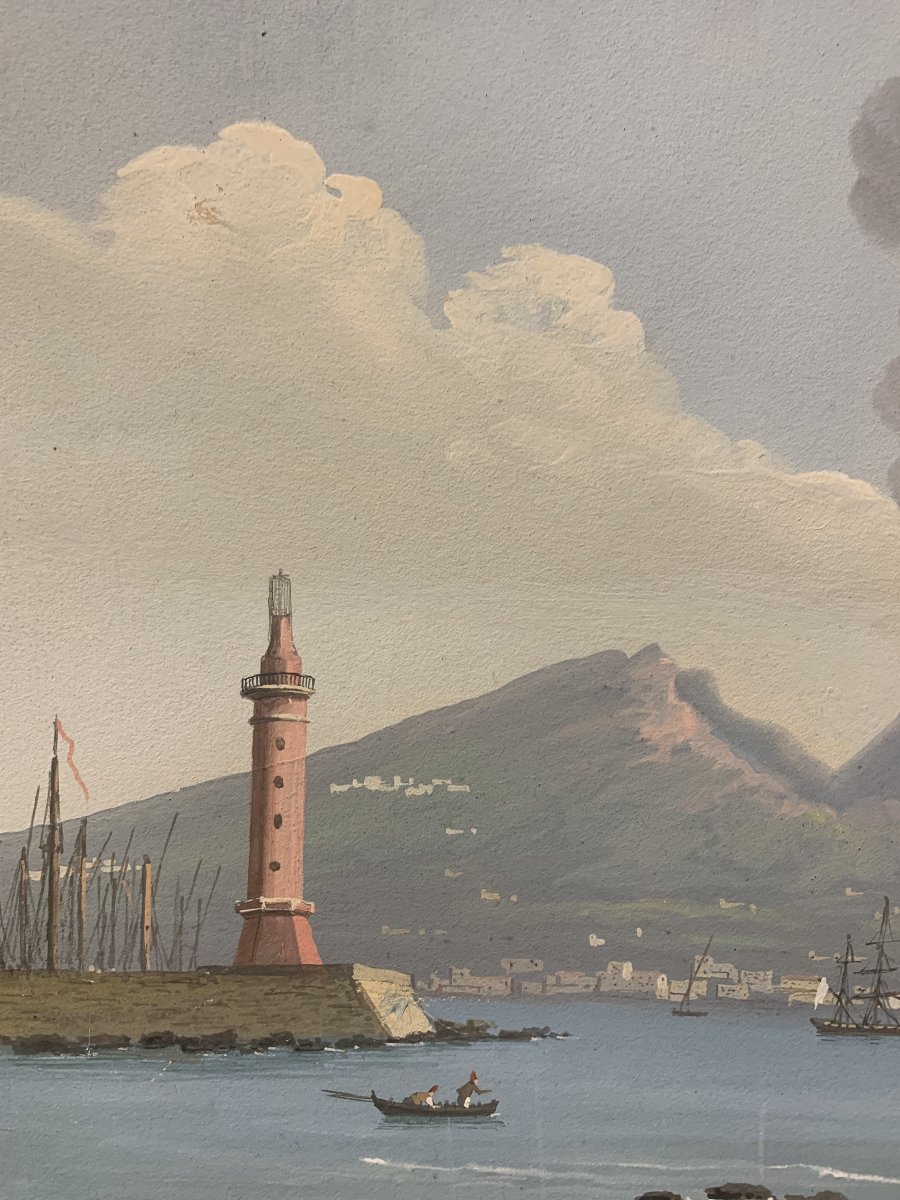

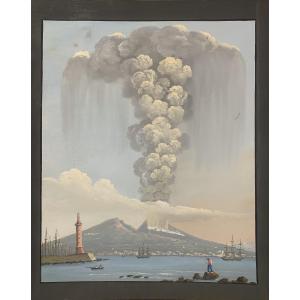


Salvatore Fergola - Eruption Of Vesuvius, 1822 – Neapolitan Gouache – Naples, Italy
Salvatore Fergola - Eruption of Vesuvius 1822 - Neapolitan gouache - Naples, Italy
Salvatore Fergola (Naples, April 24, 1796 – Naples, March 7, 1874) was an Italian painter, considered one of the most influential exponents of the Posillipo school.
The painting is undoubtedly by Fergola, although unsigned.
Biography
Salvatore Fergola was the son of Luigi and Teresa Conti. As a young man, he studied literature and architecture, then turned to painting, following his father's example. As Maria Causa Picone reports, Fergola was "a slavish follower of Hackert, bound to a meticulous micrography that does not, however, exclude a successful watercolorist streak." In his early painting, Salvatore Fergola was greatly indebted to Jakob Philipp Hackert, both in his application of tempera and in his composition of the view. His brother Alessandro Fergola (1812-1864) was also a painter.
Admitted as a student to the Topographical Office of Naples, he immediately achieved success at the Bourbon Court, earning him numerous commissions from the Bourbons of Naples from his first works. In 1819, Fergola executed several paintings in Naples for the Duke of Calabria, before being called upon by the Duke of Sicily. After receiving a monthly salary of thirty ducats from the Bourbons, he followed the Court to Castellammare di Stabia to paint views of the Gulf of Naples. He subsequently traveled to Caserta, San Leucio, Santa Maria Capua Vetere, and Ischia, where he stayed for three months. His wanderings took him to Sicily in 1823, intending to tour the island, but, having fallen ill in Trapani, he decided to return to Ischia and then back to Castellammare.
A visitor observes a Fergola painting depicting the wild and mysterious profile of the Capri coast, on display at the exhibition "Salvatore Fergola. The Splendor of a Kingdom" at Palazzo Zevallos in Naples.
After 1820, he attended the private painting school of Anton Sminck van Pitloo and, with the master and other students, was a member of the so-called School of Posillipo. In 1824, he followed the royal family to Foggia and the Royal Estate of Carditello—where he painted a horse race—and then traveled to Arienzo to document the customs of the Terra di Lavoro and Paestum. Among his paintings from this period are "Ancient Tomb Known as the Conocchia in Santa Maria di Capua" (1820), "Embarkation of the Royal Family from the Sarno River" (1823), and "Launching of the Vesuvius" (1825).
In 1829, he traveled to Spain, in the entourage of the Bourbon family, for the wedding in Madrid of Princess Maria Cristina of Bourbon-Two Sicilies to King Ferdinand VII of Spain. Fergola had the opportunity to visit Seville, Cadiz, Burgos, Toledo, and Barcelona. On his return journey, he stayed for a few months in Paris, as a guest of the Duke of Orleans, Louis-Philippe of France, and Caroline of Bourbon-Two Sicilies, Duchess of Berry. During this French sojourn, Fergola received new inspiration for his painting style.
Despite his popularity as an illustrator of court events and the most significant events of the Kingdom, Fergola failed to become a professor of landscape at the Academy of Fine Arts in Naples, because in 1838, this chair was awarded to Gabriele Smargiassi. During these years, he worked tirelessly, participating in the 1839 Bourbon exhibition with View of the Source of the Sarno, Interior of the Cathedral of Toledo in Spain, Brigands Surprised by the Gendarmerie in the Forest, and three "composition landscapes" depicting sunrises and sunsets. In 1841, he presented Gothic Interior of the Cloister of San Giovanni de' Re in Toledo, Gothic Exterior of the Cathedral of Burgos, Montevergine on its Feast Day, and Inauguration of the Railroad, which he followed in Naples in October 1839. In 1843, he exhibited Marina di Capri by Moonlight with a Boat in Which a Sailor Sleeps and A Siphon in the Gulf of Procida, while Evening Prayer dates back to 1848. He died in 1874, at the age of 76.
The Galleria dell'Accademia di Belle Arti in Naples houses Fergola's painting, known by the double titles: Kiss of Judas and Christ in the Garden. Dated 1858, it is an oil on canvas, measuring 89 x 70 cm, and was purchased by the Academy in 1909.
Salvatore Fergola, a leading exponent of the Posillipo school, was a leading figure in Neapolitan painting during the Restoration, a period when the ancient city of Naples was beginning to transform into a large, modern metropolis. After the Congress of Vienna, the legitimate Bourbon monarchy was restored in Southern Italy, which promoted technological advances that would set numerous Italian firsts in the Kingdom of the Two Sicilies. Fergola was a great pictorial interpreter of this technological fervor.
Salvatore Fergola (Naples, April 24, 1796 – Naples, March 7, 1874) was an Italian painter, considered one of the most influential exponents of the Posillipo school.
The painting is undoubtedly by Fergola, although unsigned.
Biography
Salvatore Fergola was the son of Luigi and Teresa Conti. As a young man, he studied literature and architecture, then turned to painting, following his father's example. As Maria Causa Picone reports, Fergola was "a slavish follower of Hackert, bound to a meticulous micrography that does not, however, exclude a successful watercolorist streak." In his early painting, Salvatore Fergola was greatly indebted to Jakob Philipp Hackert, both in his application of tempera and in his composition of the view. His brother Alessandro Fergola (1812-1864) was also a painter.
Admitted as a student to the Topographical Office of Naples, he immediately achieved success at the Bourbon Court, earning him numerous commissions from the Bourbons of Naples from his first works. In 1819, Fergola executed several paintings in Naples for the Duke of Calabria, before being called upon by the Duke of Sicily. After receiving a monthly salary of thirty ducats from the Bourbons, he followed the Court to Castellammare di Stabia to paint views of the Gulf of Naples. He subsequently traveled to Caserta, San Leucio, Santa Maria Capua Vetere, and Ischia, where he stayed for three months. His wanderings took him to Sicily in 1823, intending to tour the island, but, having fallen ill in Trapani, he decided to return to Ischia and then back to Castellammare.
A visitor observes a Fergola painting depicting the wild and mysterious profile of the Capri coast, on display at the exhibition "Salvatore Fergola. The Splendor of a Kingdom" at Palazzo Zevallos in Naples.
After 1820, he attended the private painting school of Anton Sminck van Pitloo and, with the master and other students, was a member of the so-called School of Posillipo. In 1824, he followed the royal family to Foggia and the Royal Estate of Carditello—where he painted a horse race—and then traveled to Arienzo to document the customs of the Terra di Lavoro and Paestum. Among his paintings from this period are "Ancient Tomb Known as the Conocchia in Santa Maria di Capua" (1820), "Embarkation of the Royal Family from the Sarno River" (1823), and "Launching of the Vesuvius" (1825).
In 1829, he traveled to Spain, in the entourage of the Bourbon family, for the wedding in Madrid of Princess Maria Cristina of Bourbon-Two Sicilies to King Ferdinand VII of Spain. Fergola had the opportunity to visit Seville, Cadiz, Burgos, Toledo, and Barcelona. On his return journey, he stayed for a few months in Paris, as a guest of the Duke of Orleans, Louis-Philippe of France, and Caroline of Bourbon-Two Sicilies, Duchess of Berry. During this French sojourn, Fergola received new inspiration for his painting style.
Despite his popularity as an illustrator of court events and the most significant events of the Kingdom, Fergola failed to become a professor of landscape at the Academy of Fine Arts in Naples, because in 1838, this chair was awarded to Gabriele Smargiassi. During these years, he worked tirelessly, participating in the 1839 Bourbon exhibition with View of the Source of the Sarno, Interior of the Cathedral of Toledo in Spain, Brigands Surprised by the Gendarmerie in the Forest, and three "composition landscapes" depicting sunrises and sunsets. In 1841, he presented Gothic Interior of the Cloister of San Giovanni de' Re in Toledo, Gothic Exterior of the Cathedral of Burgos, Montevergine on its Feast Day, and Inauguration of the Railroad, which he followed in Naples in October 1839. In 1843, he exhibited Marina di Capri by Moonlight with a Boat in Which a Sailor Sleeps and A Siphon in the Gulf of Procida, while Evening Prayer dates back to 1848. He died in 1874, at the age of 76.
The Galleria dell'Accademia di Belle Arti in Naples houses Fergola's painting, known by the double titles: Kiss of Judas and Christ in the Garden. Dated 1858, it is an oil on canvas, measuring 89 x 70 cm, and was purchased by the Academy in 1909.
Salvatore Fergola, a leading exponent of the Posillipo school, was a leading figure in Neapolitan painting during the Restoration, a period when the ancient city of Naples was beginning to transform into a large, modern metropolis. After the Congress of Vienna, the legitimate Bourbon monarchy was restored in Southern Italy, which promoted technological advances that would set numerous Italian firsts in the Kingdom of the Two Sicilies. Fergola was a great pictorial interpreter of this technological fervor.
1 300 €
Period: 19th century
Style: Other Style
Condition: Excellent condition
Material: Paper
Length: 32,5
Height: 39 cm
Reference (ID): 1777828
Availability: In stock
Print