THIS OBJECT WAS SOLD
Utamaro Kitagawa (1753–1806)
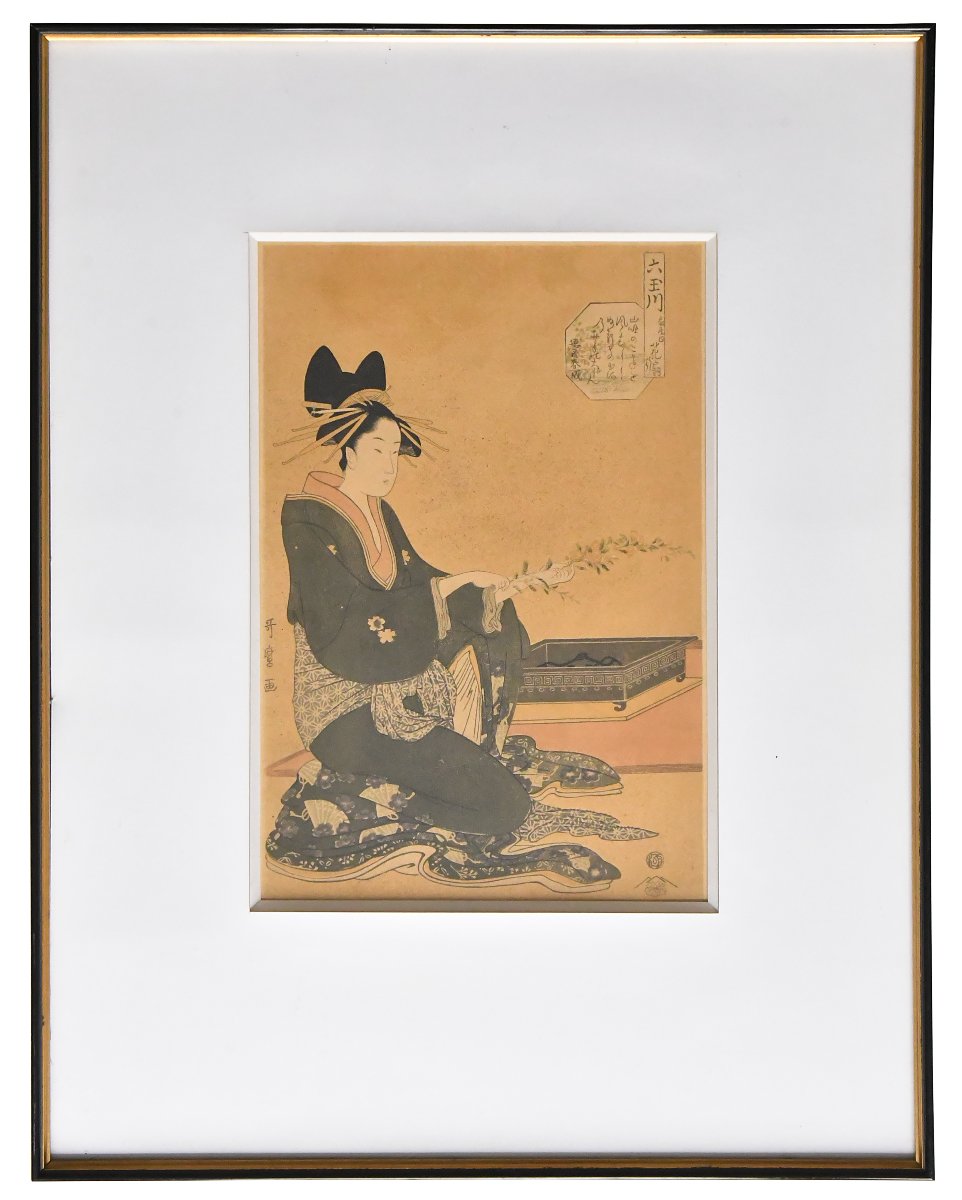
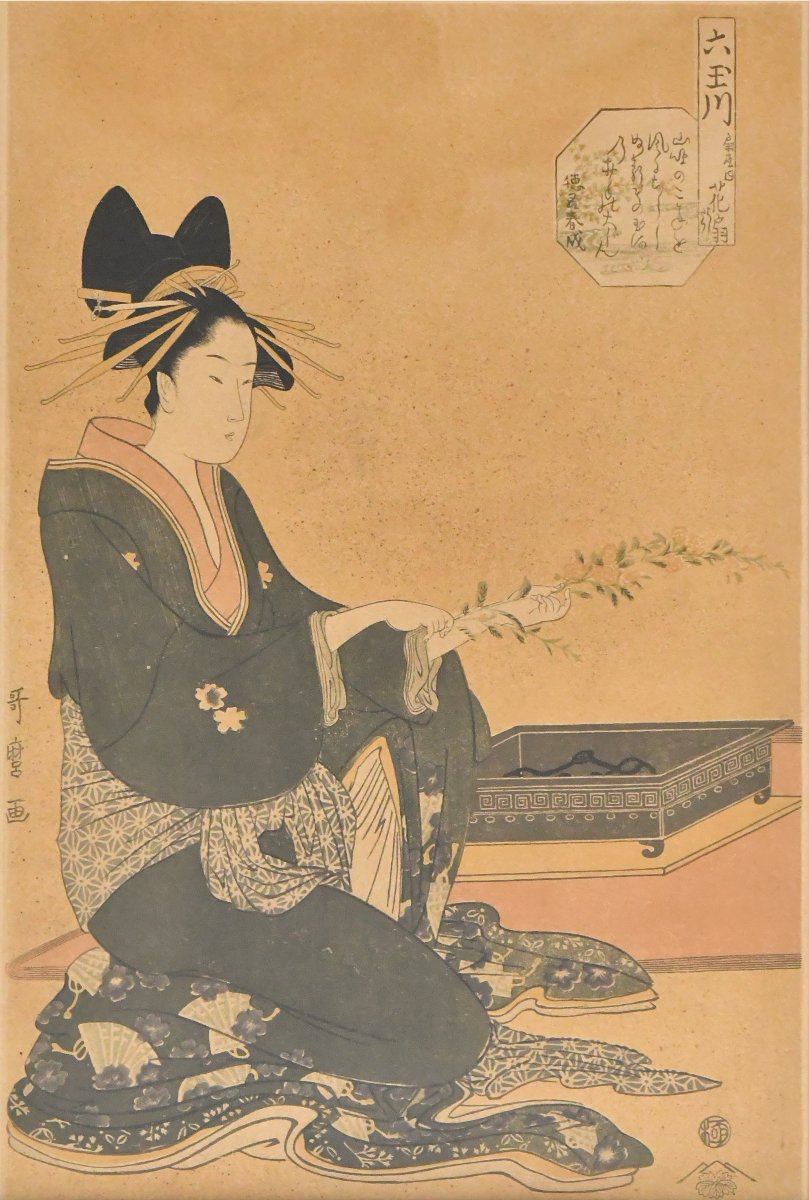
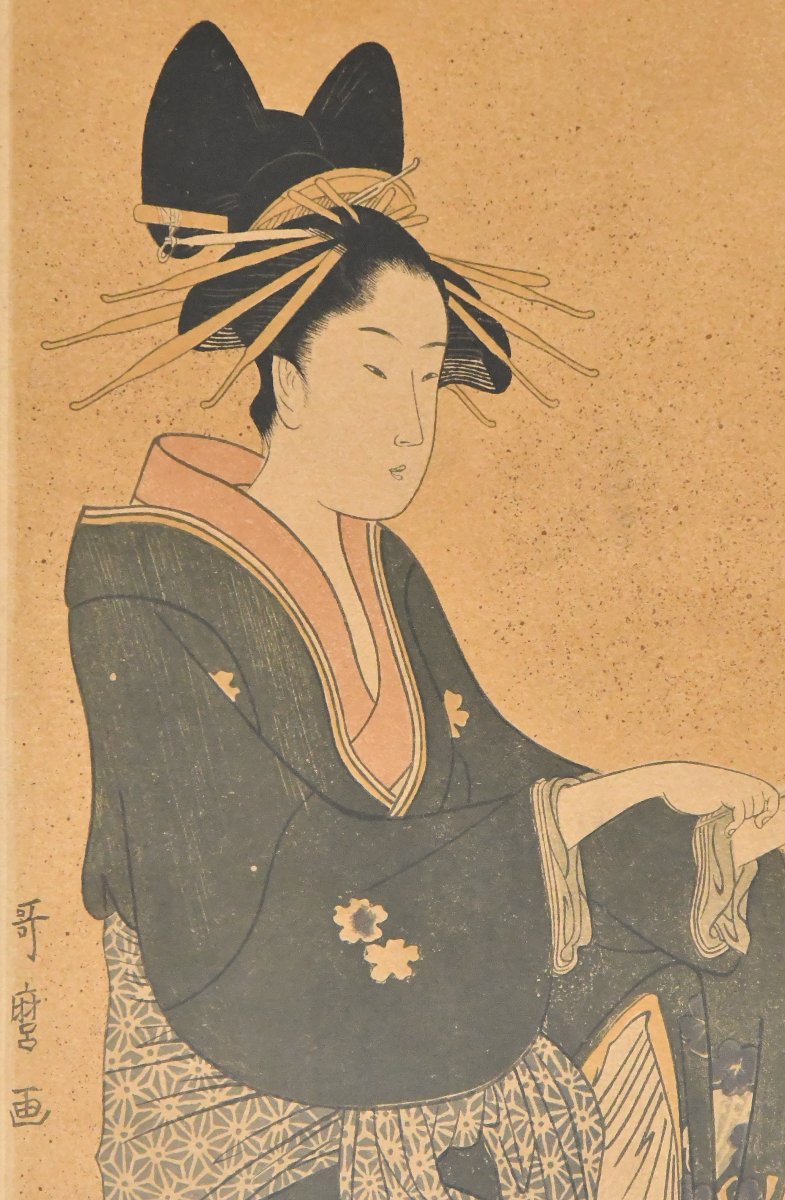
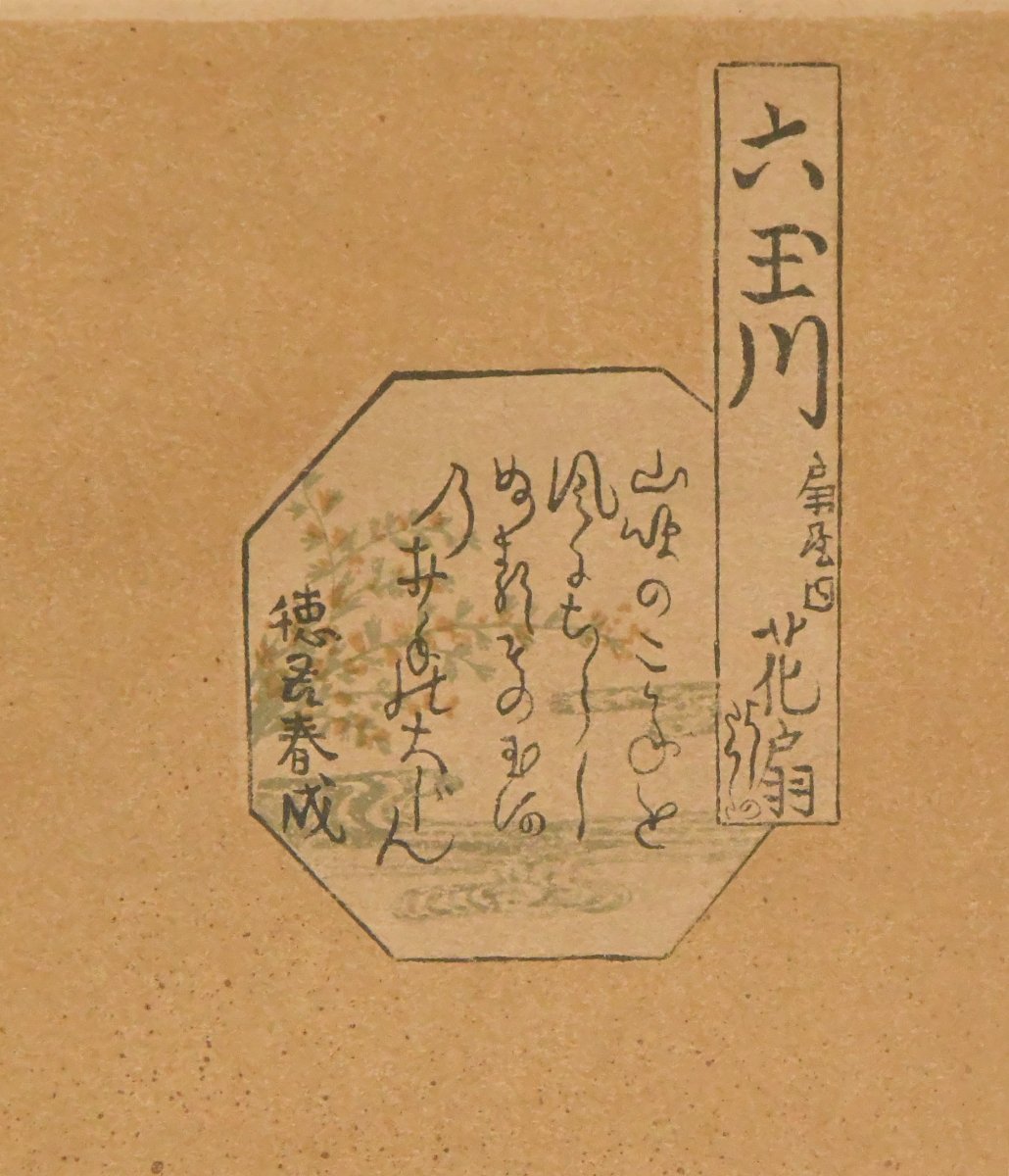
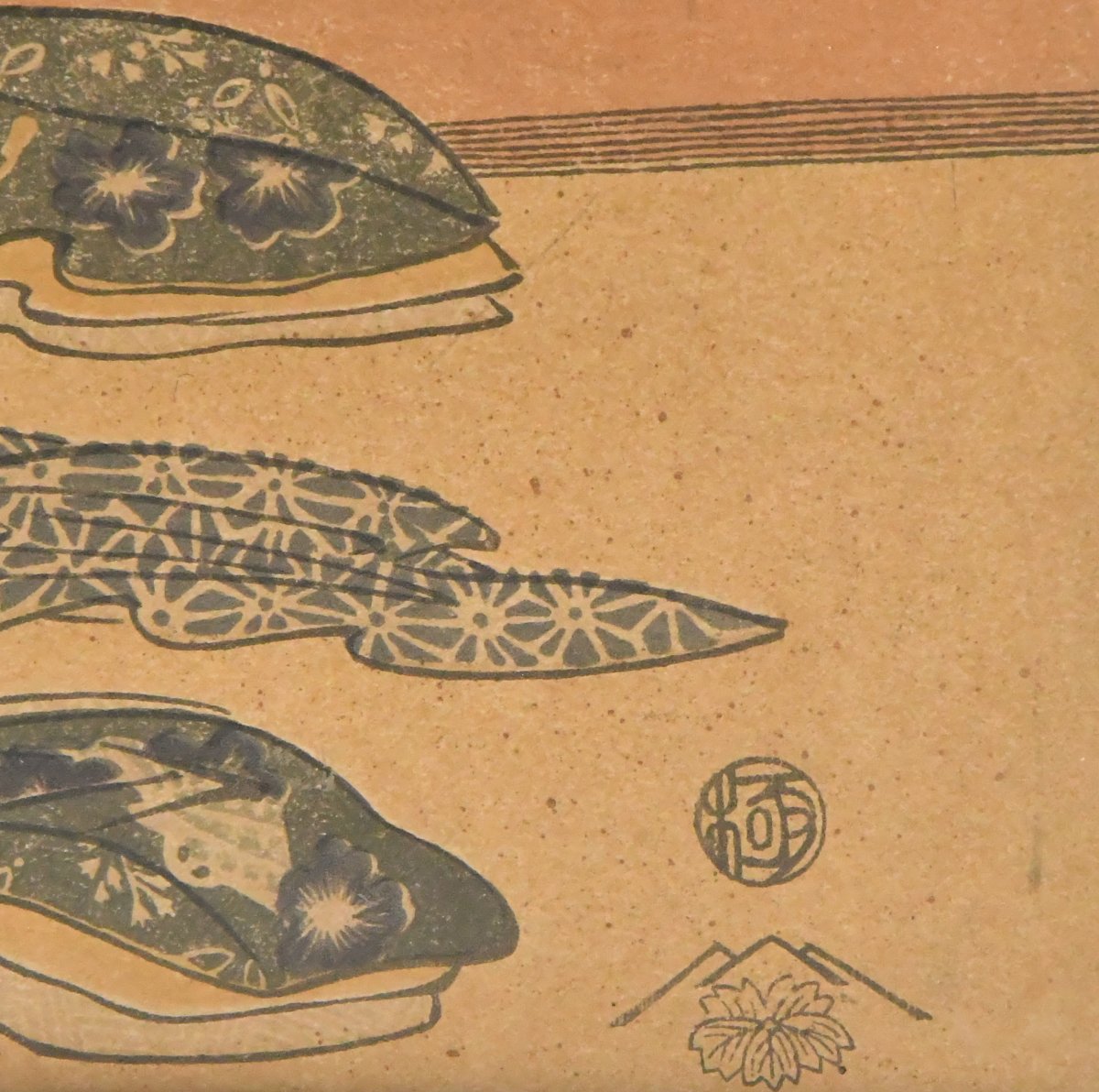
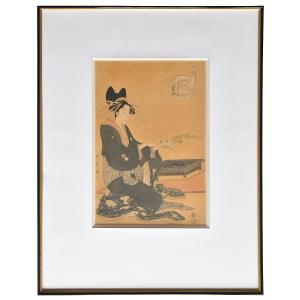


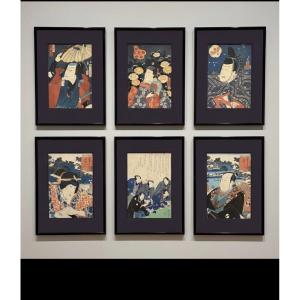
Utamaro KITAGAWA (1753–1806) "Woman in a Kimono" Oban tate-e woodblock print
Dimensions
frame: 65.5 x 49.5 cm
print: 37.5 x 24.5 cm
Kitagawa Utamaro (1753–1806) was a Japanese painter specializing in ukiyo-e, particularly known for his bijin-ga depictions, that is, of beautiful women.
Ukiyo-e is the term used to describe a Japanese artistic movement of the Edo period (1603–1868) that can be translated as “pictures of the floating world.” This genre consists primarily of Japanese woodblock prints, whose emerging techniques allowed for numerous, inexpensive reproductions on paper. This is, in fact, one of the reasons why ukiyo-e is sometimes considered a vulgar genre in Japan.
The other main reason is the choice of subjects. The Edo period was a time of peace and prosperity, which led to a decline in the influence of the military aristocracy in favor of a merchant bourgeoisie. Ukiyo-e notably reflected their interests: beautiful women, daily life, erotic scenes (known as shunga), as well as kabuki actors, sumo wrestlers, and yokai.
Utamaro began his career under the patronage of a publisher living on the outskirts of the Yoshiwara district, a red-light district in Edo (the former name of Tokyo). Over time, he specialized in series centered on the women of the district.
Contrary to Japanese conventions, Utamaro aimed for likeness in his portraits. According to his own words, he sought to capture the personality traits of his subjects in his portraits. In reality, this was quite difficult to achieve while adhering to the conventions of the time. And yet, thanks to small details, he makes it possible to identify his favorite models! Three Beauties of Our Time is thus a depiction of three famous young women of Edo from the 1790s, each identified by a coat of arms. While the young women depicted in "bijin-ga" are often courtesans, this is not the case here. One of them is a geisha, and the other two are the daughters of two tea house owners.
Dimensions
frame: 65.5 x 49.5 cm
print: 37.5 x 24.5 cm
Kitagawa Utamaro (1753–1806) was a Japanese painter specializing in ukiyo-e, particularly known for his bijin-ga depictions, that is, of beautiful women.
Ukiyo-e is the term used to describe a Japanese artistic movement of the Edo period (1603–1868) that can be translated as “pictures of the floating world.” This genre consists primarily of Japanese woodblock prints, whose emerging techniques allowed for numerous, inexpensive reproductions on paper. This is, in fact, one of the reasons why ukiyo-e is sometimes considered a vulgar genre in Japan.
The other main reason is the choice of subjects. The Edo period was a time of peace and prosperity, which led to a decline in the influence of the military aristocracy in favor of a merchant bourgeoisie. Ukiyo-e notably reflected their interests: beautiful women, daily life, erotic scenes (known as shunga), as well as kabuki actors, sumo wrestlers, and yokai.
Utamaro began his career under the patronage of a publisher living on the outskirts of the Yoshiwara district, a red-light district in Edo (the former name of Tokyo). Over time, he specialized in series centered on the women of the district.
Contrary to Japanese conventions, Utamaro aimed for likeness in his portraits. According to his own words, he sought to capture the personality traits of his subjects in his portraits. In reality, this was quite difficult to achieve while adhering to the conventions of the time. And yet, thanks to small details, he makes it possible to identify his favorite models! Three Beauties of Our Time is thus a depiction of three famous young women of Edo from the 1790s, each identified by a coat of arms. While the young women depicted in "bijin-ga" are often courtesans, this is not the case here. One of them is a geisha, and the other two are the daughters of two tea house owners.
Explore similar pieces and discover your ideal find:
Prints (Relief, Intaglio)