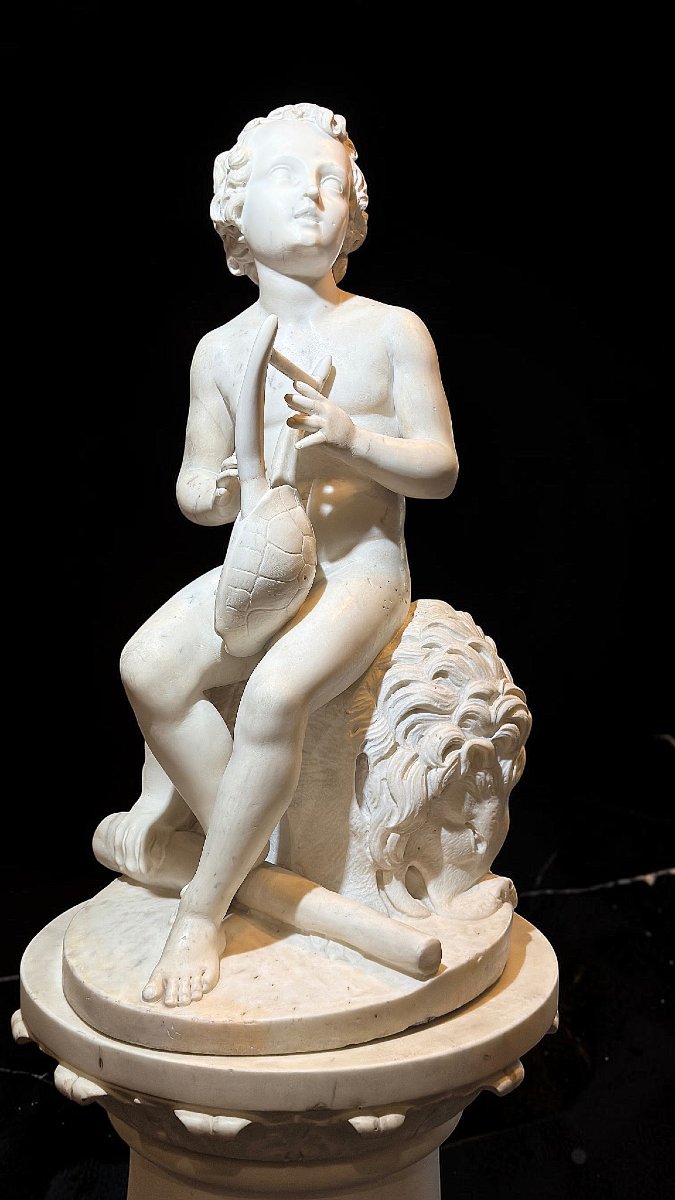
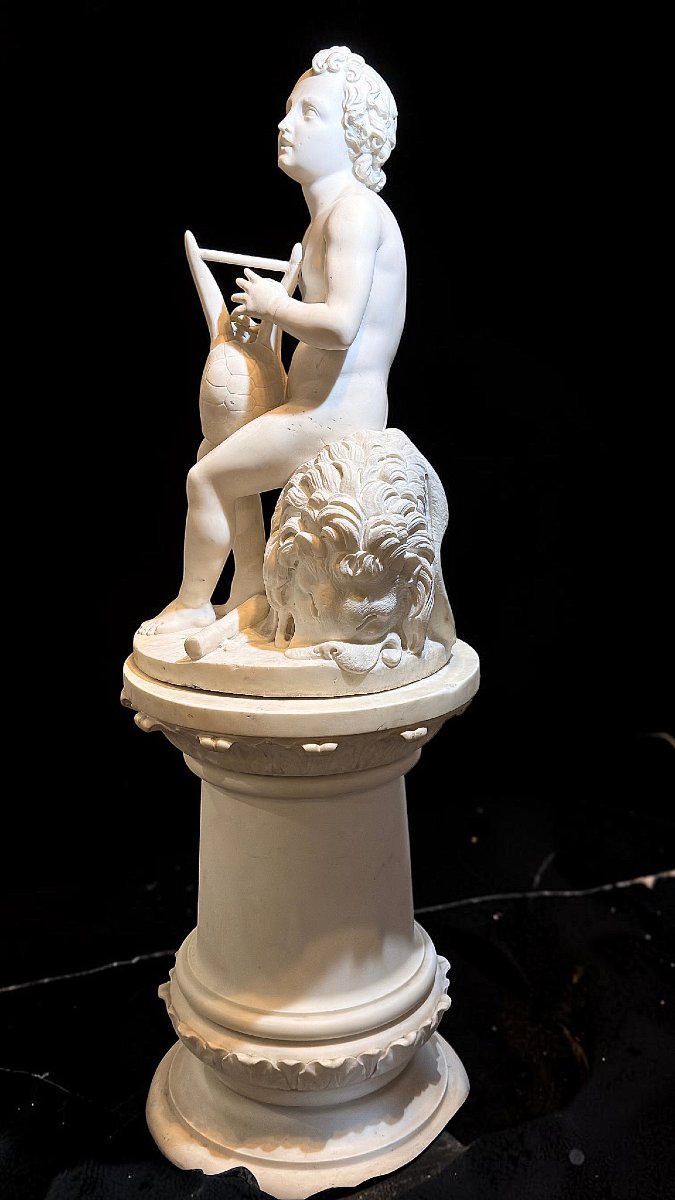
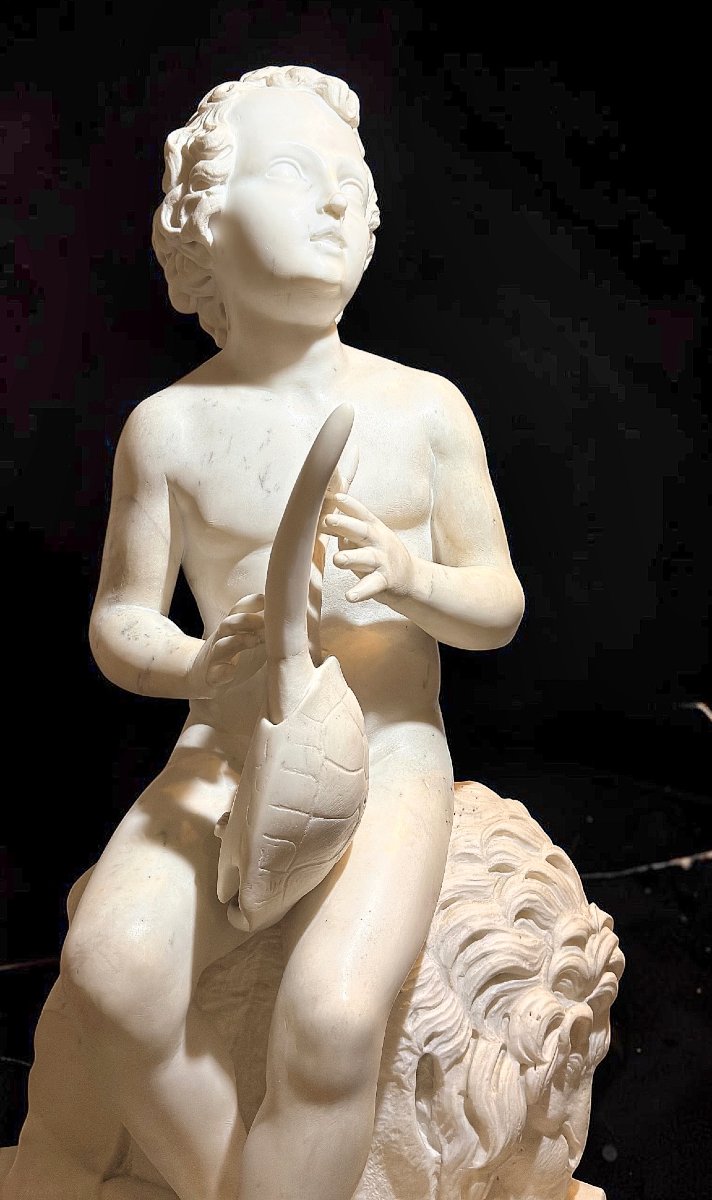
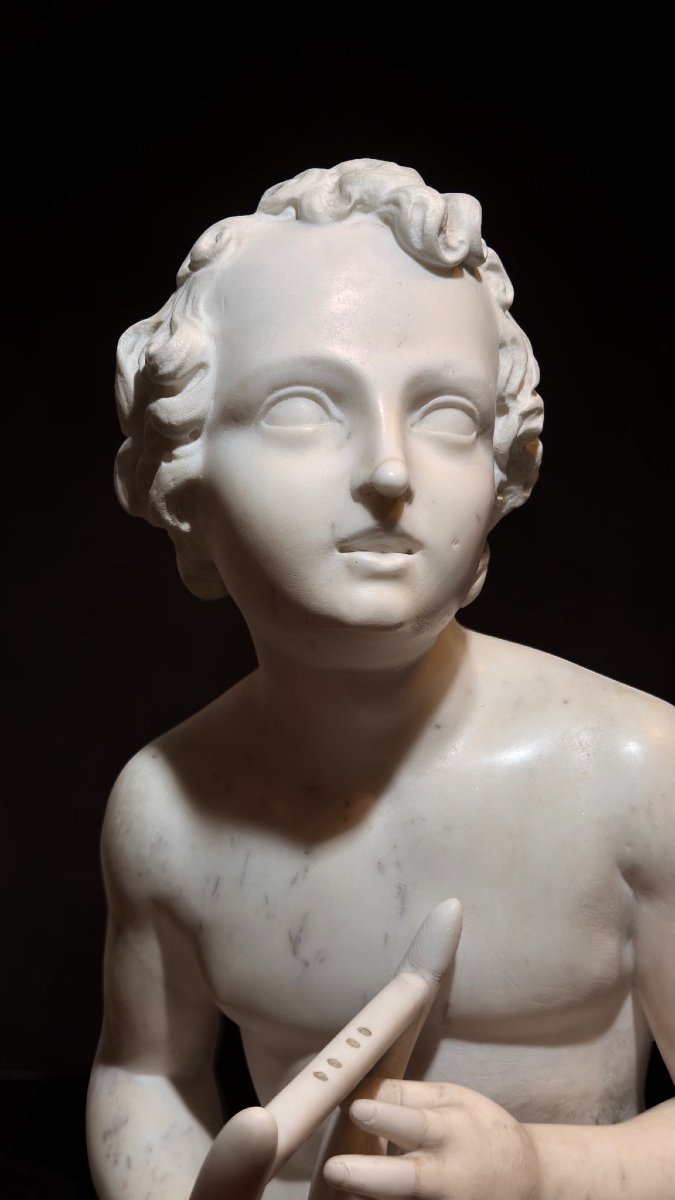
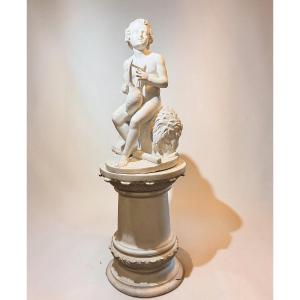


Statue Depicting Hercules Playing A Musical Instrument, By Luigi Bienaimé, Carrara Marble
Artist: Luigi Bienaimé (1795-1878)
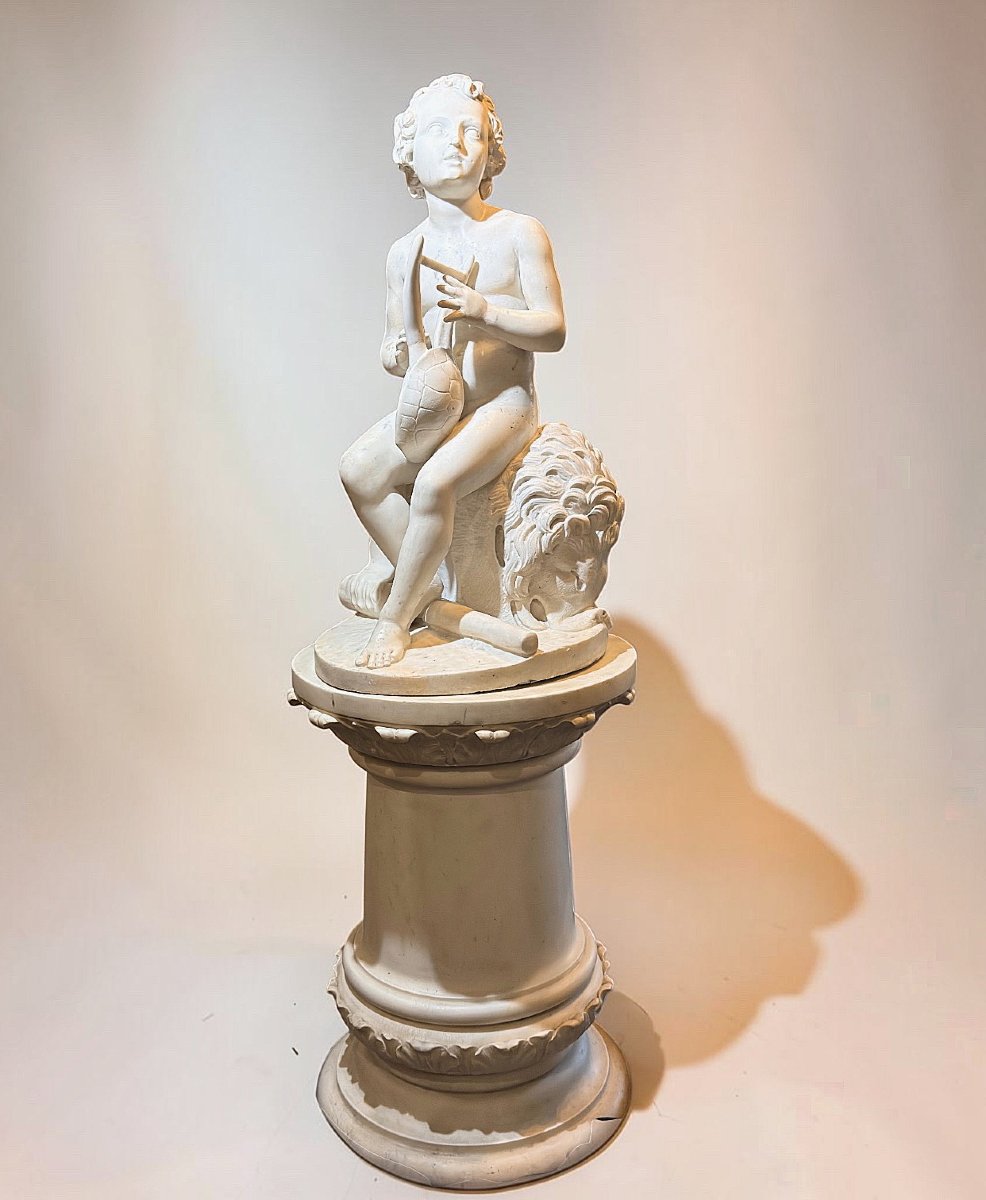
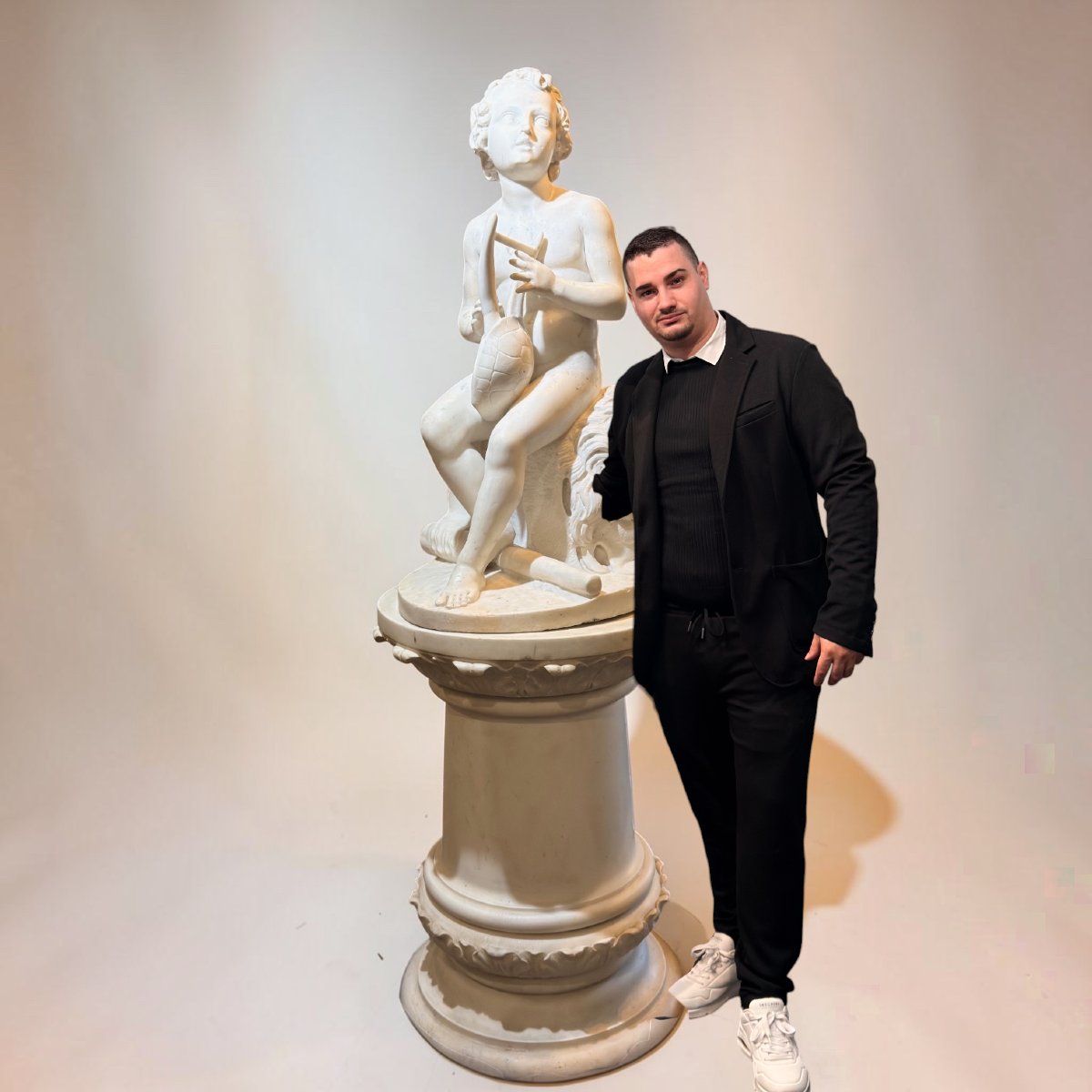
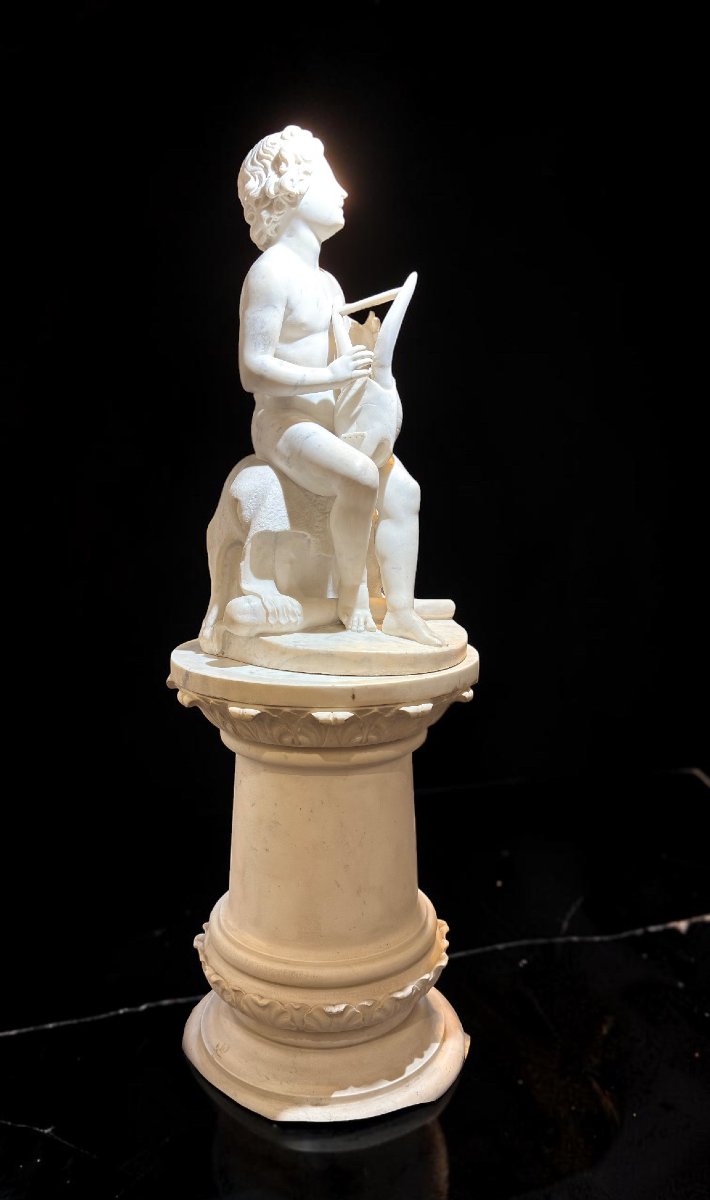
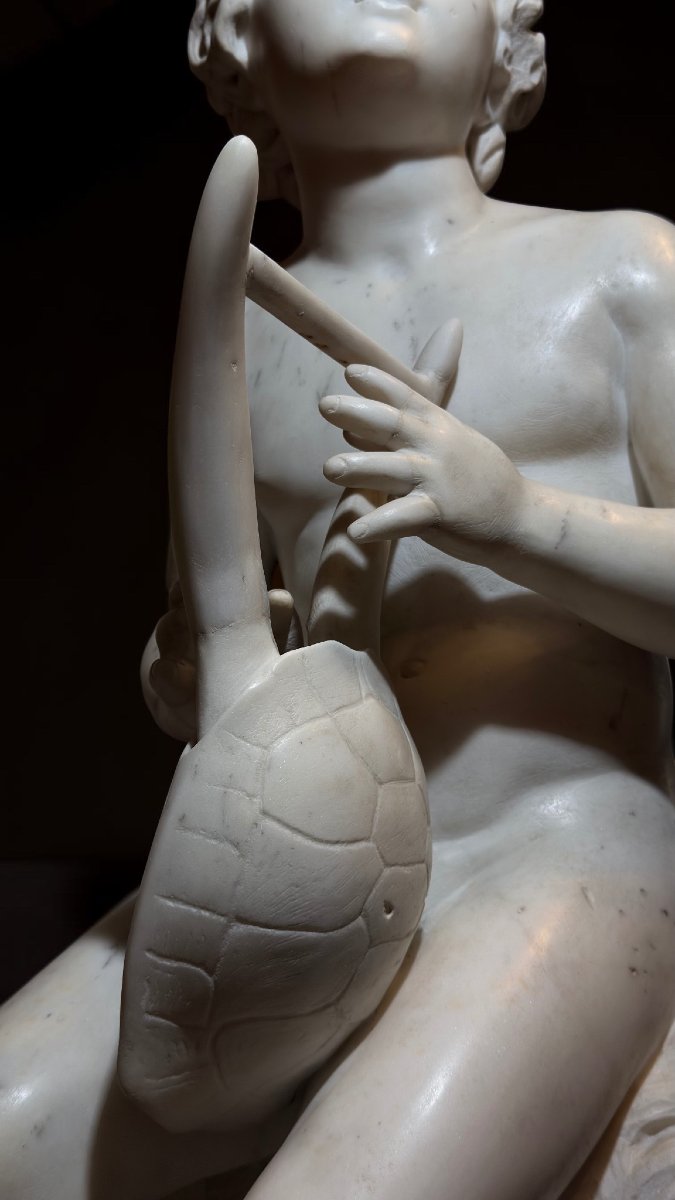
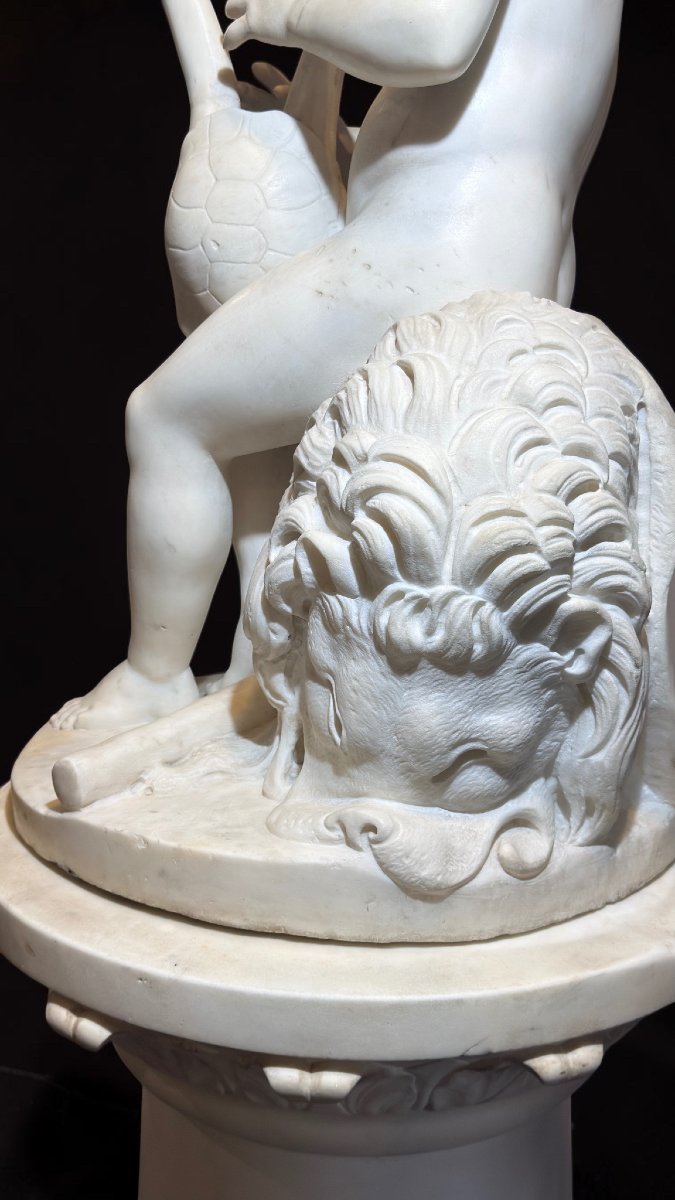
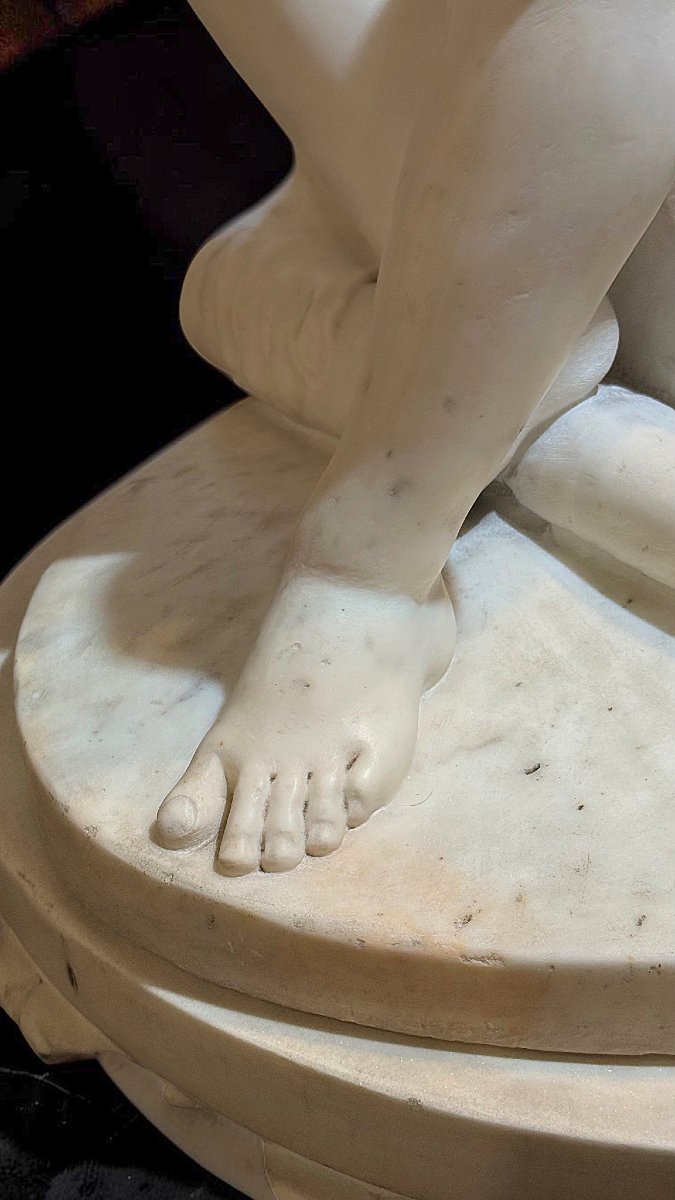
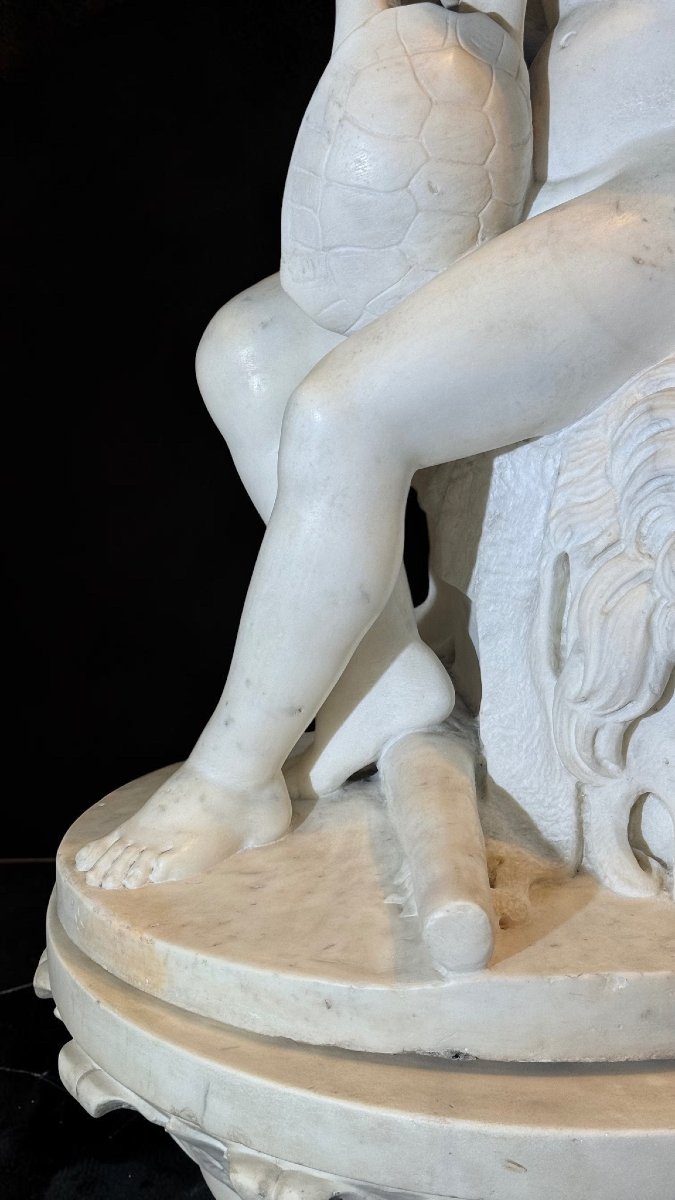
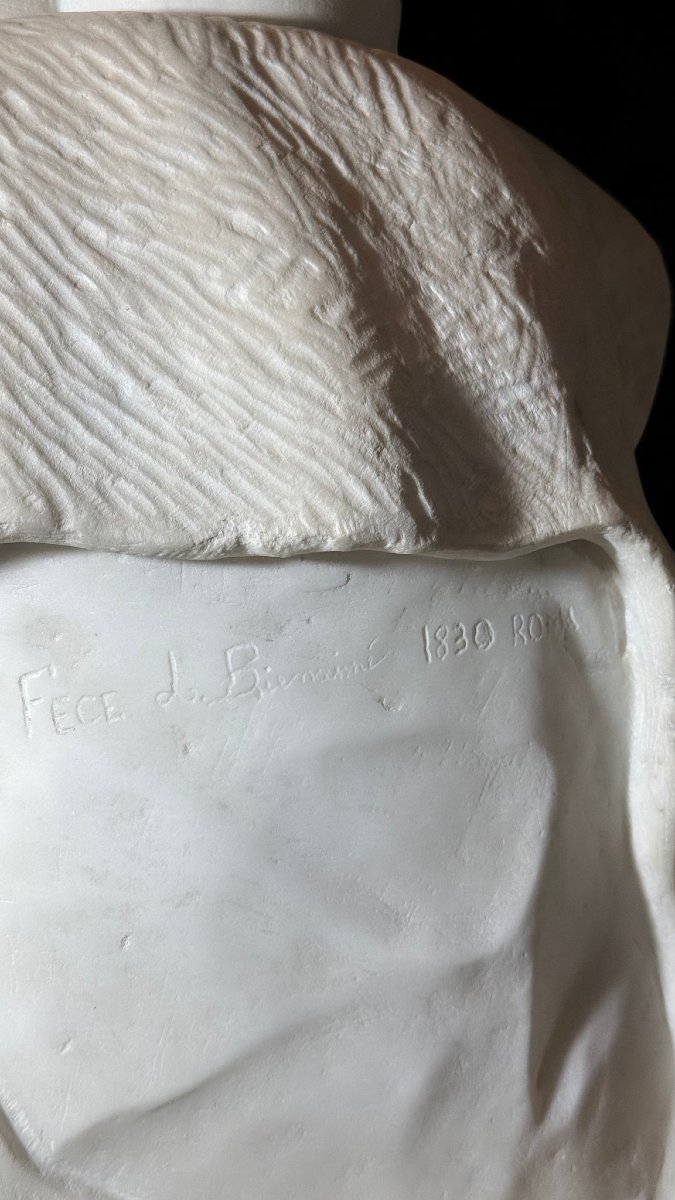
An imposing mythological figure depicting Hercules playing the cithara, a work by the sculptor Luigi Bienaimé (Carrara 1795 – Rome 1878), signed on the back and sculpted from pure white Carrara Marble. • Dimensions including Capital: 175 cm in height (350 kg) • Statue Dimensions: 93 cm in height x 55 cm x 50 cm (150 kg) • Historical, artistic, and iconographic description: This monumental work captures a rare and refined iconographic variation within the cycle of Hercules’ Labors: the hero, known for his brute strength, is depicted here in a moment of calm virtue and artistic mastery. Hercules Musagetes (or “Hercules the Learned”), a theme dear to 19th-century Neoclassical academicism. The figure of Hercules, with his athletic and idealized physique, is sculpted in the statuary purity of white Carrara marble, which enhances the softness of his skin tones and the attention to detail in his drapery. He is depicted seated, raised on an imposing capital-shaped pedestal, sumptuously decorated with acanthus leaves, a symbol of honor and immortality. The hero is partially wrapped in the skin of the Nemean lion, which rests on the rocky seat. Contrary to the traditional iconography of the struggle, his club, his favorite weapon, lies inert at his feet, symbolizing the end of physical toil. Instead, Hercules delicately holds and plays a chelys (an ancient lyre), a musical instrument originally carved from a tortoise shell. His serene gaze is turned upward, capturing the essence of harmony triumphing over brute force. The work bears the sculptor’s autograph signature, LUIGI BIENAIMÉ, clearly visible on the base. Biography: Luigi Bienaimé (Carrara, 1795 – Rome, 1878) was one of the leading figures of Italian Neoclassical sculpture of Flemish origin. After training at the Academy of Fine Arts in Carrara, he moved to Rome, where he worked for many years under the guidance of the great Bertel Thorvaldsen, serving as his favorite student and assistant, and eventually succeeded him as director of his famous studio on Via delle Quattro Fontane. Bienaimé’s works, characterized by impeccable technique and refined elegance, are housed in the world’s most important museums, including the Hermitage in St. Petersburg and the Metropolitan Museum of Art in New York. This work demonstrates Bienaimé’s extraordinary technical mastery. The carving of the Statuario marble is superb: note the chiaroscuro contrast between the smoothness of the youthful skin and the rich, deep, and detailed texture of the acanthus leaves and the lion’s mane. The mace and staff are carved with philological precision • MUSEUM CONDITION: The sculpture is in exceptional condition, virtually free of restorations or chips that would compromise its purity. The marble surface has retained its original luster, preserving the velvety patina typical of works unaltered by atmospheric agents. This sculpture, with its monumental visual impact and absolute philological and technical rigor, is destined for a highly prestigious setting, such as the central atrium of an important residence, the entrance to an institutional building, or the main hall of a museum dedicated to Neoclassicism • Packaging will be handled directly by Cenzi ArtGallery on a fully wood-lined EPAL wooden pallet, using professional and specialized materials inside! Shipping will be fast and trackable • CENZI ArtGallery certifies all the works of art you have decided to purchase with an invoice and a certificate of authenticity.
40 000 €
Period: 18th century
Style: Rome and Antic Greece
Condition: Perfect condition
Material: Marble
Length: 55
Width: 50
Height: 175
Reference (ID): 1776510
Availability: In stock
Print