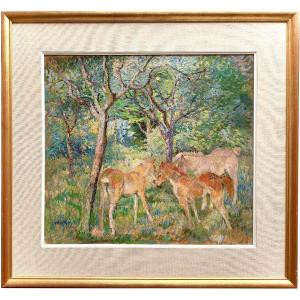


Edgard Wiethase (antwerp 1881–1965 Uccle) -
Artist: Edgard Wiethase, Anvers 1881 – 1965 Uccle, Peintre Belge, Signature : Signé En Bas à Gauche « E Wiethase »
Edgard Wiethase
Antwerp 1881–1965 Uccle
Belgian Painter
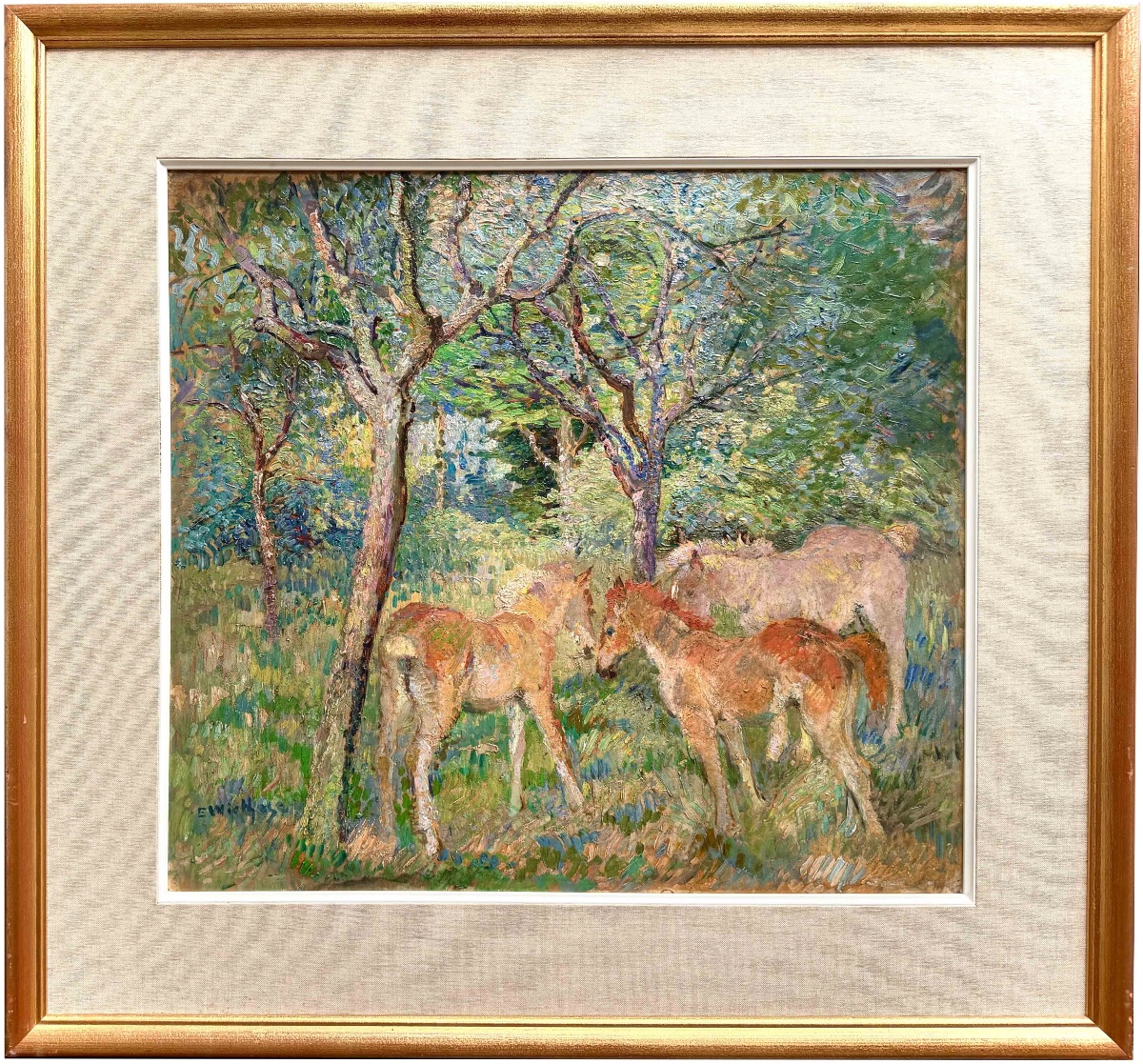
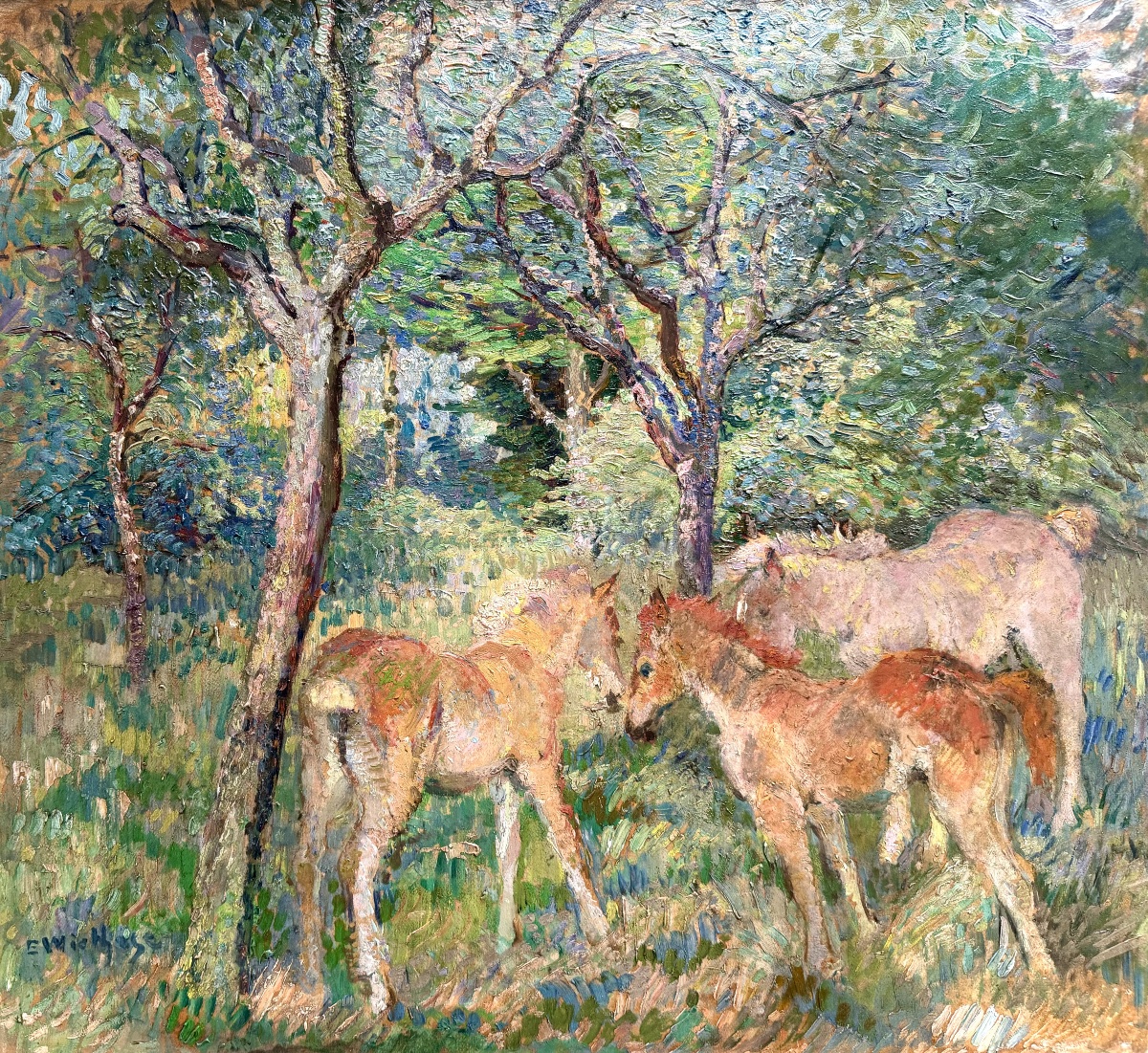
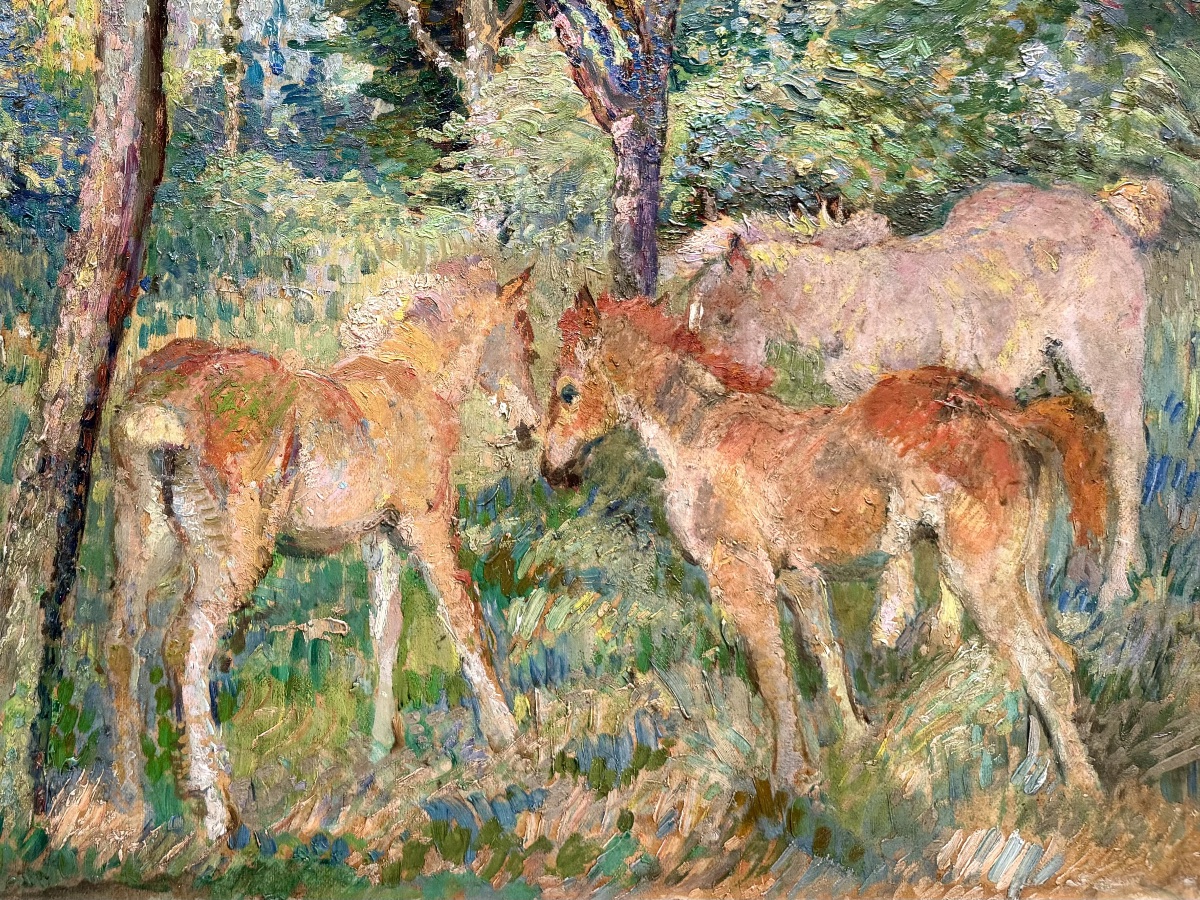
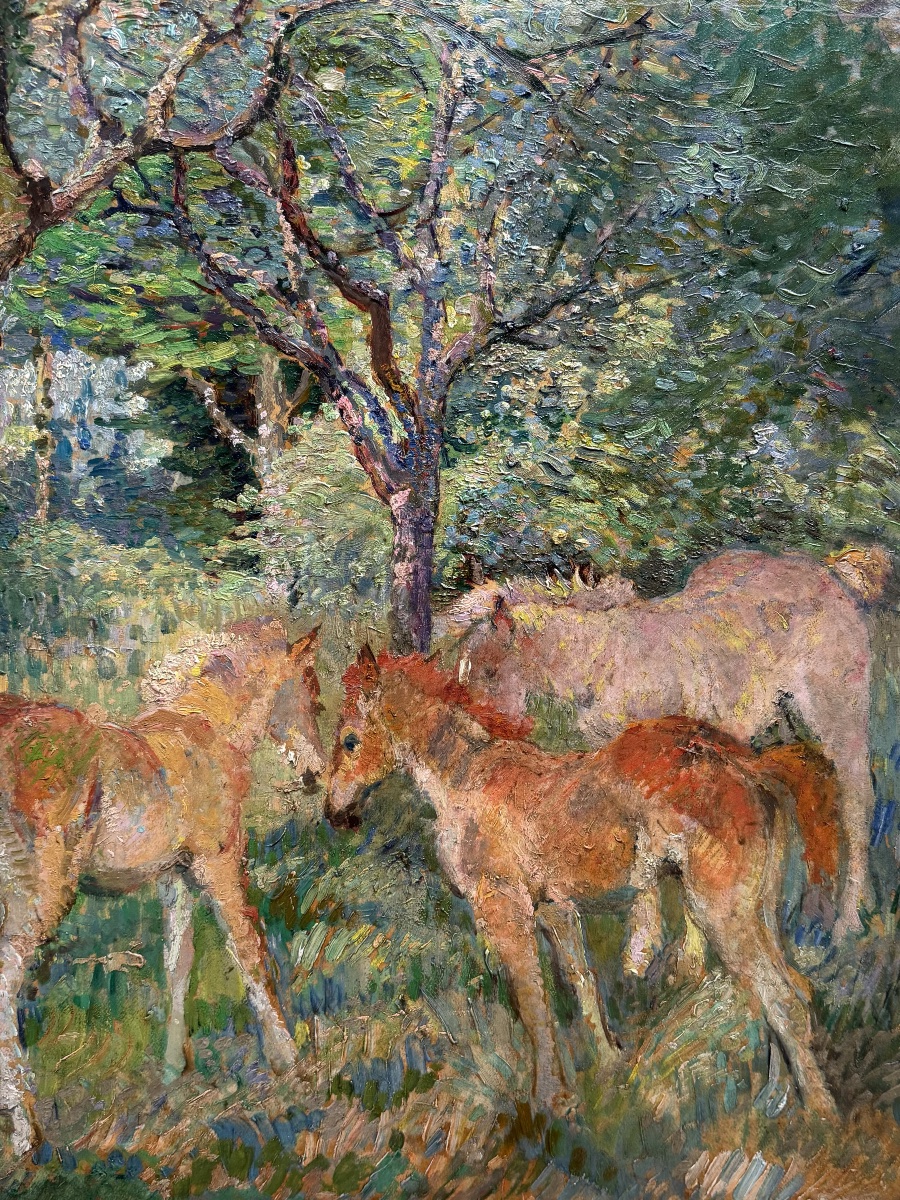
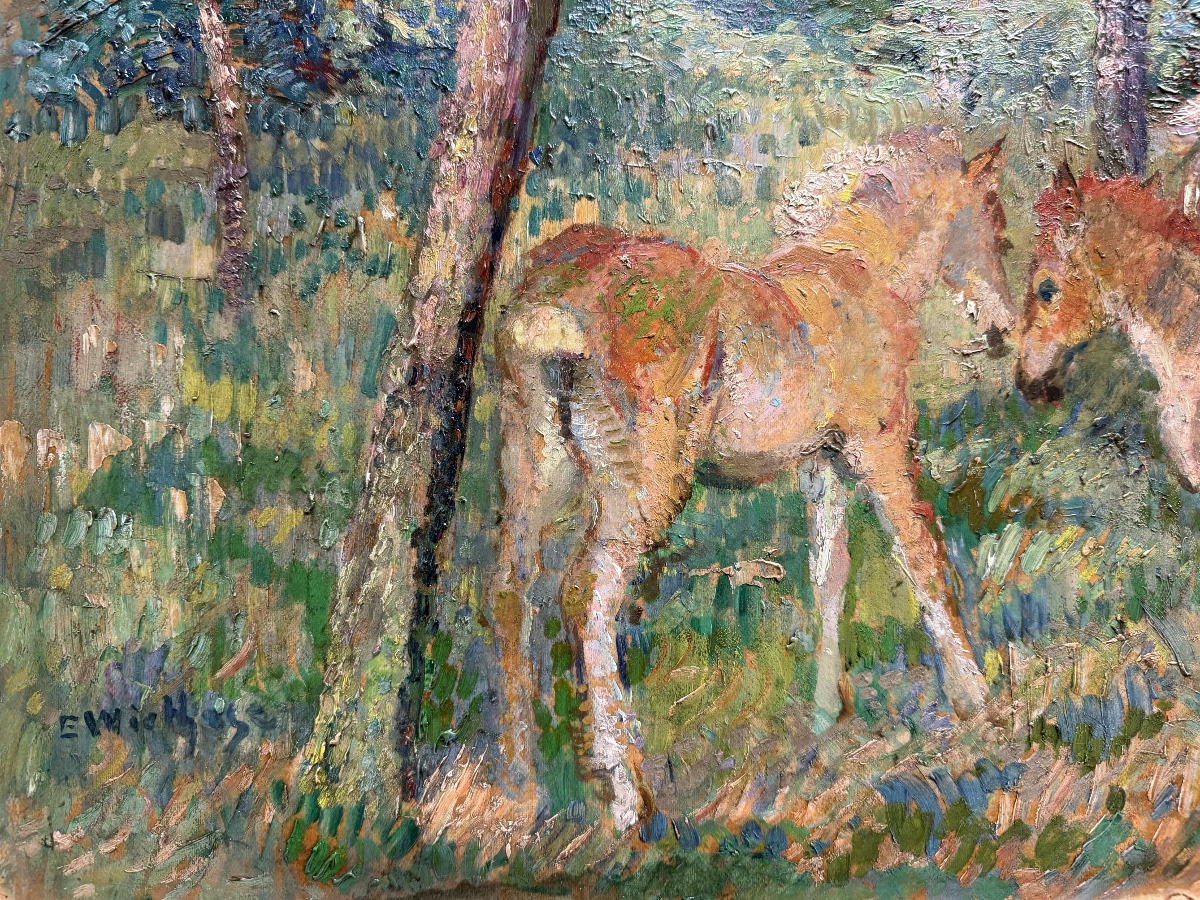
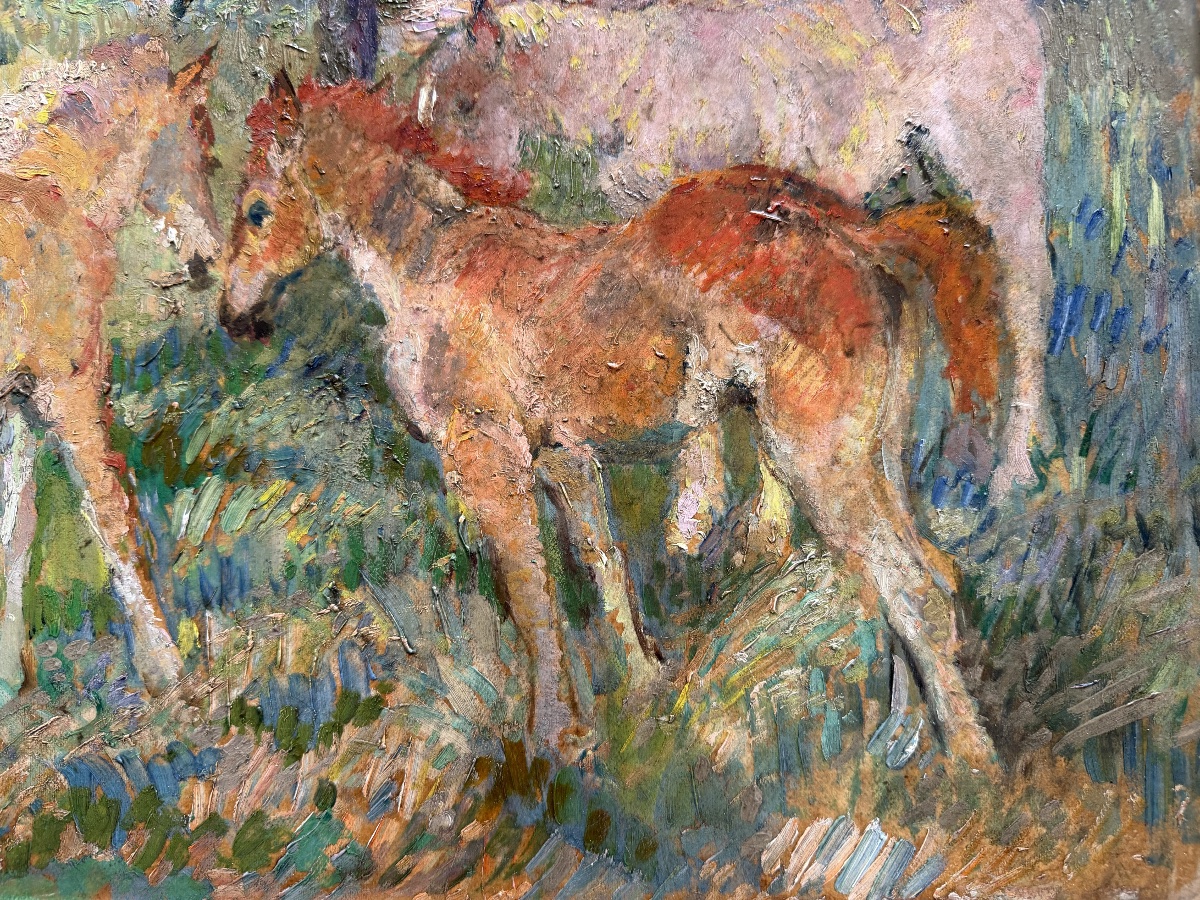
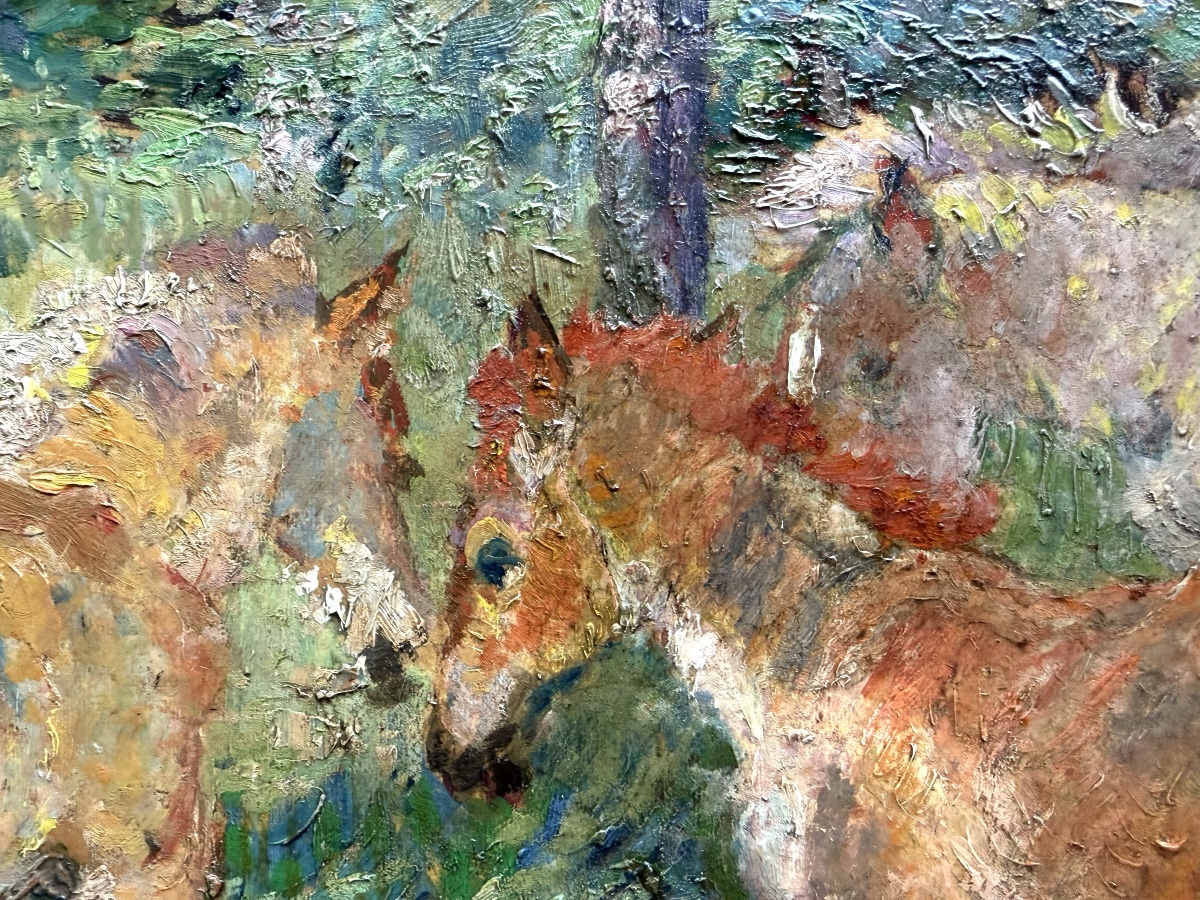
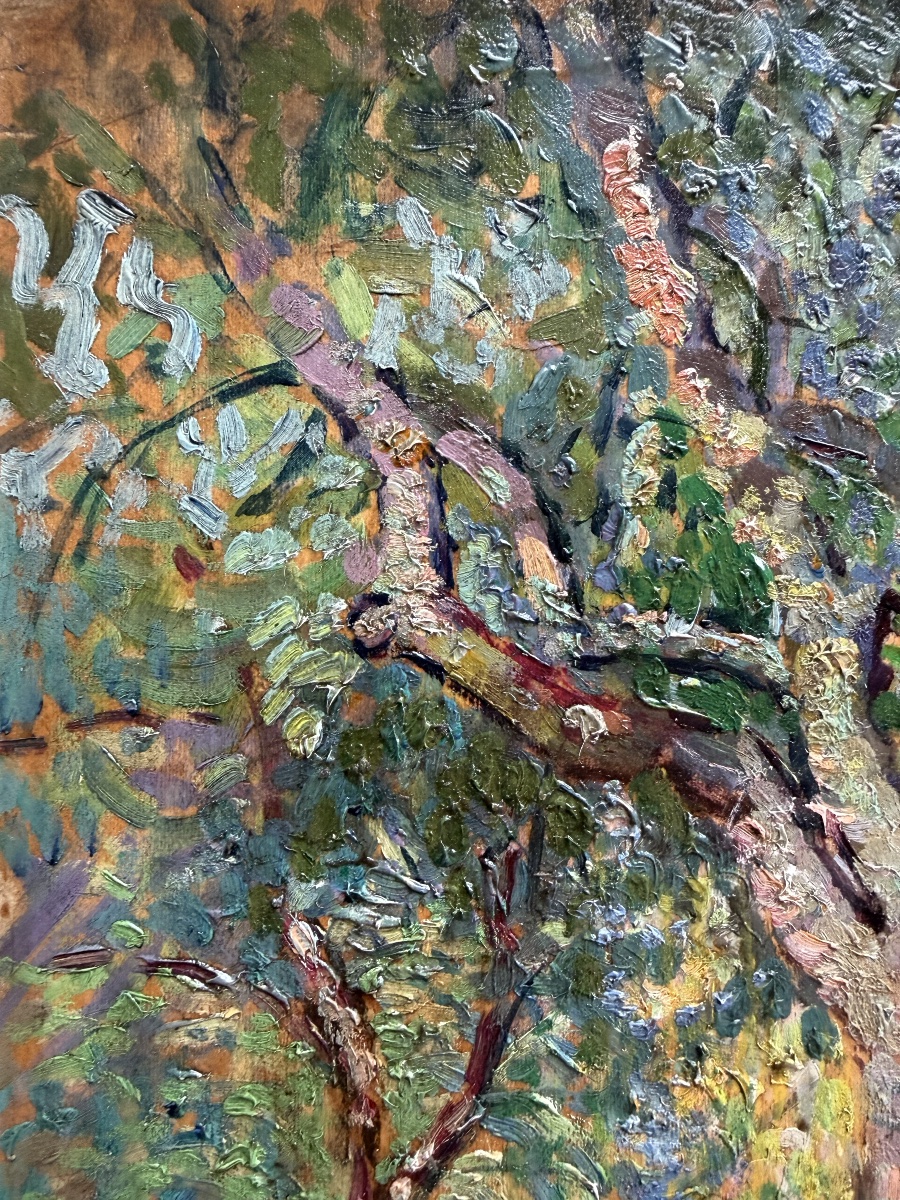
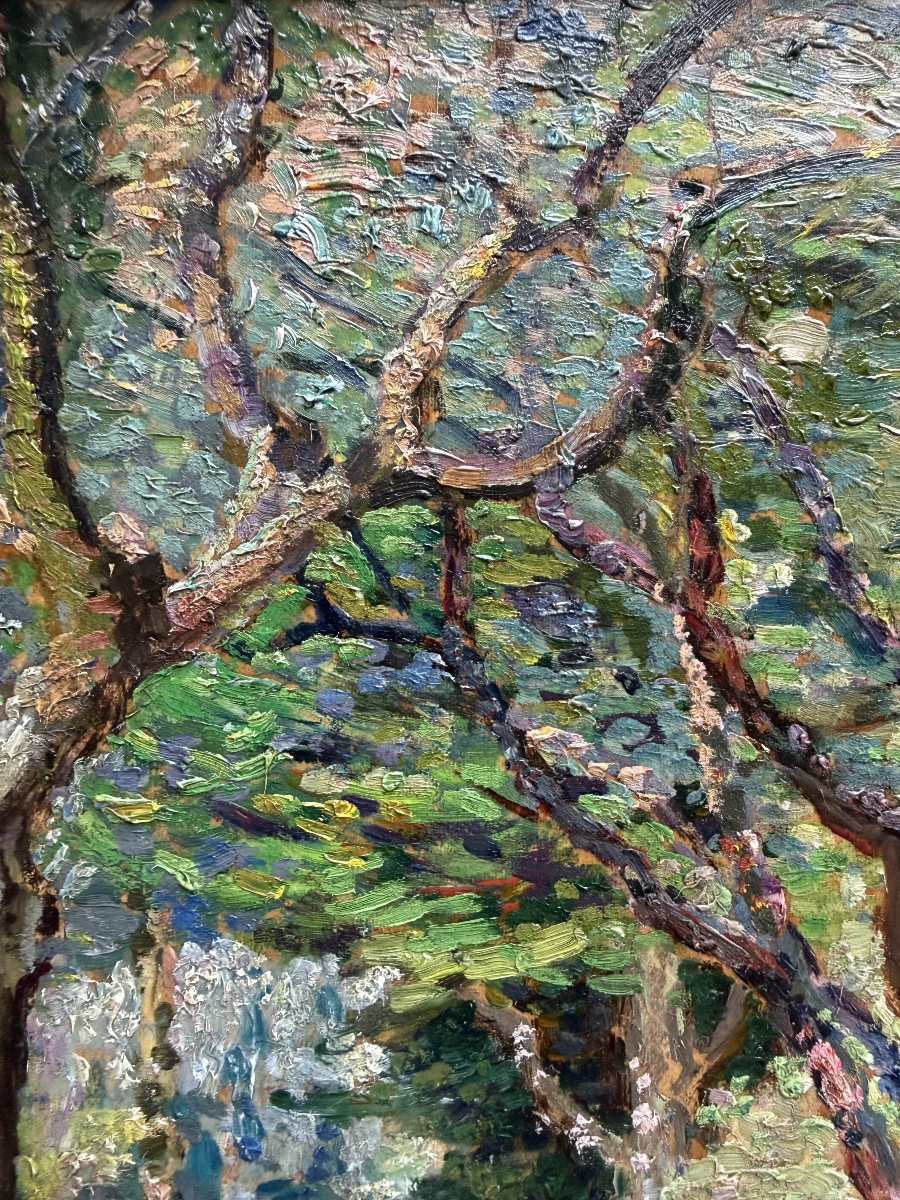
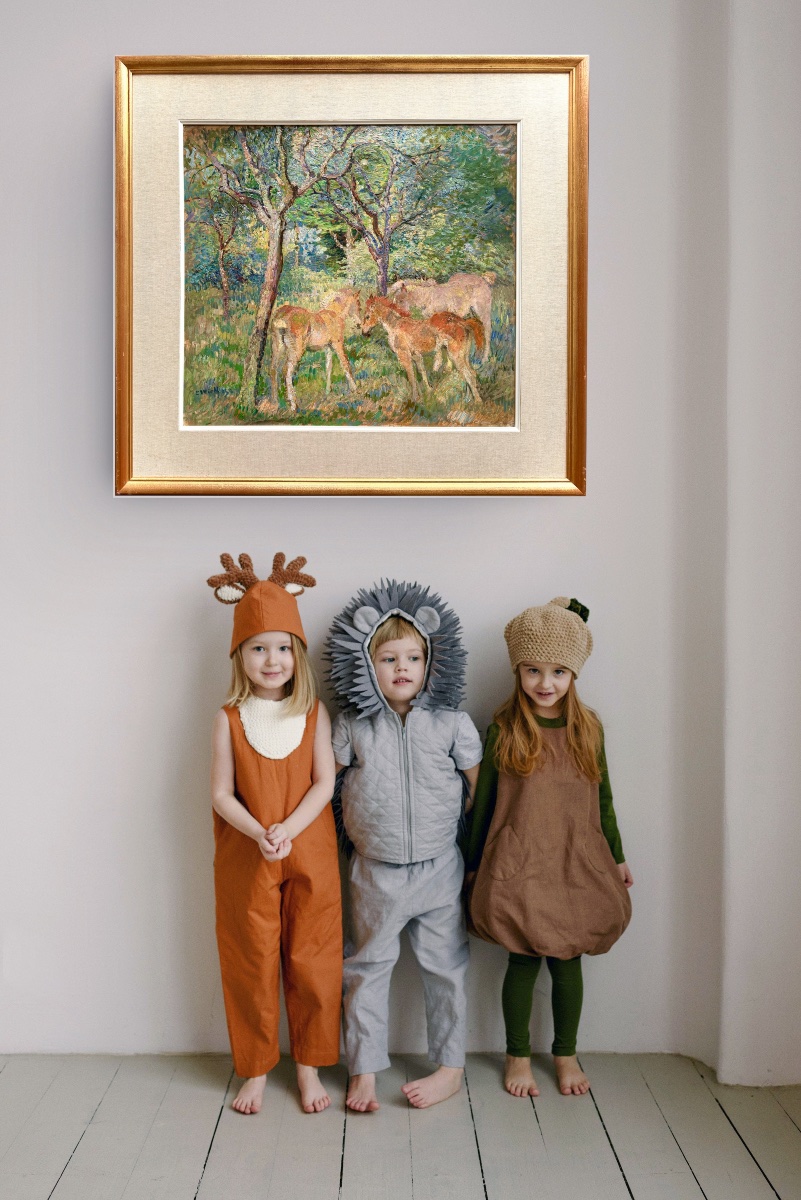
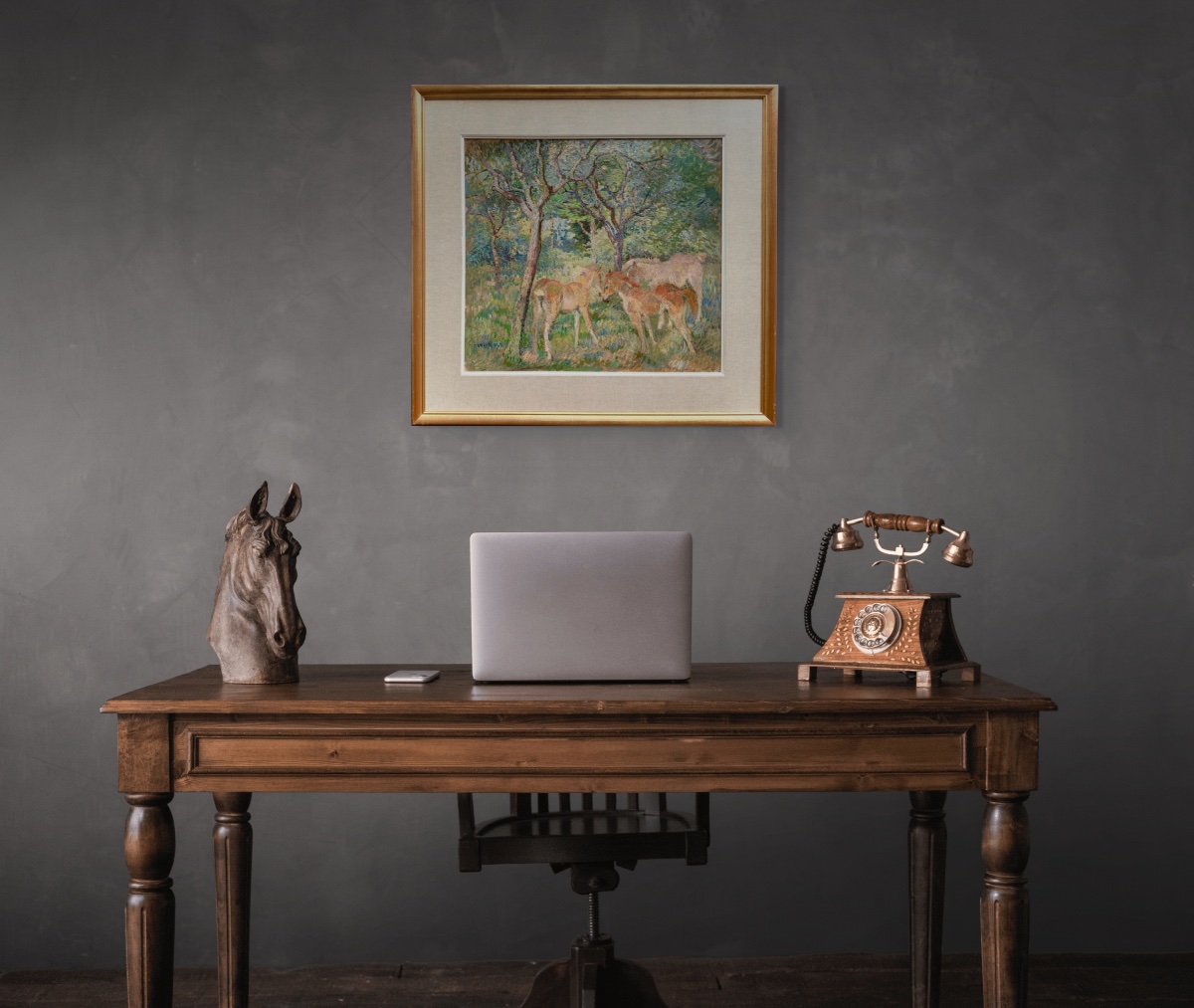
'Three Foals in the Orchard'
Signature: signed lower left 'E Wiethase'
Medium: oil on panel
Dimensions: image size 56 x 61 cm; frame size 81 x 86,5 cm
Biography: Edgard Wiethase was a Belgian painter and watercolourist born in Antwerp on 31 August 1881 and deceased in Uccle on 16 April 1965. He is regarded as one of the notable representatives of early twentieth-century Belgian realism, distinguished for his sensitive depictions of horses, landscapes, interiors, still lifes, and genre scenes.
Wiethase received his artistic training at the Royal Academy of Fine Arts in Antwerp, where he studied under Charles Boom, Charles Mertens, and Piet Verhaert. He subsequently continued his education at the National Higher Institute of Fine Arts in Antwerp under the celebrated animal painter Frans Van Leemputten, whose influence can be seen in Wiethase’s enduring fascination with animal subjects, particularly horses.
In 1903, he became a member of the prestigious Antwerp artists’ association Als Ik Kan, a society inspired by the ideals of the Flemish artistic tradition and named after the famous motto of Jan van Eyck. Through exhibitions in Antwerp, Brussels, Ghent, Amsterdam, and The Hague, Wiethase established a solid reputation within Belgian and Dutch artistic circles.
Although he painted a wide variety of subjects, Wiethase became especially admired for his portrayals of horses. Working within the great tradition of Belgian animal painting, he captured mares, foals, and stallions with remarkable vitality and elegance. Alongside these equestrian subjects, he produced luminous landscapes, garden scenes, interiors, portraits, and floral still lifes. His style combines careful observation with a vibrant use of colour, often revealing affinities with Belgian Luminism while maintaining a strong realist foundation.
Critics and collectors appreciated his ability to convey atmosphere and light, whether depicting a quiet rural landscape, a sunlit interior, or the graceful movement of animals. His mature works are characterised by a rich palette, confident brushwork, and a harmonious balance between realism and painterly expression.
Today, Edgard Wiethase’s work is represented in important public collections, notably at the Royal Museum of Fine Arts Antwerp, where works such as Head of a Woman and Return to the Paddock are preserved. His oeuvre is also documented by the Flemish Art Collection, confirming his place within the history of Belgian twentieth-century painting.
Wiethase’s paintings remain highly sought after for their lyrical treatment of everyday life, their luminous colour harmonies, and their masterful depiction of the Flemish landscape and equestrian world.
Antwerp 1881–1965 Uccle
Belgian Painter
'Three Foals in the Orchard'
Signature: signed lower left 'E Wiethase'
Medium: oil on panel
Dimensions: image size 56 x 61 cm; frame size 81 x 86,5 cm
Biography: Edgard Wiethase was a Belgian painter and watercolourist born in Antwerp on 31 August 1881 and deceased in Uccle on 16 April 1965. He is regarded as one of the notable representatives of early twentieth-century Belgian realism, distinguished for his sensitive depictions of horses, landscapes, interiors, still lifes, and genre scenes.
Wiethase received his artistic training at the Royal Academy of Fine Arts in Antwerp, where he studied under Charles Boom, Charles Mertens, and Piet Verhaert. He subsequently continued his education at the National Higher Institute of Fine Arts in Antwerp under the celebrated animal painter Frans Van Leemputten, whose influence can be seen in Wiethase’s enduring fascination with animal subjects, particularly horses.
In 1903, he became a member of the prestigious Antwerp artists’ association Als Ik Kan, a society inspired by the ideals of the Flemish artistic tradition and named after the famous motto of Jan van Eyck. Through exhibitions in Antwerp, Brussels, Ghent, Amsterdam, and The Hague, Wiethase established a solid reputation within Belgian and Dutch artistic circles.
Although he painted a wide variety of subjects, Wiethase became especially admired for his portrayals of horses. Working within the great tradition of Belgian animal painting, he captured mares, foals, and stallions with remarkable vitality and elegance. Alongside these equestrian subjects, he produced luminous landscapes, garden scenes, interiors, portraits, and floral still lifes. His style combines careful observation with a vibrant use of colour, often revealing affinities with Belgian Luminism while maintaining a strong realist foundation.
Critics and collectors appreciated his ability to convey atmosphere and light, whether depicting a quiet rural landscape, a sunlit interior, or the graceful movement of animals. His mature works are characterised by a rich palette, confident brushwork, and a harmonious balance between realism and painterly expression.
Today, Edgard Wiethase’s work is represented in important public collections, notably at the Royal Museum of Fine Arts Antwerp, where works such as Head of a Woman and Return to the Paddock are preserved. His oeuvre is also documented by the Flemish Art Collection, confirming his place within the history of Belgian twentieth-century painting.
Wiethase’s paintings remain highly sought after for their lyrical treatment of everyday life, their luminous colour harmonies, and their masterful depiction of the Flemish landscape and equestrian world.
3 800 €
Period: 20th century
Style: Other Style
Condition: Excellent condition
Material: Oil painting on wood
Width: 86,5 cm
Height: 81 cm
Depth: 4 cm
Reference (ID): 1774205
Availability: In stock
Print