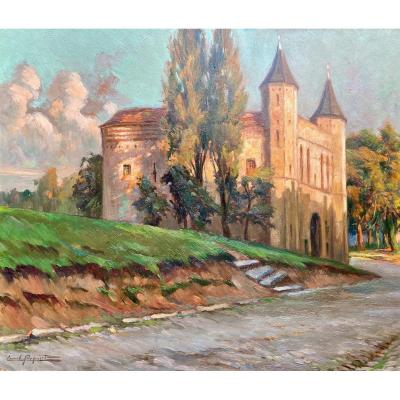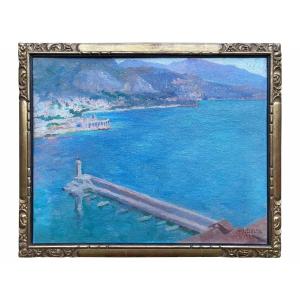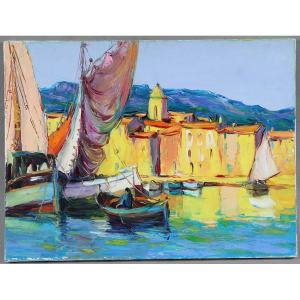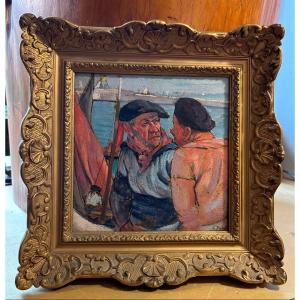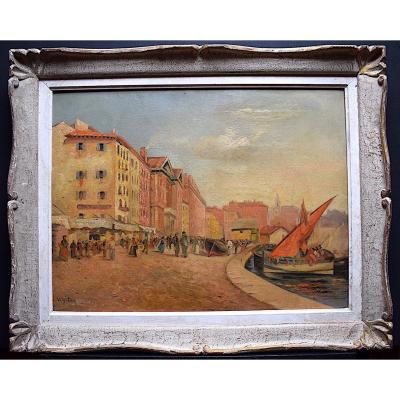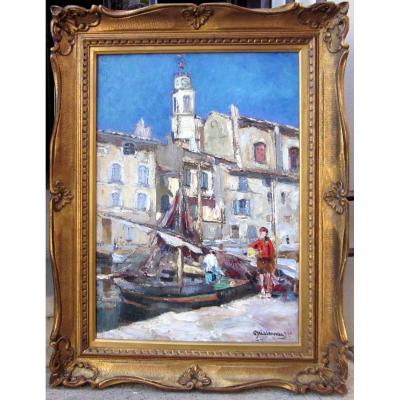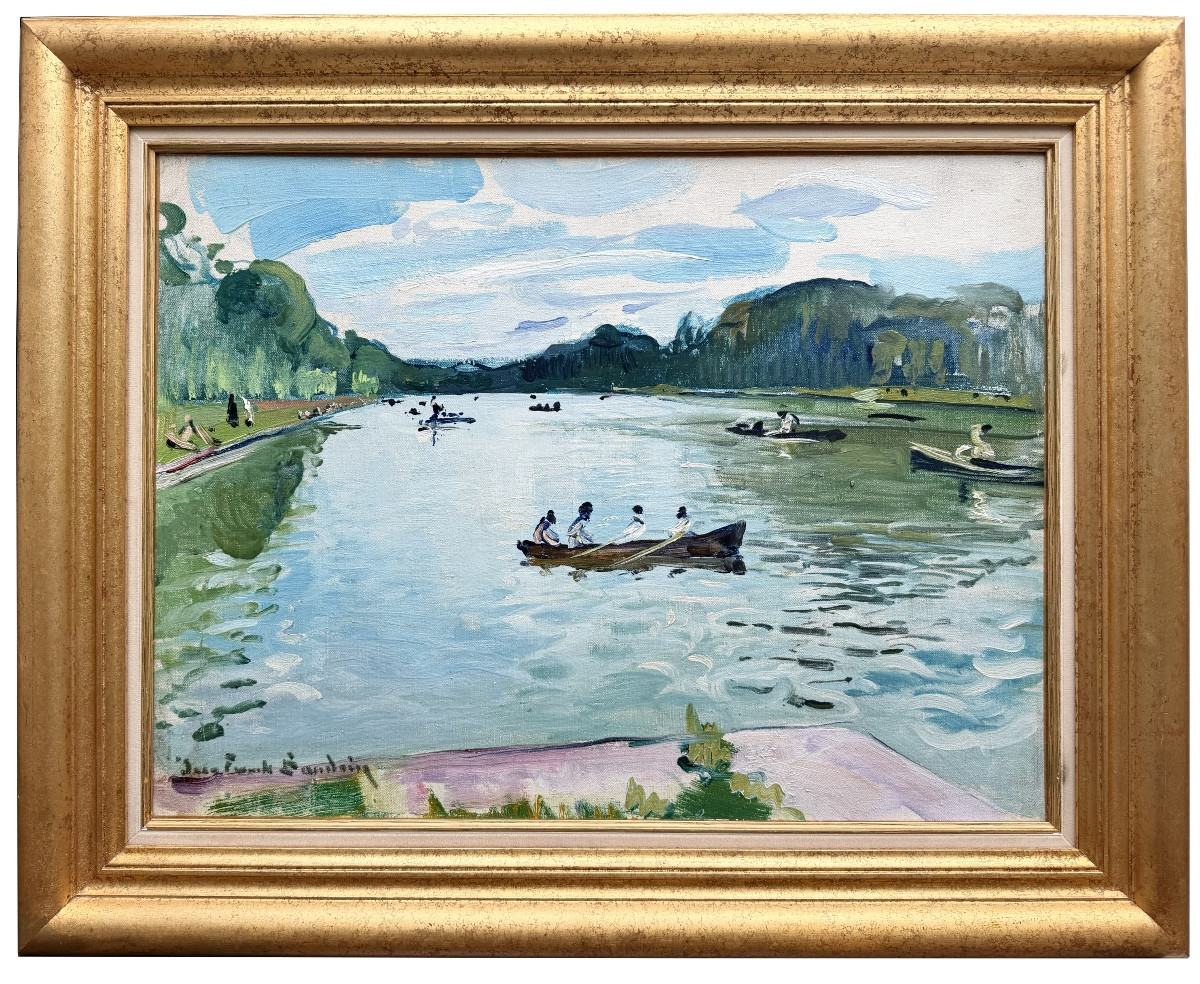
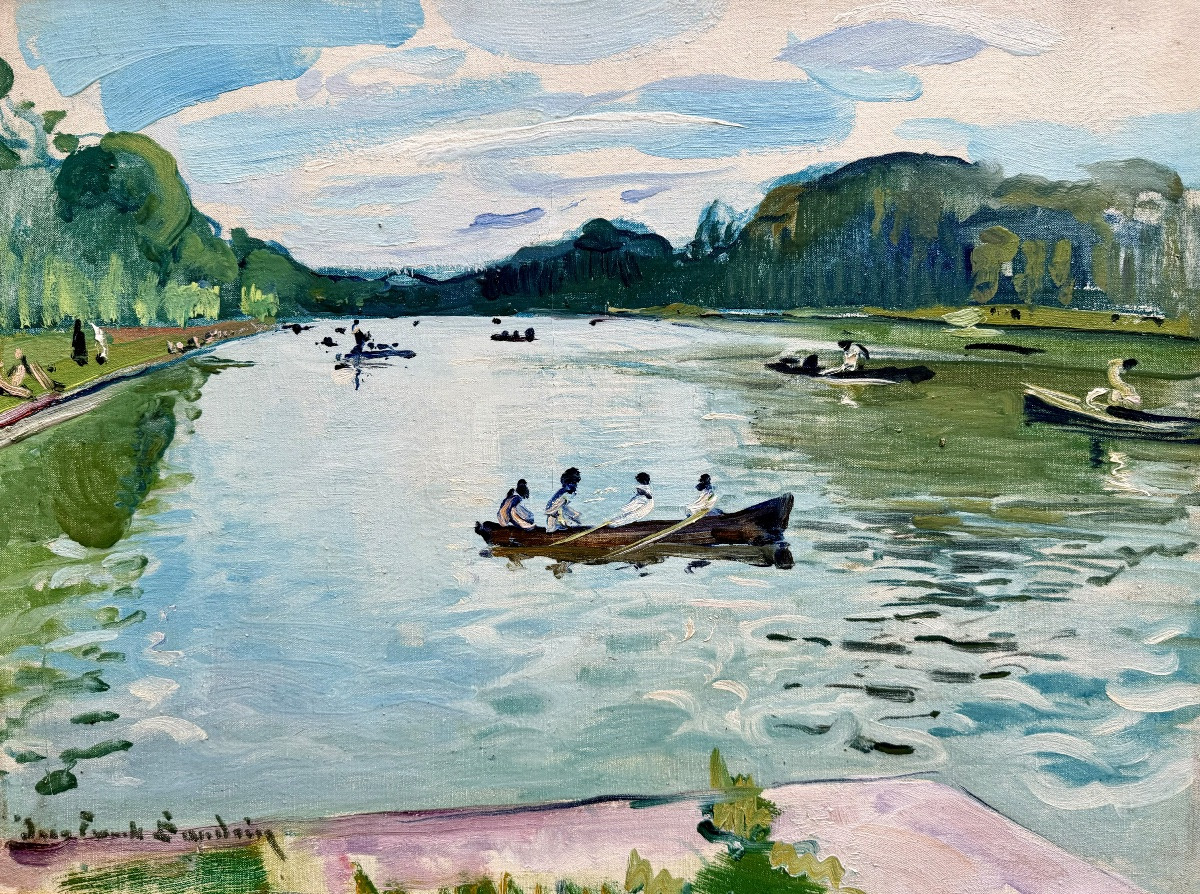
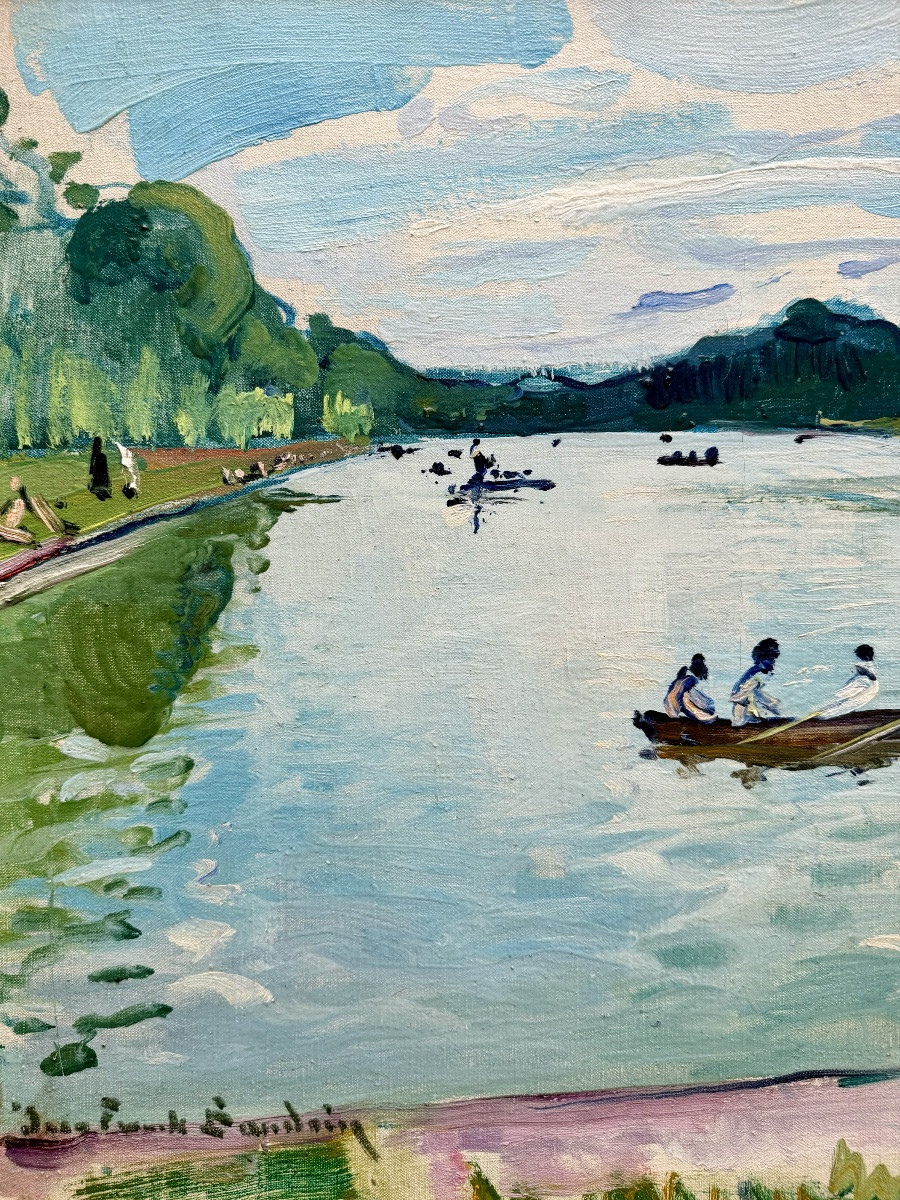
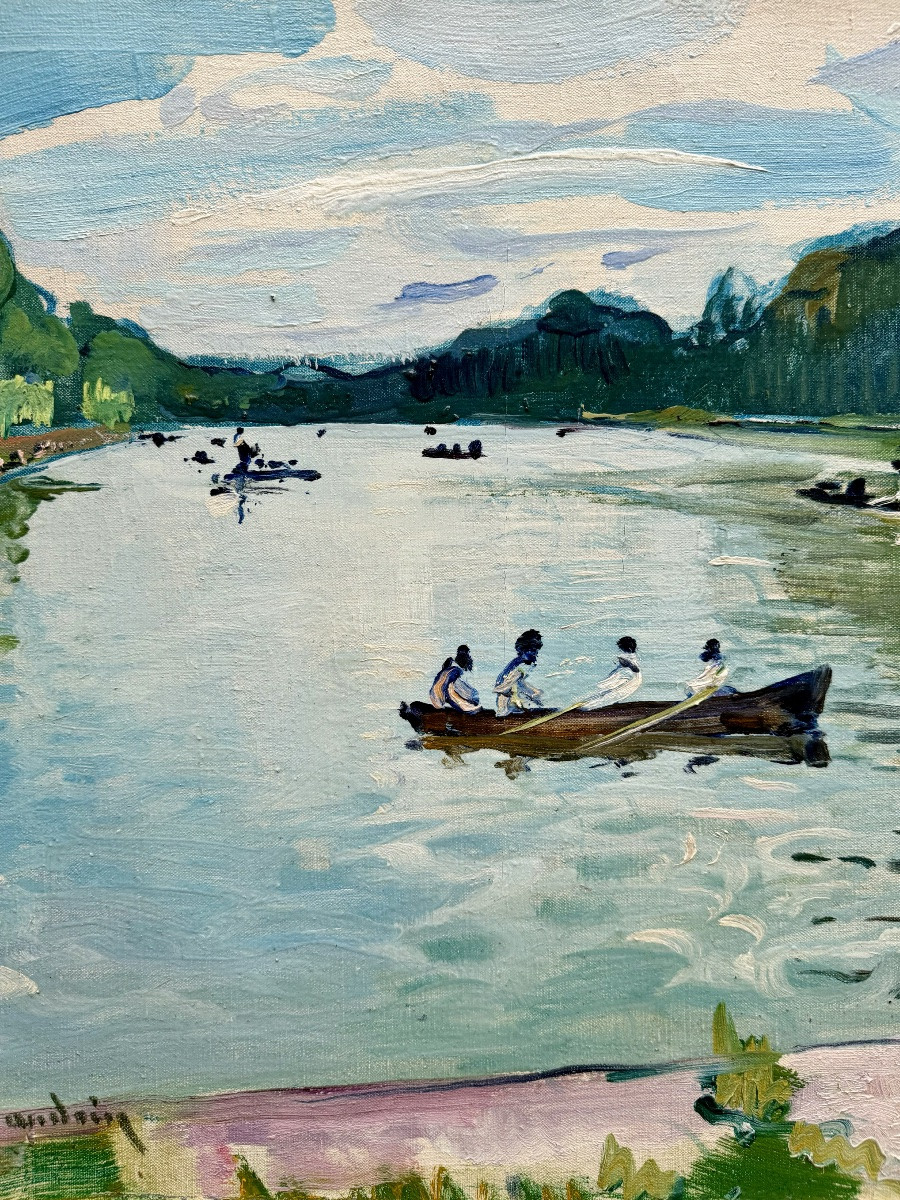
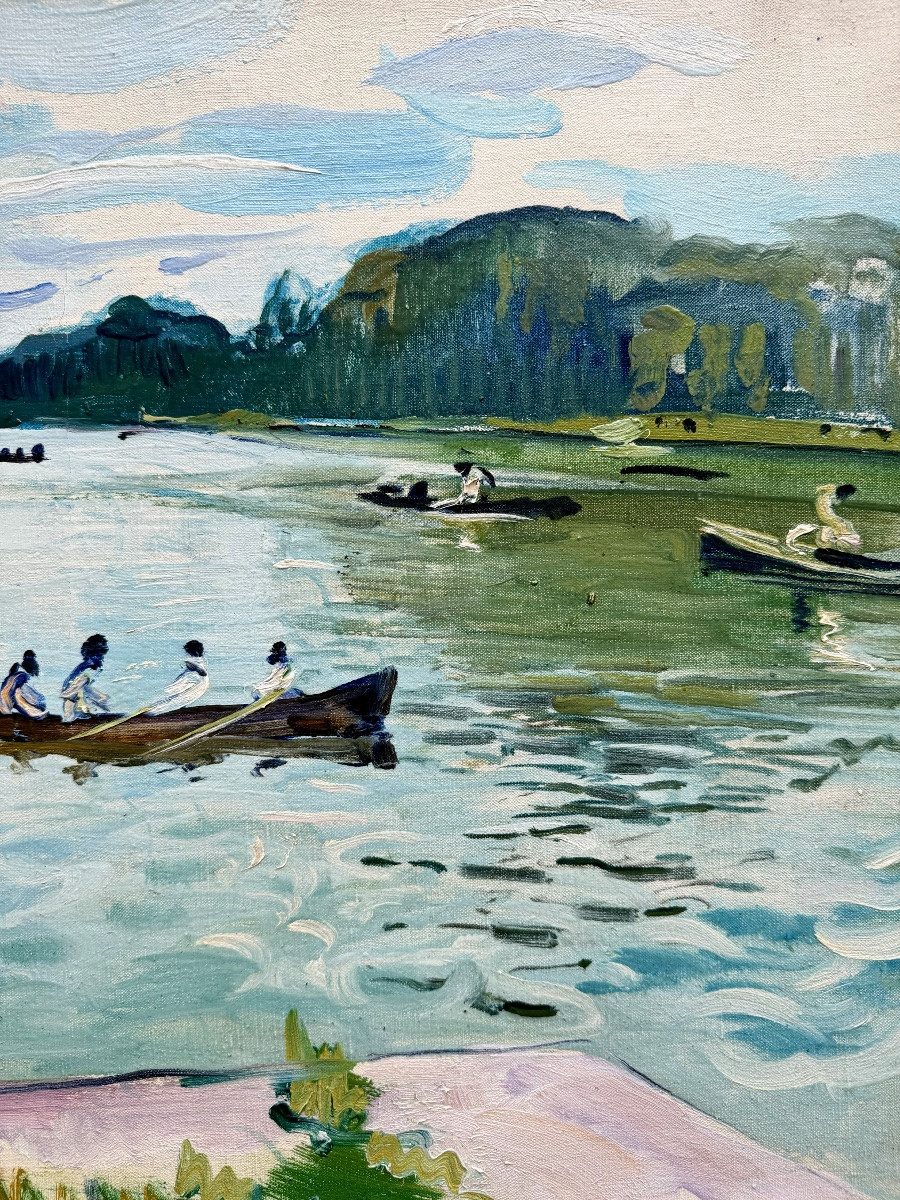
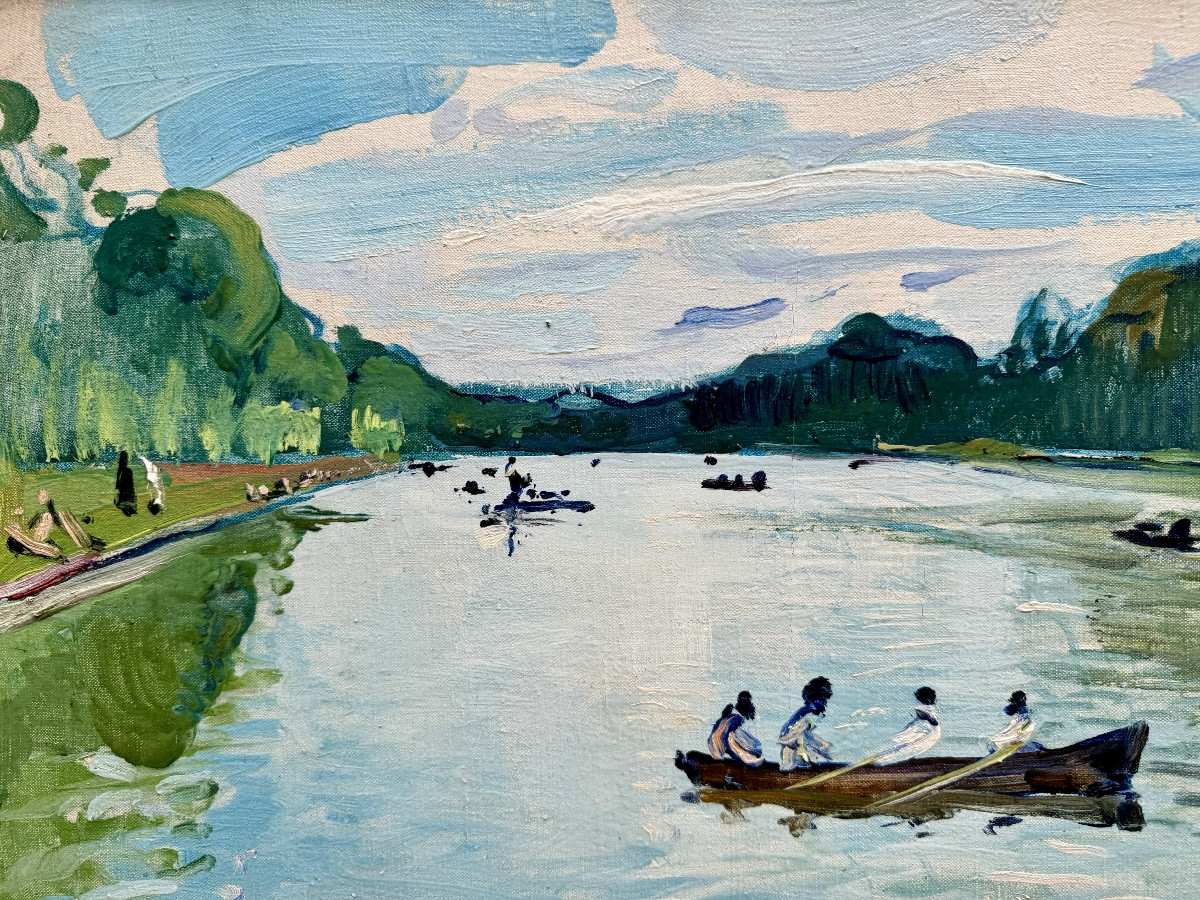
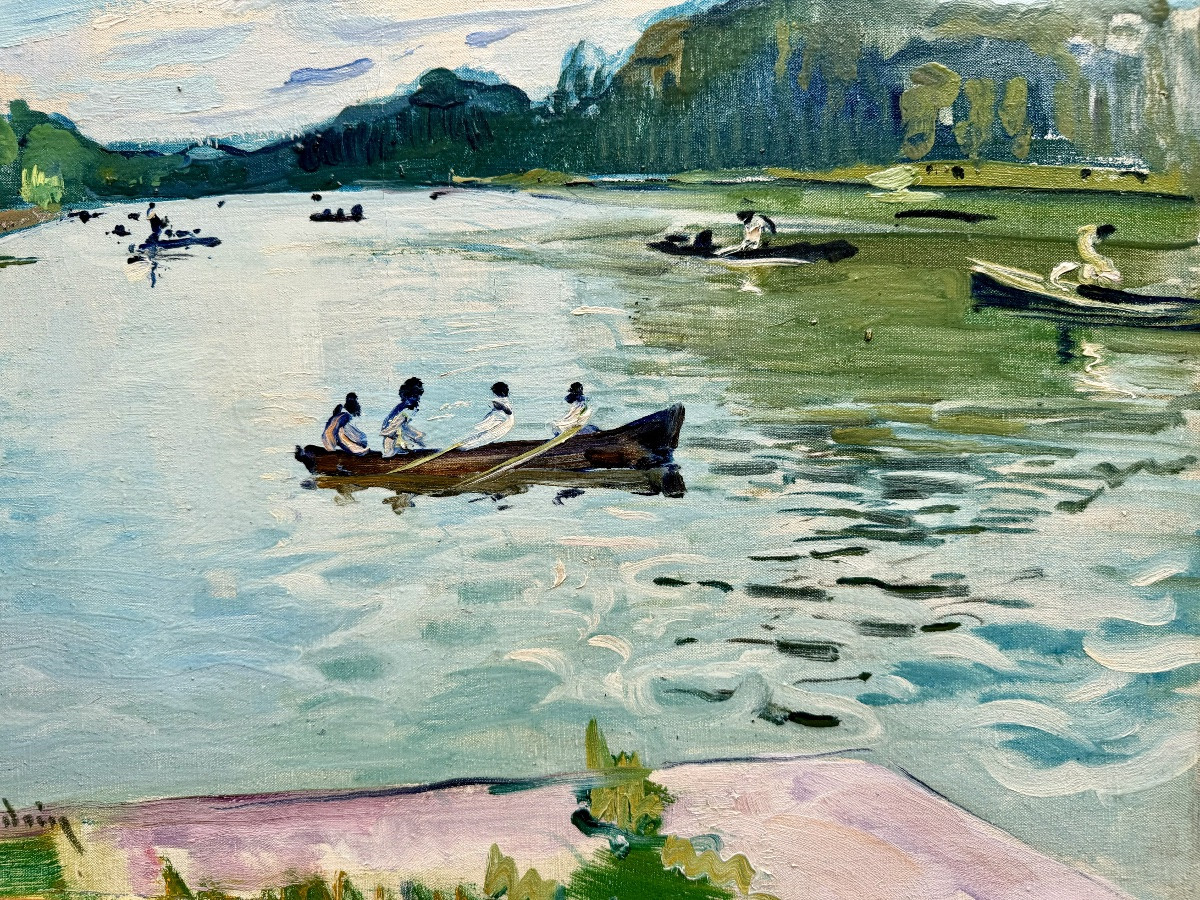
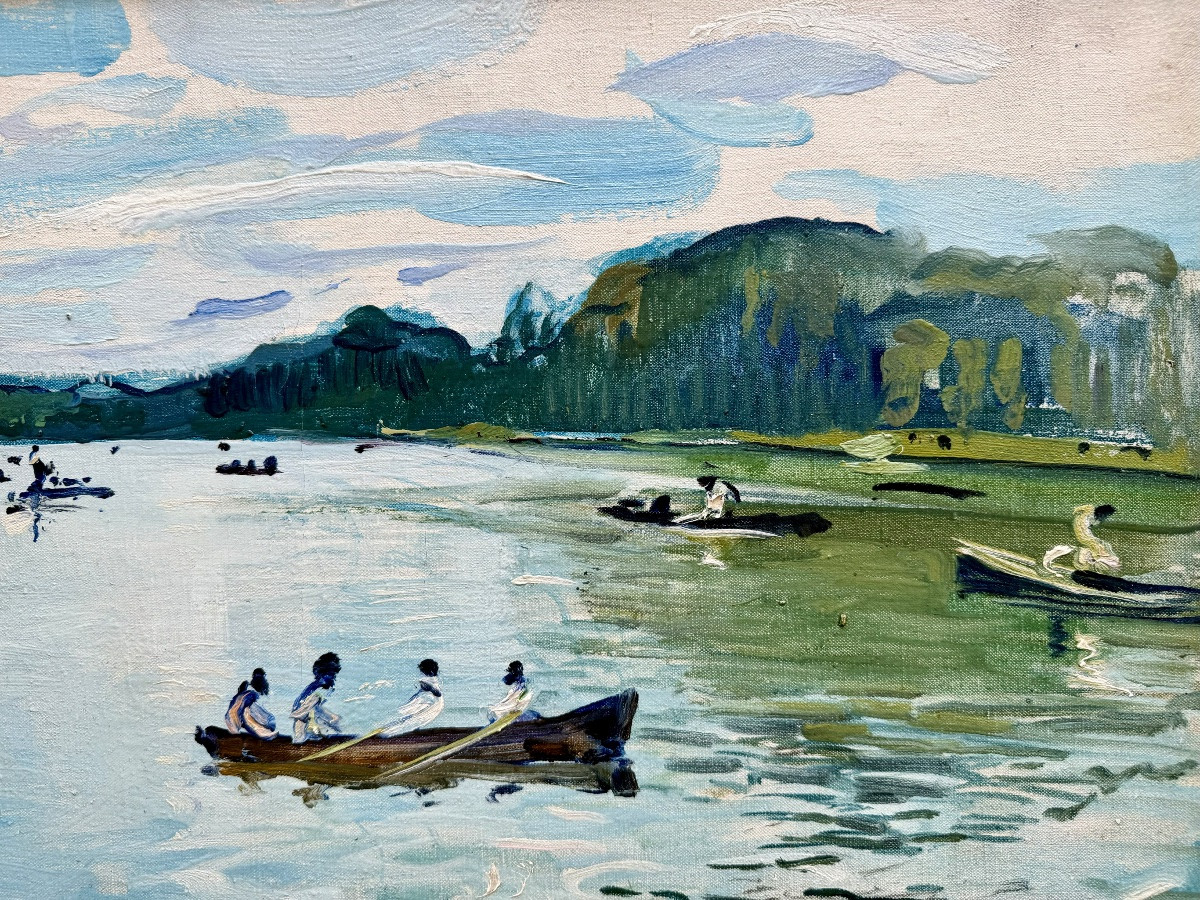
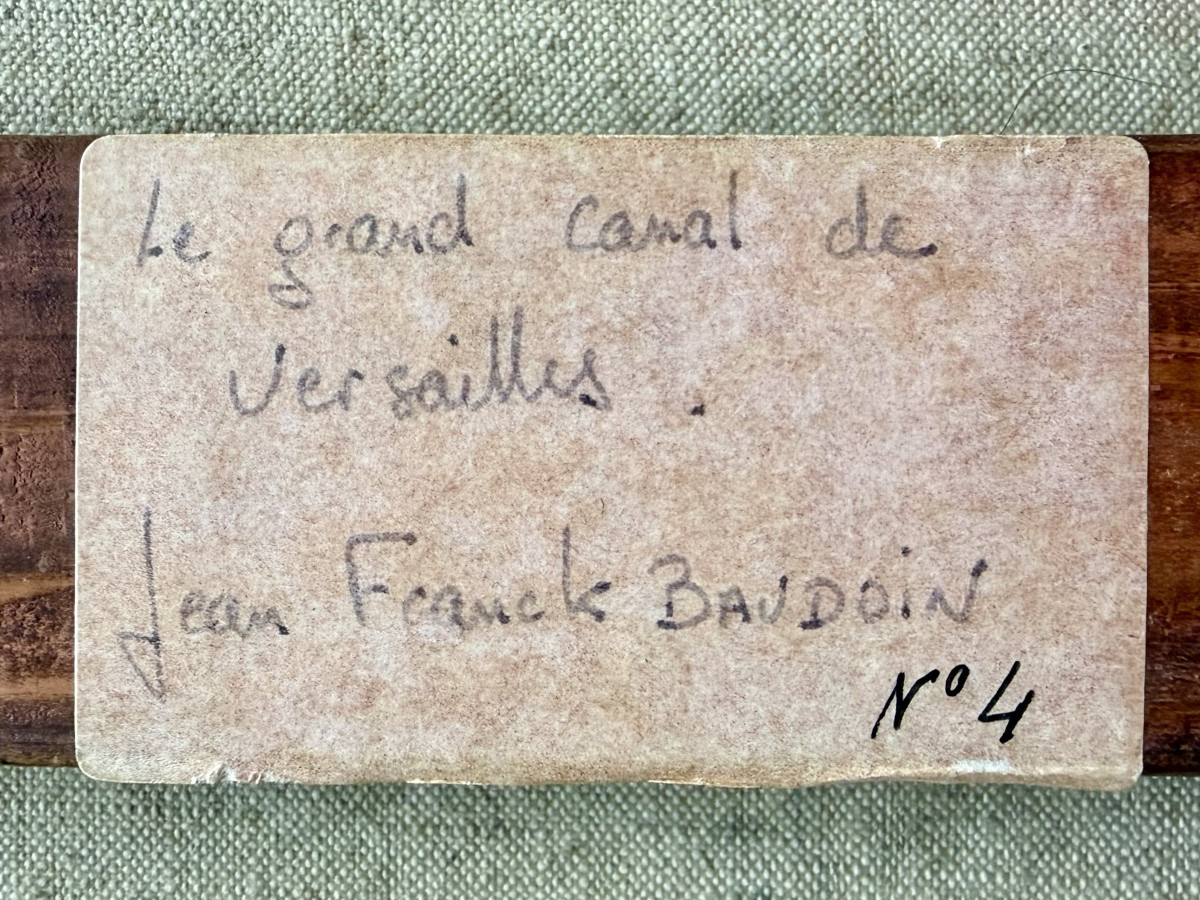
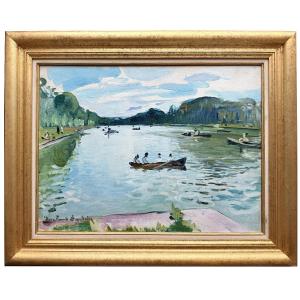


Jean-franck Baudoin (1870 - 1961) - ' Le Grand Canal De Versailles '
Artist: Jean-franck Baudoin, Saint-martin-de-ré 1870 – 1961 Libourne, Peintre Français, Signature : Signé En Bas à Gauche « Jean Franck Baudoin »
Jean-Franck Baudoin
Saint-Martin-de-Ré 1870 – 1961 Libourne
French Painter
'Le Grand Canal de Versailles'
Signature: signed lower left 'Jean Franck Baudoin'
Medium: oil on canvas
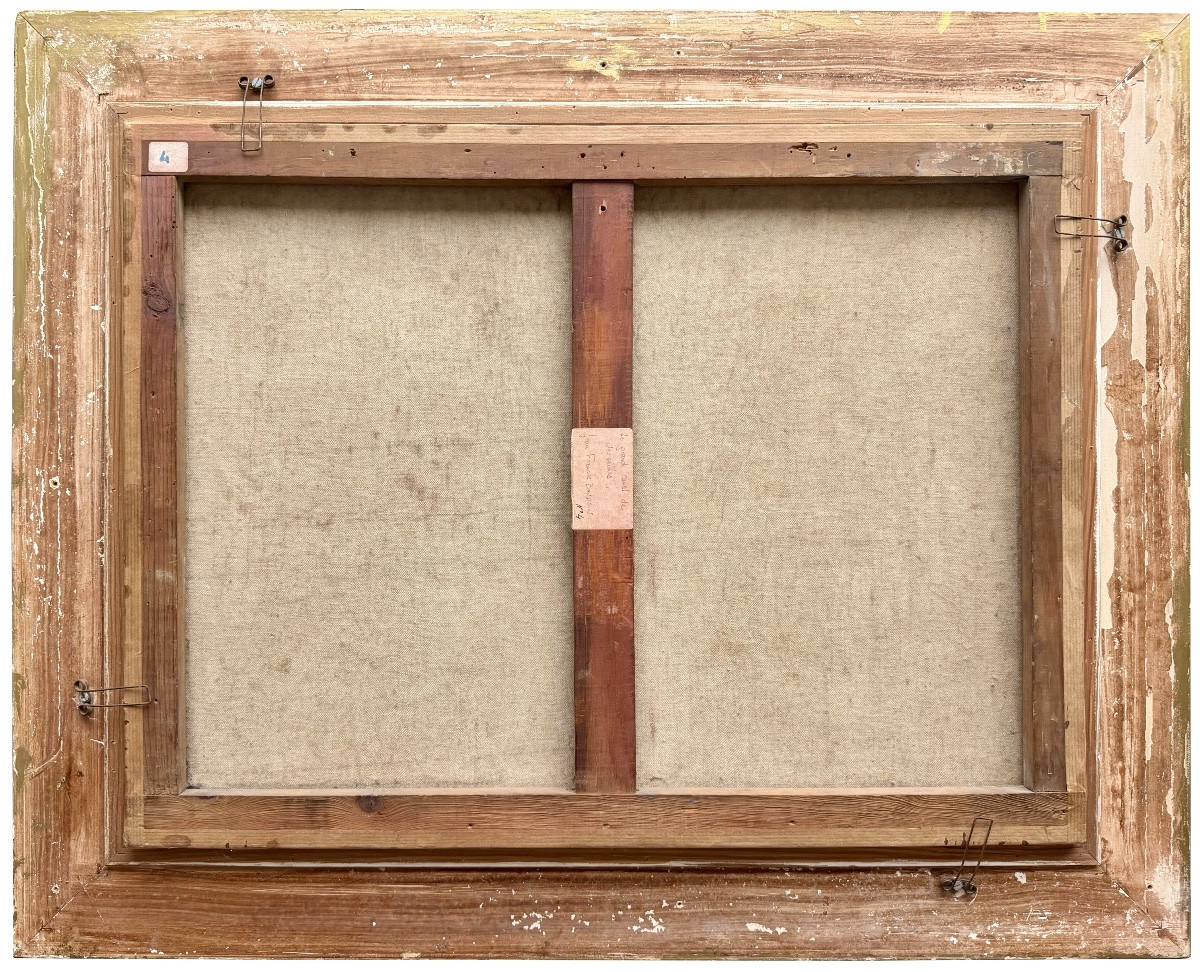
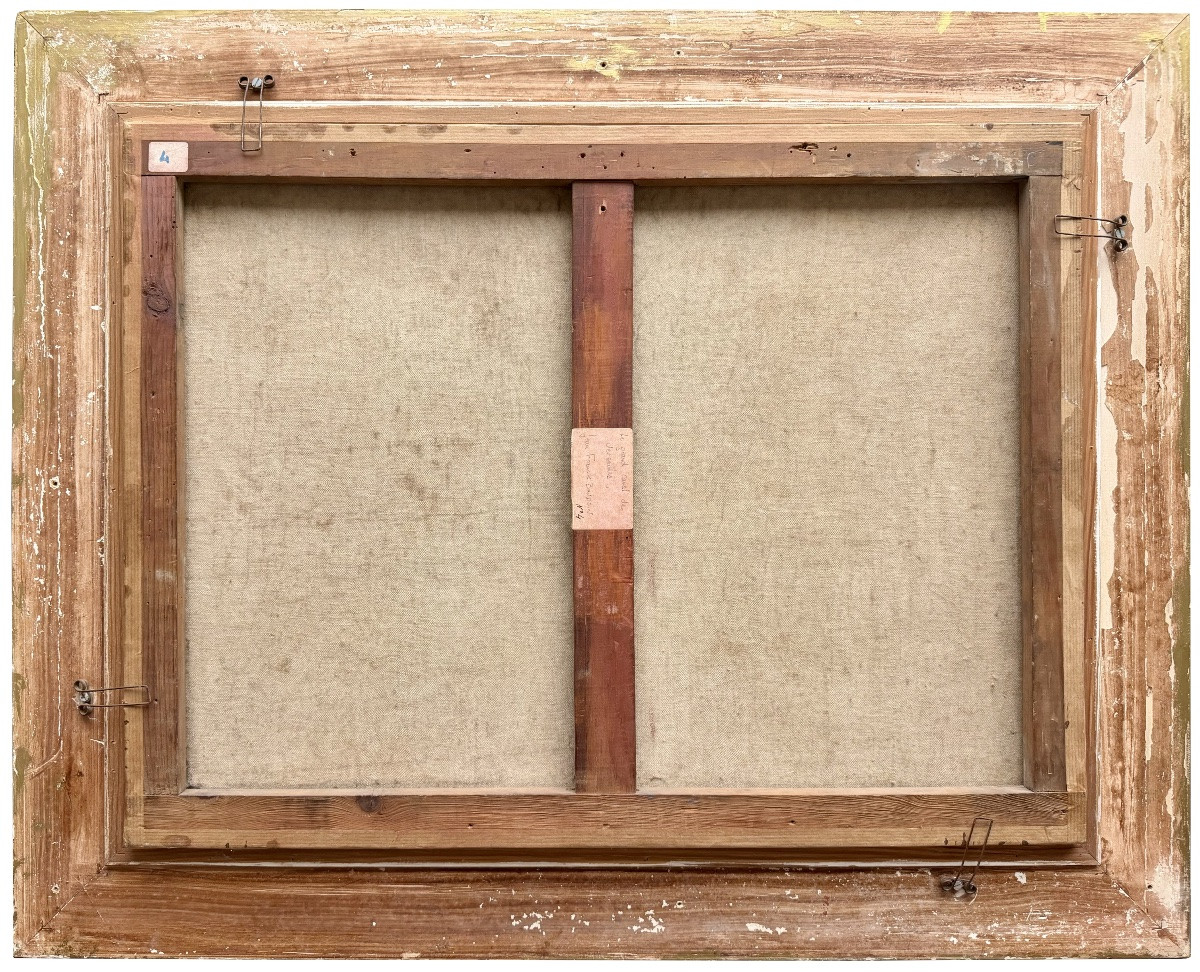
Dimensions: image size 46 x 61 cm, frame size 62 x 77 cm
Biography: Jean-Franck Baudoin was a French painter and wood engraver associated with the Société des Artistes Français, known for his Post-Impressionist style and sensitive treatment of light, colour, and composition.
He was born on 26 August 1870 in Saint-Martin-de-Ré, on the Île de Ré near La Rochelle, into an artistic and Protestant family. His father, a sculptor with a studio in Paris, played an important role in shaping his early artistic environment. During the Franco-Prussian War of 1870, the family left Paris and returned to the island, a place that would later remain deeply significant in Baudoin’s artistic imagination and serve as a recurring source of inspiration.
As a young man, Baudoin was sent to Paris to live with an uncle, where he received formal artistic training. He studied drawing under Truphème and was taught within an academic environment influenced by leading masters of the time, including Rousseau, Bouguereau, Robert-Fleury, Baschet, and Royer. This classical education provided him with a strong technical foundation in draftsmanship and composition.
Early in his career, Baudoin achieved recognition for his work as a wood engraver, receiving awards for his engravings exhibited between 1888 and 1896. He later transitioned towards painting, where he found his true artistic voice. While grounded in academic tradition, his work was profoundly influenced by Impressionist and Post-Impressionist masters such as Monet, Pissarro, Degas, and Van Gogh.
Baudoin developed a distinctive Post-Impressionist style characterized by refined compositions, vibrant yet harmonious colour palettes, and a strong sensitivity to natural and urban light. He is particularly noted for his atmospheric scenes and his ability to capture fleeting visual impressions with clarity and structure.
Throughout his career, he maintained a strong connection to Île de Ré, often painting landscapes and harbour scenes from his birthplace. The island remained both a refuge and an artistic anchor throughout his life.
In 1927, during an exhibition at the Galerie Charpentier in Paris, the French State acquired his painting Le Pont Saint-Michel et Notre-Dame, confirming his recognition at the national level. His work was also included in significant 20th-century Impressionist and Post-Impressionist exhibitions in London, where critics highlighted him as a rediscovered talent of exceptional interest among major French artists of his time.
Jean-Franck Baudoin died on 20 January 1961 in Libourne, Gironde, at the age of 91. Today, he is increasingly recognized as a significant yet long-underappreciated figure of French Post-Impressionism, bridging academic tradition and modern sensibility with remarkable subtlety and poetic insight.
Saint-Martin-de-Ré 1870 – 1961 Libourne
French Painter
'Le Grand Canal de Versailles'
Signature: signed lower left 'Jean Franck Baudoin'
Medium: oil on canvas
Dimensions: image size 46 x 61 cm, frame size 62 x 77 cm
Biography: Jean-Franck Baudoin was a French painter and wood engraver associated with the Société des Artistes Français, known for his Post-Impressionist style and sensitive treatment of light, colour, and composition.
He was born on 26 August 1870 in Saint-Martin-de-Ré, on the Île de Ré near La Rochelle, into an artistic and Protestant family. His father, a sculptor with a studio in Paris, played an important role in shaping his early artistic environment. During the Franco-Prussian War of 1870, the family left Paris and returned to the island, a place that would later remain deeply significant in Baudoin’s artistic imagination and serve as a recurring source of inspiration.
As a young man, Baudoin was sent to Paris to live with an uncle, where he received formal artistic training. He studied drawing under Truphème and was taught within an academic environment influenced by leading masters of the time, including Rousseau, Bouguereau, Robert-Fleury, Baschet, and Royer. This classical education provided him with a strong technical foundation in draftsmanship and composition.
Early in his career, Baudoin achieved recognition for his work as a wood engraver, receiving awards for his engravings exhibited between 1888 and 1896. He later transitioned towards painting, where he found his true artistic voice. While grounded in academic tradition, his work was profoundly influenced by Impressionist and Post-Impressionist masters such as Monet, Pissarro, Degas, and Van Gogh.
Baudoin developed a distinctive Post-Impressionist style characterized by refined compositions, vibrant yet harmonious colour palettes, and a strong sensitivity to natural and urban light. He is particularly noted for his atmospheric scenes and his ability to capture fleeting visual impressions with clarity and structure.
Throughout his career, he maintained a strong connection to Île de Ré, often painting landscapes and harbour scenes from his birthplace. The island remained both a refuge and an artistic anchor throughout his life.
In 1927, during an exhibition at the Galerie Charpentier in Paris, the French State acquired his painting Le Pont Saint-Michel et Notre-Dame, confirming his recognition at the national level. His work was also included in significant 20th-century Impressionist and Post-Impressionist exhibitions in London, where critics highlighted him as a rediscovered talent of exceptional interest among major French artists of his time.
Jean-Franck Baudoin died on 20 January 1961 in Libourne, Gironde, at the age of 91. Today, he is increasingly recognized as a significant yet long-underappreciated figure of French Post-Impressionism, bridging academic tradition and modern sensibility with remarkable subtlety and poetic insight.
6 400 €
Period: 20th century
Style: Other Style
Condition: Excellent condition
Material: Oil painting
Width: 77 cm
Height: 62 cm
Depth: 5 cm
Reference (ID): 1767008
Availability: In stock
Print