THIS OBJECT WAS SOLD
Prométhée Bound, Oil On Canvas, Late 18th Century
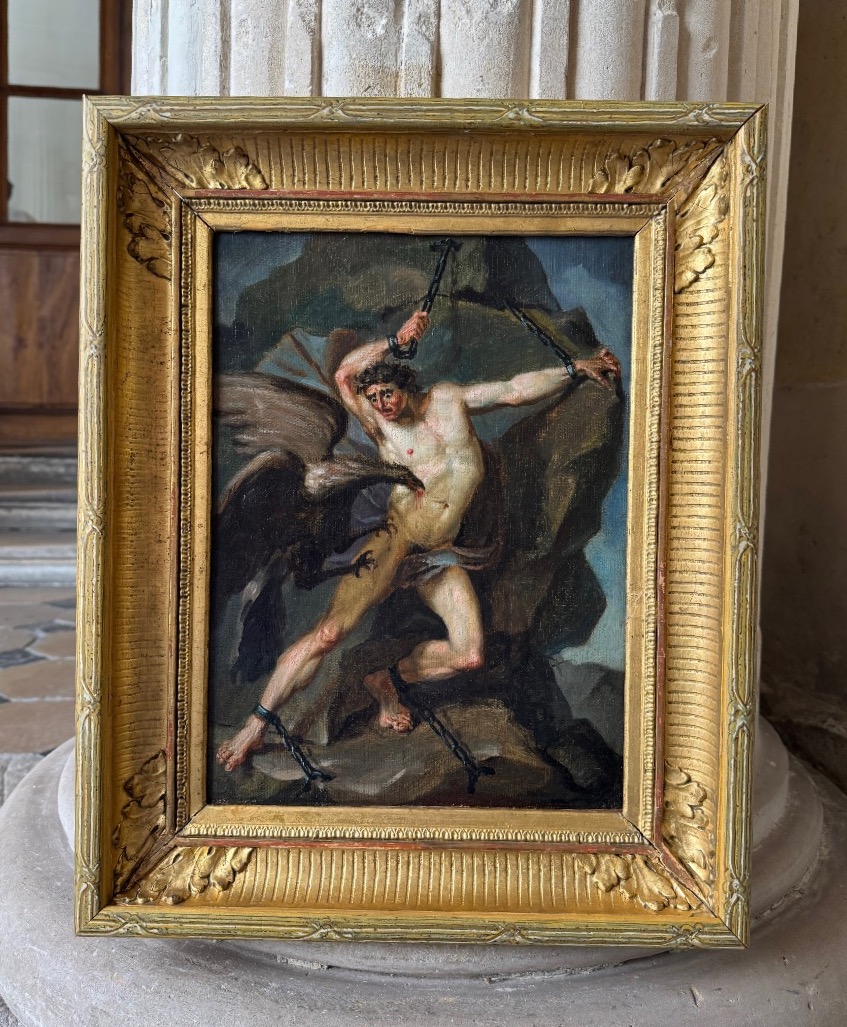
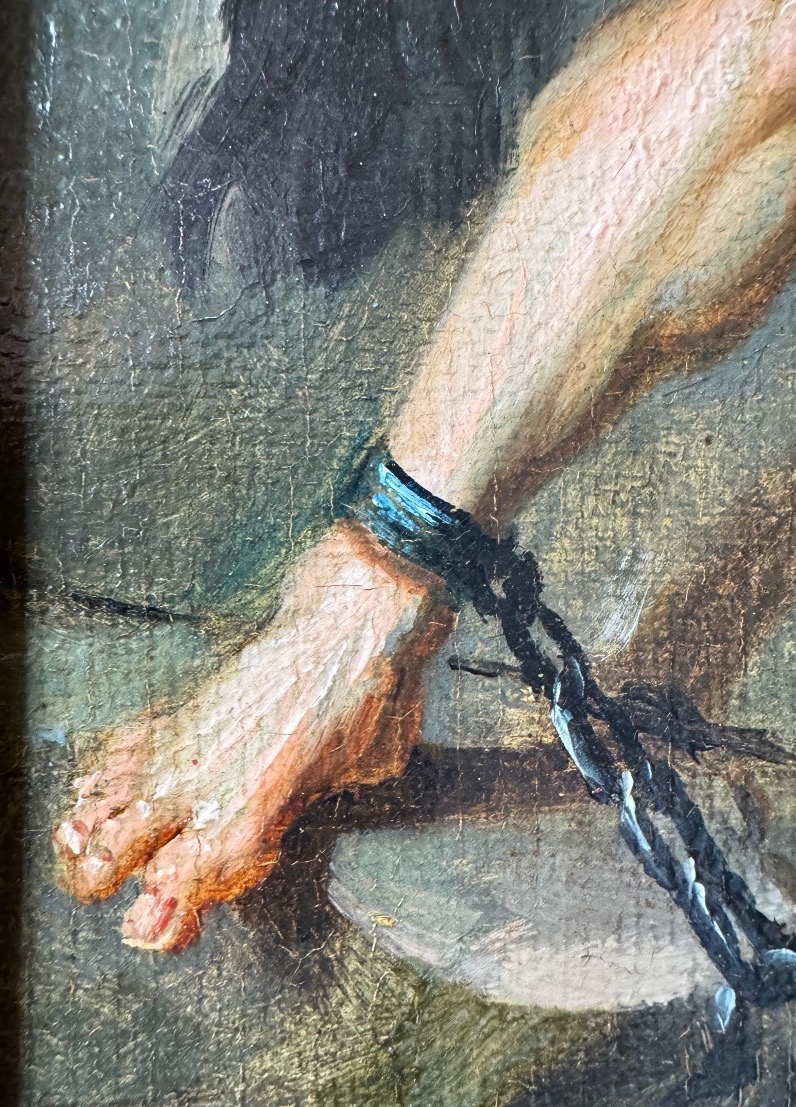
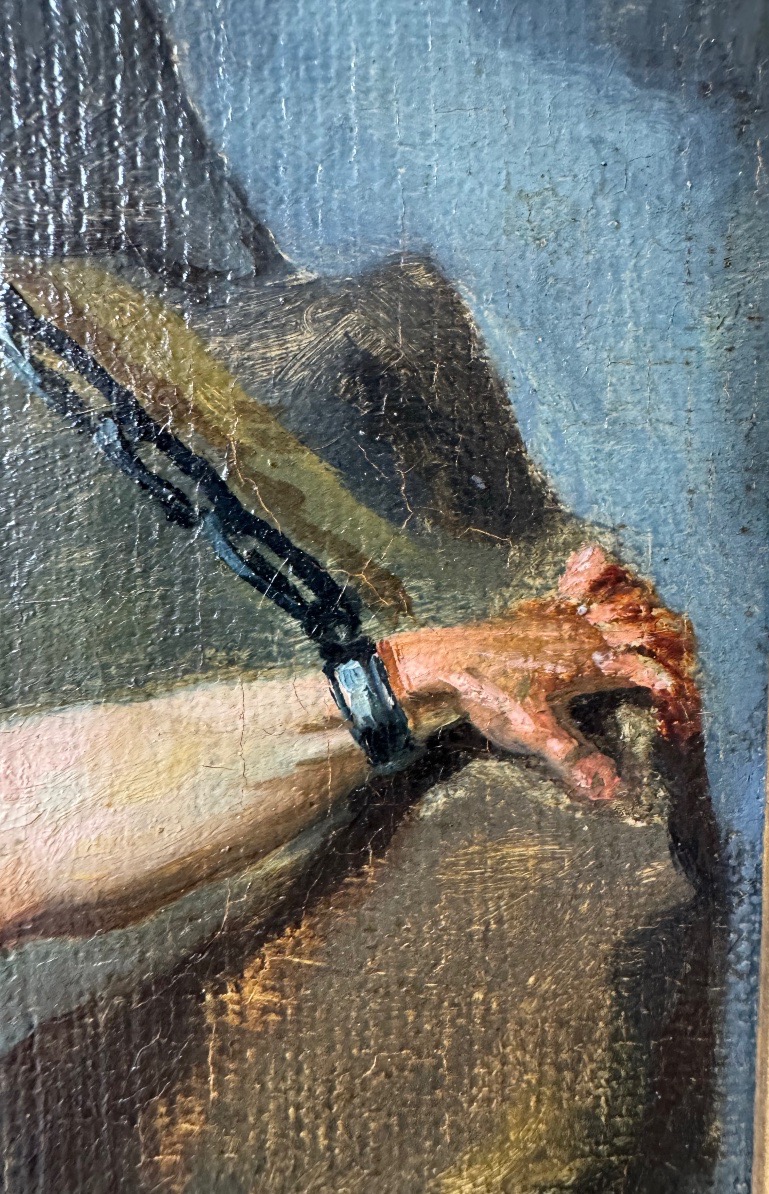
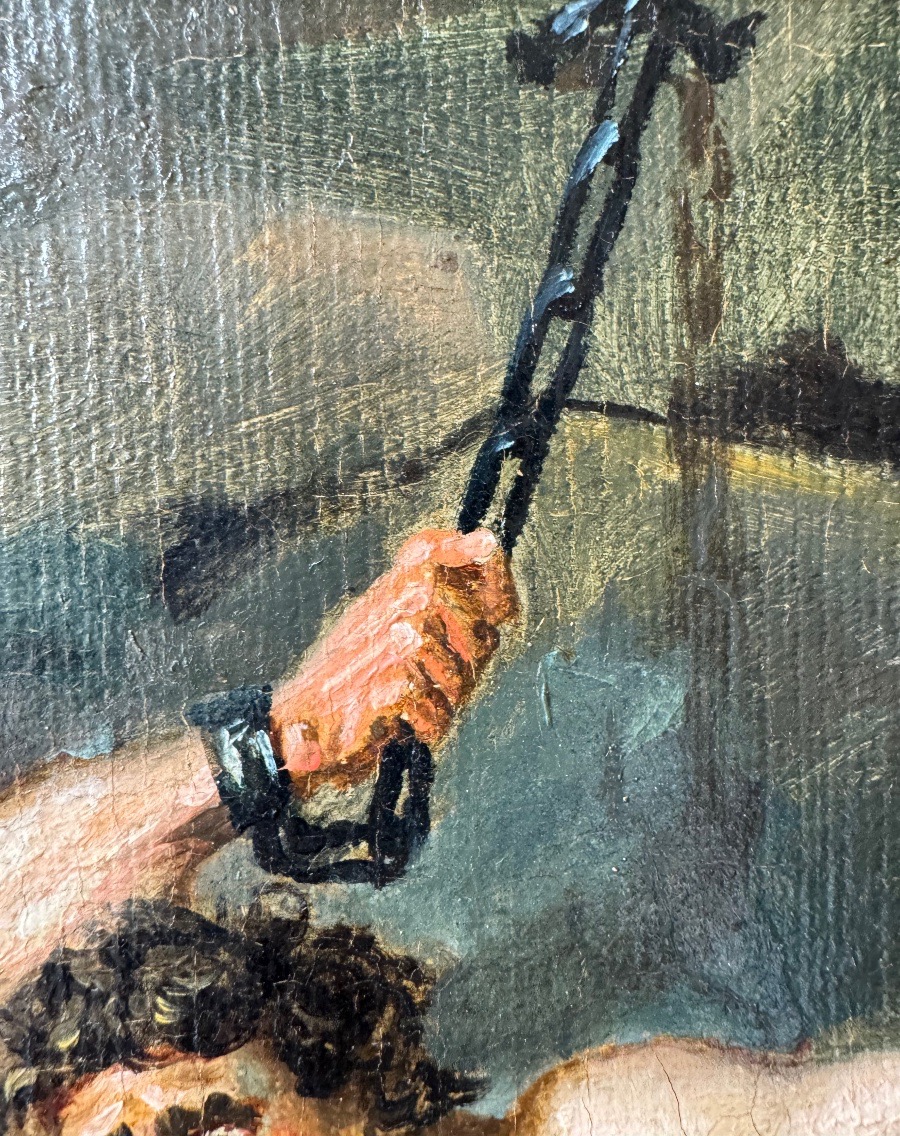
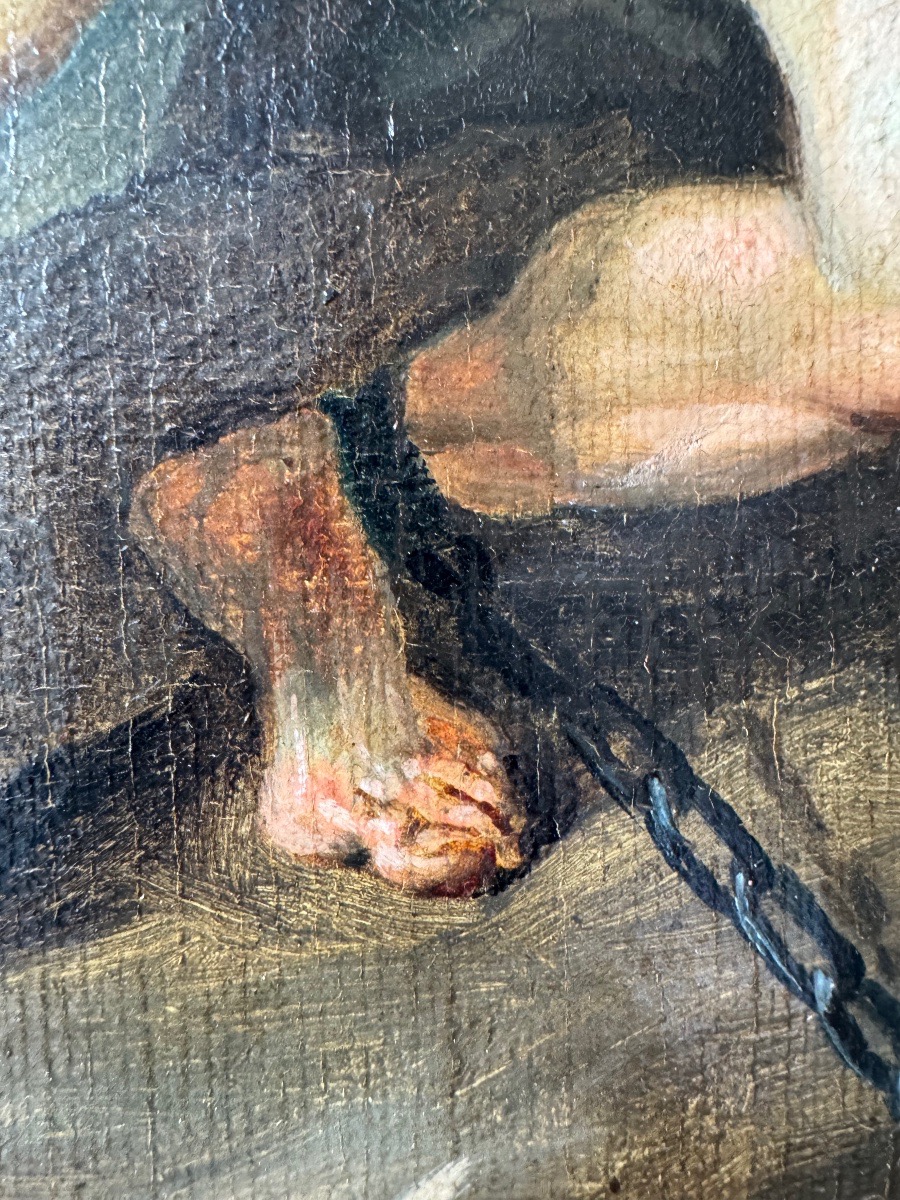
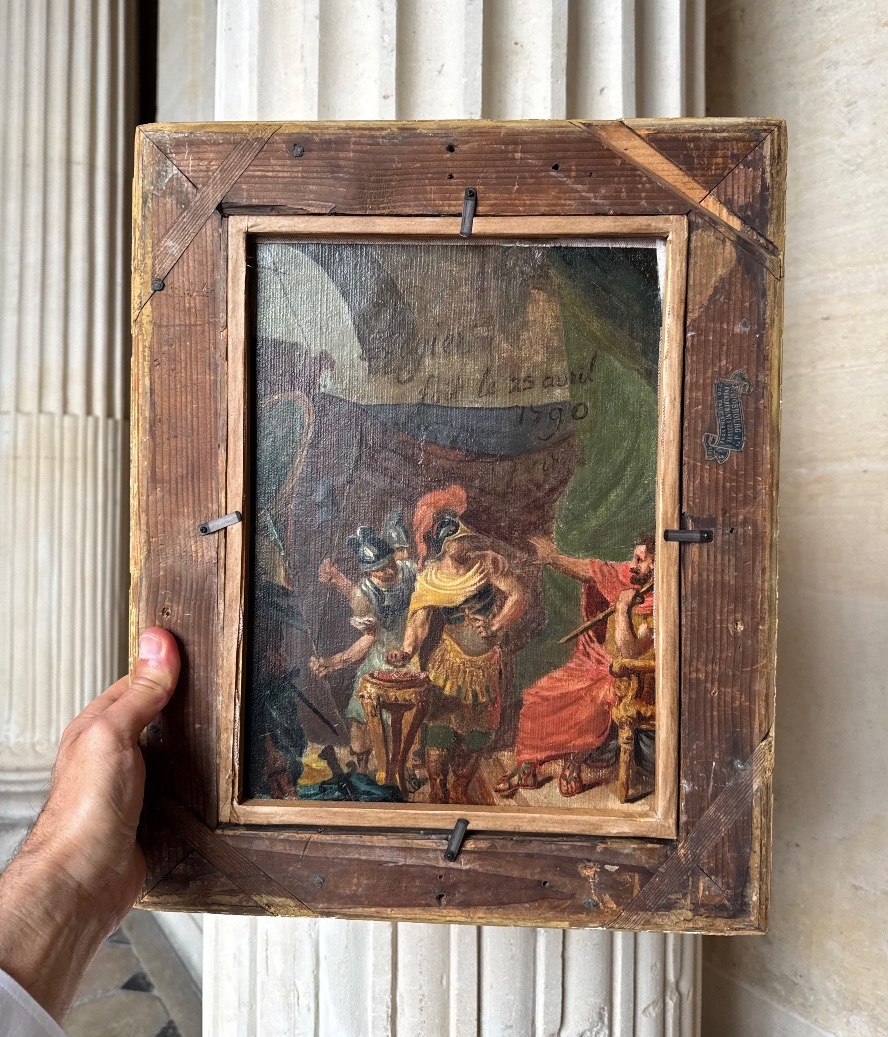
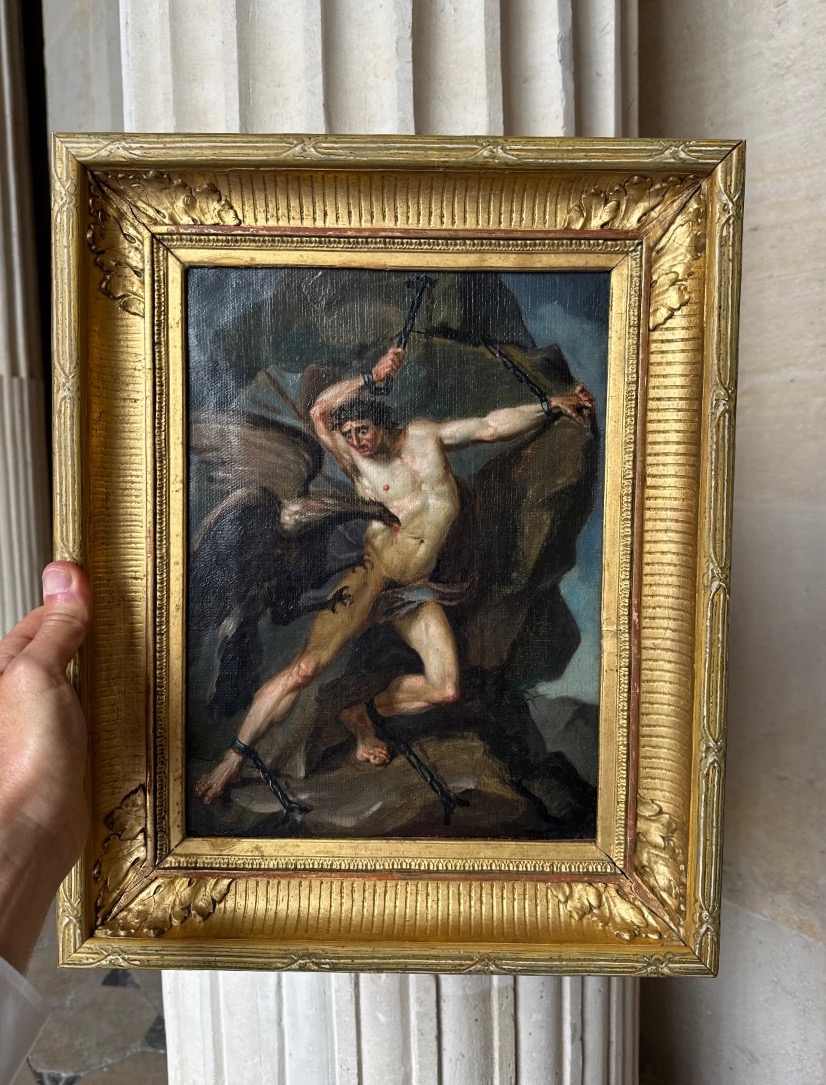
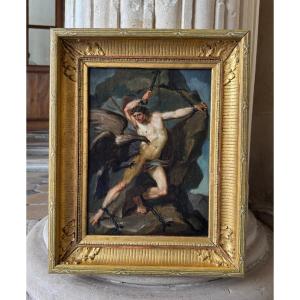


Prometheus Bound, oil on canvas, late 18th century.
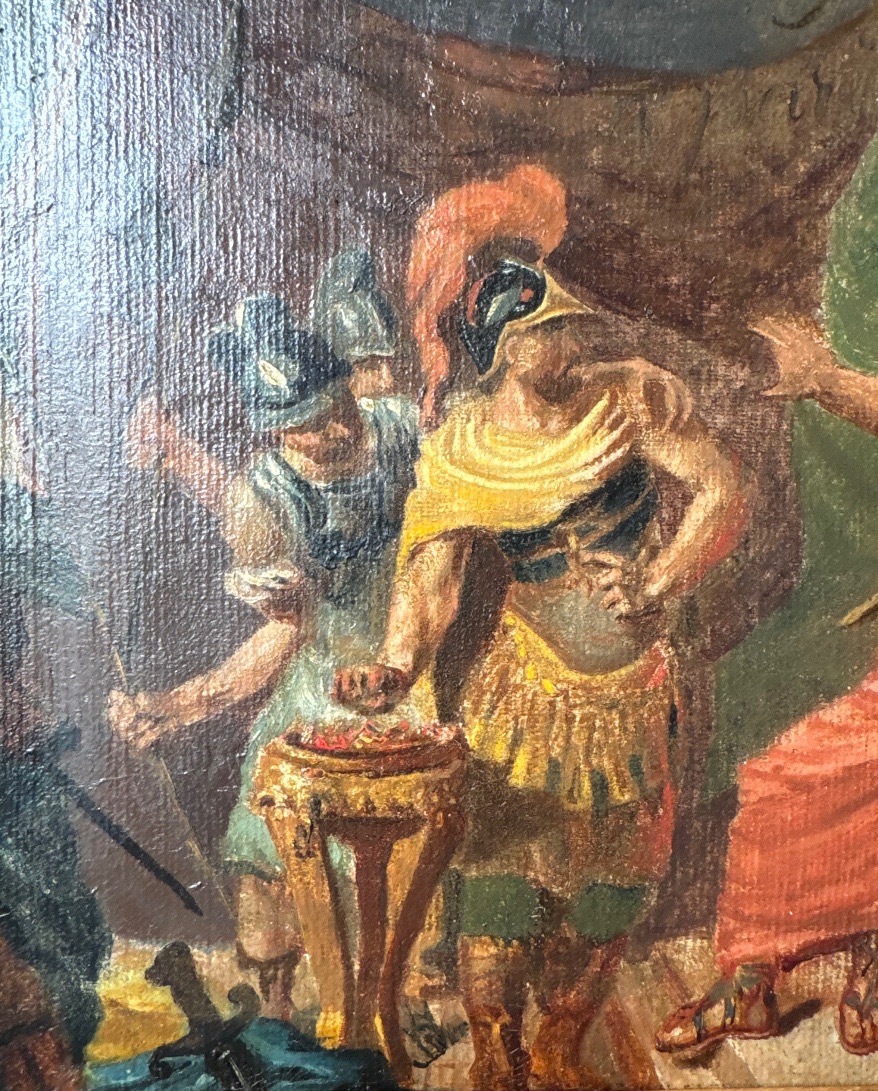
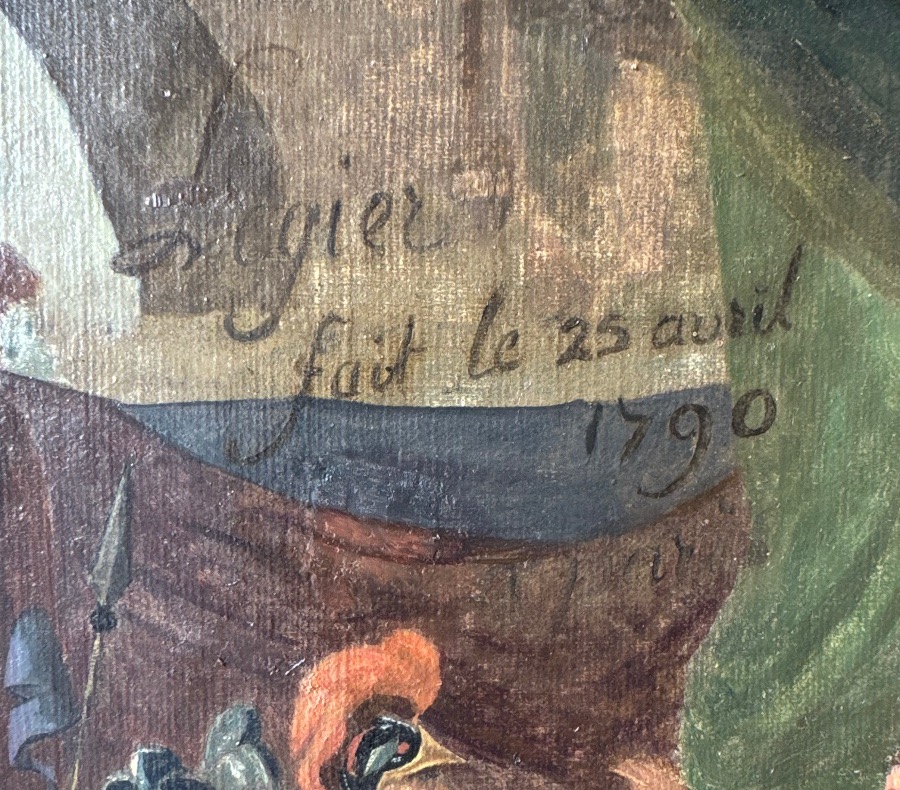
On the reverse is a sketch dated 25 April 1790, depicting a subject from Roman history: Mucius Scaevola Defying the Etruscan King PorsennaVery good condition
Later frame.
Dimensions including frame: 46 × 37 cm.
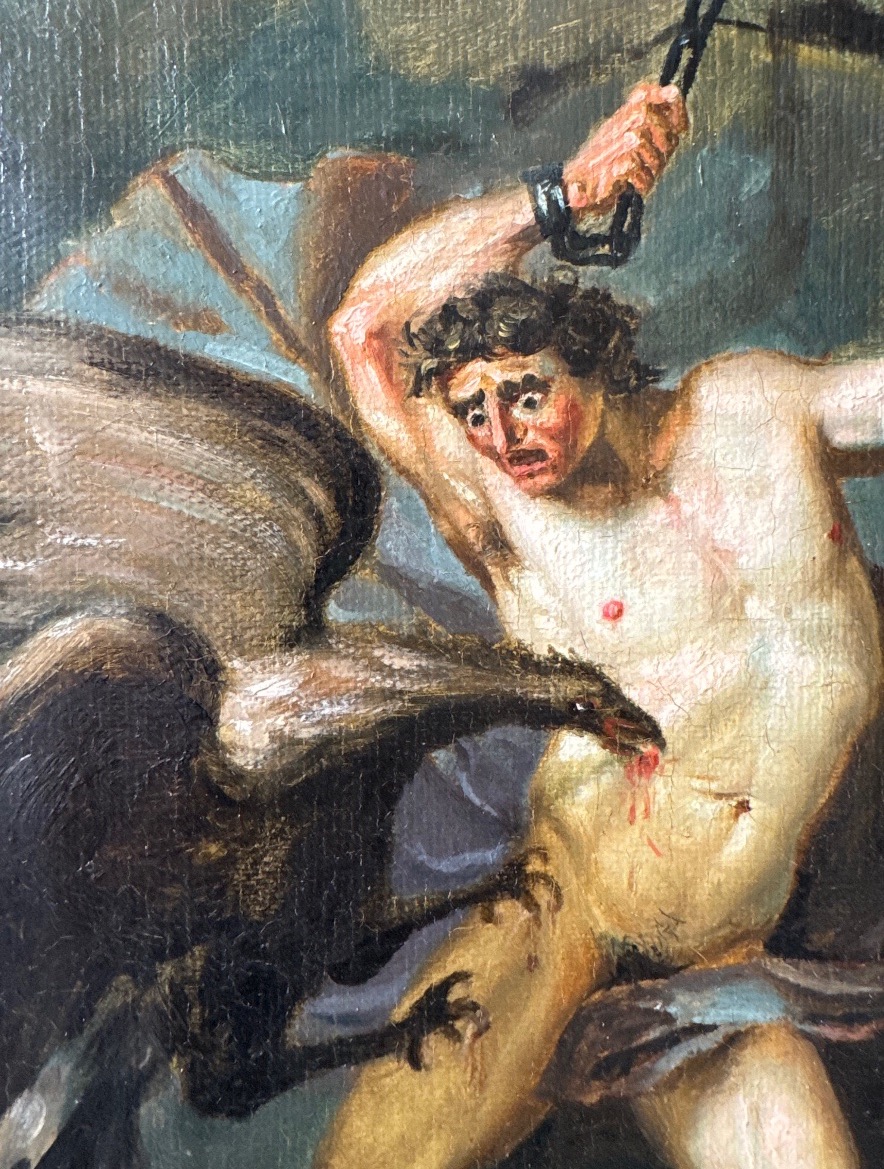
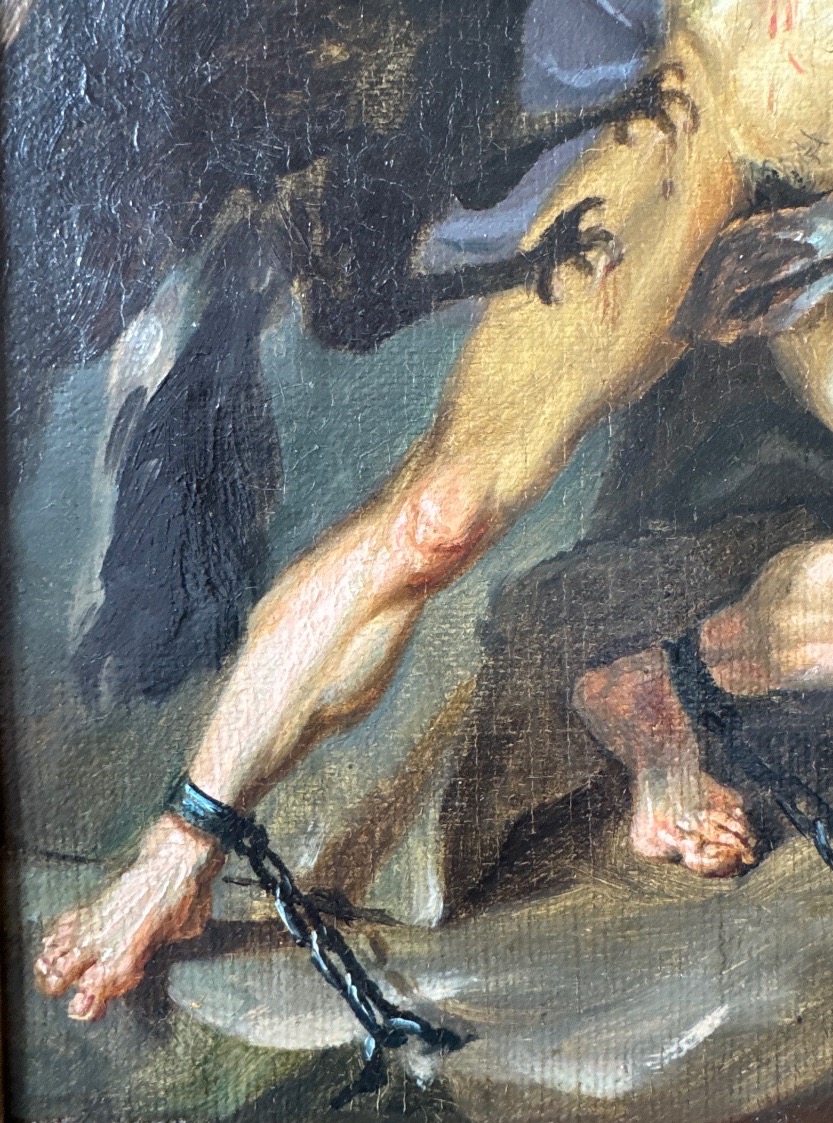
This painting depicts the punishment of Prometheus, one of the most significant figures in Greek mythology. Having stolen the sacred fire from the gods to give it to mankind, the Titan was condemned by Zeus to be chained to a rock, where an eagle came each day to devour his liver in an eternal torment.
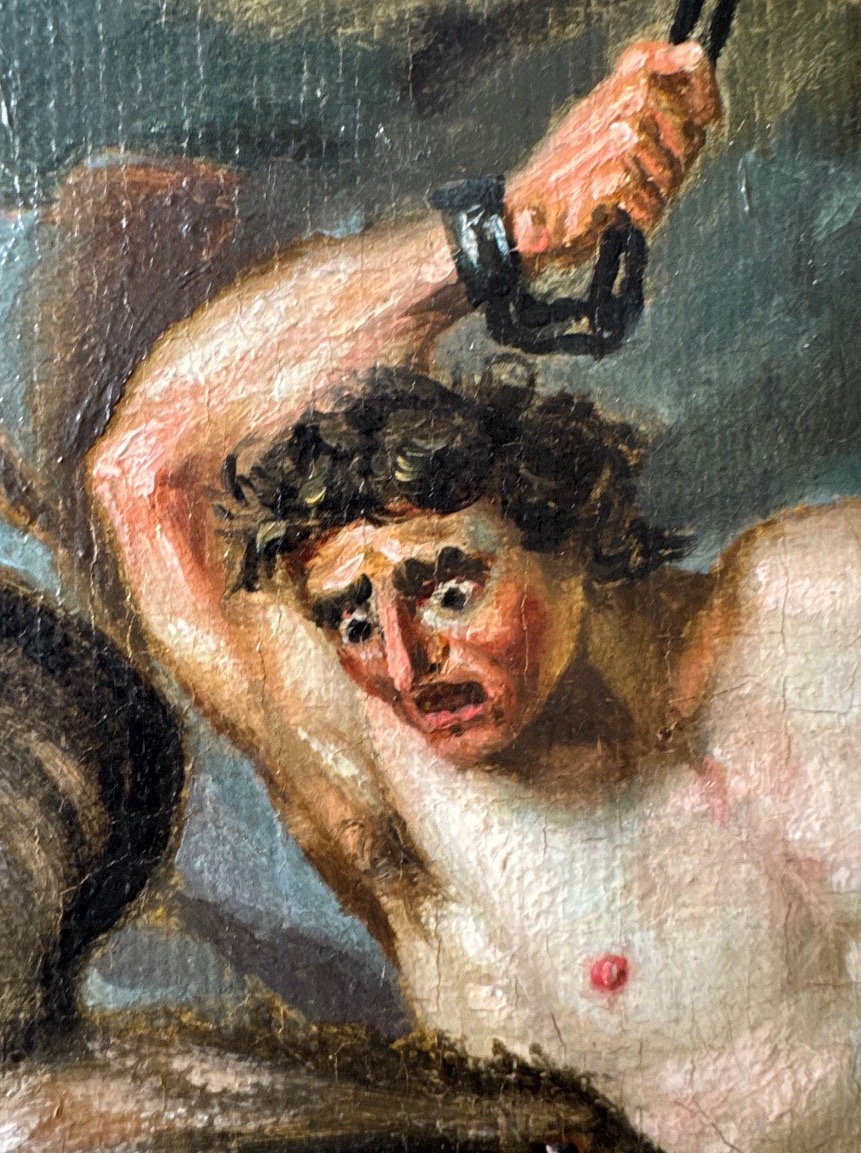
The composition shows Prometheus bound with heavy chains at his wrists and ankles while the bird of prey swoops down upon him with violence. The hero’s tortured body, the tension of his limbs, and the intensity of his expression convey the full tragic dimension of the subject. The dramatic contrasts of light, the vigor of the drawing, and the theatrical staging—expressed particularly in the hero’s haunted, almost hallucinatory face, which is not without recalling the work of Goya—are firmly rooted in the Baroque aesthetic, where mythological subjects served to exalt human passions.
The energetic treatment of the flesh, the expressive power of the figure, and the theatricality of the scene evoke the great mythological compositions developed in Northern Europe and Italy during the 17th and 18th centuries. The subject of Prometheus, a symbol of knowledge, sacrifice, and defiance against established authority, enjoyed particular popularity among enlightened collectors of the period.
The reverse also features a second scene from antiquity, showing several figures gathered around a brazier. This appears to represent Mucius Scaevola Defying the Etruscan King Porsenna, a historical episode frequently depicted during the 17th and 18th centuries. According to research conducted by one of our readers, the artist may possibly be identified as a certain Légier, a student of the Royal Academy of Painting and Sculpture who received a third-class quarterly medal for a figure drawing on 26 June 1790 (Procès-verbaux de l’Académie, vol. 10, pp. 65–66). He was still studying drawing at the École des Beaux-Arts under the sculptor Berruer in 1794 (Procès-verbaux de l’Académie, vol. 9, p. 259).
This composition, dated 25 April 1790, provides valuable insight into the subjects explored by the artist and reflects the intellectual and artistic concerns of the period. The date places the work within the turbulent years of the French Revolution, a time when themes drawn from classical antiquity and the heroic virtues of mythology experienced a remarkable revival among artists and collectors alike.
Explore similar pieces and discover your ideal find:
Other Paintings