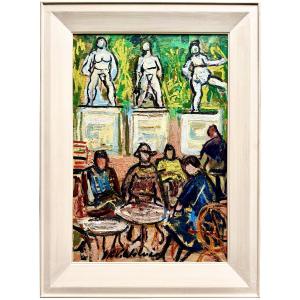
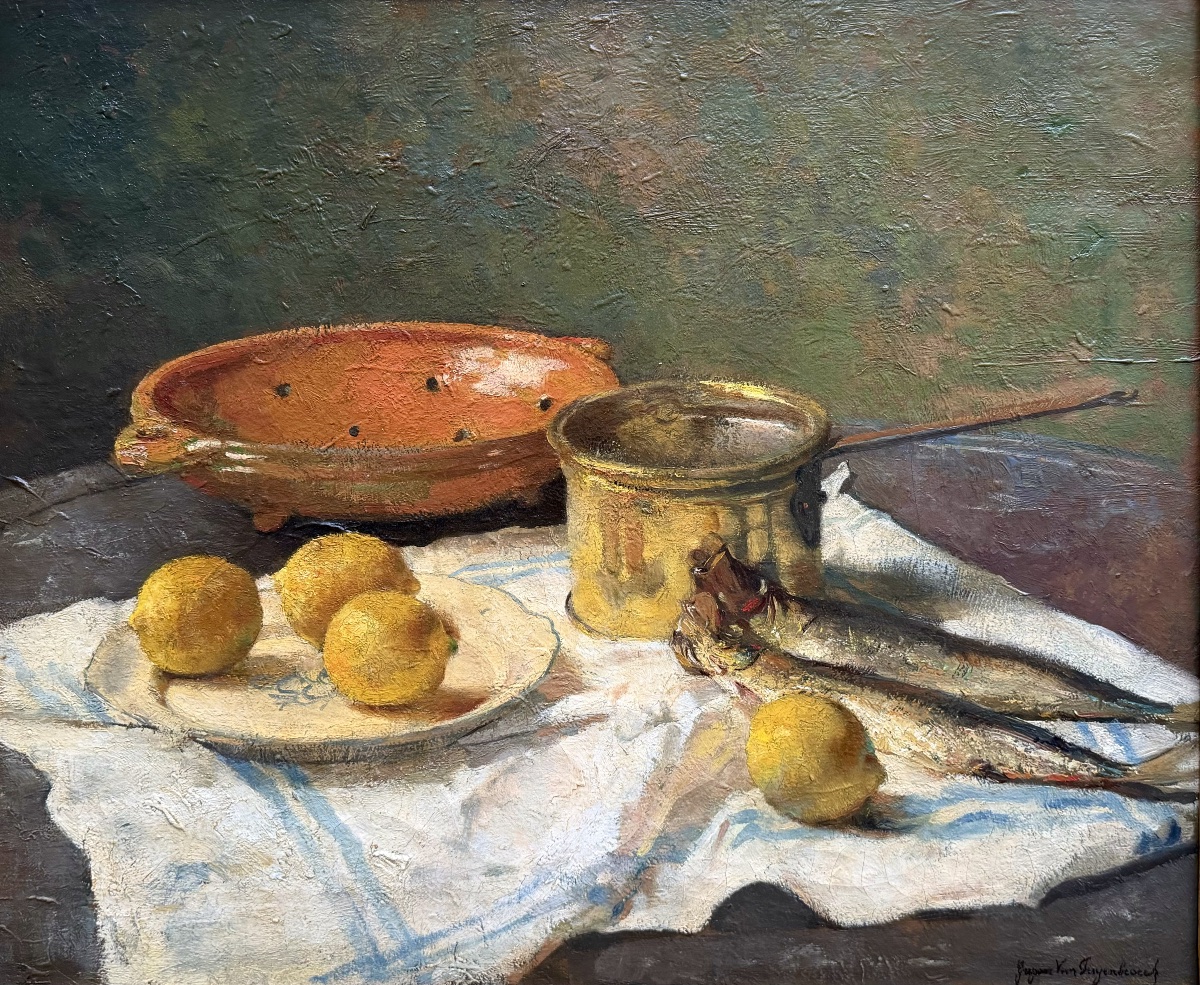
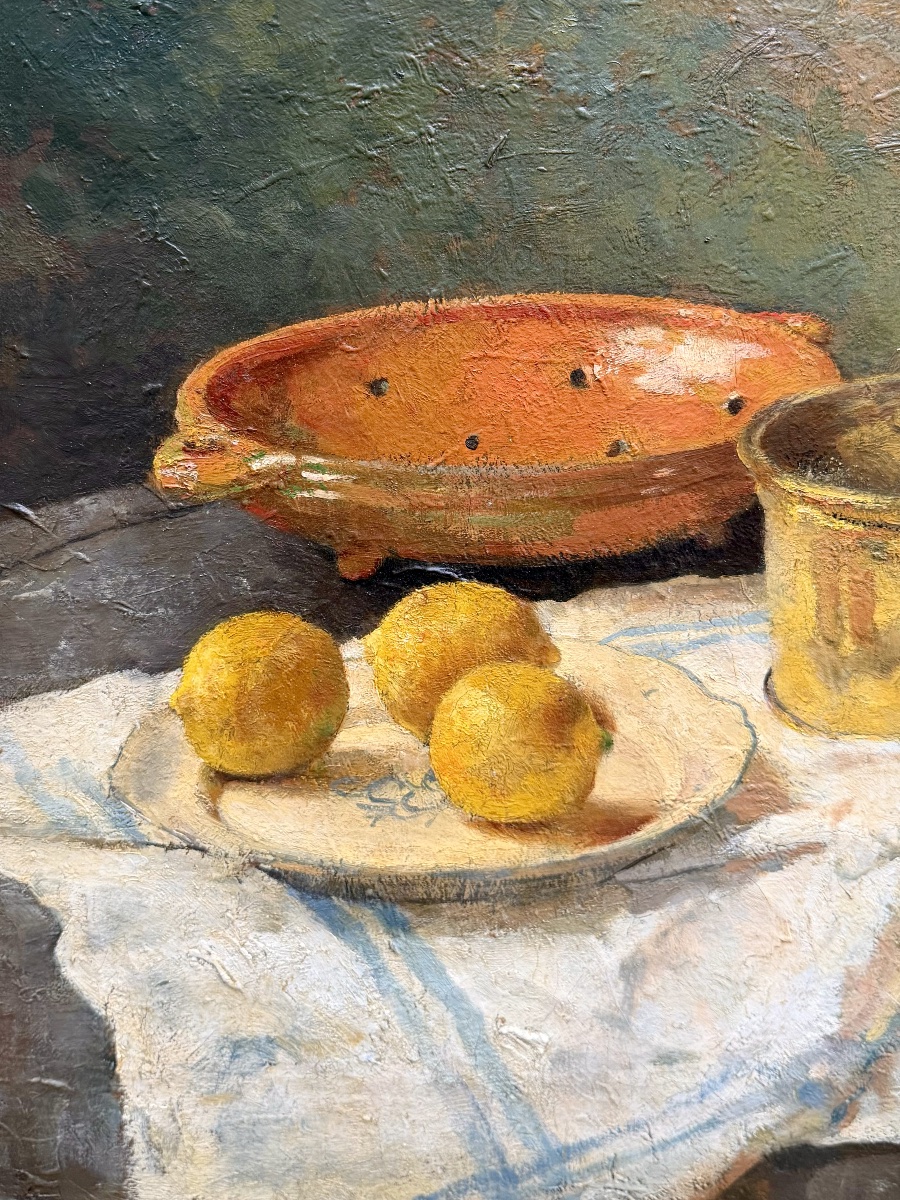
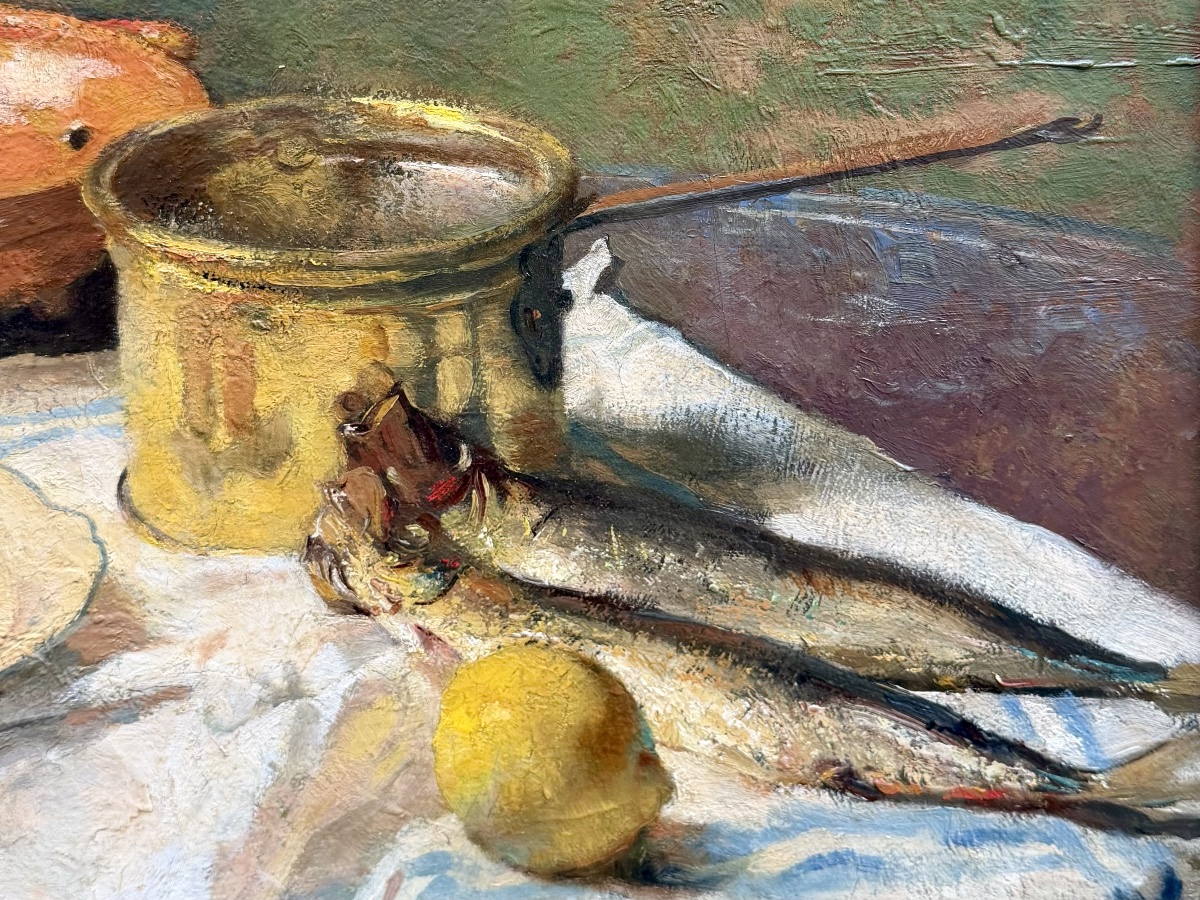
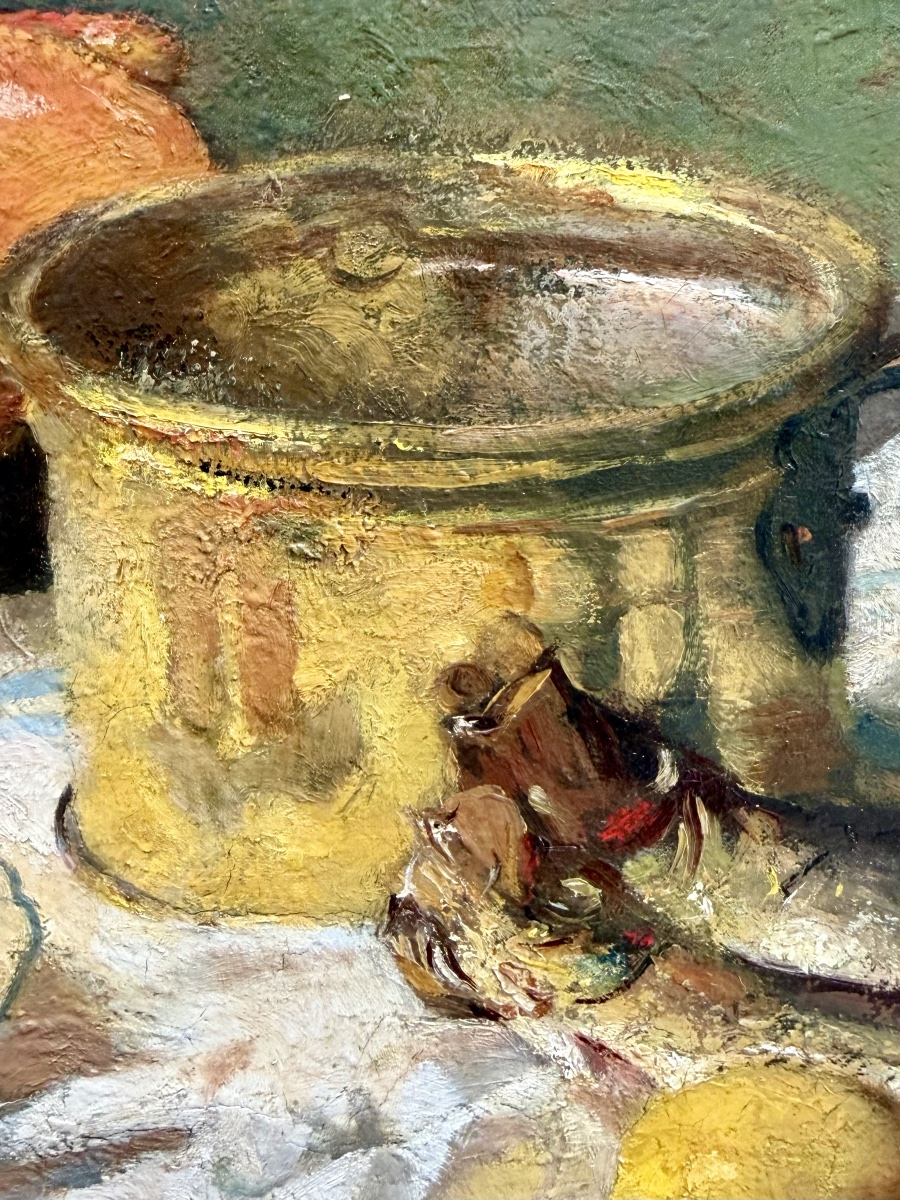
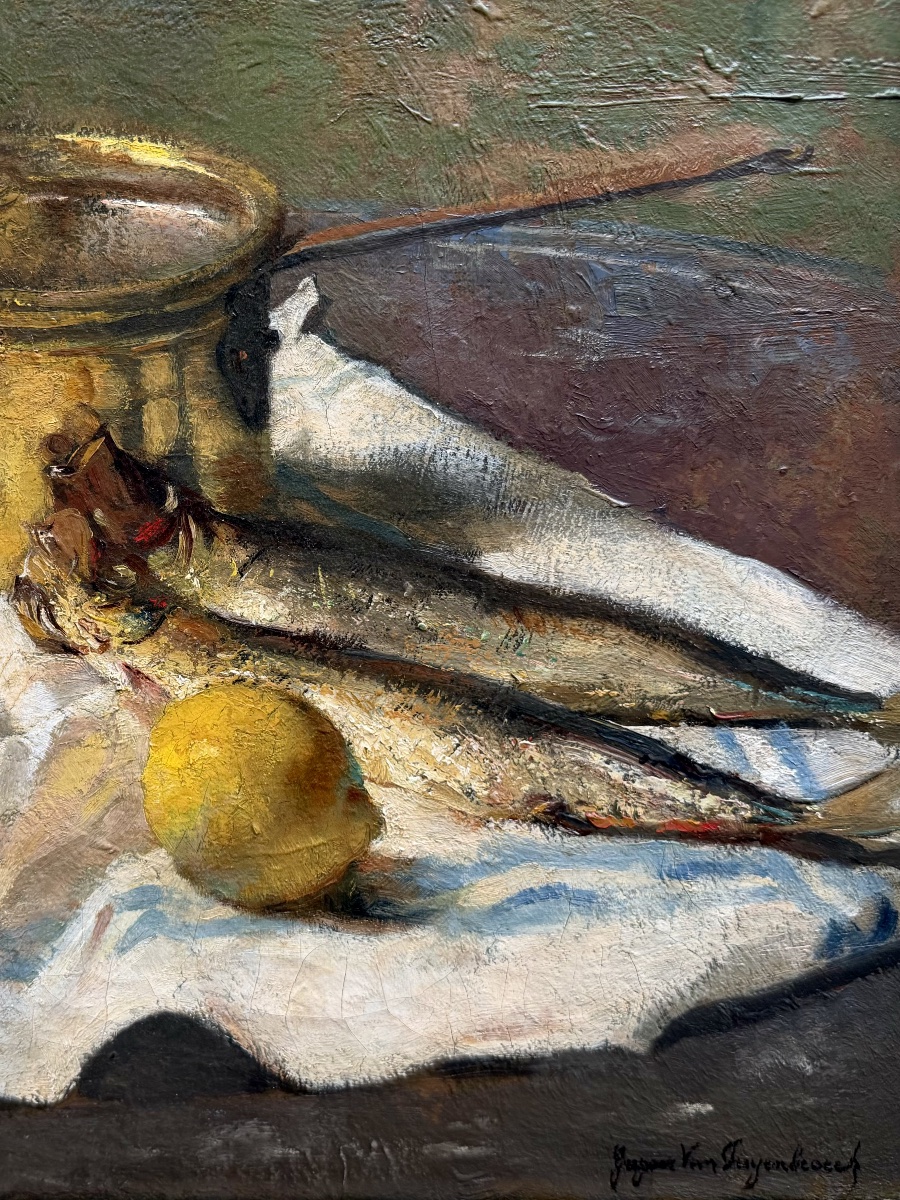
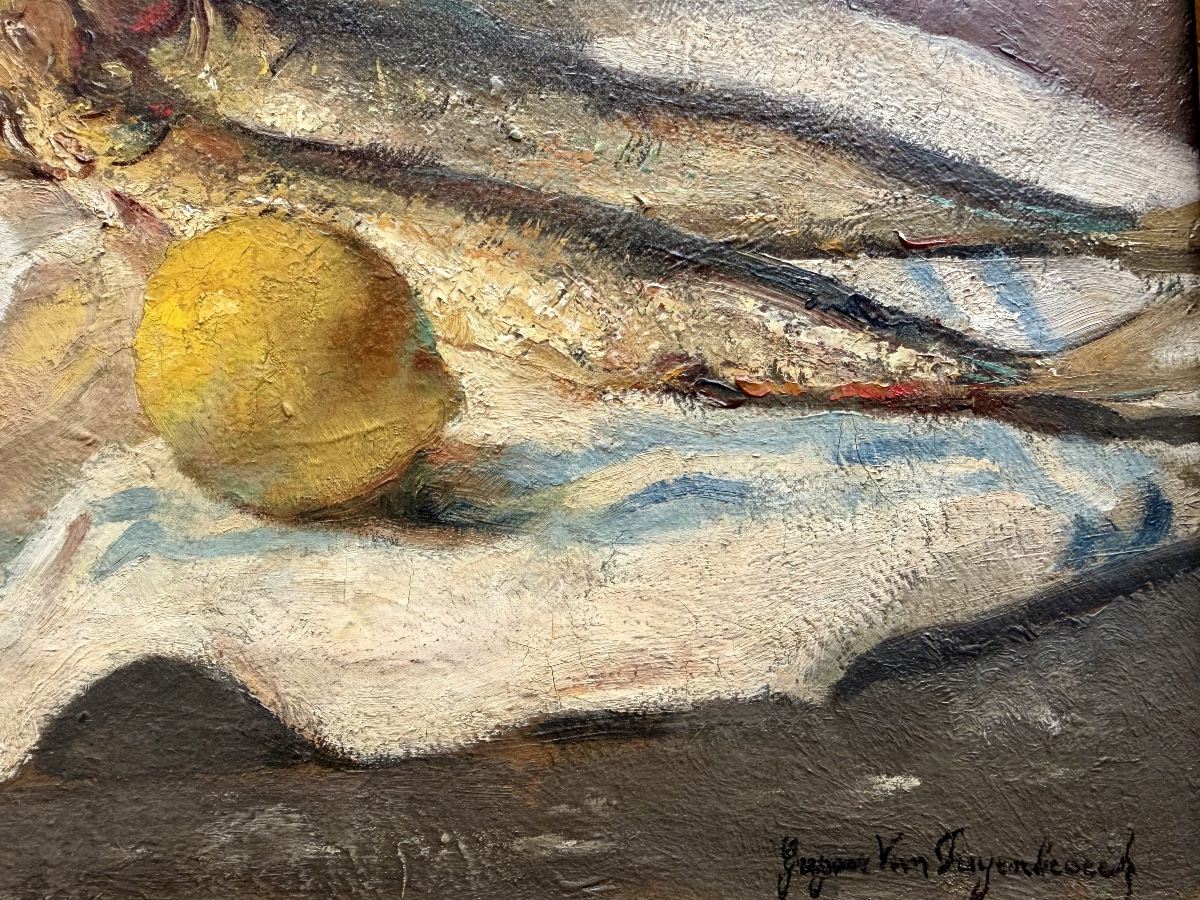
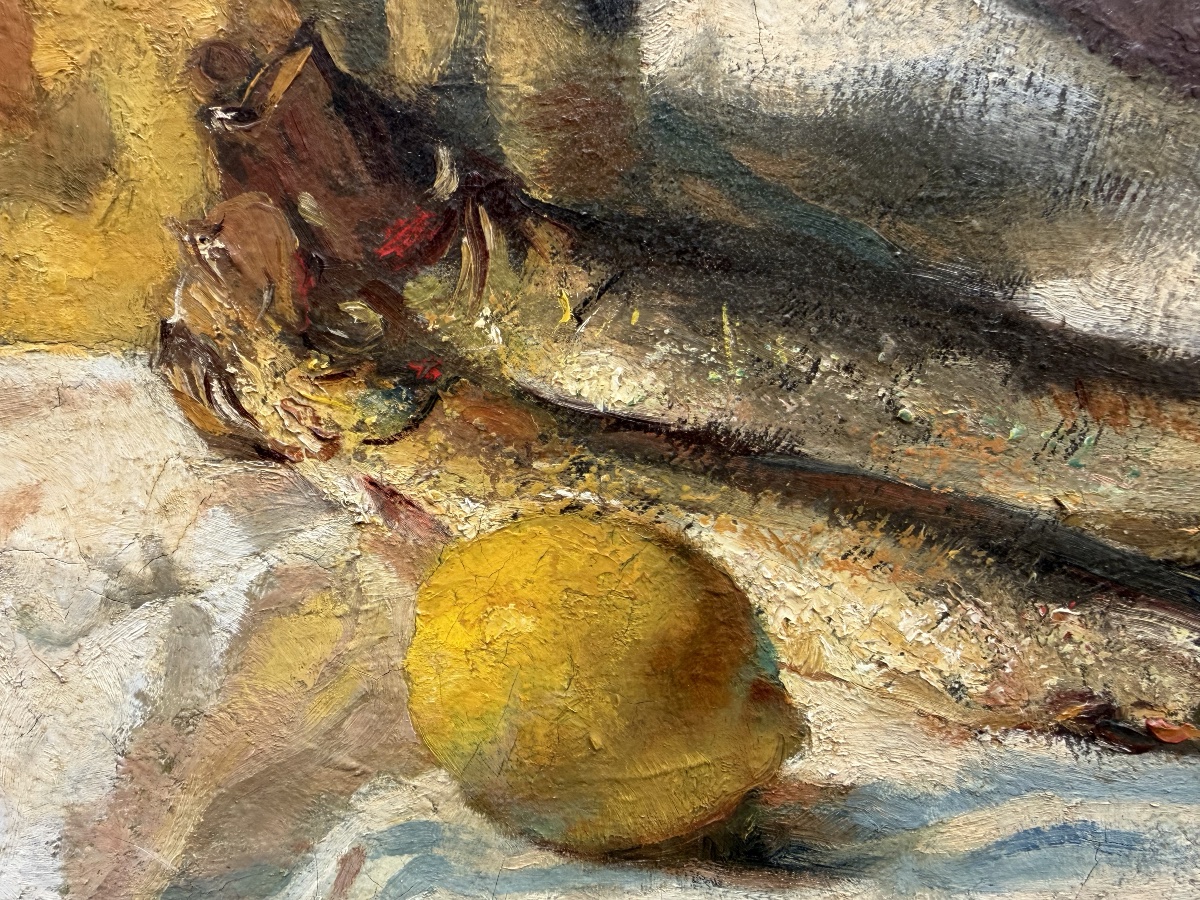
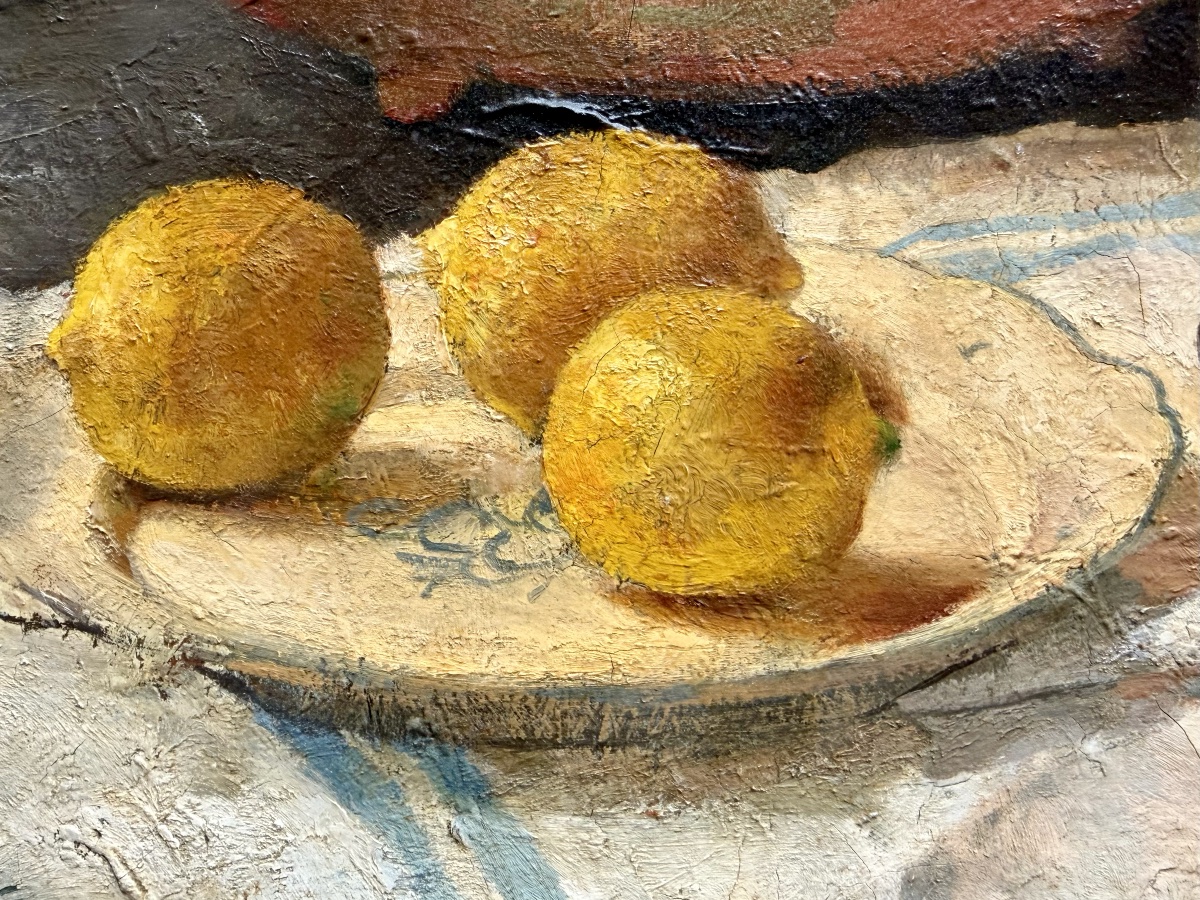
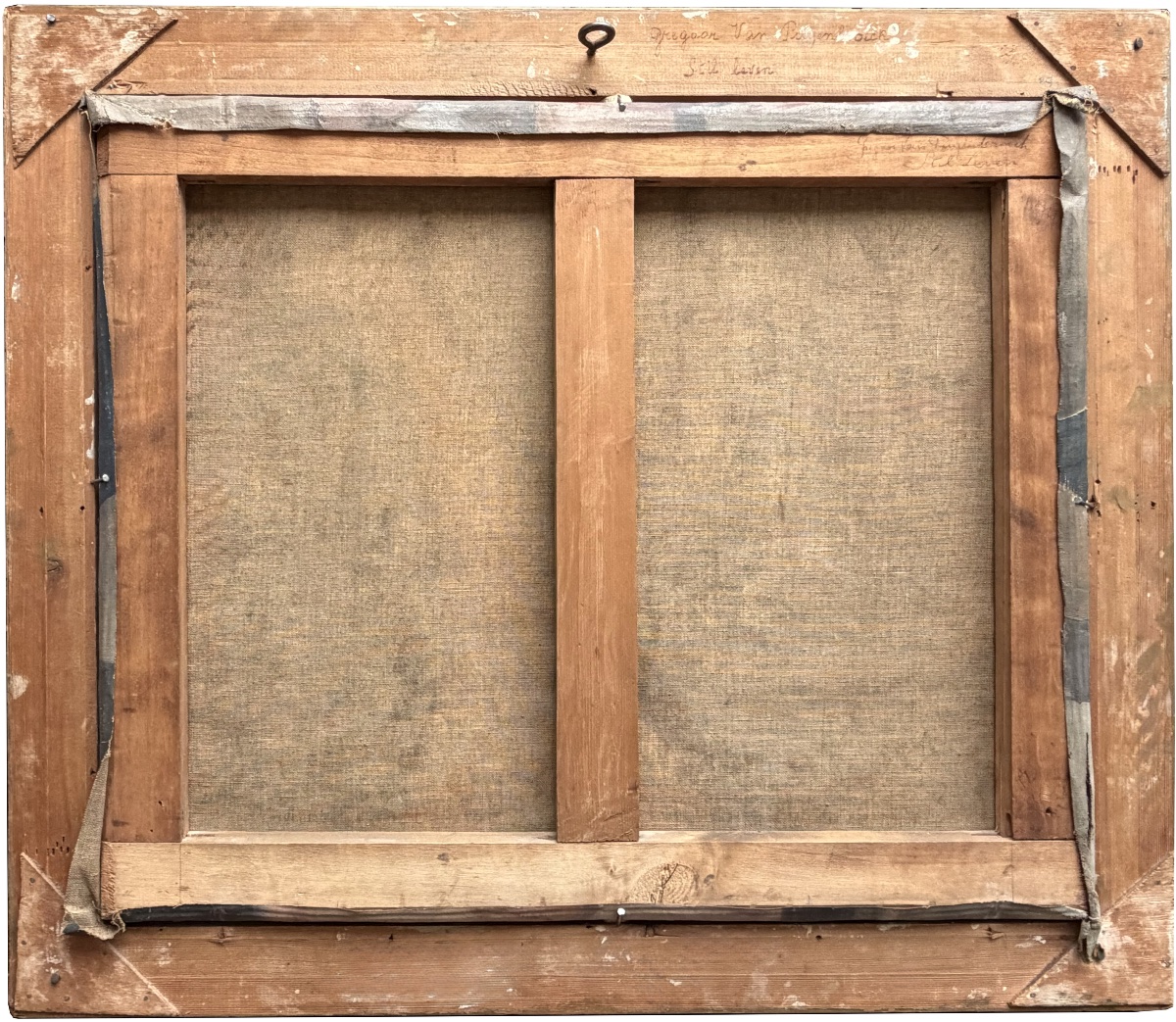
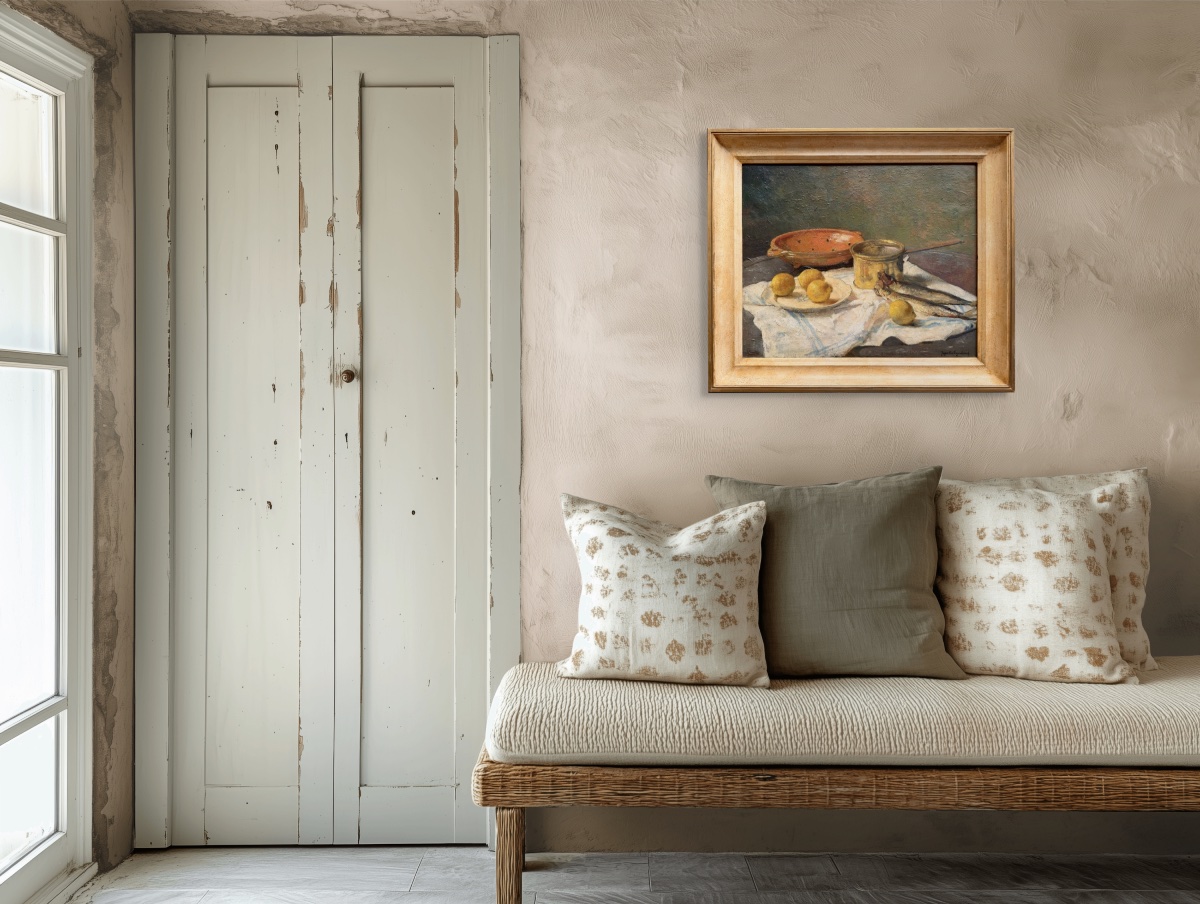
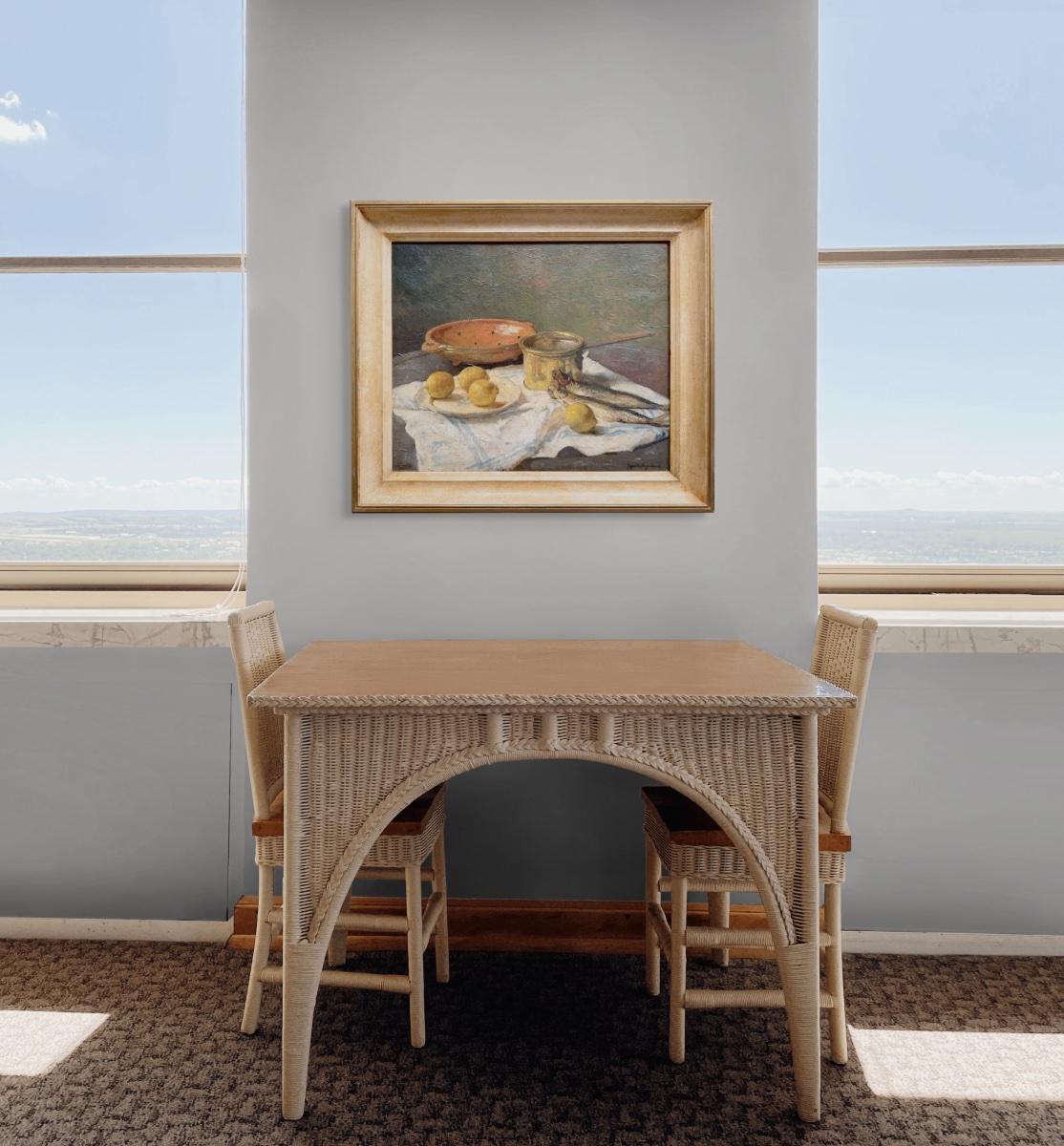
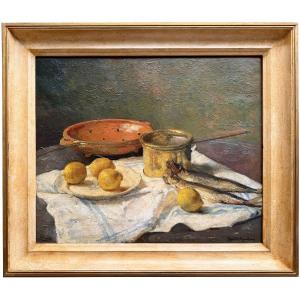


Georges Van Puyenbroeck (1906 - Antwerp - 1982) - 'the Fisherman’s Table, 1940'
Georges Van Puyenbroeck
1906 – Antwerp – 1982
Belgian Painter
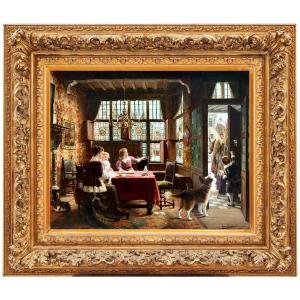
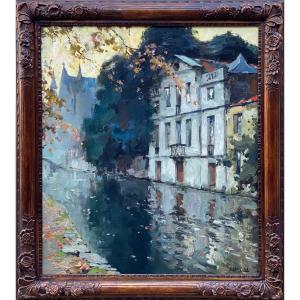
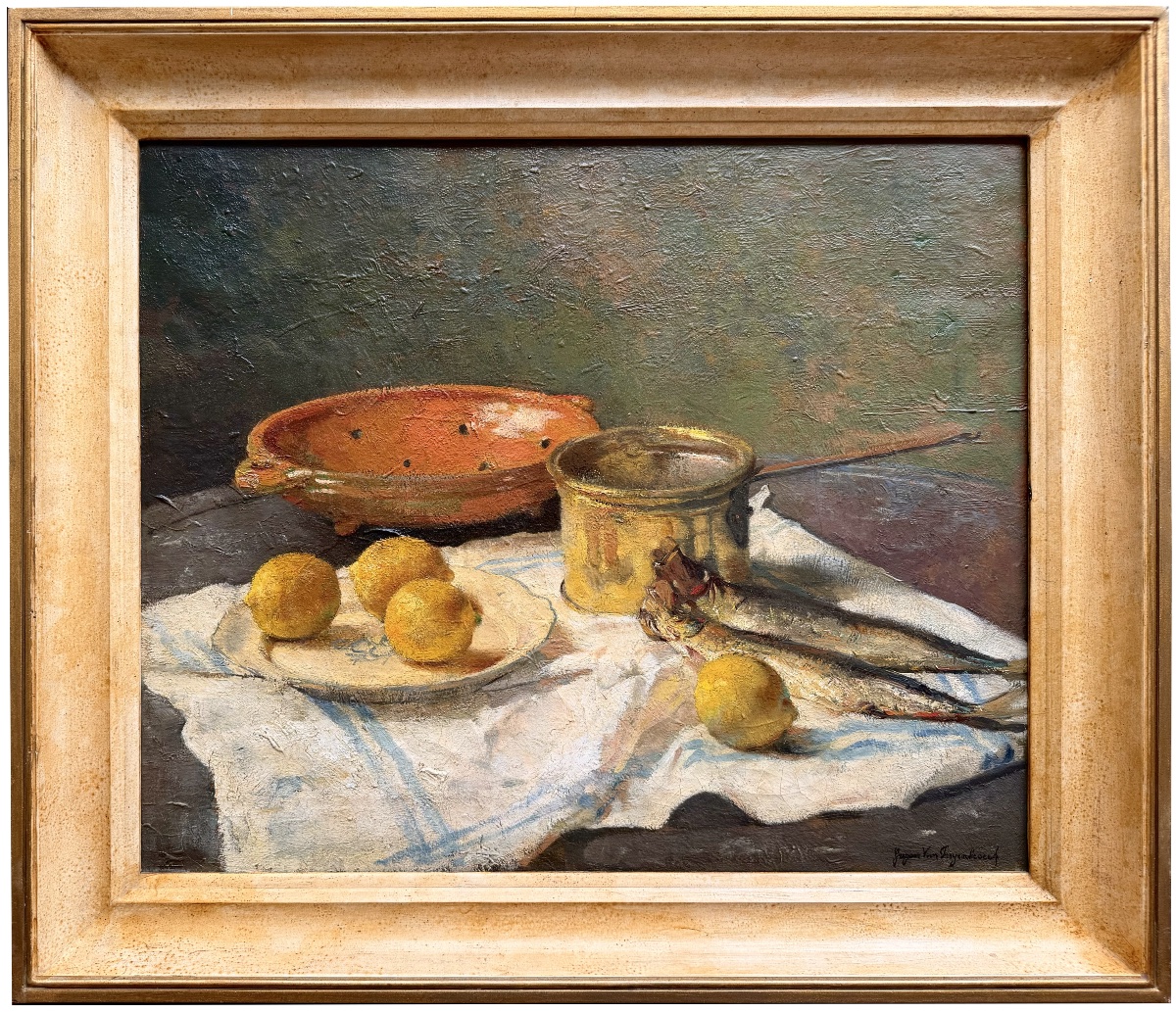
'The Fisherman’s Table, 1940'
Signature: signed lower right 'Georges Van Puyenbroeck'
Medium: oil on canvas
Dimensions: image size 50 x 60 cm; frame size 62 x 72 cm
Biography: Gregoor, also known as Georges, Van Puyenbroeck was a Belgian painter whose work occupies a distinctive place within twentieth-century Belgian art. Closely associated with the traditions of Post-Impressionism, Luminism and Realism, he developed a personal style characterised by rich colour harmonies, atmospheric light effects and a sensitive observation of everyday life. His paintings encompass landscapes, genre scenes, portraits, interiors and still lifes, all executed with a refined sense of composition and mood.
Born in Antwerp in 1906, Van Puyenbroeck received his artistic training at the Institute of Fine Arts in Antwerp, where he studied under the respected painter and teacher Walter Vaes. During his studies he demonstrated exceptional talent and was awarded the prestigious Van Lerius Prize in 1926, a distinction that helped establish his reputation within Belgian artistic circles.
Van Puyenbroeck came from an artistic family. He was the younger brother of the painter and writer Jan Van Puyenbroeck (1887–1972), one of the notable figures of the Antwerp art scene. Although influenced by the Flemish pictorial tradition, Gregoor developed an artistic language of his own, marked by a luminous palette and an interest in capturing the subtle interplay between light and atmosphere.
Throughout his career, he remained faithful to figurative painting. His landscapes often depict tranquil countryside views, lakeside scenes and idyllic parks animated by strolling figures. In these works, light becomes the principal subject, bathing the scenery in a gentle radiance and creating an atmosphere of serenity and contemplation. His brushwork, while firmly rooted in realism, reveals the influence of Belgian Luminism through its vibrant treatment of colour and natural light.
Van Puyenbroeck also painted portraits, figure compositions and genre scenes that demonstrate a keen sensitivity to human presence and character. His works are distinguished by their harmonious compositions, balanced tonality and poetic quality. Whether depicting a solitary artist at work, elegant interiors or intimate moments of daily life, he consistently conveyed a sense of quiet refinement and emotional warmth.
Although less widely known internationally than some of his contemporaries, Van Puyenbroeck enjoyed a respected position within Belgian artistic circles and exhibited his works throughout his career. His paintings continue to attract collectors for their technical quality, atmospheric charm and faithful representation of the Belgian artistic tradition of the twentieth century.
Today, Gregoor Van Puyenbroeck is remembered as a gifted colourist and sensitive observer of nature and everyday life. His oeuvre forms a valuable continuation of the Belgian luminist and post-impressionist tradition, combining realism, light and poetry in works that remain appealing for their timeless elegance and tranquillity.
1906 – Antwerp – 1982
Belgian Painter
'The Fisherman’s Table, 1940'
Signature: signed lower right 'Georges Van Puyenbroeck'
Medium: oil on canvas
Dimensions: image size 50 x 60 cm; frame size 62 x 72 cm
Biography: Gregoor, also known as Georges, Van Puyenbroeck was a Belgian painter whose work occupies a distinctive place within twentieth-century Belgian art. Closely associated with the traditions of Post-Impressionism, Luminism and Realism, he developed a personal style characterised by rich colour harmonies, atmospheric light effects and a sensitive observation of everyday life. His paintings encompass landscapes, genre scenes, portraits, interiors and still lifes, all executed with a refined sense of composition and mood.
Born in Antwerp in 1906, Van Puyenbroeck received his artistic training at the Institute of Fine Arts in Antwerp, where he studied under the respected painter and teacher Walter Vaes. During his studies he demonstrated exceptional talent and was awarded the prestigious Van Lerius Prize in 1926, a distinction that helped establish his reputation within Belgian artistic circles.
Van Puyenbroeck came from an artistic family. He was the younger brother of the painter and writer Jan Van Puyenbroeck (1887–1972), one of the notable figures of the Antwerp art scene. Although influenced by the Flemish pictorial tradition, Gregoor developed an artistic language of his own, marked by a luminous palette and an interest in capturing the subtle interplay between light and atmosphere.
Throughout his career, he remained faithful to figurative painting. His landscapes often depict tranquil countryside views, lakeside scenes and idyllic parks animated by strolling figures. In these works, light becomes the principal subject, bathing the scenery in a gentle radiance and creating an atmosphere of serenity and contemplation. His brushwork, while firmly rooted in realism, reveals the influence of Belgian Luminism through its vibrant treatment of colour and natural light.
Van Puyenbroeck also painted portraits, figure compositions and genre scenes that demonstrate a keen sensitivity to human presence and character. His works are distinguished by their harmonious compositions, balanced tonality and poetic quality. Whether depicting a solitary artist at work, elegant interiors or intimate moments of daily life, he consistently conveyed a sense of quiet refinement and emotional warmth.
Although less widely known internationally than some of his contemporaries, Van Puyenbroeck enjoyed a respected position within Belgian artistic circles and exhibited his works throughout his career. His paintings continue to attract collectors for their technical quality, atmospheric charm and faithful representation of the Belgian artistic tradition of the twentieth century.
Today, Gregoor Van Puyenbroeck is remembered as a gifted colourist and sensitive observer of nature and everyday life. His oeuvre forms a valuable continuation of the Belgian luminist and post-impressionist tradition, combining realism, light and poetry in works that remain appealing for their timeless elegance and tranquillity.
3 400 €
Period: 20th century
Style: Other Style
Condition: Excellent condition
Material: Oil painting
Width: 72 cm
Height: 62 cm
Depth: 6 cm
Reference (ID): 1770041
Availability: In stock
Print