

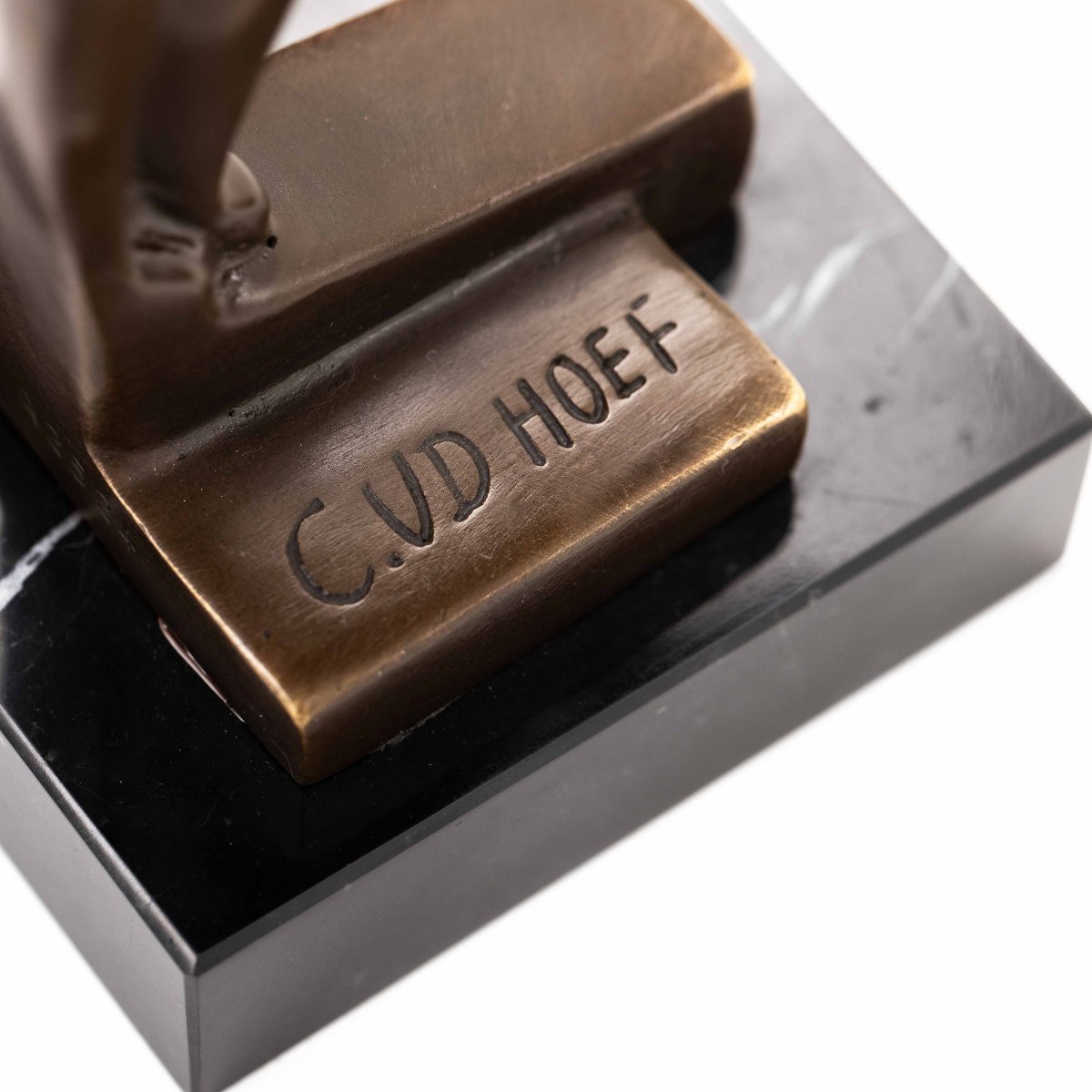



Dutch Cubist Art Deco Bronze Panther On Black Marble, By C. Van Der Hoef, 1910s
Artist: Christian Johannes Van Der Hoef (1875–1933)
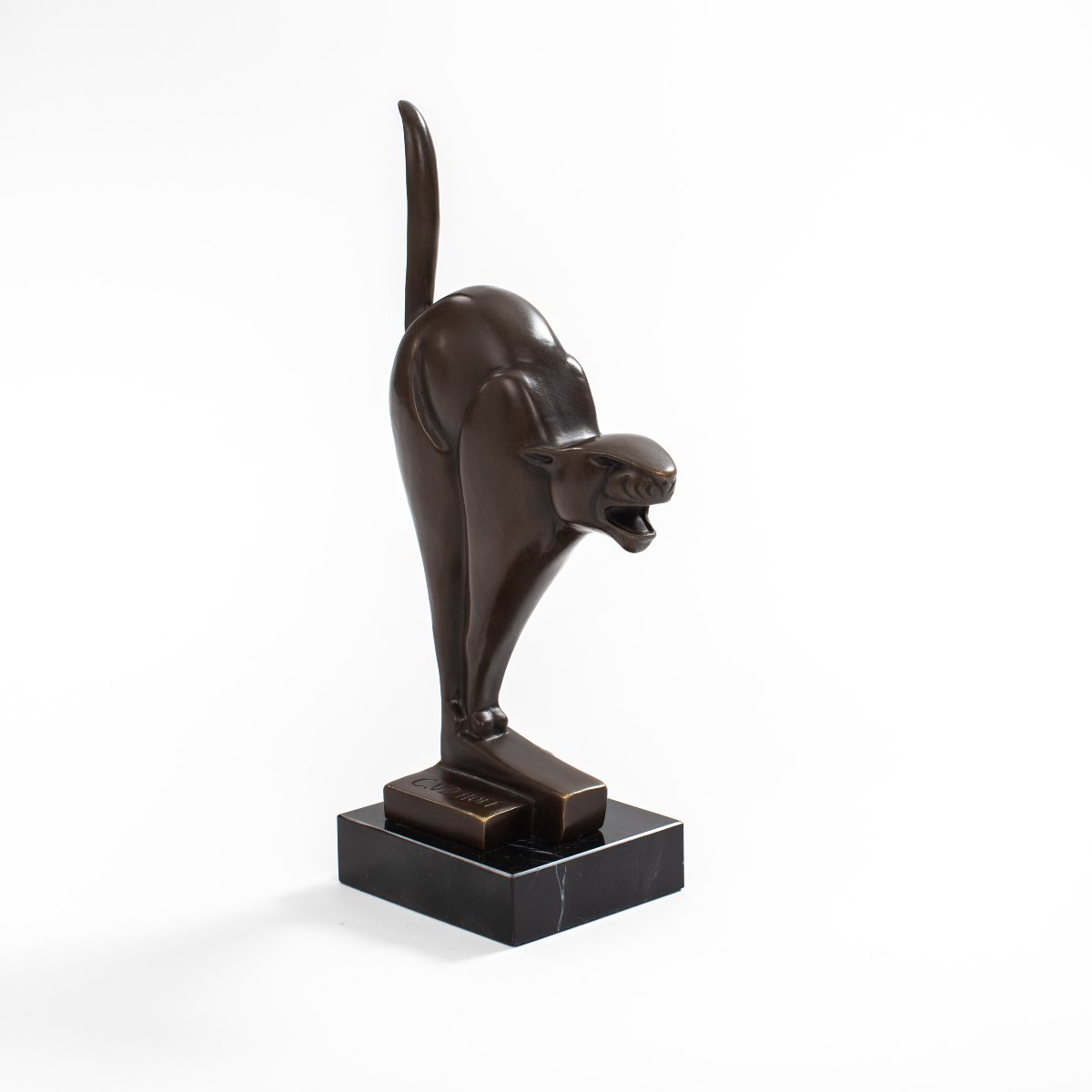
Dutch cubist Art Deco bronze panther on black marble, by C. VAN DER HOEF, 1910s
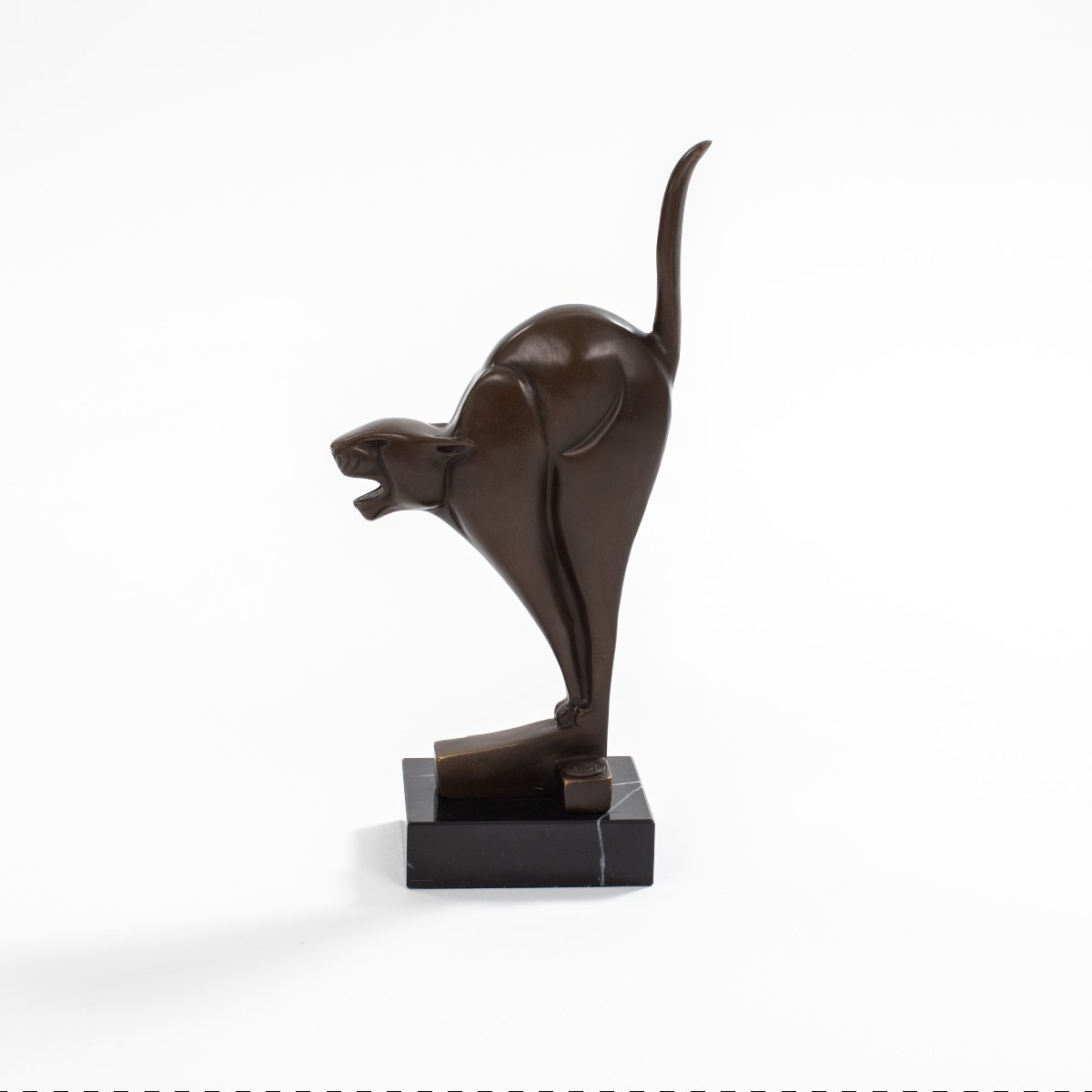
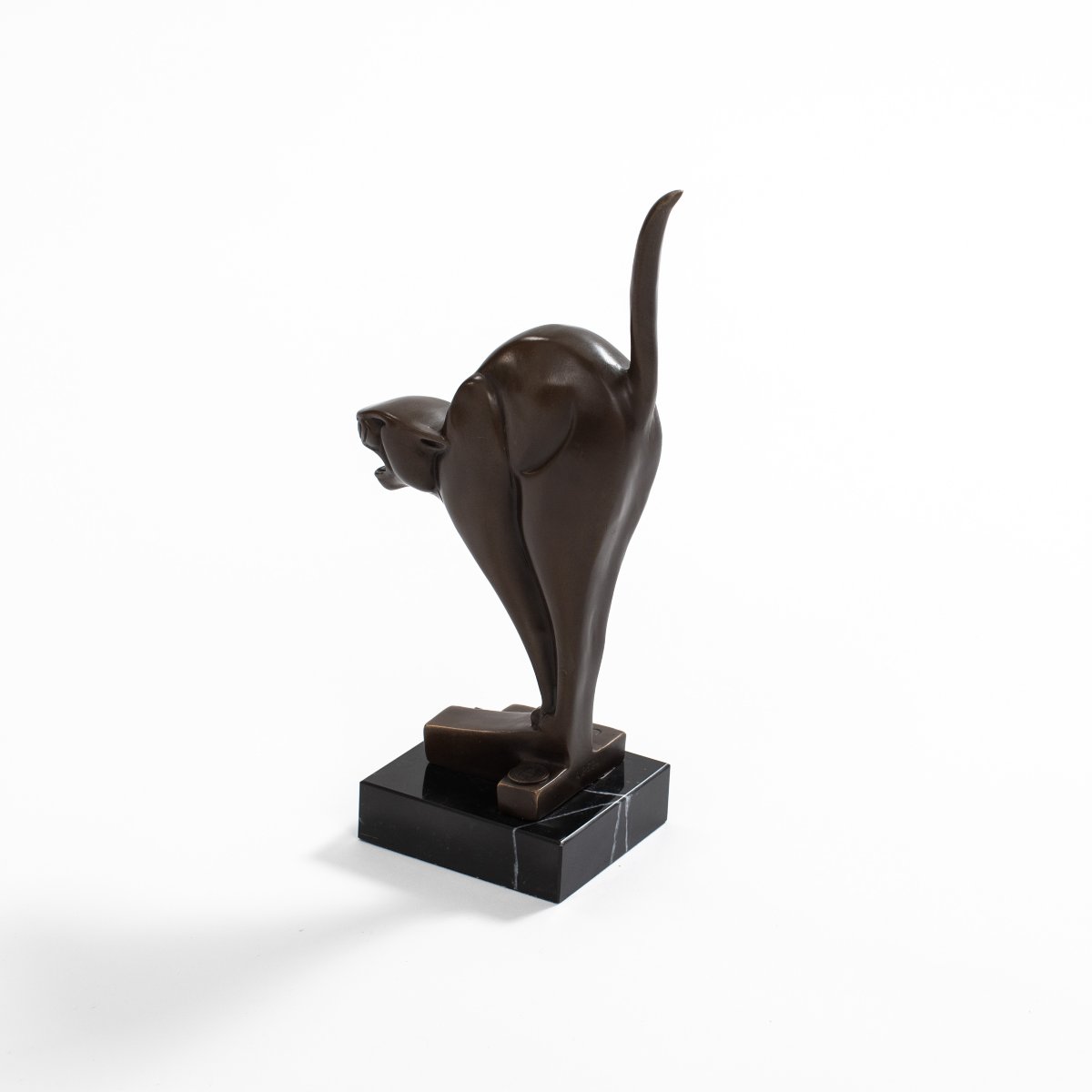
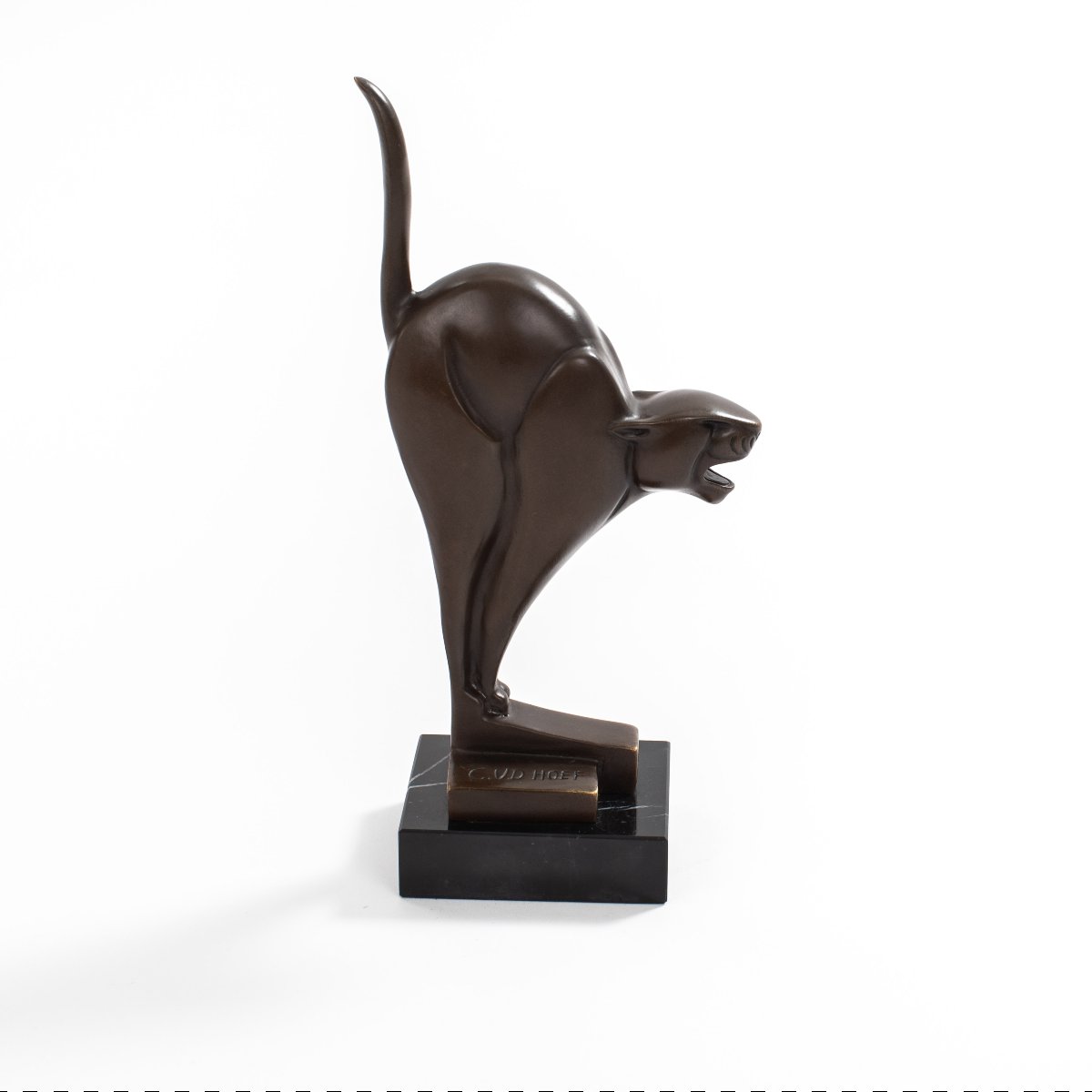
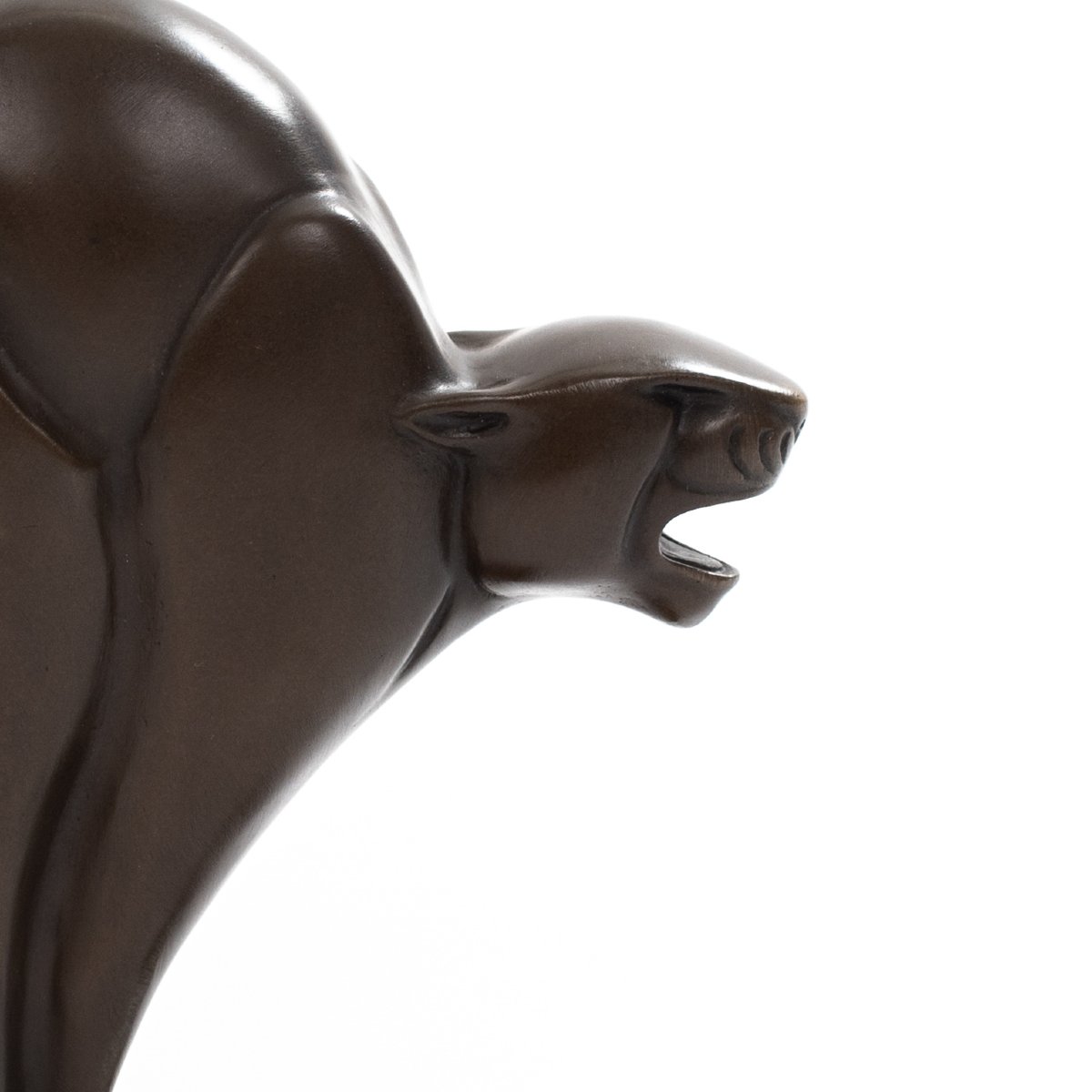
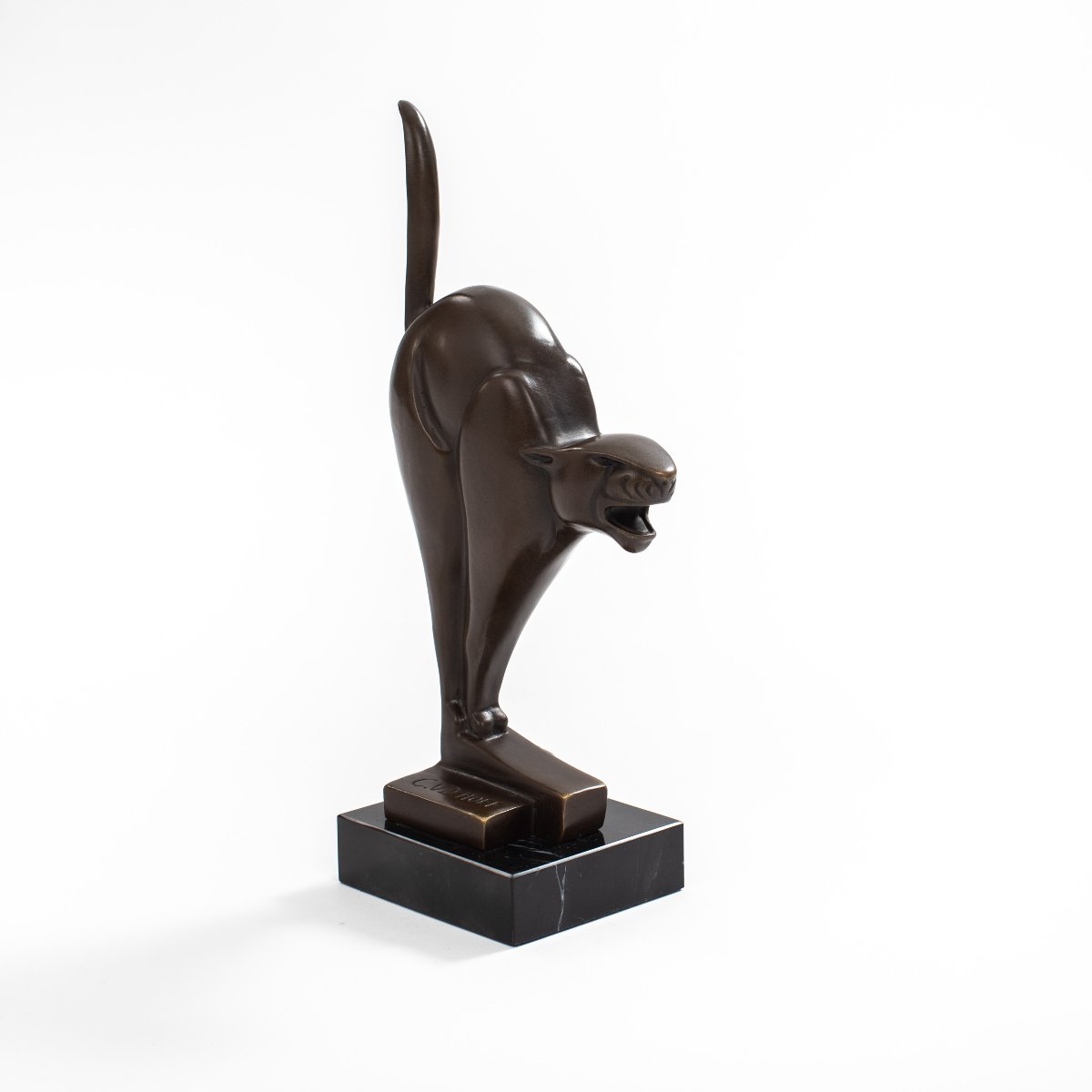
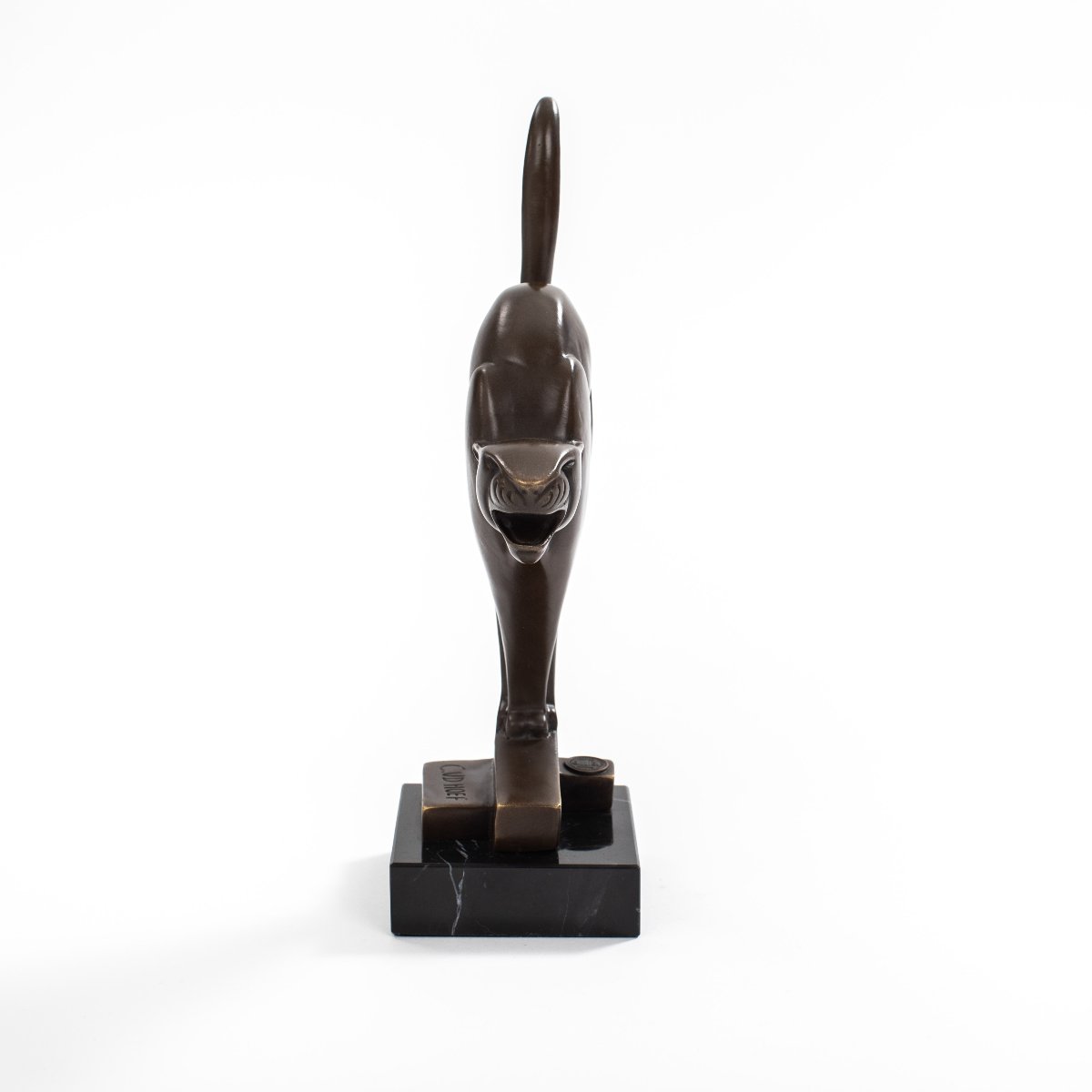
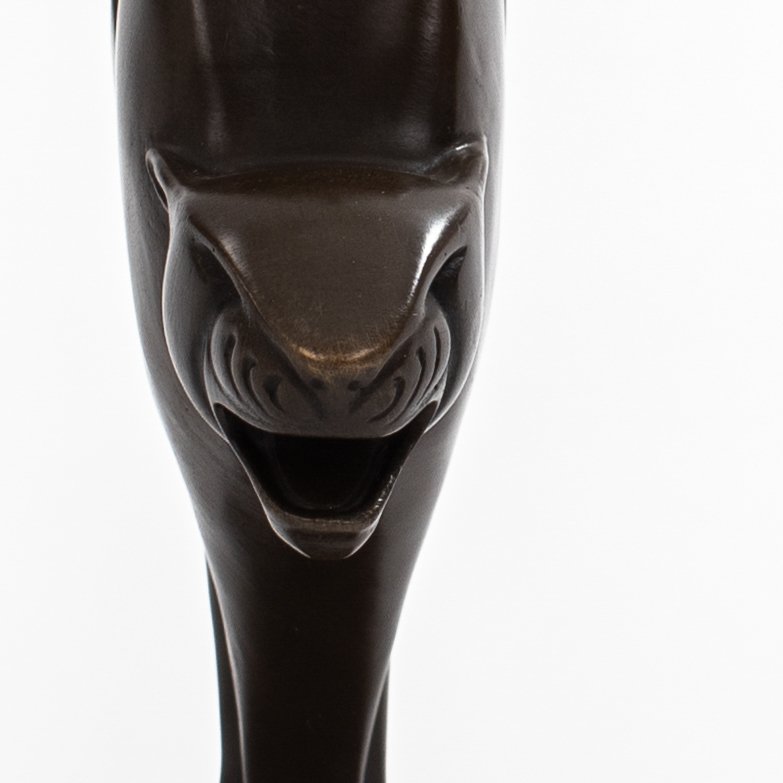
This large cubist-style feline (panther) is reduced to just a few features.
The animal's posture suggests an explosive movement about to occur; the tension is palpable.
(The body is visually enlarged to intimidate enemies, and the back is extremely arched.
By arching its back, the spine stores elastic energy to propel itself far forward from a standing position)
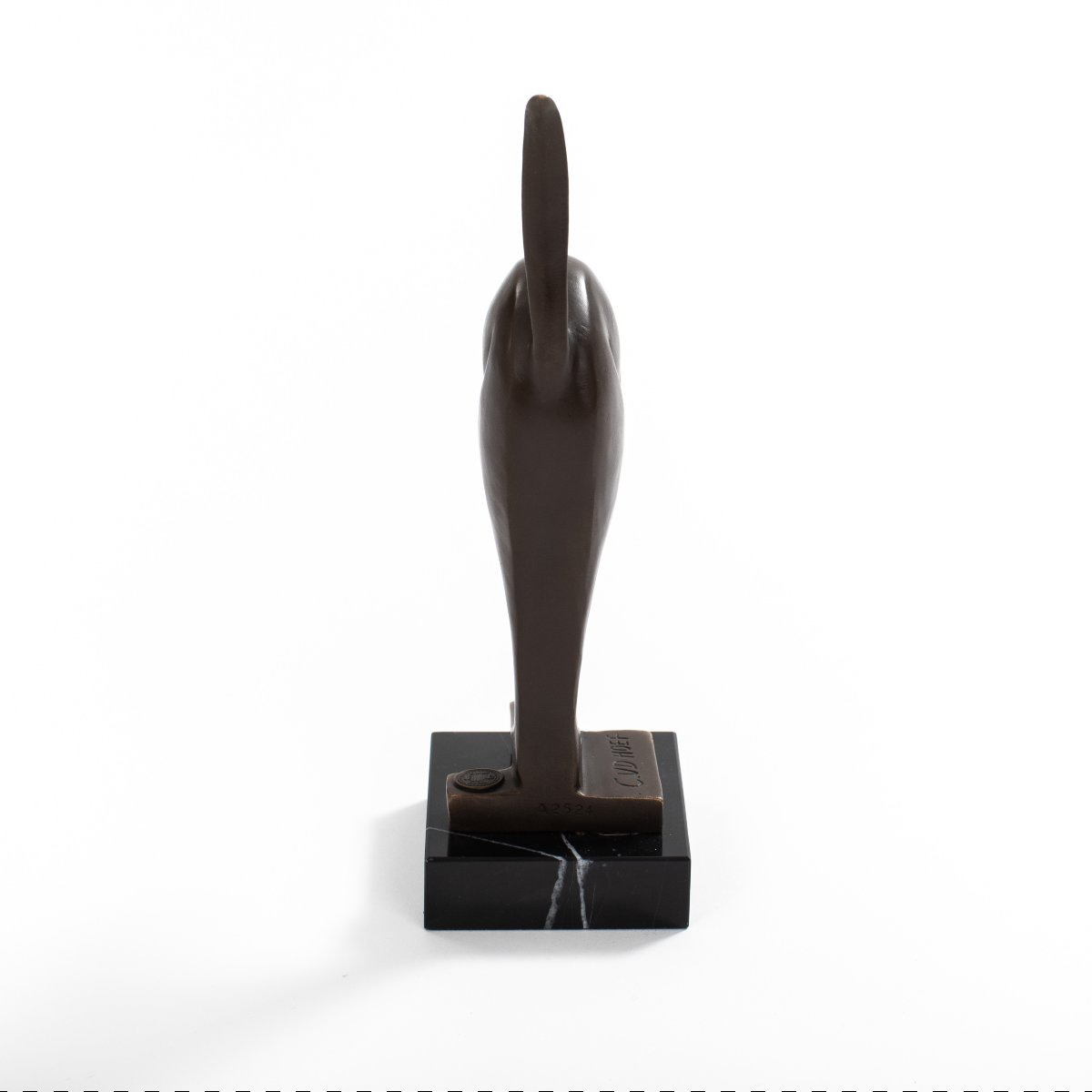
Even the signature is integrated into cubist lines.
This decorative sculpture rests on a black marble base (9 x 9 x 2.5 cm) with white veins.
CHRISTIAN JOHANNES VAN DER HOEF (1875-1933)
was a multi-talented Dutch sculptor, graphic artist and applied arts designer, best known for his pioneering ceramic creations in the Art Nouveau and Amsterdam School style.
Overview of his life and work:
Van der Hoef was born in 1875. He apprenticed as a sculptor, which strongly influenced his sculptural creations and form designs.
The Amstelhoek era:
He worked as art director at the Amstelhoek pottery near Amsterdam. Inspired by the English Arts and Crafts movement,
he designed simple yet functional everyday objects, often decorated with striking two-tone clay inlays and adorned with traditional Dutch motifs.
Artistic versatility: In addition to pottery, he also worked as a graphic artist and medal designer. His works were characterized by a highly refined balance between form and decoration.
Collaboration:
His ceramic designs were produced by numerous prominent Dutch manufacturers and studios, including Haga, Amphora, Zuid-Holland, and the Plateelfabriek de Kat.
Signature:
Throughout his career, he used various trademarks that
typically featured interlocking versions of his initials, CJH.
Legacy:
Van der Hoef died in 1933. Today, his applied art is highly sought after; some of his pieces fetch five-figure sums at international auctions.
This large cubist-style feline (panther) is reduced to just a few features.
The animal's posture suggests an explosive movement about to occur; the tension is palpable.
(The body is visually enlarged to intimidate enemies, and the back is extremely arched.
By arching its back, the spine stores elastic energy to propel itself far forward from a standing position)
Even the signature is integrated into cubist lines.
This decorative sculpture rests on a black marble base (9 x 9 x 2.5 cm) with white veins.
CHRISTIAN JOHANNES VAN DER HOEF (1875-1933)
was a multi-talented Dutch sculptor, graphic artist and applied arts designer, best known for his pioneering ceramic creations in the Art Nouveau and Amsterdam School style.
Overview of his life and work:
Van der Hoef was born in 1875. He apprenticed as a sculptor, which strongly influenced his sculptural creations and form designs.
The Amstelhoek era:
He worked as art director at the Amstelhoek pottery near Amsterdam. Inspired by the English Arts and Crafts movement,
he designed simple yet functional everyday objects, often decorated with striking two-tone clay inlays and adorned with traditional Dutch motifs.
Artistic versatility: In addition to pottery, he also worked as a graphic artist and medal designer. His works were characterized by a highly refined balance between form and decoration.
Collaboration:
His ceramic designs were produced by numerous prominent Dutch manufacturers and studios, including Haga, Amphora, Zuid-Holland, and the Plateelfabriek de Kat.
Signature:
Throughout his career, he used various trademarks that
typically featured interlocking versions of his initials, CJH.
Legacy:
Van der Hoef died in 1933. Today, his applied art is highly sought after; some of his pieces fetch five-figure sums at international auctions.
1 900 €
Period: 20th century
Style: Art Deco
Condition: Excellent condition
Material: Bronze
Width: 12
Height: 26
Depth: 9
Reference (ID): 1768726
Availability: In stock
Print