THIS OBJECT WAS SOLD
Joan Of Arc André Vermare 1869-1949
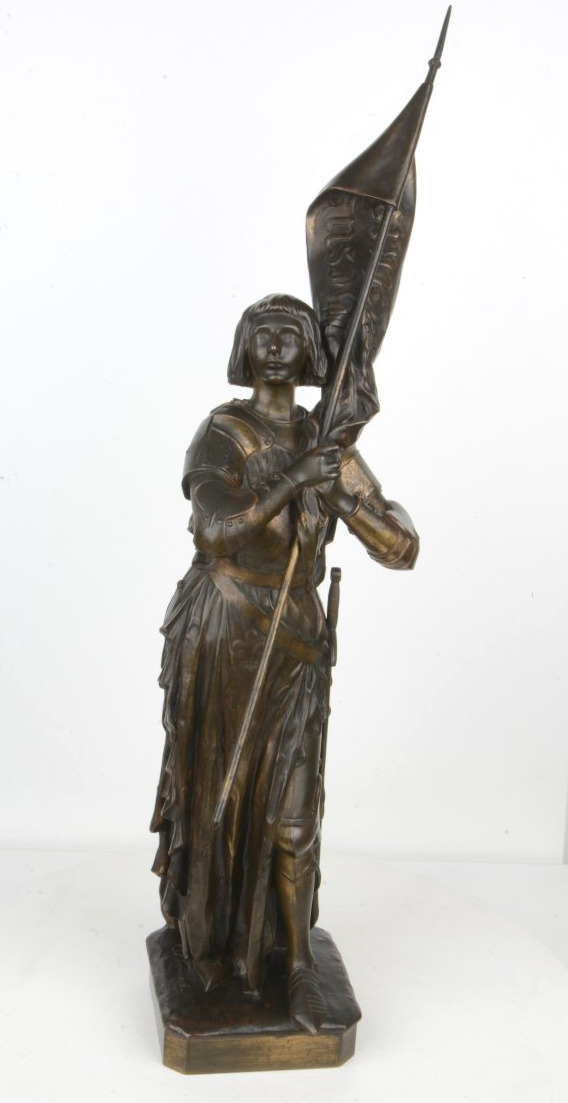
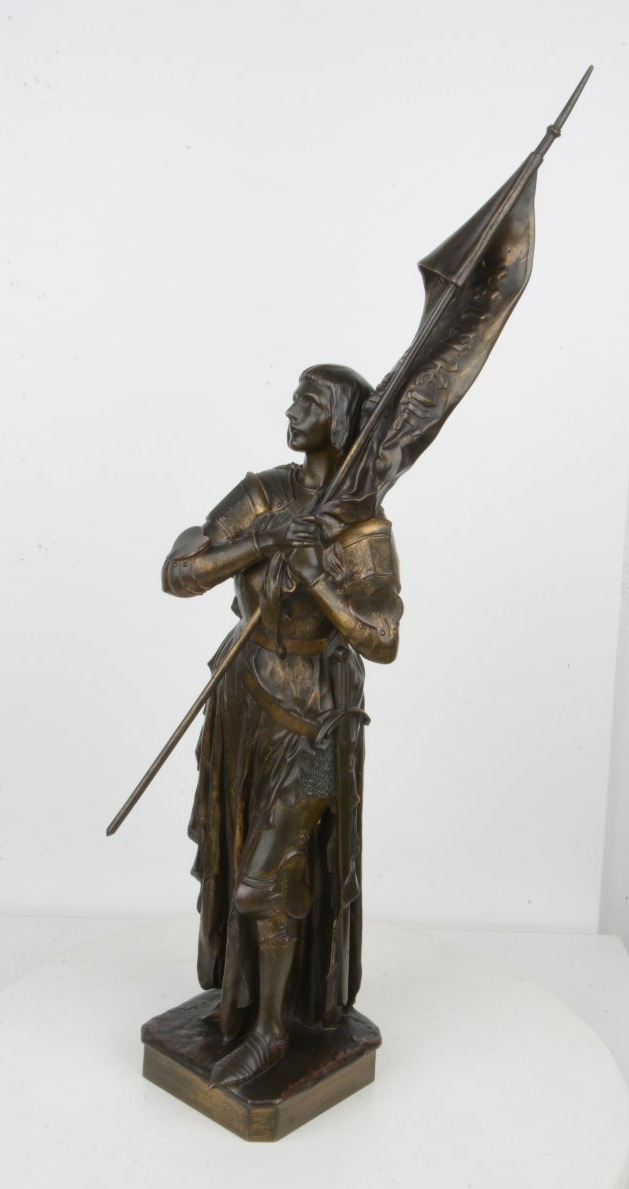
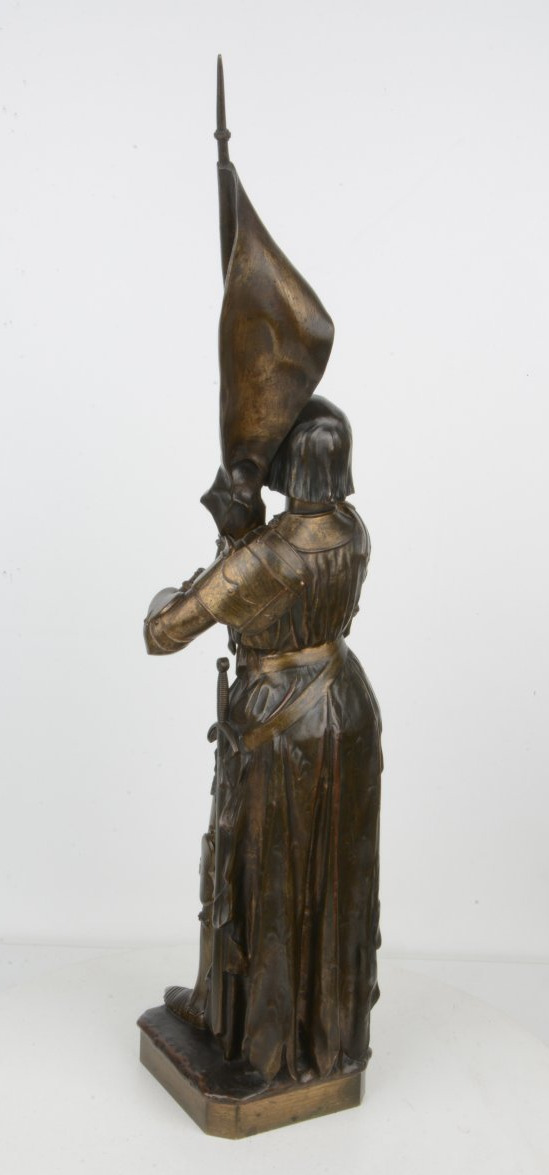
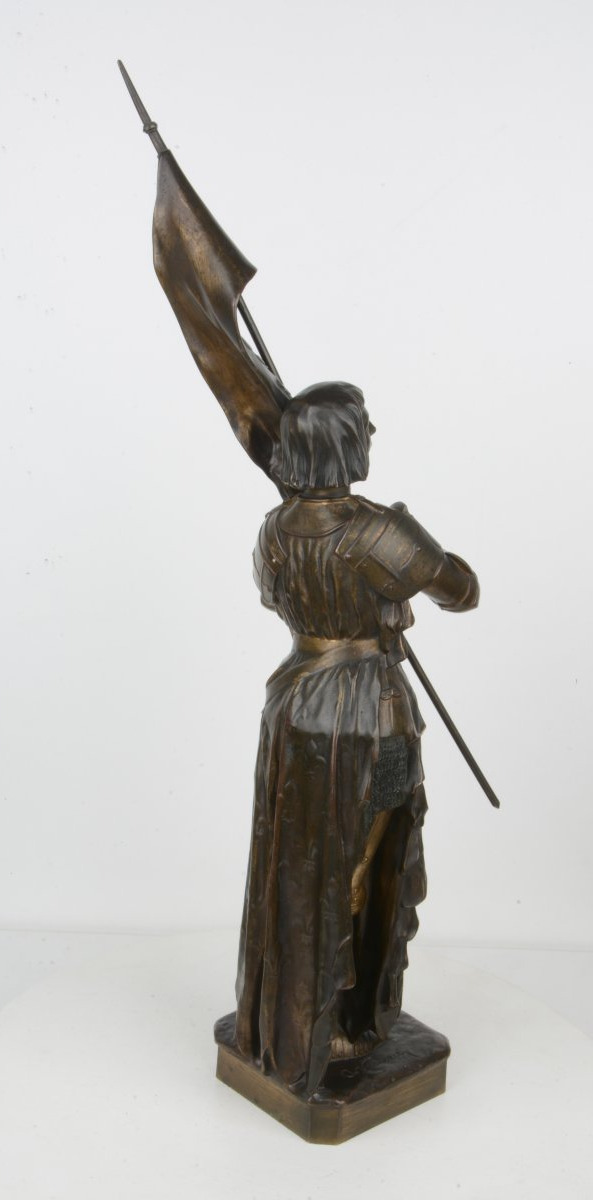
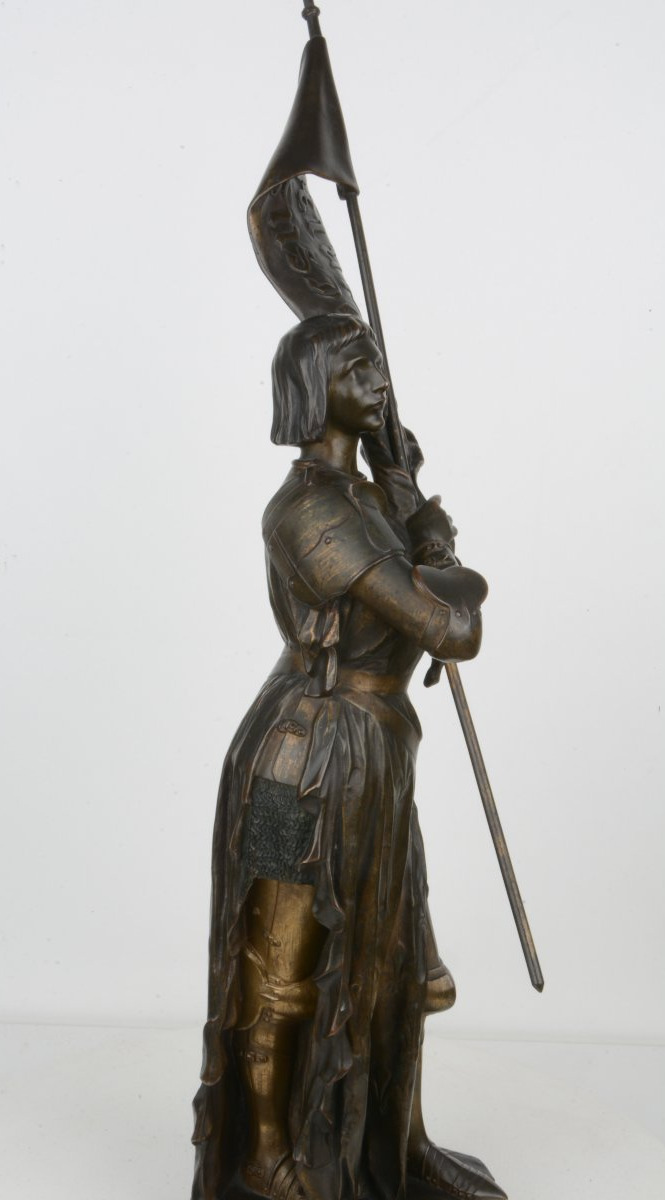
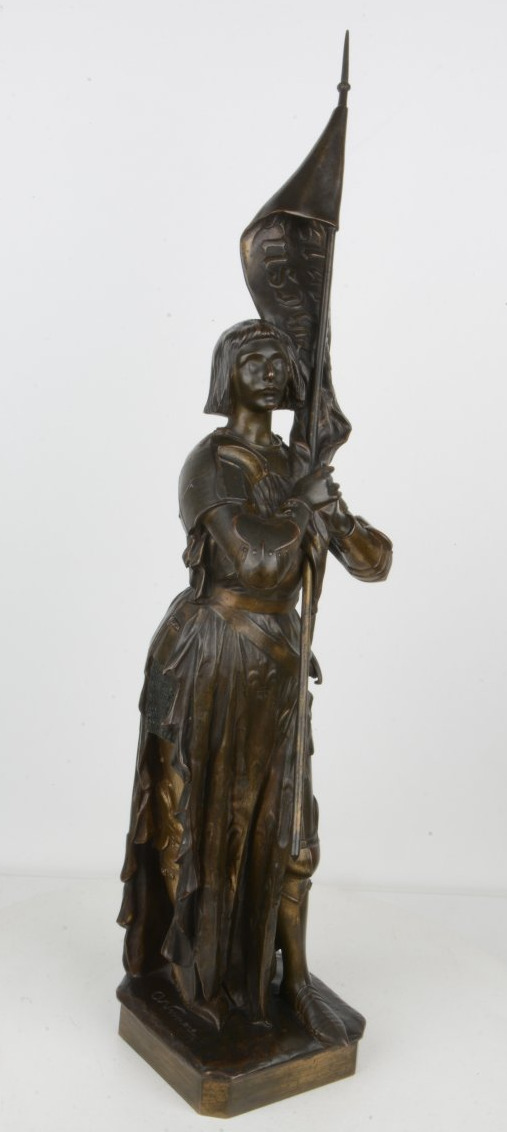
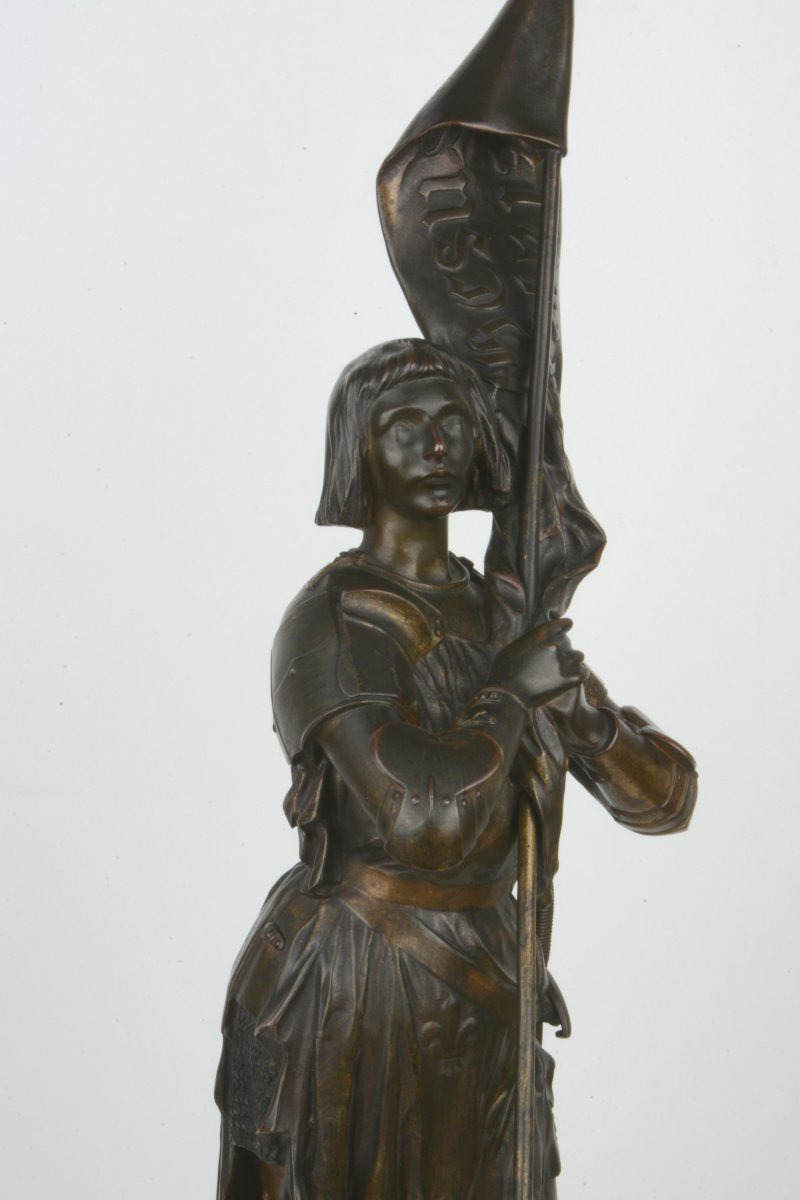
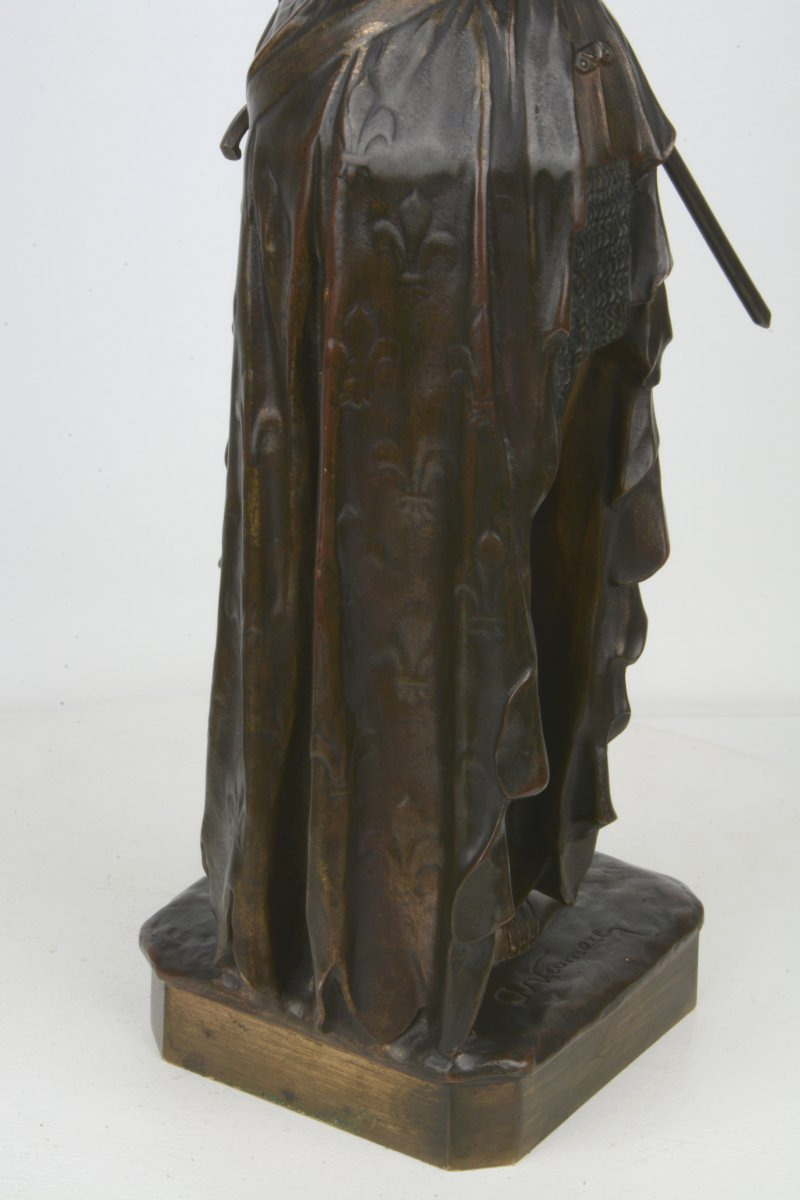
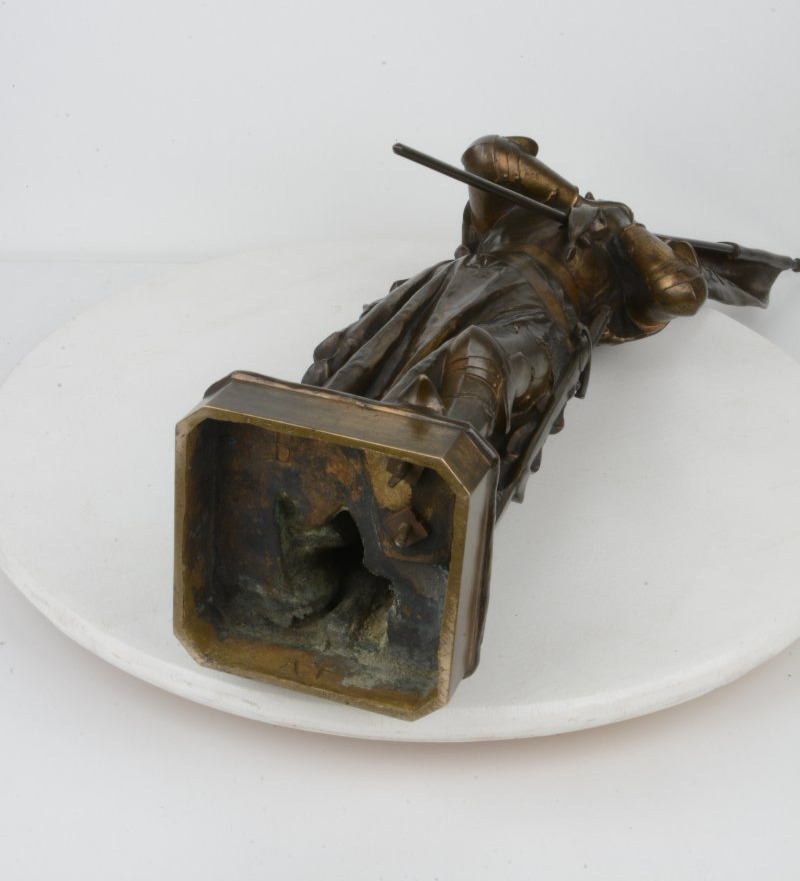
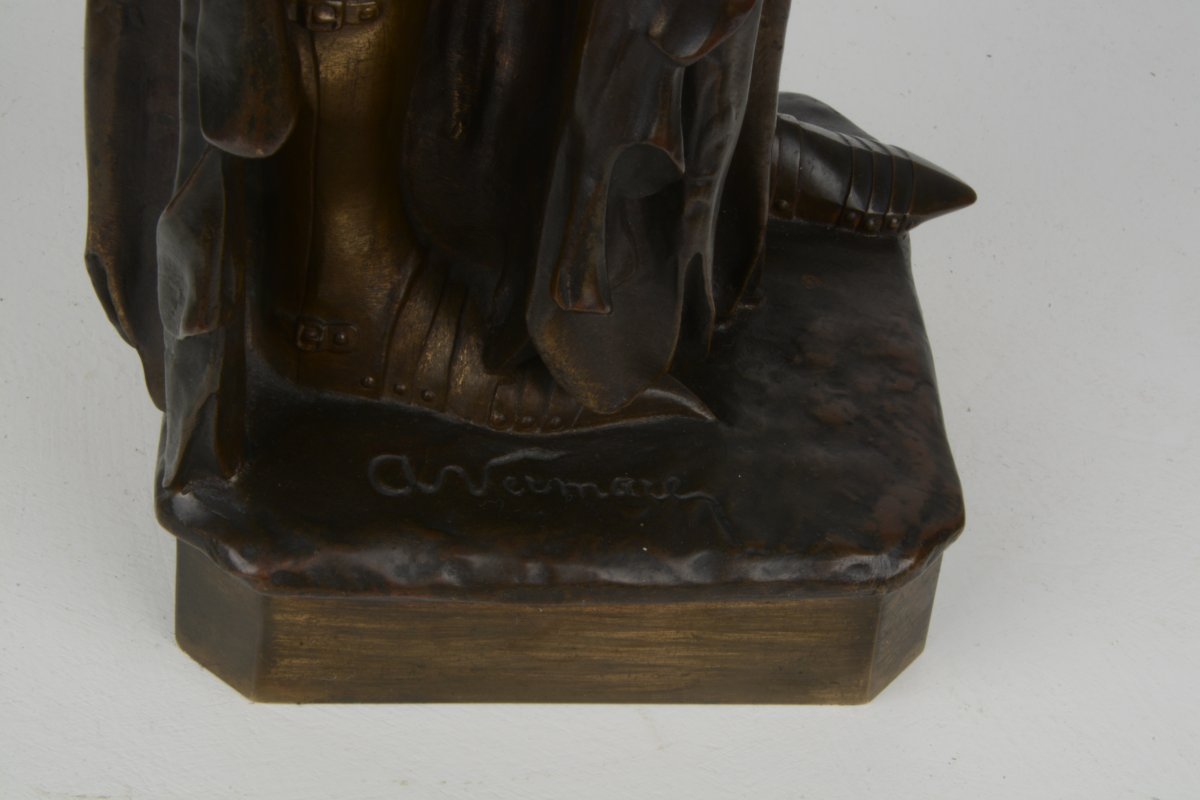



Joan of Arc is depicted in full armor, holding a florin in her hands. Her dress is adorned with fleurs-de-lis. This statue was a great success; it can be found throughout France in various churches and cathedrals: Carcassonne, Orléans, Bourges, etc.
Vermare exhibited at the Salon from 1892 and received an honorable mention; in 1899, he won the Prix de Rome. He resided at the Villa Medici between 1900 and 1903. More or less forgotten in previous centuries, at the beginning of the 19th century, Joan of Arc became a very popular figure, admired and loved by the French in a very romantic surge, which was reinforced by patriotic sentiments at the end of the century and the misfortunes of 1871.
The contradictory facets of the little girl from Lorraine fascinate: a virtuous and modest daughter of the people, she is a fierce warrior; A devout Christian, she was nonetheless condemned by the Church; devoted to her King, she was betrayed by him. The historian Jules Michelet[2] played a significant role in this renewed interest in the personality and life of Joan of Arc. In 1841, in Book V of his History of France, he highlighted her heroic figure, which stood out for its exemplary nature. The warrior virgin of the Marches of Lorraine was the liberator.
At her call, France awoke and rallied its troops. Hope was reborn in hearts, leading to victory.
Vermare exhibited at the Salon from 1892 and received an honorable mention; in 1899, he won the Prix de Rome. He resided at the Villa Medici between 1900 and 1903. More or less forgotten in previous centuries, at the beginning of the 19th century, Joan of Arc became a very popular figure, admired and loved by the French in a very romantic surge, which was reinforced by patriotic sentiments at the end of the century and the misfortunes of 1871.
The contradictory facets of the little girl from Lorraine fascinate: a virtuous and modest daughter of the people, she is a fierce warrior; A devout Christian, she was nonetheless condemned by the Church; devoted to her King, she was betrayed by him. The historian Jules Michelet[2] played a significant role in this renewed interest in the personality and life of Joan of Arc. In 1841, in Book V of his History of France, he highlighted her heroic figure, which stood out for its exemplary nature. The warrior virgin of the Marches of Lorraine was the liberator.
At her call, France awoke and rallied its troops. Hope was reborn in hearts, leading to victory.
Explore similar pieces and discover your ideal find:
bronze sculptures