

Late 15th Century, Early 16th Century, Saint George And The Dragon
Late 15th century, early 16th century
Saint George and the Dragon
Oil on canvas, 102 x 122.5 cm – with frame, 111 x 130 cm
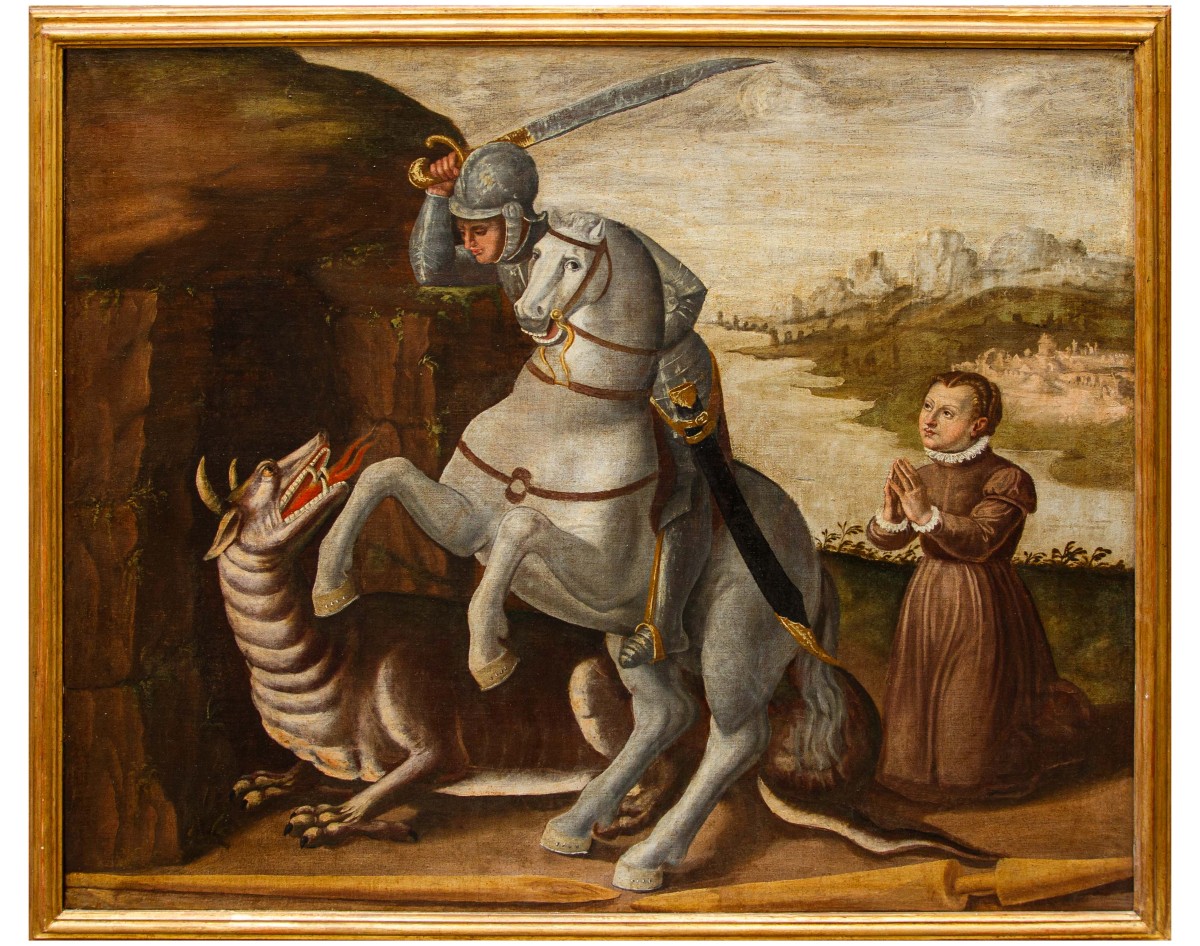
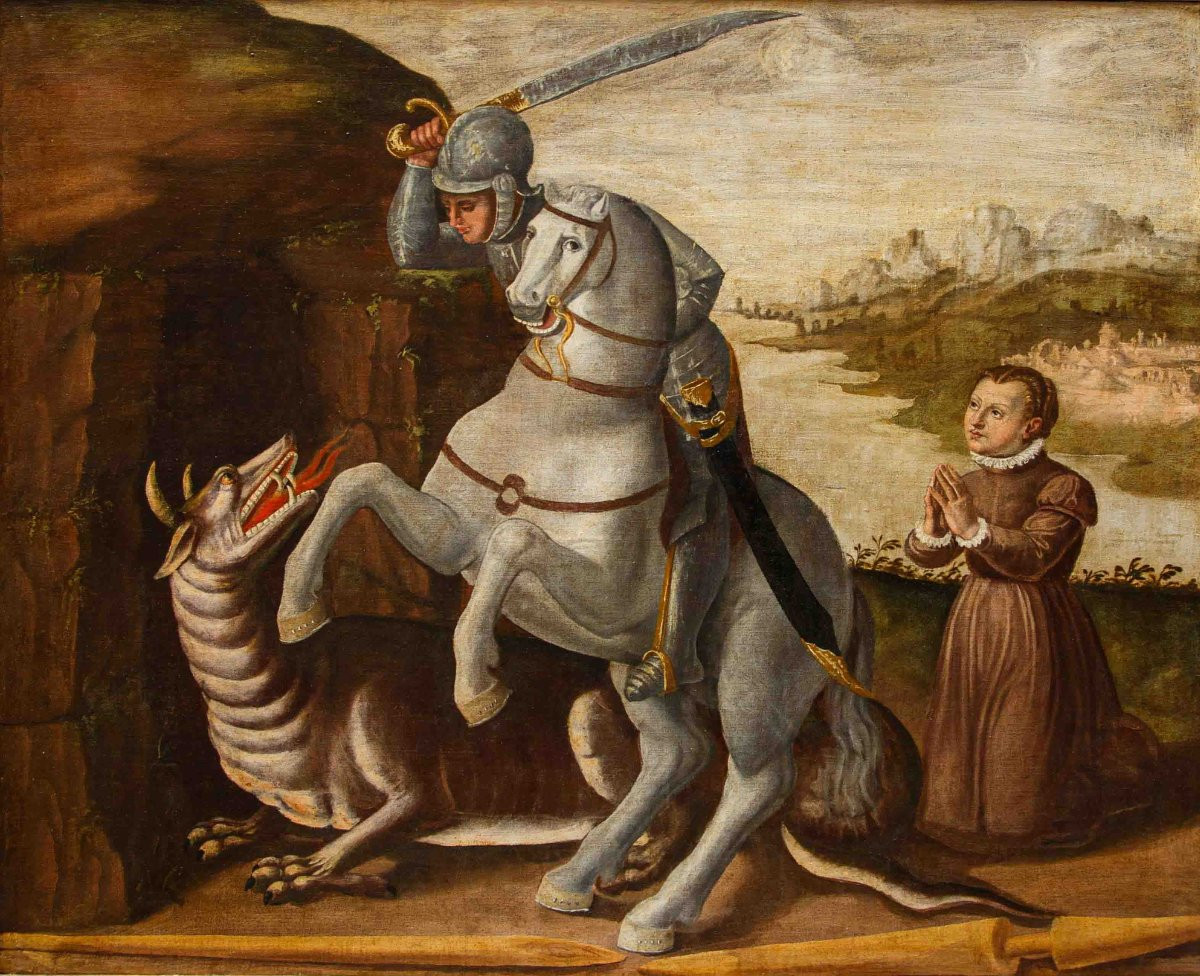
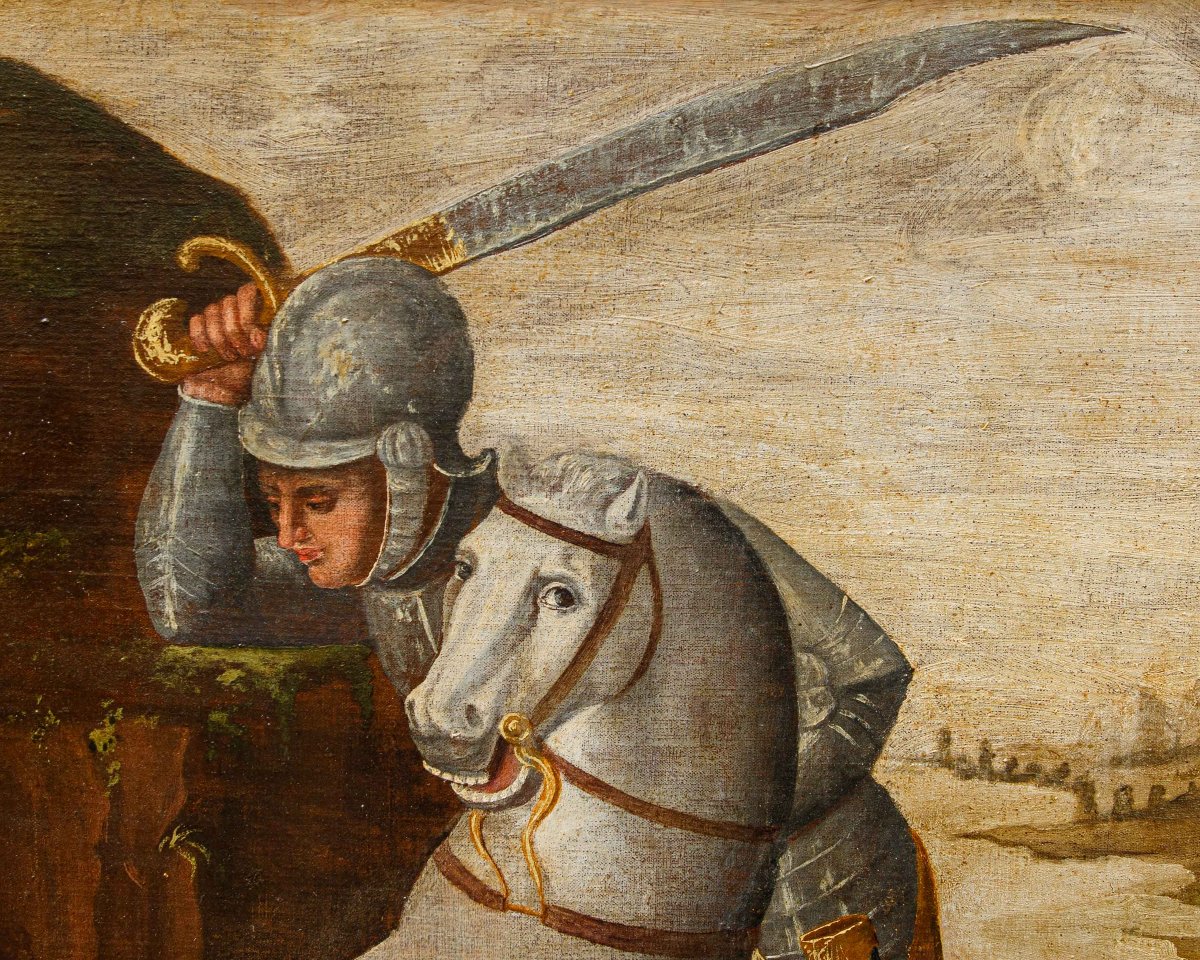
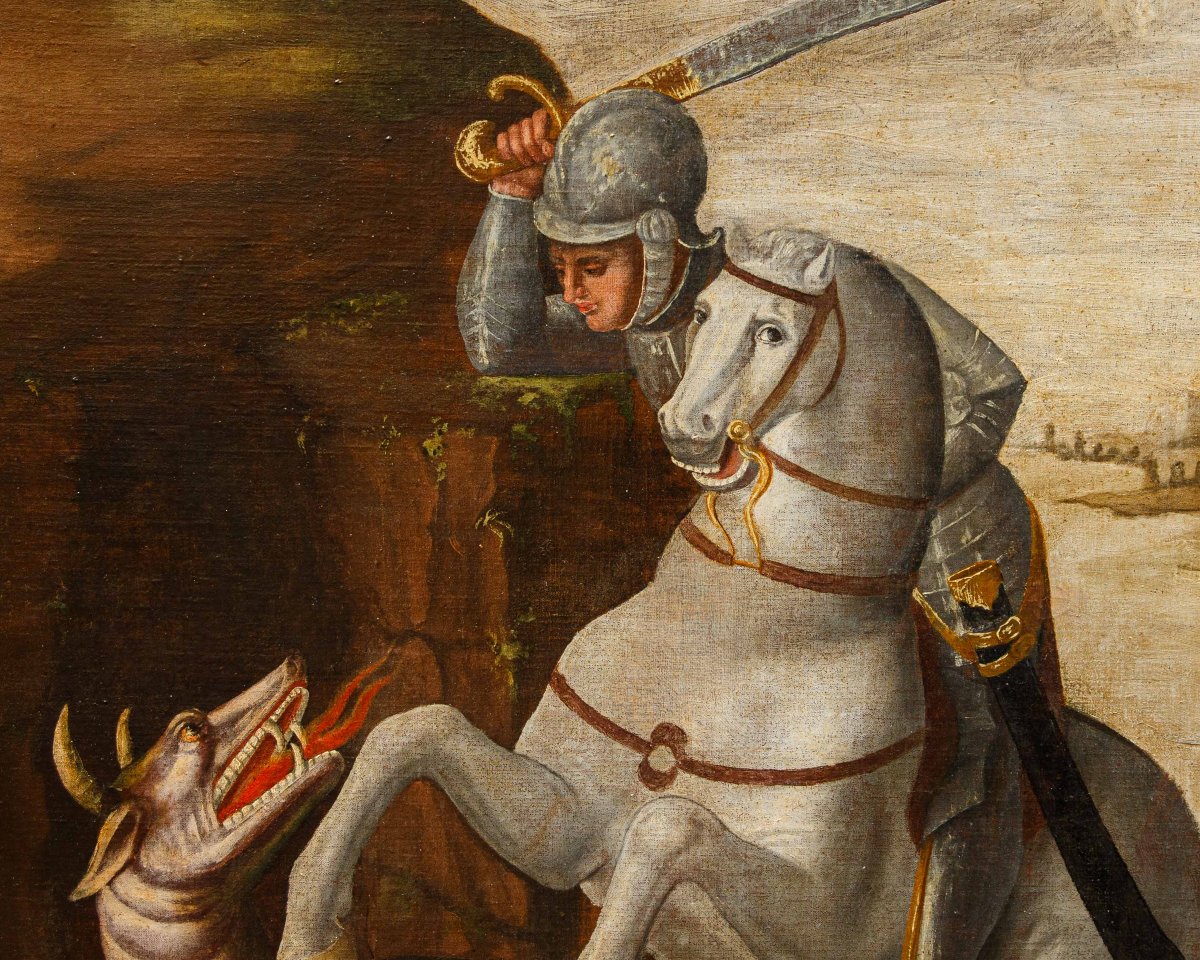
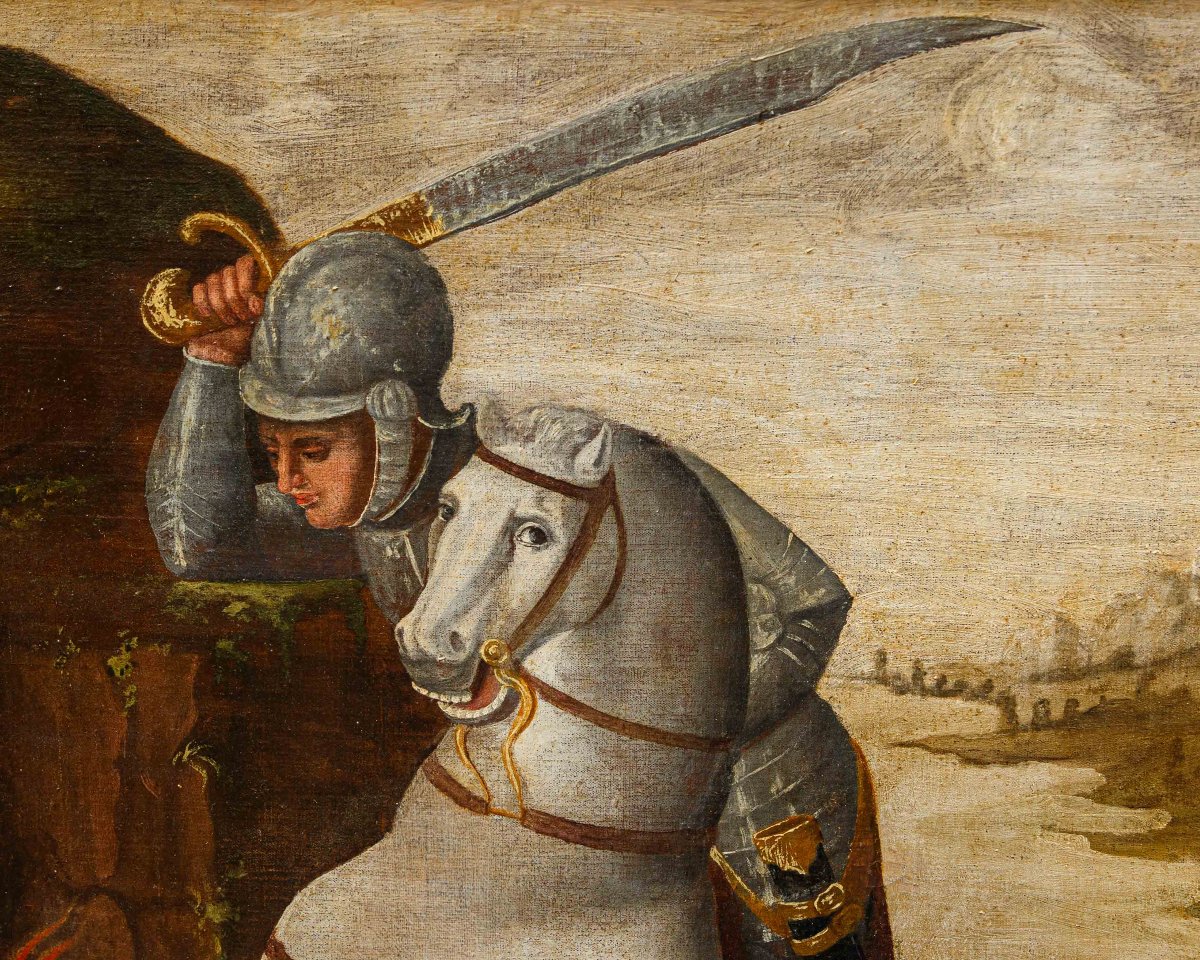
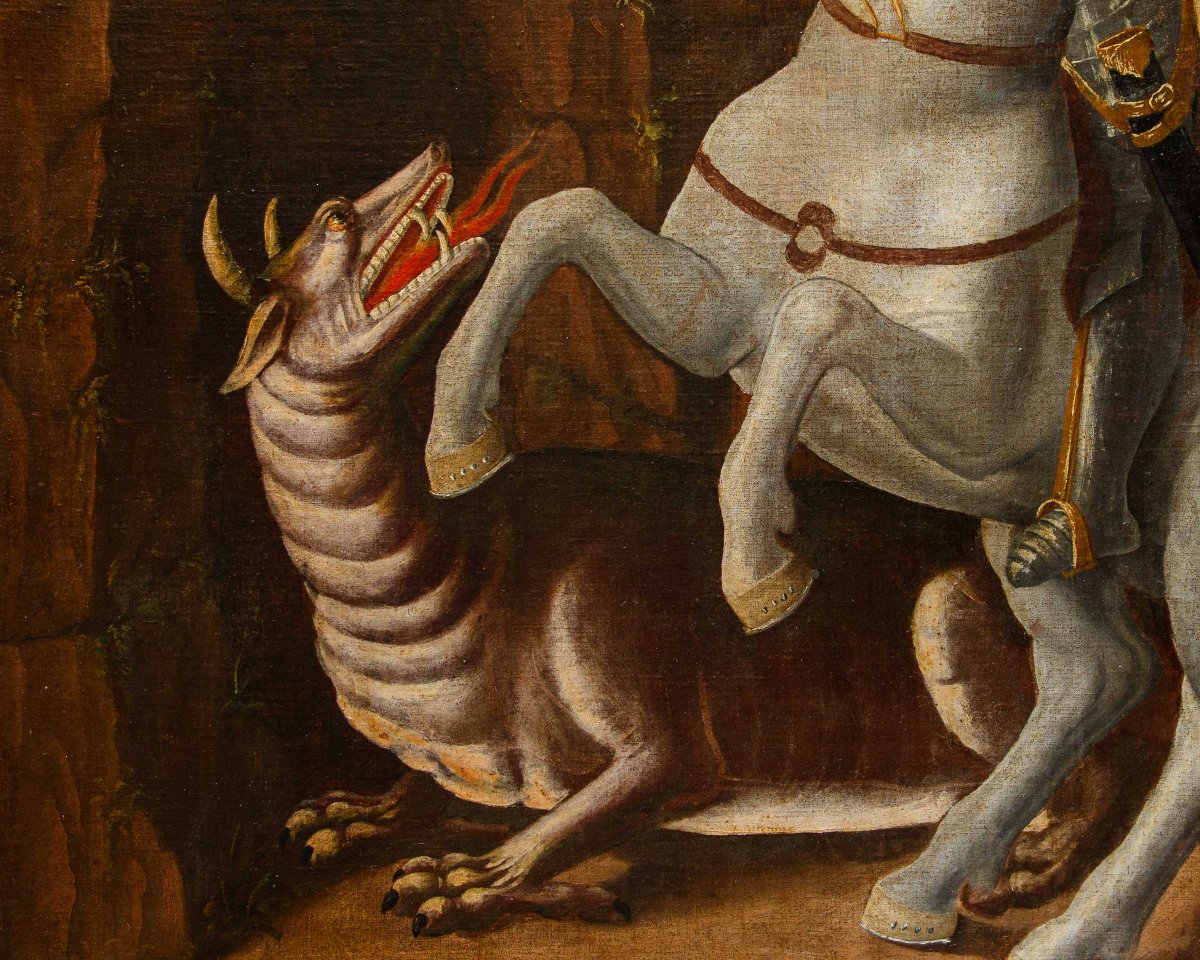
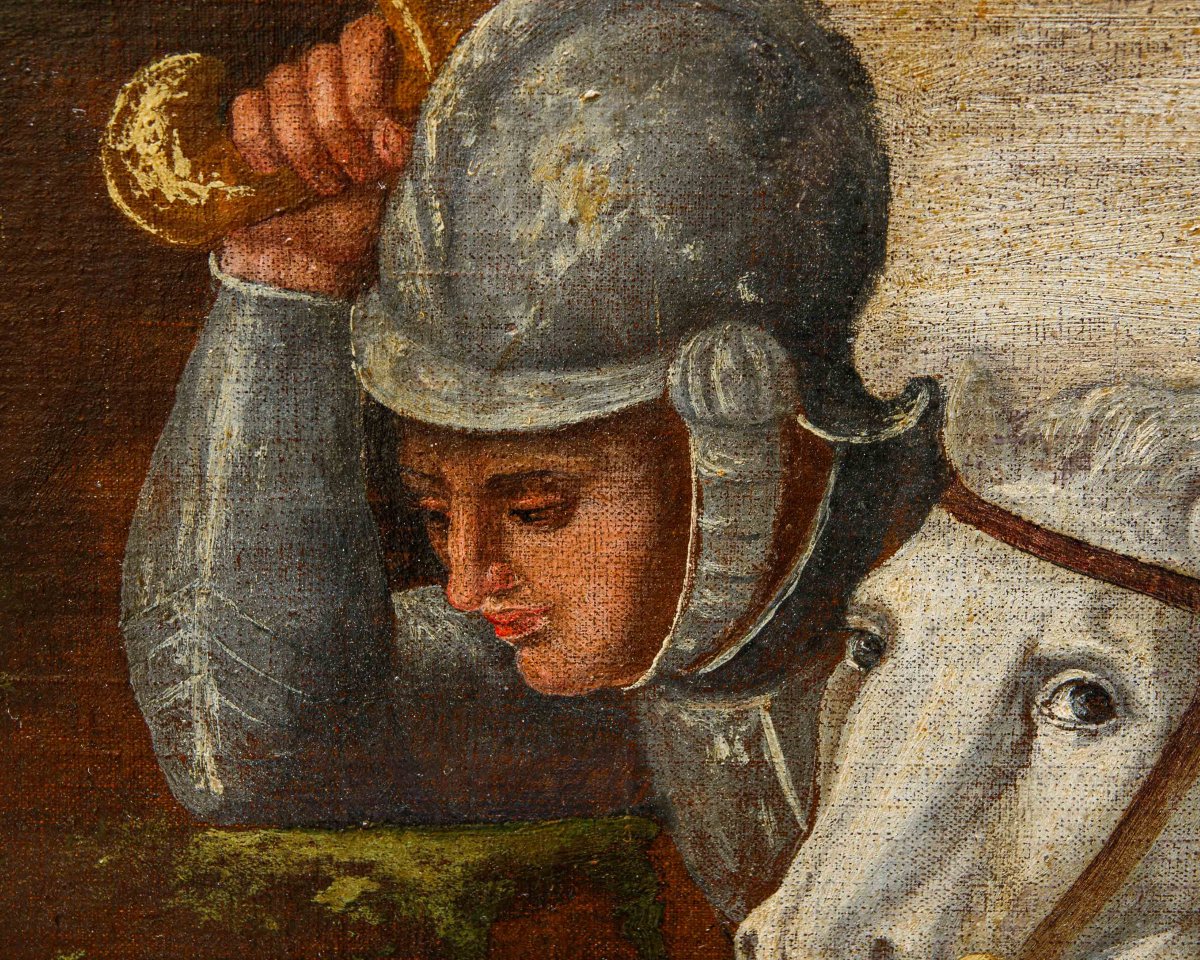
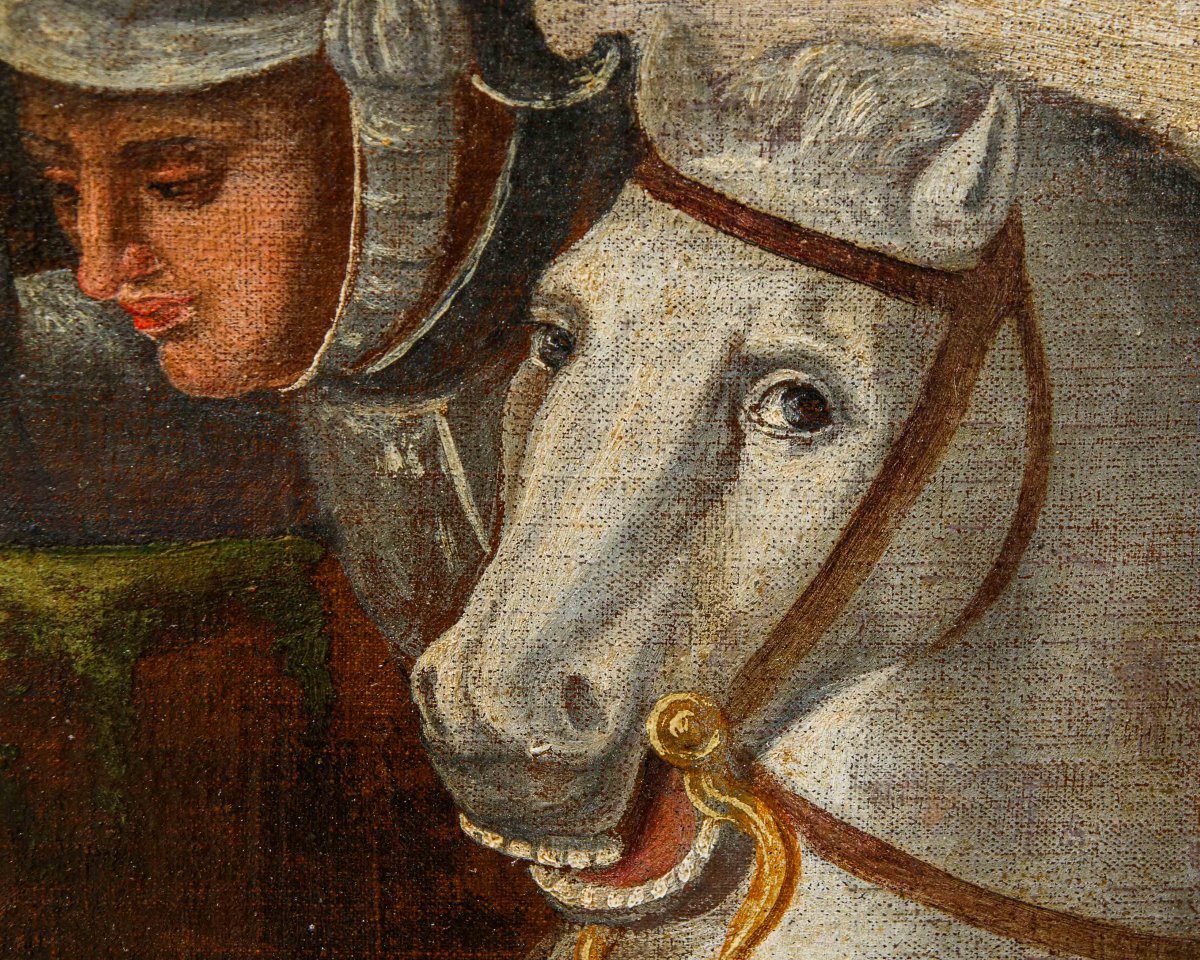
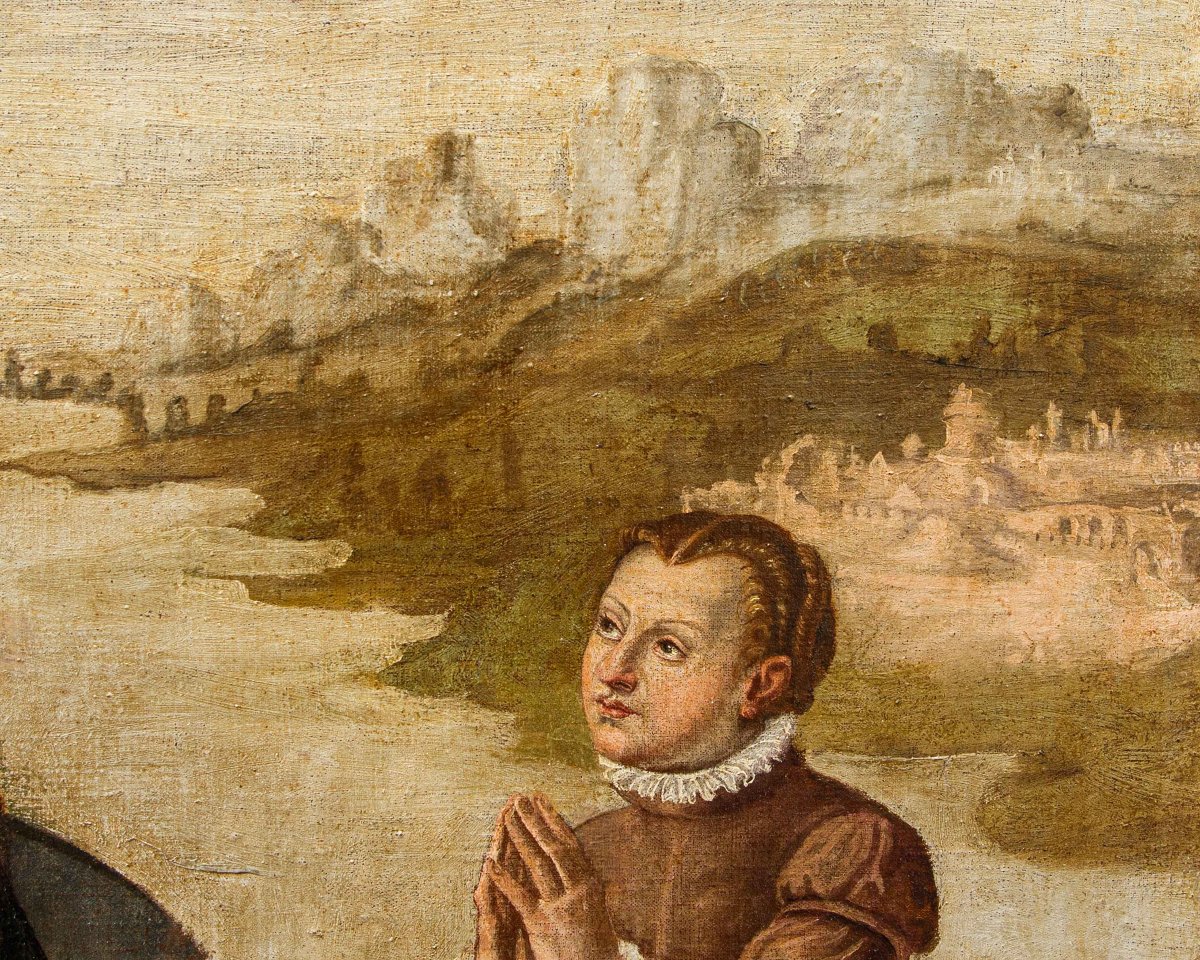
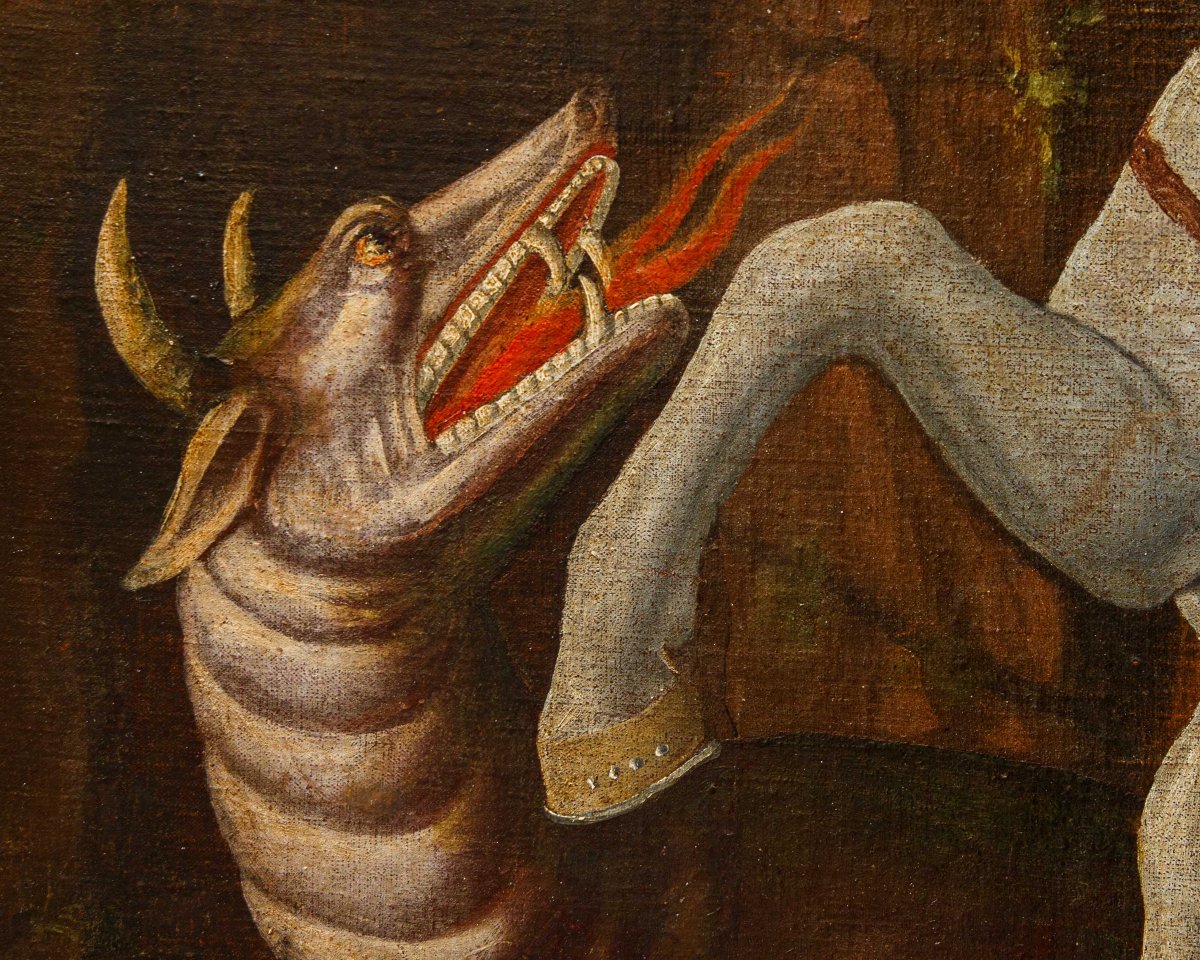
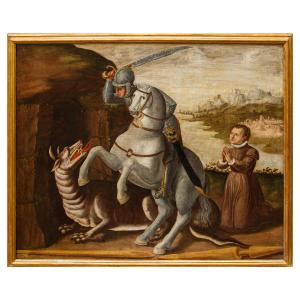
At the heart of a composition thick with tension, a knight in armor charges toward a dragon with its jaws wide open, while a female figure in prayer watches the scene. The white horse rears up vigorously in the center, becoming as much a protagonist as the knight riding it. In the background, an open landscape with a river and a distant city evokes the Flemish and Northern Italian tradition of the late 15th century.
The subject is one of the most beloved in Christian iconography: the legend of Saint George, a Roman soldier martyred in the third century and venerated as the patron saint of knights and warriors. According to hagiographic tradition, George arrived in the city of Silene, in Libya, where a dragon was terrorizing the population by demanding human victims. When it was the king’s daughter’s turn to be offered as a sacrifice, George intervened, confronted the monster on horseback, and slew it with his lance before converting the entire city to Christianity. The episode became a metaphor for the victory of good over evil, of faith over fear, and was interpreted over the centuries in infinite variations by painters, sculptors, and miniaturists throughout Europe.
The presence of the rearing white horse inevitably brings to mind the formal solutions of Paolo Uccello, the 15th-century Florentine master who made the horse in foreshortening one of his pictorial obsessions. In the two versions of Saint George and the Dragon—the one preserved in Paris at the Musée Jacquemart-André and the one at the National Gallery in London—Uccello constructs almost sculptural steeds, rigid in their geometric perfection, symbols of controlled and rational power. The same formal solutions are found in the famous Battle of San Romano, where the horses become monumental war machines, studied from every possible angle with geometric-mathematical rigor.
Period: 16th century
Style: Other Style
Condition: Good condition
Material: Oil painting
Width: 122,5
Height: 102
Reference (ID): 1762364
Availability: In stock