THIS OBJECT WAS SOLD
Jean Veber (1864-1928) - Les Lutteuses 1901 - Raised -
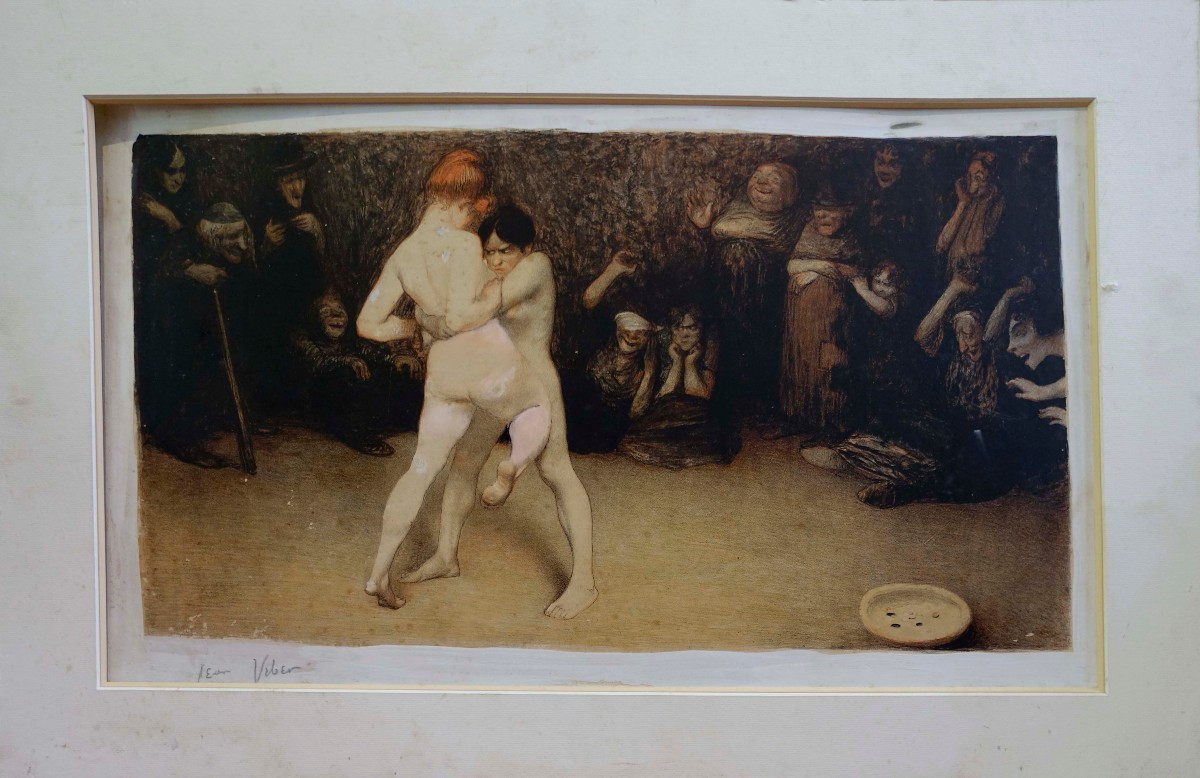
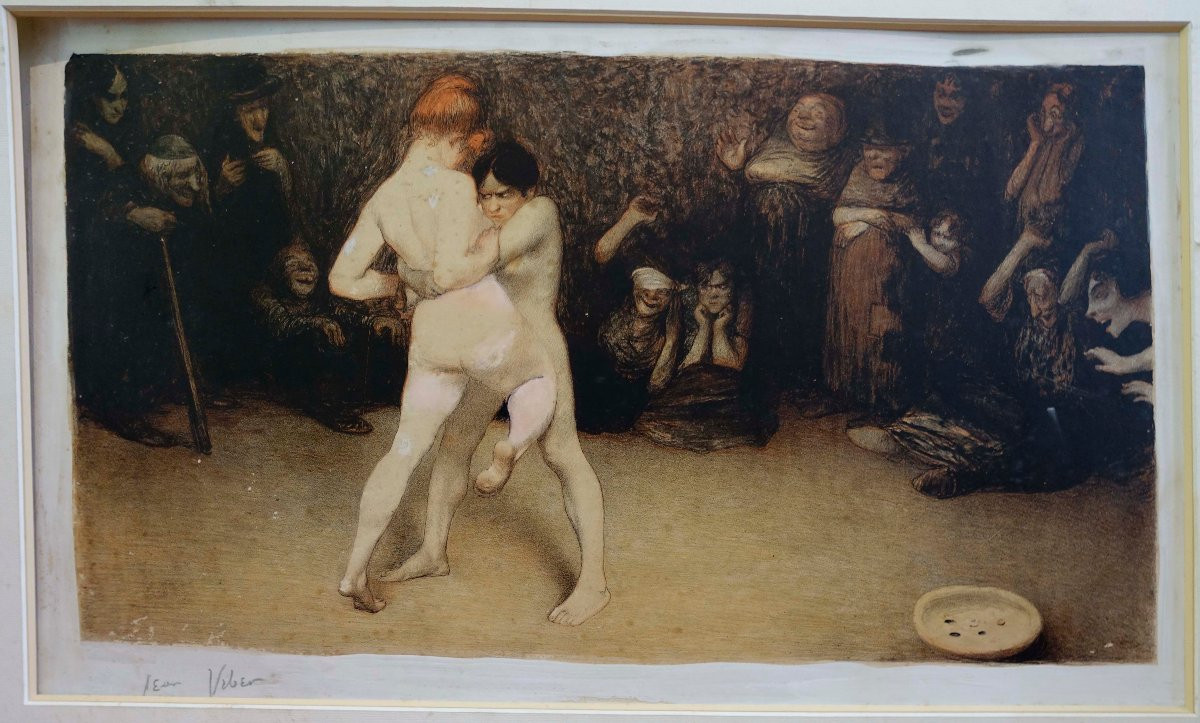
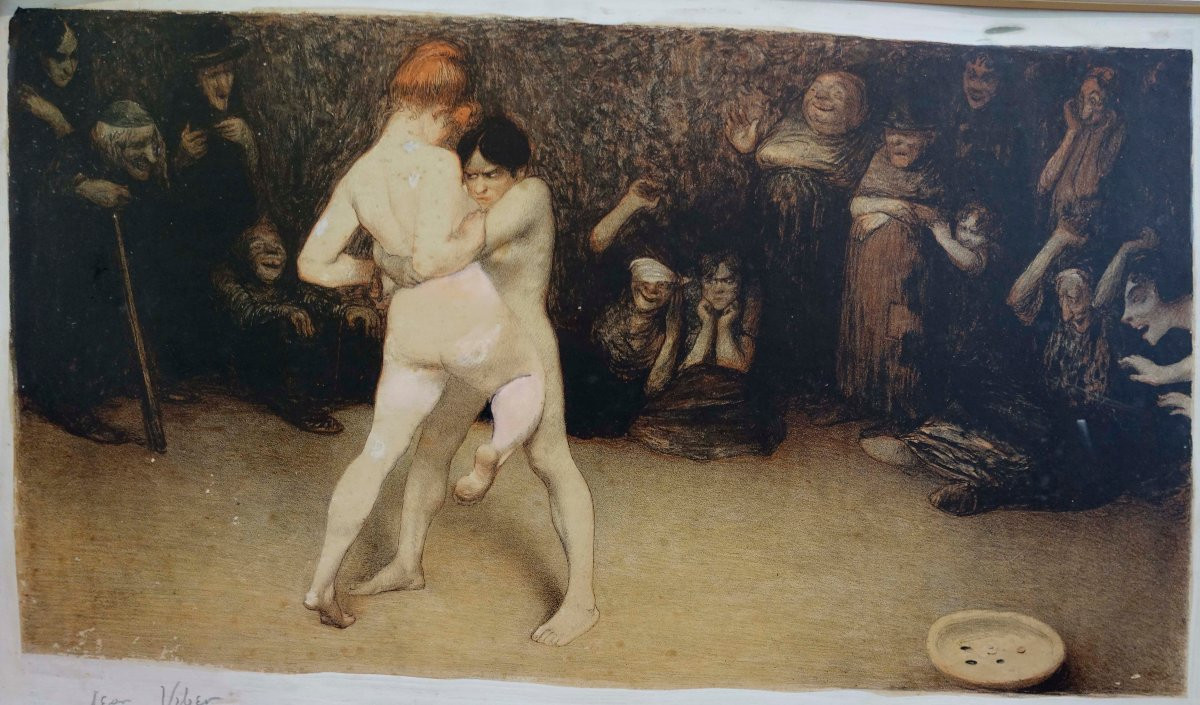
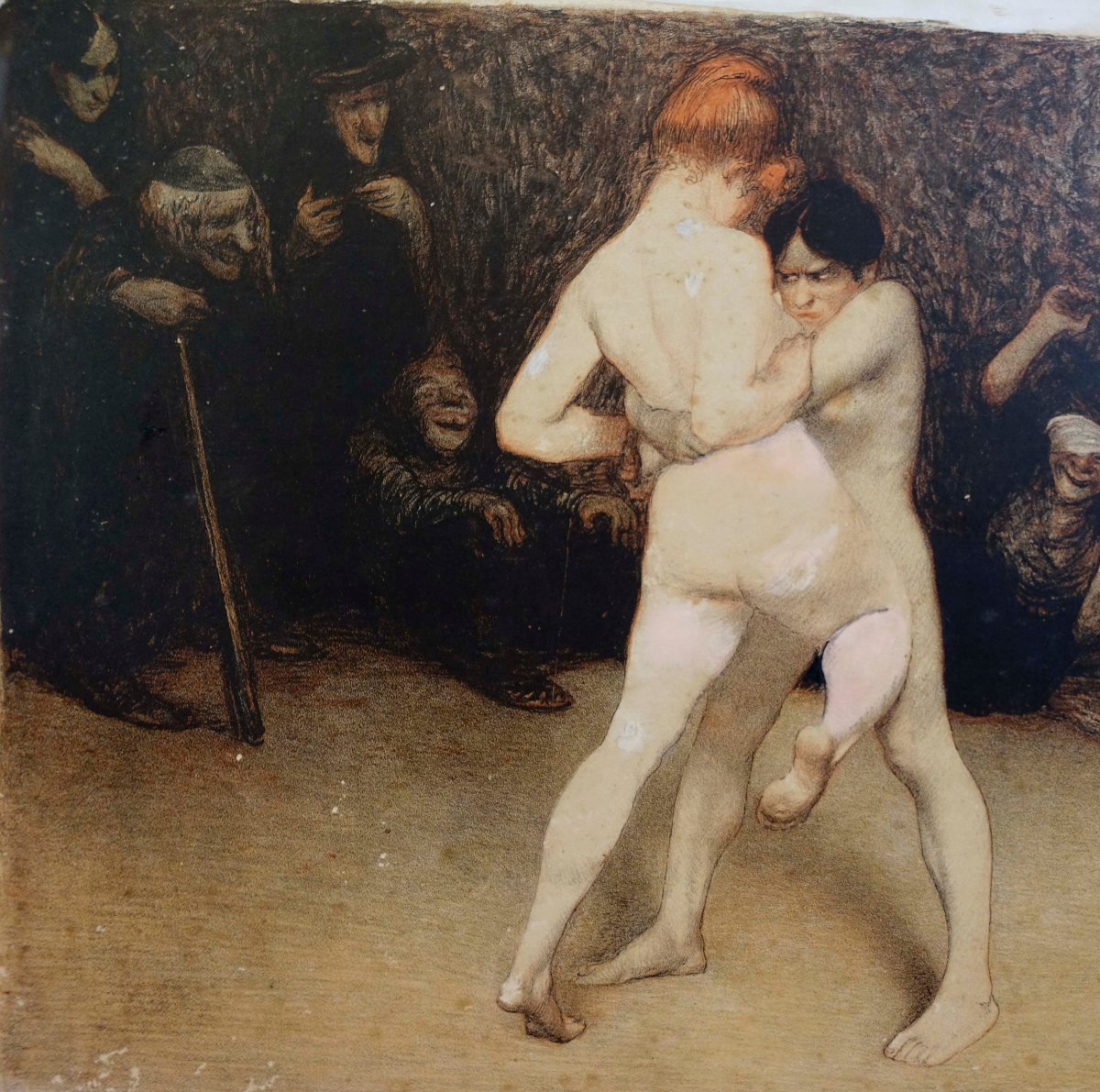
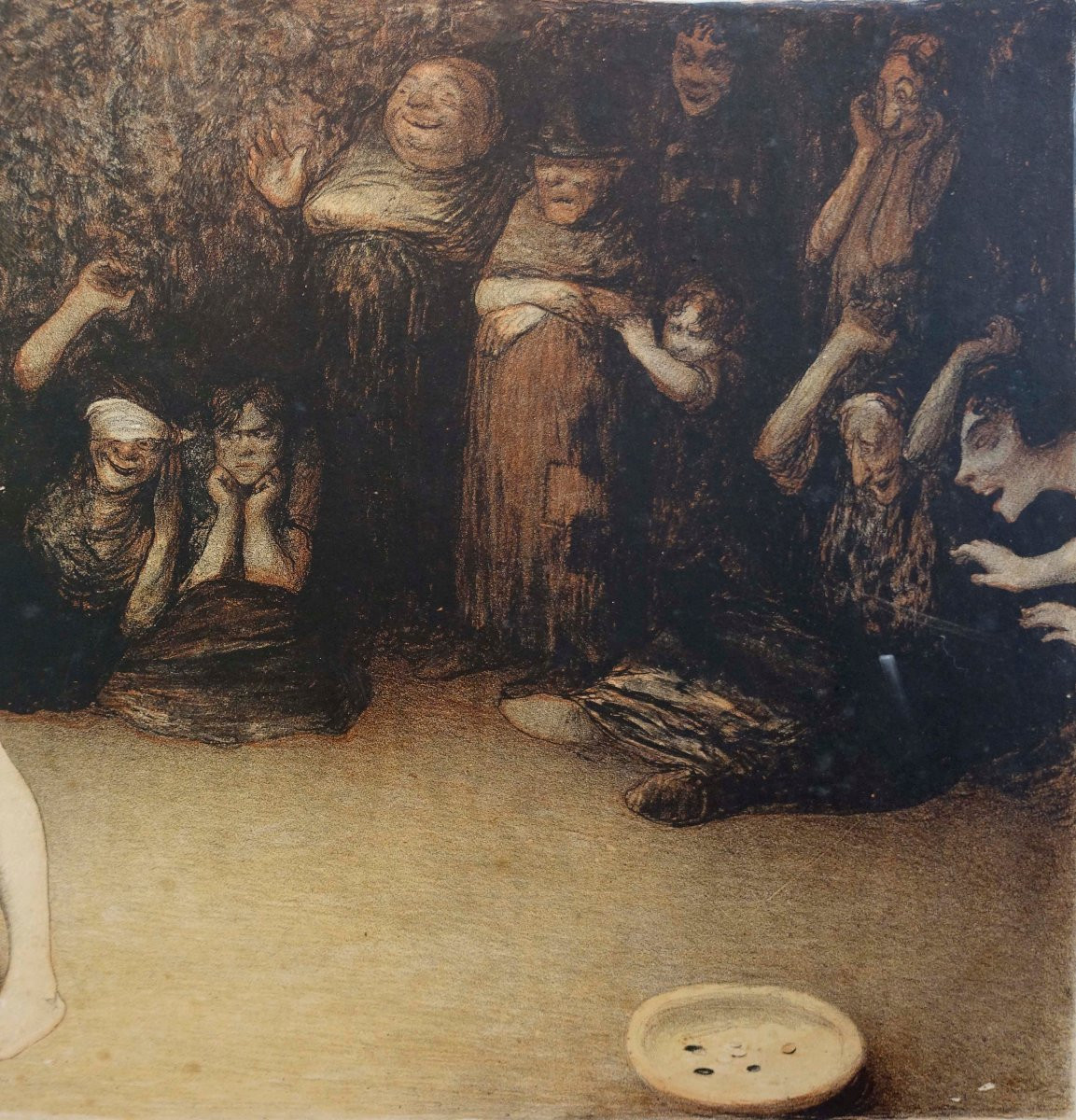
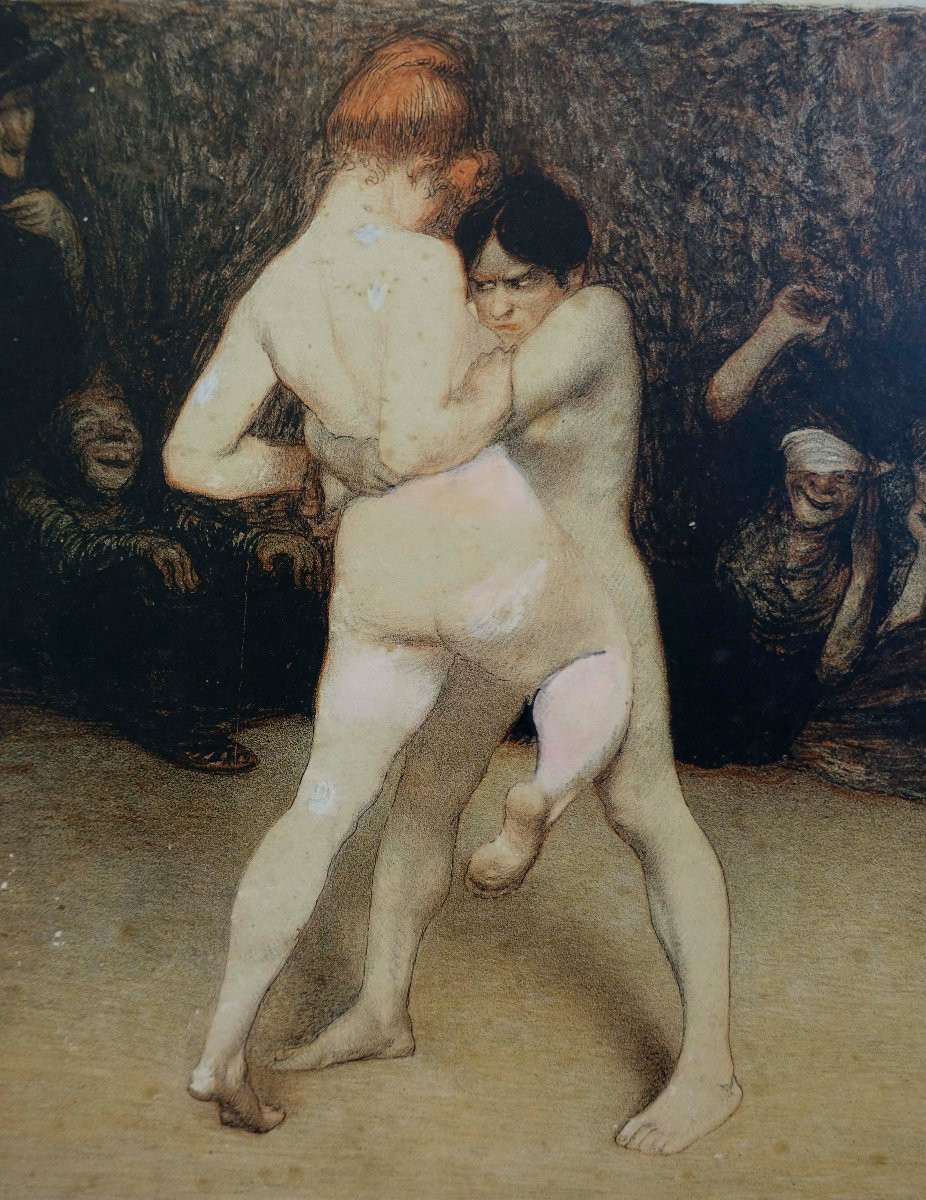
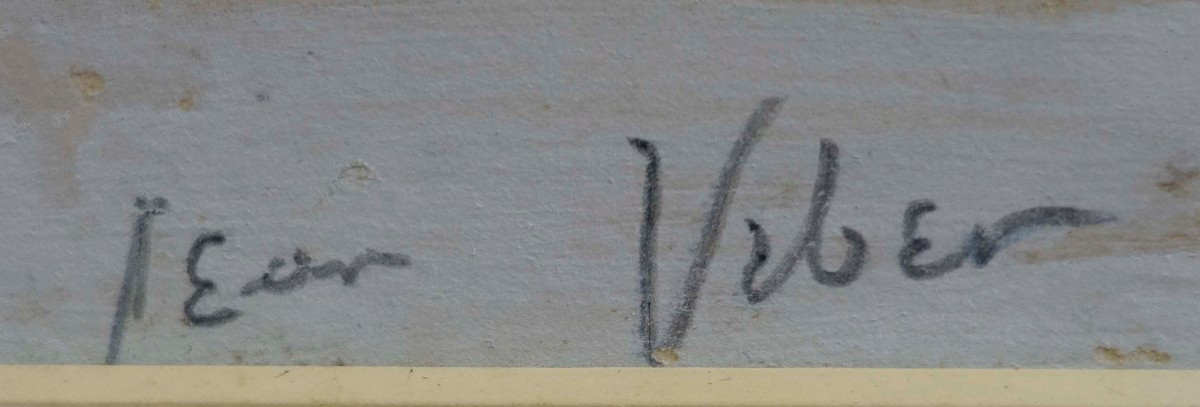
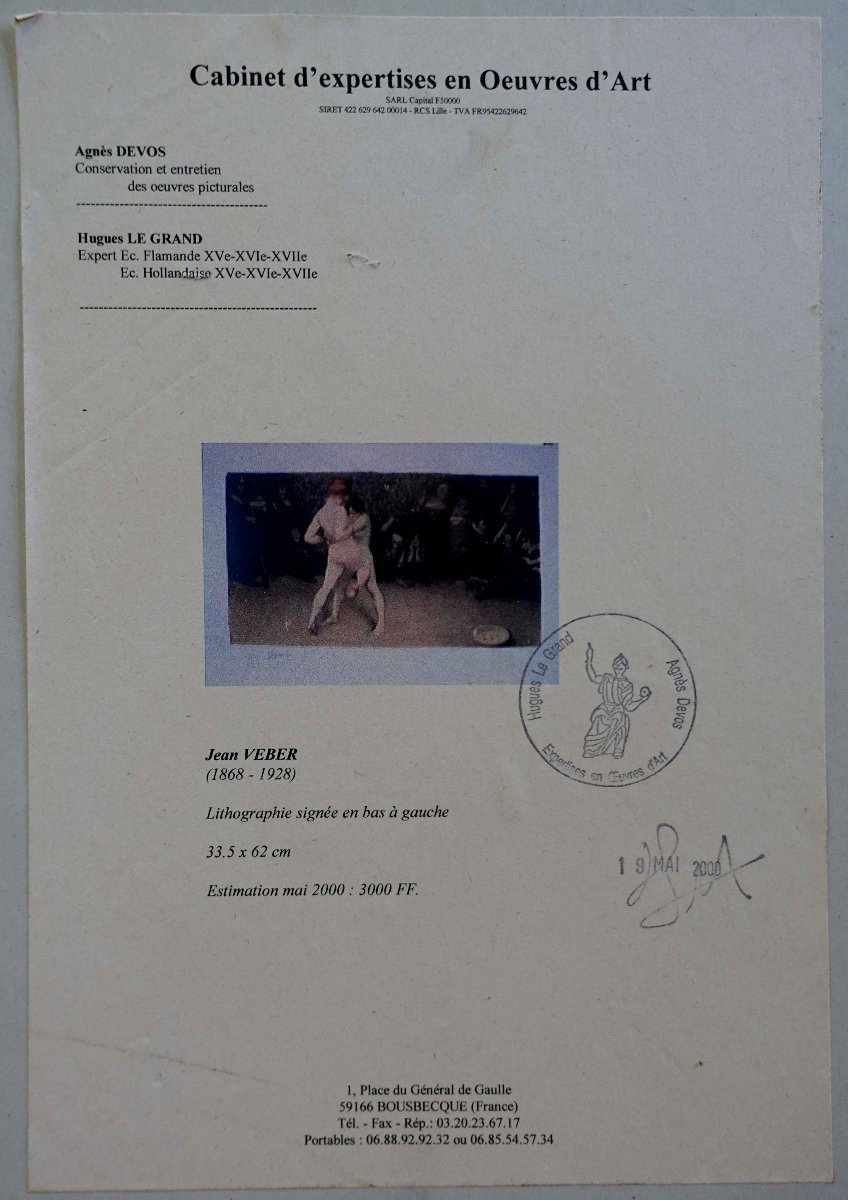
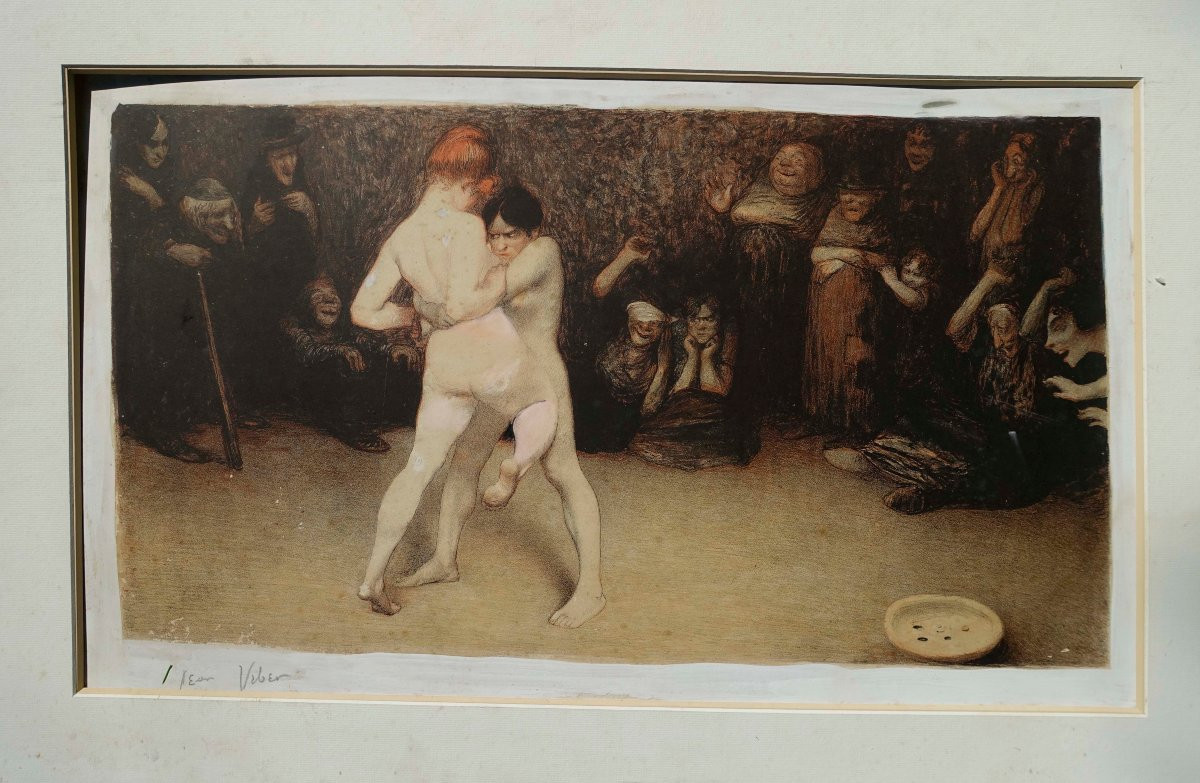
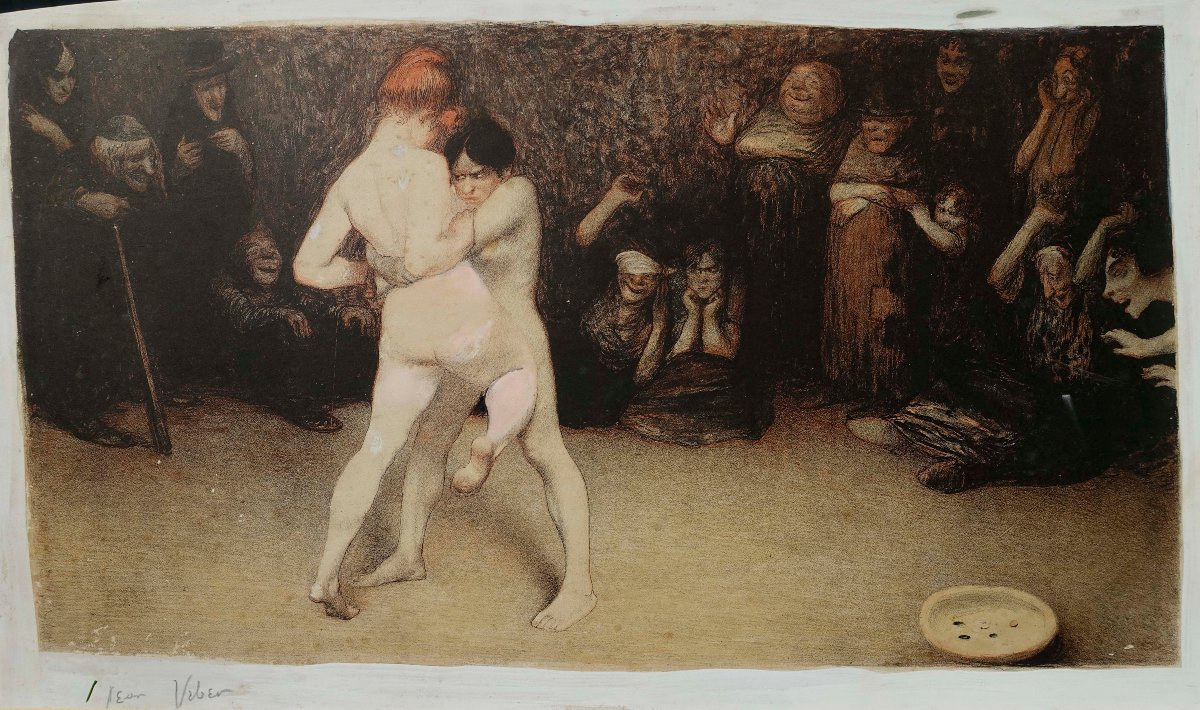
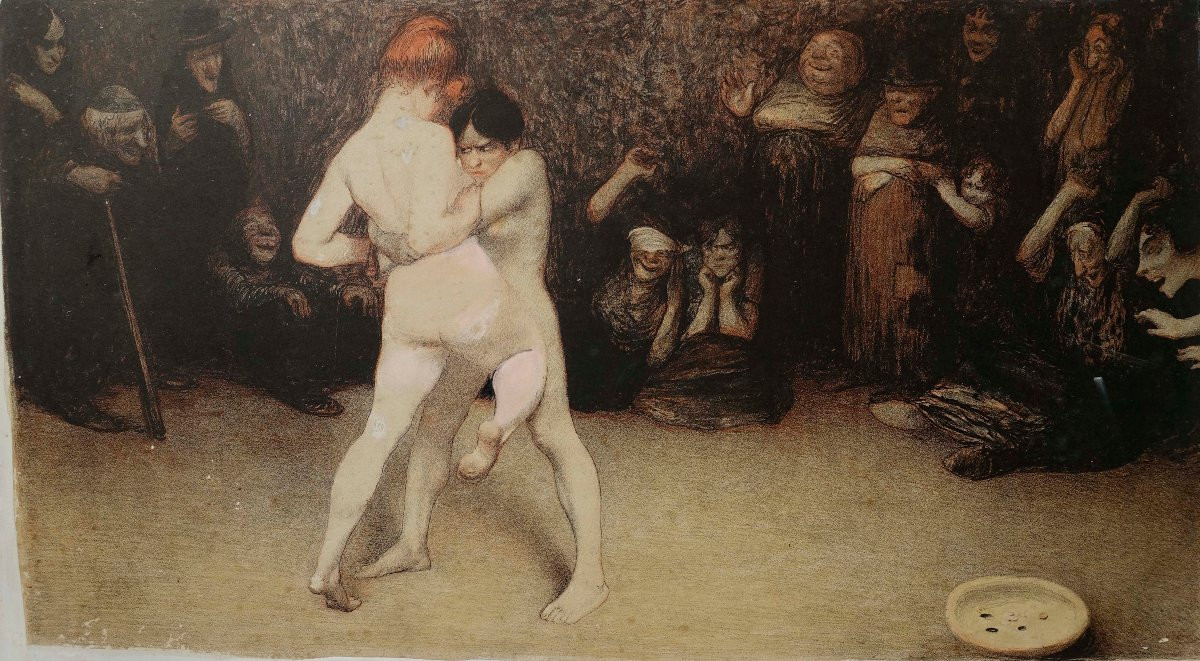
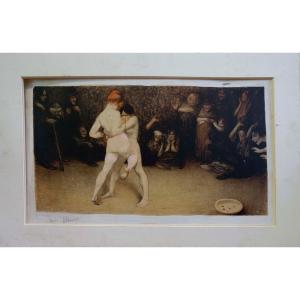


Lithograph with gouache highlights signed in pencil lower left Jean Veber.
The sheet measures 71.5cm x 47cm, the view 65.5cm x 38.5cm, the lithographed part measures 61.5cm x 33.5cm, the total measurement with matting is 80cm x 52.5cm.
Representing Two Wrestlers Surrounded by a Grimacing Crowd, lithograph of 1901 whose border has been enhanced by the artist with white paint on which he has signed in pencil and applied a few touches of paint to the first wrestler, probably an artist's proof.
A copy of this lithograph printed in 1901 at 100 copies is on display at the Musée d'Orsay.
Jean Veber, 1864-1928, French press cartoonist, painter and lithographer born in Paris. He studied with Jules-Élie Delaunay and Alexandre Cabanel at the Beaux-Arts de Paris from 1883. Trained as a painter, Jean Veber became a draughtsman when his brother Pierre Veber encouraged him to join his newspaper, Gil Blas. In 1897, his drawing showing Otto von Bismarck as a butcher of his people caused a controversy. He worked for the newspaper L'Assiette au beurre. Some of his drawings caused a scandal, such as those in issue no. 26 of September 28, 1901, devoted to the reconcentration camps in the Transvaal. They denounced the atrocities committed by the British in South Africa during their war against the Boers, and drew the wrath of the censors. The artist drew Edward VII's face on Britannia's defecating buttocks. Despite some Anglophobic outrage at the height of the Entente Cordiale, his drawings appear to be prophetic visions of all the great mass crimes of the twentieth century. Jean Veber's fantastic and morbid drawings are certainly the most striking part of his work. Long before the Surrealists and the development of science fiction, and rooted in Goya, Daumier and the Dutch, he explored a universe of incomparable power and strangeness at the heart of the human condition. A foe of oppression, he dealt with a number of social issues, translating into his work the anguish of the great upheavals of the early 20th century. His caricatures were also published in Le Rire. During the First World War, aged 50, he enlisted voluntarily in 1914 and took part in all the major battles of the conflict. In July 1917, he was gassed and saved by his men from certain death. Although his state of health prevented him from returning to the front, he was reunited with his regiment in 1918 for the entry of French troops into Alsace as flag bearer. A true hero of the Great War, Jean Veber ended the conflict with the Croix de Guerre, Bronze and Vermeil with Palms, the Médaille Militaire, Chevalier de la Légion d'Honneur, and was made an Officer in 1920. General Gouraud said of him: "I admired him as an artist, I admire him even more as a soldier, I give him as a model. He should serve as an example to all Frenchmen". He returned from the war very weakened, producing virtually nothing after 1918. Since 1930, a street has been named after him in the 20th arrondissement of Paris, where he died on November 28, 1928 at his home at 149 boulevard Pereire (17th arrondissement), where he had lived since 1893. Works in museums in Cleveland, San Francisco, Castres, Lille, Nantes, Paris (Bibliothèque nationale de France, Musée Carnavalet, Musée du Louvre and Musée d'Orsay) and Tours. Artist listed in Bénézit, Coté Artprice, Artnet, Akoun, etc.
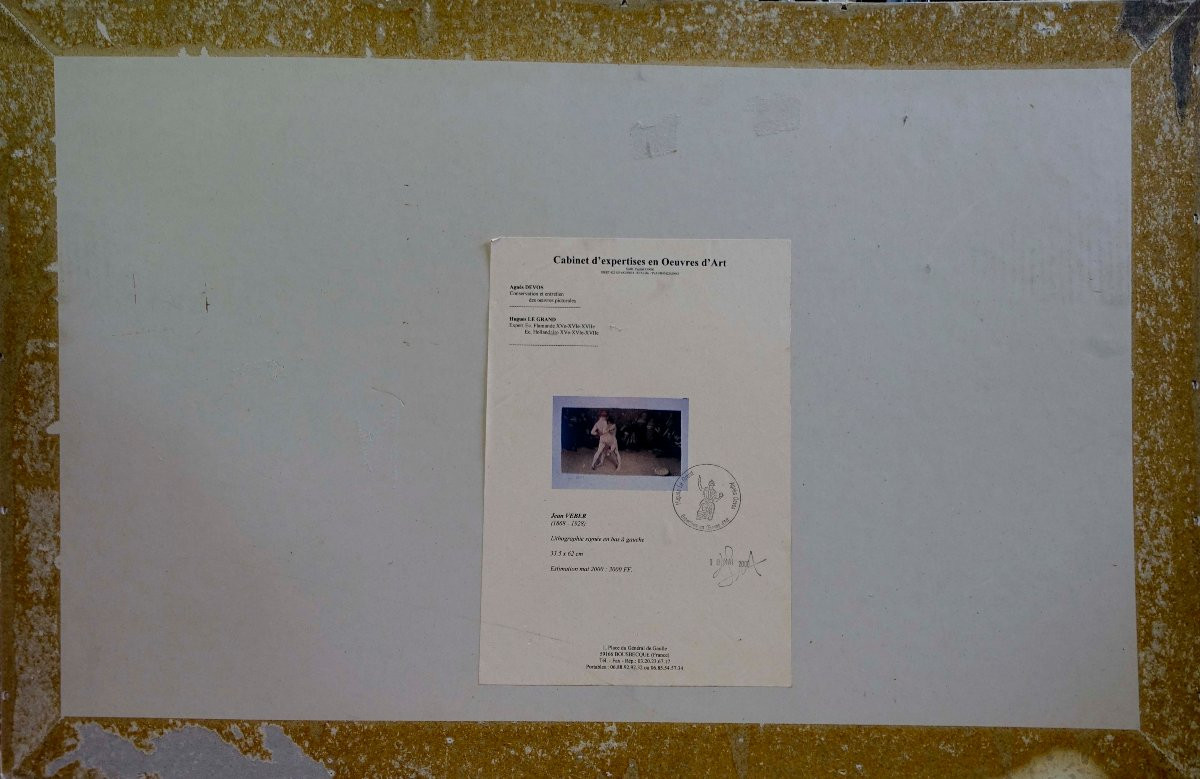
This sheet of paper, marouflaged on original cardboard is in good condition.
The lithograph, not dirty, is in good original condition.
In a more recent mat that is a little dirty.
Lithograph in good condition.
Shipping costs by insured Colissimo Recommandé:
France: 25€
Belgium: 12€
EEC: 35€
USA: On Request.
Explore similar pieces and discover your ideal find:
lithography