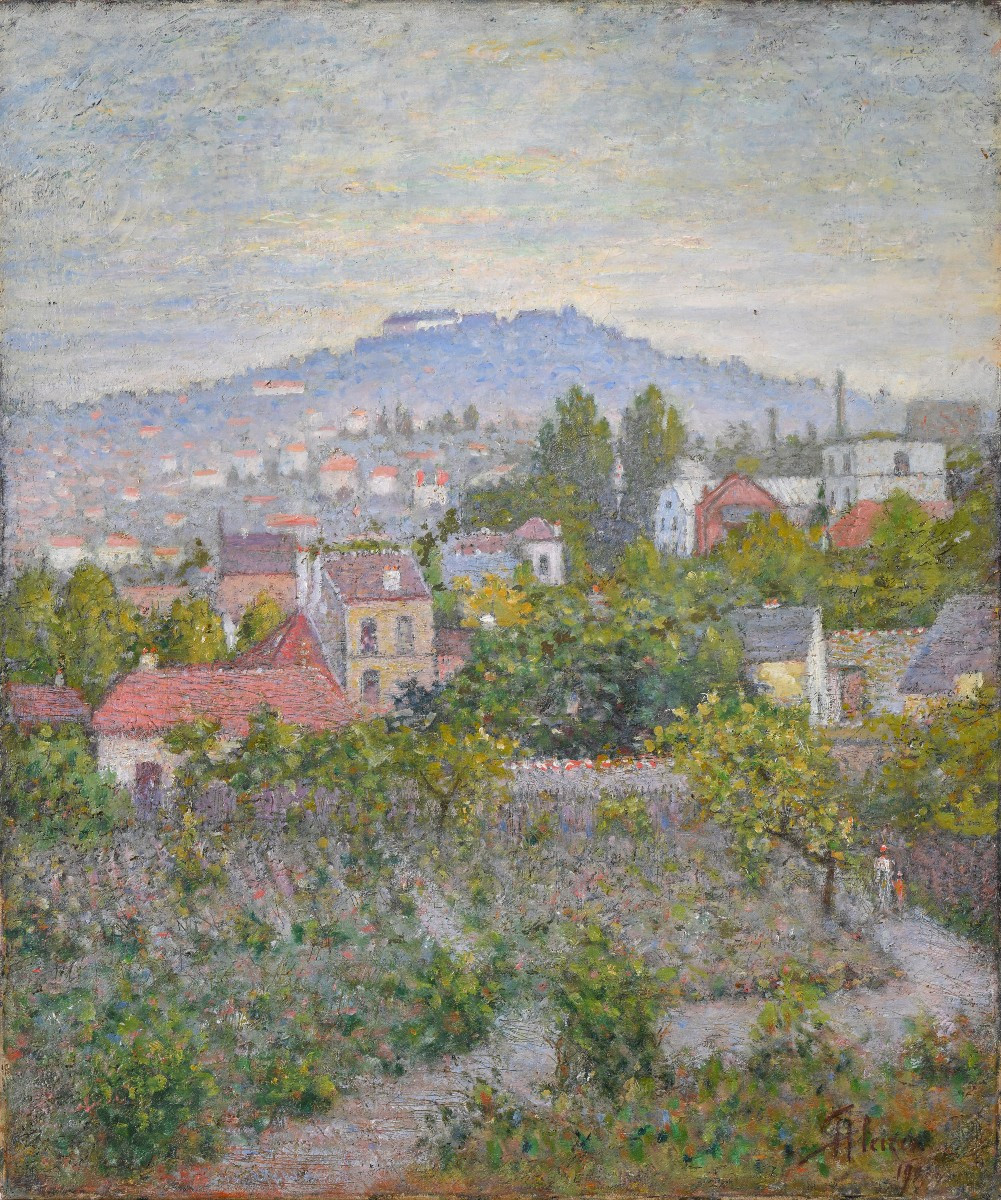
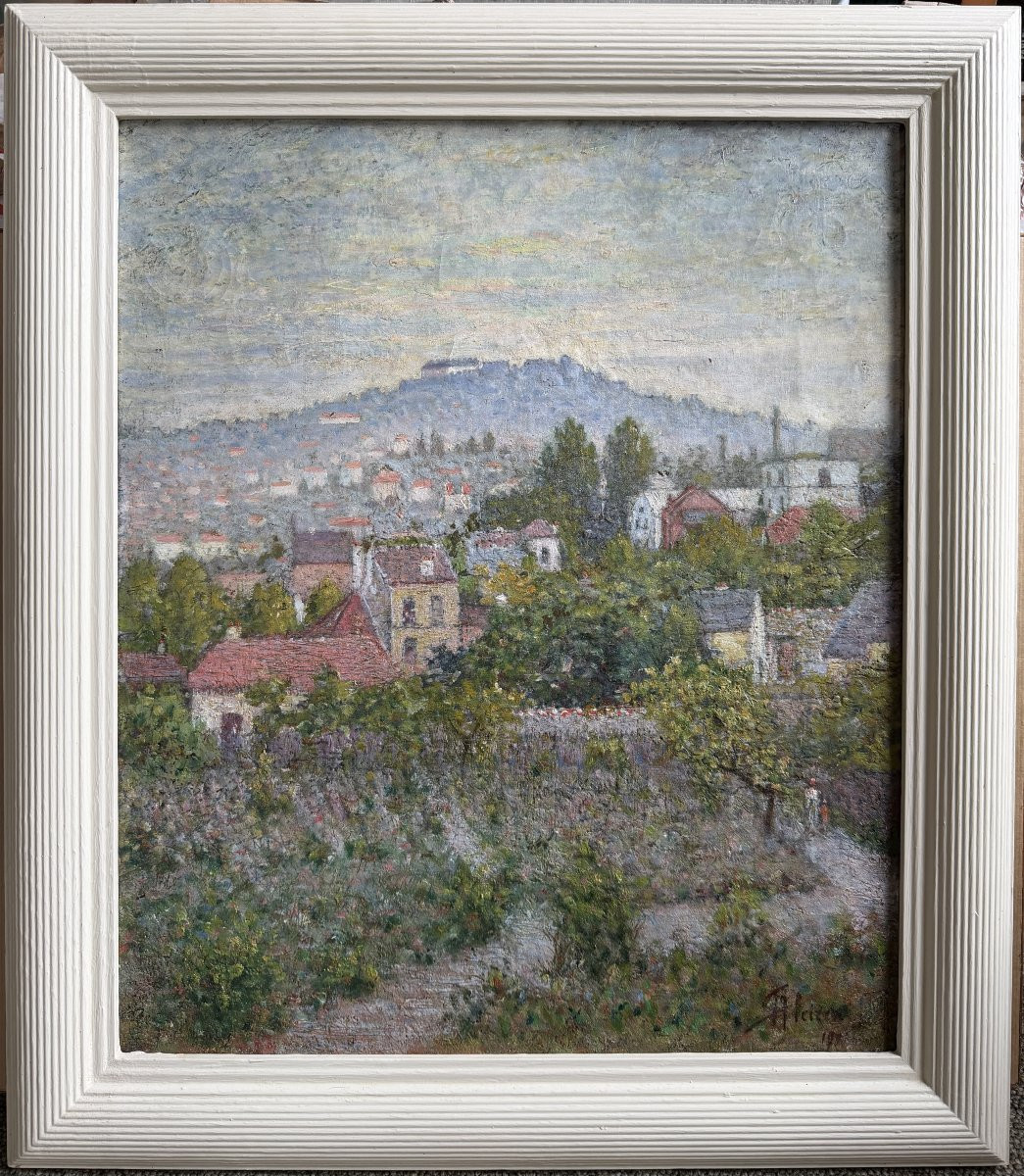
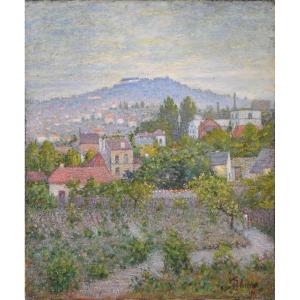


Honoré Auclair Gleizes (1855-1920) - Mont Valérien As Seen From Courbevoie, 1901
Artist: Honoré Auclair Gleizes (1855-1920)
Honoré AuclairGleizes(Capoulet, Ariège, 1855 - Courbevoie, 1920)
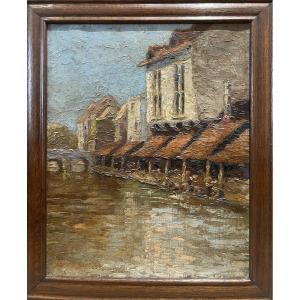
Le MontValérien seen from Courbevoie ,1901
Oil on canvas
55 x 45.5 cm
67 x 58 cm with frame
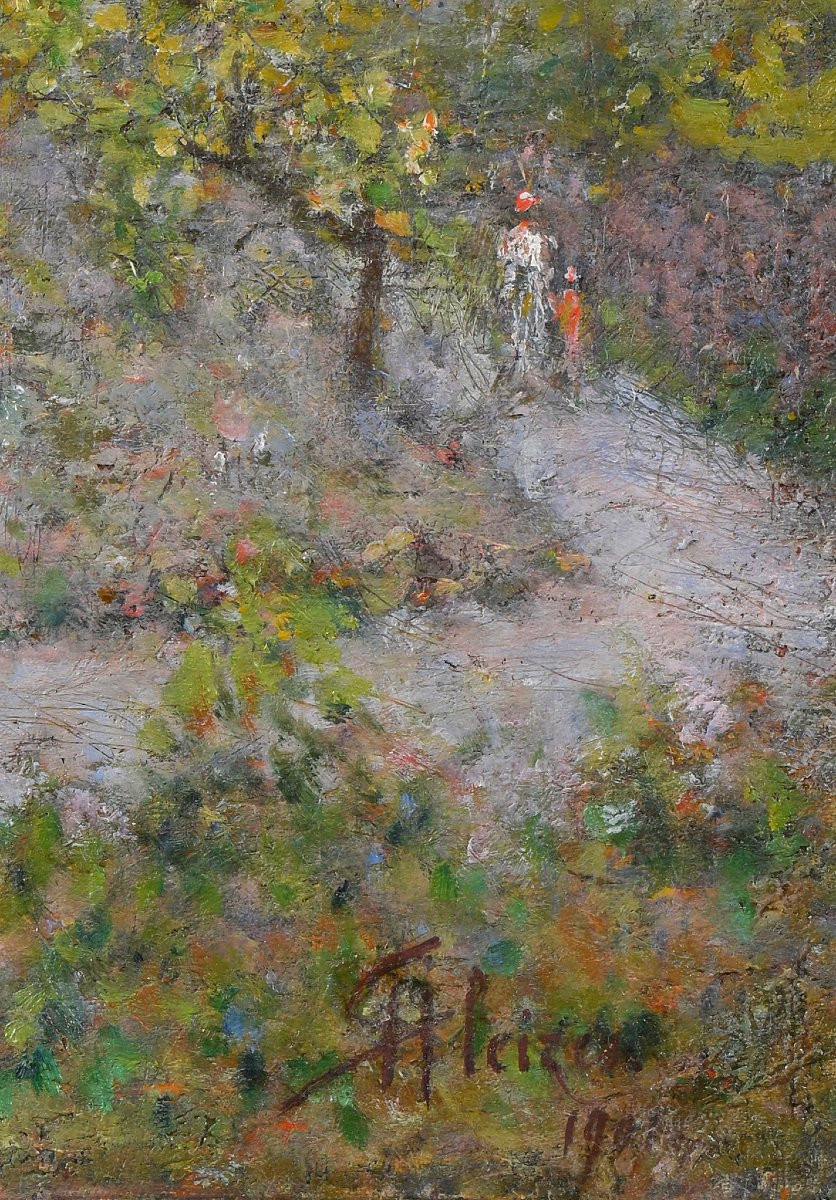
Signed and dated "H.Gleizes 1901" lower right
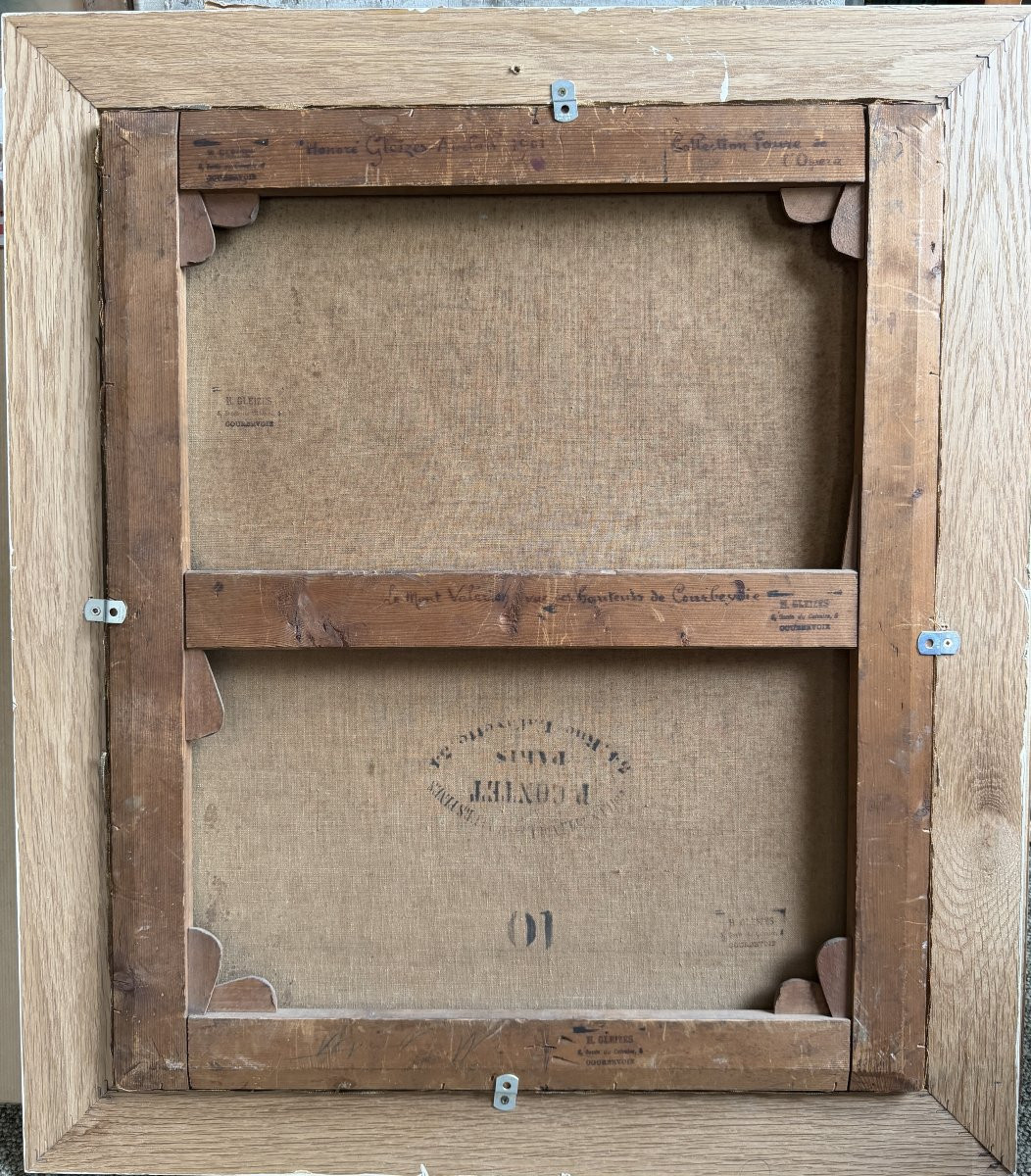
Inked annotation "LeMont Valérien vu des hauteurs de Courbevoie" on the stretcher on verso
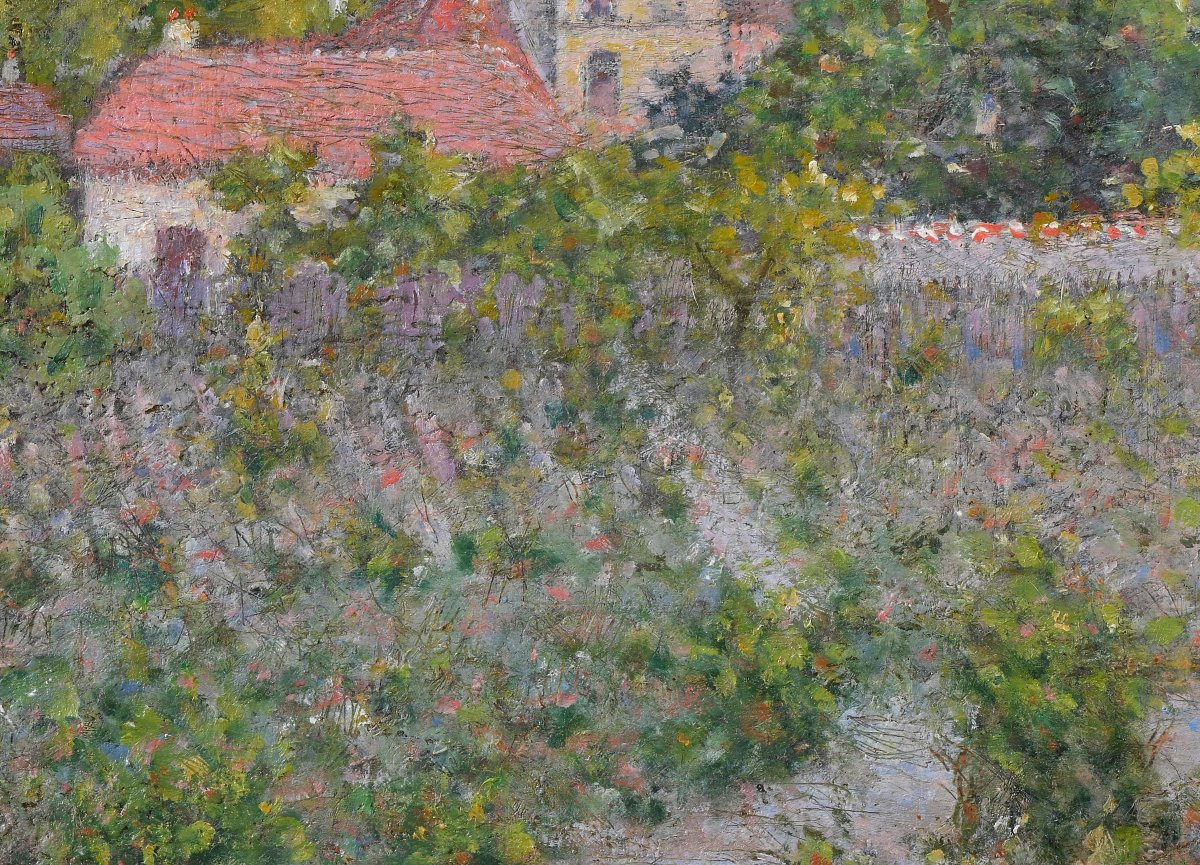
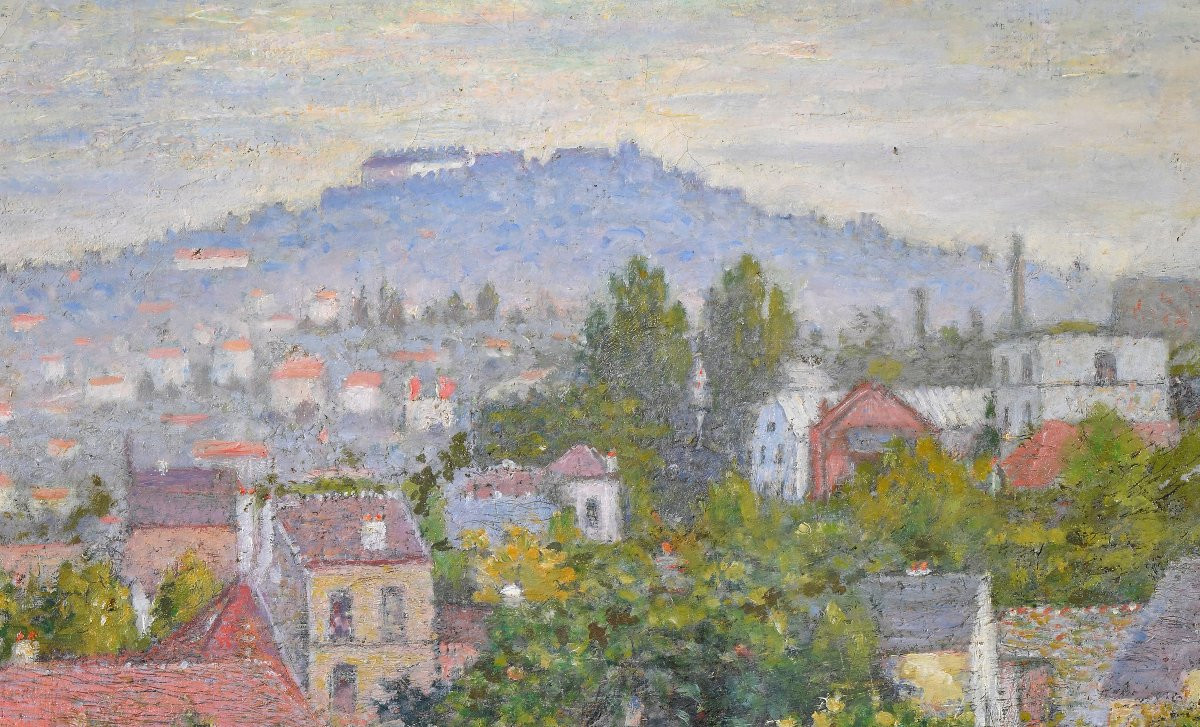
Born in 1855 in Ariège, in the heart of the Pyrenean Midi, HonoréGleizes moved to Paris at an early age to pursue an artistic career.Settling in Courbevoie with his family, he frequented painting studiosand quickly developed a career as a portraitist and landscape painter, adopting a stylea style close to the still nascent Impressionist movement. With the exception of anan appearance at the Salon des Indépendants in 1895, he initially remainedParisian salons. Above all, he played an eminent role as an informal teacherto his nephew Albert Gleizes, introducing him to drawing and paintingthe practice of drawing and plein-air painting along the banks of the Seine inin Neuilly, exerting a decisive influence on his artisticartistic development. In 1903, he exhibited a major group of eight landscapes at the Salon des Indépendants.of eight landscapes, some of whose atmospheric titles - "Après l'orage" (cat. no. 968), "Derniers rayons" (cat. no. 970), "Effet de matin" (cat. no. 971) - bear witness to his Impressionist preoccupations.impressionist preoccupations. He repeated the experience the following year at thesame Salon with six new canvases in the same spirit, capturing the changingthe changing aspects of light. In 1911, when the firstfirst Cubist exhibitions, Albert Gleize took refuge for a while with histook refuge for a time with his uncle Honoré in Courbevoie. This coincided with the latter'sthe latter's strange choice of the pseudonym Auclair, under which heunder which he exhibited at the Salon des Indépendants between 1911 and 1913. Although he neverpublic recognition comparable to that of his nephew,Honoré occasionally shared the limelight with the young avant-gardists, notably bythree landscapes at the Salon de la Section d'Or, the famous exhibition heldin October 1912 at the Galerie La Boétie by the Puteaux group, concurrentlythe Salon d'Automne.Painted in 1901, Mont Valérien, seen from the heights of Courbevoie in a bold verticalvertical framing, the oil on canvasbelongs to Honoré Gleizes' mature period. As early as thethe end of the 19th century, Gleizes developed a sensitive, finely structuredsensitive, finely structured landscape painting, on the bangs of the great avant-gardespersonal finesse. Observed from a slightly overhanging positionprobably from the heights of the neighborhood where the artist lived,houses of Courbevoie adjoin the garden in the foreground, while in the backgroundsilhouette of Mont Valérien, shrouded in a bluish mist, looms on the horizon like a shadowon the horizon like the mythical shadow of Vesuvius. The landscape is bathed in an atmosphericatmospheric light, skilfully captured in the reflection of a skyof pink and pale yellow. In this suspended light, most likely morninglight, the geometric volumes of the houses and the green masses of thevegetation blend into a soft harmony, with no break in tone. Pointillistin places, the brushstroke is quickly poised, more in search of a poeticpoetic rather than technical balance. Like a Pissarro or aLebasque, Honoré Gleizes allows us to contemplate a familiar, intimate landscapelandscape, faithfully transcribed by the flickering brushwork.Silent, peaceful and evocative, it invites us to pause and reflecton the eve of the century's upheavals.
Le MontValérien seen from Courbevoie ,1901
Oil on canvas
55 x 45.5 cm
67 x 58 cm with frame
Signed and dated "H.Gleizes 1901" lower right
Inked annotation "LeMont Valérien vu des hauteurs de Courbevoie" on the stretcher on verso
Born in 1855 in Ariège, in the heart of the Pyrenean Midi, HonoréGleizes moved to Paris at an early age to pursue an artistic career.Settling in Courbevoie with his family, he frequented painting studiosand quickly developed a career as a portraitist and landscape painter, adopting a stylea style close to the still nascent Impressionist movement. With the exception of anan appearance at the Salon des Indépendants in 1895, he initially remainedParisian salons. Above all, he played an eminent role as an informal teacherto his nephew Albert Gleizes, introducing him to drawing and paintingthe practice of drawing and plein-air painting along the banks of the Seine inin Neuilly, exerting a decisive influence on his artisticartistic development. In 1903, he exhibited a major group of eight landscapes at the Salon des Indépendants.of eight landscapes, some of whose atmospheric titles - "Après l'orage" (cat. no. 968), "Derniers rayons" (cat. no. 970), "Effet de matin" (cat. no. 971) - bear witness to his Impressionist preoccupations.impressionist preoccupations. He repeated the experience the following year at thesame Salon with six new canvases in the same spirit, capturing the changingthe changing aspects of light. In 1911, when the firstfirst Cubist exhibitions, Albert Gleize took refuge for a while with histook refuge for a time with his uncle Honoré in Courbevoie. This coincided with the latter'sthe latter's strange choice of the pseudonym Auclair, under which heunder which he exhibited at the Salon des Indépendants between 1911 and 1913. Although he neverpublic recognition comparable to that of his nephew,Honoré occasionally shared the limelight with the young avant-gardists, notably bythree landscapes at the Salon de la Section d'Or, the famous exhibition heldin October 1912 at the Galerie La Boétie by the Puteaux group, concurrentlythe Salon d'Automne.Painted in 1901, Mont Valérien, seen from the heights of Courbevoie in a bold verticalvertical framing, the oil on canvasbelongs to Honoré Gleizes' mature period. As early as thethe end of the 19th century, Gleizes developed a sensitive, finely structuredsensitive, finely structured landscape painting, on the bangs of the great avant-gardespersonal finesse. Observed from a slightly overhanging positionprobably from the heights of the neighborhood where the artist lived,houses of Courbevoie adjoin the garden in the foreground, while in the backgroundsilhouette of Mont Valérien, shrouded in a bluish mist, looms on the horizon like a shadowon the horizon like the mythical shadow of Vesuvius. The landscape is bathed in an atmosphericatmospheric light, skilfully captured in the reflection of a skyof pink and pale yellow. In this suspended light, most likely morninglight, the geometric volumes of the houses and the green masses of thevegetation blend into a soft harmony, with no break in tone. Pointillistin places, the brushstroke is quickly poised, more in search of a poeticpoetic rather than technical balance. Like a Pissarro or aLebasque, Honoré Gleizes allows us to contemplate a familiar, intimate landscapelandscape, faithfully transcribed by the flickering brushwork.Silent, peaceful and evocative, it invites us to pause and reflecton the eve of the century's upheavals.
6 000 €
Period: 20th century
Style: Art Nouveau
Condition: Excellent condition
Material: Oil painting
Length: 45,5 (58) cm
Height: 55 (67) cm
Reference (ID): 1759532
Availability: In stock
Print