

Talking Terracotta Vase Signed Jean Paulet
Artist: Jean Paulet ( 1931 - 2012 )
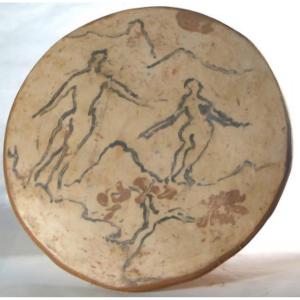
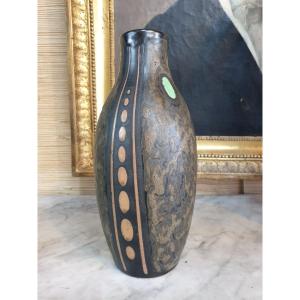
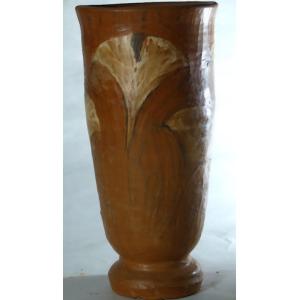
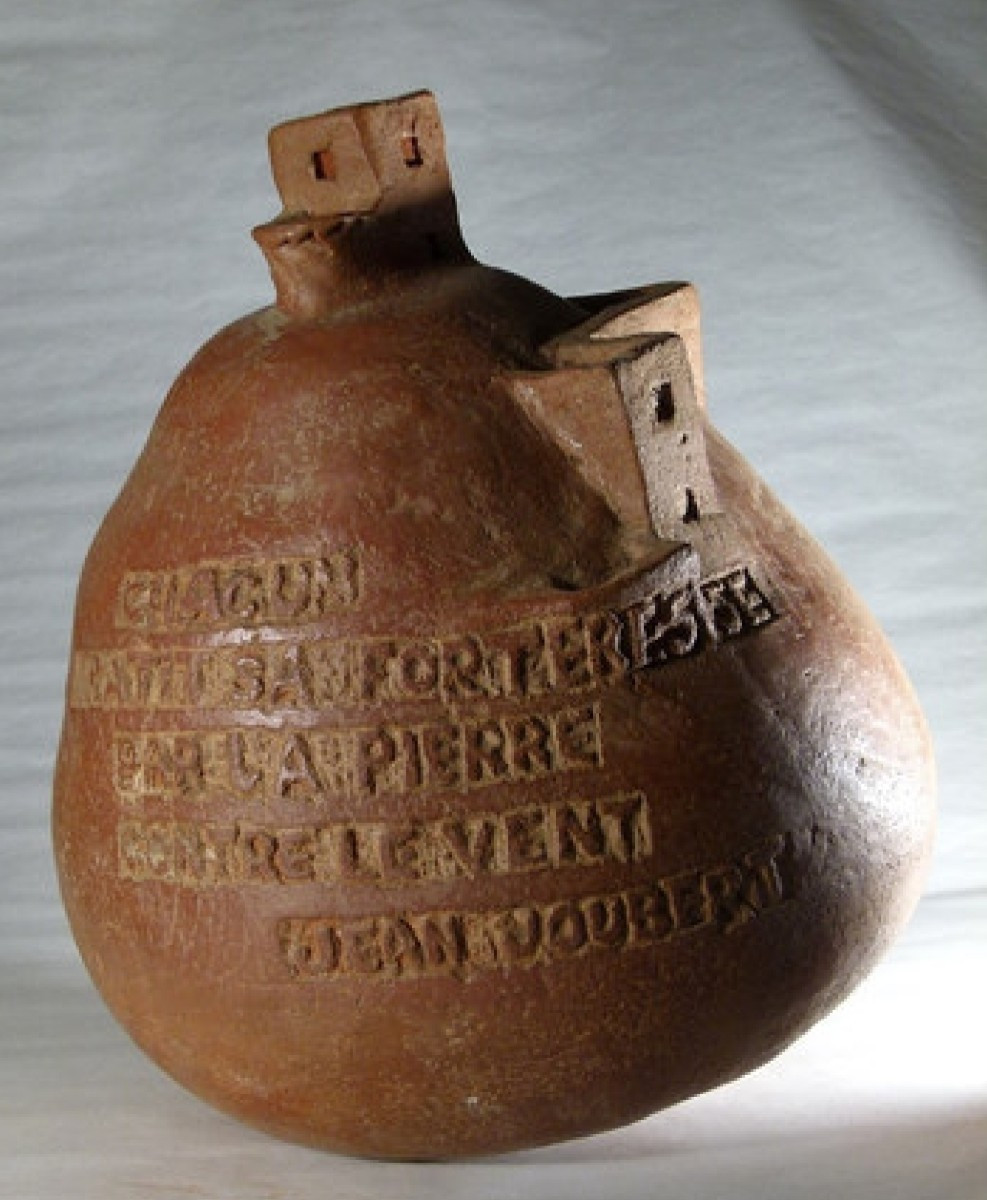
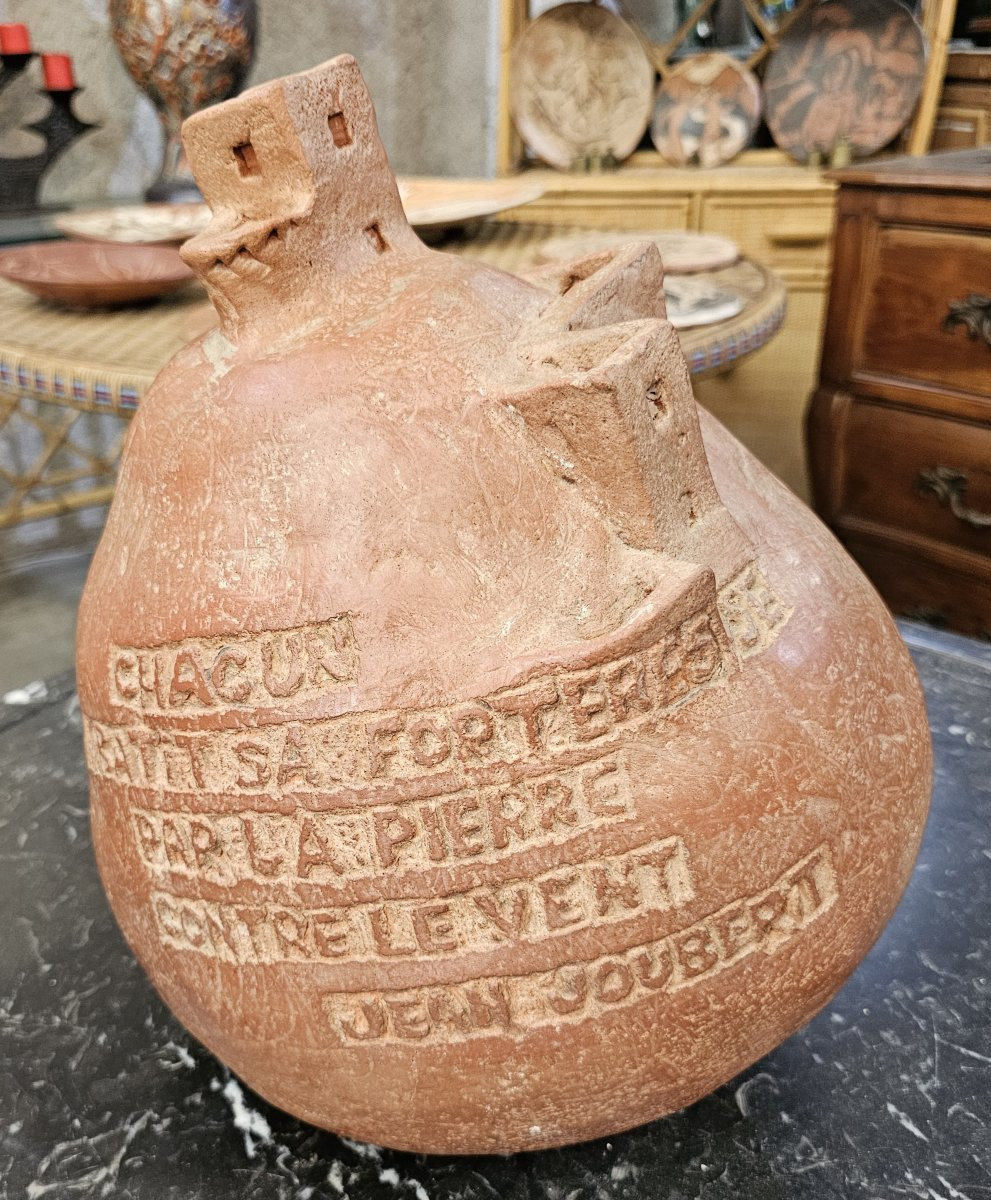
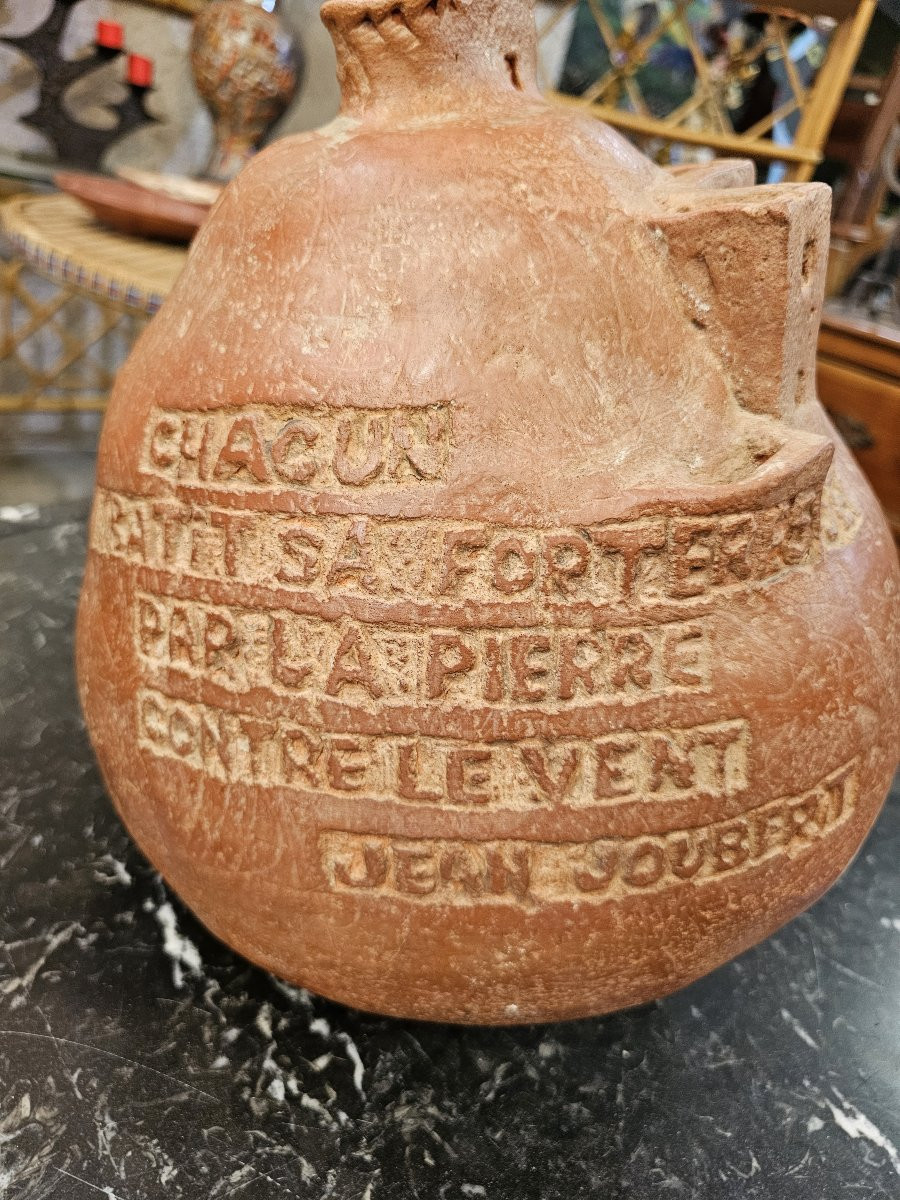
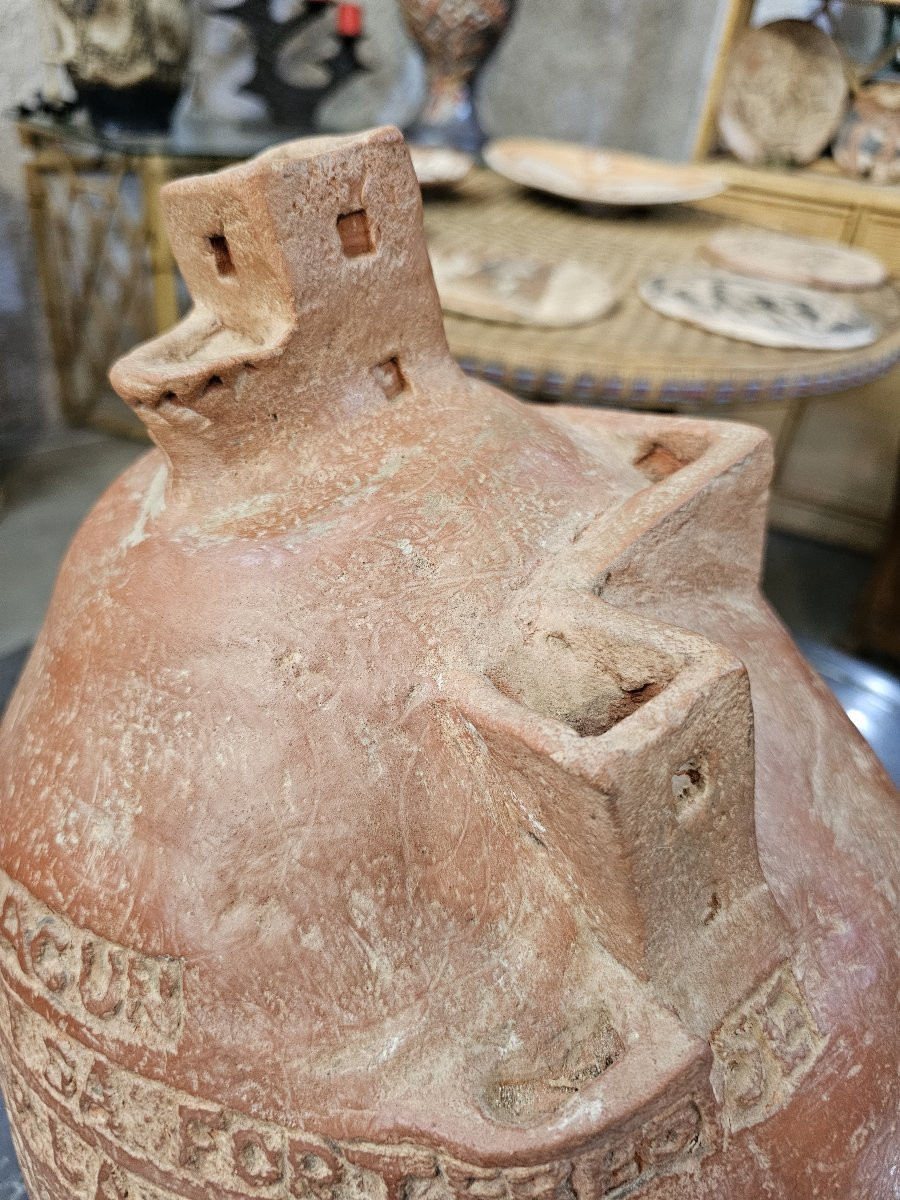
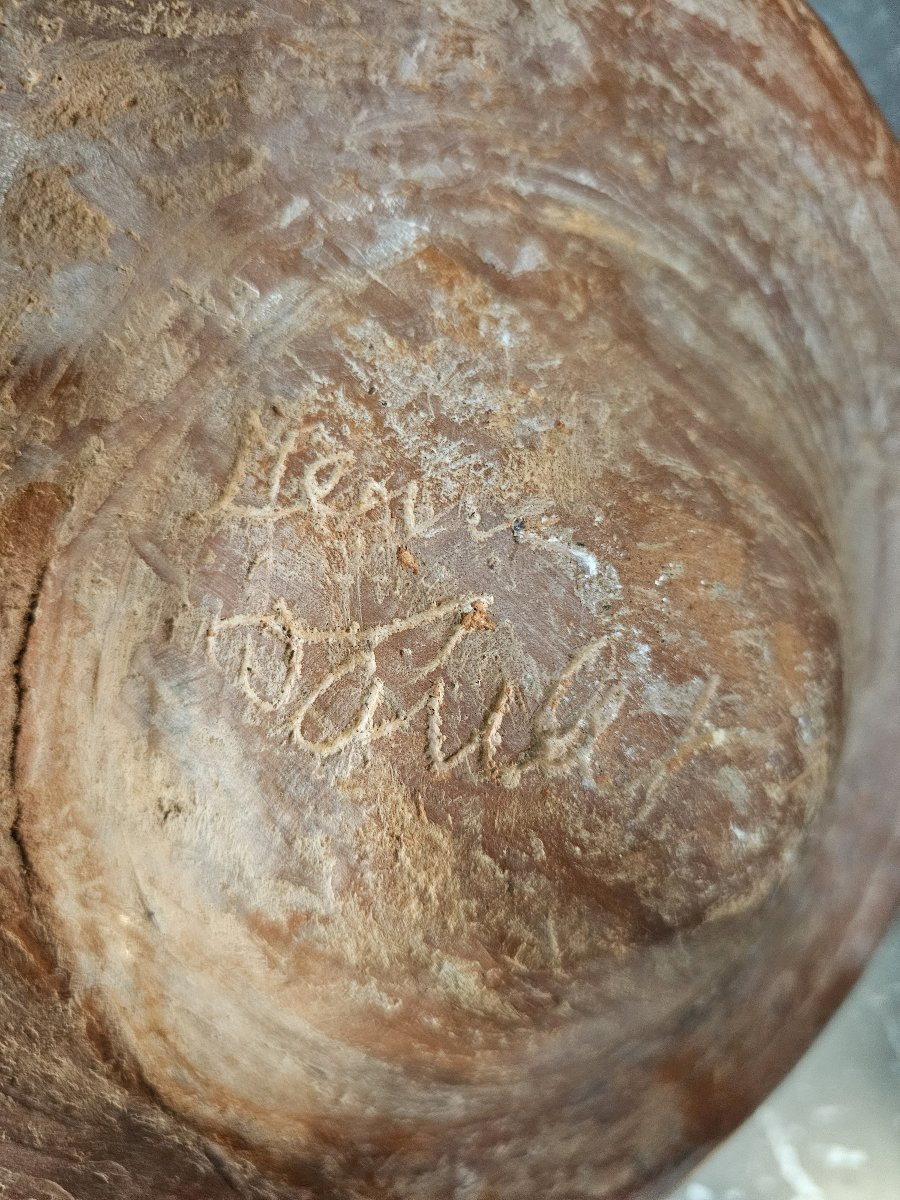
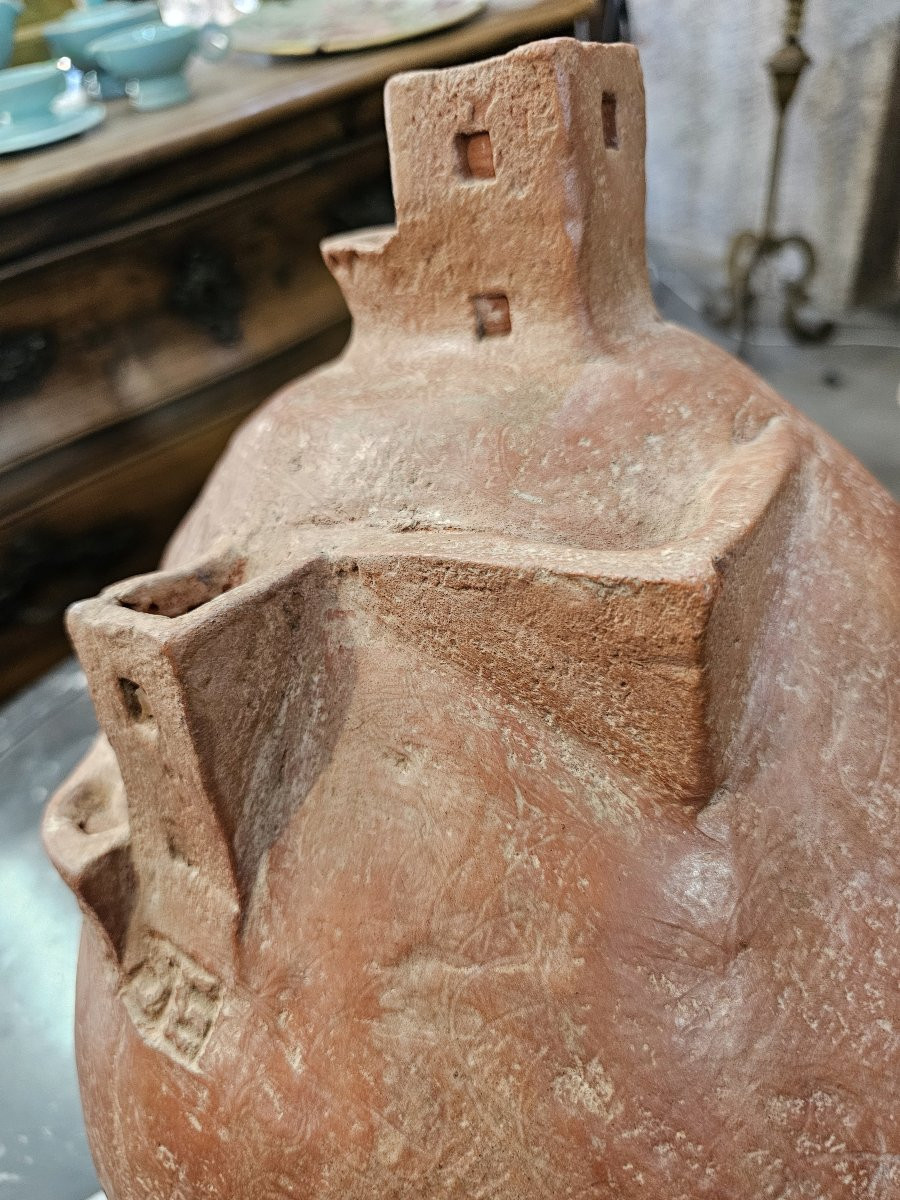
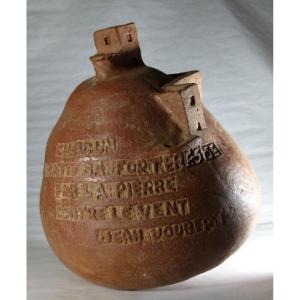
Terracotta vase signed Jean PAULET. Vase talking about a quote by Jean Joubert ( 1928 - 2015 ) , poet and friend of the artist. The vase is decorated with stylized architecture. "Each builds his fortress by the stone against the wind" .
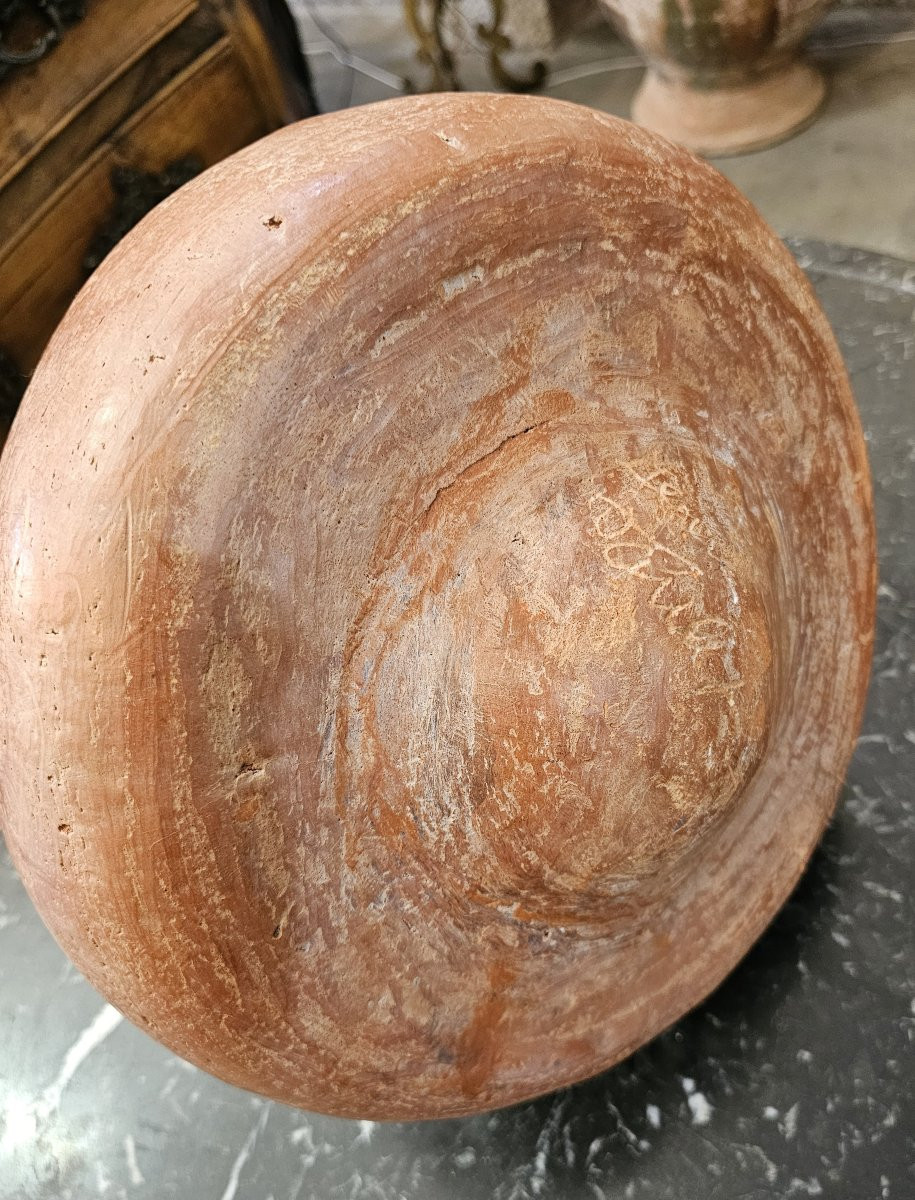
Vase with a deliberately domed bottom .
Provenance private collection of the artist.
Dimensions height 36 cm , diameter 30 cm .
Jean Paulet (1931- 2012) French ceramist, pioneer of the revival of the antique polished clay technique.Jean Paulet is one of the first ceramists to rework polished clay according to the antique technique. At a time when it was fashionable to fire stoneware at high temperatures, his work with low-temperature fired earthenware paved the way for young contemporary ceramists such as Pierre Bayle, Loul Combres and Jean-Paul Azais. His work also gave new impetus to the historic pottery village of Saint Jean de Fos in the Hérault region of France. Born in 1931, faced with the cruelty and harshness of the Second World War, Jean Paulet aspired to a life in harmony with nature. The youngest of five children with a widowed mother, he quickly decided to turn to the manual craft of pottery. His training at the Fontcarrade school run by Emilie Decanis enabled him to rub shoulders with many young people, including the future sculptor César Baldaccini. He then began working as a wheel-turner in various culinary pottery workshops in Anduze, Aubagnes (1948-1949) and Uzès (1951). After his military service, he set up his first workshop in Montpellier's Aiguelongue district in 1954, aiming to produce one-off pieces fired in a small wood-fired kiln, and to polish his pieces rather than glaze them like his neighboring colleagues. He sought to make his mark and break with local tradition. Success followed, with exhibitions in Montpellier. But wood-firing led to tragedy, setting fire to his workshop and home! Jean Paulet had to leave! In the neighboring village of Saint Guilhem le désert, near Saint-Jean-de-Fos, famous in the 19th century for its pottery, Jean chose a bakery with an old wood-fired oven. And he stayed there for over fifty years! From the old quarries, he extracted red clay, which he prepared himself. His first products were for food and utilitarian purposes (dishes, pitchers, candlesticks, etc.), with varied shades of red and brown due to the wood-firing process. This style appealed to the public, earning him a local reputation with a number of exhibitions. In June 1955, Jean Paulet was admitted to the Casa Velasquez in Madrid to study Salamanca pottery, but the outbreak of the Algerian war cut short this opportunity. In 1957, he met the former director of the Manufacture Nationale de Sèvres, Jean Maydoyon. In 1962, he discovered porcelain throwing at Sèvres. Jean Paulet loved the symbolism of ancient Greek pottery. He updates this style by freeing himself from the glaze. His work coincides with a meeting with the young Loul Combres. The polished clay technique began to develop between them. Together, they work temporarily for the Lozère artisans' cooperative. In an interview for AIC, Loul Combres explains that, during his formative years, he was greatly influenced by Jean Paulet's work and his low-temperature firing, which at the time was despised by all stoneware enthusiasts.Jean Paulet decided to use a new clay, from the quarry in Argeliers, a neighboring village, to engrave and sculpt his pieces in relief with floral motifs, landscapes, etc. Over time, he devoted himself to modeling and sculpting until the end of his life in 2012. In 2016, the Argileum museum in Saint Jean de Fos organized a retrospective of the artist's work. Under the patronage of Loul Combres, the Jean Paulet workshop, created in 2016, has become a genuine research center where eleven potters meet regularly. Text © Christine Lavenu (c. 22/06/2021) Sources: Biography of Jean Paulet by Christiane Paulet La gazette de Drouot Art Valorem - April 2017 AIC-Loul Combres
Vase with a deliberately domed bottom .
Provenance private collection of the artist.
Dimensions height 36 cm , diameter 30 cm .
Jean Paulet (1931- 2012) French ceramist, pioneer of the revival of the antique polished clay technique.Jean Paulet is one of the first ceramists to rework polished clay according to the antique technique. At a time when it was fashionable to fire stoneware at high temperatures, his work with low-temperature fired earthenware paved the way for young contemporary ceramists such as Pierre Bayle, Loul Combres and Jean-Paul Azais. His work also gave new impetus to the historic pottery village of Saint Jean de Fos in the Hérault region of France. Born in 1931, faced with the cruelty and harshness of the Second World War, Jean Paulet aspired to a life in harmony with nature. The youngest of five children with a widowed mother, he quickly decided to turn to the manual craft of pottery. His training at the Fontcarrade school run by Emilie Decanis enabled him to rub shoulders with many young people, including the future sculptor César Baldaccini. He then began working as a wheel-turner in various culinary pottery workshops in Anduze, Aubagnes (1948-1949) and Uzès (1951). After his military service, he set up his first workshop in Montpellier's Aiguelongue district in 1954, aiming to produce one-off pieces fired in a small wood-fired kiln, and to polish his pieces rather than glaze them like his neighboring colleagues. He sought to make his mark and break with local tradition. Success followed, with exhibitions in Montpellier. But wood-firing led to tragedy, setting fire to his workshop and home! Jean Paulet had to leave! In the neighboring village of Saint Guilhem le désert, near Saint-Jean-de-Fos, famous in the 19th century for its pottery, Jean chose a bakery with an old wood-fired oven. And he stayed there for over fifty years! From the old quarries, he extracted red clay, which he prepared himself. His first products were for food and utilitarian purposes (dishes, pitchers, candlesticks, etc.), with varied shades of red and brown due to the wood-firing process. This style appealed to the public, earning him a local reputation with a number of exhibitions. In June 1955, Jean Paulet was admitted to the Casa Velasquez in Madrid to study Salamanca pottery, but the outbreak of the Algerian war cut short this opportunity. In 1957, he met the former director of the Manufacture Nationale de Sèvres, Jean Maydoyon. In 1962, he discovered porcelain throwing at Sèvres. Jean Paulet loved the symbolism of ancient Greek pottery. He updates this style by freeing himself from the glaze. His work coincides with a meeting with the young Loul Combres. The polished clay technique began to develop between them. Together, they work temporarily for the Lozère artisans' cooperative. In an interview for AIC, Loul Combres explains that, during his formative years, he was greatly influenced by Jean Paulet's work and his low-temperature firing, which at the time was despised by all stoneware enthusiasts.Jean Paulet decided to use a new clay, from the quarry in Argeliers, a neighboring village, to engrave and sculpt his pieces in relief with floral motifs, landscapes, etc. Over time, he devoted himself to modeling and sculpting until the end of his life in 2012. In 2016, the Argileum museum in Saint Jean de Fos organized a retrospective of the artist's work. Under the patronage of Loul Combres, the Jean Paulet workshop, created in 2016, has become a genuine research center where eleven potters meet regularly. Text © Christine Lavenu (c. 22/06/2021) Sources: Biography of Jean Paulet by Christiane Paulet La gazette de Drouot Art Valorem - April 2017 AIC-Loul Combres
680 €
Period: 20th century
Style: Other Style
Condition: Excellent condition
Material: Terracotta
Reference (ID): 1758759
Availability: In stock
Print