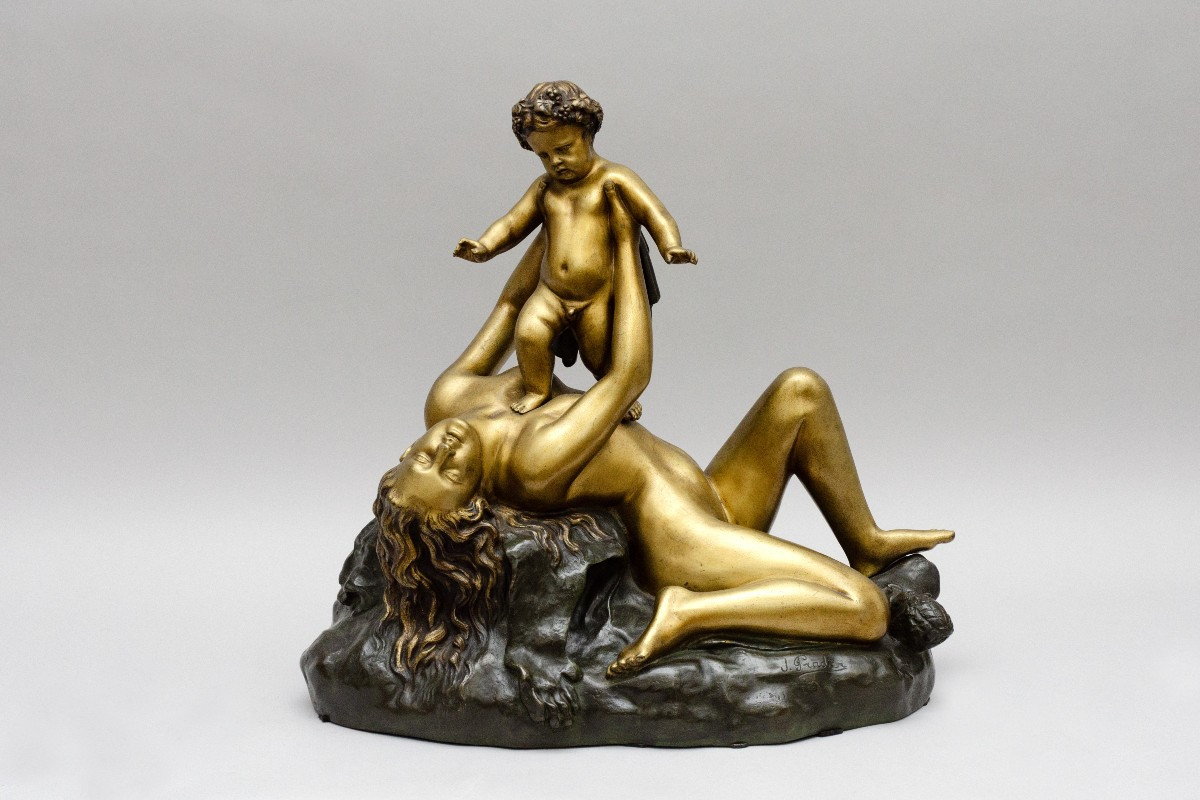
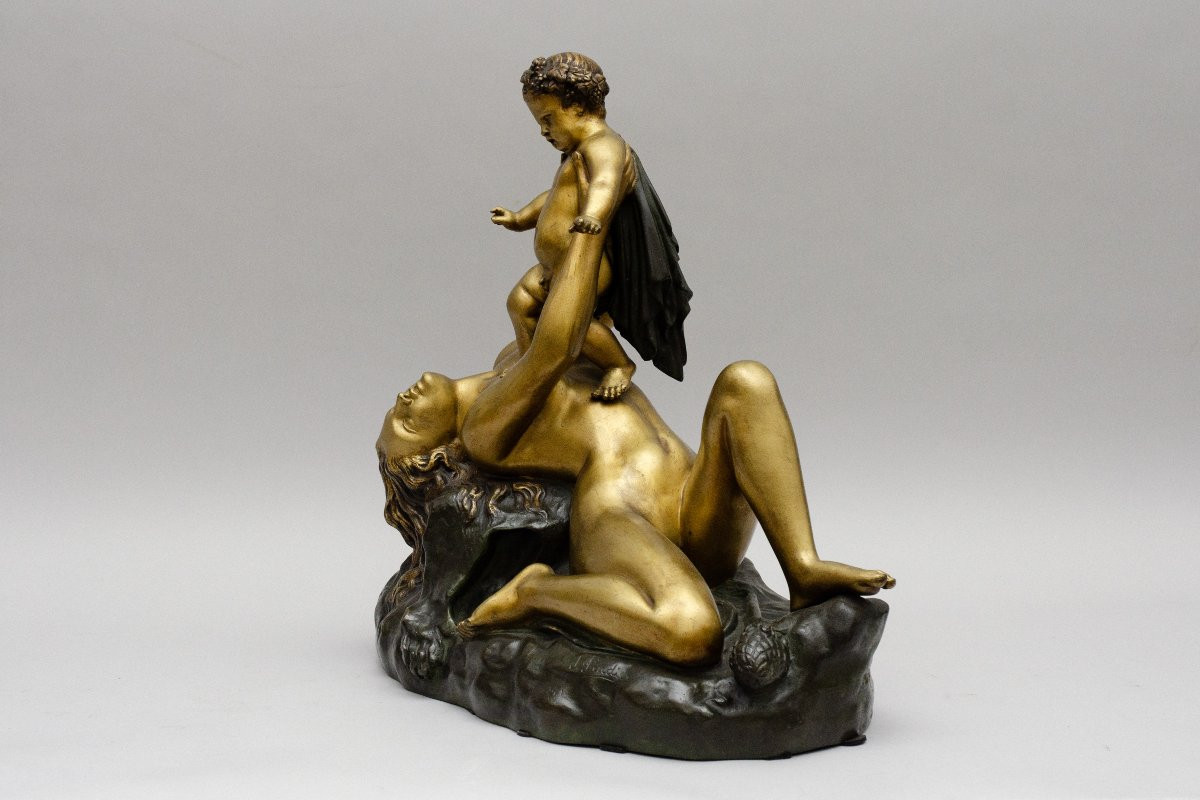
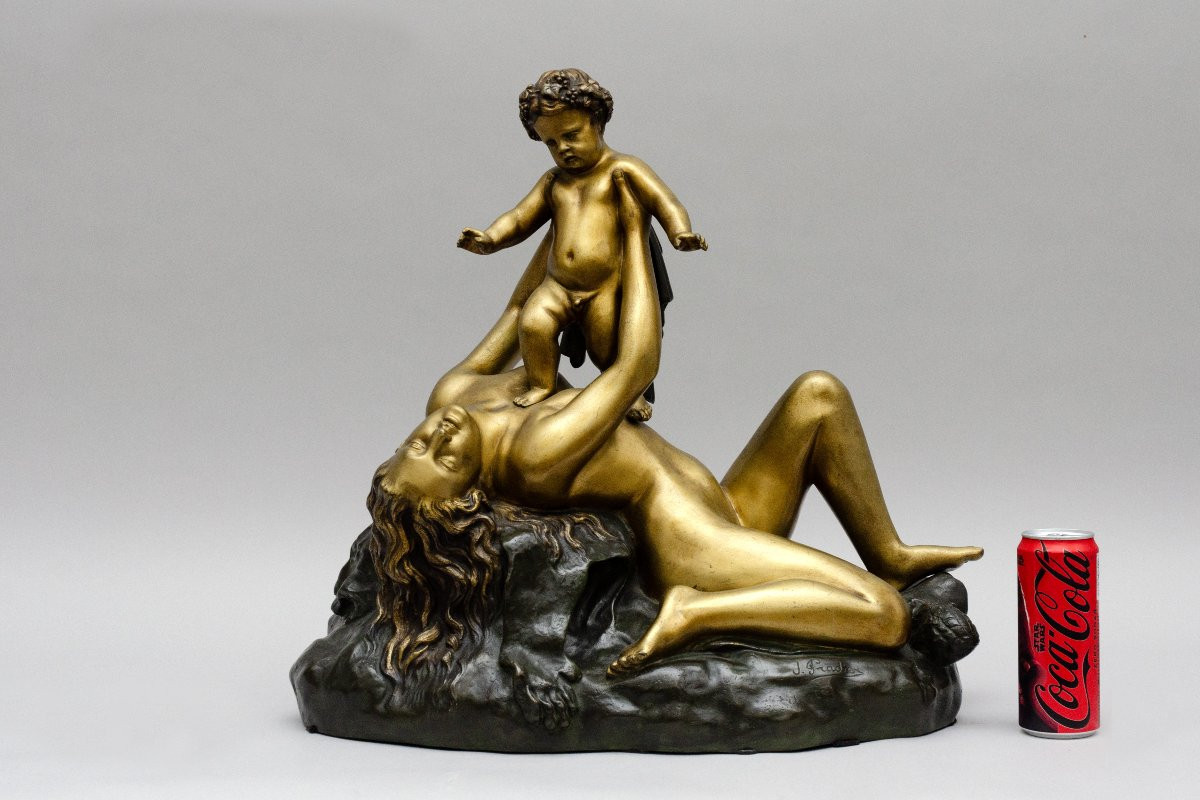
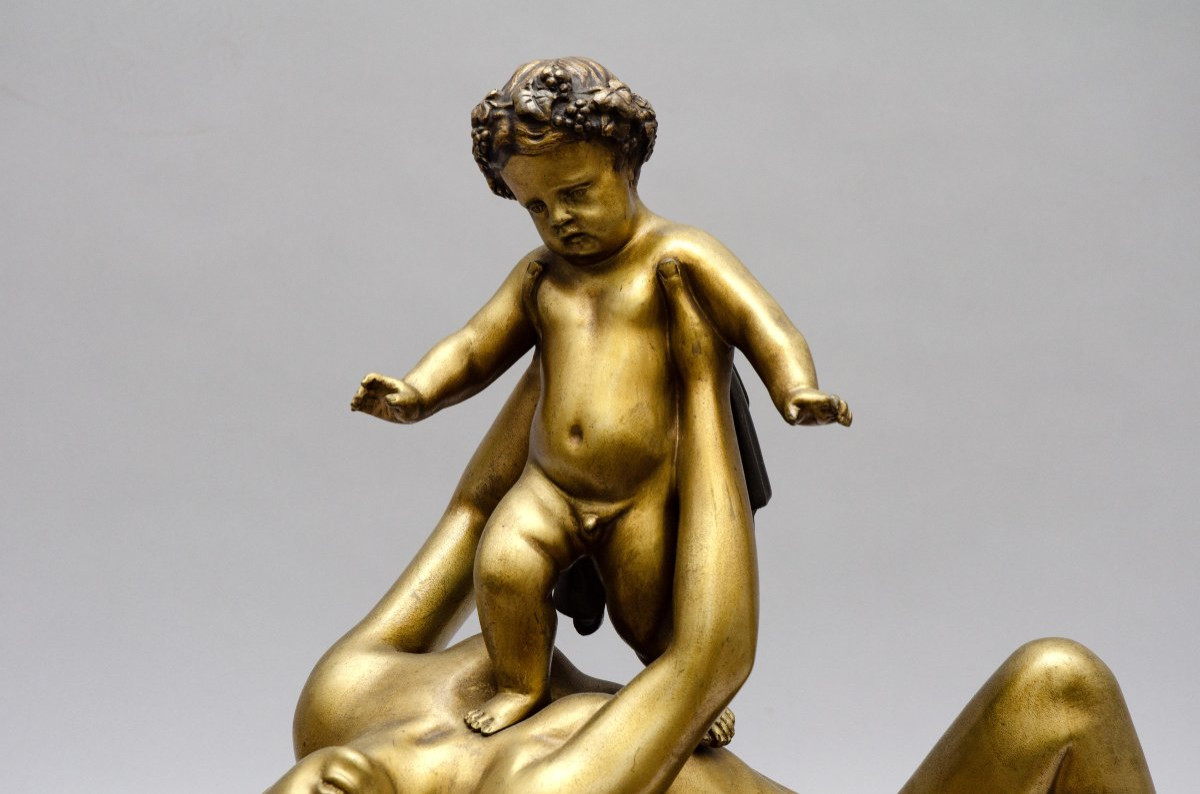
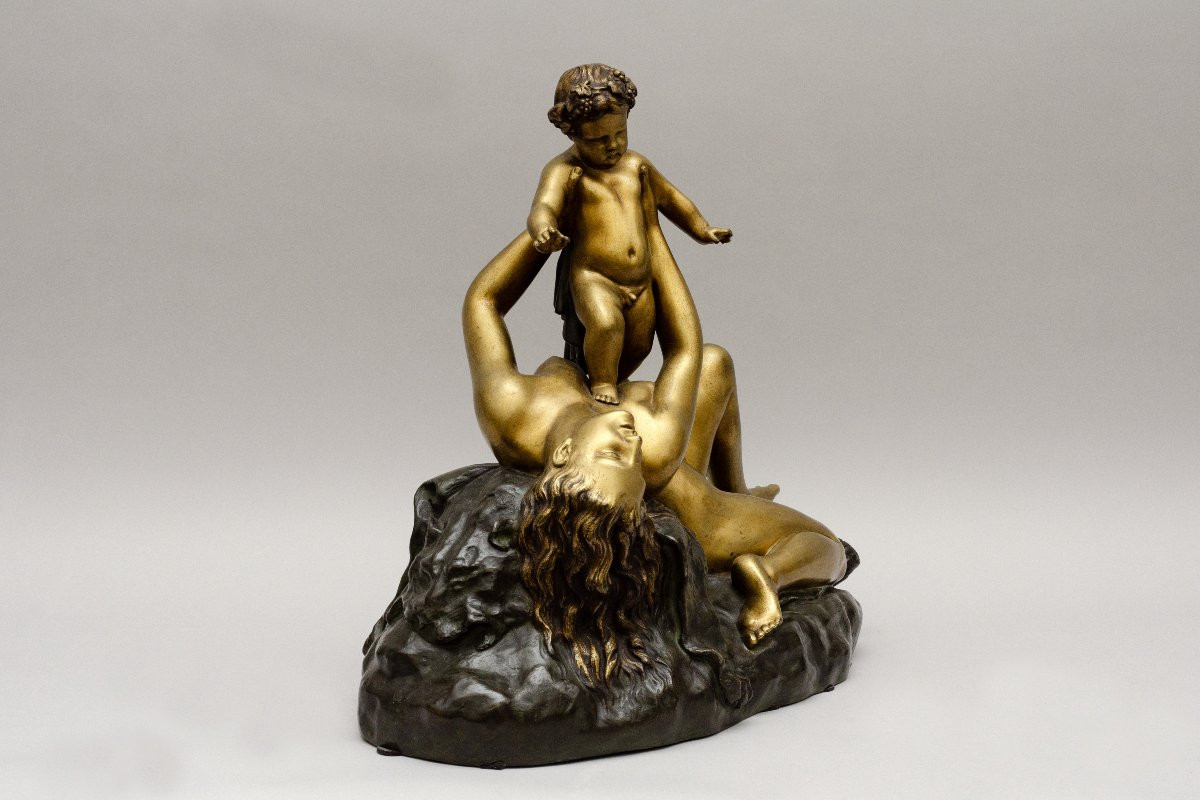



Bronze "bacchus As A Child", After James Pradier 19th Century
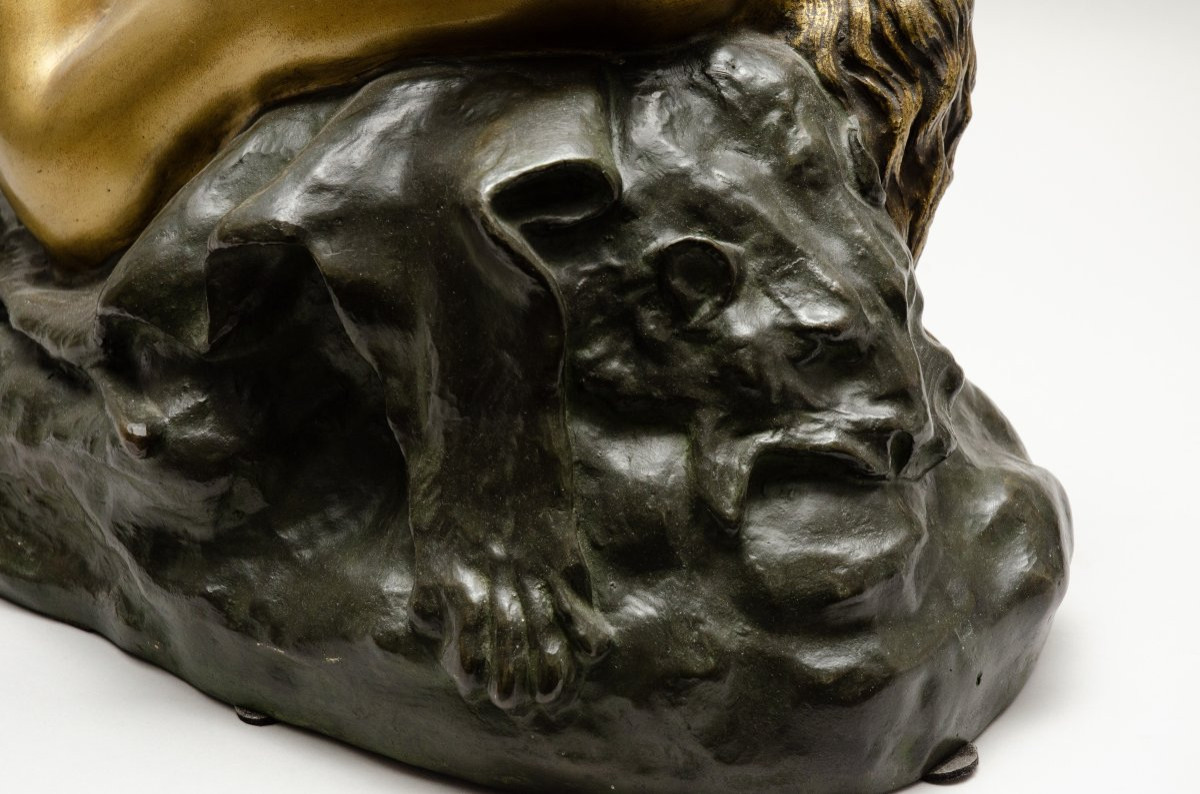
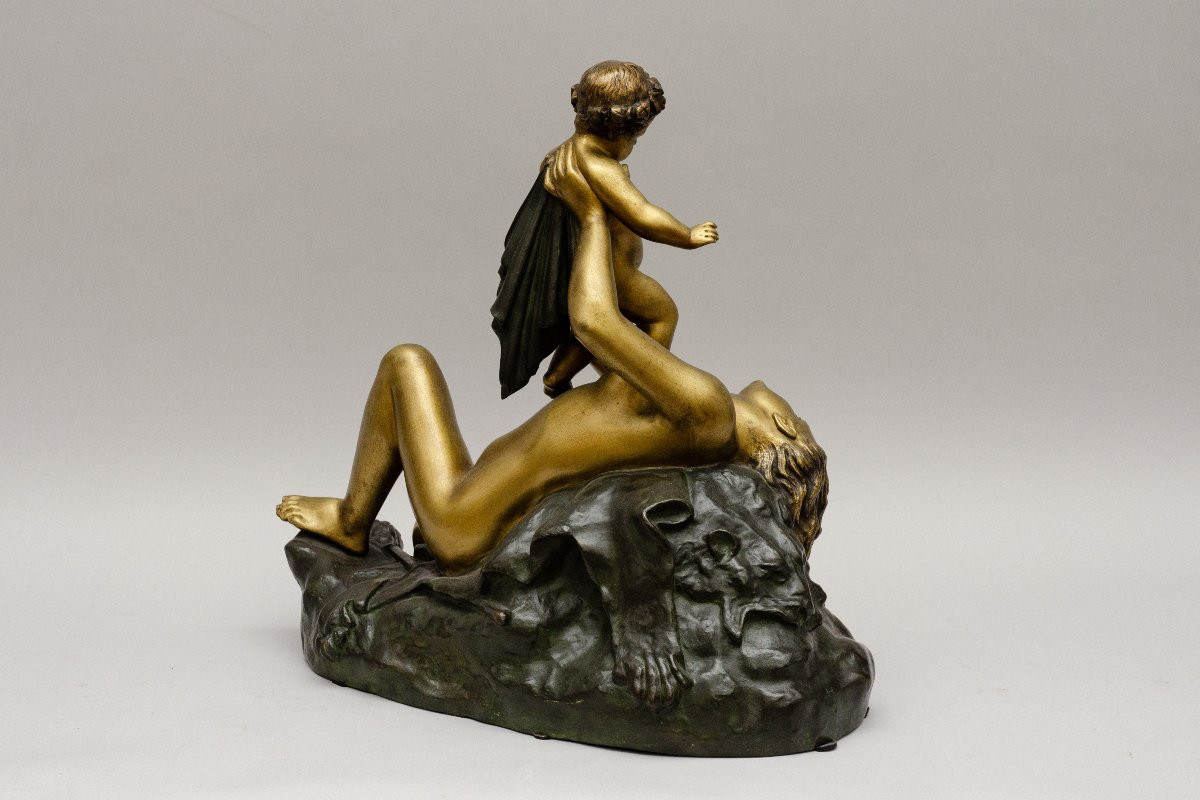
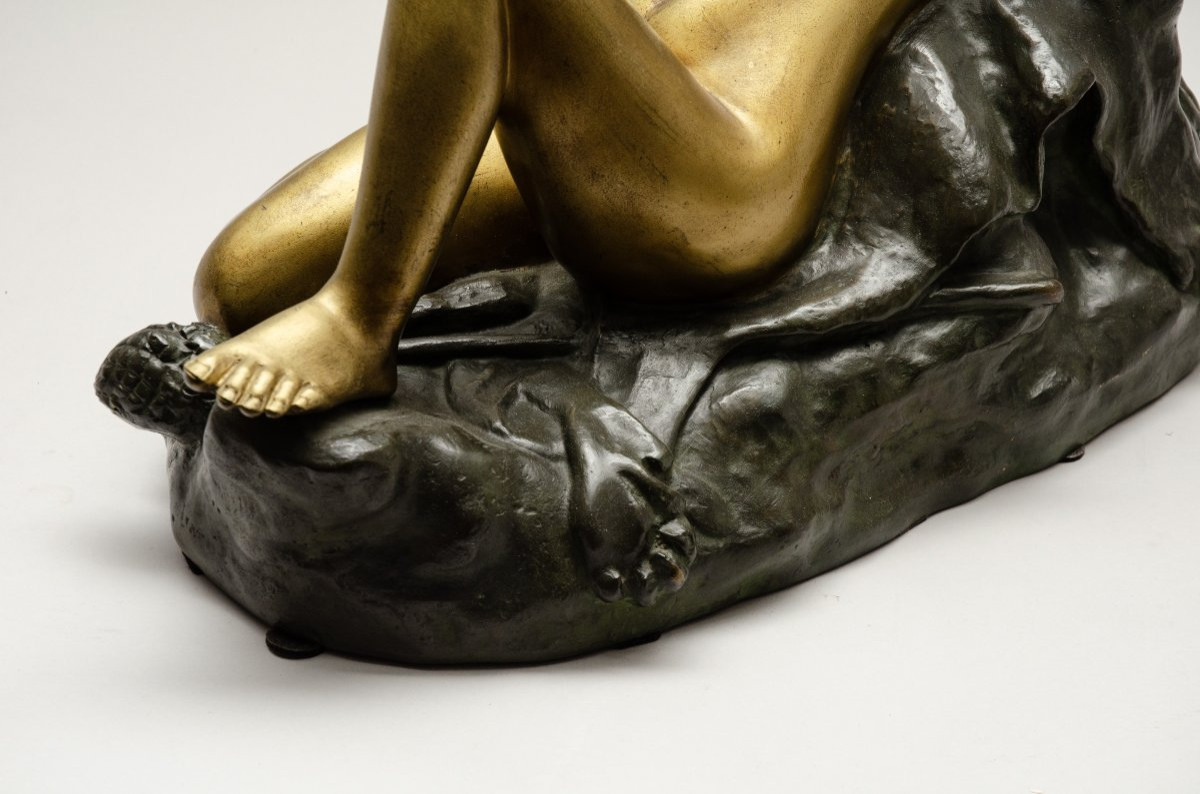
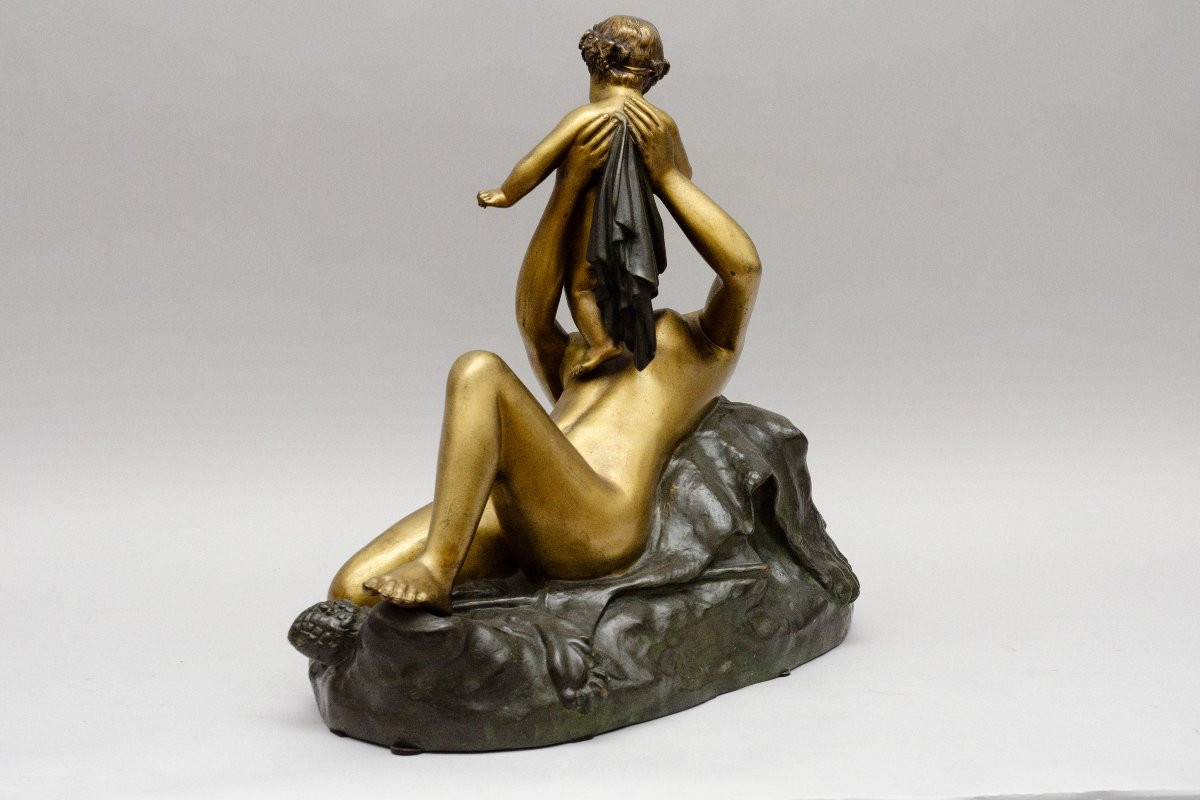
Large bronze of Dionysos or Bacchus as a child held by a woman lying on a lion's skin. A bronze between Romantism and sensuality. Signed on the terrace with the mention "Hors concours". Napoleon III period. Beautiful gilt patina on a base that is dark green.
Size: H 51 cm - W 54 cm x 30 cm
France, Napoleon III.
Lit: Born on 23 May 1790 in Geneva, Jean-Jacques Pradier, known as ‘James’, showed an exceptional talent for sculpture from a very early age. Trained in Paris in the studio of François-Frédéric Lemot at the École des Beaux-Arts, he won the Prix de Rome in 1813. His stay at the Villa Medici (1814–1819) enabled him to gain a deep understanding of classical art, which formed the foundation of his entire body of work. On his return to Paris, his career took off rapidly. Elected a member of the Académie des Beaux-Arts in 1819, he became a professor at the École des Beaux-Arts, training a new generation of sculptors including Auguste Clésinger. An official artist par excellence, he received major commissions from the State throughout his life, occupying a central place in Parisian artistic life.
Positioned between Neoclassicism and Romanticism, Pradier excelled in the depiction of the female form with an unrivalled technical mastery of marble. Among his most famous works are: Sappho (1852, Musée d’Orsay), Phryne (1845, Louvre), the Renommées on Napoleon’s tomb at Les Invalides, the allegorical figures at the Madeleine in Paris, and the Molard fountain in Geneva. His body of work comprises over 200 sculptures adorning museums and monuments across Europe.
In 1833, he married Louise d’Arcet, whose tempestuous nature would inspire Gustave Flaubert to create the character of Emma Bovary—Louise having had an affair with the writer. The couple divorced in 1845. Close to literary circles, Pradier counted among his friends Victor Hugo, Théophile Gautier, Alfred de Musset and Flaubert.
James Pradier died on 4 June 1852 in Rueil-Malmaison, leaving his work on Napoleon’s tomb unfinished. He remains one of the undisputed masters of 19th-century French sculpture.
Period: 19th century
Style: Napoleon 3rd
Condition: Excellent condition
Material: Bronze
Width: 54cm
Height: 51cm
Depth: 30cm
Reference (ID): 1758242
Availability: In stock