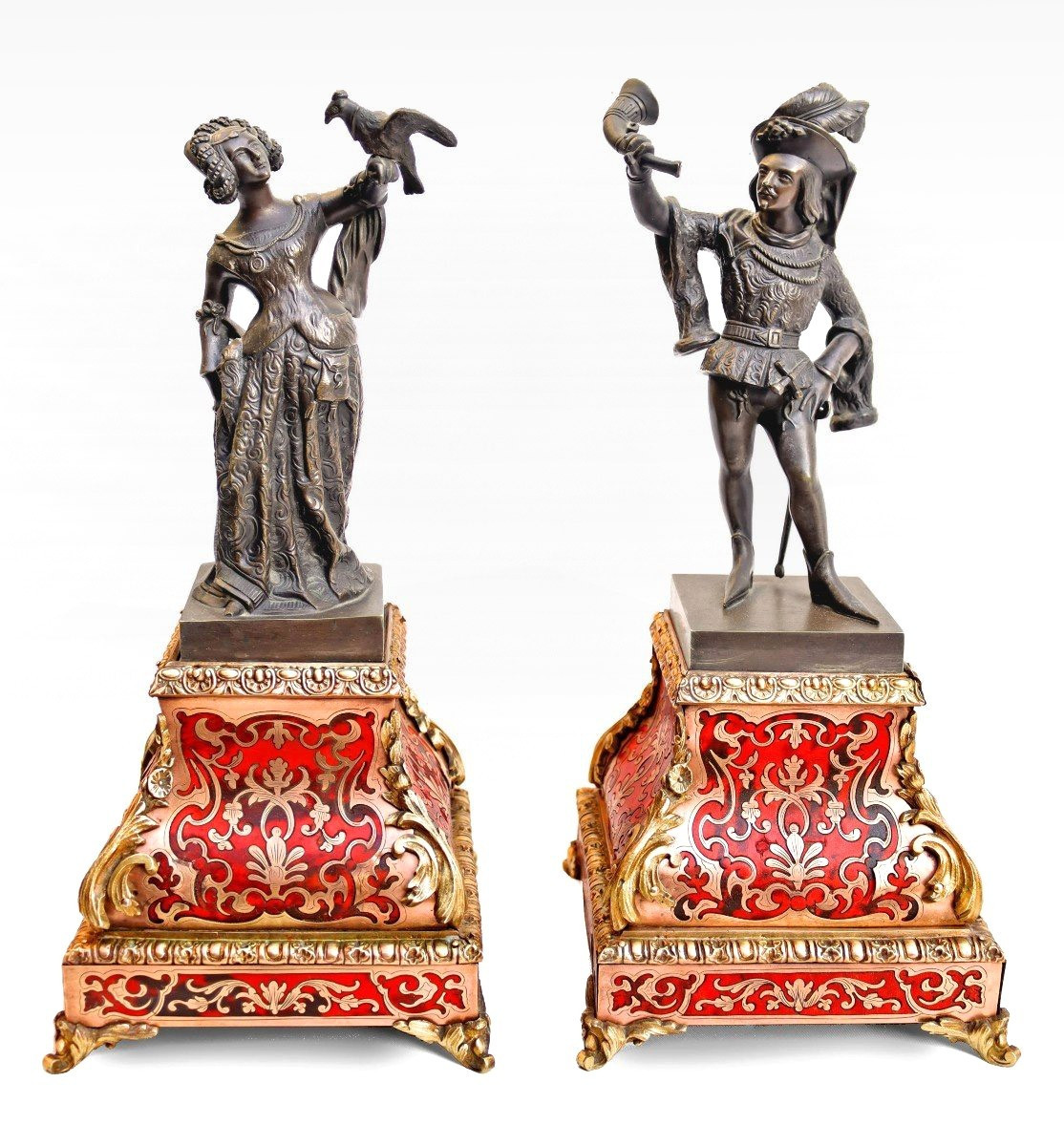
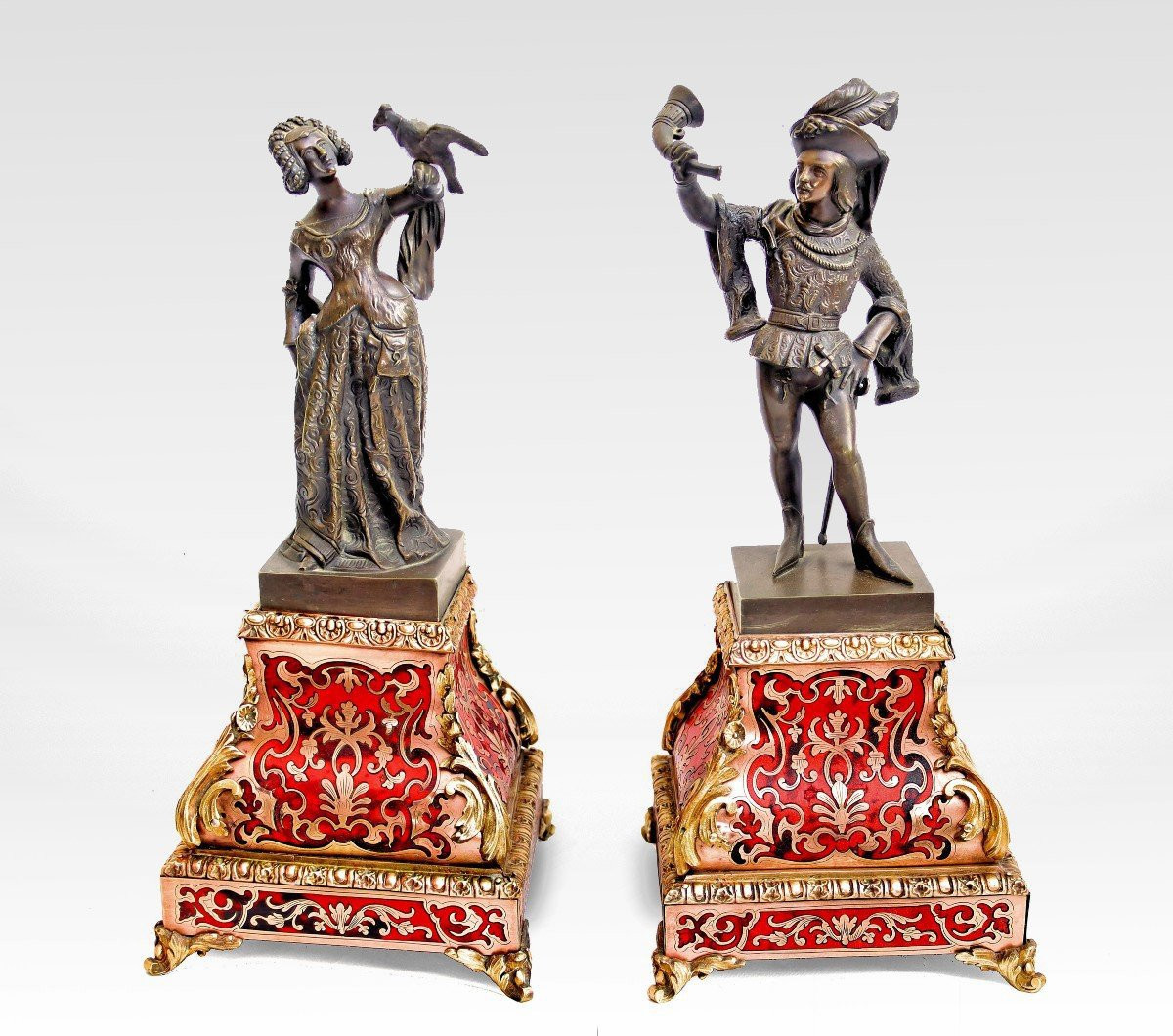
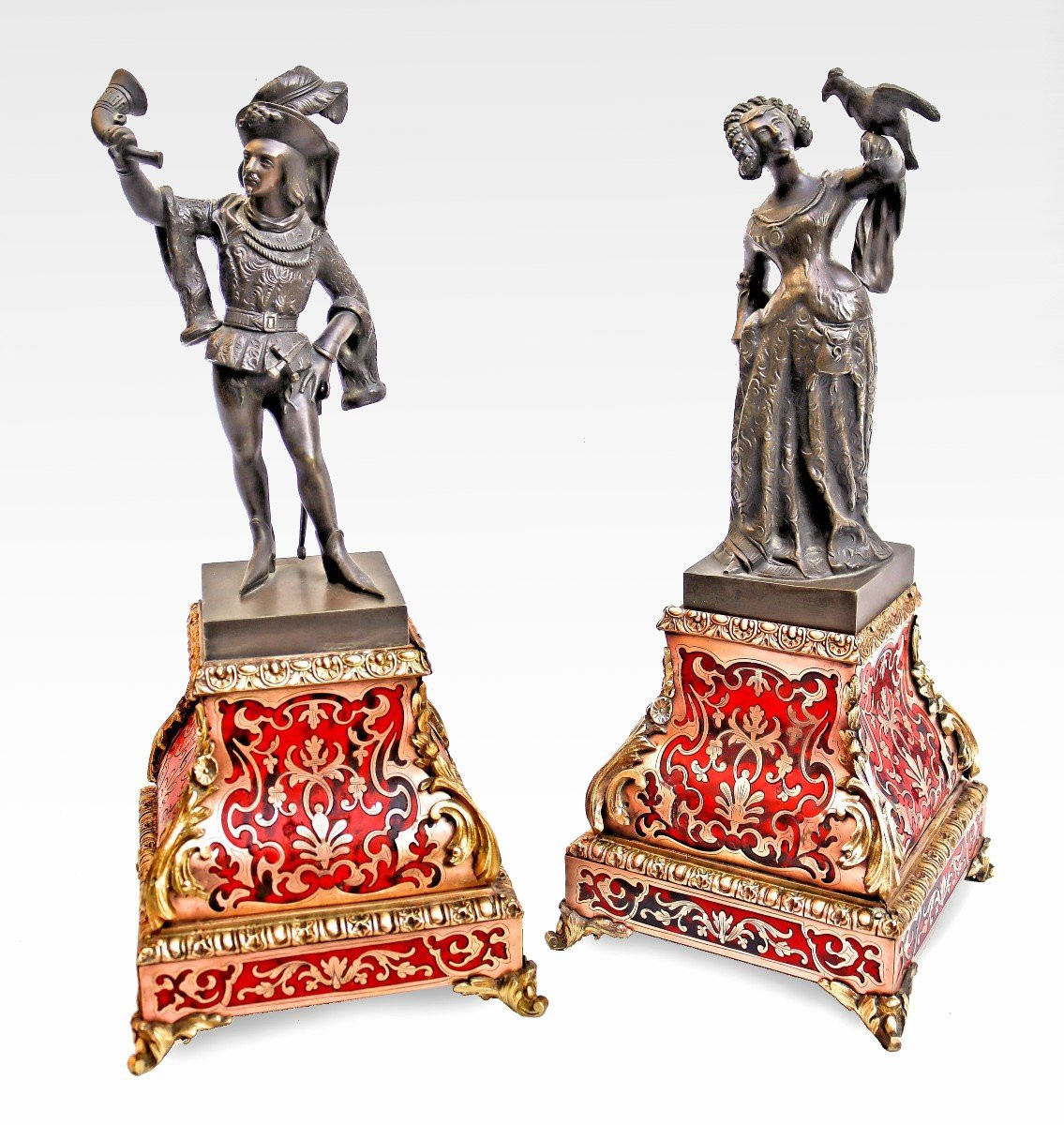
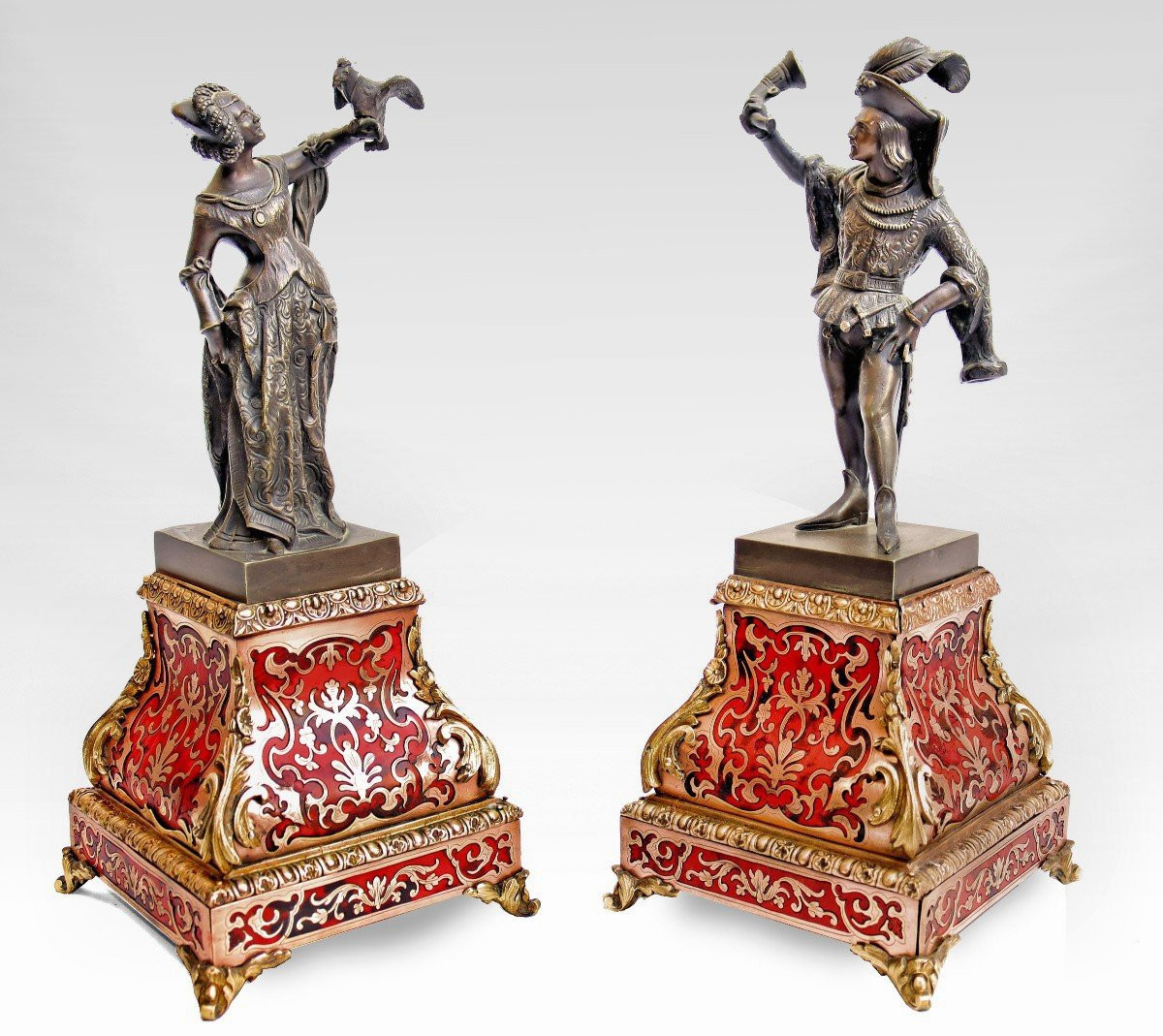
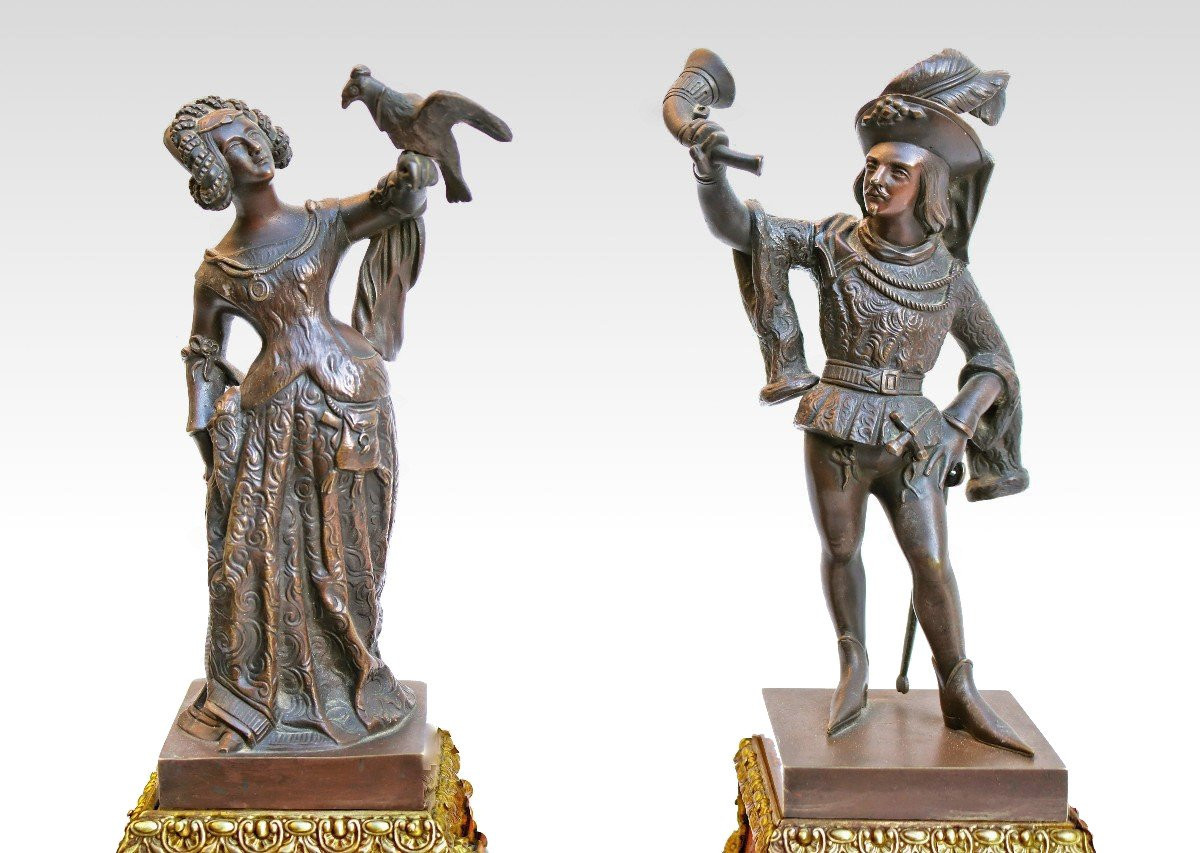
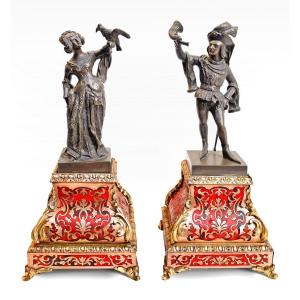


Antonin Moine (1796-1849) Paire De Statues En Bronze époque Charles X
Artist: Antonin Moine (1796-1849)
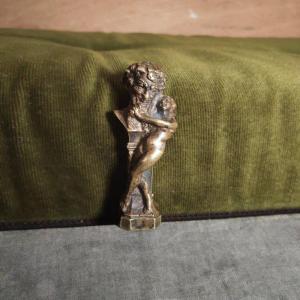
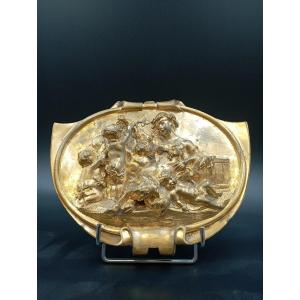
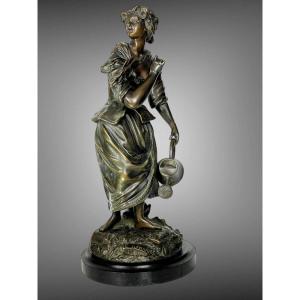
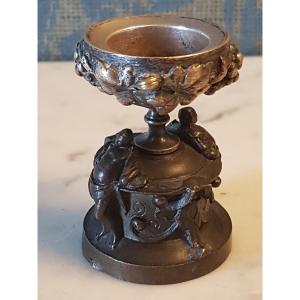
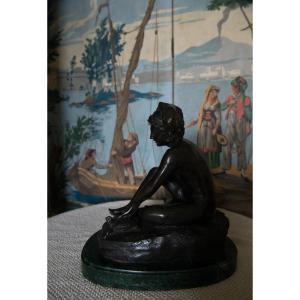
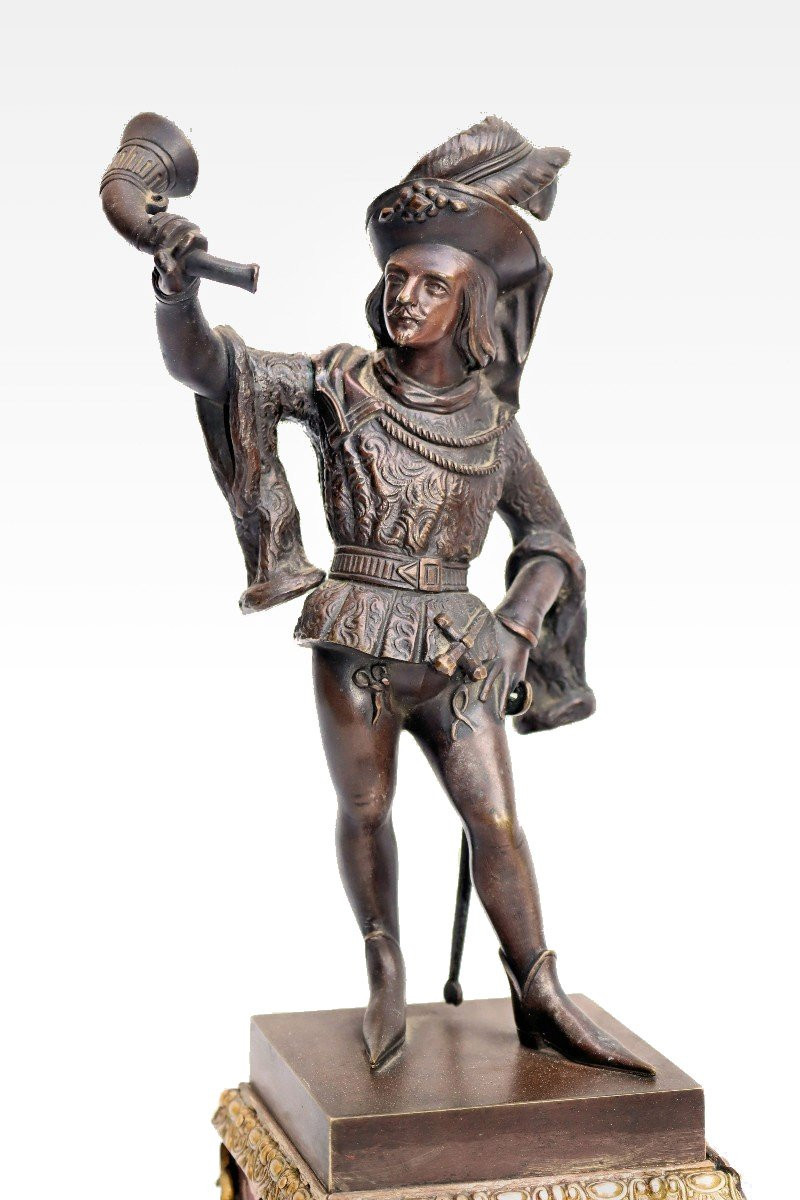
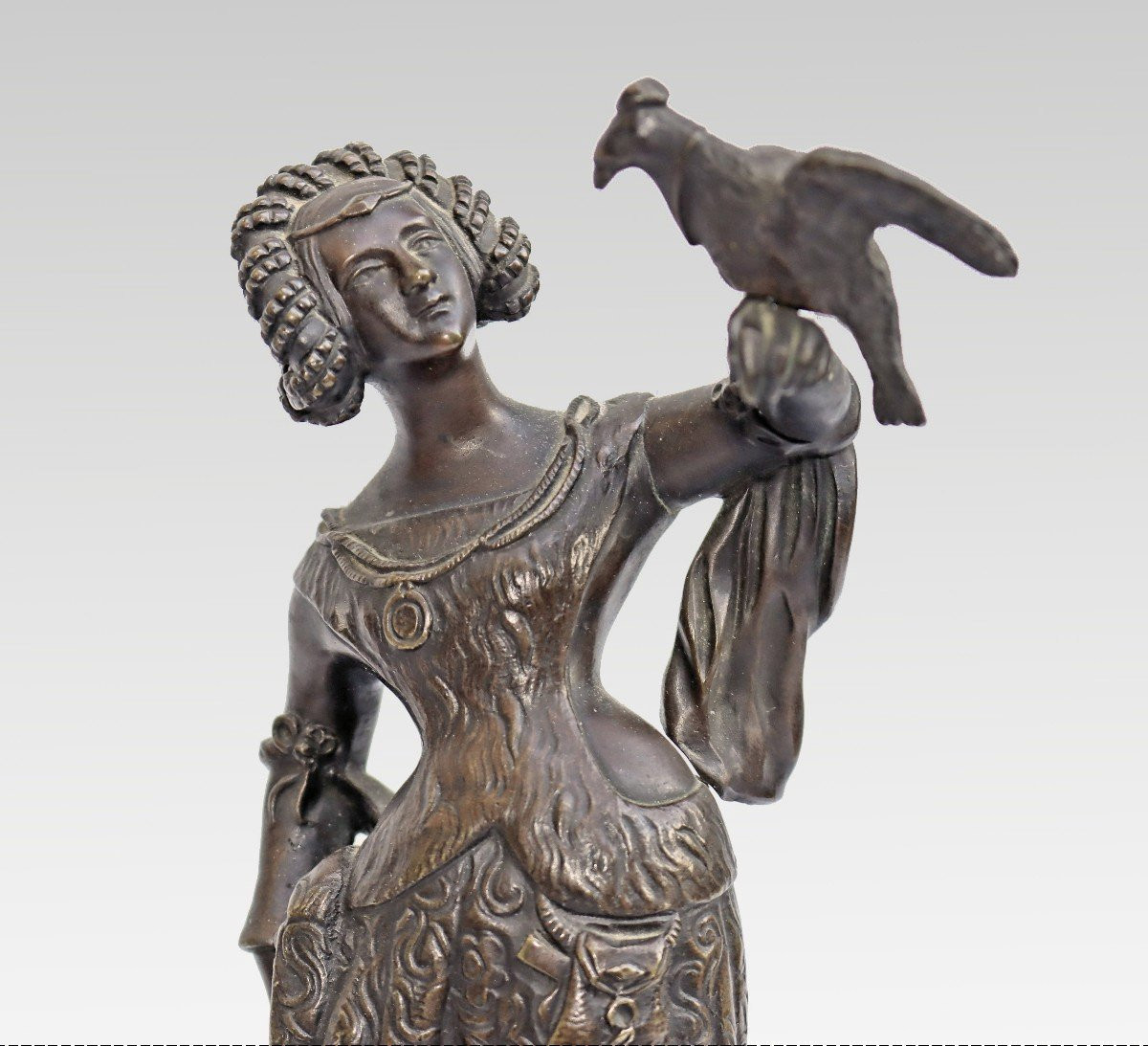
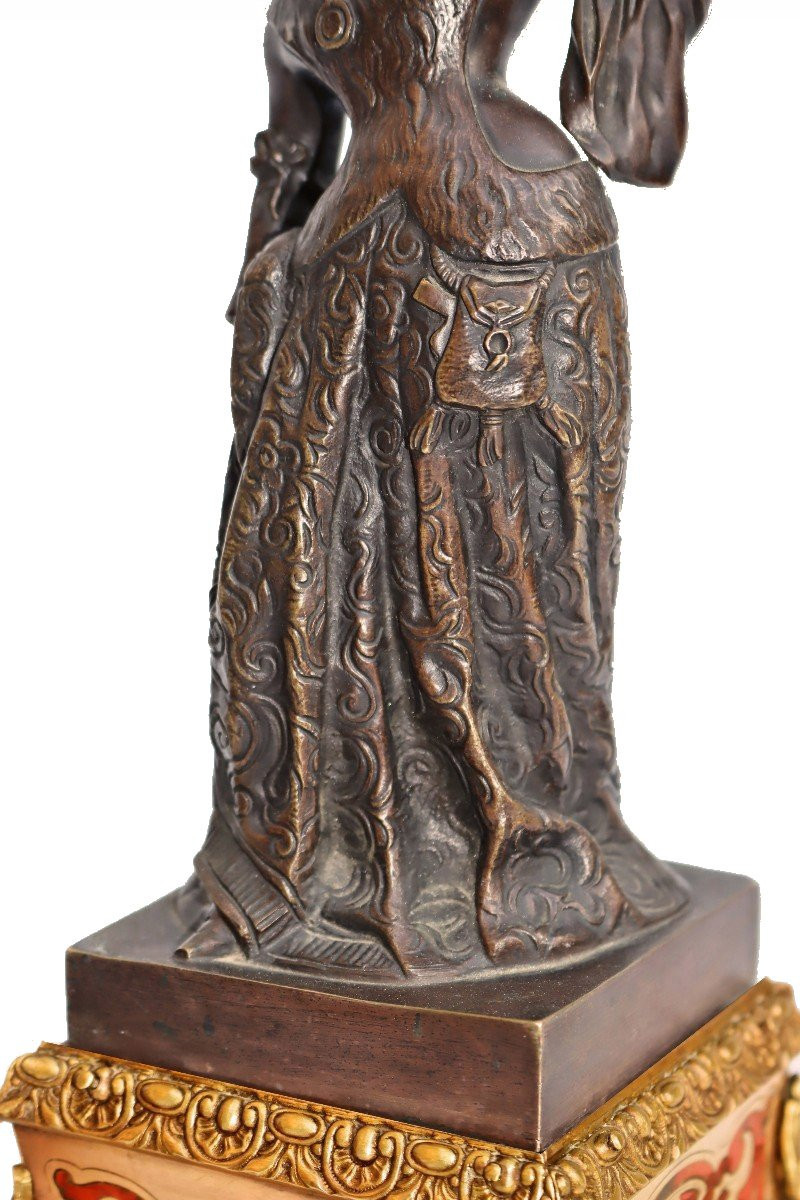
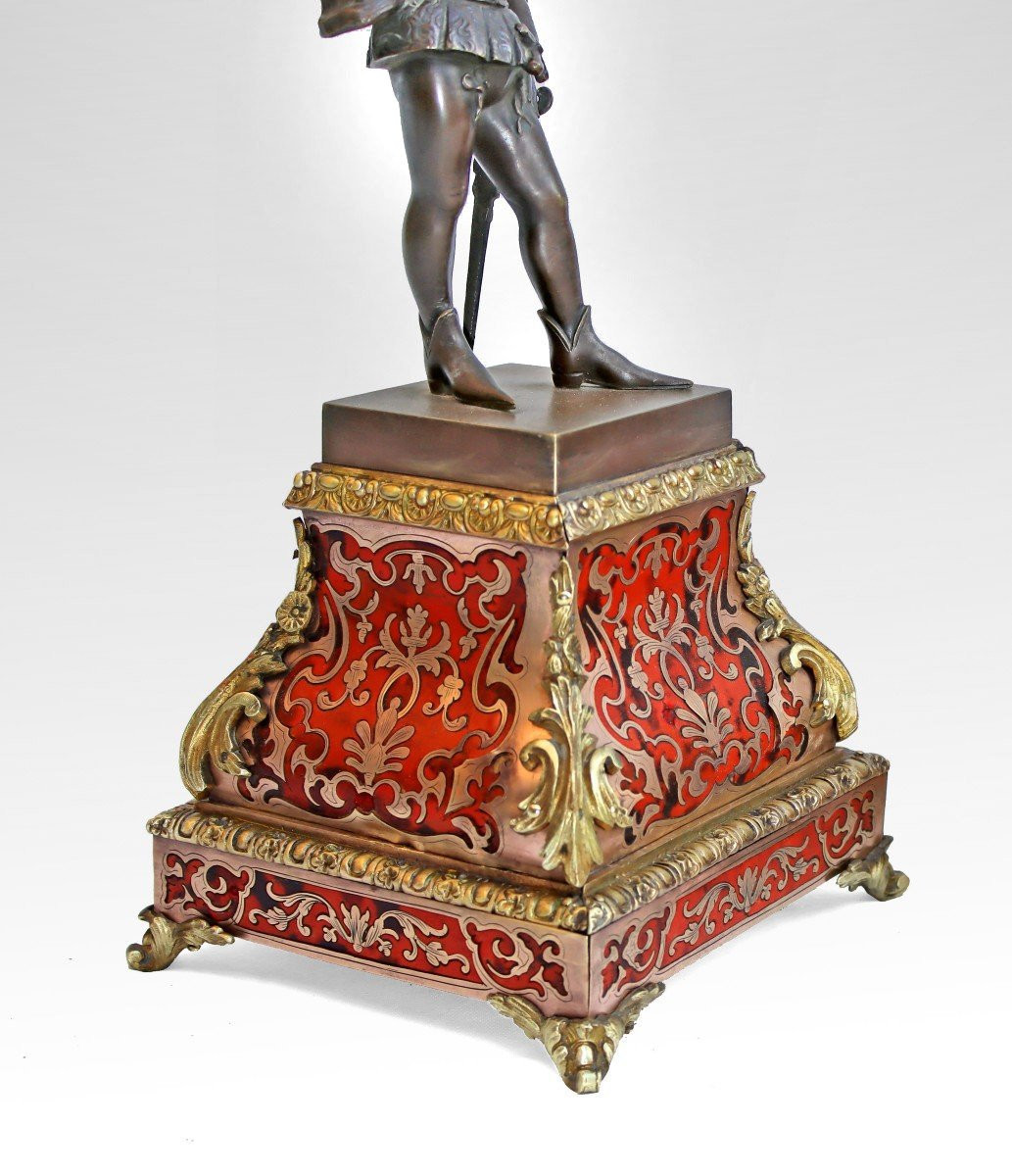
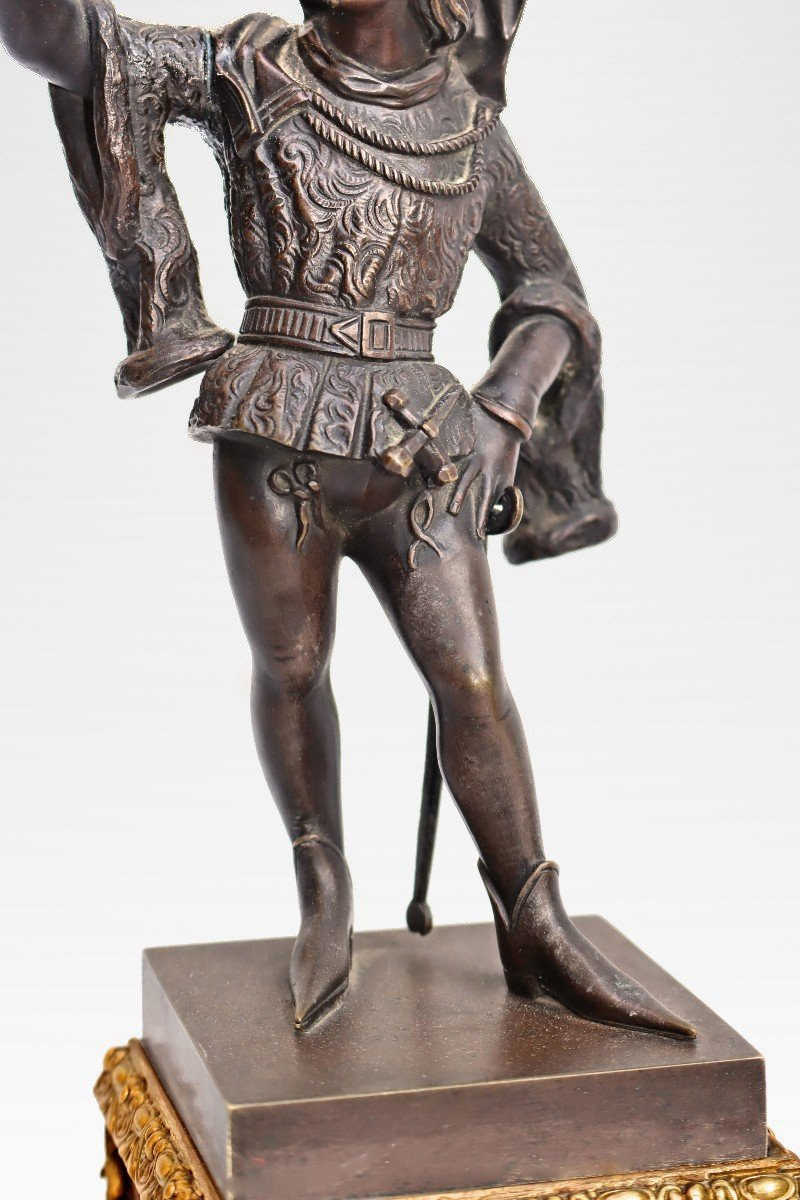
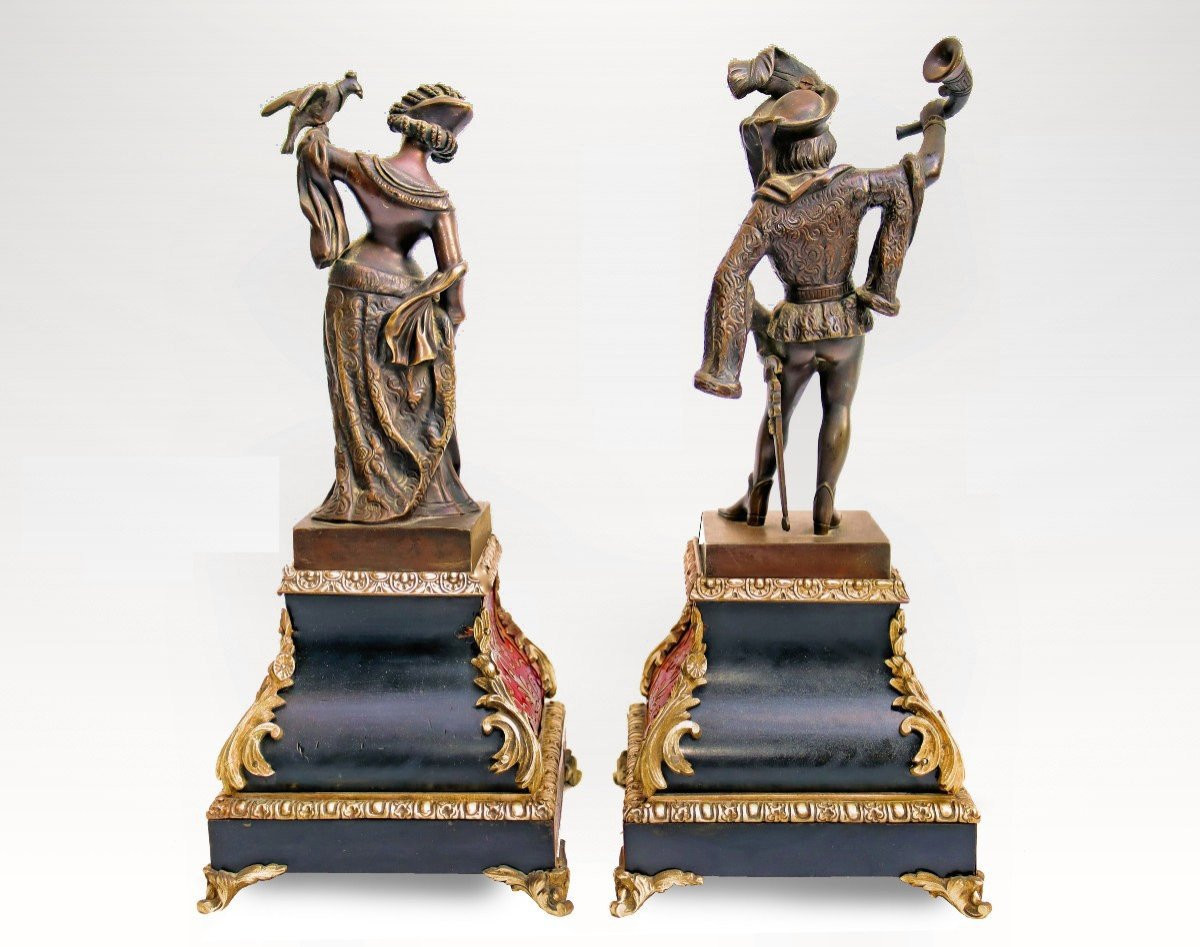
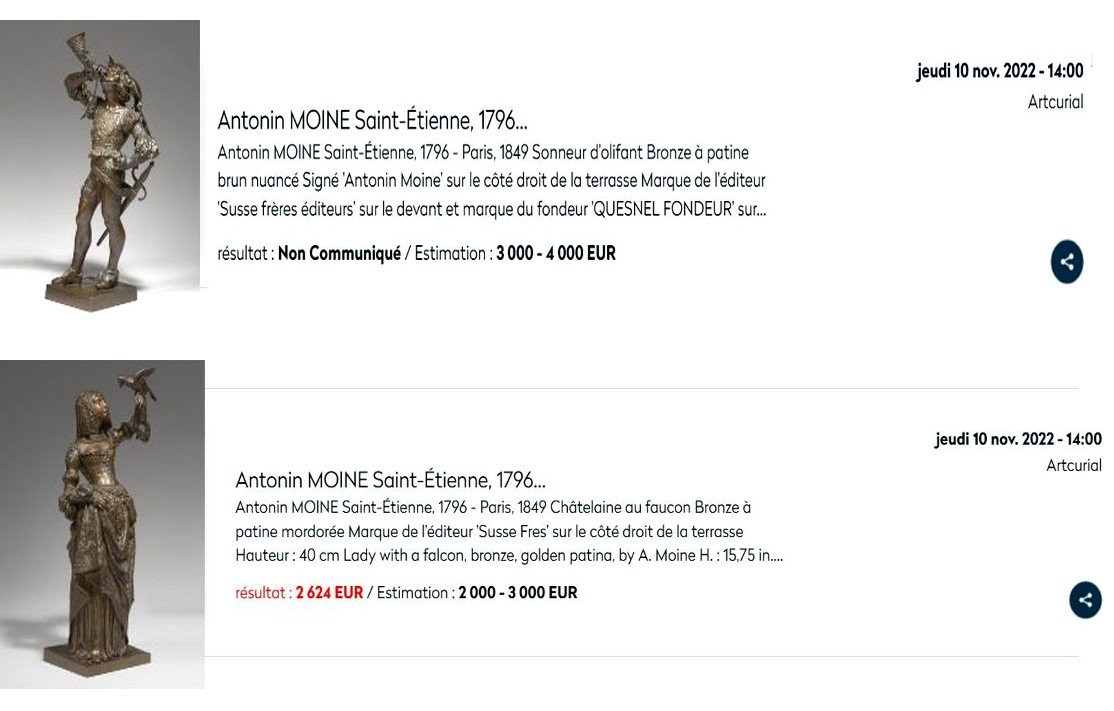
Elegant pair of finely chased bronze sculptures from the Charles X period circa 1830, attributed to the sculptor Antonin MOINE (1796-1849), representing two of the artist's best-known works of art, "La Châtelaine au Faucon" and "Le Sonneur d'Olifant", dressed in romantic troubadour style, the woman as a lady and the man as a knight. They stand on precious Boulle marquetry bases with gilded brass and red tortoiseshell inlays (some lifting and missing). Dimensions: 34 cm high X 15 cm wide.
Bibliography:
Antonin Moine (1796-1849), un romantique oublié : Jean-Baptiste Galley, Ménard, Saint-Etienne (1898), reprinted by Nabu Press / Antonin Moine (1796-1849), Sculpteur romantique : Jean-Loup Champion, Bulletin de la Société de l'histoire de l'art français, pp. 251-274 (1997)
-Le Sonneur d'olifant (Musée Saint-Étienne, circa 1833)
-Femme au faucon (Château de Blois, circa 1840)
Antoine Marie Moine, known as Antonin Moine, was born in Saint-Etienne, France, the son of ribbon merchant André Moine and Marie Lardon. In 1817, he was admitted to the Ecole des Beaux-arts de Paris to study painting. He studied under Anne-Louis Girodet (1767-1824) and Antoine-Jean Gros (1771-1835). Antonin Moine painted landscapes and mythological subjects, but became famous for his romantic sculptures, which he exhibited at the Salon of 1831. His return to the Middle Ages and the Renaissance, in opposition to the neo-classical style, was part of the Romantic movement. Théophile Gautier was the first to recognize his talent: "The bold and happy modifications that Géricault and Delacroix brought to painting, Moine introduced to sculpture". In 1837, thanks to a contract with the Frères Susse, publishers of art bronze, he produced small-scale pieces for bourgeois interiors. From 1835 to 1840, under the direction of architect Jacques Hittorff (1792-1867), Antonin Moine worked with other sculptors on the Fontaine des Mers and the Fontaine des Fleuves, located on the Place de la Concorde in Paris, for which he created several Nereids. After an absence from the Paris Salon from 1837 to 1842, he exhibited again in 1843, presenting pastel portraits. He completed a number of commissions, including a full-length sculpture of Sully (1846) for the Jardin du Luxembourg in Paris. He was made Chevalier de la Légion d'honneur in 1847.
Bibliography:
Antonin Moine (1796-1849), un romantique oublié : Jean-Baptiste Galley, Ménard, Saint-Etienne (1898), reprinted by Nabu Press / Antonin Moine (1796-1849), Sculpteur romantique : Jean-Loup Champion, Bulletin de la Société de l'histoire de l'art français, pp. 251-274 (1997)
-Le Sonneur d'olifant (Musée Saint-Étienne, circa 1833)
-Femme au faucon (Château de Blois, circa 1840)
Antoine Marie Moine, known as Antonin Moine, was born in Saint-Etienne, France, the son of ribbon merchant André Moine and Marie Lardon. In 1817, he was admitted to the Ecole des Beaux-arts de Paris to study painting. He studied under Anne-Louis Girodet (1767-1824) and Antoine-Jean Gros (1771-1835). Antonin Moine painted landscapes and mythological subjects, but became famous for his romantic sculptures, which he exhibited at the Salon of 1831. His return to the Middle Ages and the Renaissance, in opposition to the neo-classical style, was part of the Romantic movement. Théophile Gautier was the first to recognize his talent: "The bold and happy modifications that Géricault and Delacroix brought to painting, Moine introduced to sculpture". In 1837, thanks to a contract with the Frères Susse, publishers of art bronze, he produced small-scale pieces for bourgeois interiors. From 1835 to 1840, under the direction of architect Jacques Hittorff (1792-1867), Antonin Moine worked with other sculptors on the Fontaine des Mers and the Fontaine des Fleuves, located on the Place de la Concorde in Paris, for which he created several Nereids. After an absence from the Paris Salon from 1837 to 1842, he exhibited again in 1843, presenting pastel portraits. He completed a number of commissions, including a full-length sculpture of Sully (1846) for the Jardin du Luxembourg in Paris. He was made Chevalier de la Légion d'honneur in 1847.
1 800 €
Period: 19th century
Style: Louis Philippe, Charles 10th
Condition: Good condition
Material: Bronze
Reference (ID): 1754188
Availability: In stock
Print