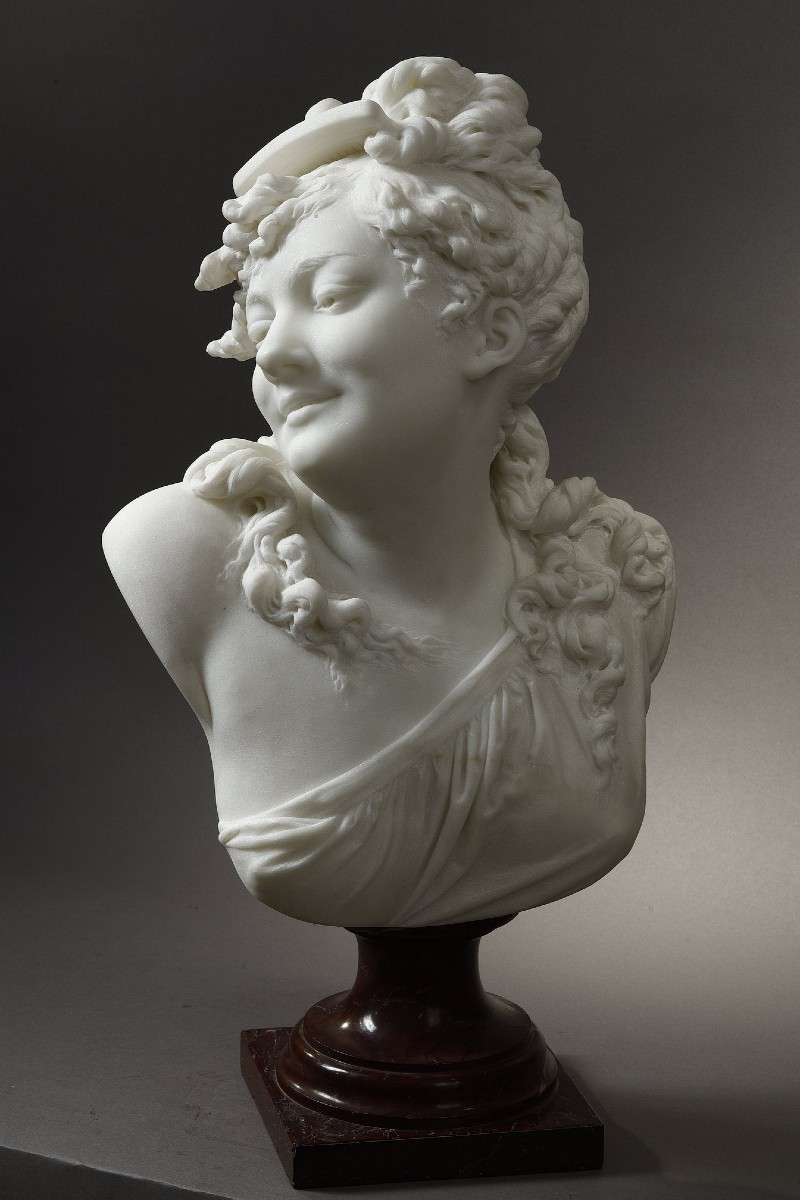
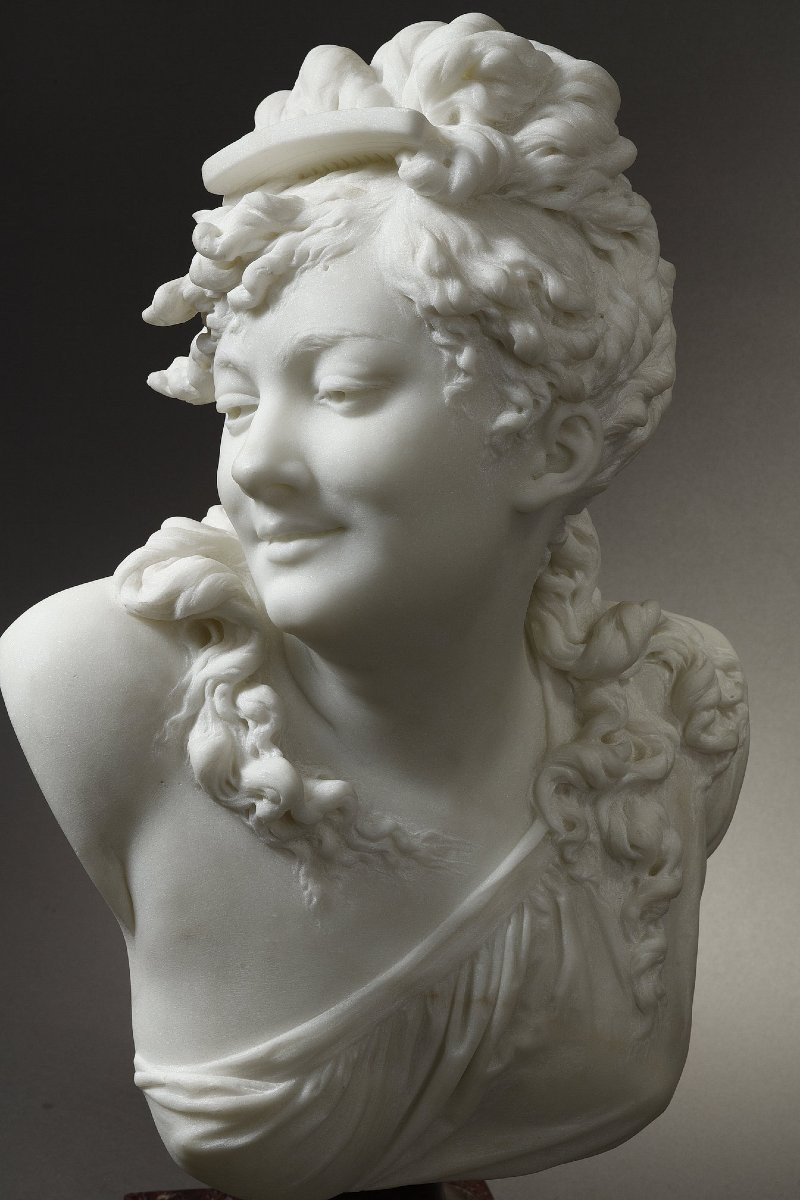
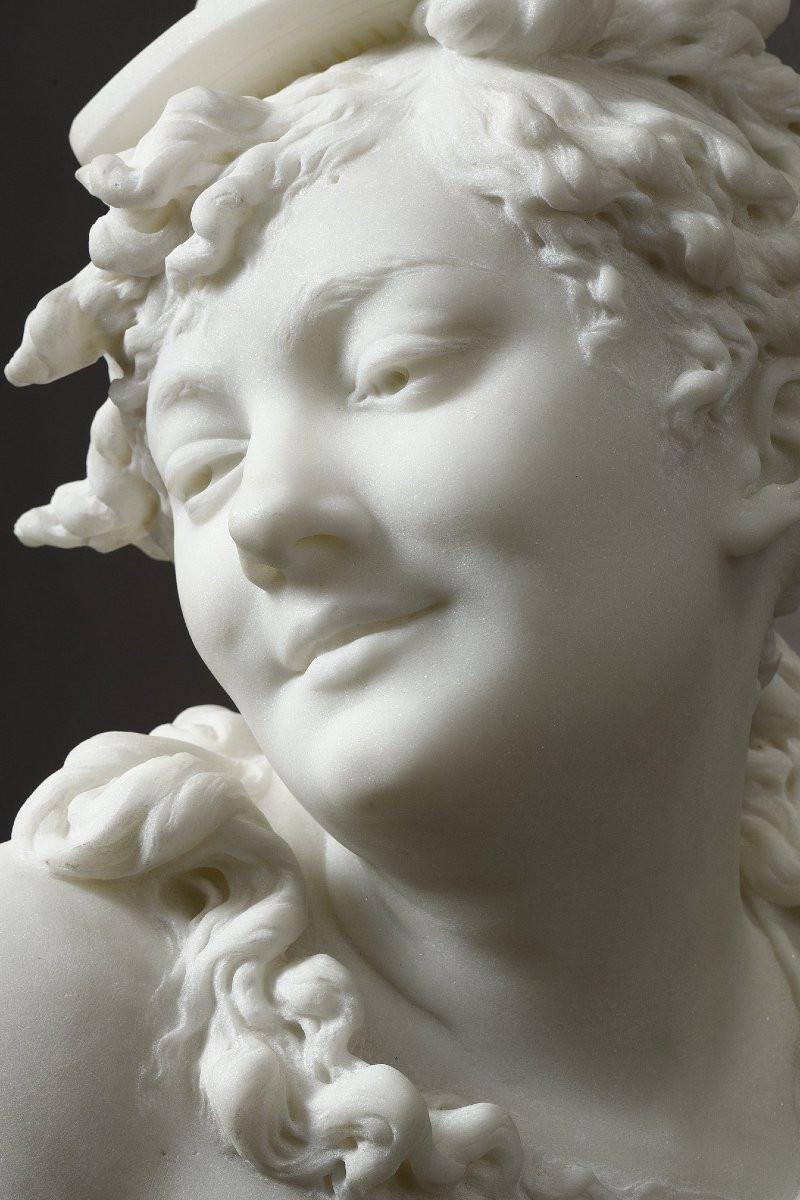
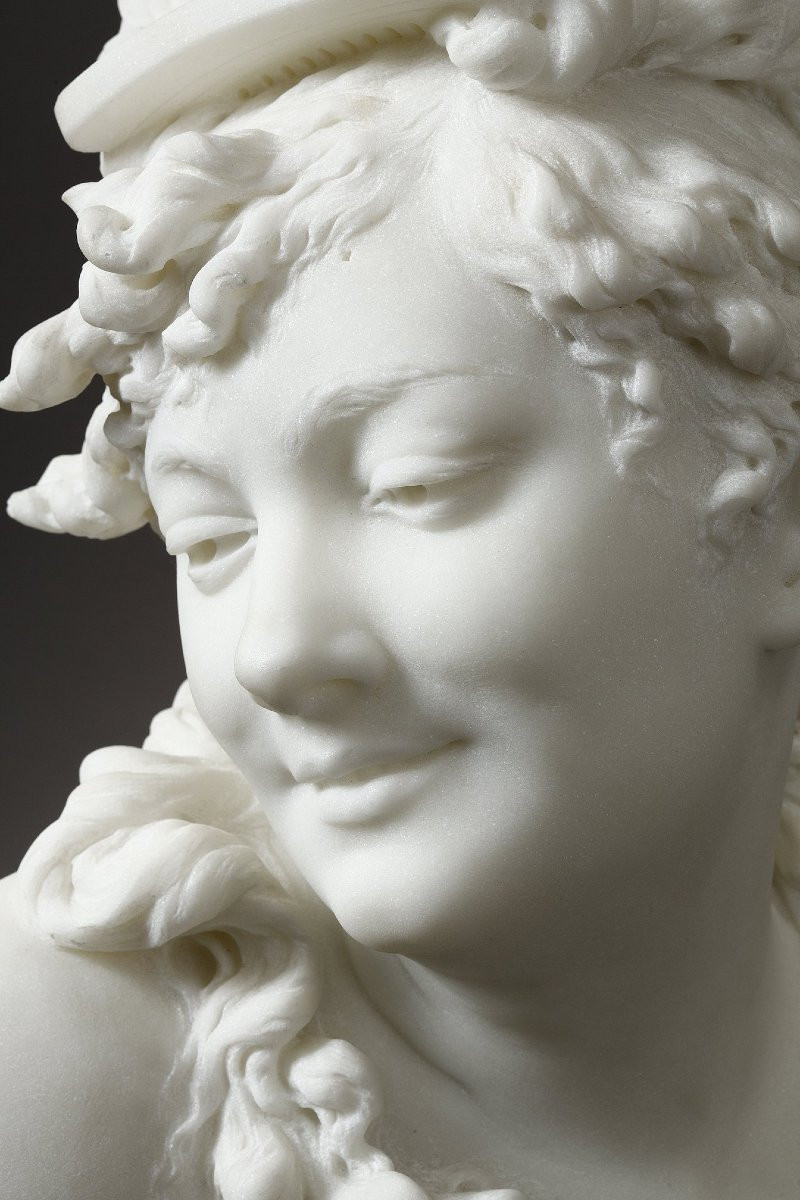
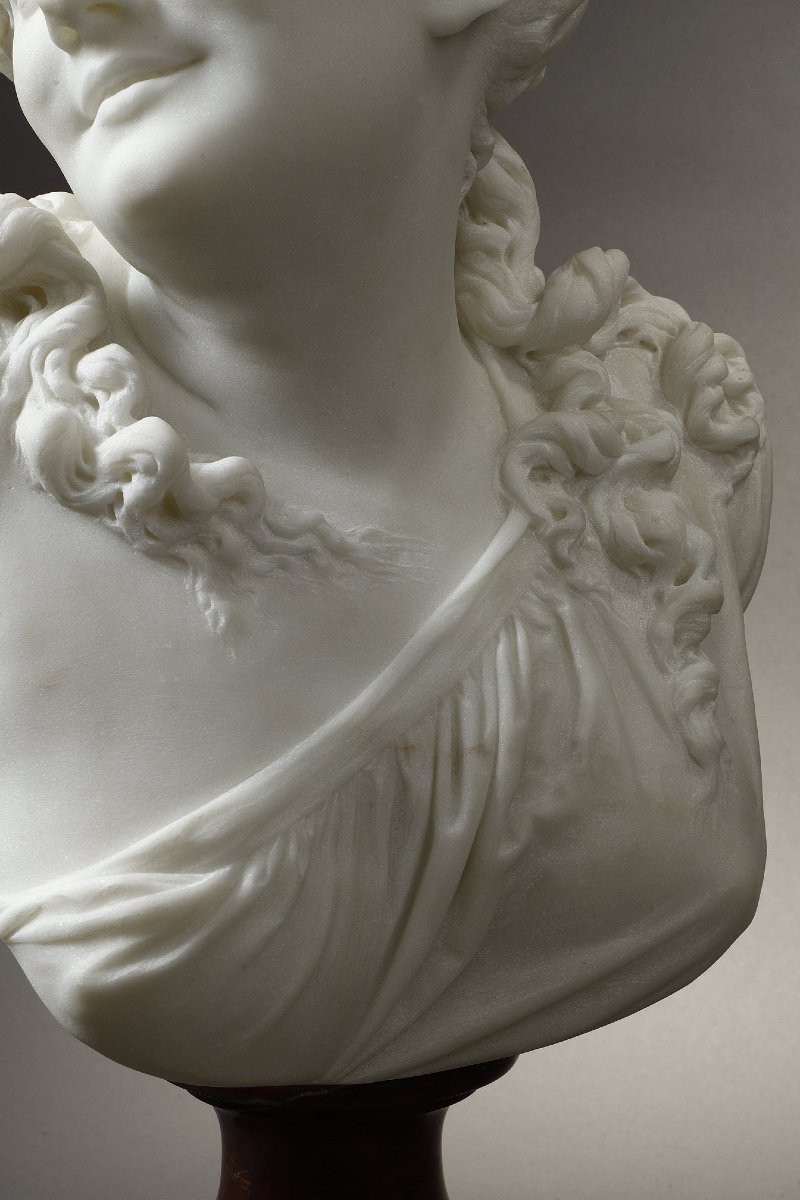
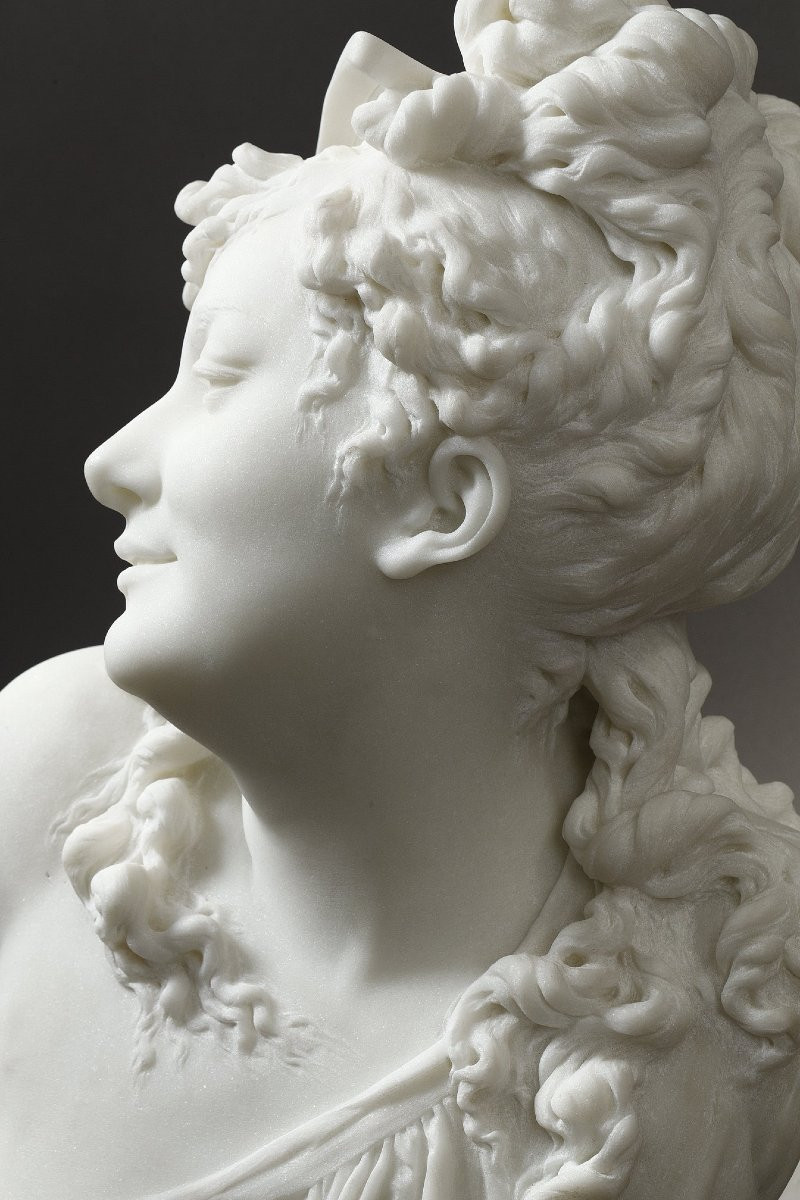
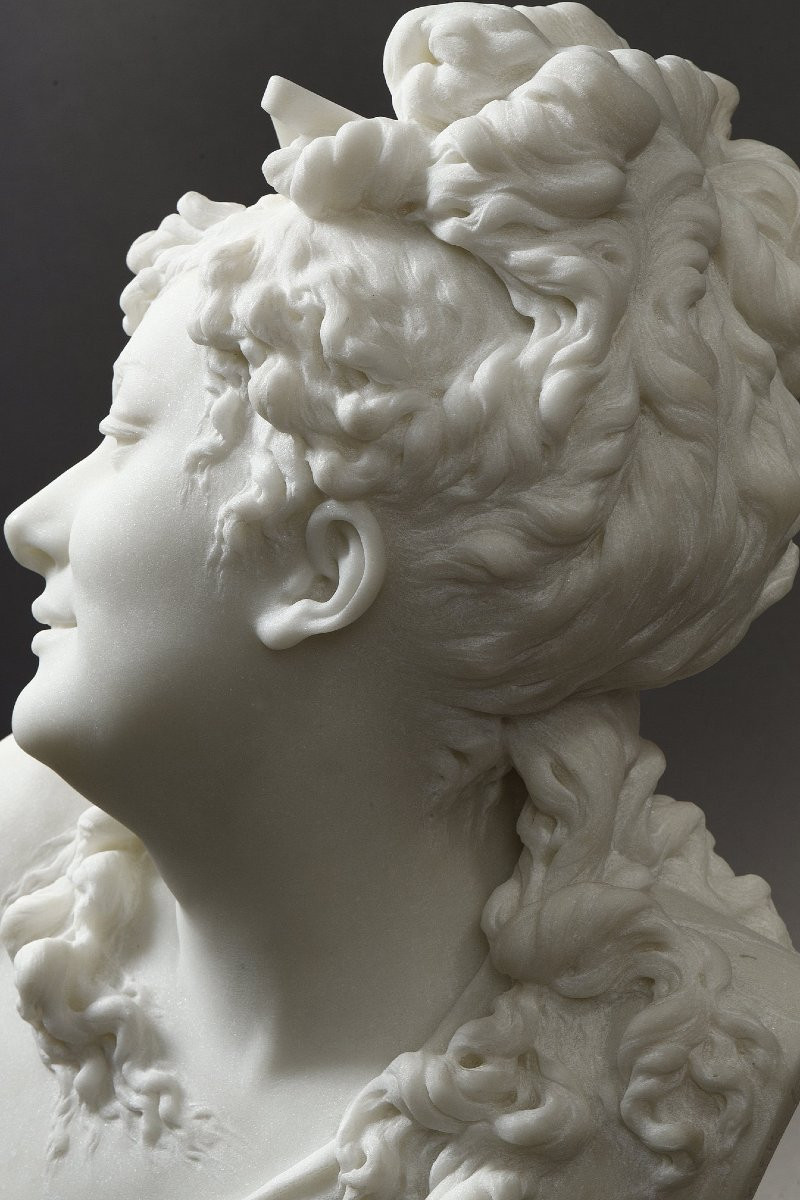
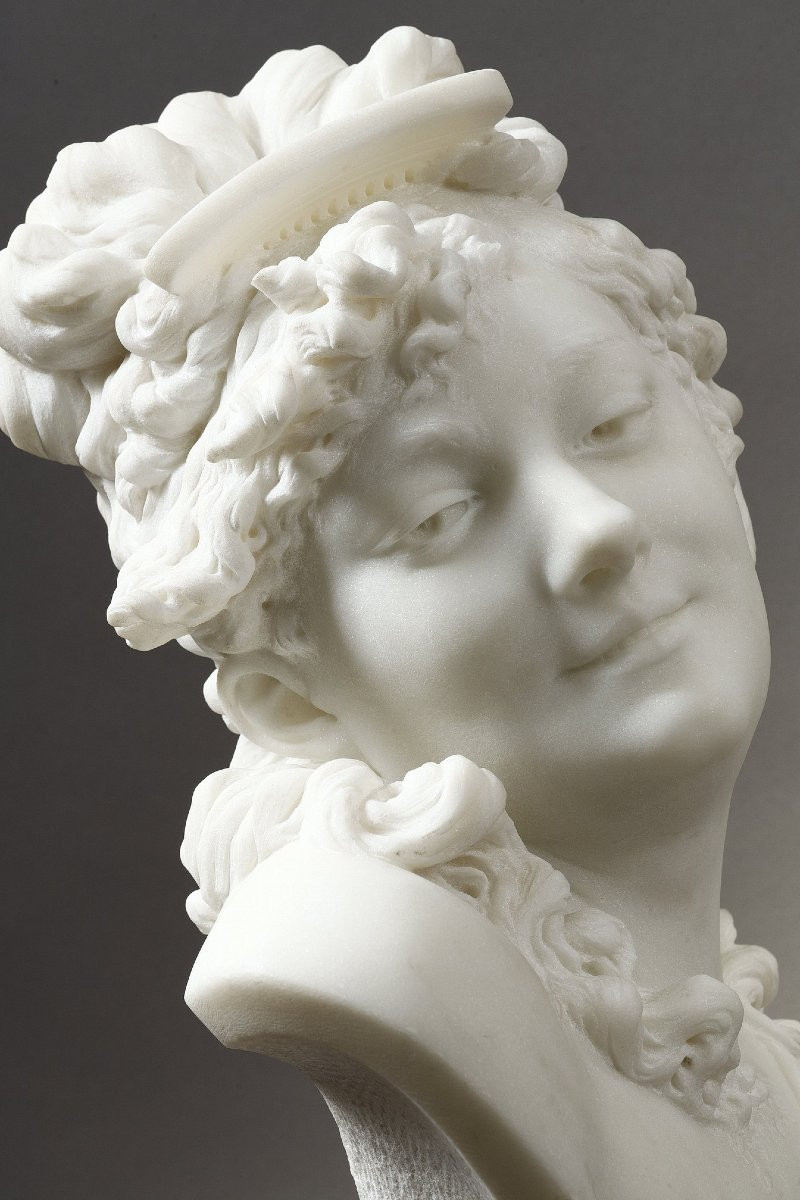
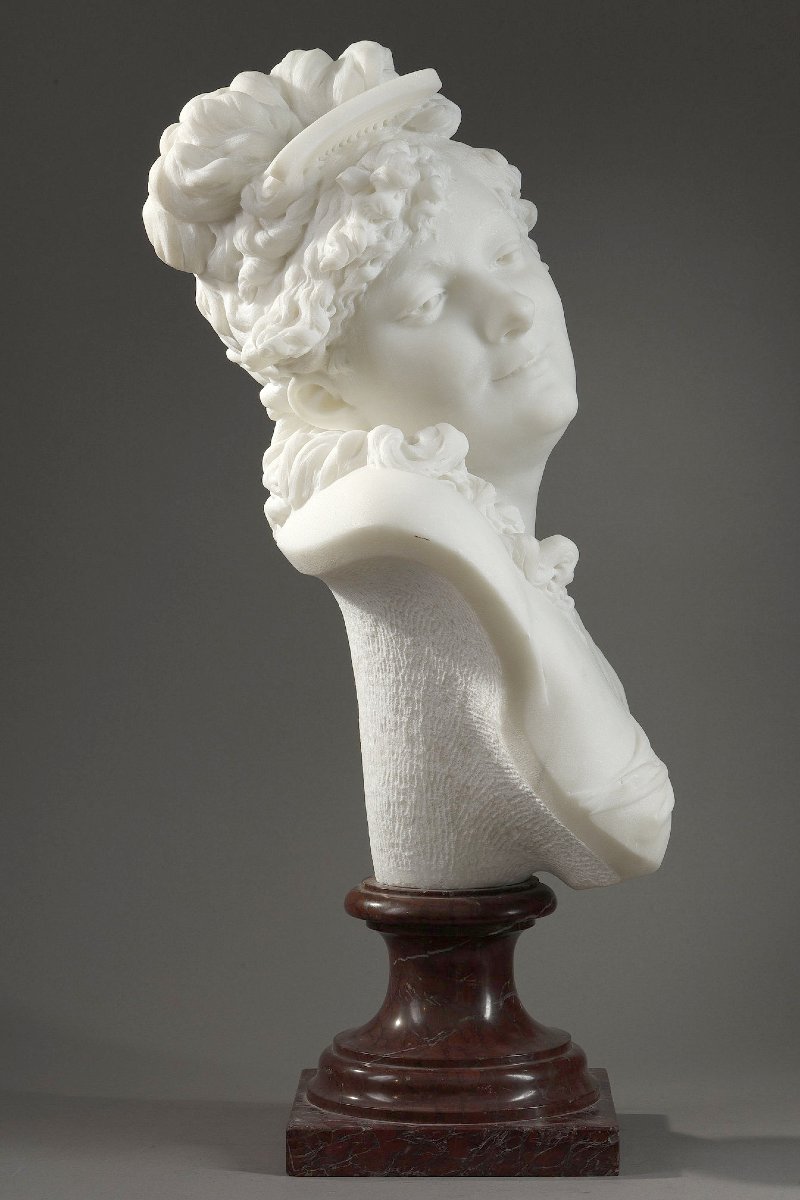
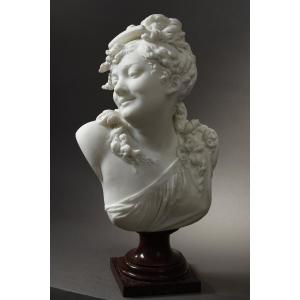


Bust Of Young Woman With Comb - Albert-ernest Carrier-belleuse (1824-1887)
Artist: Carrier-belleuse
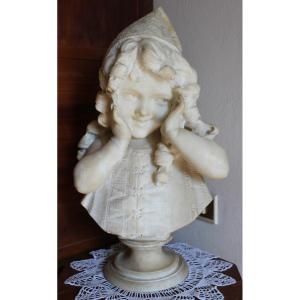
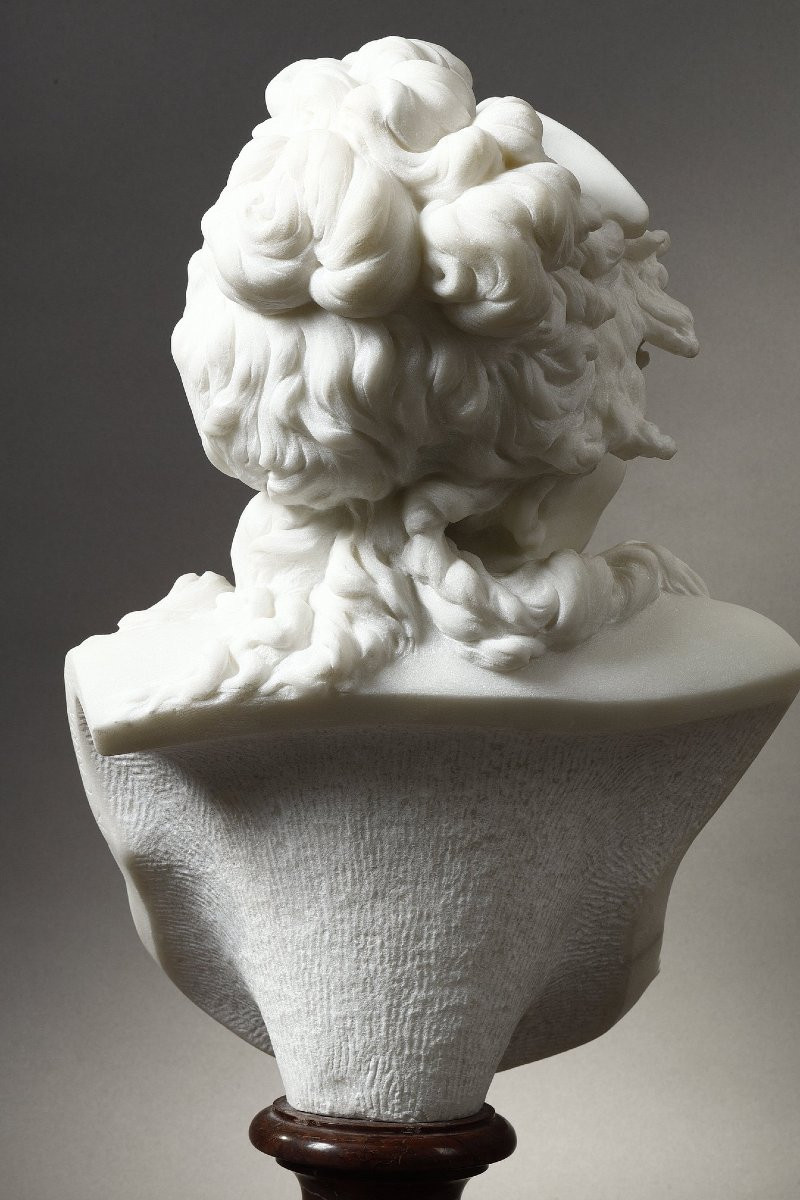
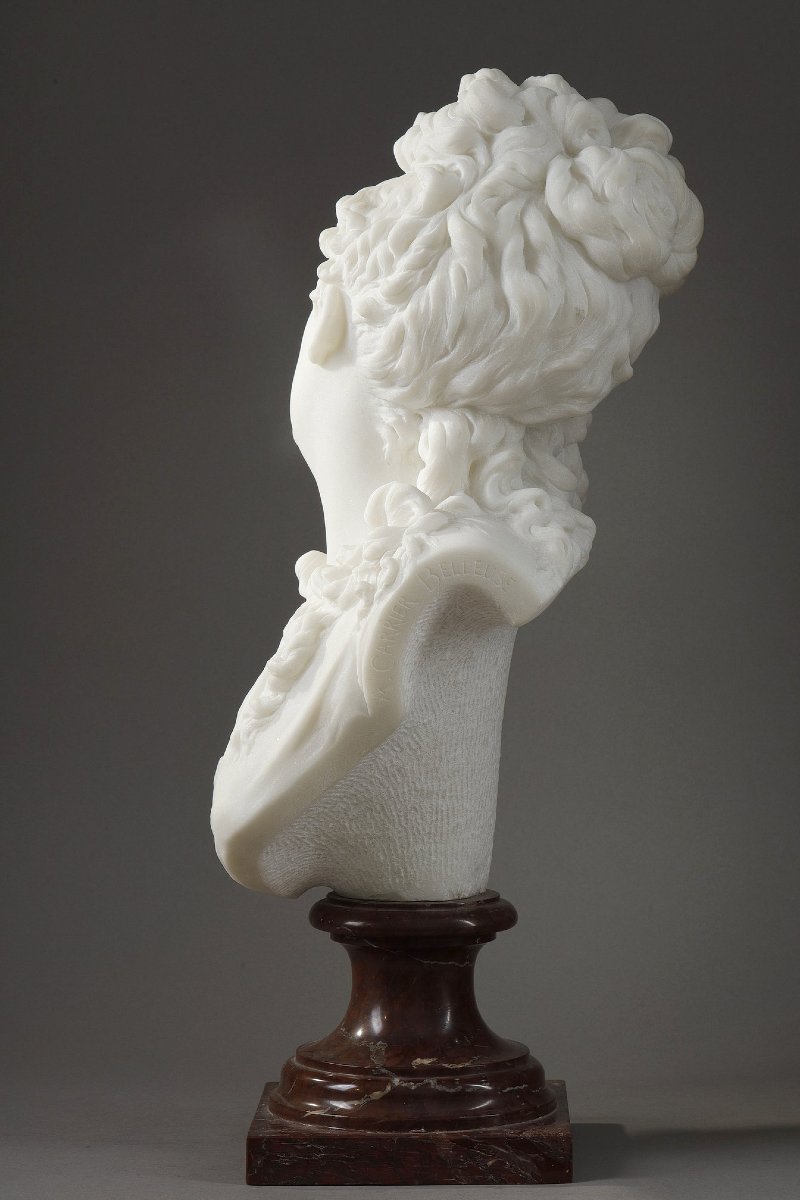
Bust sculptedin white Carrara marble
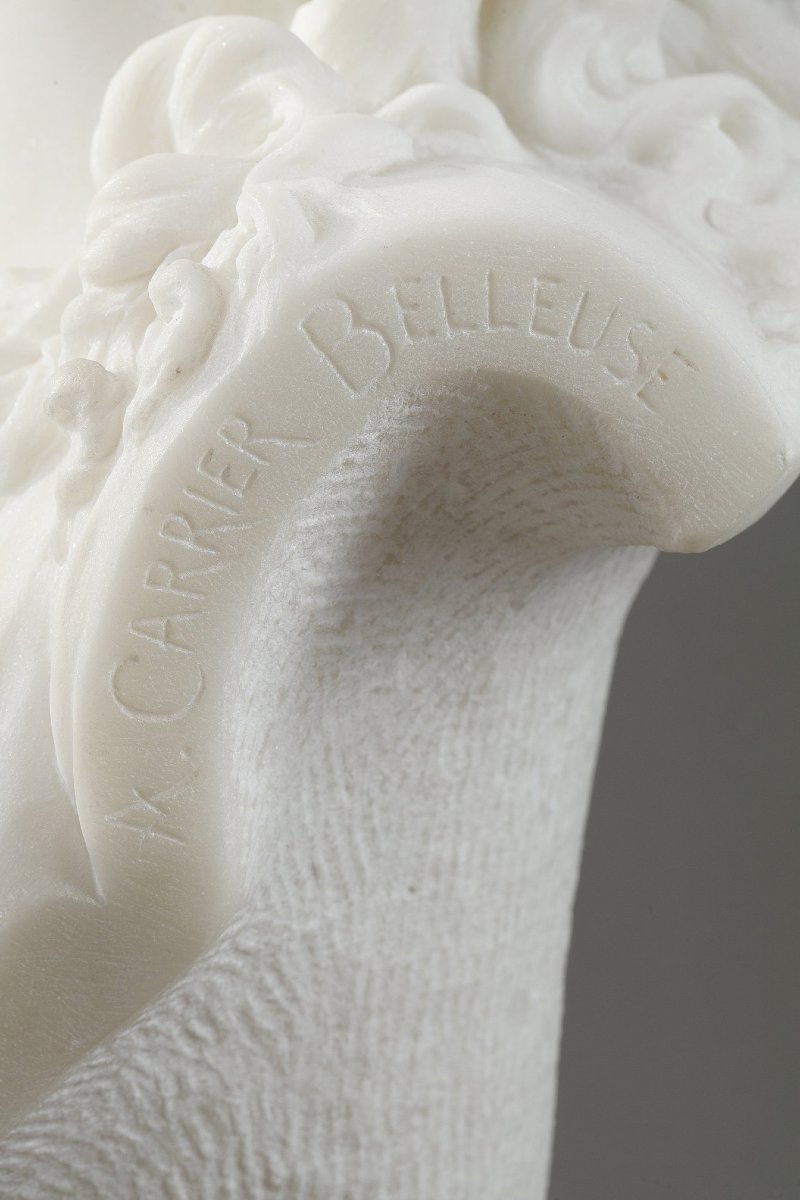
signed on the shoulder "A. Carrier Belleuse"
reposing on anred griotte marble base
France
circa 1870
total heightwith the base 61 cm
width 32 cm
depth 28 cm
our web catalog link :
https://galerietourbillon.com/carrier-belleuse-albert-ernest-jeune-femme-au-peigne/
Galerie Tourbillon : Free valuation - Buy and Sell at best prices
Biography :
Albert-Ernest Carrier de Belleuse known as Carrier-Belleuse (1824-1887)was one of the most prolific artists of the century and had the greatestsuccesses under the Second Empire, enjoying the personal support of NapoleonIII. His work was greatly influenced by the style of the Italian Renaissance andthat of the 18th century, which he helped to bring up to date.In 1837, the young Carrier-Belleuse apprenticed in the workshop of theengraver Bauchery. He was admitted soon after to the goldsmith Jacques HenriFauconnier. Through François Arago, he met the sculptor David d'Angers whofacilitated his admission to the School of Fine Arts. Carrier-Belleuse enteredit in 1840. Noted for his skill by the great bronze companies in Paris such asBarbedienne and Denière, he soon received numerous orders for models forcandelabras, pendulums, fittings for fireplaces, etc. In 1848, probably at theinitiative of François Arago, who became head of state, he received his firstpublic order for a small statue of "Mademoiselle Rachel singing LaMarseillaise". In 1851, he appeared for the first time at the Salon ofFrench Artists, where he presented two bronze medallions. From 1851 to 1855,Carrier-Belleuse stayed in England, in Stoke-on-Trent where he served asdirector of the modeling and drawing school of the Minton house, a largeporcelain manufacturer.Back in France, Carrier-Belleuse moved to Paris in a large workshop located 15rue de la Tour d´Auvergne. From 1857, he made regular sendings to the Salon andbecame famous thanks to the success of large marbles, such as the "Bacchante"exhibited at the Salon in 1863, and acquired by Napoleon III, "Angelica"(1866) or even "Hebe asleep" (1869). At the Salon of 1867, hisgroup entitled "Messiah" earned him the medal of honor of sculpture.It was acquired by the State to adorn the Chapel of the Virgin in theSaint-Vincent-de-Paul church.Carrier-Belleuse acquired a great reputation in parallel for his terracottabusts which, in many respects, recall those of 18th century artists. Hemade portraits of a large number of celebrities of his time. He produced, amongothers, the busts of Napoleon III, Renan, Thiers, Grévy, Arago, MargueriteBellanger, Théophile Gautier, Honoré Daumier, Delacroix, Hortense Schneider,Réjane… He also modelled numerous busts of mythological inspiration andhistorical and artistic portraits like Marie Stuart, Shakespeare or evenMozart.Carrier-Belleuse used and trained in his workshop in the rue de la Tourd´Auvergne many young talented artists such as Alexandre Falguière, JulesDesbois, Eugène Delaplanche, Jules Dalou or Joseph Chéret; but he was bestknown for having been the master of Auguste Rodin who entered his studio as apractitioner in 1864.Carrier-Belleuse devoted himself a lot to decorative sculpture. Hecontributed to the decorations of many important buildings. We owe him inparticular the caryatids of the Renaissance theater in Paris, the pediment ofthe main entrance to the Banque de France, the stucco ceilings of theLesdiguières and La Trémoïlle pavilions at the Louvre Palace, the frieze of thePalais de la Bourse in Brussels, or the decoration of the Hôtel de la Païva onthe Champs-Elysées in Paris. He also received State commissions for monuments:that of Jean-Jacques Rousseau in Montmorency, of Alexandre Dumas, in Villers-Cotterêts,of Masséna in Nice. Abroad, he produced the equestrian statue of Michael thebrave in Bucharest and the tomb of José de San Martín in Buenos Aires.In 1873, Carrier-Belleuse took part in the construction of the ParisOpera house, directed by his friend Charles Garnier. He created the twomonumental torchieres flanking the grand staircase in the main hall and thecaryatids of the chimney of the grand foyer. In 1875, he was appointed directorof works of art at the Porcelain Manufacture de Sèvres. He imprinted on it avery modern impulse which manifested itself in the creation of a completerange of vases.
signed on the shoulder "A. Carrier Belleuse"
reposing on anred griotte marble base
France
circa 1870
total heightwith the base 61 cm
width 32 cm
depth 28 cm
our web catalog link :
https://galerietourbillon.com/carrier-belleuse-albert-ernest-jeune-femme-au-peigne/
Galerie Tourbillon : Free valuation - Buy and Sell at best prices
Biography :
Albert-Ernest Carrier de Belleuse known as Carrier-Belleuse (1824-1887)was one of the most prolific artists of the century and had the greatestsuccesses under the Second Empire, enjoying the personal support of NapoleonIII. His work was greatly influenced by the style of the Italian Renaissance andthat of the 18th century, which he helped to bring up to date.In 1837, the young Carrier-Belleuse apprenticed in the workshop of theengraver Bauchery. He was admitted soon after to the goldsmith Jacques HenriFauconnier. Through François Arago, he met the sculptor David d'Angers whofacilitated his admission to the School of Fine Arts. Carrier-Belleuse enteredit in 1840. Noted for his skill by the great bronze companies in Paris such asBarbedienne and Denière, he soon received numerous orders for models forcandelabras, pendulums, fittings for fireplaces, etc. In 1848, probably at theinitiative of François Arago, who became head of state, he received his firstpublic order for a small statue of "Mademoiselle Rachel singing LaMarseillaise". In 1851, he appeared for the first time at the Salon ofFrench Artists, where he presented two bronze medallions. From 1851 to 1855,Carrier-Belleuse stayed in England, in Stoke-on-Trent where he served asdirector of the modeling and drawing school of the Minton house, a largeporcelain manufacturer.Back in France, Carrier-Belleuse moved to Paris in a large workshop located 15rue de la Tour d´Auvergne. From 1857, he made regular sendings to the Salon andbecame famous thanks to the success of large marbles, such as the "Bacchante"exhibited at the Salon in 1863, and acquired by Napoleon III, "Angelica"(1866) or even "Hebe asleep" (1869). At the Salon of 1867, hisgroup entitled "Messiah" earned him the medal of honor of sculpture.It was acquired by the State to adorn the Chapel of the Virgin in theSaint-Vincent-de-Paul church.Carrier-Belleuse acquired a great reputation in parallel for his terracottabusts which, in many respects, recall those of 18th century artists. Hemade portraits of a large number of celebrities of his time. He produced, amongothers, the busts of Napoleon III, Renan, Thiers, Grévy, Arago, MargueriteBellanger, Théophile Gautier, Honoré Daumier, Delacroix, Hortense Schneider,Réjane… He also modelled numerous busts of mythological inspiration andhistorical and artistic portraits like Marie Stuart, Shakespeare or evenMozart.Carrier-Belleuse used and trained in his workshop in the rue de la Tourd´Auvergne many young talented artists such as Alexandre Falguière, JulesDesbois, Eugène Delaplanche, Jules Dalou or Joseph Chéret; but he was bestknown for having been the master of Auguste Rodin who entered his studio as apractitioner in 1864.Carrier-Belleuse devoted himself a lot to decorative sculpture. Hecontributed to the decorations of many important buildings. We owe him inparticular the caryatids of the Renaissance theater in Paris, the pediment ofthe main entrance to the Banque de France, the stucco ceilings of theLesdiguières and La Trémoïlle pavilions at the Louvre Palace, the frieze of thePalais de la Bourse in Brussels, or the decoration of the Hôtel de la Païva onthe Champs-Elysées in Paris. He also received State commissions for monuments:that of Jean-Jacques Rousseau in Montmorency, of Alexandre Dumas, in Villers-Cotterêts,of Masséna in Nice. Abroad, he produced the equestrian statue of Michael thebrave in Bucharest and the tomb of José de San Martín in Buenos Aires.In 1873, Carrier-Belleuse took part in the construction of the ParisOpera house, directed by his friend Charles Garnier. He created the twomonumental torchieres flanking the grand staircase in the main hall and thecaryatids of the chimney of the grand foyer. In 1875, he was appointed directorof works of art at the Porcelain Manufacture de Sèvres. He imprinted on it avery modern impulse which manifested itself in the creation of a completerange of vases.
9 800 €
Period: 19th century
Style: Napoleon 3rd
Condition: Excellent condition
Material: Marble
Height: 61 cm
Reference (ID): 1750319
Availability: In stock
Print