THIS OBJECT WAS SOLD
Paul Rue (1866-1954) Birch And Heather, Berry, Creuse. Crozant School, Châteauroux Coutant
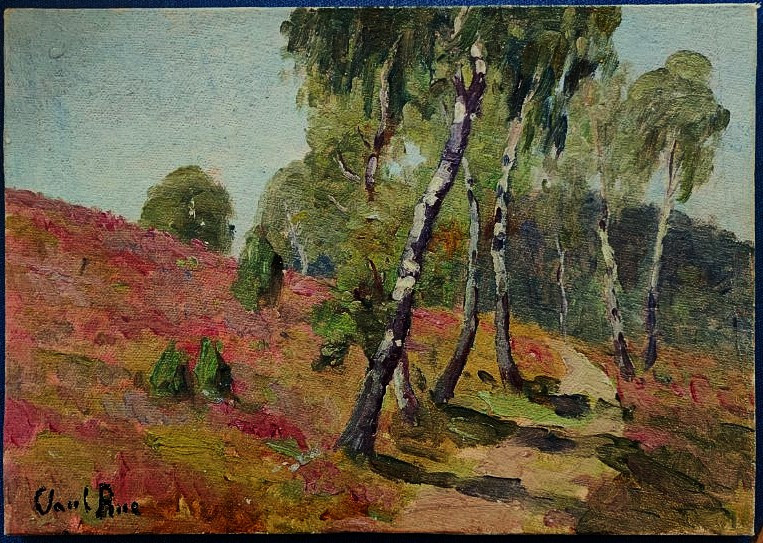
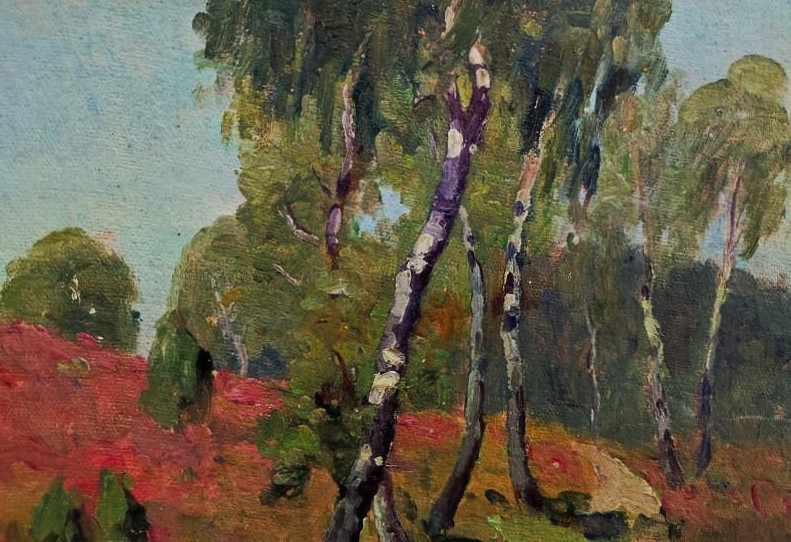
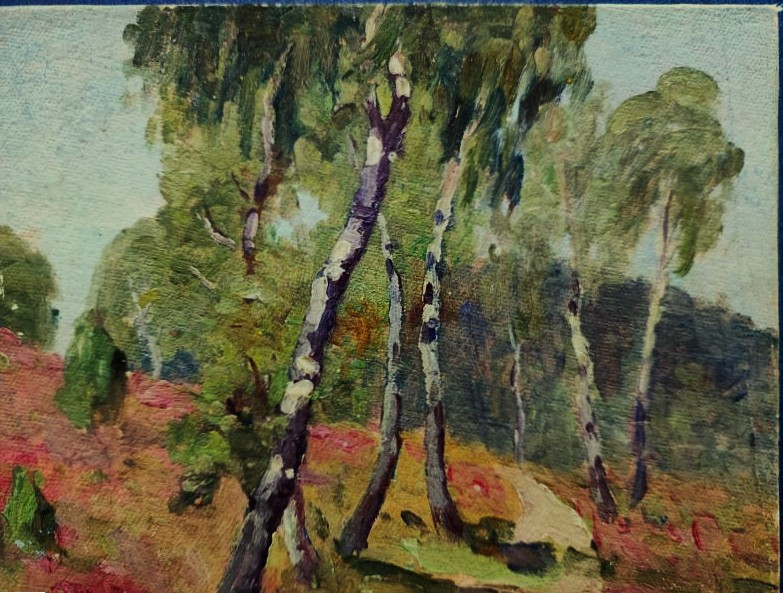
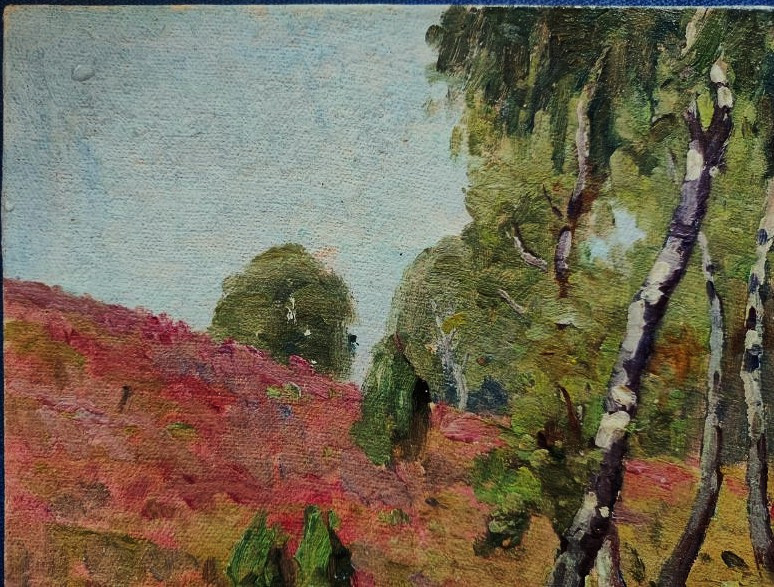
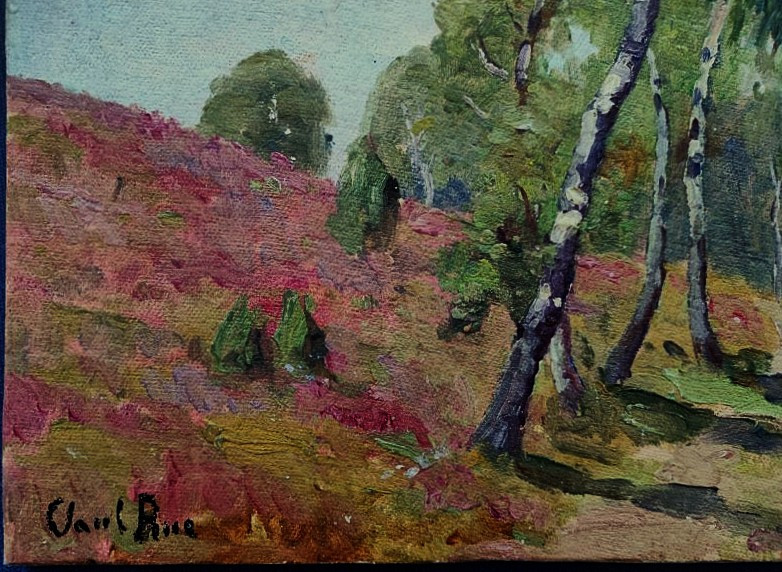
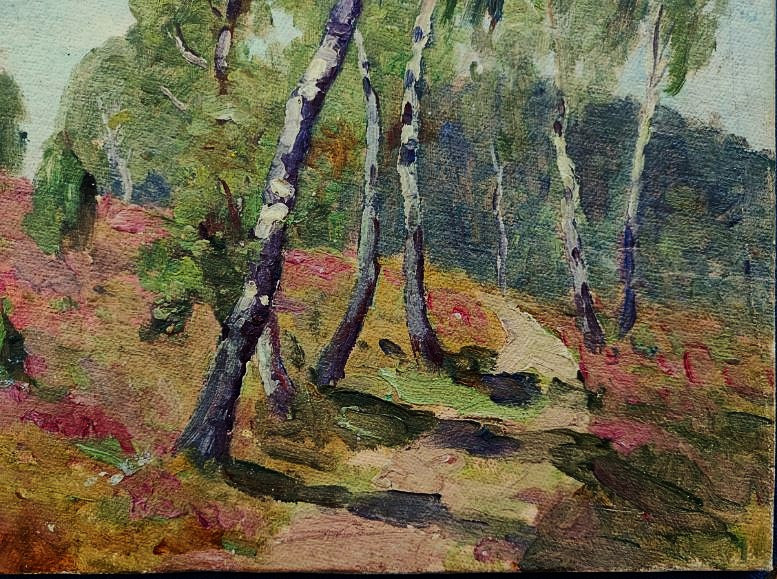
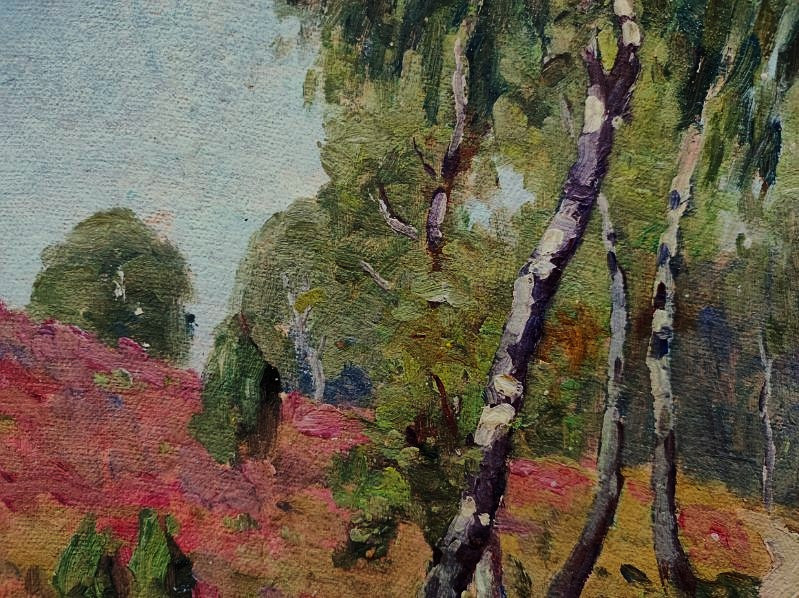
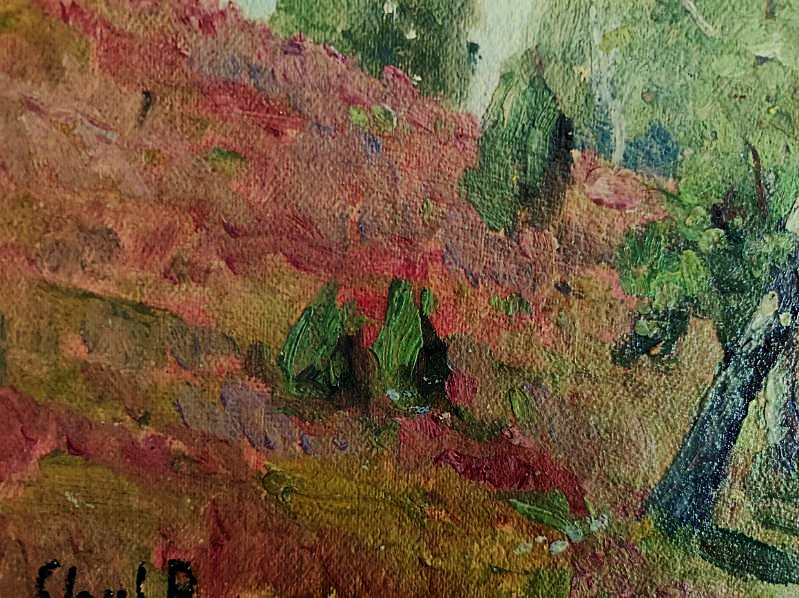
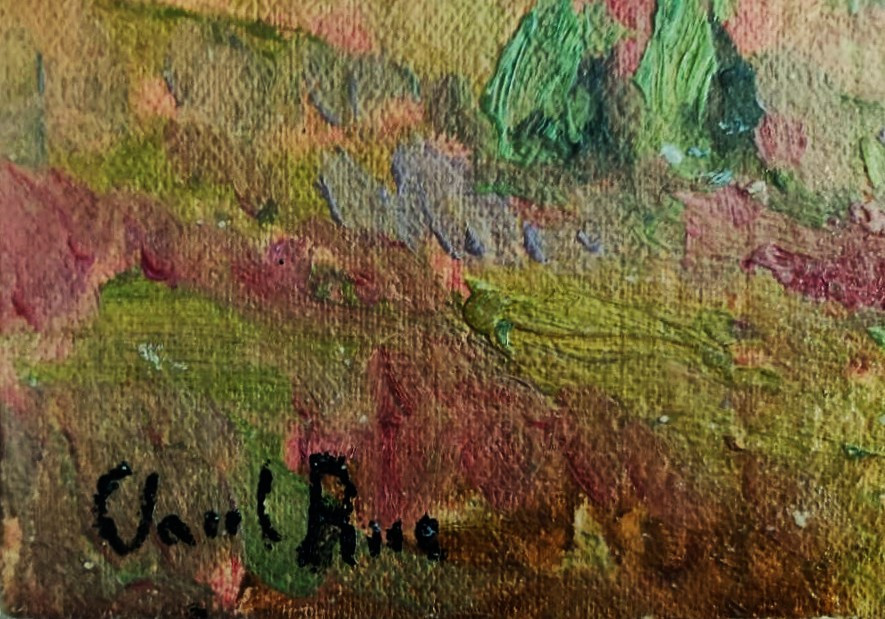
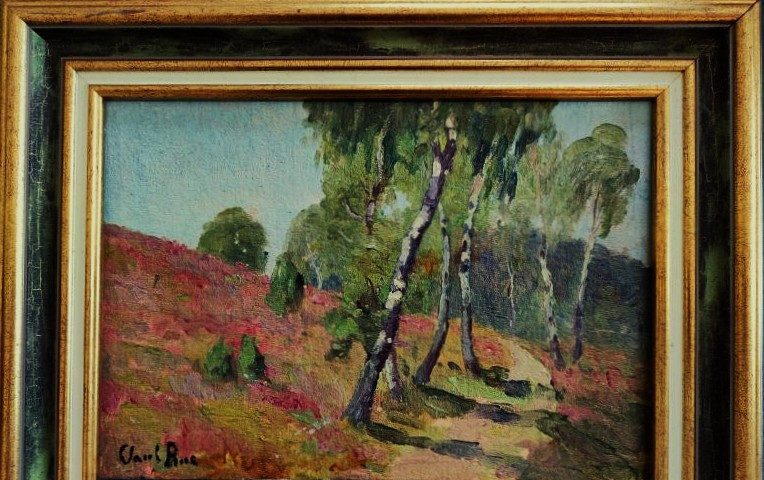
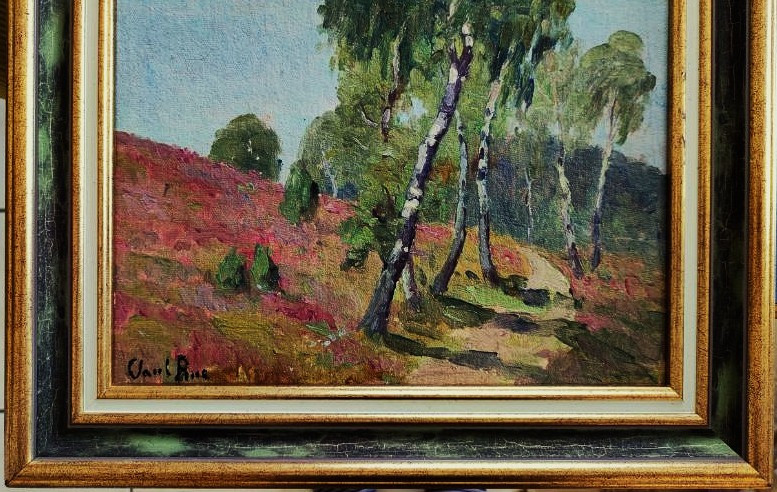
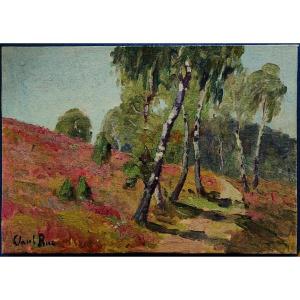


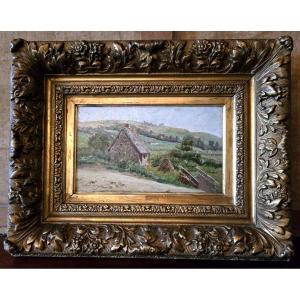
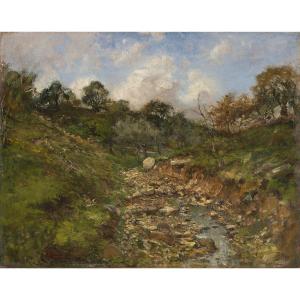
New work by Paul Rue, an oil on canvas depicting a landscape of birch and heather, signed lower left.
Size of the painting alone, unframed, 19x27cm.
This is a very pretty post-impressionist composition by Paul Rue, painting a landscape of birch and heather, most probably in Creuse or Berry. One immediately recognizes his characteristic touch, his entire palette dominated by browns, mauves, pinks and soft greens, with the addition of a pretty blue sky.
You can quickly recognize a work by Paul Rue, at least as much as a painting by Fernand.a painting by Fernand Maillaud, one of his mentors. mentor.
Paul Rue, born in Châteauroux on October 81866 and died in Le Poinçonnet on May 26, 1954, was a Frenchlandscape painter. He was the half-brother of the poet Gabriel Nigond. son of a former mayor of Châteauroux, Paul-Joseph Rue, he lost his fatherhis father just a few days after his birth. His mother, Françoisemother, Françoise Suzanne Duquesnoy, married Charles Nigond, a civil engineer.Baccalauréat es lettres at the lycée in Châteauroux, it was not until 1906 that he turned to painting.
Gabriel Nigond, then living at "Les Epingués" (commune ofVerneuil-sur-Igneraie, Indre), introduced his half-brother to thecommunity of regional artists he had formed there. Here we findmen of letters, Abbé Jacob (Hector de Corlay), Lionel Nastorgand painters Henry Coutant and Fernand Maillaud. According toRaymond Christoflour in Maillaud, peintre de la vie, his meeting with the latter would be decisive in his formation as a painter.
In 1908, he sent six paintings to the Salon des indépendants, and became a member of the of the Société des artistes français in 1913. He received a mention at theSalon in 1916.
He was vice-president of the Académie du Centre and of the commission for admission to the Musée Bertrand in Châteauroux.
Mayor of the commune of Châteauroux for sixteen years. of the commune of Saint-Martin-de-Lamps for sixteen years, he was alsoof Saint-Martin-de-Lamps for sixteen years, but ended his life at Les Divers, in the commune of Le Poinçonnet.
Although the artistwhile the artist never left the Indre department, between its bordersthe Creuse valley, of Le Poinçonnet, but also the Brenne region, were frequentlyfrequently visited. On the subject of the latter, he says in an autograph letterin an autograph letter. TheBrenne and its ponds is also an ideal setting for the expression of torments, in a more directly poetic register. in a more directly poetic register. In the same letter, he confesses to enjoyinglikes to evoke "the slightly gray, rather melancholy atmospherethe charm of our Berrichon skies".themes are autumnal and wintry, mostly illustrated by sunsetssunsets, twilights and mist.
Trees are also a major focus of thisalso a major point in this work, always holding an important place in thestructure of the landscape. To this end, the practice ofwas his daily practice.
There are also regular hunting scenes.hunting scenes. A former huntsman, he enjoyed evokingAlthough he did some illustrations, a series of his paintings is directly inspired by Gabriel Nigond's Contes de la Limousine.
Today, he is a key figure among the painters of the Crozant school.
This oil painting is in very good condition, delivered in a contemporary frame (see last 2 photos)
Genuine work guaranteed.
Size of the painting alone, unframed, 19x27cm.
This is a very pretty post-impressionist composition by Paul Rue, painting a landscape of birch and heather, most probably in Creuse or Berry. One immediately recognizes his characteristic touch, his entire palette dominated by browns, mauves, pinks and soft greens, with the addition of a pretty blue sky.
You can quickly recognize a work by Paul Rue, at least as much as a painting by Fernand.a painting by Fernand Maillaud, one of his mentors. mentor.
Paul Rue, born in Châteauroux on October 81866 and died in Le Poinçonnet on May 26, 1954, was a Frenchlandscape painter. He was the half-brother of the poet Gabriel Nigond. son of a former mayor of Châteauroux, Paul-Joseph Rue, he lost his fatherhis father just a few days after his birth. His mother, Françoisemother, Françoise Suzanne Duquesnoy, married Charles Nigond, a civil engineer.Baccalauréat es lettres at the lycée in Châteauroux, it was not until 1906 that he turned to painting.
Gabriel Nigond, then living at "Les Epingués" (commune ofVerneuil-sur-Igneraie, Indre), introduced his half-brother to thecommunity of regional artists he had formed there. Here we findmen of letters, Abbé Jacob (Hector de Corlay), Lionel Nastorgand painters Henry Coutant and Fernand Maillaud. According toRaymond Christoflour in Maillaud, peintre de la vie, his meeting with the latter would be decisive in his formation as a painter.
In 1908, he sent six paintings to the Salon des indépendants, and became a member of the of the Société des artistes français in 1913. He received a mention at theSalon in 1916.
He was vice-president of the Académie du Centre and of the commission for admission to the Musée Bertrand in Châteauroux.
Mayor of the commune of Châteauroux for sixteen years. of the commune of Saint-Martin-de-Lamps for sixteen years, he was alsoof Saint-Martin-de-Lamps for sixteen years, but ended his life at Les Divers, in the commune of Le Poinçonnet.
Although the artistwhile the artist never left the Indre department, between its bordersthe Creuse valley, of Le Poinçonnet, but also the Brenne region, were frequentlyfrequently visited. On the subject of the latter, he says in an autograph letterin an autograph letter. TheBrenne and its ponds is also an ideal setting for the expression of torments, in a more directly poetic register. in a more directly poetic register. In the same letter, he confesses to enjoyinglikes to evoke "the slightly gray, rather melancholy atmospherethe charm of our Berrichon skies".themes are autumnal and wintry, mostly illustrated by sunsetssunsets, twilights and mist.
Trees are also a major focus of thisalso a major point in this work, always holding an important place in thestructure of the landscape. To this end, the practice ofwas his daily practice.
There are also regular hunting scenes.hunting scenes. A former huntsman, he enjoyed evokingAlthough he did some illustrations, a series of his paintings is directly inspired by Gabriel Nigond's Contes de la Limousine.
Today, he is a key figure among the painters of the Crozant school.
This oil painting is in very good condition, delivered in a contemporary frame (see last 2 photos)
Genuine work guaranteed.
Explore similar pieces and discover your ideal find:
Landscapes