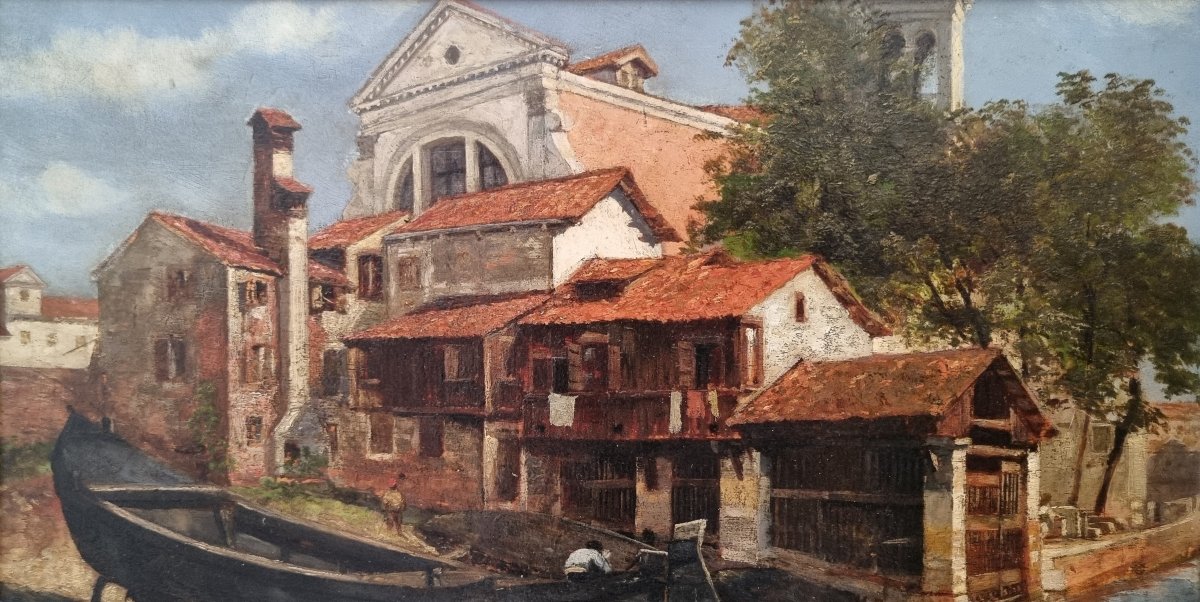
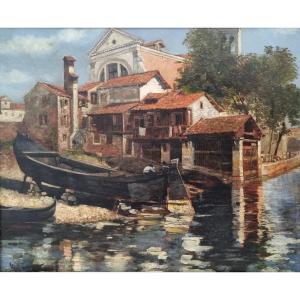


Wiliam Scott - View Of The Squero De San Trovaso In Venice
Artist: Wiliam Scott
William SCOTT
London, 1848 - Cannes, 1918
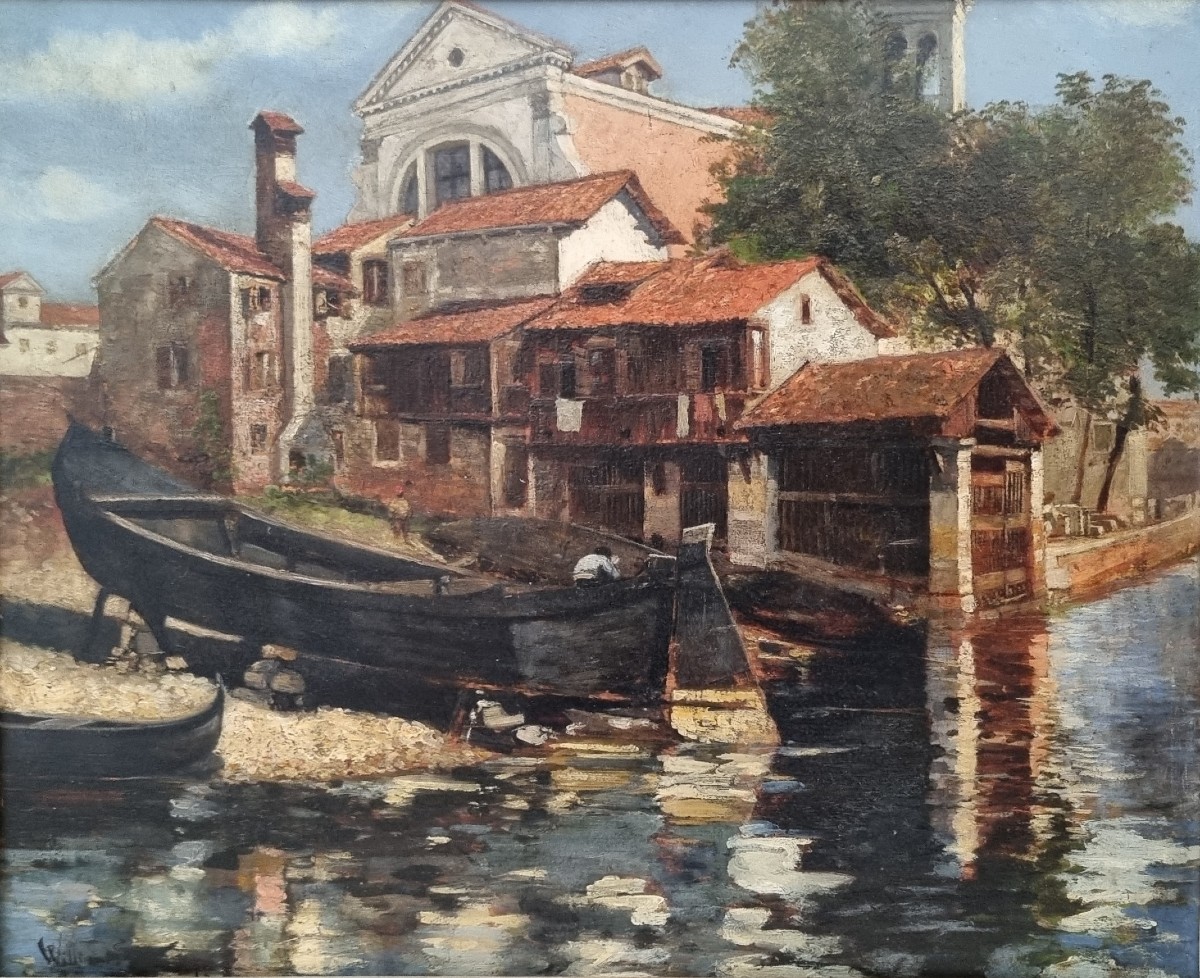
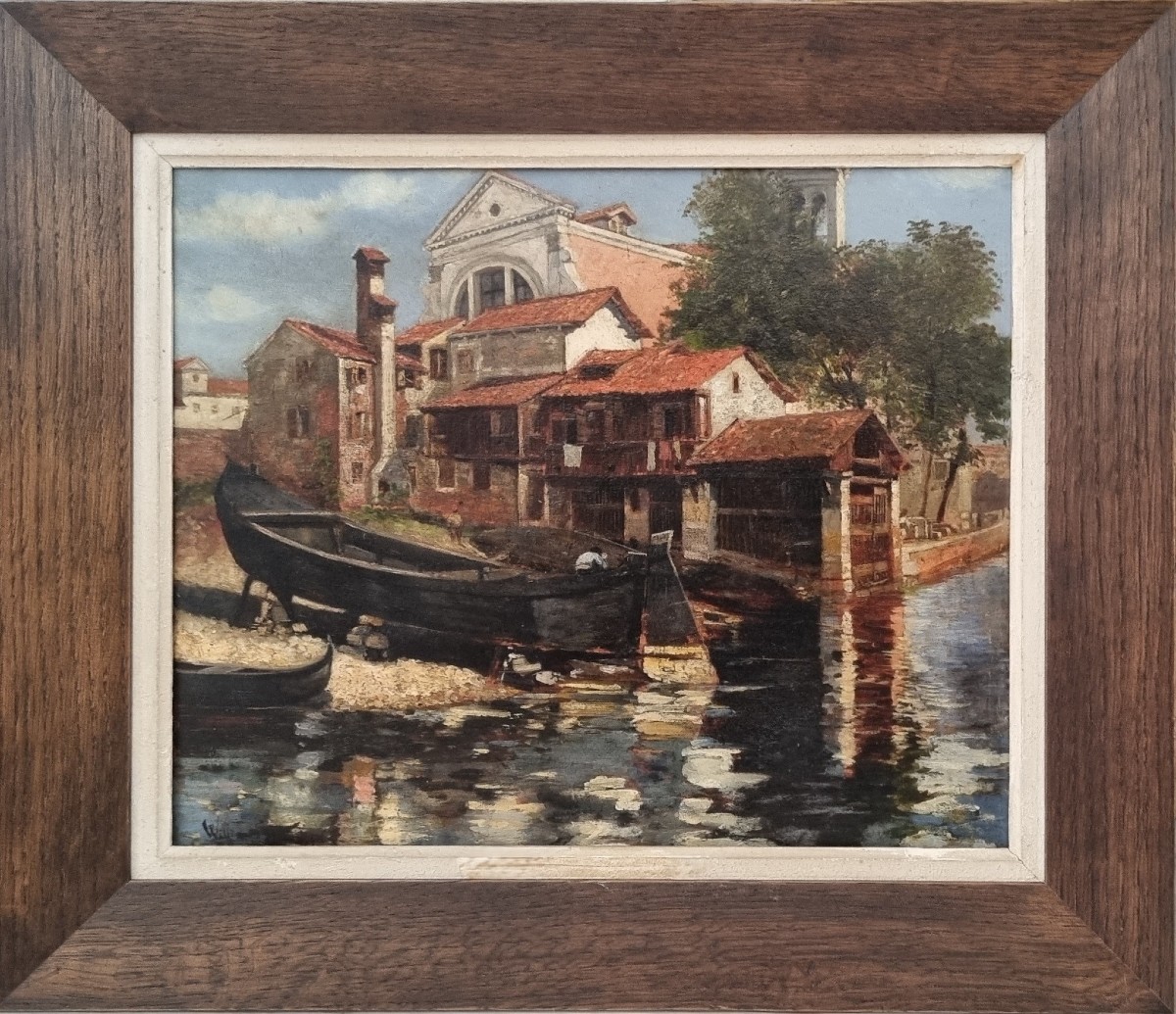
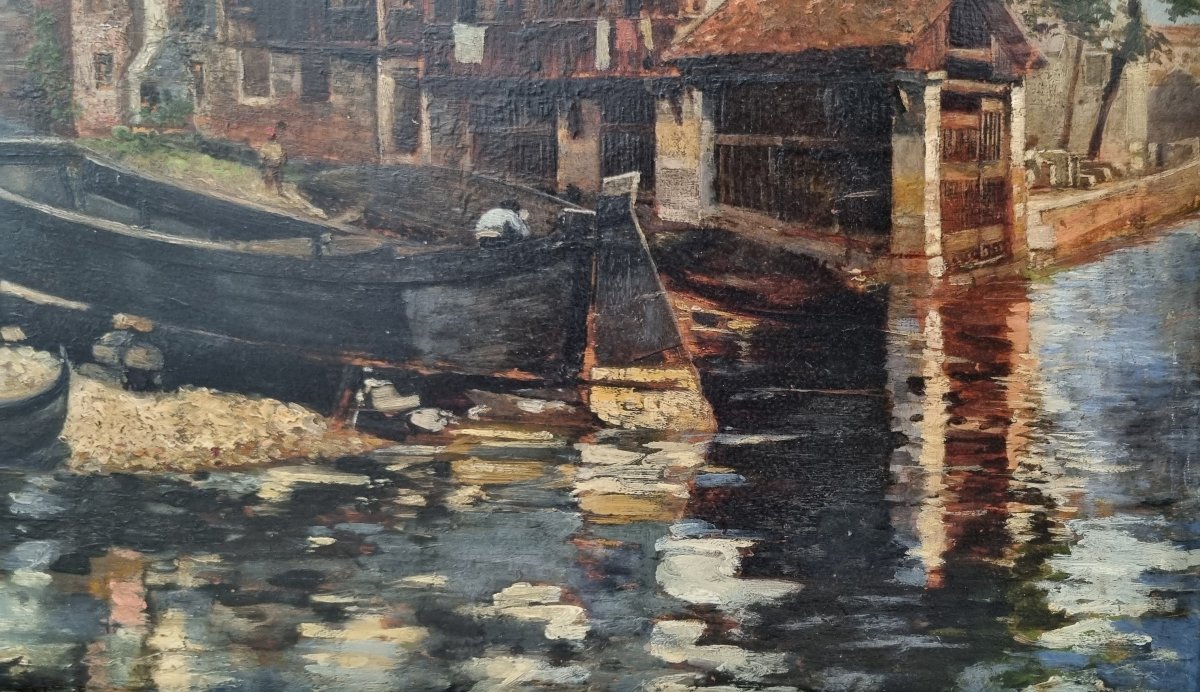
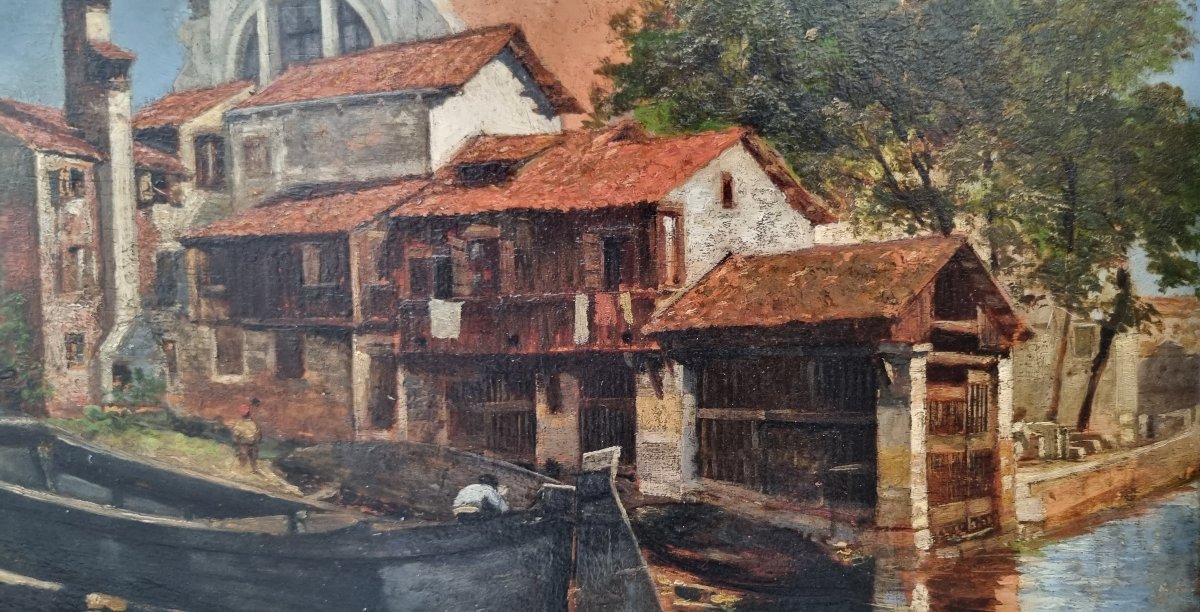
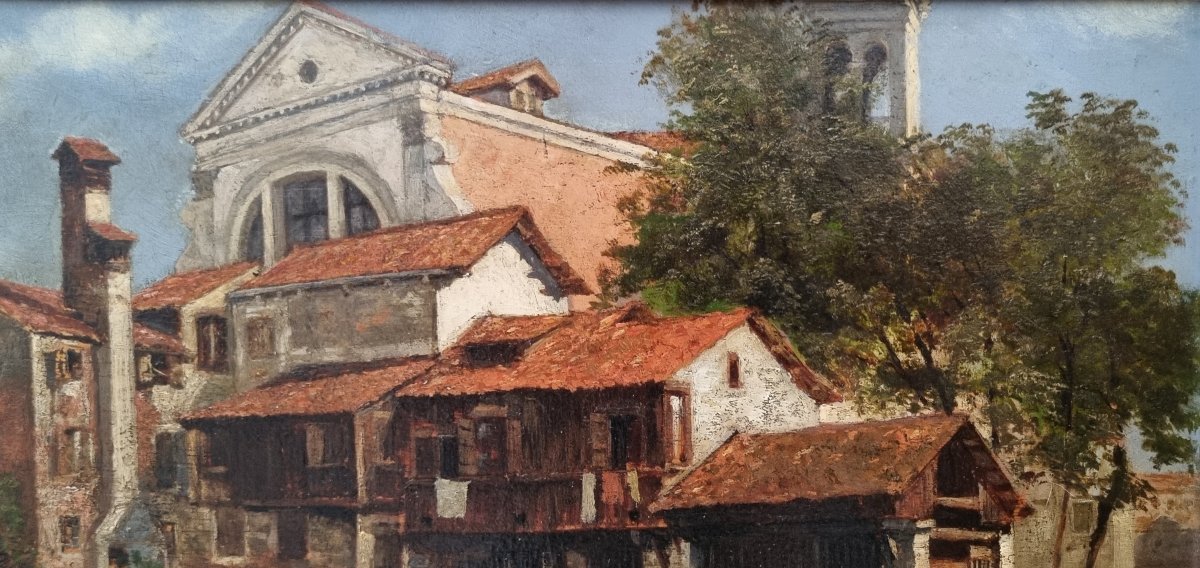
View of the Squero de San Trovaso in Venice
Oil onwood panel
26 x 43 cm (33 x 51 cm with frame)
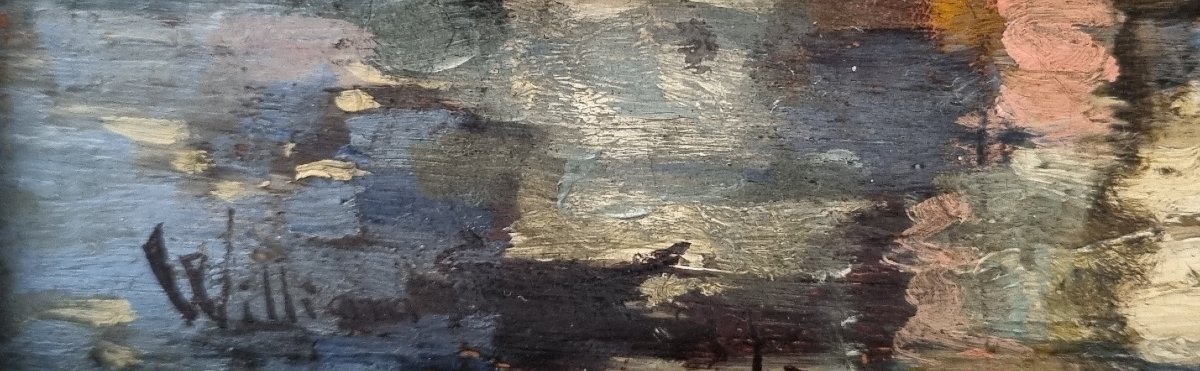
Signed lower left "William Scott"
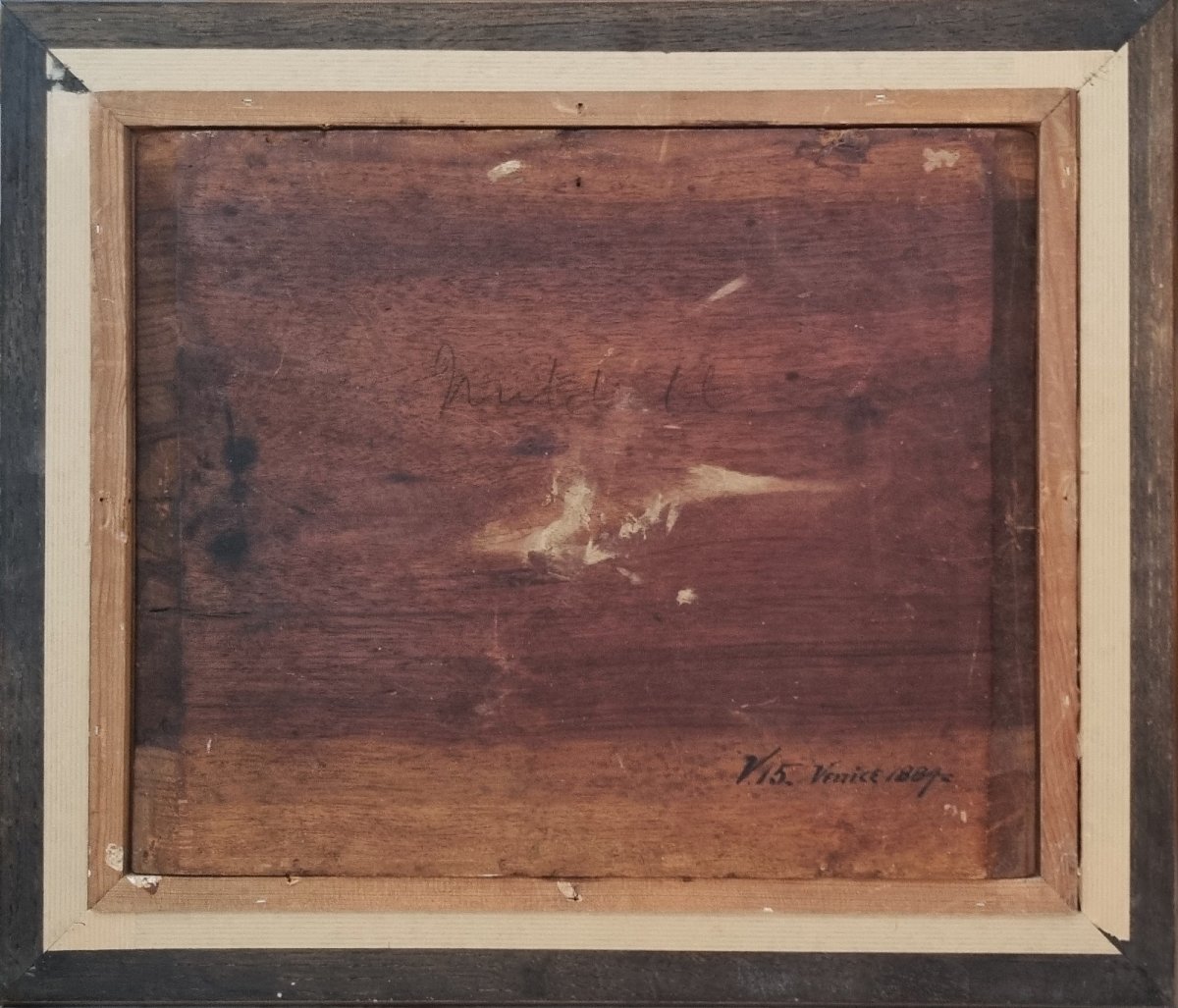
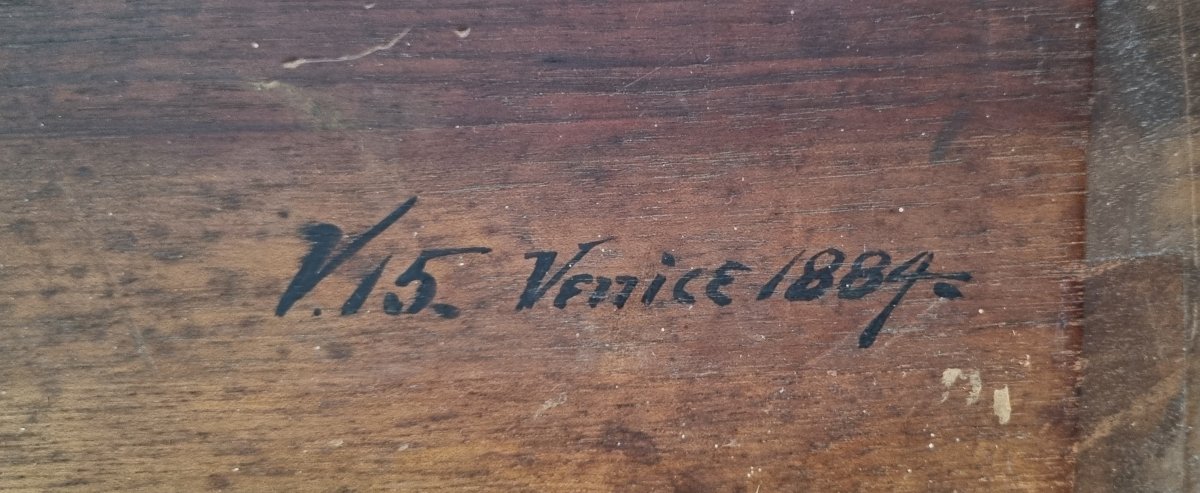
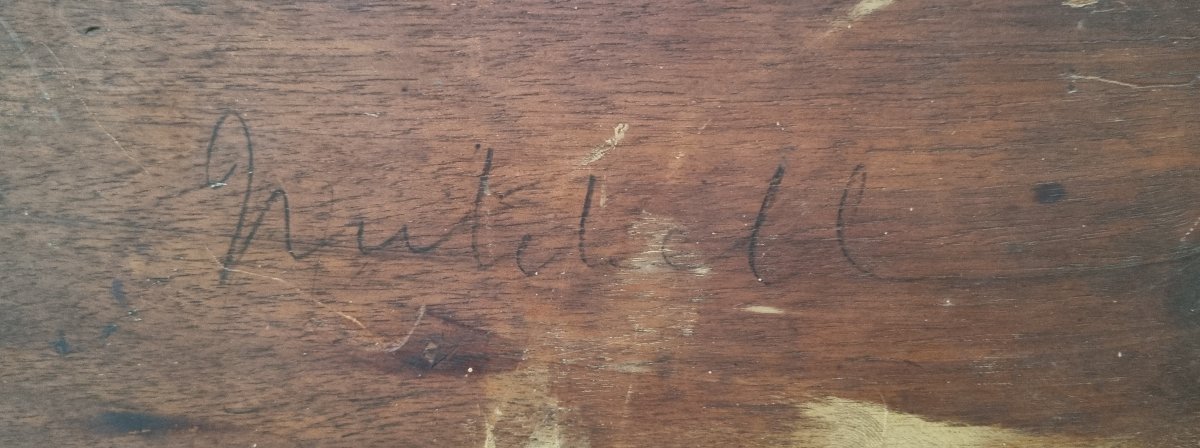
Situated and dated on the back "Venice / 1884"
Here is a rare work by an artist who, trained as an architect, became a painter in the 1880s when he became a friend and disciple of the American James McNeill Whistler in Venice.
Born in 1848, William Scott first studied in London and was admitted to the Royal Institute of British Architects in 1870. He was awarded the Silver Medal for Drawing in 1875 and elected Associate Member of the RIBA in 1877. He was also awarded the Soane Medal in 1877. In the 1870s, Scott traveled and even lived in Italy for part of the 1880s and 1890s. He stayed in Rome in 1882, Venice in 1884 and Bordighera (Italy) in 1896.
It was in Venice, in the early 1880s, that he met James McNeill Whistler, who became his friend. He then turned to painting and engraving. He then exhibited his paintings at the Royal Academy in London between 1880 and 1897, as well as at the Royal Institute of Oil Painters, the Royal Society of Painter-Etchers and Engravers and the Royal Society of British Artists in London. He also exhibited in Glasgow, Birmingham and Manchester.
Our painting is an oil-on-canvas view of the Squero de San Trovaso in Venice, one of the oldest shipyards in Venice, located in front of the church of Saint Gervais Saint Protais, known as San Trovaso. It was here that Venice's small boats, such as gondolas, pupparini and sandoli, were built and repaired.
The beautiful colors, the science of architectural design and the desire to create atmosphere through harmonious colors are all in the spirit of his friend James McNeil Whistler, whom he knew well and frequented in Venice in the 1880s. He attended the Sunday breakfasts where "the latest pastels were presented for examination". He confided to the Pennels that "Whistler always showed his sketches in his own way, or not at all." ! William Scott can be seen as a disciple of Whistler insofar as, for Whistler as for him, art had to concentrate on working out the harmony of colors, thus prefiguring abstract art, while retaining a highly mastered drawing. For Whistler, art was a "science of beauty"!
London, 1848 - Cannes, 1918
View of the Squero de San Trovaso in Venice
Oil onwood panel
26 x 43 cm (33 x 51 cm with frame)
Signed lower left "William Scott"
Situated and dated on the back "Venice / 1884"
Here is a rare work by an artist who, trained as an architect, became a painter in the 1880s when he became a friend and disciple of the American James McNeill Whistler in Venice.
Born in 1848, William Scott first studied in London and was admitted to the Royal Institute of British Architects in 1870. He was awarded the Silver Medal for Drawing in 1875 and elected Associate Member of the RIBA in 1877. He was also awarded the Soane Medal in 1877. In the 1870s, Scott traveled and even lived in Italy for part of the 1880s and 1890s. He stayed in Rome in 1882, Venice in 1884 and Bordighera (Italy) in 1896.
It was in Venice, in the early 1880s, that he met James McNeill Whistler, who became his friend. He then turned to painting and engraving. He then exhibited his paintings at the Royal Academy in London between 1880 and 1897, as well as at the Royal Institute of Oil Painters, the Royal Society of Painter-Etchers and Engravers and the Royal Society of British Artists in London. He also exhibited in Glasgow, Birmingham and Manchester.
Our painting is an oil-on-canvas view of the Squero de San Trovaso in Venice, one of the oldest shipyards in Venice, located in front of the church of Saint Gervais Saint Protais, known as San Trovaso. It was here that Venice's small boats, such as gondolas, pupparini and sandoli, were built and repaired.
The beautiful colors, the science of architectural design and the desire to create atmosphere through harmonious colors are all in the spirit of his friend James McNeil Whistler, whom he knew well and frequented in Venice in the 1880s. He attended the Sunday breakfasts where "the latest pastels were presented for examination". He confided to the Pennels that "Whistler always showed his sketches in his own way, or not at all." ! William Scott can be seen as a disciple of Whistler insofar as, for Whistler as for him, art had to concentrate on working out the harmony of colors, thus prefiguring abstract art, while retaining a highly mastered drawing. For Whistler, art was a "science of beauty"!
4 500 €
Period: 19th century
Style: Art Nouveau
Condition: Excellent condition
Material: Oil painting on wood
Width: 43 cm (51 cm avec le cadre)
Height: 26 cm (33 cm avec le cadre)
Reference (ID): 1749059
Availability: In stock
Print