THIS OBJECT WAS SOLD
Carved Beech Armchair, Bv Crowned Mark, Bellevue Castle, Louis XV Period.
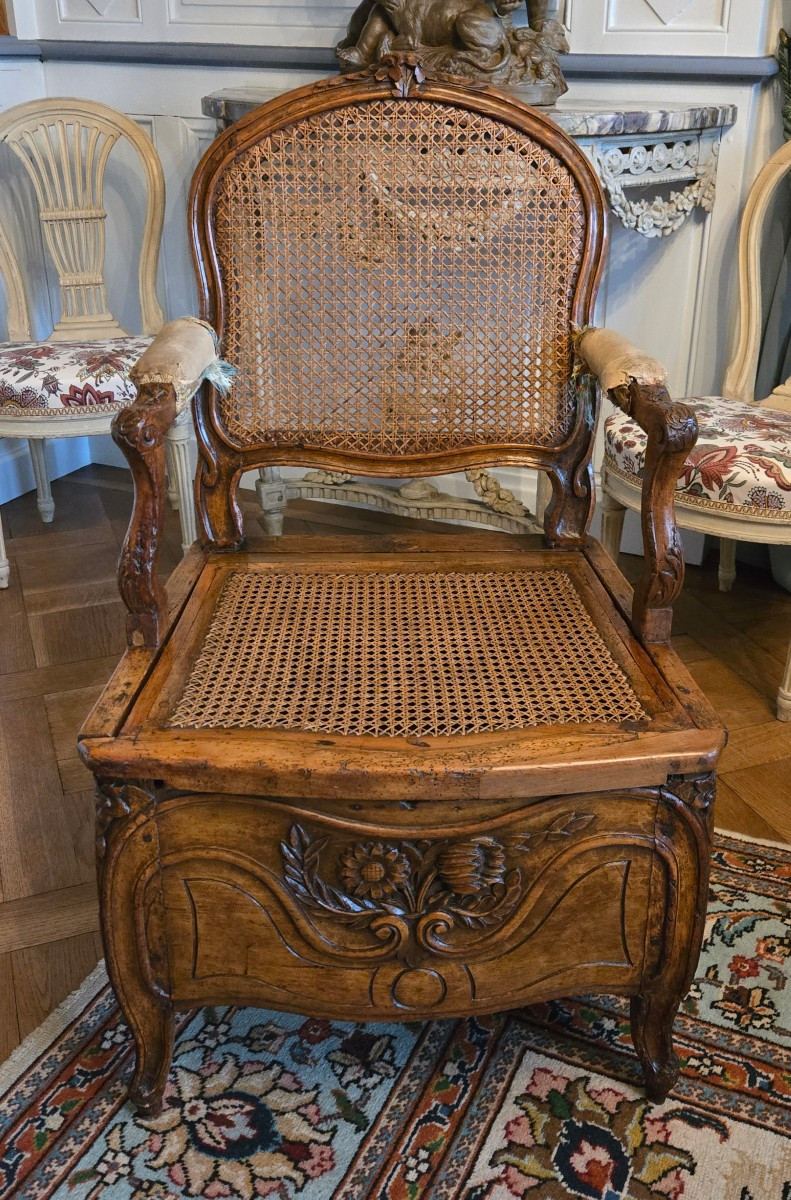
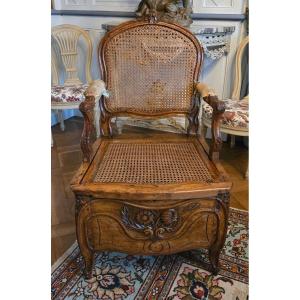


Carved beech commode, crowned BV mark, Château de Bellevue, Louis XV period, circa 1750.
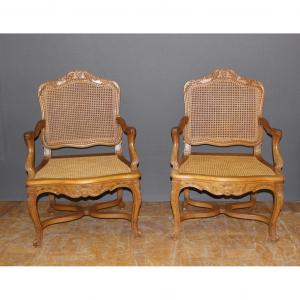
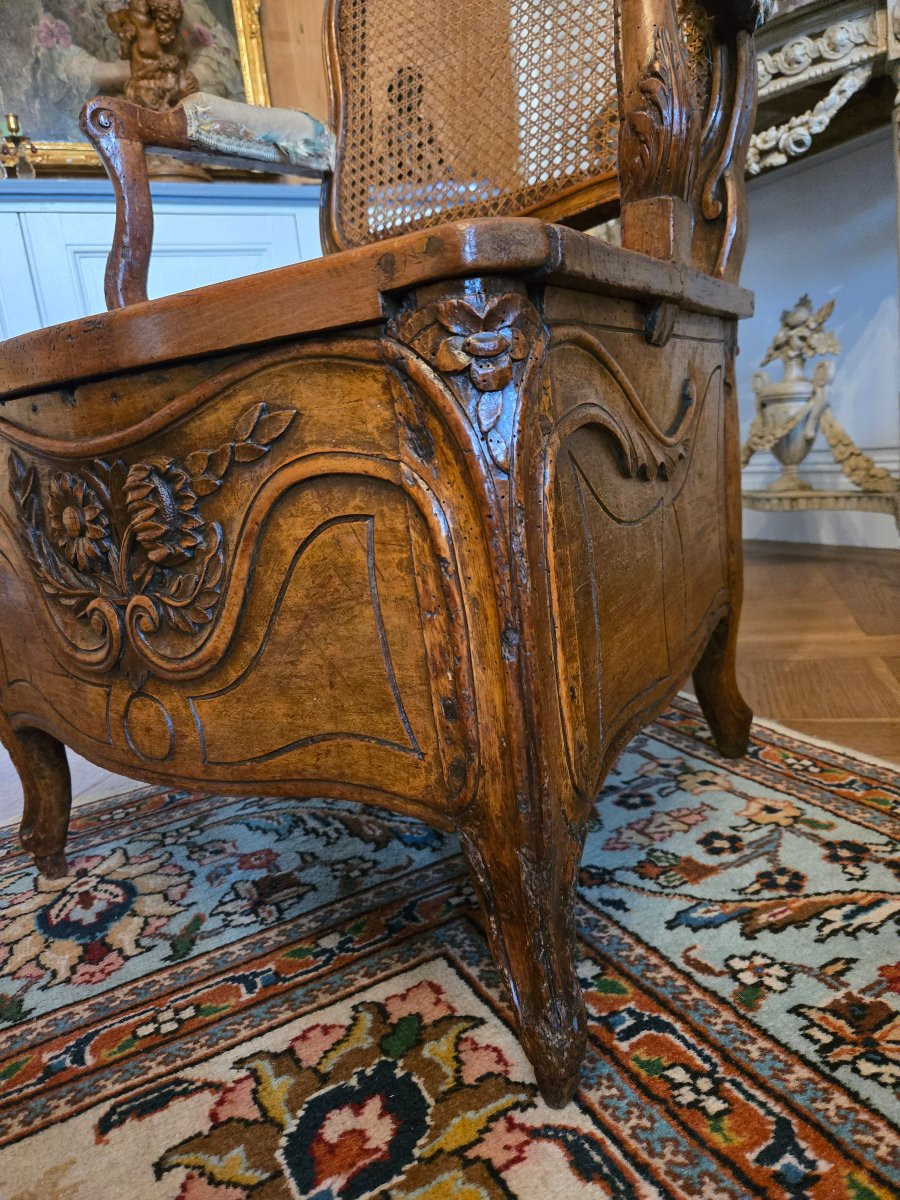
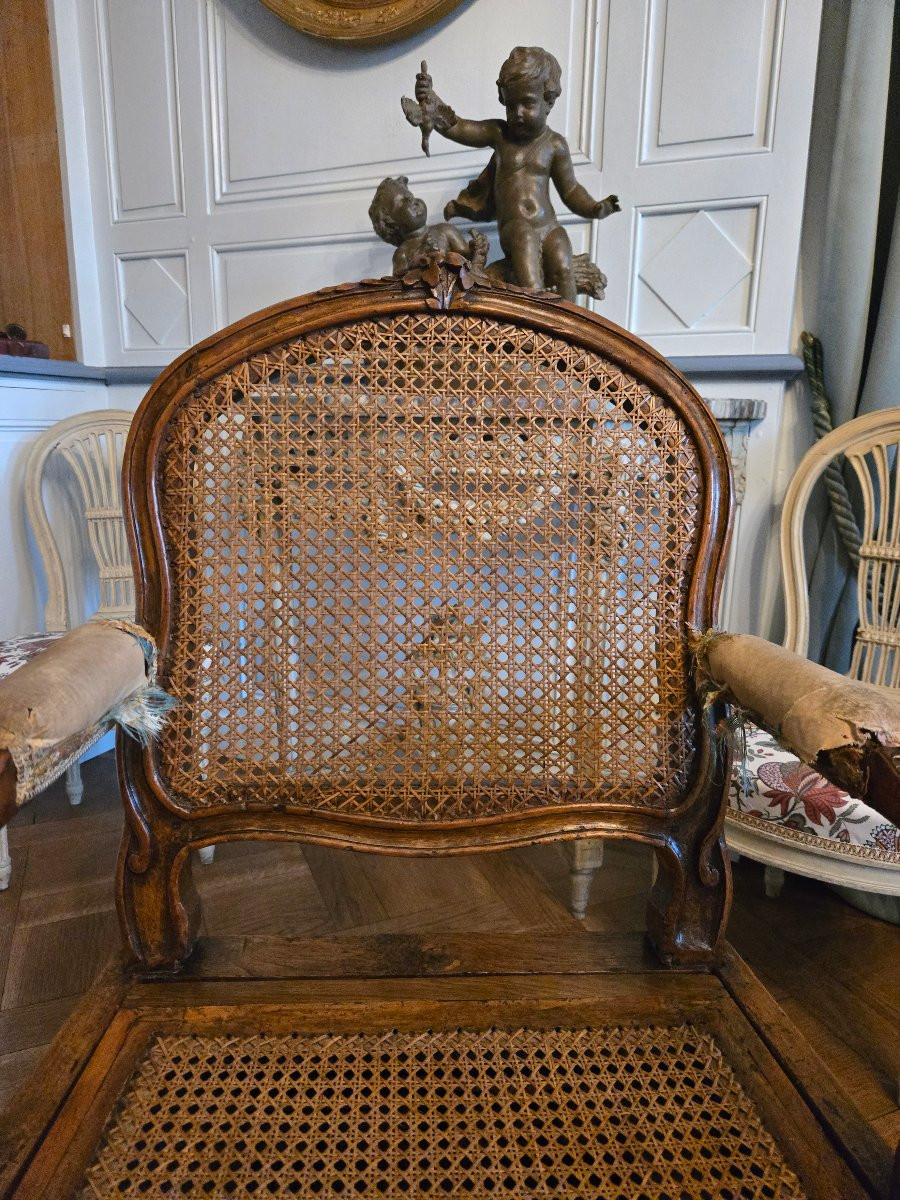
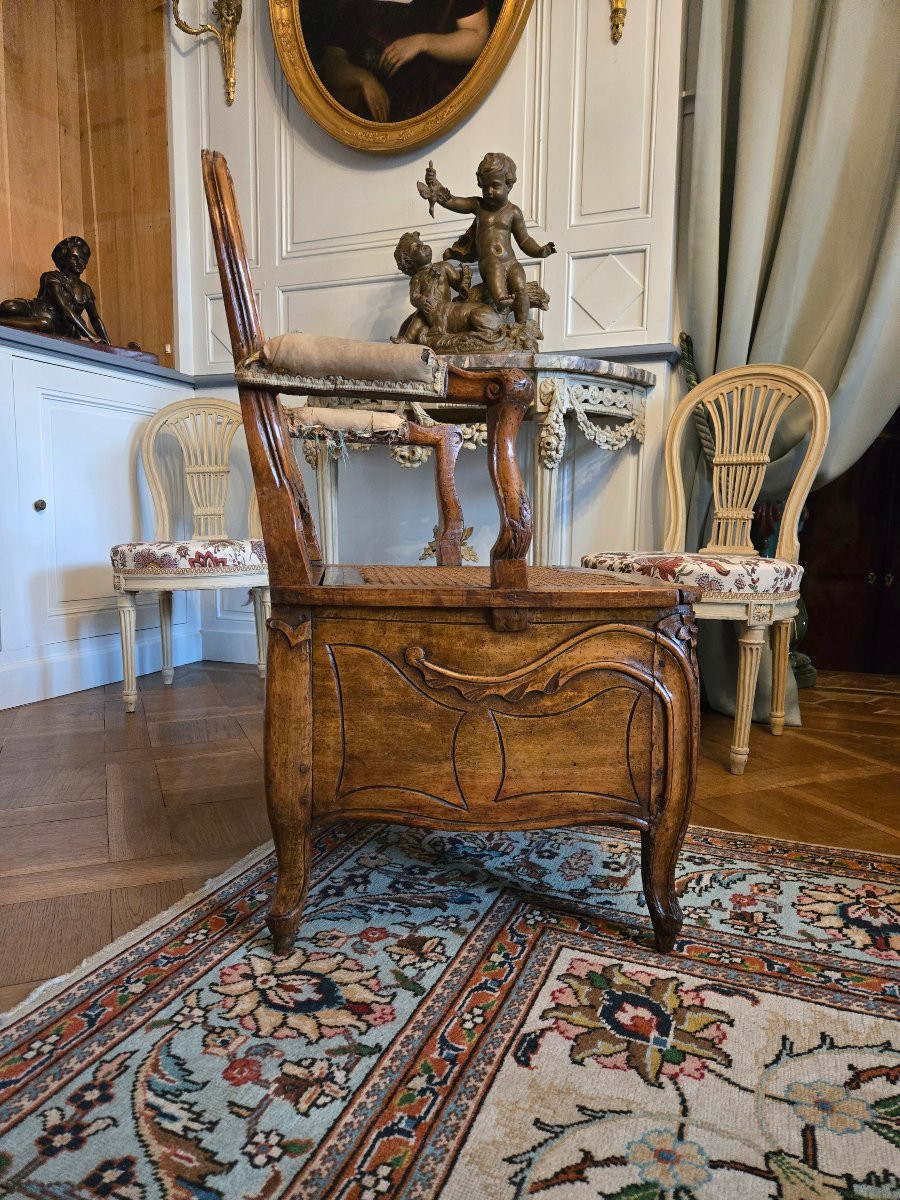
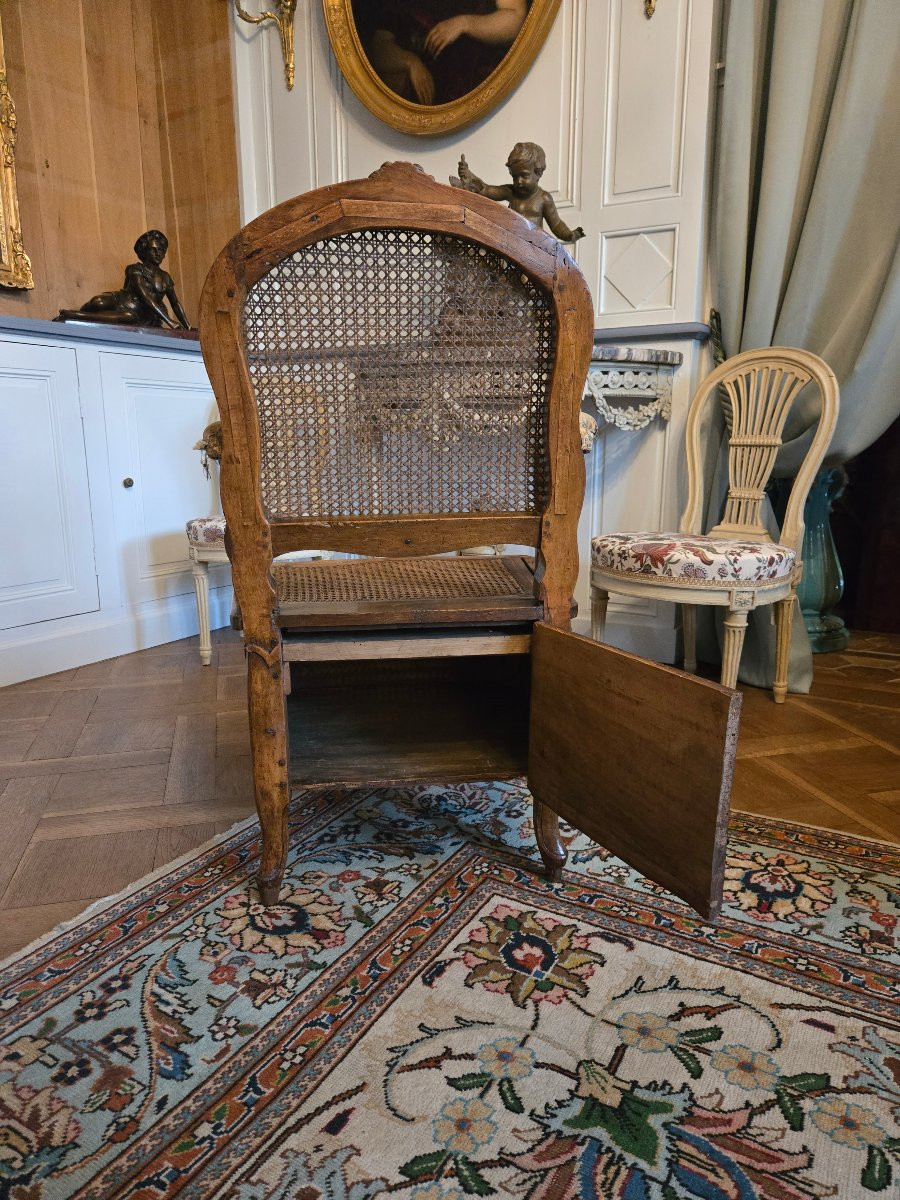
Louis XV period commode, in molded and carved beech, resting on four arched legs and opening through a door at the rear. The backrest adopts a slightly arched shape, directly comparable to that of mid-18th-century fauteuils à la reine. This structure, still held in place, combined with an overall measured silhouette, testifies to an aesthetic where curvature remains contained.
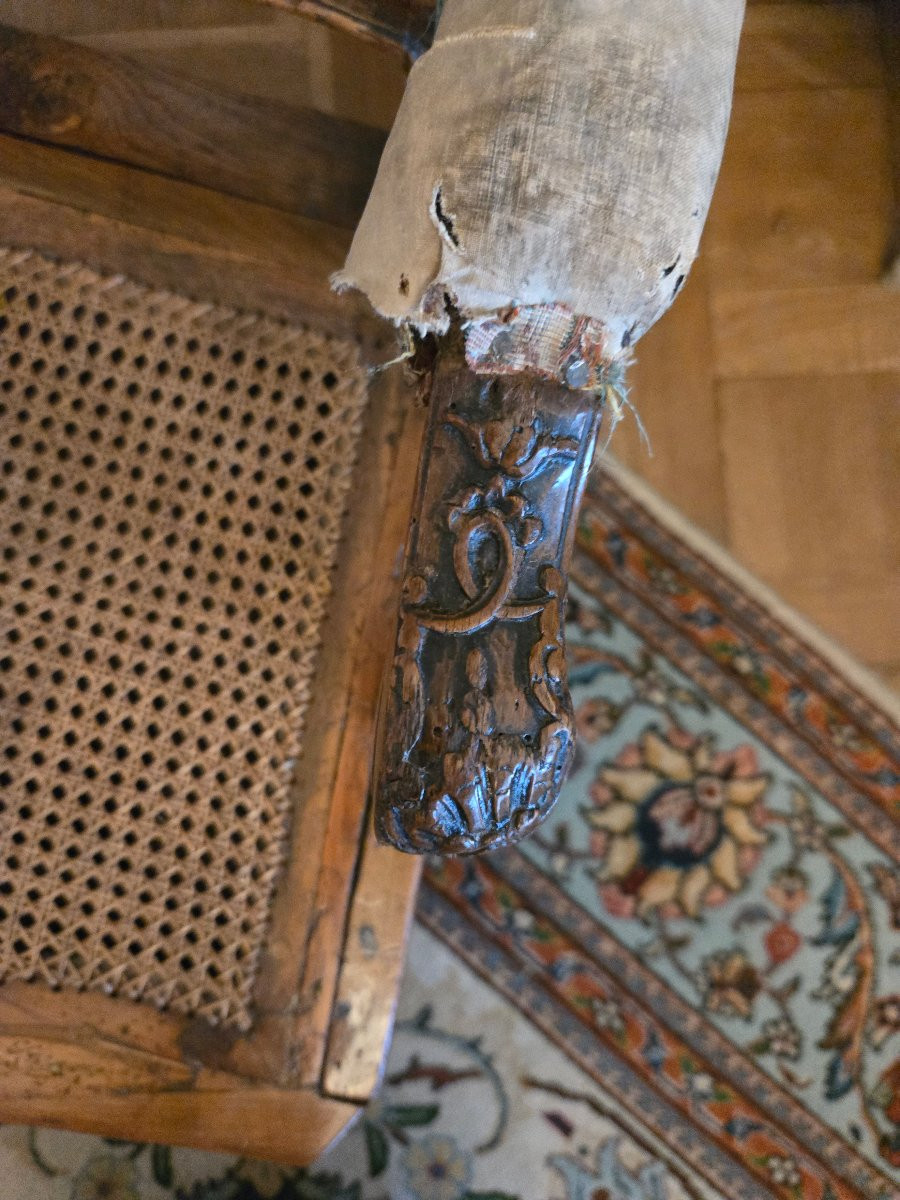
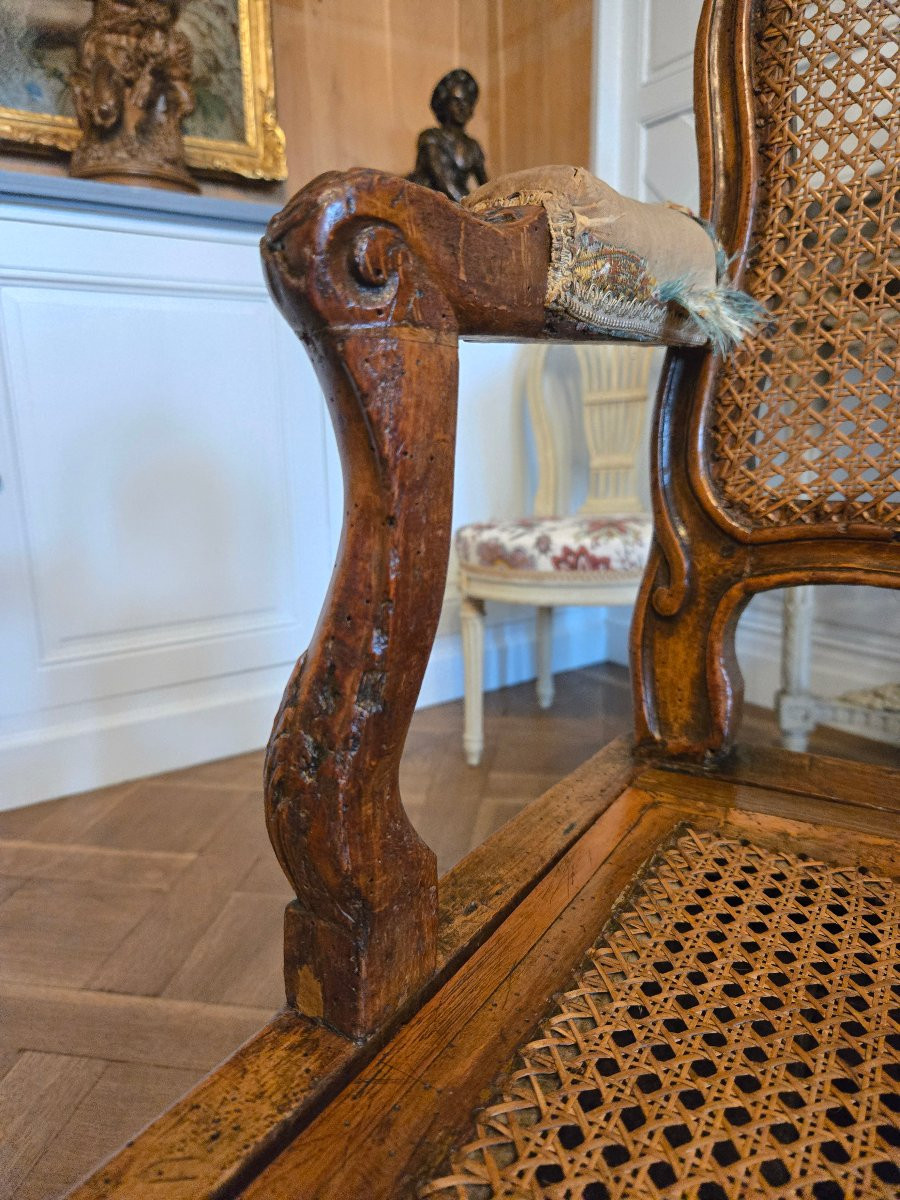
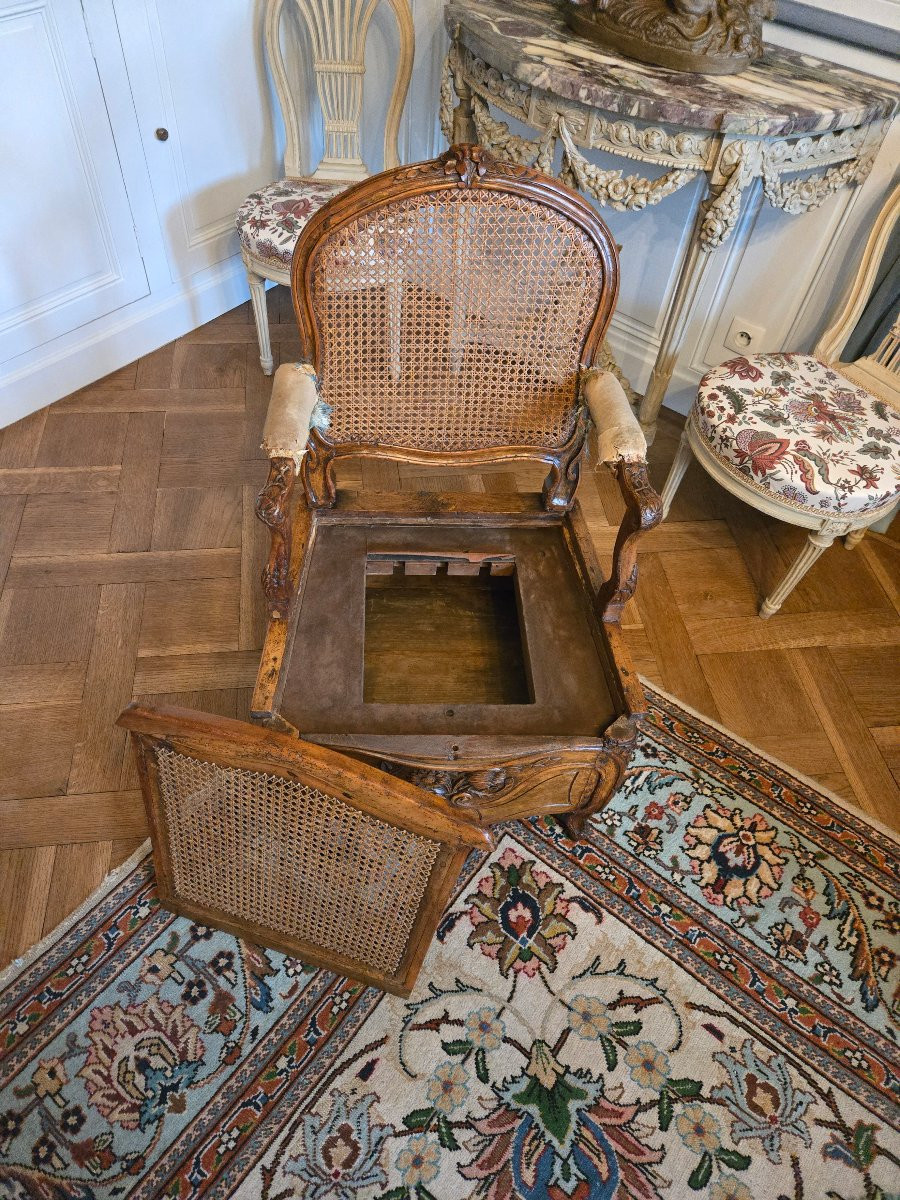
The seat as a whole thus reveals a relatively early manufacture in the reign of Louis XV, still marked by the Regency heritage. This influence can be seen in the treatment of the armrests: the consoles and noses retain a certain firmness of design and decoration that betray a period of stylistic transition around 1745-1755.
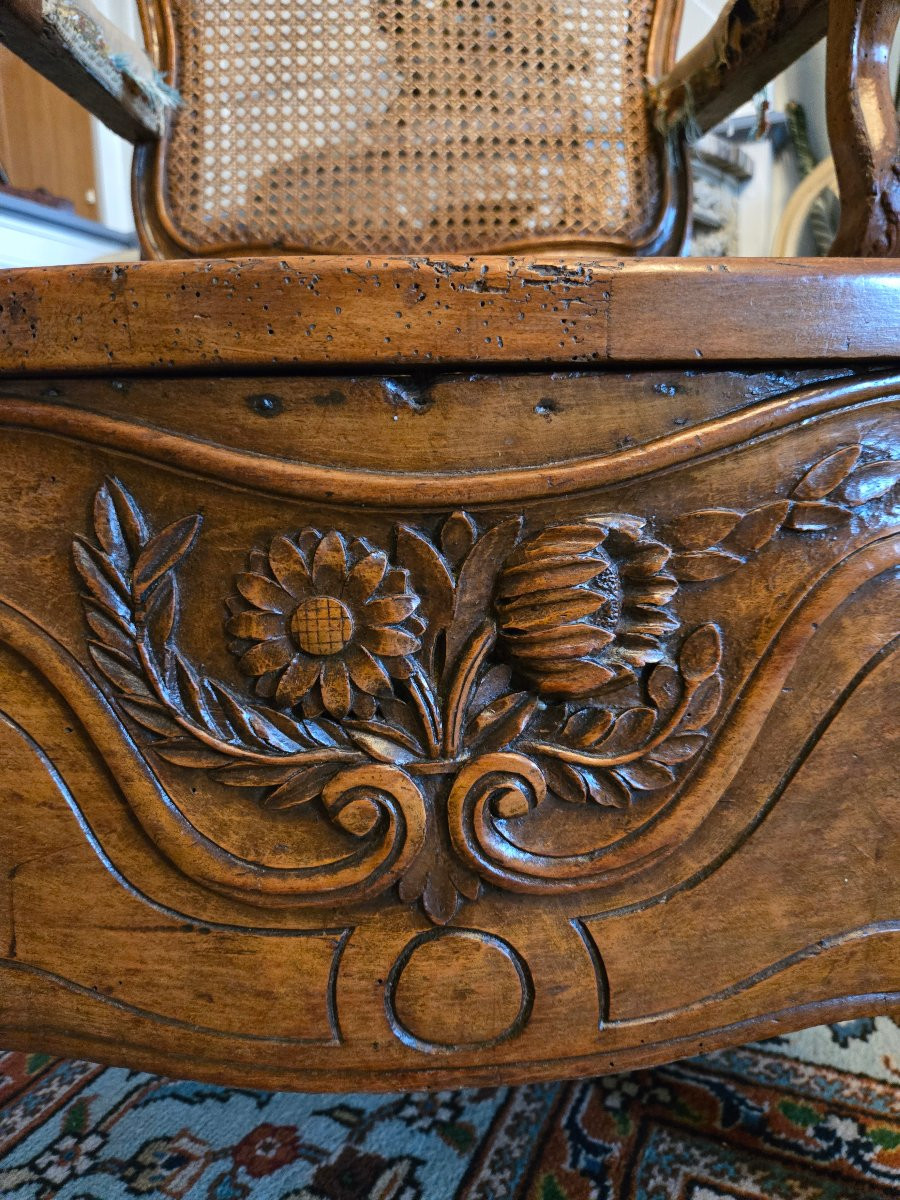
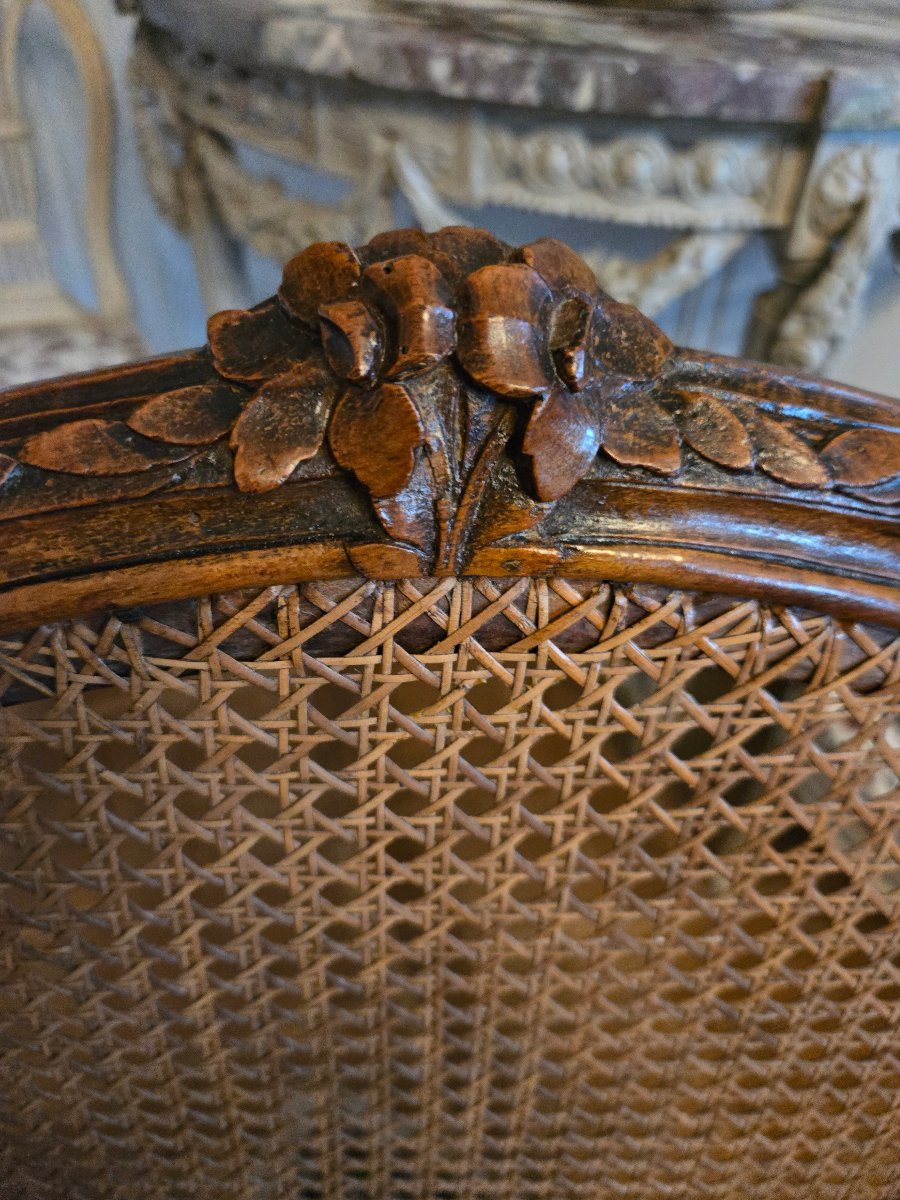
The front of the mantel features a particularly interesting country-style carved motif, consisting of two open flowers framed by foliage scrolls, finely treated in strong relief.
The backrest and seat are upholstered in cane; the seat frame, also caned, is removable and provides access to the inner part designed to hold the chamber pot. The cabinet can be accessed through a door at the rear, which is typical of this type of furniture.
Entirely made of beech, this armchair was most likely originally painted or lacquered, in keeping with the custom of joinery seats integrated into 18th-century decorative ensembles. It was thus part of an overall decor, in harmony with the room's panelling, woodwork and fabrics, as evidenced by the seats preserved in the Château de Bellevue furniture, often treated in white rechampi or polychrome.
Château de Bellevue and the BV mark:
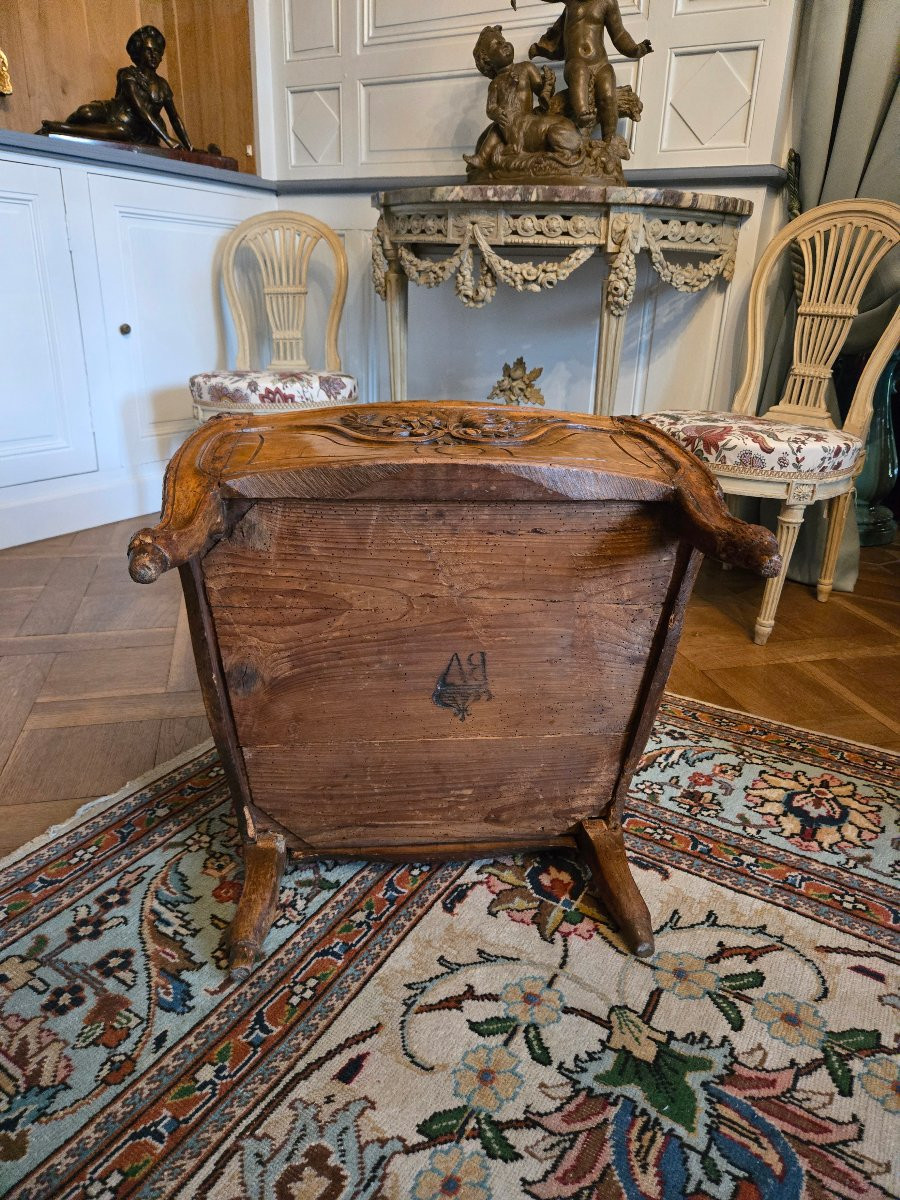
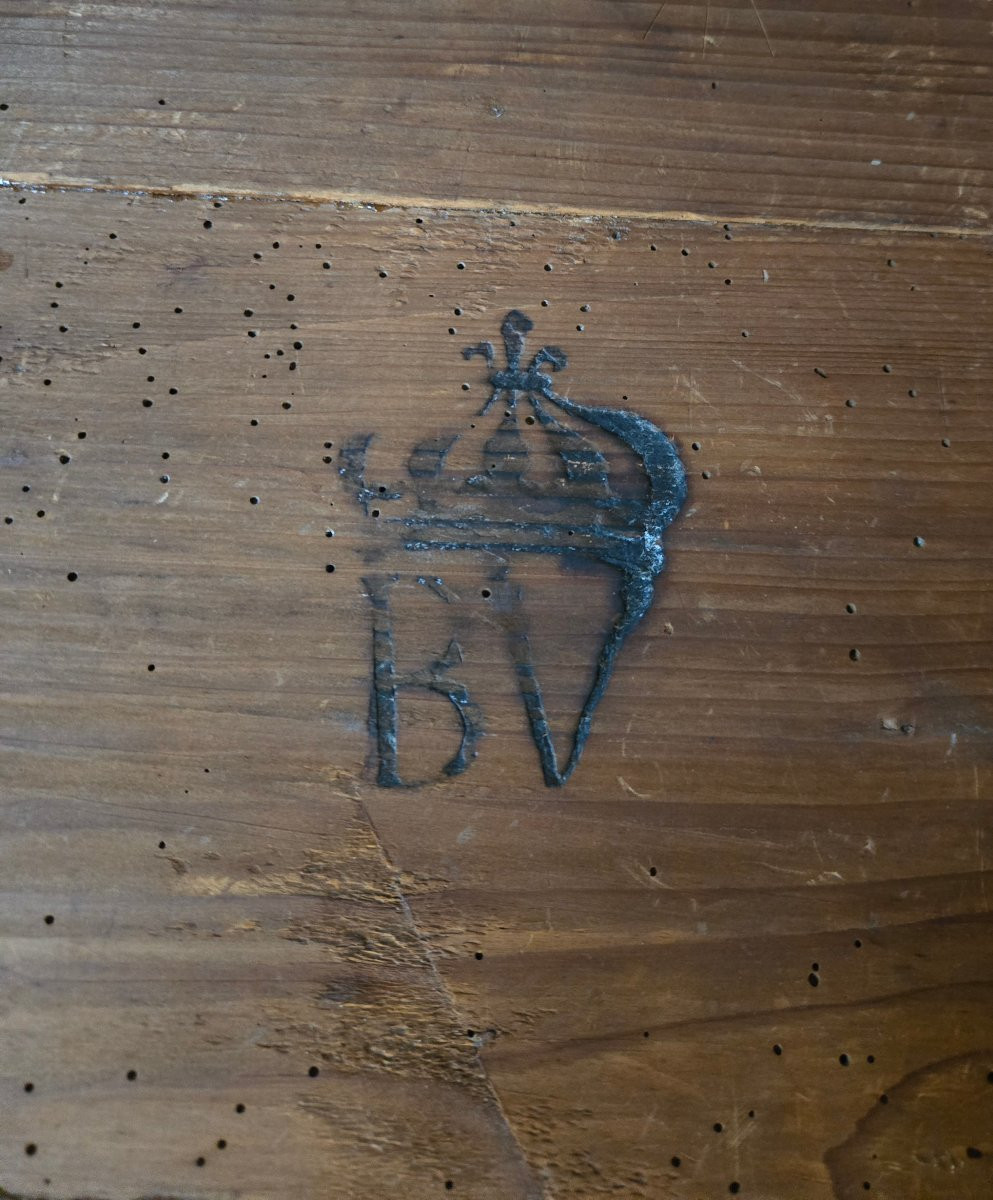
On the reverse of the frame is a "BV" fire mark surmounted by a crown, corresponding to the inventory marks of Château de Bellevue. Built between 1748 and 1750 on the heights of Meudon, Château de Bellevue was designed for Madame de Pompadour as an intimate residence, away from the protocol of Versailles. The estate was quickly furnished in those years, thanks to the intervention of the great Parisian merchant-merchants and craftsmen. In 1757, Madame de Pompadour ceded the château to the king, leaving much of the current furniture in place. This was then integrated into the management of the Garde-Meuble de la Couronne, an organization responsible for inventorying, monitoring and redistributing furniture in the royal residences.
The "BV" marks were affixed to identify the furniture belonging to Bellevue and to keep track of its movements and reassignments. The furniture was later used by Mesdames Adélaïde and Victoire, daughters of Louis XV, who inherited the château at the end of the century.
The dating of the present armchair to around 1750, corresponding precisely to the period of the château's initial conversion, means that it is very likely to have been part of the first state of Bellevue furniture under Madame de Pompadour, prior to its conservation and subsequent inventory attested by the BV mark.
The fauteuil d'aisance in the 18th century:
The fauteuil d'aisance - or chaise de commodité - was an indispensable element of domestic furnishings in the 18th century. Intended for intimate use, it was placed in bedrooms or private chambers and was part of daily service, while being integrated into the general aesthetics of interiors.
Examples preserved in the great royal residences, such as Versailles or Compiègne, show comparable typologies, ranging from the simple pierced chair to more elaborate models. The present armchair, with its armrests, offers superior comfort, reflecting a fuller, more polished version of this customary furniture.
This type of chair was produced by joiners, including masters such as Henri Amand and Étienne Meunier. Although the present armchair is not stamped, it is fully in keeping with this tradition of quality production.
Dimensions:
Back height: 94.5 cmSeat height: 42 cmWidth: 56 cmDepth: 54 cm
Louis XV period commode, in molded and carved beech, resting on four arched legs and opening through a door at the rear. The backrest adopts a slightly arched shape, directly comparable to that of mid-18th-century fauteuils à la reine. This structure, still held in place, combined with an overall measured silhouette, testifies to an aesthetic where curvature remains contained.
The seat as a whole thus reveals a relatively early manufacture in the reign of Louis XV, still marked by the Regency heritage. This influence can be seen in the treatment of the armrests: the consoles and noses retain a certain firmness of design and decoration that betray a period of stylistic transition around 1745-1755.
The front of the mantel features a particularly interesting country-style carved motif, consisting of two open flowers framed by foliage scrolls, finely treated in strong relief.
The backrest and seat are upholstered in cane; the seat frame, also caned, is removable and provides access to the inner part designed to hold the chamber pot. The cabinet can be accessed through a door at the rear, which is typical of this type of furniture.
Entirely made of beech, this armchair was most likely originally painted or lacquered, in keeping with the custom of joinery seats integrated into 18th-century decorative ensembles. It was thus part of an overall decor, in harmony with the room's panelling, woodwork and fabrics, as evidenced by the seats preserved in the Château de Bellevue furniture, often treated in white rechampi or polychrome.
Château de Bellevue and the BV mark:
On the reverse of the frame is a "BV" fire mark surmounted by a crown, corresponding to the inventory marks of Château de Bellevue. Built between 1748 and 1750 on the heights of Meudon, Château de Bellevue was designed for Madame de Pompadour as an intimate residence, away from the protocol of Versailles. The estate was quickly furnished in those years, thanks to the intervention of the great Parisian merchant-merchants and craftsmen. In 1757, Madame de Pompadour ceded the château to the king, leaving much of the current furniture in place. This was then integrated into the management of the Garde-Meuble de la Couronne, an organization responsible for inventorying, monitoring and redistributing furniture in the royal residences.
The "BV" marks were affixed to identify the furniture belonging to Bellevue and to keep track of its movements and reassignments. The furniture was later used by Mesdames Adélaïde and Victoire, daughters of Louis XV, who inherited the château at the end of the century.
The dating of the present armchair to around 1750, corresponding precisely to the period of the château's initial conversion, means that it is very likely to have been part of the first state of Bellevue furniture under Madame de Pompadour, prior to its conservation and subsequent inventory attested by the BV mark.
The fauteuil d'aisance in the 18th century:
The fauteuil d'aisance - or chaise de commodité - was an indispensable element of domestic furnishings in the 18th century. Intended for intimate use, it was placed in bedrooms or private chambers and was part of daily service, while being integrated into the general aesthetics of interiors.
Examples preserved in the great royal residences, such as Versailles or Compiègne, show comparable typologies, ranging from the simple pierced chair to more elaborate models. The present armchair, with its armrests, offers superior comfort, reflecting a fuller, more polished version of this customary furniture.
This type of chair was produced by joiners, including masters such as Henri Amand and Étienne Meunier. Although the present armchair is not stamped, it is fully in keeping with this tradition of quality production.
Dimensions:
Back height: 94.5 cmSeat height: 42 cmWidth: 56 cmDepth: 54 cm
Explore similar pieces and discover your ideal find:
Armchairs