

Gabriel Argy-rousseau (1885 - 1953) Art Deco "thèbes" Vase - 1924
Meslay-le-Vidame, March 17, 1885 - February 20, 1953, Paris
"Vase Thebes"
Glass (polychrome glass paste)
Height: 15.5cm
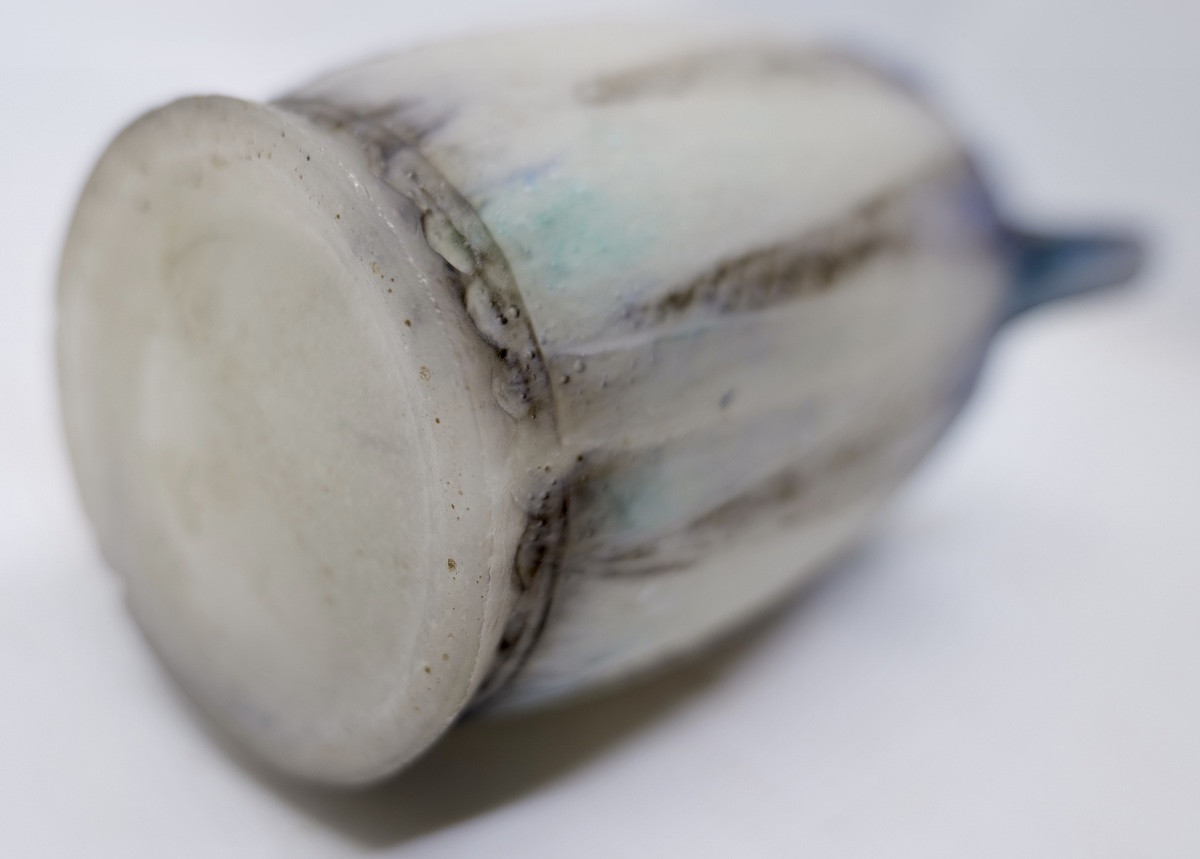
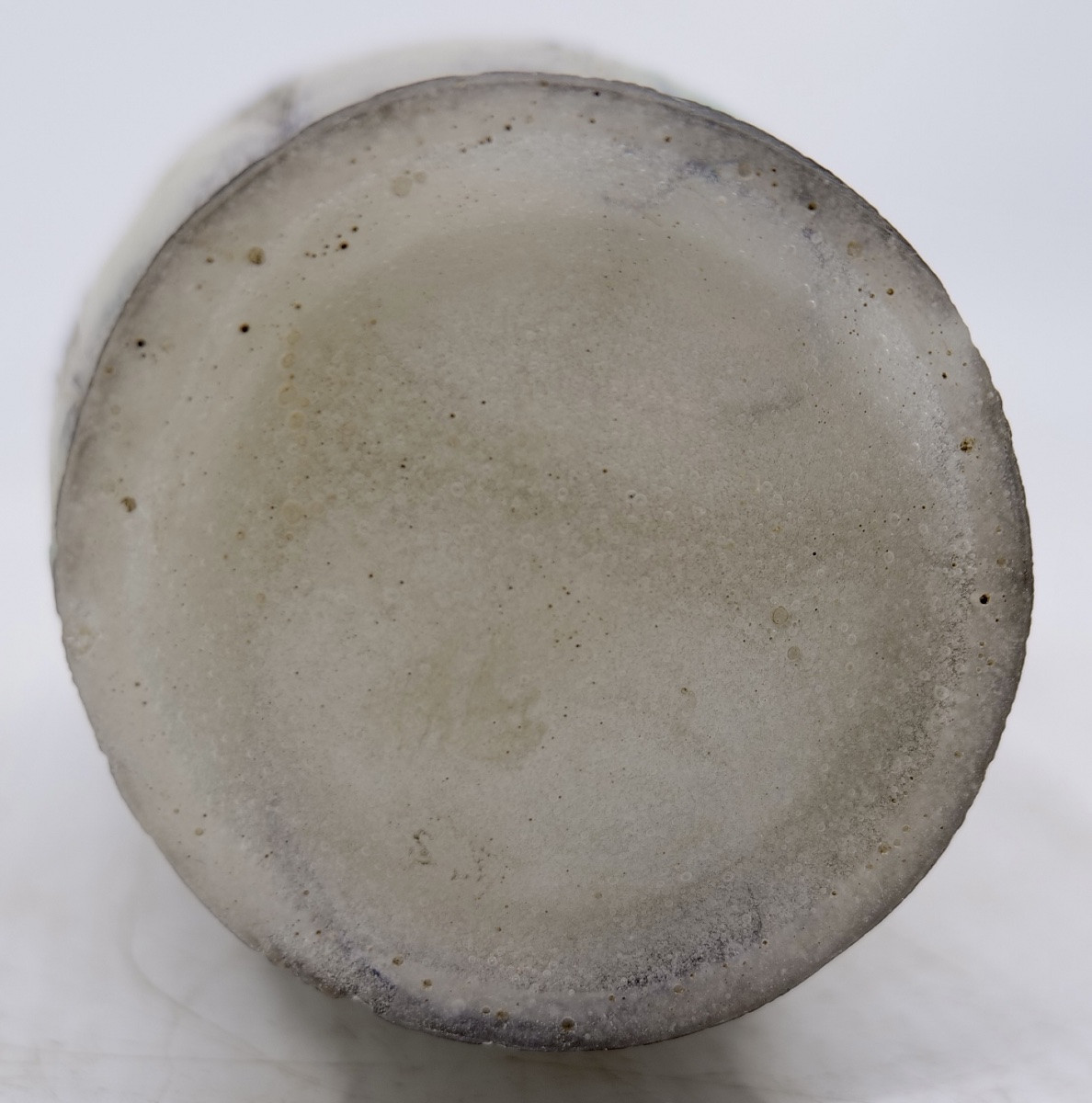
Signature bottom middle
1924
Literature:
- Bloch-Dermant 24-09
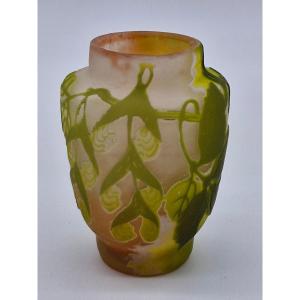
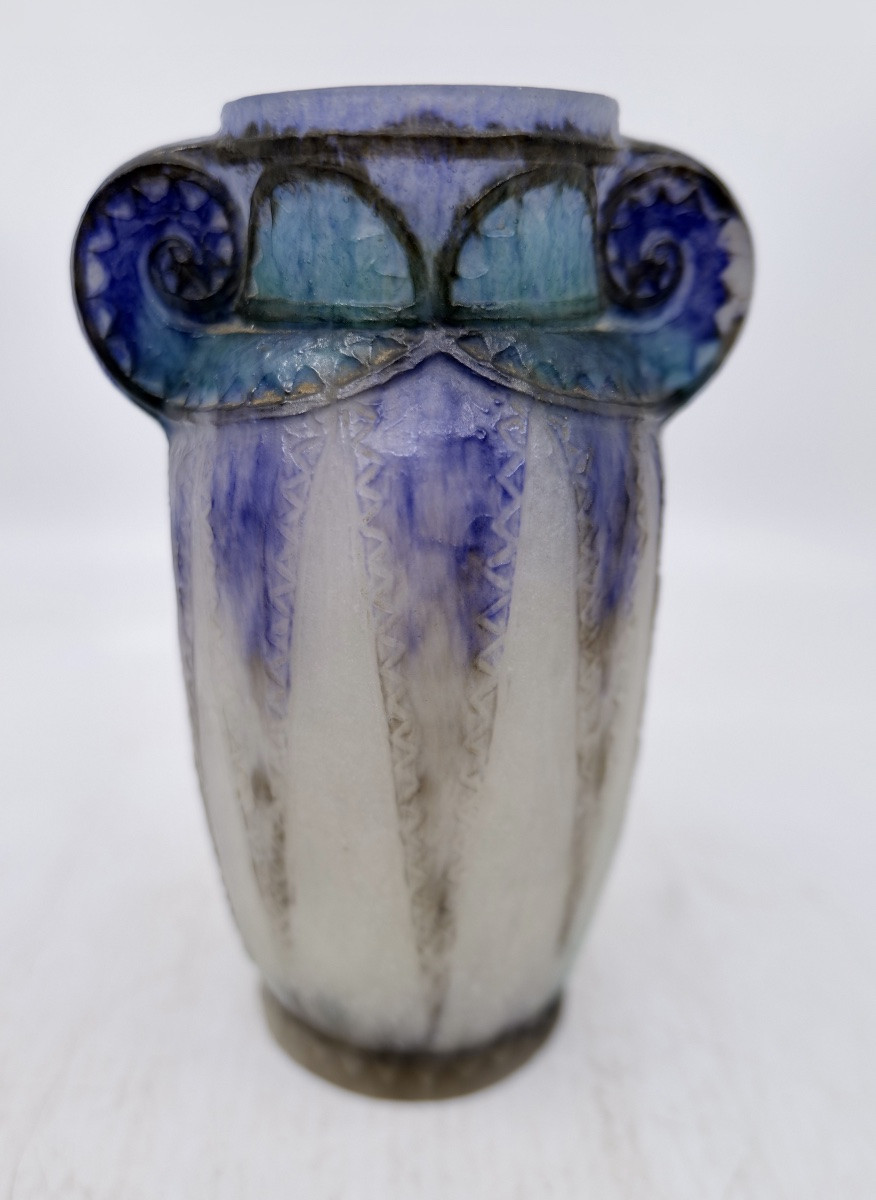
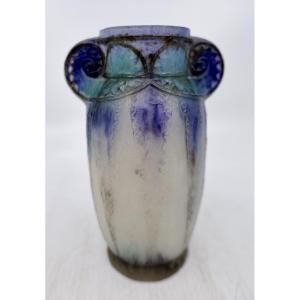
This so-called "Thebes" vase, created in 1924 by Gabriel Argy-Rousseau, is a particularly accomplished testimony to the Art Deco aesthetic applied to pâte de verre, a technique of which the artist was one of the most eminent masters in the 20th century.
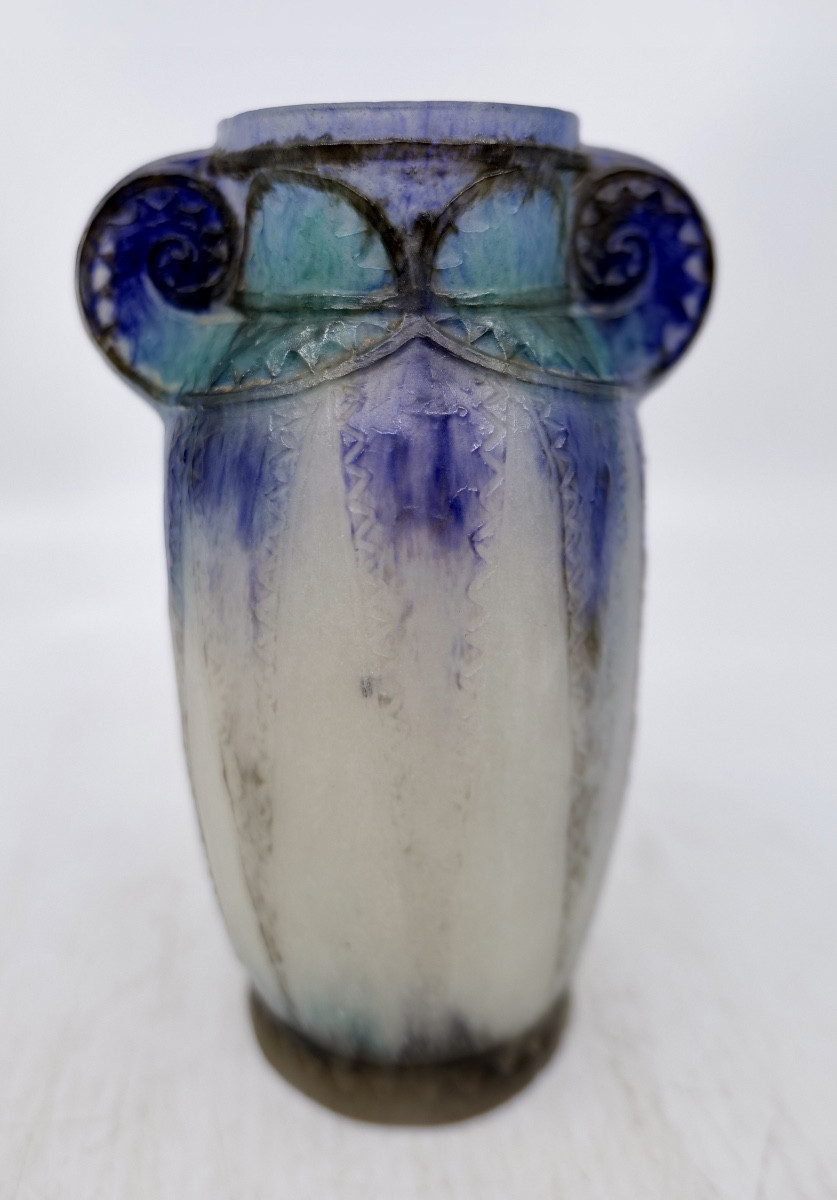
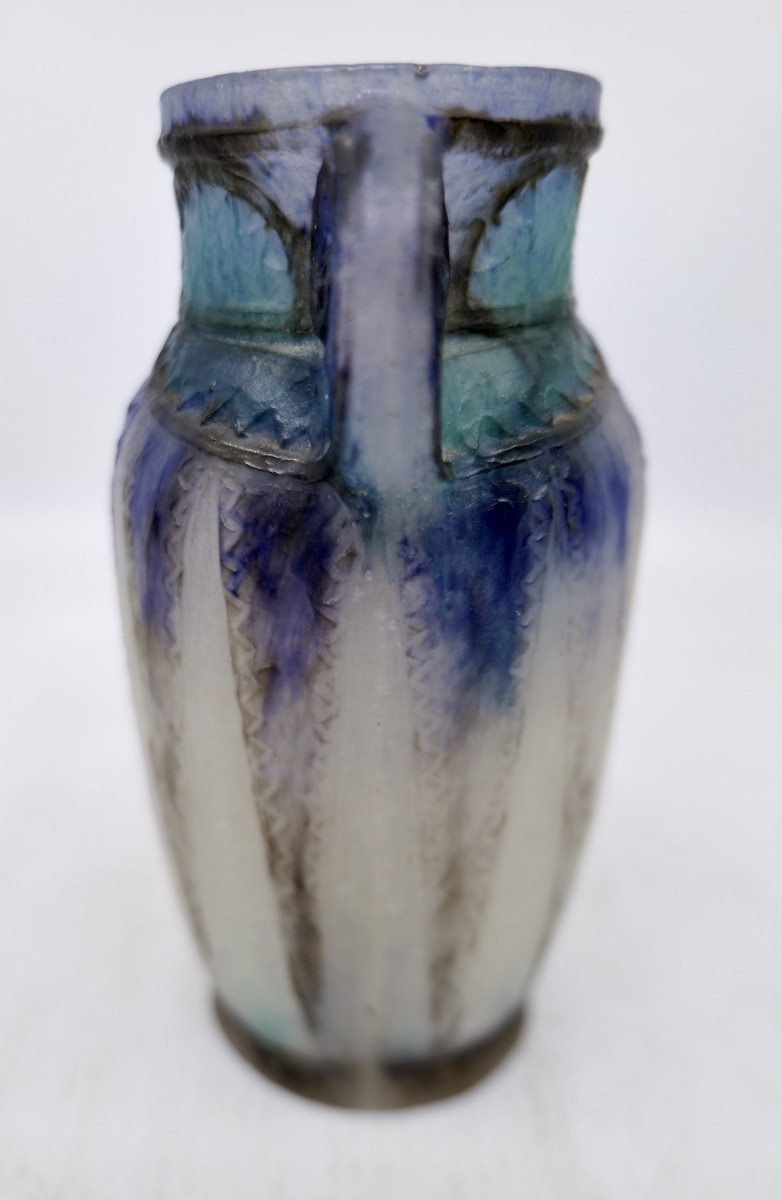
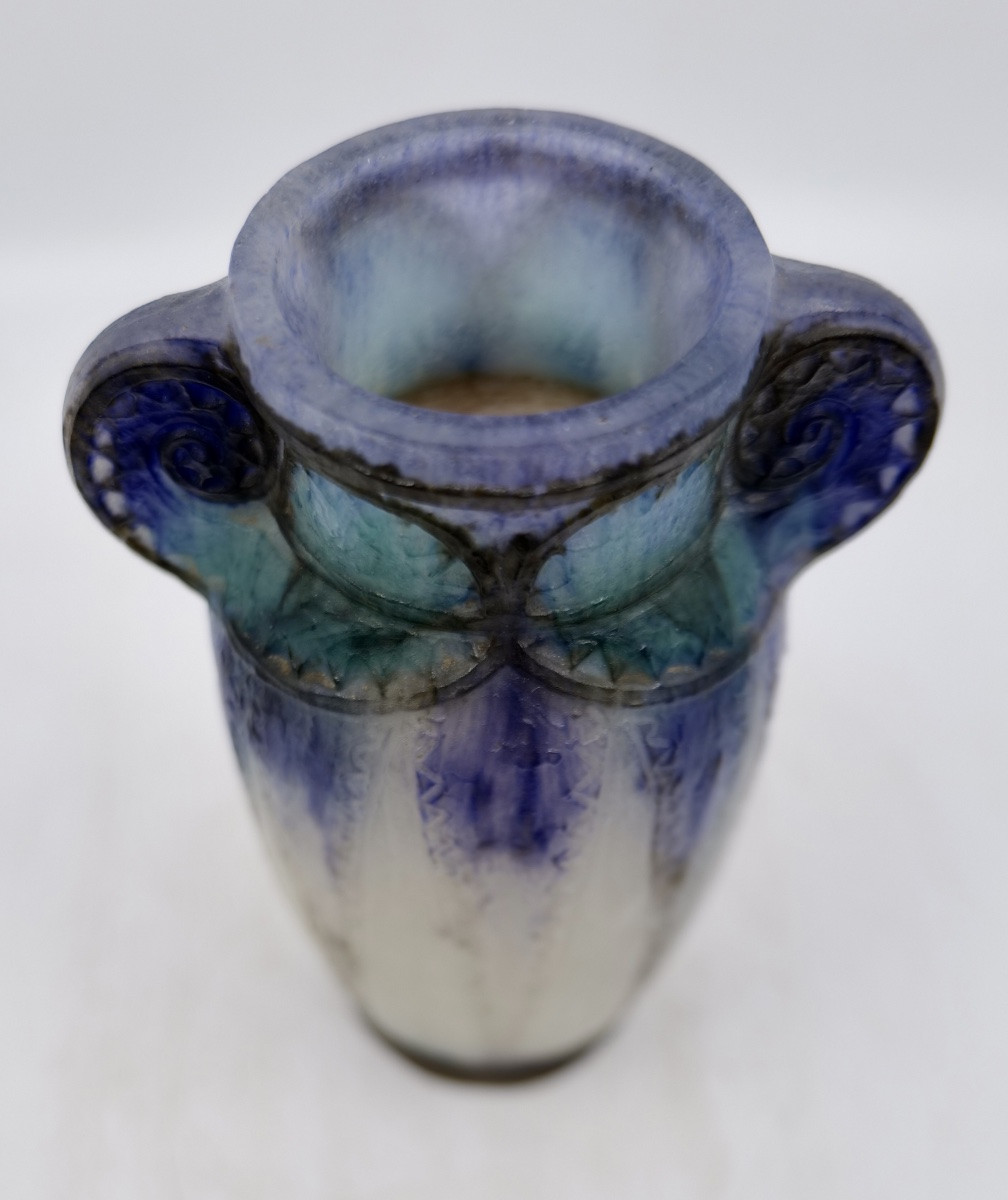
At 15.5 cm high, this piece features a slender, slightly curved silhouette, whose elevation is subtly interrupted by a thickened lip and two scrolled side handles, directly inspired by ancient forms. This explicit reference to ancient Egypt - suggested by the very name Thebes - is in keeping with the Egyptian taste that permeated the decorative arts of the 1920s, particularly after the discovery of Tutankhamun's tomb in 1922.
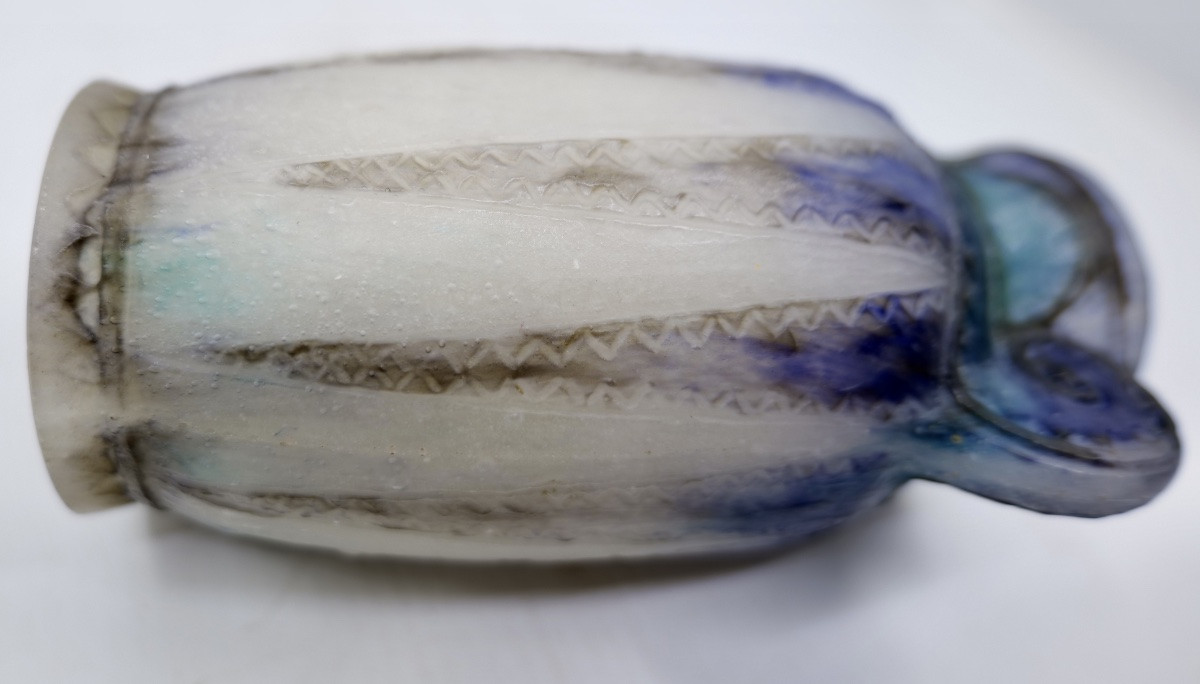
The material, characteristic of Argy-Rousseau's pâte de verre, offers here a remarkable chromatic richness. The polychrome decoration unfolds in a nuanced range of deep blues, turquoise greens and opalescent whites, organized in vertical gradations that evoke mineral flows or strata. This modulation of hues, achieved by including pigments directly in the paste, lends the surface an internal vibration and almost organic depth.
The upper register of the vase is adorned with a stylized decoration in slight relief, composed of geometric and vegetalizing motifs, whose angular and repetitive graphics bear witness to a typically Art Deco stylization. These decorative elements, highlighted by darker outlines, create a subtle contrast with the satin-finish softness of the vase's body. The massive, sculptural spiral handles contribute fully to the object's plastic balance, while reinforcing its anchorage in an archaic vocabulary reinterpreted with modernity.
The surface, matte and slightly grainy to the touch, captures light with restraint, producing diffuse effects that distinguish pâte de verre from traditional blown glass. This tactile and visual quality is part of Argy-Rousseau's intention: to make each piece not just a decorative object, but a work in which the material itself becomes language.
Thus, this Thebes vase perfectly illustrates Argy-Rousseau's synthesis of ancient heritage, technical research and modern sensibility. It stands out as an emblematic work of the artist's production in the 1920s, a period during which pâte de verre underwent an unprecedented revival, driven by a highly sophisticated aesthetic and craftsmanship requirement.
Additional information(s) : Signed "G. ARGY-ROUSSEAU". We report two chips on the base. Otherwise very good condition.
Period: 20th century
Style: Art Deco
Condition: Good condition
Material: Glass paste
Height: 15,5cm
Reference (ID): 1747300
Availability: In stock