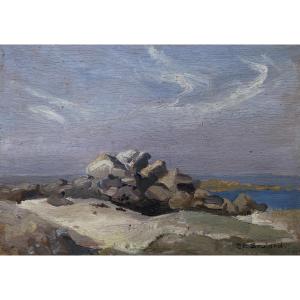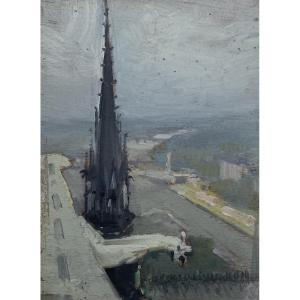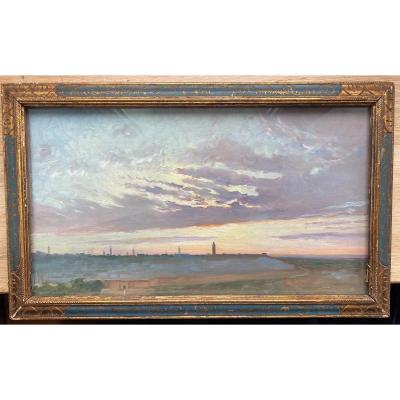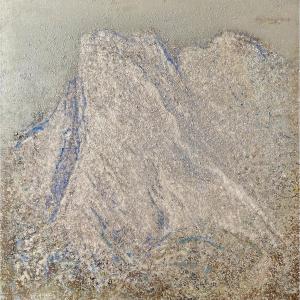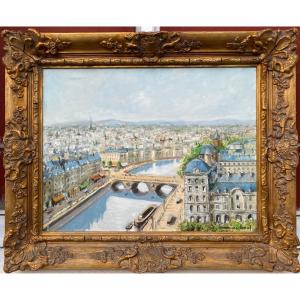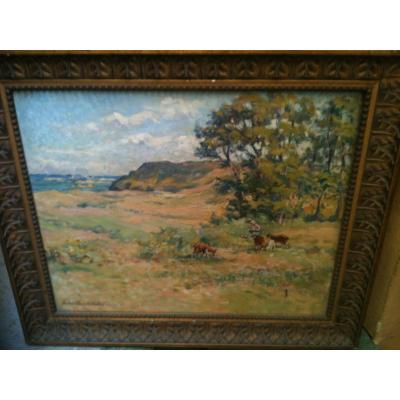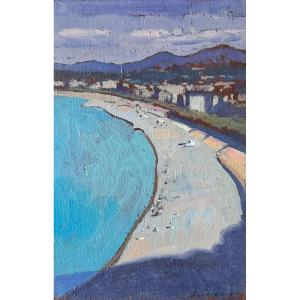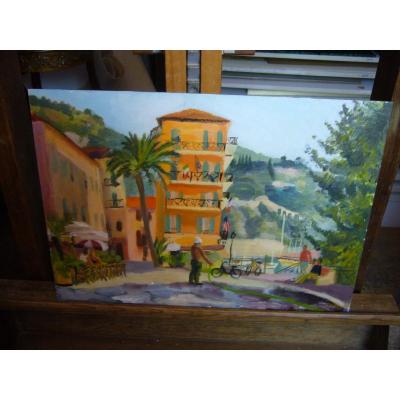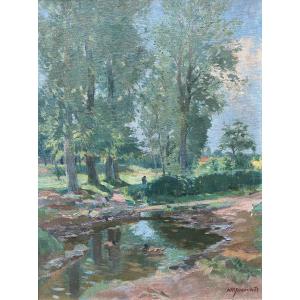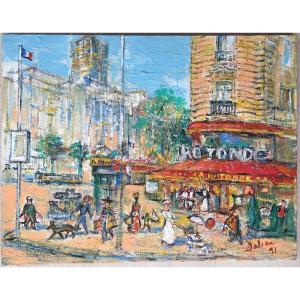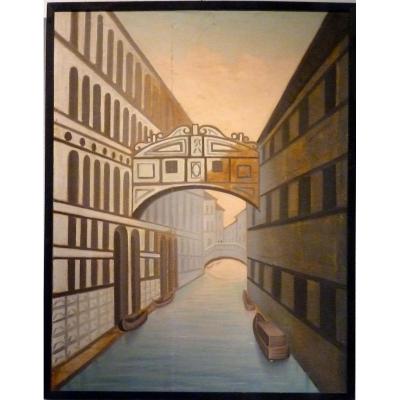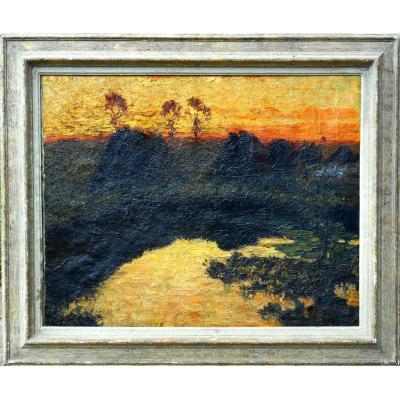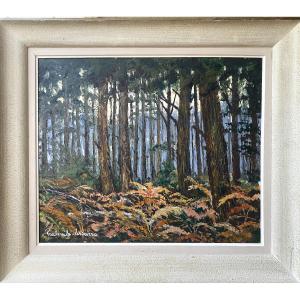


Oil On Canvas Paulémile Pissaro (1884 - 1972) Title Ferns In A Fir Wood 55x46 Cm
Artist: Paul Emile Pissaro Dit Paulémile Pissaro
Paul-Émile Pissarro, known as Paulémile, born on 22 August 1884 in Éragny-sur-Epte (Oise) and died on 20 January 1972 in Saint-Rémy (Calvados), was a French painter. Paul-Émile Pissarro specialised in portraiture and landscape painting. He painted small towns in the Midi such as Treignac and Uzerche, the Normandy forest and the Poitevin marshes.
Paul-Émile Pissarro was the fifth and youngest son of Camille Pissarro and Julie Vellay. Raised in an artistic household like his brothers, he seems to have been the most naturally gifted for painting: a white horse, drawn at the age of five, received praise from the writer Octave Mirbeau. His father, impressed, decided to keep it in his private collection and from then on never ceased to support him in what became his passion.
In 1899, Paul-Émile Pissarro went to take classes in Gisors (Eure), but stopped after a few months to accompany his father on an artistic trip to Le Havre, Dieppe and Rouen. During the final years of his father’s life, his family lived in Paris, where Paul-Émile studied at a private art academy, a path that differed from that of his brothers and sisters, who had mainly benefited from their father’s tutelage.Following his father’s death in 1903, he returned to live with his mother at their summer home in Éragny, some thirty kilometres from Giverny, where his godfather Claude Monet lived. Monet, who was very close to Camille, became his tutor and friend. He often visited Giverny, where Monet gave him lessons in painting and horticulture, encouraging him to follow in his father’s footsteps: ‘Work! Explore! Do as your father did.”[citation needed] In 1905, alongside his brother Ludovic-Rodo Pissarro, he made his debut at the Salon des Indépendants (known that year as the Salon des Fauves) with his landscape *Bords de l’Epte à Eragny*.
The years 1908–1914 were difficult. In 1908 he worked as a mechanic and test pilot, then as a designer of textiles and laces, a job that allowed him some free time for painting. Whilst working at the lace factory, his brother Lucien Pissarro, then in London, asked him to send him some watercolours. The interest shown by British art lovers encouraged him to take up painting again. With his young wife, Berthe Bennaiché, he moved to Burgundy.
Exempted from military service during the First World War due to ill health, Paul-Émile Pissarro used the war years to travel and paint, particularly in northern France. In a letter to Lucien in 1916, he wrote, ‘I have seen some superb things; I am filled with enthusiasm’ [citation needed]. With his brother’s help, he exhibited in London at the New English Art
In 1924, he bought a house in Lyons-la-Forêt (Eure), where the garden (which Monet sketched[2]), the surrounding countryside and the River Epte inspired his paintings.
His style became more defined towards the end of the 1920s: mixed tones and the use of a palette knife. He worked on a houseboat.
He practised woodcut and etching; some of his prints were published by Malcolm Salaman in 1919.
In 1930, on the recommendation of Raoul Dufy, Paul-Émile Pissarro visited the ‘Swiss Normandy’ region. He immediately fell in love with this part of Calvados, and particularly with the Orne, which provided him with new subjects for the paintings he submitted to the Salon des Indépendants over the next thirty years. From his visit to the 1933 Salon d’Automne, Michel Florisoone noted the name of Paul-Émile Pissarro alongside those of Maurice Asselin, Gaston Balande, Victor Charreton, Jean Fernand-Trochain, Tristan Klingsor, Robert Lotiron, Raymond Renefer, René Seyssaud, Henri Vergé-Sarrat and Jules-Émile Zingg in what he called ‘the immutable phalanx of landscape painters enamoured of foliage and rivers’.
Following his divorce from his first wife, he moved to the Swiss-speaking region of Normandy in 1934. Two years later, he bought a house in Clécy with his second wife, Yvonne Beaupel (1915–2018), with whom he had three children: Hugues Claude, Yvon and Véra. Both sons went on to become artists. In 1967, Paul-Émile Pissarro held his first solo exhibition at the Wally Findlay Gallery in New York.
Paul-Émile Pissarro died on 20 January 1972 in Saint-Rémy.
Paul-Émile Pissarro was the fifth and youngest son of Camille Pissarro and Julie Vellay. Raised in an artistic household like his brothers, he seems to have been the most naturally gifted for painting: a white horse, drawn at the age of five, received praise from the writer Octave Mirbeau. His father, impressed, decided to keep it in his private collection and from then on never ceased to support him in what became his passion.
In 1899, Paul-Émile Pissarro went to take classes in Gisors (Eure), but stopped after a few months to accompany his father on an artistic trip to Le Havre, Dieppe and Rouen. During the final years of his father’s life, his family lived in Paris, where Paul-Émile studied at a private art academy, a path that differed from that of his brothers and sisters, who had mainly benefited from their father’s tutelage.Following his father’s death in 1903, he returned to live with his mother at their summer home in Éragny, some thirty kilometres from Giverny, where his godfather Claude Monet lived. Monet, who was very close to Camille, became his tutor and friend. He often visited Giverny, where Monet gave him lessons in painting and horticulture, encouraging him to follow in his father’s footsteps: ‘Work! Explore! Do as your father did.”[citation needed] In 1905, alongside his brother Ludovic-Rodo Pissarro, he made his debut at the Salon des Indépendants (known that year as the Salon des Fauves) with his landscape *Bords de l’Epte à Eragny*.
The years 1908–1914 were difficult. In 1908 he worked as a mechanic and test pilot, then as a designer of textiles and laces, a job that allowed him some free time for painting. Whilst working at the lace factory, his brother Lucien Pissarro, then in London, asked him to send him some watercolours. The interest shown by British art lovers encouraged him to take up painting again. With his young wife, Berthe Bennaiché, he moved to Burgundy.
Exempted from military service during the First World War due to ill health, Paul-Émile Pissarro used the war years to travel and paint, particularly in northern France. In a letter to Lucien in 1916, he wrote, ‘I have seen some superb things; I am filled with enthusiasm’ [citation needed]. With his brother’s help, he exhibited in London at the New English Art
In 1924, he bought a house in Lyons-la-Forêt (Eure), where the garden (which Monet sketched[2]), the surrounding countryside and the River Epte inspired his paintings.
His style became more defined towards the end of the 1920s: mixed tones and the use of a palette knife. He worked on a houseboat.
He practised woodcut and etching; some of his prints were published by Malcolm Salaman in 1919.
In 1930, on the recommendation of Raoul Dufy, Paul-Émile Pissarro visited the ‘Swiss Normandy’ region. He immediately fell in love with this part of Calvados, and particularly with the Orne, which provided him with new subjects for the paintings he submitted to the Salon des Indépendants over the next thirty years. From his visit to the 1933 Salon d’Automne, Michel Florisoone noted the name of Paul-Émile Pissarro alongside those of Maurice Asselin, Gaston Balande, Victor Charreton, Jean Fernand-Trochain, Tristan Klingsor, Robert Lotiron, Raymond Renefer, René Seyssaud, Henri Vergé-Sarrat and Jules-Émile Zingg in what he called ‘the immutable phalanx of landscape painters enamoured of foliage and rivers’.
Following his divorce from his first wife, he moved to the Swiss-speaking region of Normandy in 1934. Two years later, he bought a house in Clécy with his second wife, Yvonne Beaupel (1915–2018), with whom he had three children: Hugues Claude, Yvon and Véra. Both sons went on to become artists. In 1967, Paul-Émile Pissarro held his first solo exhibition at the Wally Findlay Gallery in New York.
Paul-Émile Pissarro died on 20 January 1972 in Saint-Rémy.
7 500 €
Period: 20th century
Style: Modern Art
Condition: Excellent condition
Material: Oil painting
Width: 55 cm
Height: 46 cm
Reference (ID): 1744999
Availability: In stock
Print