

Japanese Print Utamaro (1753-1806) 'parody Of The Killing Of The Nude' 19th Century
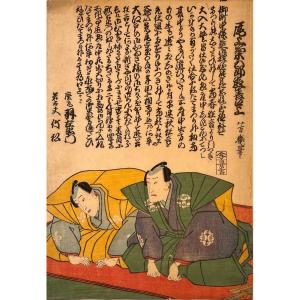
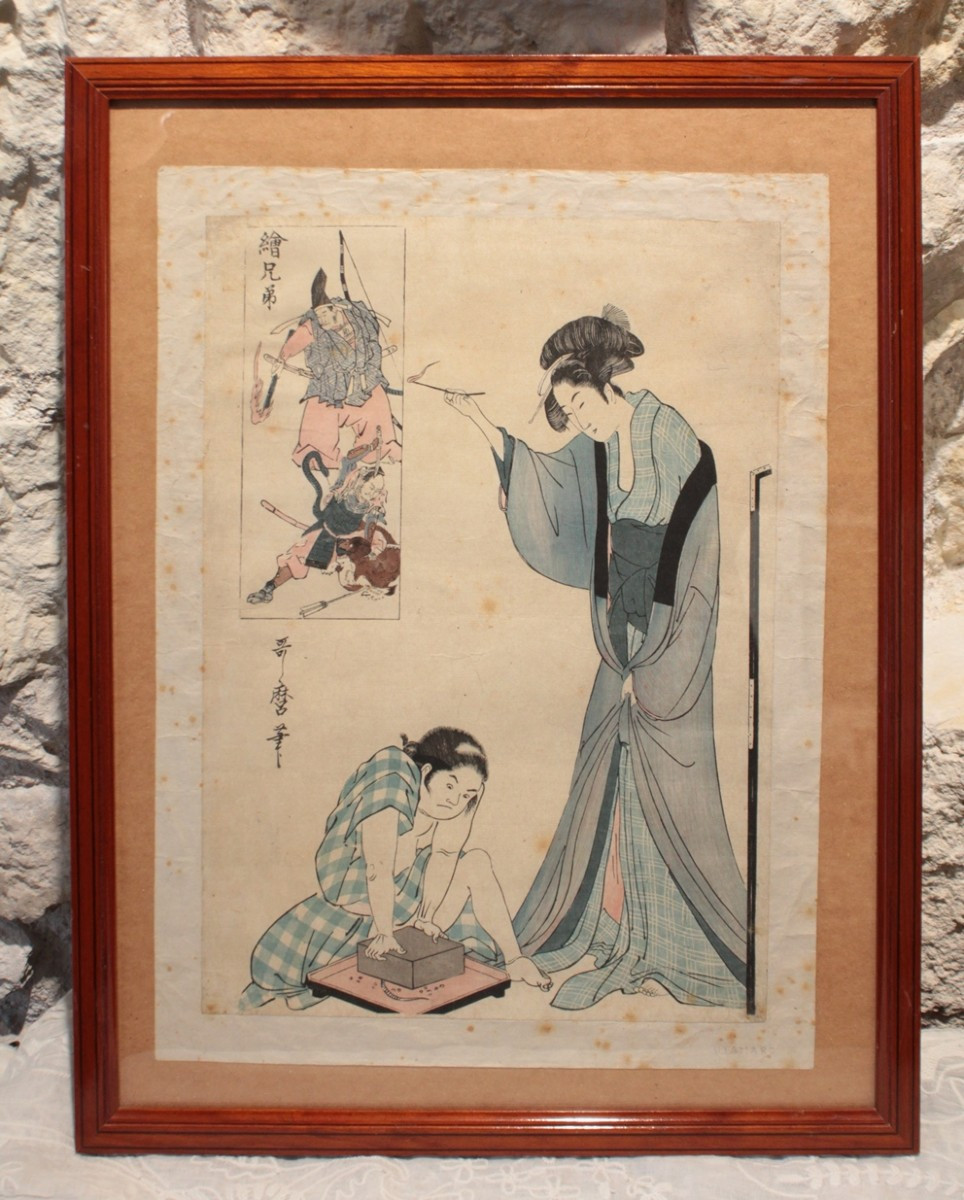
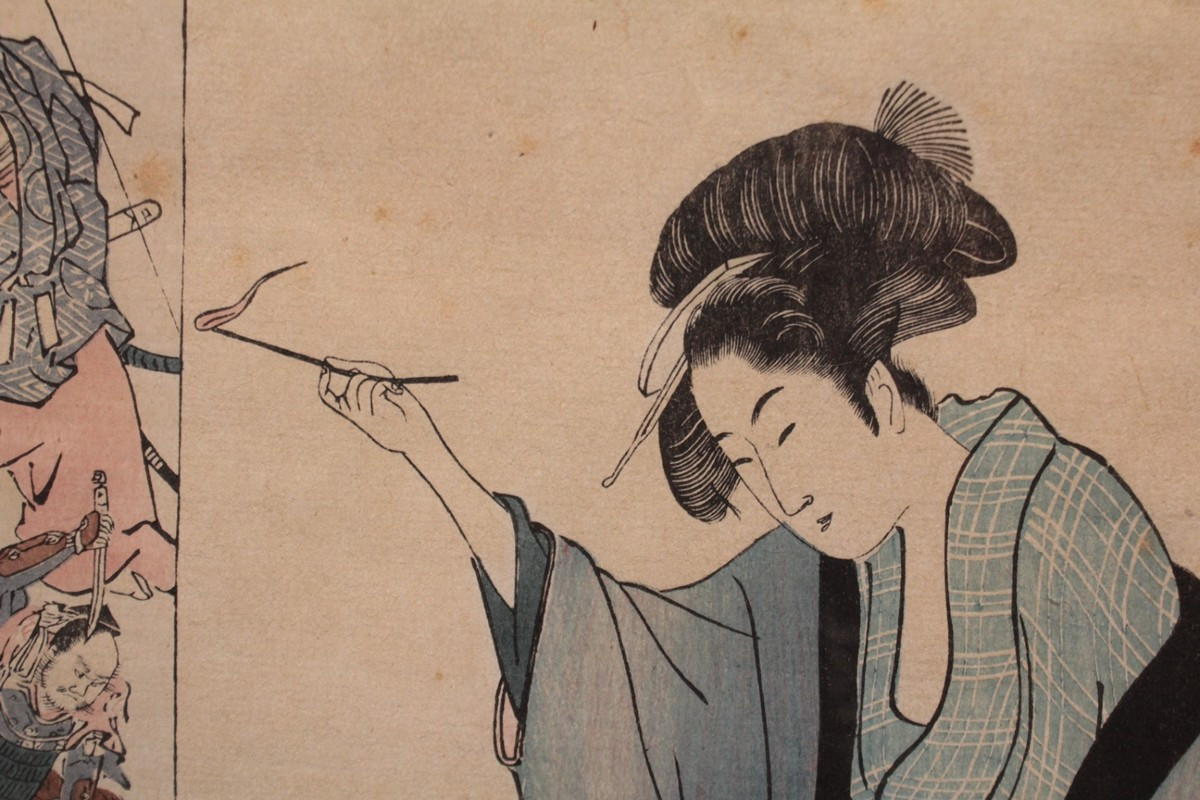
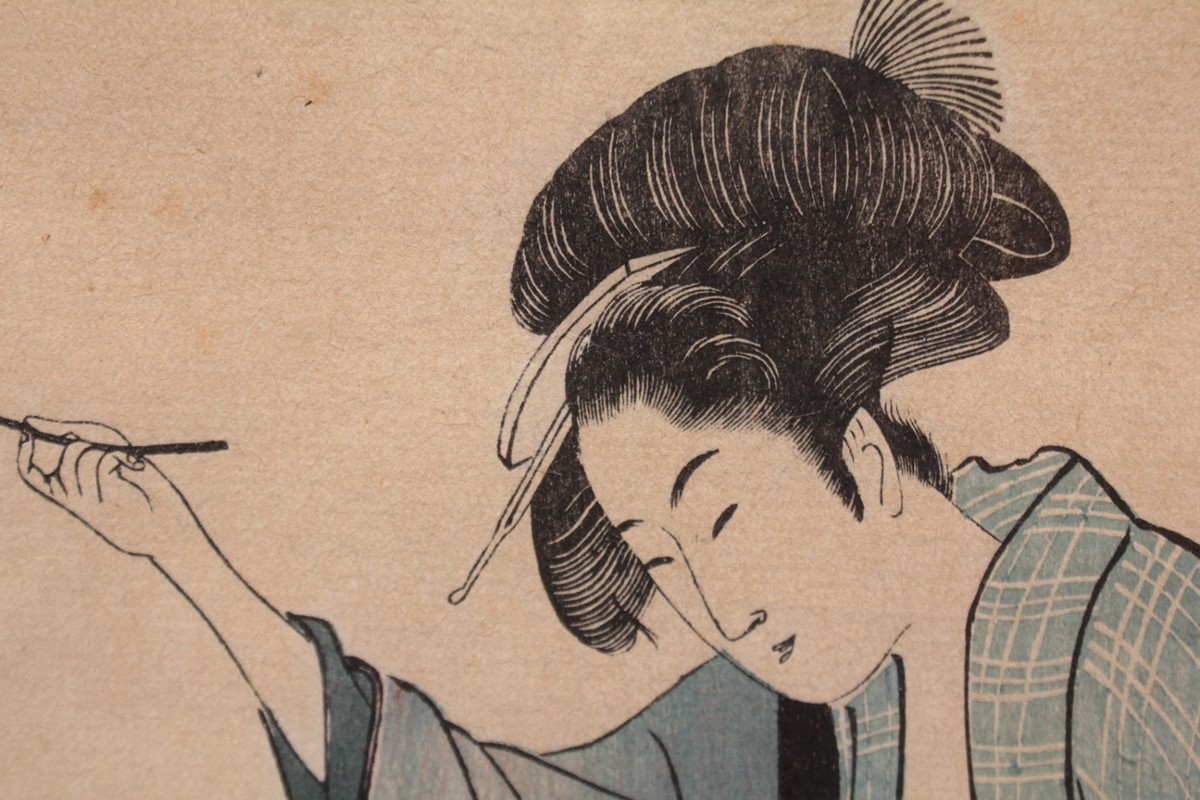
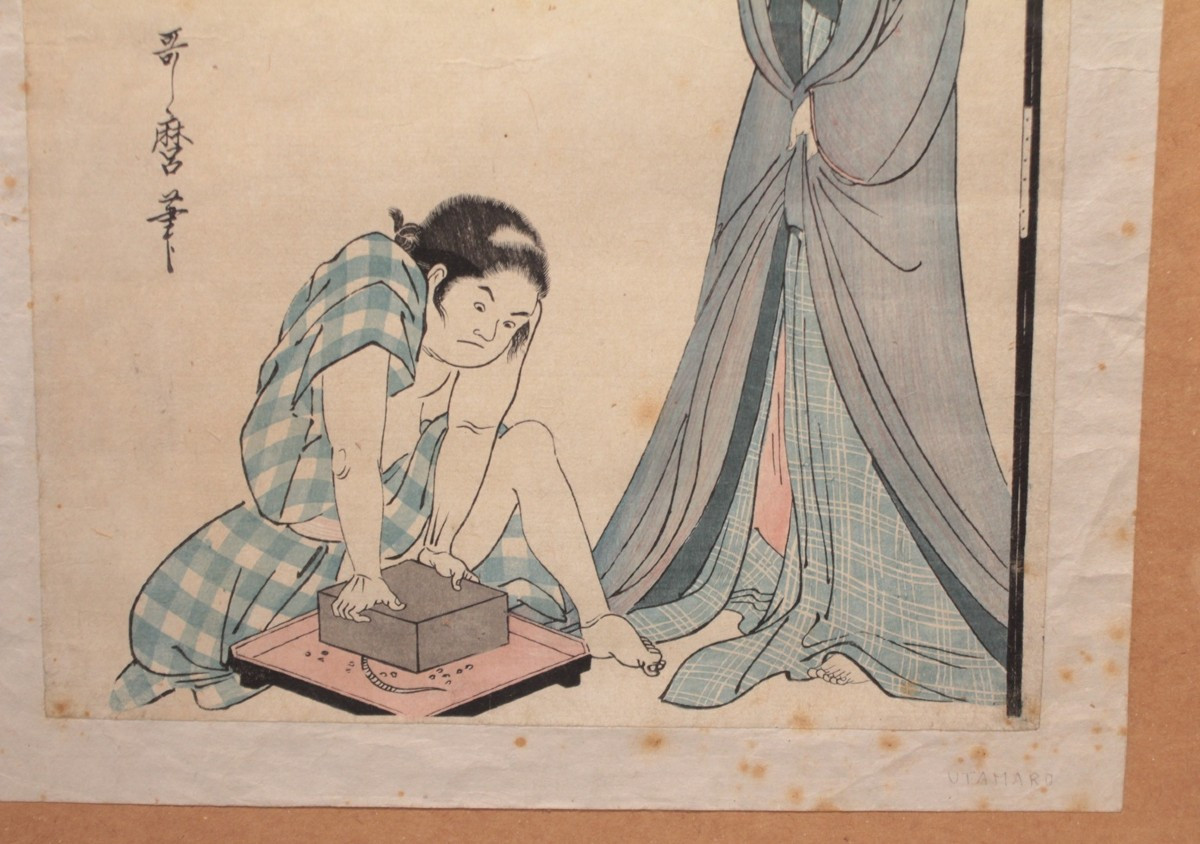
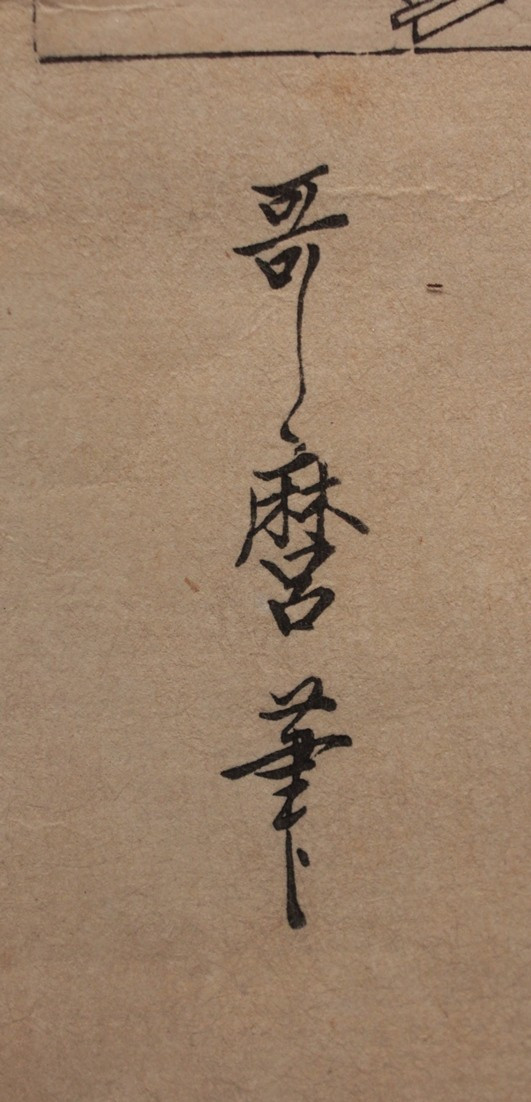
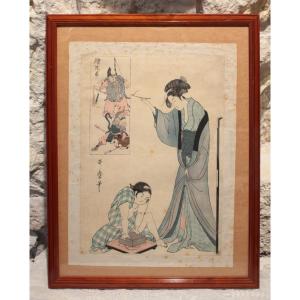
Japanese etching depicting the parody of "The Killing of the Nude", from the E-kyôdai series, after the original by Kitagawa Utamaro (1753-1806) published in 1798. See description below.
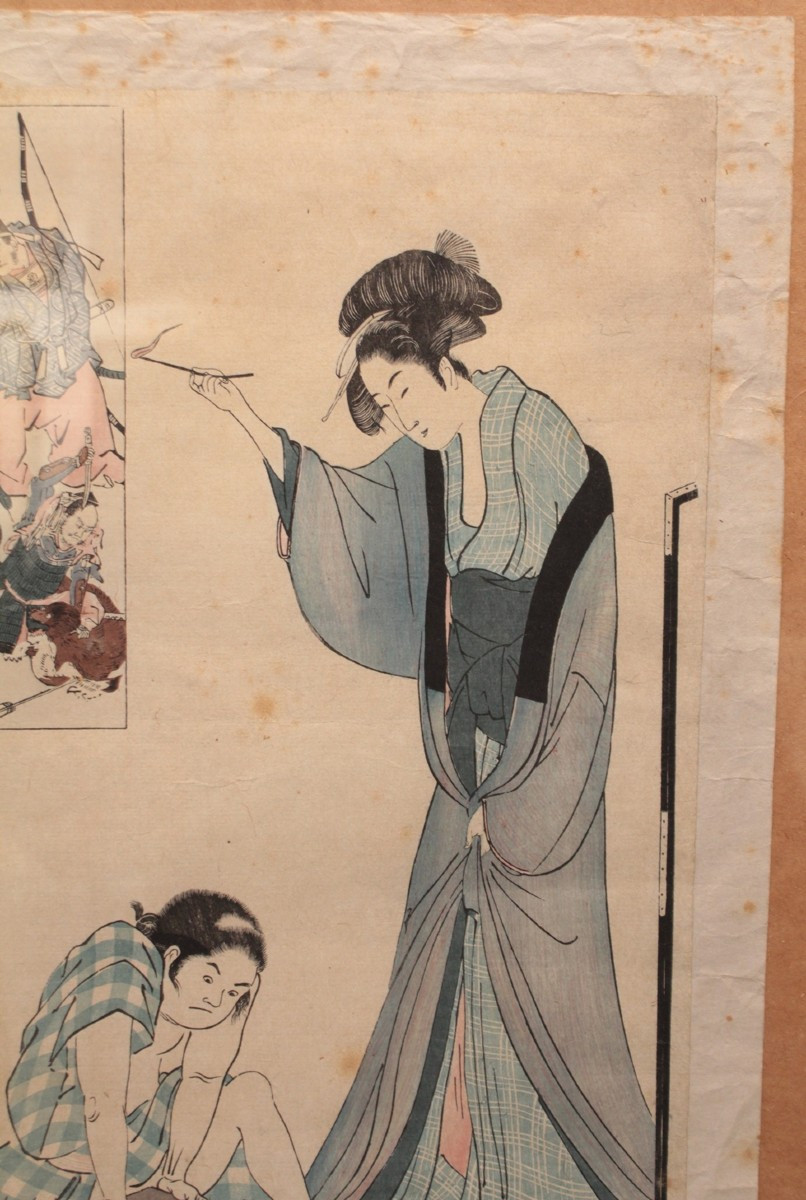
Note some wetness and slightly sunned red color.
Pitchpin framing.
19th century period.
Dimensions of frame: H 51 x W 39 x D 1.5 cm, of print: H 41.8 x W 30.5 cm
This print features the nude, a fantastic creature from the world of the Yôkai, that universe populated by spirits, monsters and ghosts that nourishes the Japanese imagination.
The title of the series, inscribed in the upper-left cartouche, E-kyôdai, which can be translated as "sister images", evokes an idea of kinship or correspondence between the scenes depicted. Through this series, Kitagawa Utamaro explores a play of mirrors between two situations.
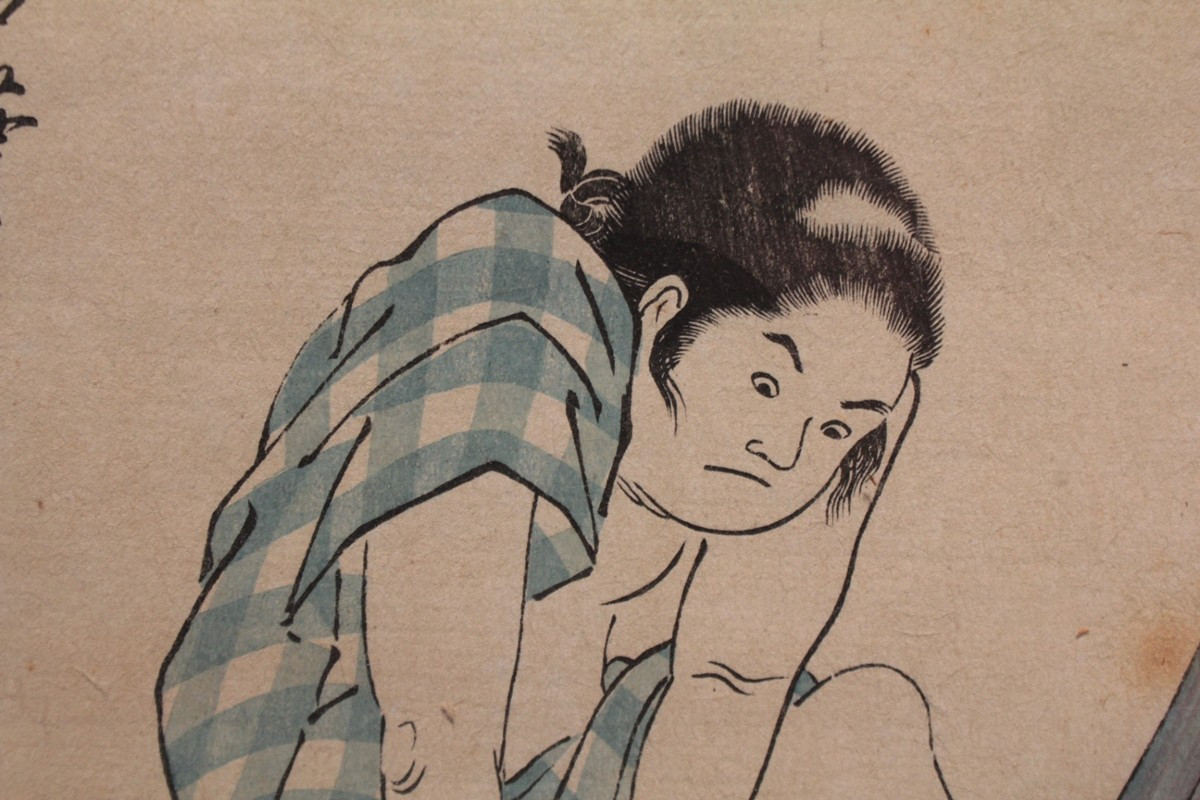
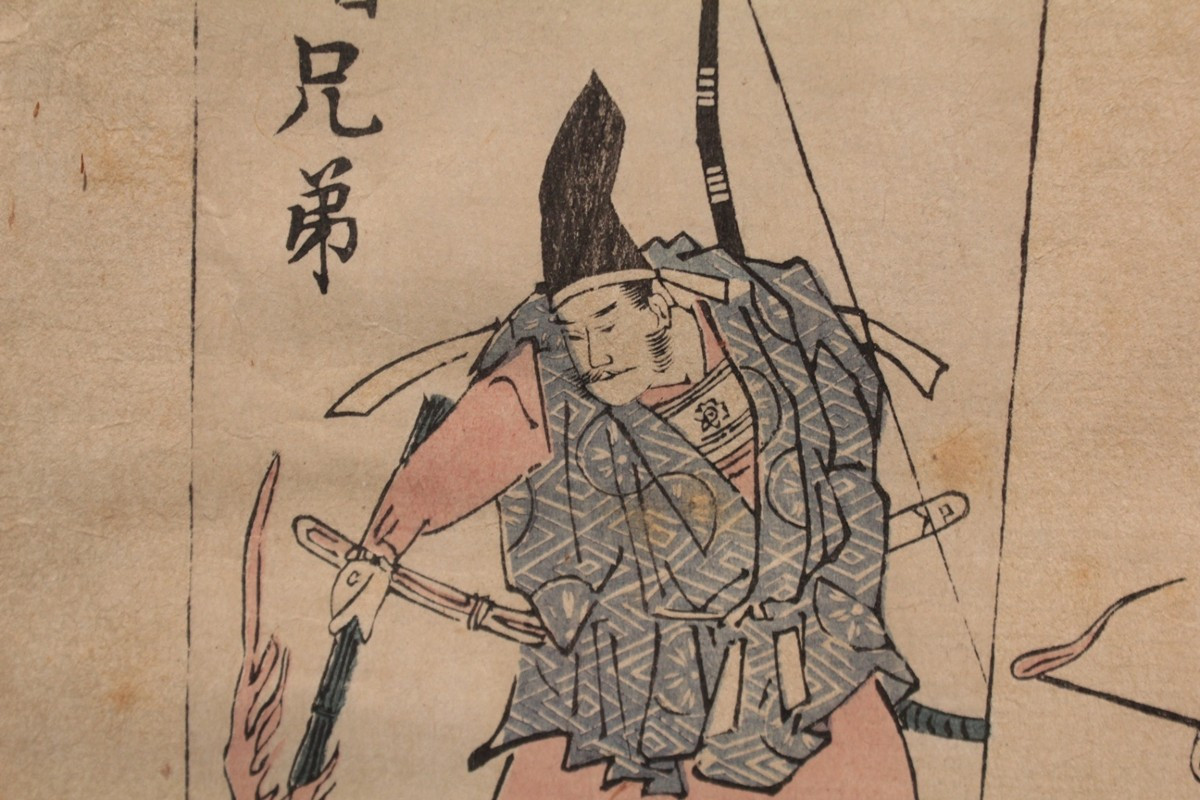
Here, a young boy has just captured a rat whose tail is still sticking out of the trap. This everyday scene echoes that of two samurai subduing a harmful long-tailed creature, probably an allusion to a legend well known to 18th-century Japanese audiences. The composition underscores this analogy right down to the details: one of the samurai is brandishing a torch, while a young woman illuminates the scene with a simple flame.
With this comparison, Utamaro resorts to a subtle procedure, close to parody, frequently used in the art of Japanese printmaking: confronting a familiar, almost trivial scene with a more noble subject, taken from history or mythology. This play of echoes, at once erudite and imbued with humor, particularly appealed to the bourgeois and merchant clientele to whom print publishers catered.
Copies are preserved in American museums (Portland and New-York) as well as in Warsaw.
Kitagawa Utamaro (1753-1806) was one of the great masters of Japanese printmaking of the Edo period (18th century). Famous for his portraits of women (bijin-ga), through elegant, uncluttered compositions he manages to capture subtle expressions, delicate gestures and moments of intimate life. His work is distinguished by a great finesse of line and attention to the details of everyday life.
Highly appreciated during his lifetime, he left his mark on the history of ukiyo-e and influenced many artists, both in Japan and Europe, particularly during the discovery of Japanese art in the 19th century. Even today, his prints are among the most emblematic and sought-after works of Japanese art.
****
I'll take care of delivery in France and abroad.and abroad.Shipping conditions depend on thedo not hesitate to contact me to find out how much it will cost andplease contact me to find out how much it will cost and how to organize it. I take particular care to protectprotection and packaging of each art object.
Period: 19th century
Style: Asian art
Condition: En l'etat
Material: Paper
Width: 39
Height: 51
Depth: 1,5
Reference (ID): 1739747
Availability: In stock