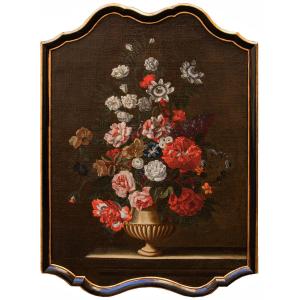


Scope Of Jean-baptiste Monnoyer (lille, 1636 - London, 1699), Vase Of Flowers
Scope of Jean-Baptiste Monnoyer (Lille, 1636 - London, 1699)
Vase of flowers
Oil on canvas, 103 / 97 x 77 cm
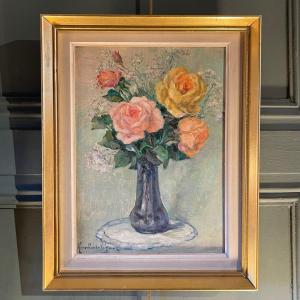
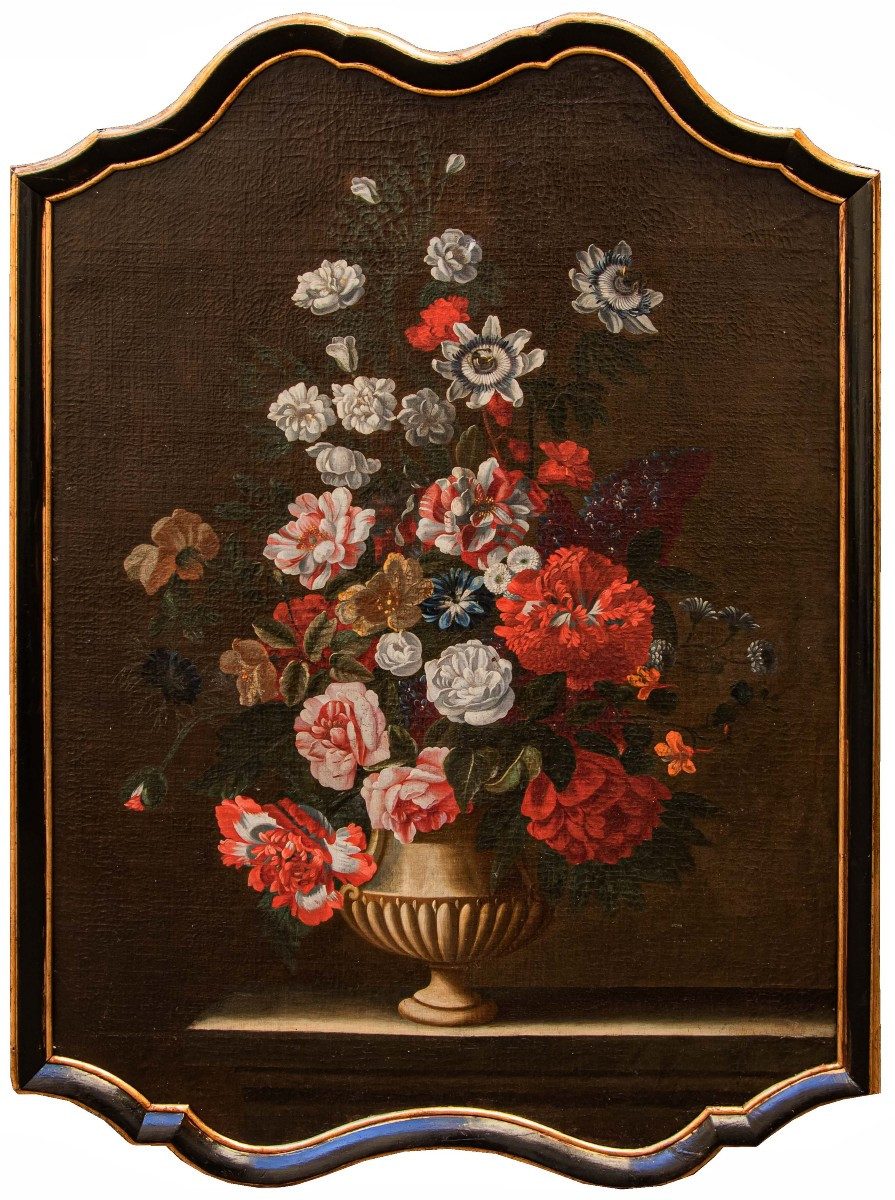
The elaborate profile with alternating lobes of this canvas overlooks the preciousness of the floral composition offered to the viewer.
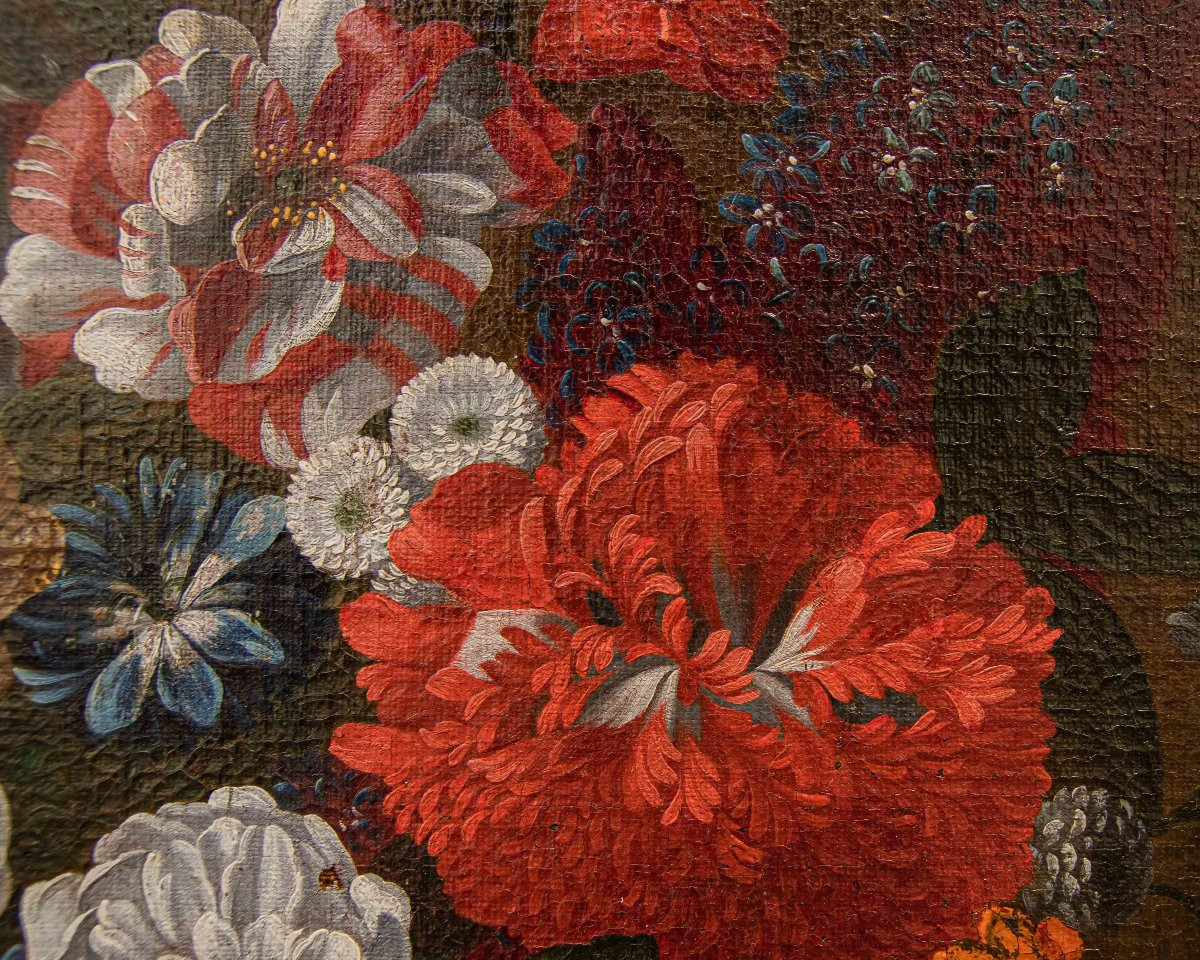
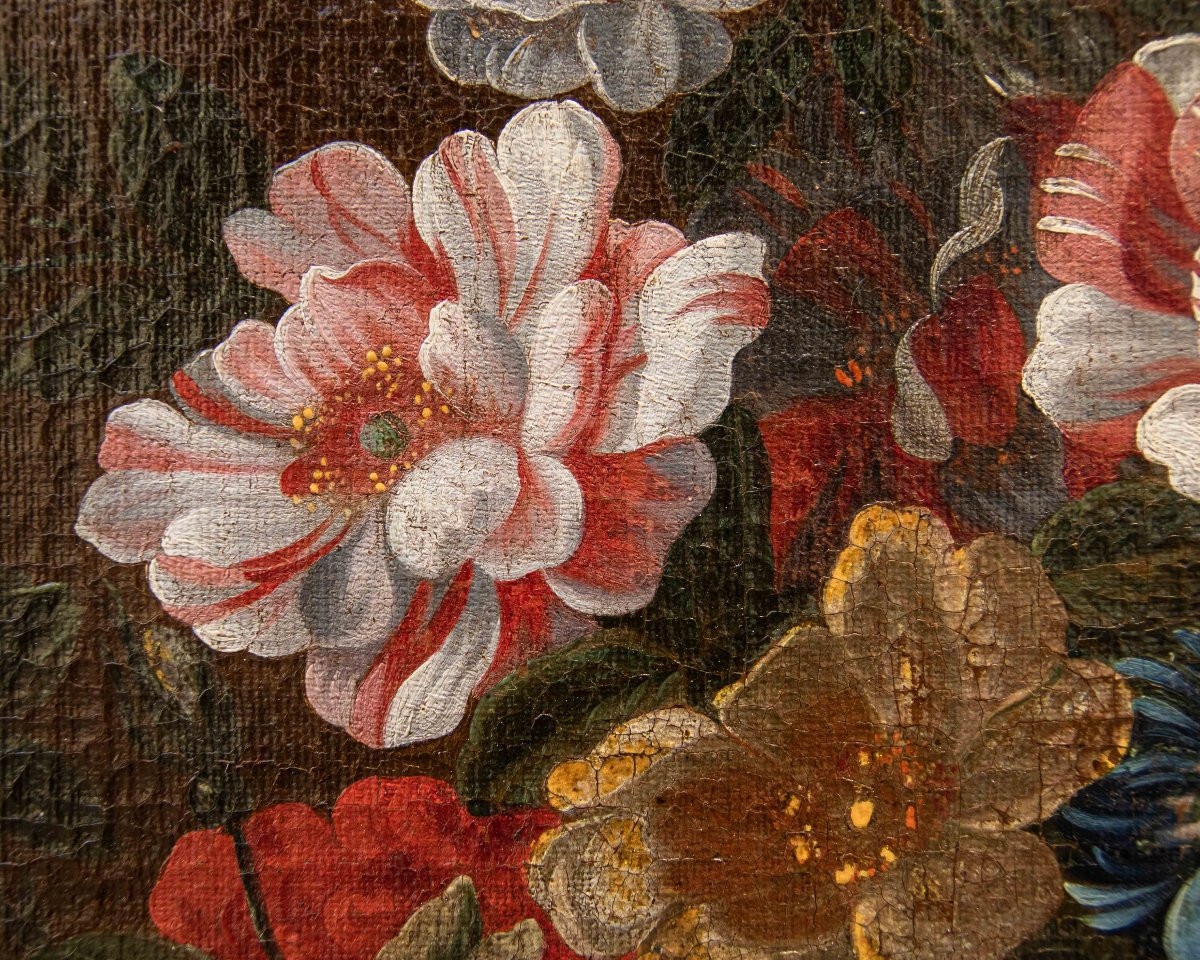
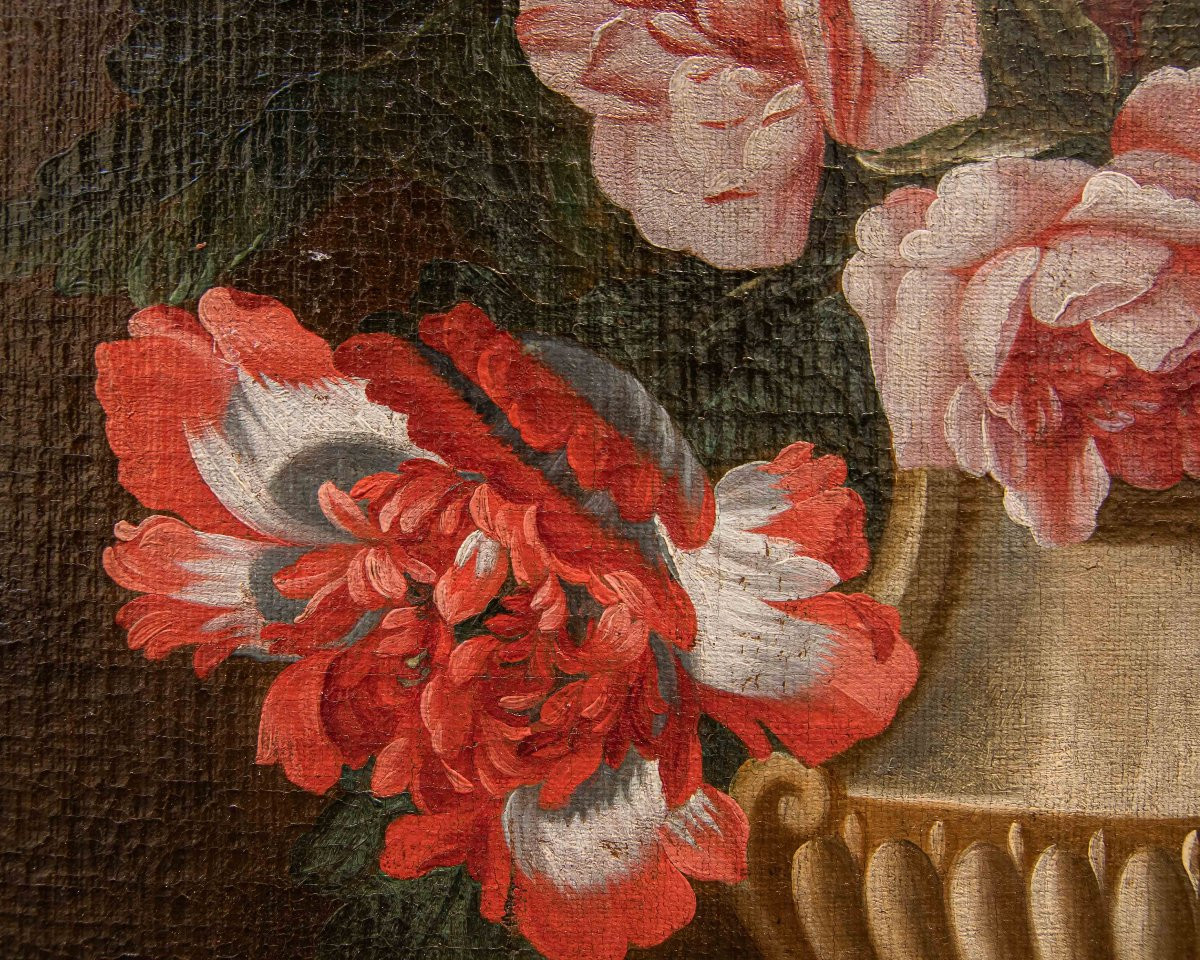
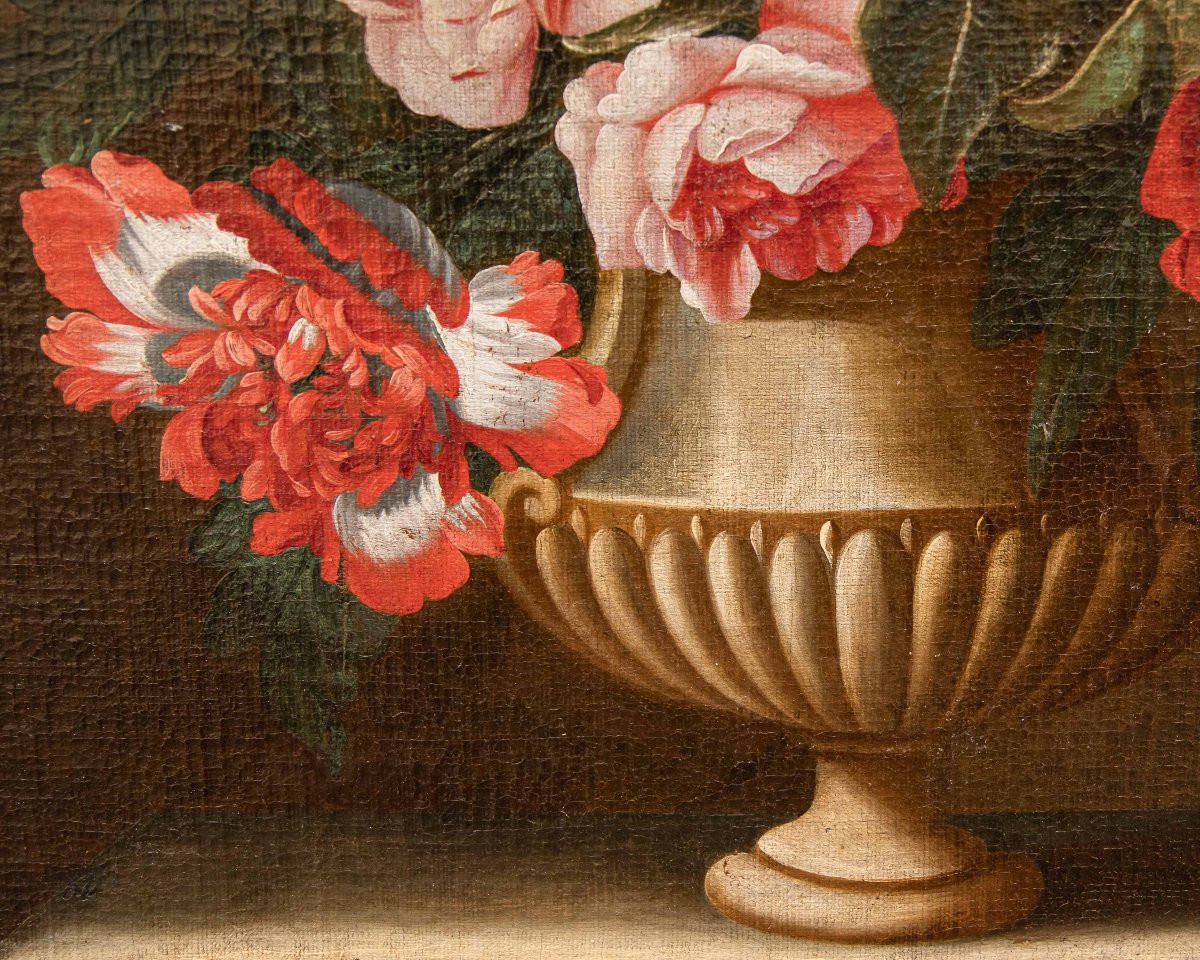
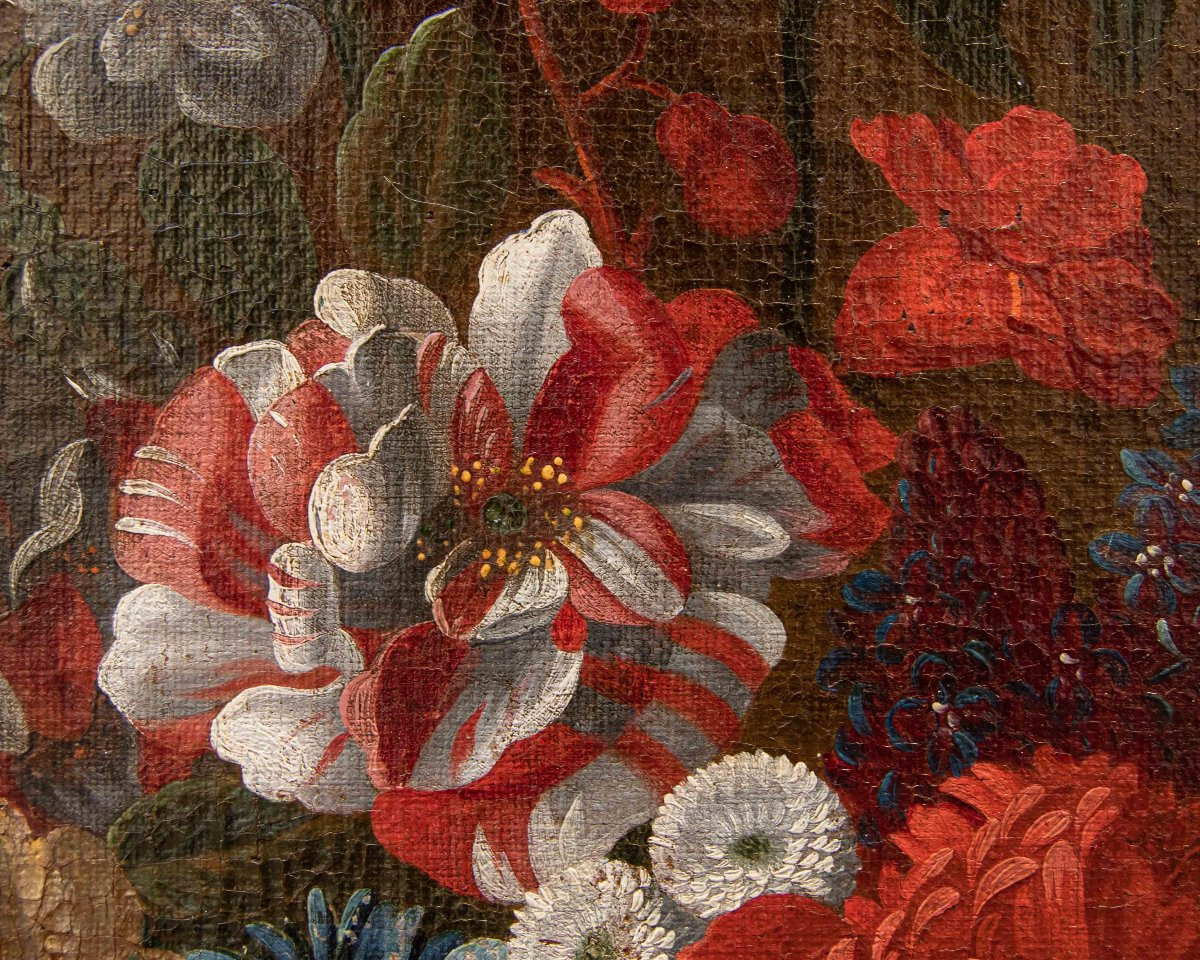
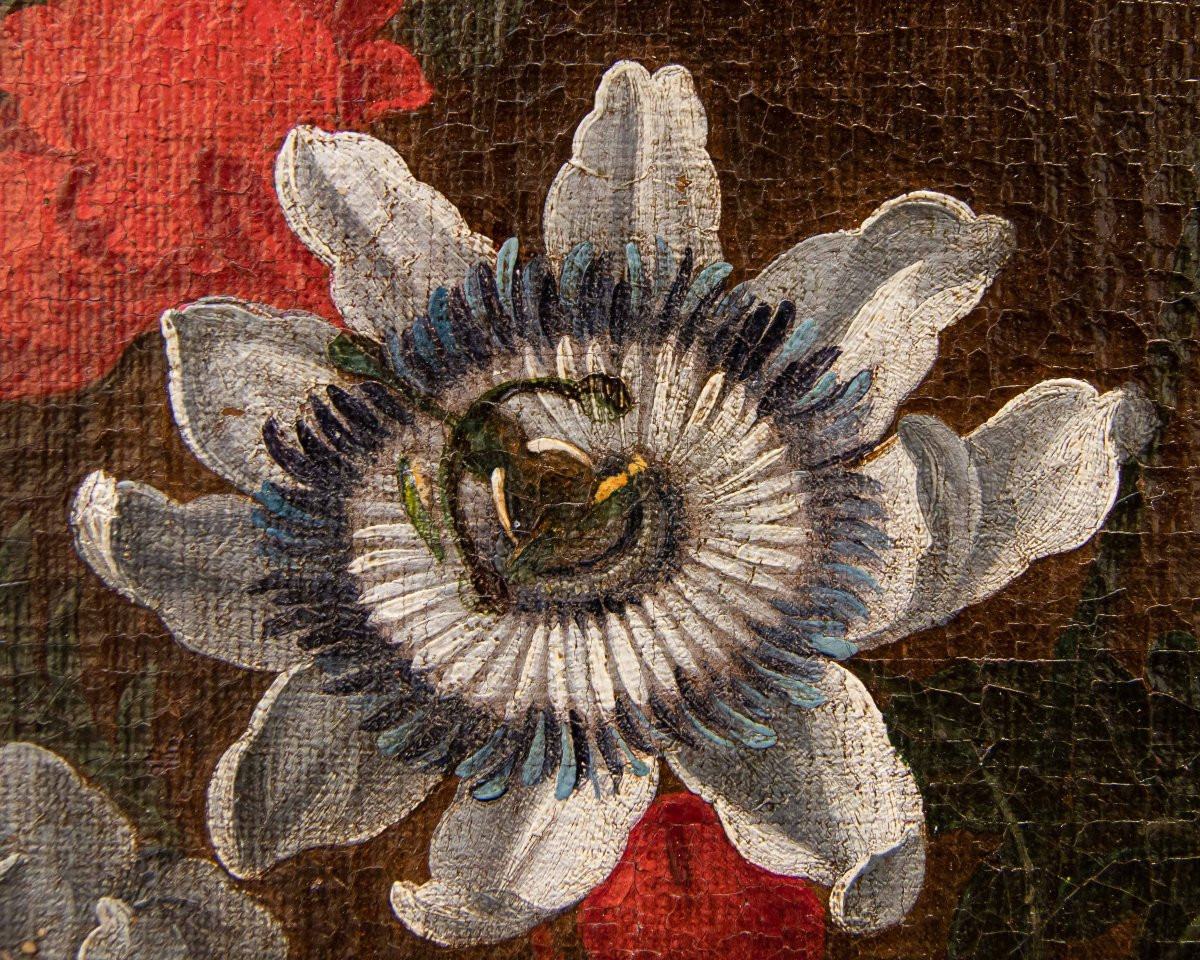
A sliding lighting cuts across the marble shelf from the front, falling plumb in front of the vase and enhancing its defined corollas of flowers that emerge forcefully from a theatrical dark backdrop. The fluid formal geometry that designs the flowers, juxtaposed in a calm coloristic syntax, does not disdain to reveal their most sought-after species: red peonies alternate with roses, variously striated carnations, anemones with filamentous petals and perhaps centifolias. Precisely this particular variety of cuts, in accordance with the solid rhythmic plasticism of corollas and the antiquating decoration of the overhang on the historiated vase, allows us to bring the present artistic language closer to the particular culture supported by the echo of Jean-Baptiste Monnoyer (1636 - 1699). Monnoyer, a Flemish painter from Lille, initially linked his name to the tapestry cartoons he developed on behalf of the Beauvais and Gobelins factories. He later became a protégé of Charles le Brun, who commissioned his art to decorate Marly Castle, then Meudon Castle. His fame took him across the Channel to Montagu House, London, and to the eyes of other English landowners. Monnoyer was an eclectic and multifaceted artist: a true constant within his natures was the full-bodied solidity of buds and corollas, like the present which defines every petal and every leaf. Monnoyer's lesson spread uncontrollably in the school and in the variously direct lineage that he had to determine: it is possible in this regard to compare the present both with two natures of Monnoyer, one last on the antiques market (Sotheby's, auction of 9 January 1980, n. 155), the other in a private collection, and with several paintings by Jean Baptiste Belin de Fontenay (Caen, 1653 – Paris, 1715), Monnoyer's pupil and son-in-law, all passed into private collections (aste Dorotheum). A clear uniformity with pastel tones directs these compositions towards a soberly restrained taste, in line with the preponderant ornamental intent of the time. Belin also satisfied commissions for the royal residences of Versailles, Compiègne and Fontainebleau, Marly and Meudon, re-proposing elegant bouquets of flower parks, in which beauty was greatly enhanced by the quiet yet noble floral composition.
Vase of flowers
Oil on canvas, 103 / 97 x 77 cm
The elaborate profile with alternating lobes of this canvas overlooks the preciousness of the floral composition offered to the viewer.
A sliding lighting cuts across the marble shelf from the front, falling plumb in front of the vase and enhancing its defined corollas of flowers that emerge forcefully from a theatrical dark backdrop. The fluid formal geometry that designs the flowers, juxtaposed in a calm coloristic syntax, does not disdain to reveal their most sought-after species: red peonies alternate with roses, variously striated carnations, anemones with filamentous petals and perhaps centifolias. Precisely this particular variety of cuts, in accordance with the solid rhythmic plasticism of corollas and the antiquating decoration of the overhang on the historiated vase, allows us to bring the present artistic language closer to the particular culture supported by the echo of Jean-Baptiste Monnoyer (1636 - 1699). Monnoyer, a Flemish painter from Lille, initially linked his name to the tapestry cartoons he developed on behalf of the Beauvais and Gobelins factories. He later became a protégé of Charles le Brun, who commissioned his art to decorate Marly Castle, then Meudon Castle. His fame took him across the Channel to Montagu House, London, and to the eyes of other English landowners. Monnoyer was an eclectic and multifaceted artist: a true constant within his natures was the full-bodied solidity of buds and corollas, like the present which defines every petal and every leaf. Monnoyer's lesson spread uncontrollably in the school and in the variously direct lineage that he had to determine: it is possible in this regard to compare the present both with two natures of Monnoyer, one last on the antiques market (Sotheby's, auction of 9 January 1980, n. 155), the other in a private collection, and with several paintings by Jean Baptiste Belin de Fontenay (Caen, 1653 – Paris, 1715), Monnoyer's pupil and son-in-law, all passed into private collections (aste Dorotheum). A clear uniformity with pastel tones directs these compositions towards a soberly restrained taste, in line with the preponderant ornamental intent of the time. Belin also satisfied commissions for the royal residences of Versailles, Compiègne and Fontainebleau, Marly and Meudon, re-proposing elegant bouquets of flower parks, in which beauty was greatly enhanced by the quiet yet noble floral composition.
3 800 €
Period: 17th century
Style: Other Style
Condition: Good condition
Material: Oil painting
Width: 77
Height: 103/97
Reference (ID): 1739397
Availability: In stock
Print