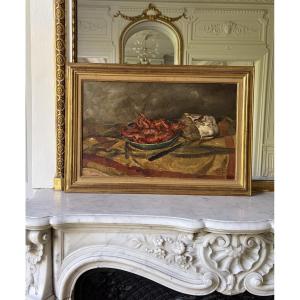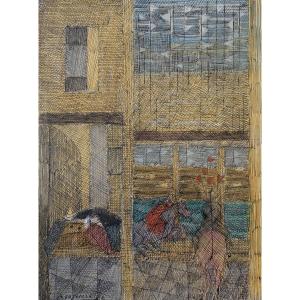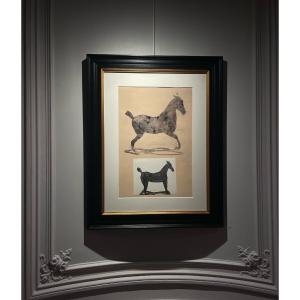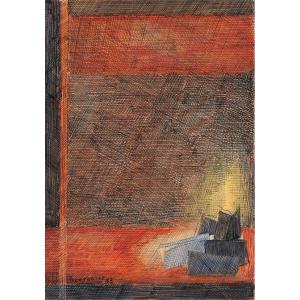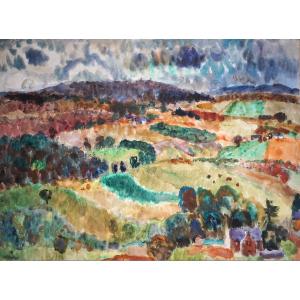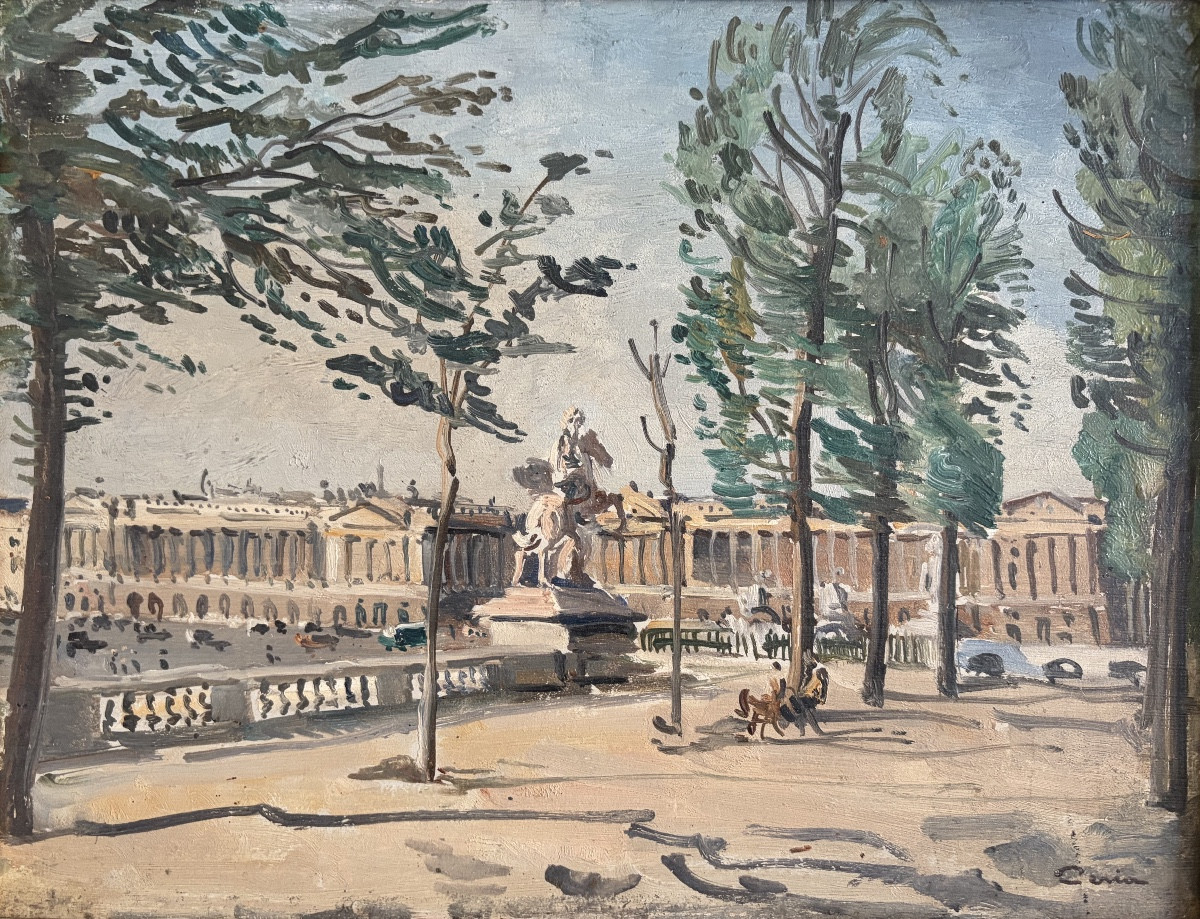
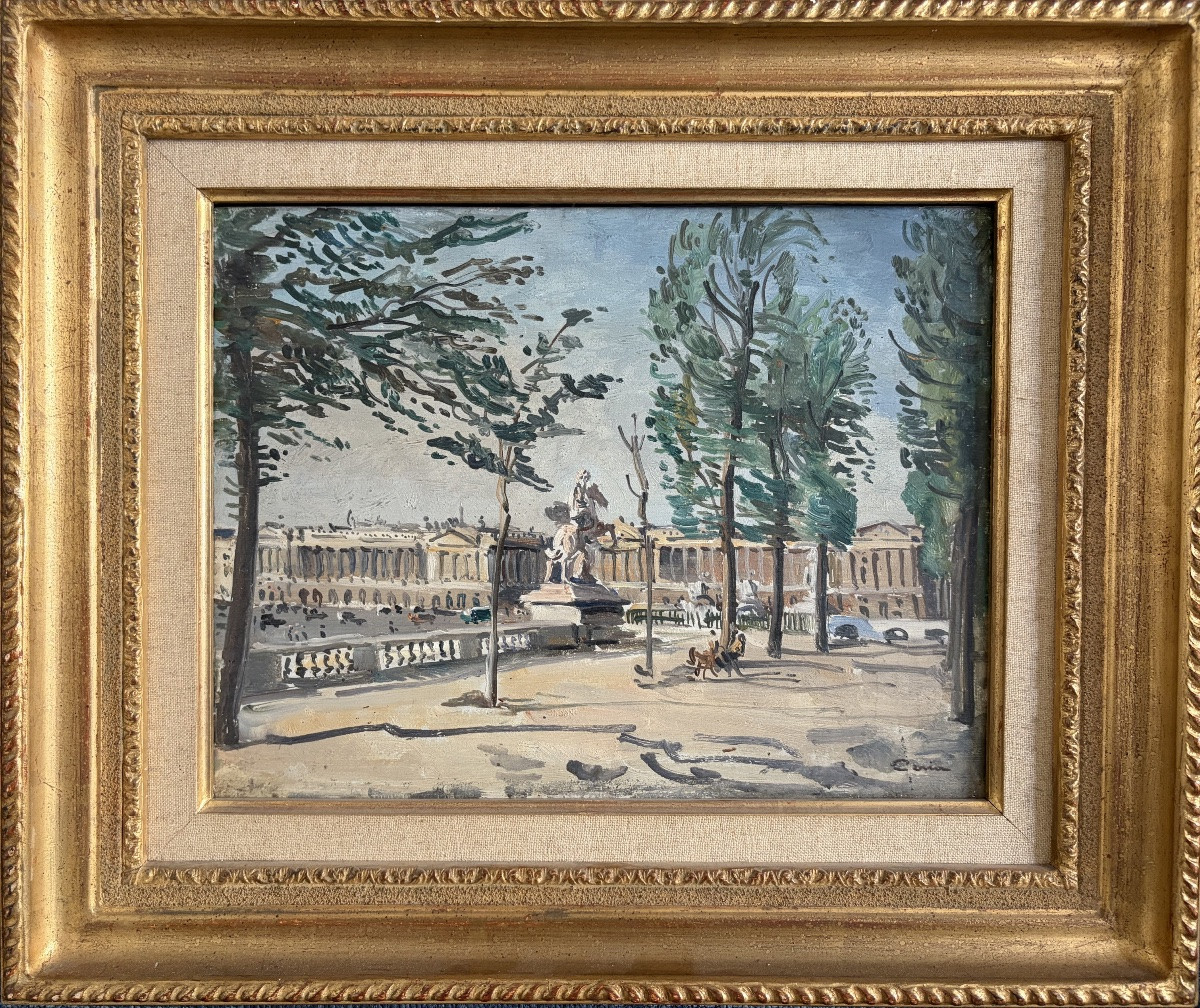


Edmond Ceria, La Place De La Concorde, Oil On Panel
Artist: Edmond Ceria (1884-1955)
Edmond Ceria (1884-1955)
La Place de la Concorde
Oil on panel
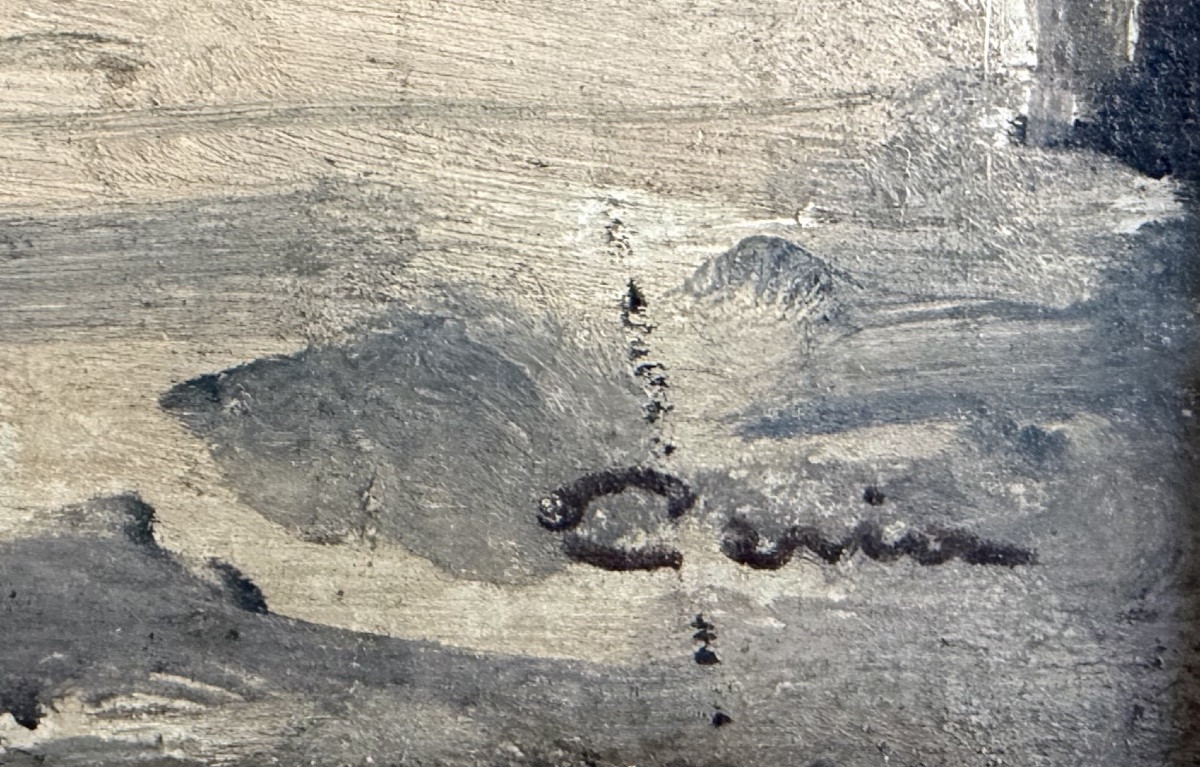
Signed lower right
27 x 35 cm
Edmond Ceria (1884-1955)
Early in childhood, Edmond Ceria showed a predisposition for music, drawing and painting. After studying at the Collège d'Évian, he entered the École des Beaux-Arts in Geneva. Disappointed by the teaching, he moved to Paris in 1904, entered the Académie Julian and frequented the Louvre, where he discovered the work of Paul Cézanne, which had a profound effect on him. He became a disciple of this new vision of the world, where sensitivity and love of nature replaced genre and anecdote. According to René Barotte, "his incisive pages are reminiscent of Guardi or Canaletto. His style gradually frees itself from a certain rigor of execution. The brushstroke becomes a sign, almost an ideogram, and the small painting appears written like a love poem."
He began his career by exhibiting at the Salon des Indépendants in 1908, then at the Salon des Tuileries and the Salon d'Automne, of which he was a member. In 1919, he spent a year in Tuscany, where, like Corot, he became aware of the importance of light in painting. During this stay, he copied the great Italian masters, including Giotto, Uccello and Masaccio. On his return to France, Ceria discovered the light of Provence, painting mainly in Marseille and Sanary.
In Paris, he settled in a studio near the Observatoire and frequently went down to the quays to paint the Seine, the bridges, the Concorde, the Tuileries and Luxembourg. In 1934, he stopped traveling to Provence to discover Brittany, where he spent many years. Indifferent to fashions and unfailingly attached to nature, which he stylized, he pursued a landscape style in which light brushstrokes emphasized accidents and reflections. When the climate forced him to paint in the studio, he devoted his talent to still lifes, which testified to his love of life, just as his landscapes reflected his taste for nature.
Ceria took part, along with his friends Charles Dufresne, Othon Friesz and Henry de Waroquier, in the first exhibition of the Masters of Independent Art at the Petit Palais in 1937. Still working with Dufresne, to whom he entrusted the artistic education of his son Jacques Despierre, he decorated the small foyer of the Théâtre de Chaillot with Le Théâtre antique. The following year, he won the Carnegie Prize in the United States. Appointed painter to the Navy in 1945, now free of material contingencies, he continued his work, expressing his emotion until his death ten years later.
His works are preserved in numerous museums, including the Centre Pompidou, the Musée d'art moderne de Paris, the Musée des Années 30, the Musée Carnavalet and the Musée des Beaux-Arts de Lyon.
La Place de la Concorde
Oil on panel
Signed lower right
27 x 35 cm
Edmond Ceria (1884-1955)
Early in childhood, Edmond Ceria showed a predisposition for music, drawing and painting. After studying at the Collège d'Évian, he entered the École des Beaux-Arts in Geneva. Disappointed by the teaching, he moved to Paris in 1904, entered the Académie Julian and frequented the Louvre, where he discovered the work of Paul Cézanne, which had a profound effect on him. He became a disciple of this new vision of the world, where sensitivity and love of nature replaced genre and anecdote. According to René Barotte, "his incisive pages are reminiscent of Guardi or Canaletto. His style gradually frees itself from a certain rigor of execution. The brushstroke becomes a sign, almost an ideogram, and the small painting appears written like a love poem."
He began his career by exhibiting at the Salon des Indépendants in 1908, then at the Salon des Tuileries and the Salon d'Automne, of which he was a member. In 1919, he spent a year in Tuscany, where, like Corot, he became aware of the importance of light in painting. During this stay, he copied the great Italian masters, including Giotto, Uccello and Masaccio. On his return to France, Ceria discovered the light of Provence, painting mainly in Marseille and Sanary.
In Paris, he settled in a studio near the Observatoire and frequently went down to the quays to paint the Seine, the bridges, the Concorde, the Tuileries and Luxembourg. In 1934, he stopped traveling to Provence to discover Brittany, where he spent many years. Indifferent to fashions and unfailingly attached to nature, which he stylized, he pursued a landscape style in which light brushstrokes emphasized accidents and reflections. When the climate forced him to paint in the studio, he devoted his talent to still lifes, which testified to his love of life, just as his landscapes reflected his taste for nature.
Ceria took part, along with his friends Charles Dufresne, Othon Friesz and Henry de Waroquier, in the first exhibition of the Masters of Independent Art at the Petit Palais in 1937. Still working with Dufresne, to whom he entrusted the artistic education of his son Jacques Despierre, he decorated the small foyer of the Théâtre de Chaillot with Le Théâtre antique. The following year, he won the Carnegie Prize in the United States. Appointed painter to the Navy in 1945, now free of material contingencies, he continued his work, expressing his emotion until his death ten years later.
His works are preserved in numerous museums, including the Centre Pompidou, the Musée d'art moderne de Paris, the Musée des Années 30, the Musée Carnavalet and the Musée des Beaux-Arts de Lyon.
1 450 €
Period: 20th century
Style: Modern Art
Condition: Excellent condition
Material: Oil painting on wood
Reference (ID): 1738398
Availability: In stock
Print