THIS OBJECT WAS SOLD
Spain. Antique Cup-hilt Sword With Long Quillons, Circa 1700
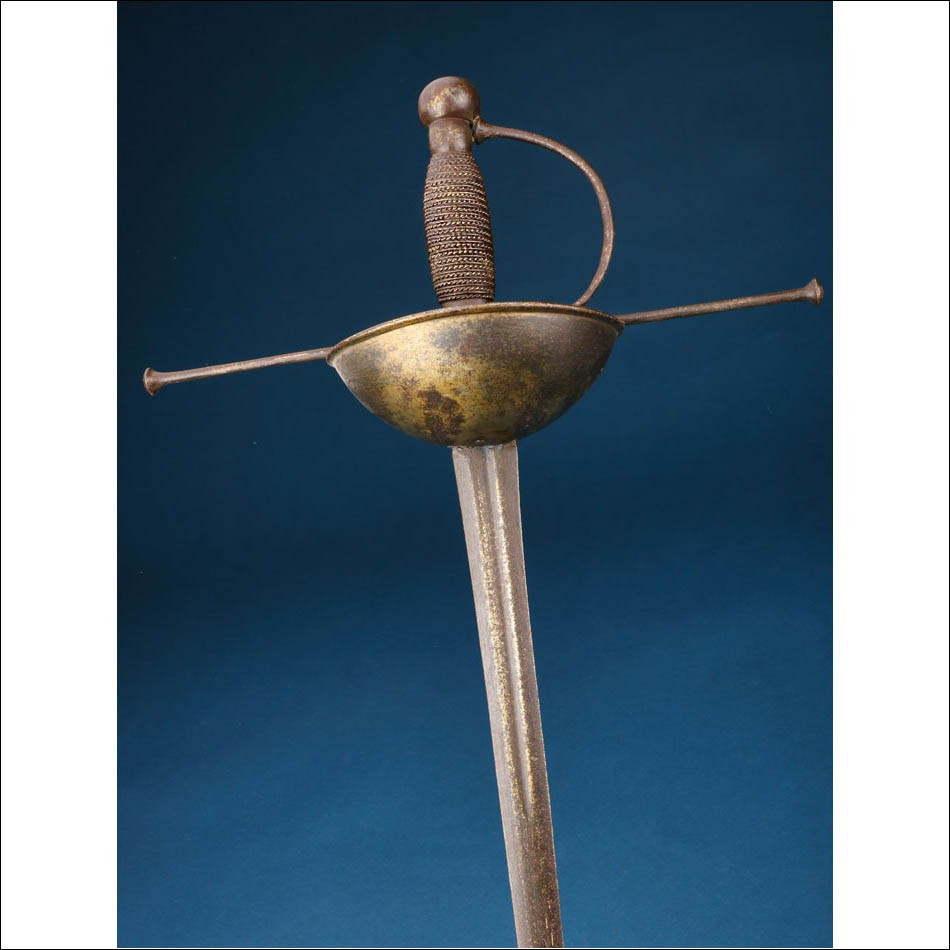
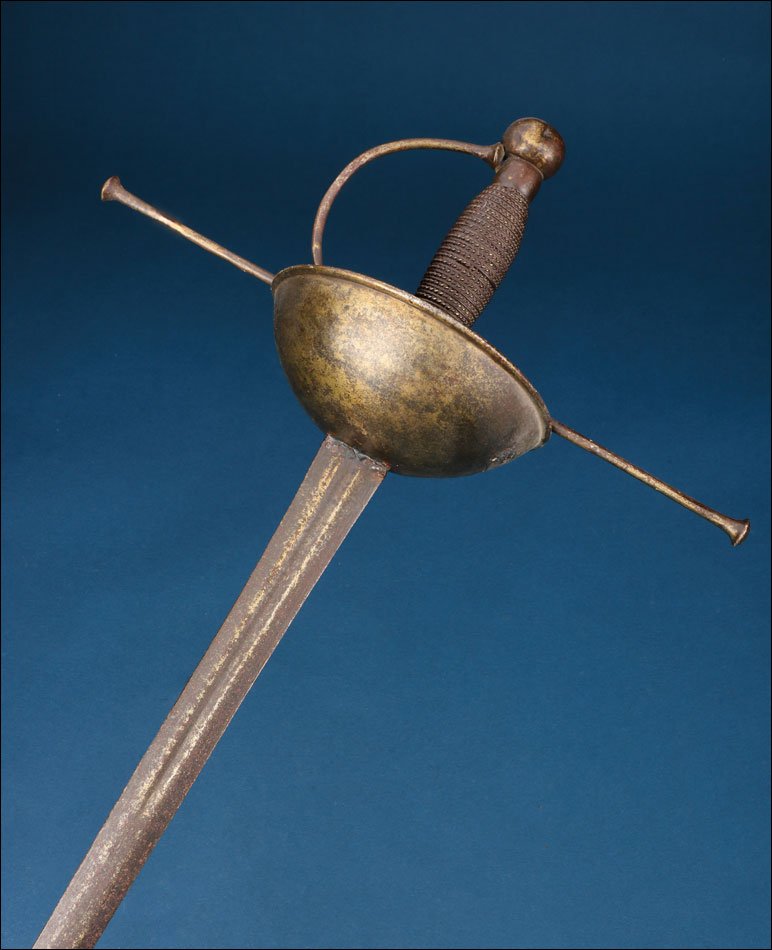
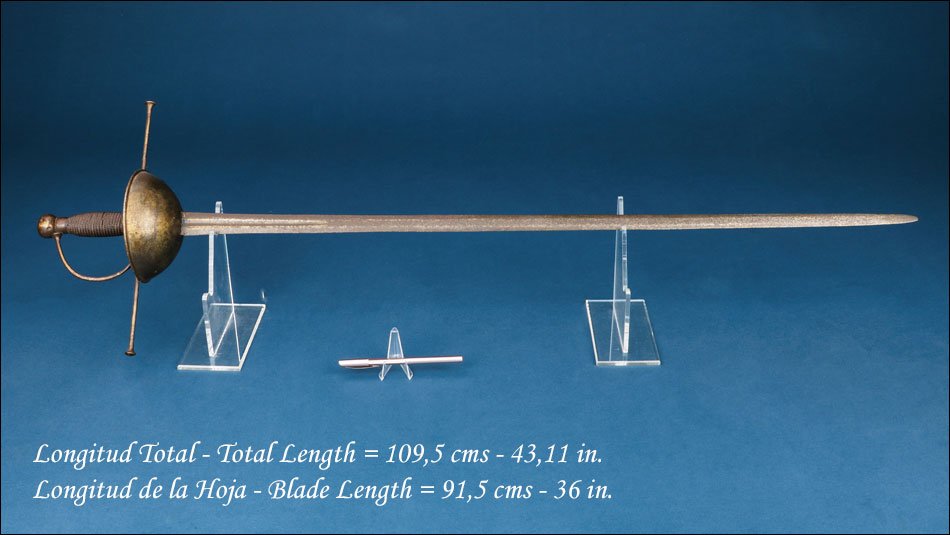
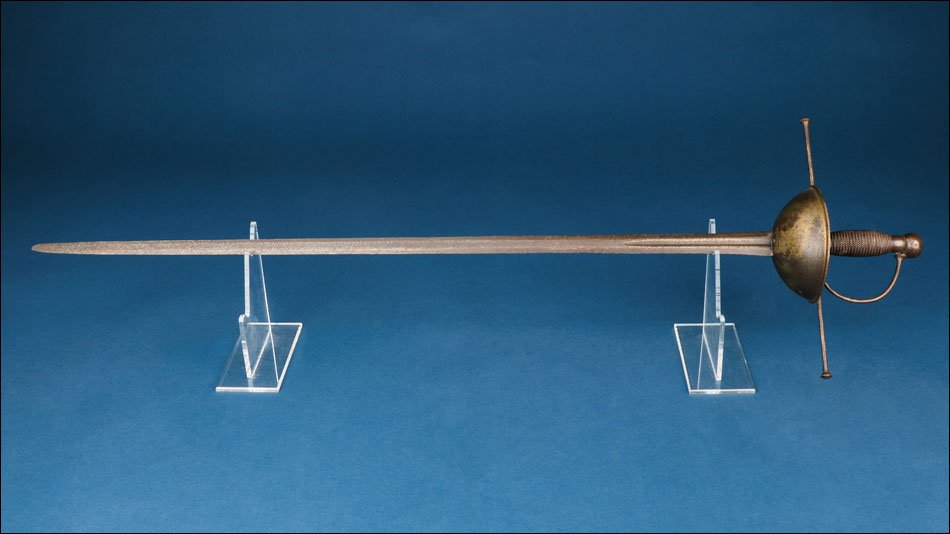
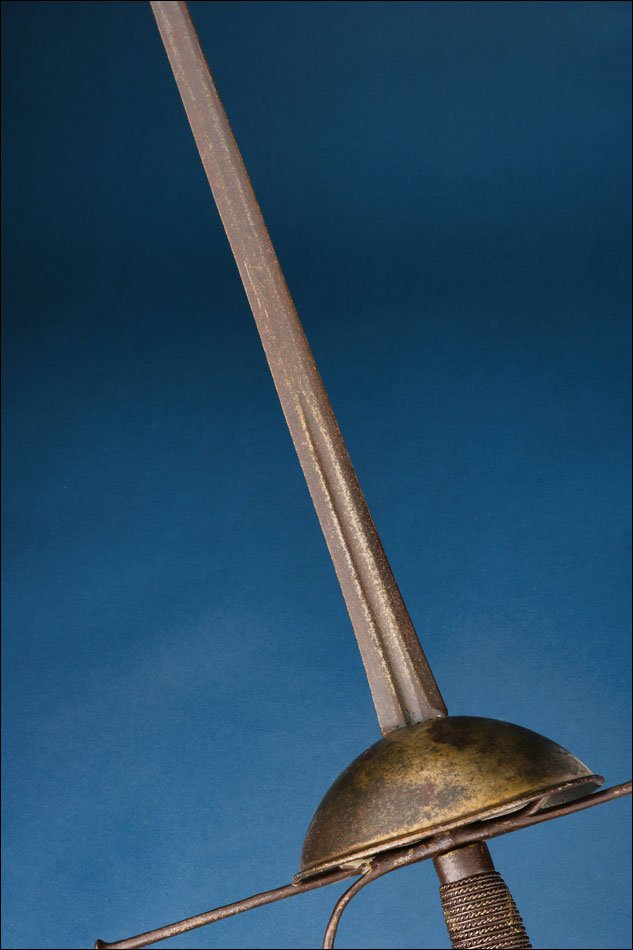
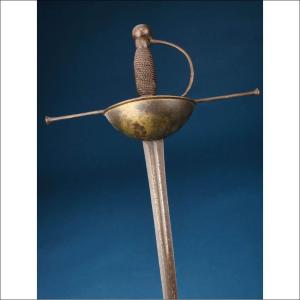


Antique cup-hilt sword datable to the late 17th or early 18th century, characterized by the functional elegance of its guard and the notable length of its quillons. It is a weapon of strong presence, well balanced in hand and displaying a sober aesthetic. Although it lacks marks or inscriptions that would allow a secure attribution, its discovery in Spanish territory reasonably suggests a possible Hispanic origin.
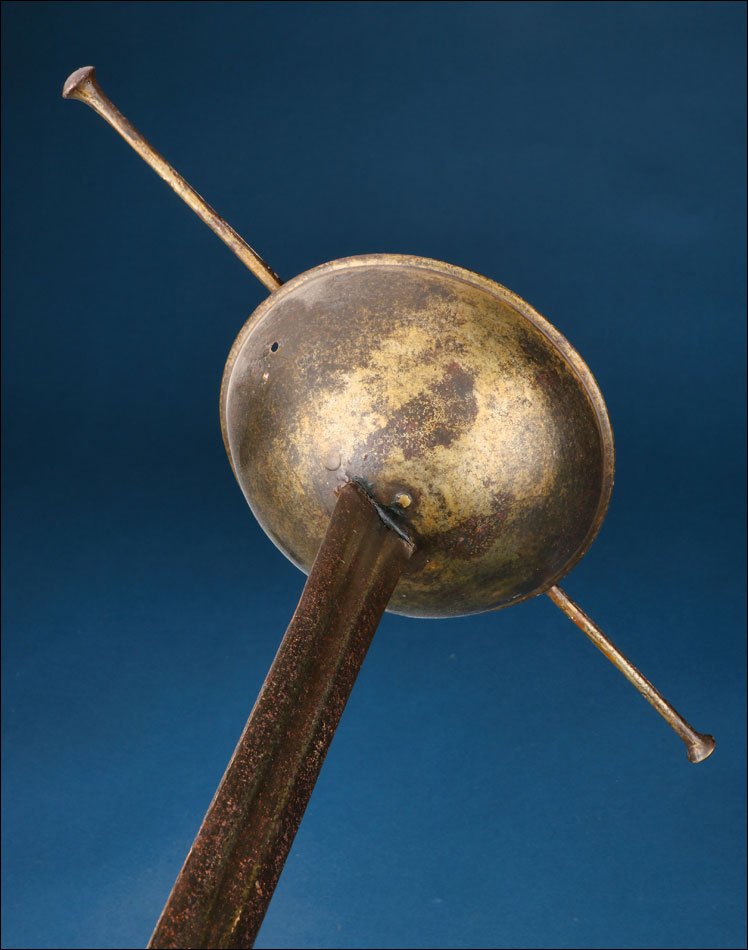
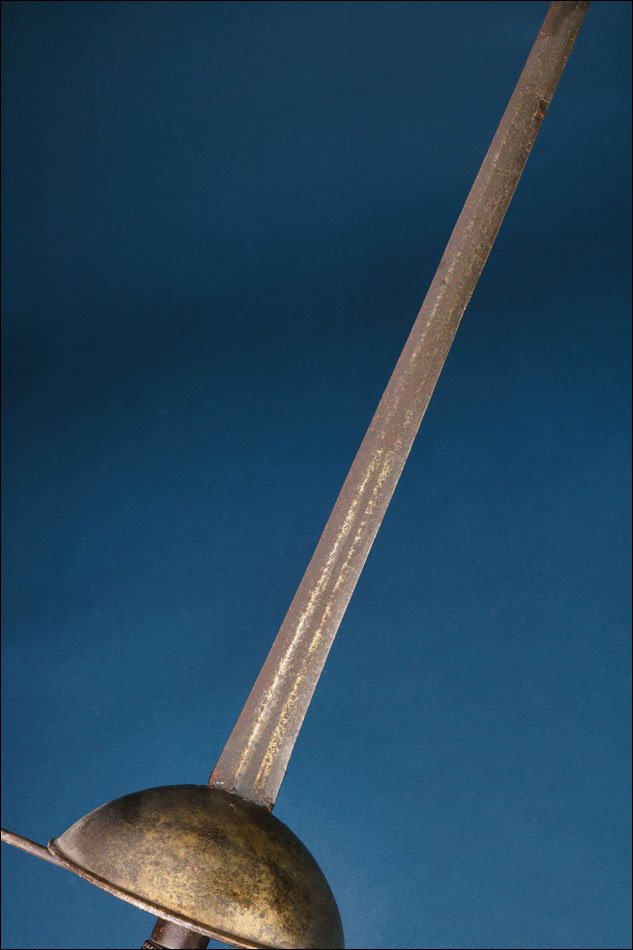
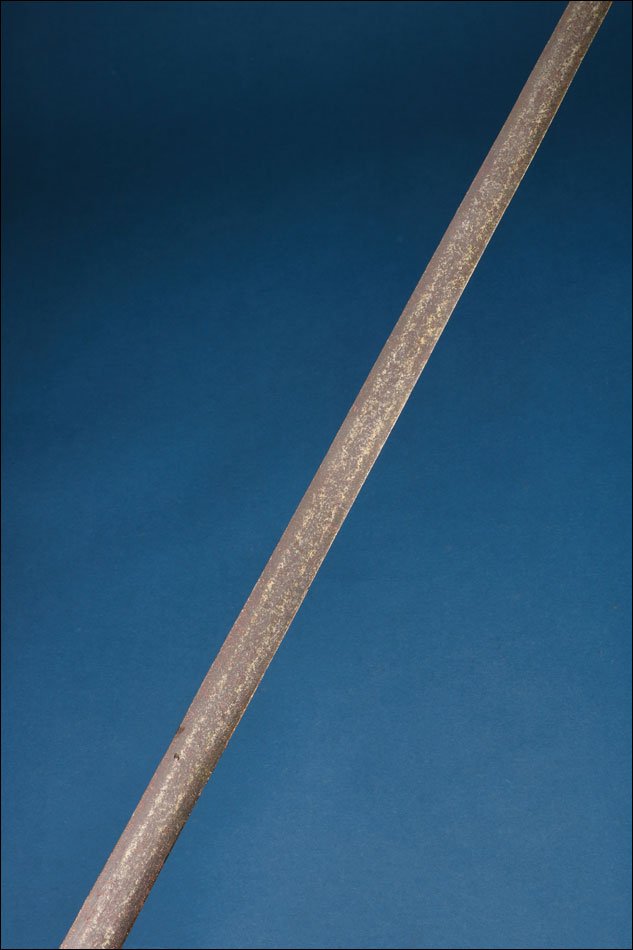
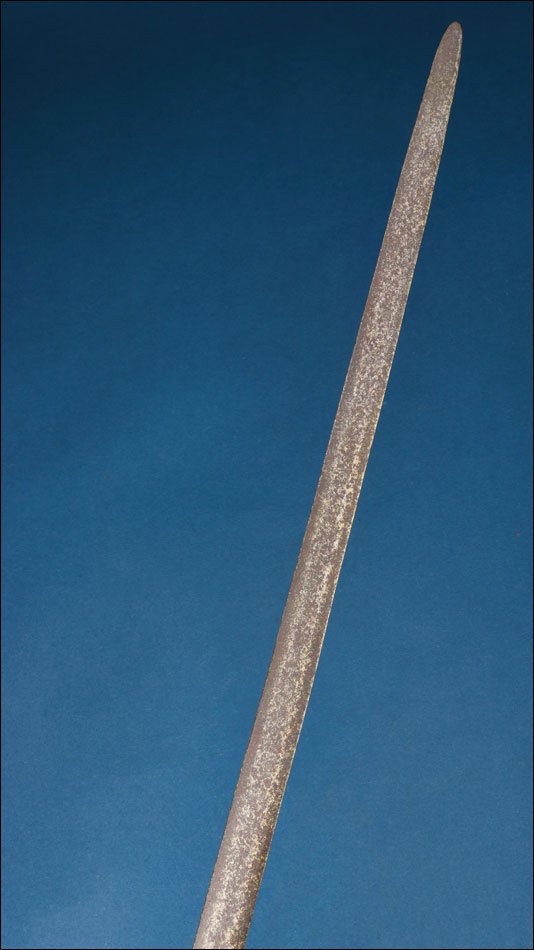
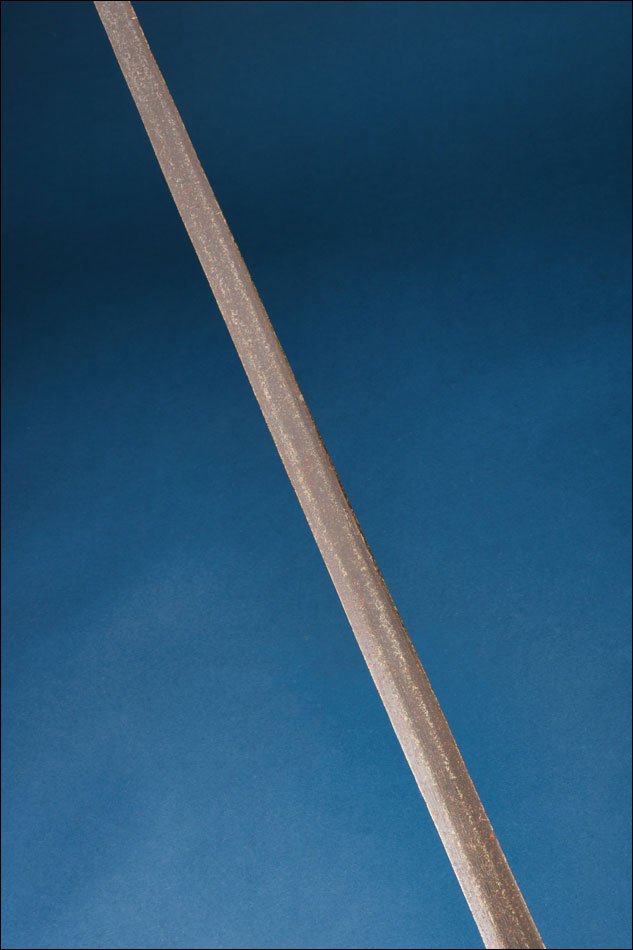
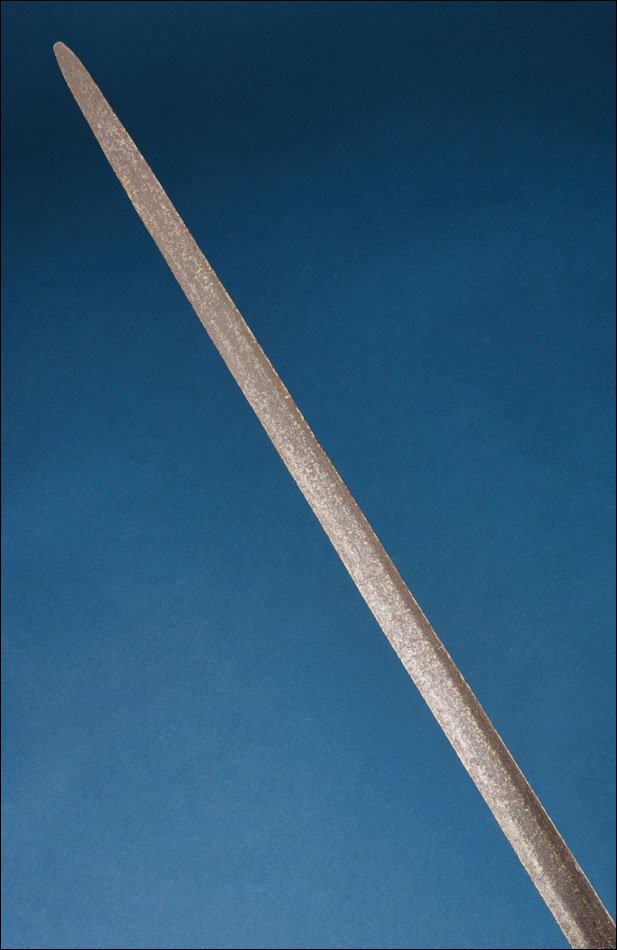
The blade, long and straight, has a flat section with a slight longitudinal ridge that reinforces its structure without adding excessive weight. It shows no engravings or visible maker’s marks, suggesting production intended for practical use rather than ceremonial purposes. The surface retains uniform wear and a patina consistent with its age, preserved without modern cleaning.
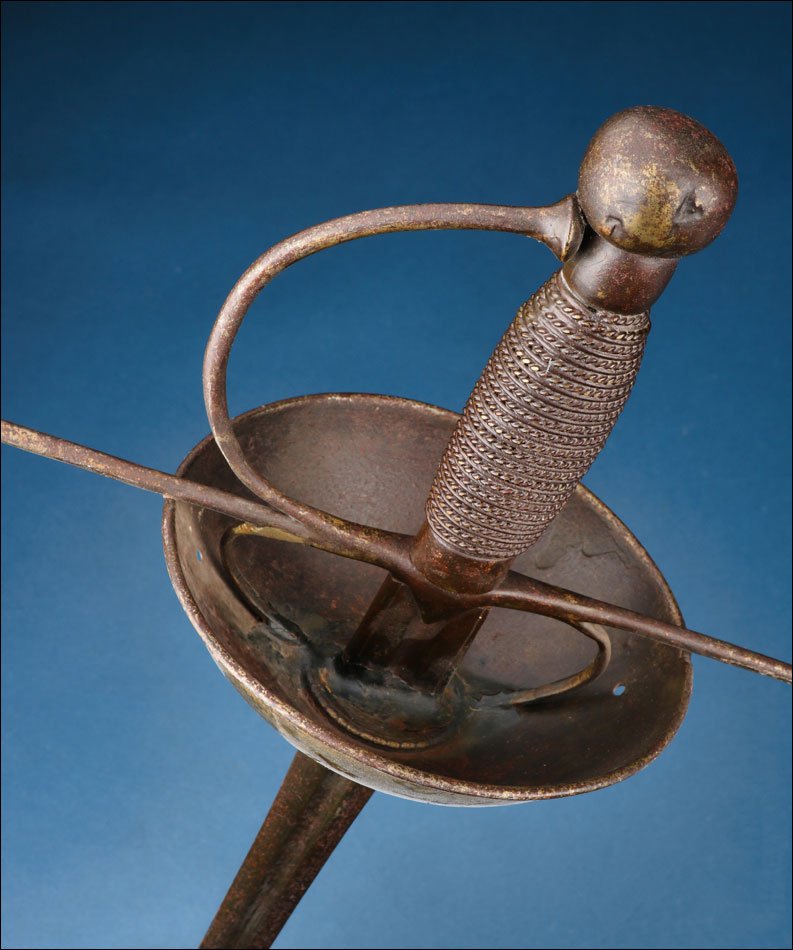
The guard consists of a wide hemispherical metal cup designed to provide effective protection in real combat. Particularly notable are the long straight quillons, ending in discreetly enlarged terminals, a distinctive feature that adds typological character and visual balance to the weapon. The curved knuckle guard integrates naturally into the protective structure, reinforcing the functional character of the sword.
The grip retains its braided metal wire covering, well preserved and showing an attractive aged appearance. The spherical pommel, modest in size, completes the silhouette with a simple and effective constructive solution. The overall impression is of a weapon conceived for real use, with carefully studied proportions that favour balanced handling.
The sword has not been restored or cleaned, fully preserving its historic patina. This condition is especially valued by specialized collectors, as it maintains both material authenticity and historical integrity.
Due to its typology, chronology and possible geographical context, this sword fits naturally into collections devoted to Hispanic arms of the 17th and 18th centuries or to the evolution of the European cup-hilt sword.
A piece of interest for its probable Spanish origin and for its early chronology within the development of the cup-hilt sword. It stands out for the length of its quillons and its excellent functional balance. Its untouched original condition makes it particularly appealing.
Measurements: 109.5 cm (43.11 in). Blade: 91.5 cm (36 in).
History of the Cup-Hilt Sword
The cup-hilt sword represents one of the most characteristic developments of Hispanic weaponry between the 16th and 18th centuries, later spreading throughout much of Europe. Its design arose from the need to effectively protect the combatant’s hand, evolving from complex swept-hilt constructions toward more compact and resistant solutions. The cup-shaped guard provided superior protection in direct combat, becoming a defining element of Iberian arms.
During the transition from the 17th to the 18th century, these swords adopted more sober and functional forms in line with the progressive militarization of their use. Models with long straight quillons reflect a transitional phase in which influences from the rapier tradition coexist with more robust solutions suited to warfare. In Spain, such weapons were used in both military and civilian contexts depending on their specific configuration. Today, these swords constitute valuable testimonies of early modern European arms evolution and are especially appreciated within specialized collecting for their historical and typological significance.
The blade, long and straight, has a flat section with a slight longitudinal ridge that reinforces its structure without adding excessive weight. It shows no engravings or visible maker’s marks, suggesting production intended for practical use rather than ceremonial purposes. The surface retains uniform wear and a patina consistent with its age, preserved without modern cleaning.
The guard consists of a wide hemispherical metal cup designed to provide effective protection in real combat. Particularly notable are the long straight quillons, ending in discreetly enlarged terminals, a distinctive feature that adds typological character and visual balance to the weapon. The curved knuckle guard integrates naturally into the protective structure, reinforcing the functional character of the sword.
The grip retains its braided metal wire covering, well preserved and showing an attractive aged appearance. The spherical pommel, modest in size, completes the silhouette with a simple and effective constructive solution. The overall impression is of a weapon conceived for real use, with carefully studied proportions that favour balanced handling.
The sword has not been restored or cleaned, fully preserving its historic patina. This condition is especially valued by specialized collectors, as it maintains both material authenticity and historical integrity.
Due to its typology, chronology and possible geographical context, this sword fits naturally into collections devoted to Hispanic arms of the 17th and 18th centuries or to the evolution of the European cup-hilt sword.
A piece of interest for its probable Spanish origin and for its early chronology within the development of the cup-hilt sword. It stands out for the length of its quillons and its excellent functional balance. Its untouched original condition makes it particularly appealing.
Measurements: 109.5 cm (43.11 in). Blade: 91.5 cm (36 in).
History of the Cup-Hilt Sword
The cup-hilt sword represents one of the most characteristic developments of Hispanic weaponry between the 16th and 18th centuries, later spreading throughout much of Europe. Its design arose from the need to effectively protect the combatant’s hand, evolving from complex swept-hilt constructions toward more compact and resistant solutions. The cup-shaped guard provided superior protection in direct combat, becoming a defining element of Iberian arms.
During the transition from the 17th to the 18th century, these swords adopted more sober and functional forms in line with the progressive militarization of their use. Models with long straight quillons reflect a transitional phase in which influences from the rapier tradition coexist with more robust solutions suited to warfare. In Spain, such weapons were used in both military and civilian contexts depending on their specific configuration. Today, these swords constitute valuable testimonies of early modern European arms evolution and are especially appreciated within specialized collecting for their historical and typological significance.
Explore similar pieces and discover your ideal find:
Edged Weapons