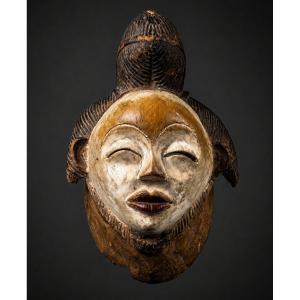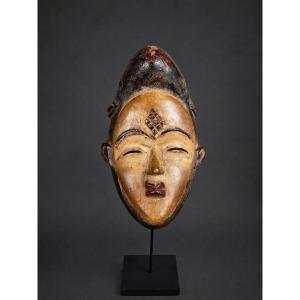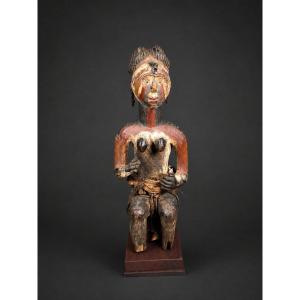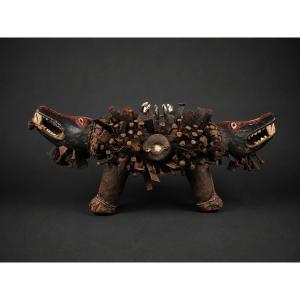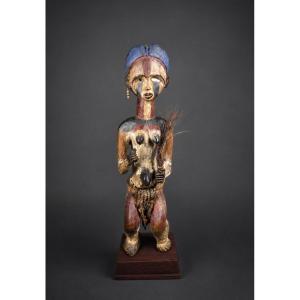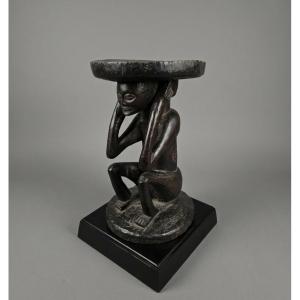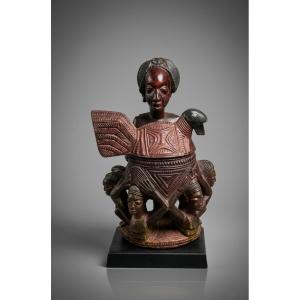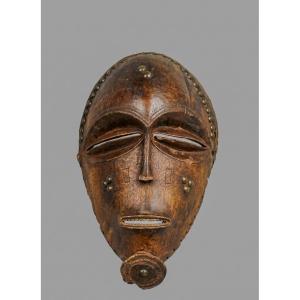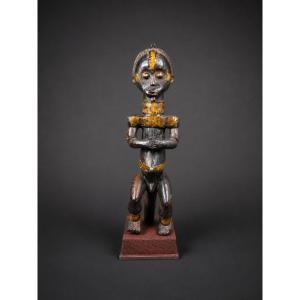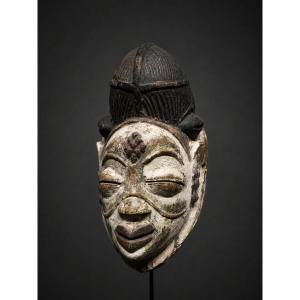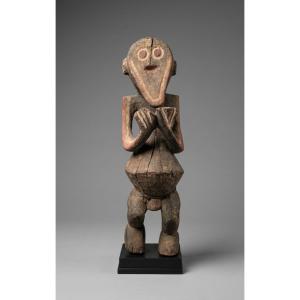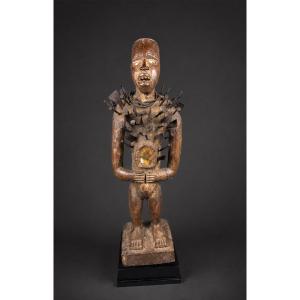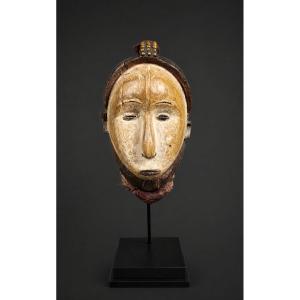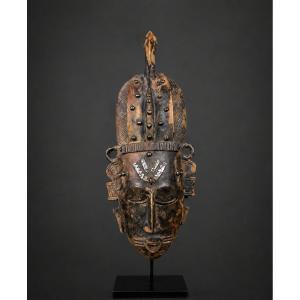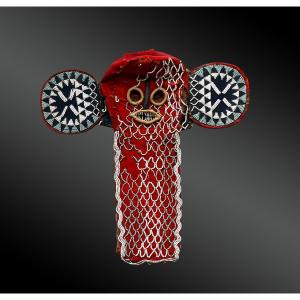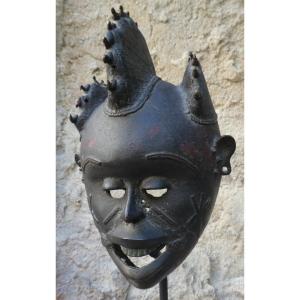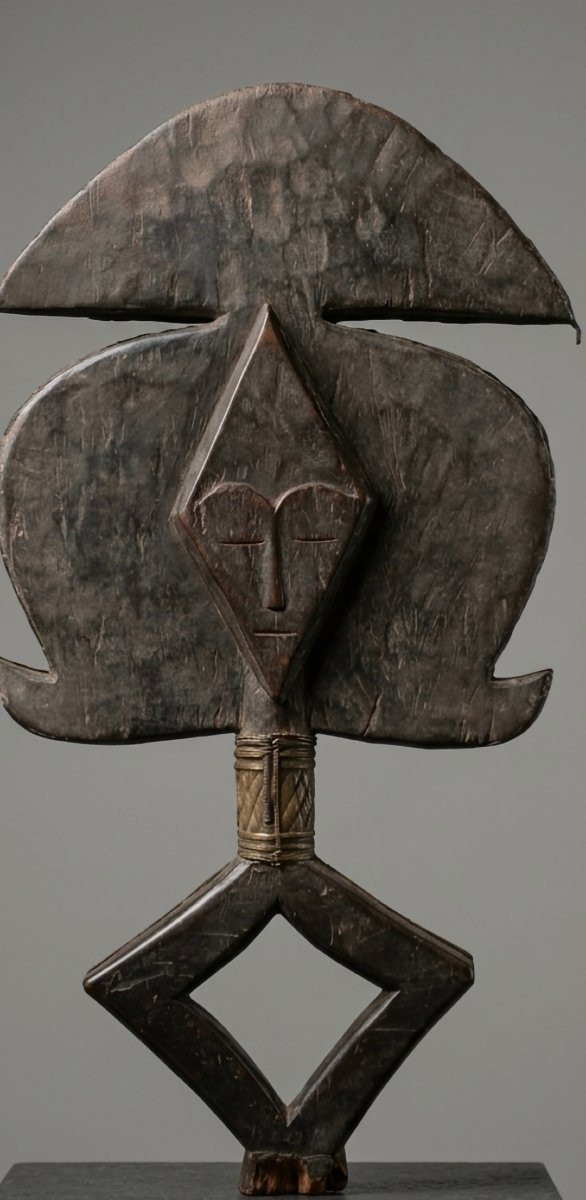

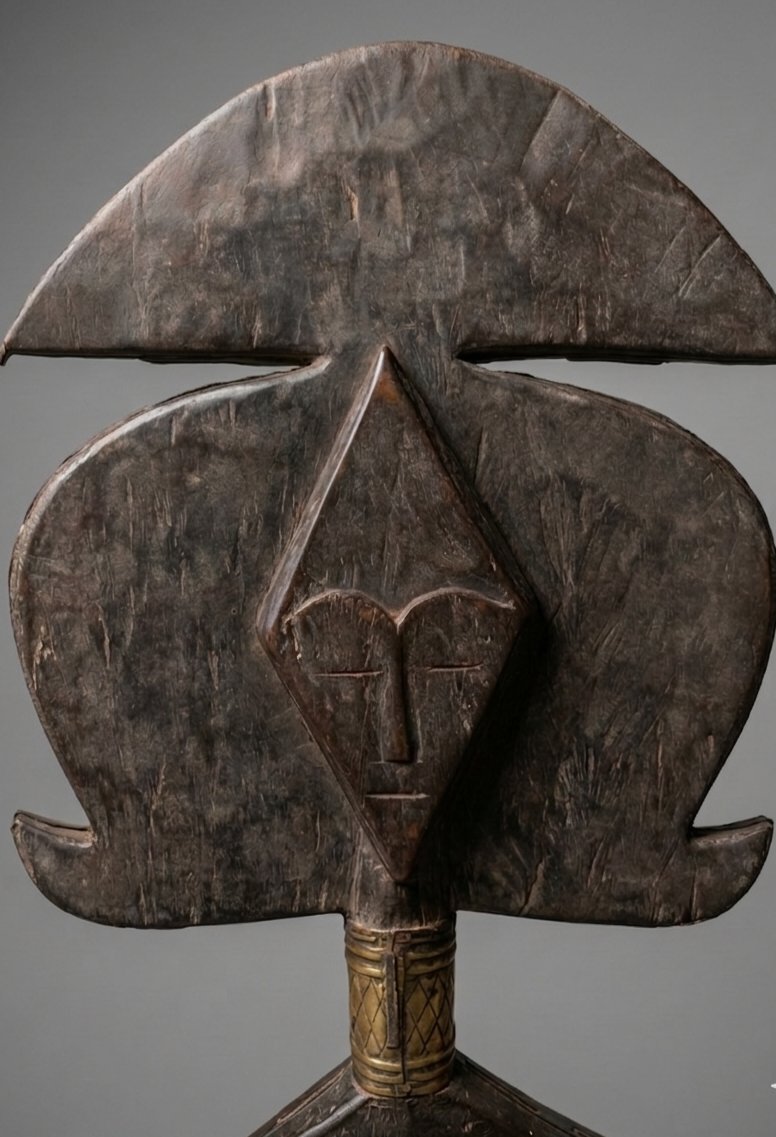

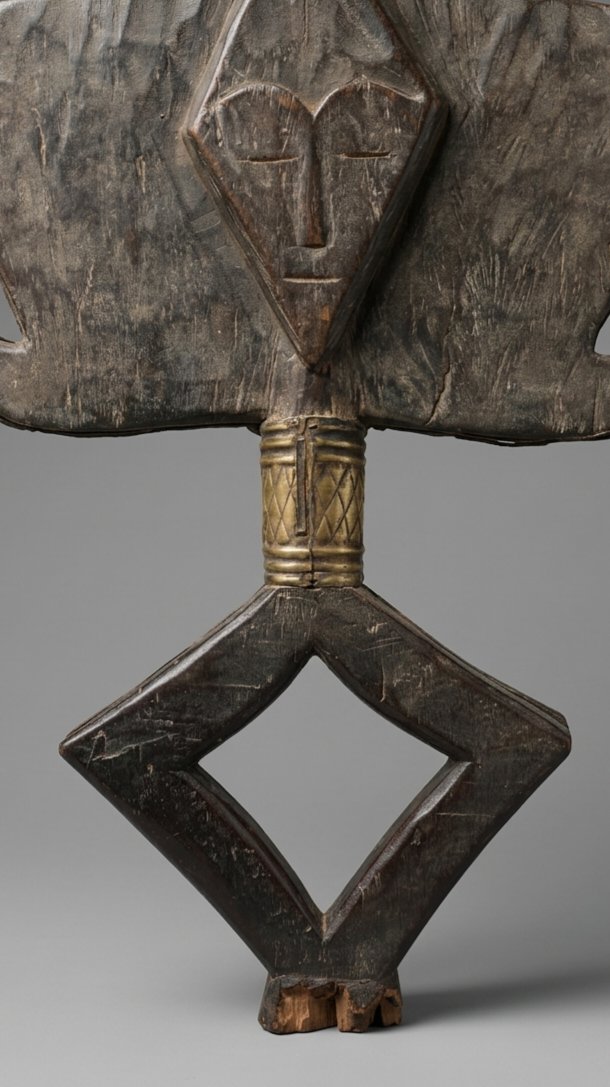

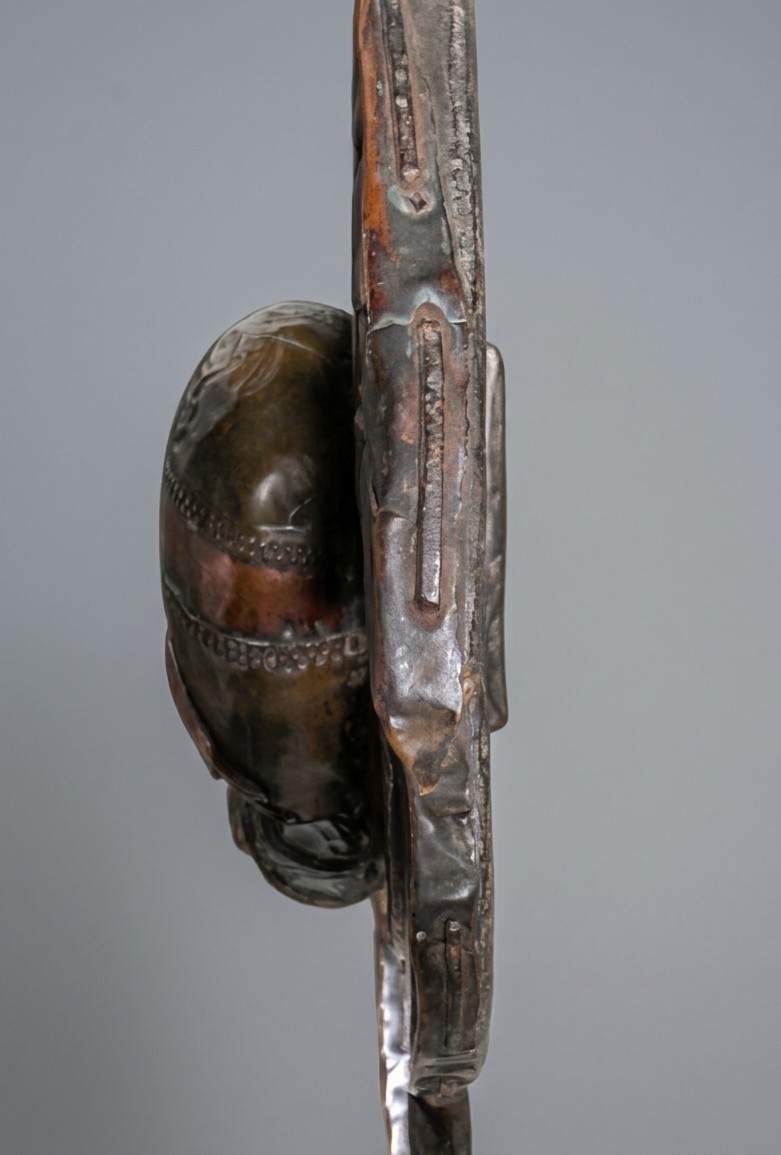
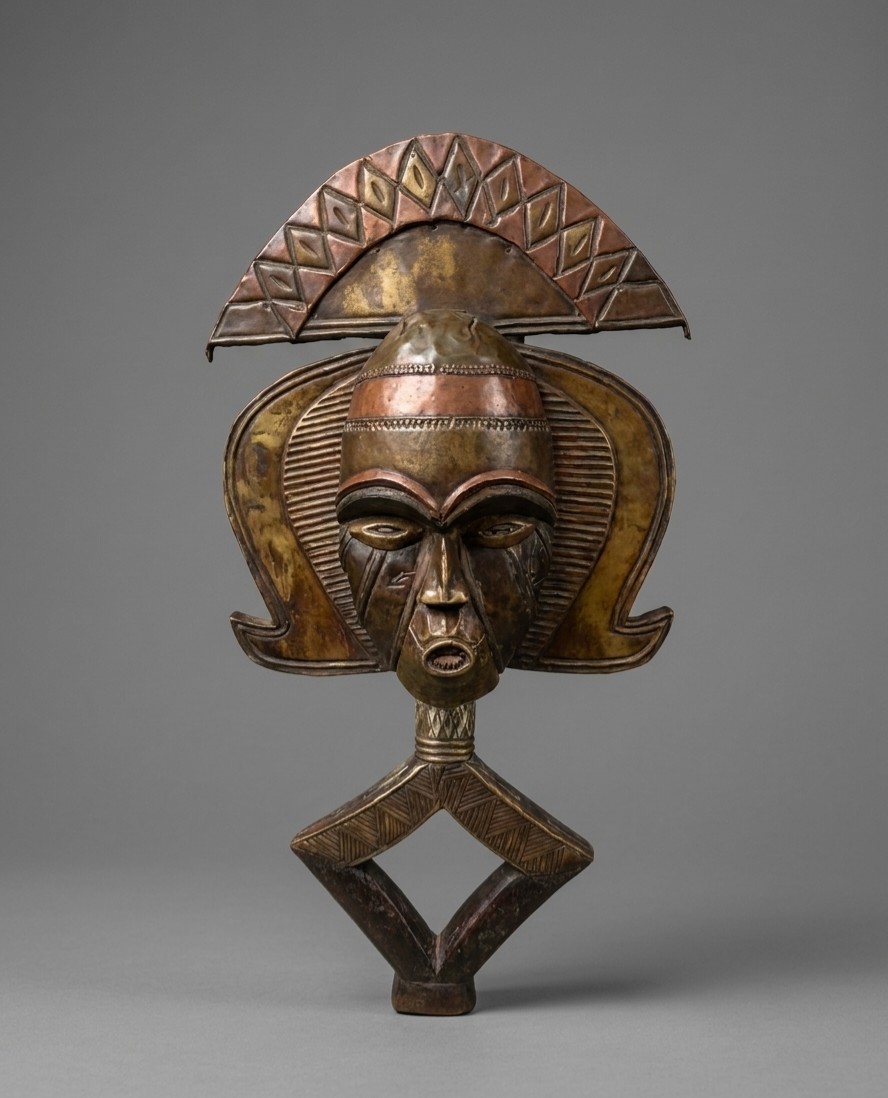


Kota-ndassa Mbulu-ngulu Reliquary, South Kata Region. Gabon
Kota-Ndasa mbulu-ngulu reliquary figure, South Kota region, Gabon
The Kota or Bakota (plural), along with the Mahongwe, live in eastern Gabon, and are renowned for their reliquaries.Initially, the Kota used to leave their dead exposed to the elements, in the forest.
Under the influence of neighboring tribes, they began to bury their chiefs, then exhume their bones (mainly the skull) and place them in bark boxes or baskets called bwété, on which a statue was placed.
Of these seldom-complete wicker boxes or baskets, what we know most is the carvings that topped them, intended to warn off invisible forces that might diminish the supernatural power of the relics.
"Such reliquaries were entrusted to clan chiefs who kept them hidden, sometimes harnessing the power of the relics for the benefit of the clan.This cult was known as bwiti by the Mahongwe and their neighbors, for whom the guardians were the "faces" of the bwété.Each image had its own name and specific powers. "Sources Musée Branly
During the clan's major bwiti ceremonies (bwett, bwété, mbulu-ngulu or mboy), in which only the initiated took part, the reliquaries were brought out into the open.
The Kota or Bakota (plural), along with the Mahongwe, live in eastern Gabon, and are renowned for their reliquaries.Initially, the Kota used to leave their dead exposed to the elements, in the forest.
Under the influence of neighboring tribes, they began to bury their chiefs, then exhume their bones (mainly the skull) and place them in bark boxes or baskets called bwété, on which a statue was placed.
Of these seldom-complete wicker boxes or baskets, what we know most is the carvings that topped them, intended to warn off invisible forces that might diminish the supernatural power of the relics.
"Such reliquaries were entrusted to clan chiefs who kept them hidden, sometimes harnessing the power of the relics for the benefit of the clan.This cult was known as bwiti by the Mahongwe and their neighbors, for whom the guardians were the "faces" of the bwété.Each image had its own name and specific powers. "Sources Musée Branly
During the clan's major bwiti ceremonies (bwett, bwété, mbulu-ngulu or mboy), in which only the initiated took part, the reliquaries were brought out into the open.
3 500 €
Period: 20th century
Style: Tribal Art
Condition: Excellent condition
Material: Solid wood
Length: 60 cm
Width: 30 cm
Height: 60cmune figure de reliquaire kota-ndasa mbulu-ngulu , région de kota sud, gabon
Reference (ID): 1737241
Availability: In stock
Print