THIS OBJECT WAS SOLD
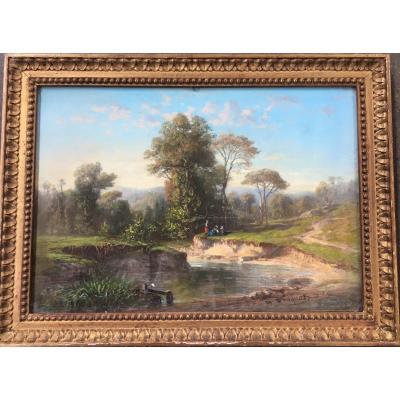
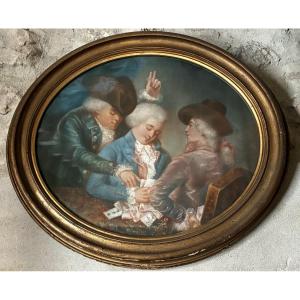
Louis Mathieu Verdilhan (1875-1928), Promenade Au Parc, Pastel On Paper, Signed And Framed
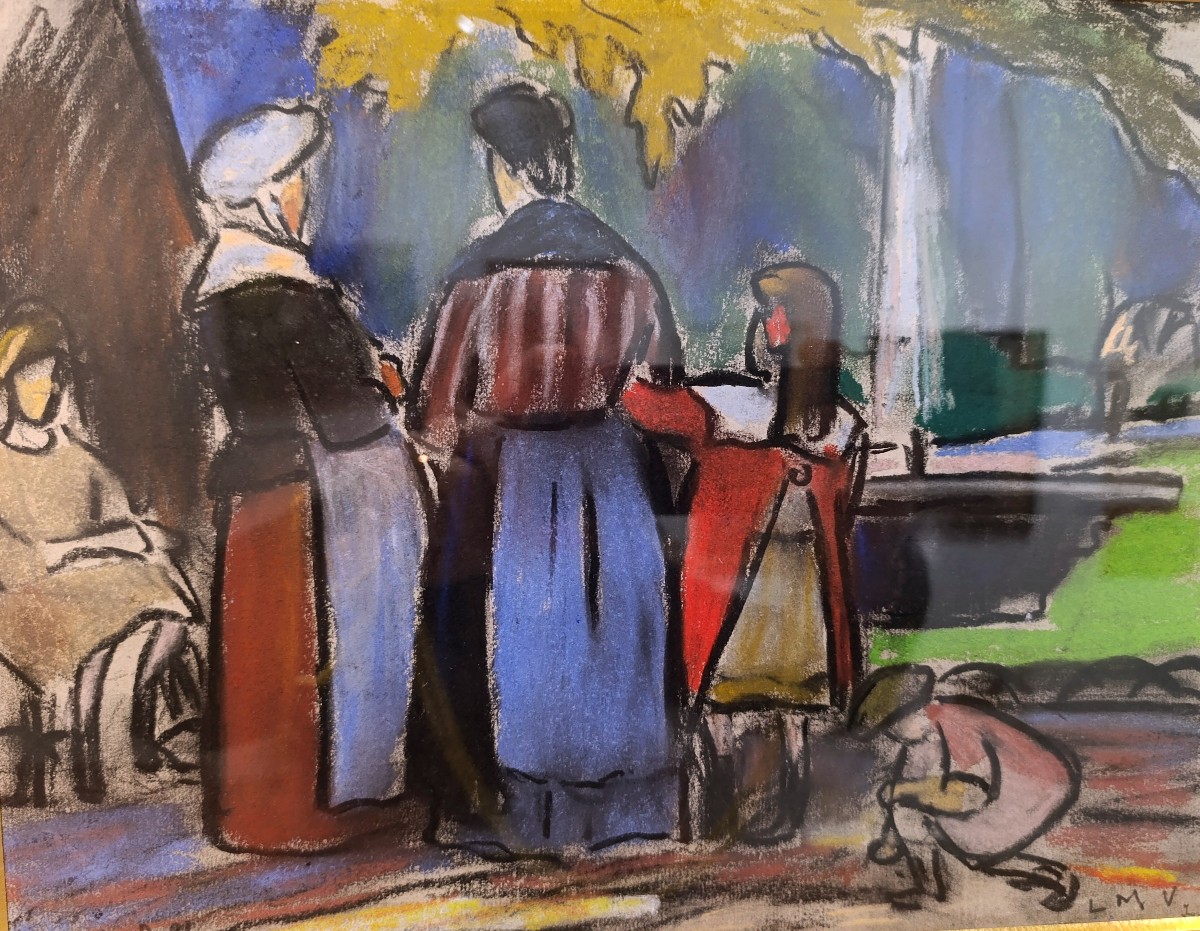


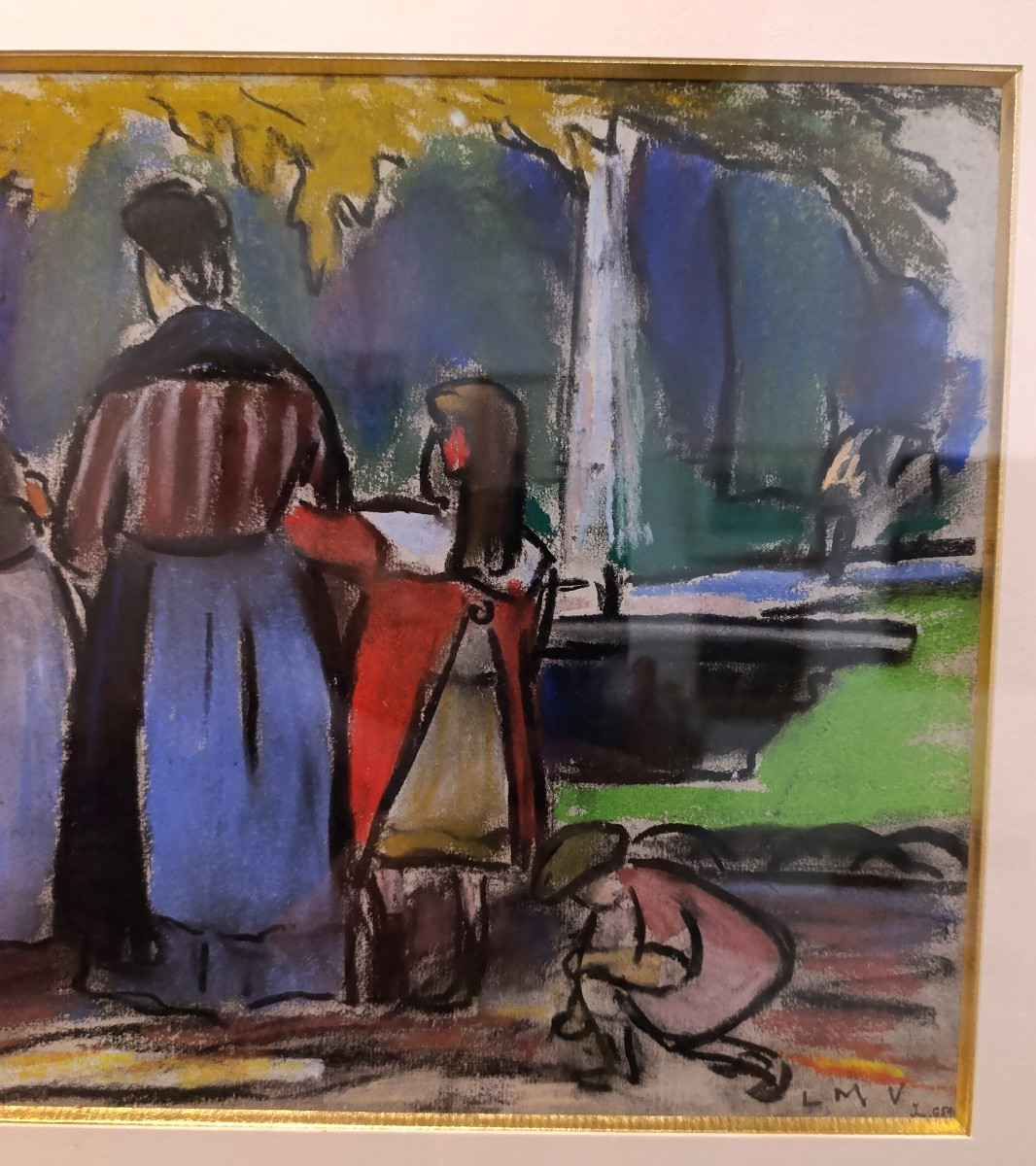
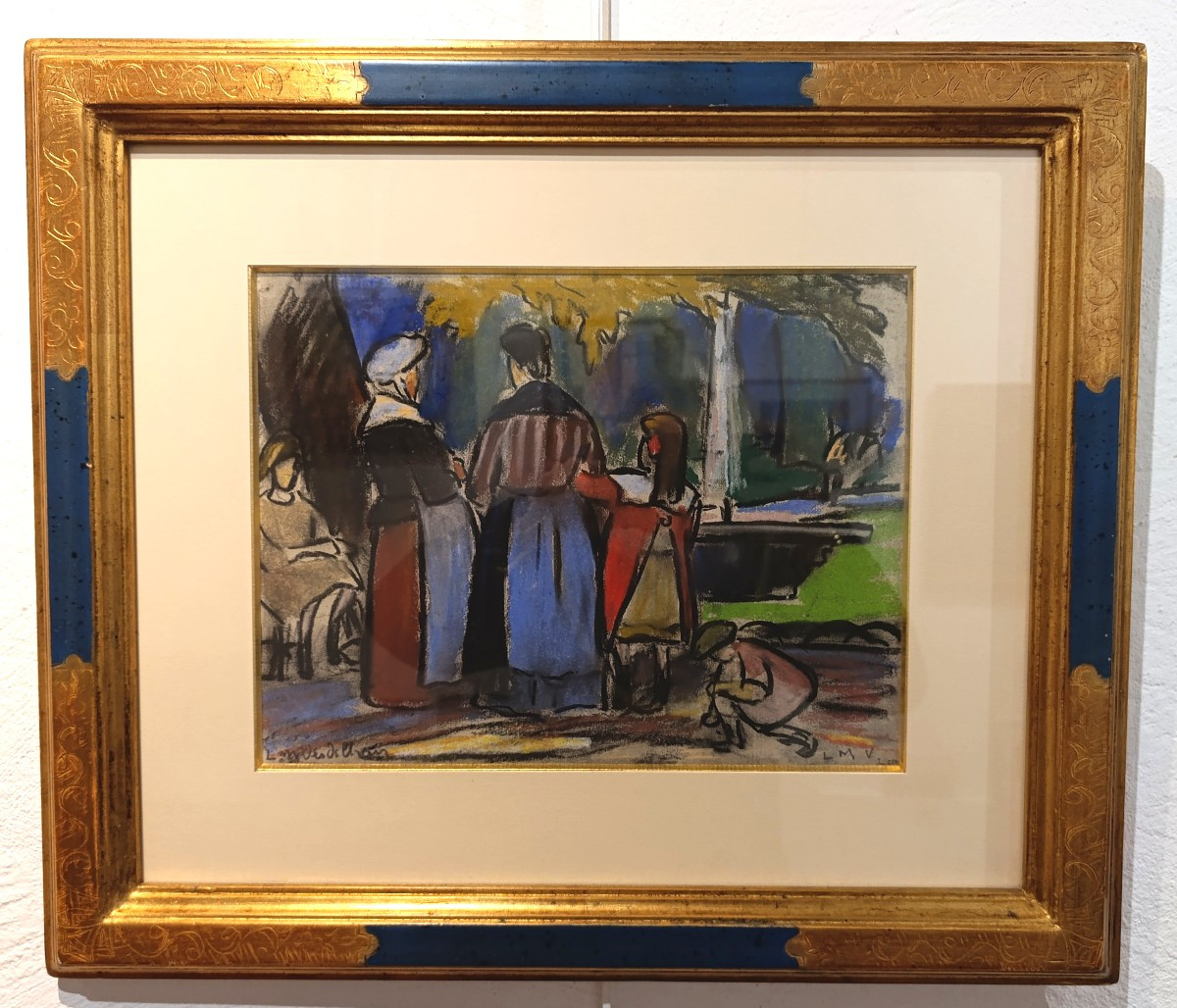


Beautiful pastel on paper, a walk in the Parc du Jardin Borely in Marseille, where the painter was originally from.
Framed painting, sold with certificate.
Louis Mathieu Verdilhan's family settled in the Chartreux district of Marseille in 1877. Born into a poor family, he was apprenticed to a house painter in 1890, but took up drawing with the help of Marseille painter Eugène Giraud (Marseille 1848-1937). In 1895, he opened a studio at no 12 rue Fort-Notre-Dame, which he kept throughout his life. In 1898, he moved to Paris for the first time, working for the decorator Adrien Karbowsky, who was responsible for some of the ornamentation in the Salon du Bois of the Pavillon des Arts Décoratifs at the 1900 Universal Exhibition, before returning to Marseille the following year. In 1902, he lost his left eye, but this did not prevent him from painting.
His artistic career began in 1902 in Marseille with an exhibition at rue Saint-Ferréol, followed in 1905 by an exhibition at the Palais des Architectes on avenue du Prado. He also exhibited in Paris at the Salon des Indépendants from 1906: Champs de coquelicots (1906), Prêtre et enfant de chœur (1910), Place de l'horloge (1911), Maison à l'amandier (1913), La cruche aux fleurs (1914)... From 1908, he also participated in the Salon d'Automne. In 1909, he spent six months at Versailles, where he produced numerous paintings. From 1910 to 1914, he occupied a studio at no 12 quai de Rive Neuve, in warehouses already occupied by painters Girieud and Lombard (later, from 1946 to 1993, the studio of painter François Diana). Mobilized in Toulon during the First World War, Louis Mathieu Verdilhan rubbed shoulders with Albert Marquet, who influenced him, as well as André Suarès and Antoine Bourdelle.
For the city of Marseille, he painted a panel for the Opéra de Marseille: the canvas depicts Marseille's July 14th celebration, and was much criticized when the opera house was inaugurated
Passionate about the Vieux-Port, he painted over 130 representations of it between 1913 and 1920.
He died in December 1928.
Framed painting, sold with certificate.
Louis Mathieu Verdilhan's family settled in the Chartreux district of Marseille in 1877. Born into a poor family, he was apprenticed to a house painter in 1890, but took up drawing with the help of Marseille painter Eugène Giraud (Marseille 1848-1937). In 1895, he opened a studio at no 12 rue Fort-Notre-Dame, which he kept throughout his life. In 1898, he moved to Paris for the first time, working for the decorator Adrien Karbowsky, who was responsible for some of the ornamentation in the Salon du Bois of the Pavillon des Arts Décoratifs at the 1900 Universal Exhibition, before returning to Marseille the following year. In 1902, he lost his left eye, but this did not prevent him from painting.
His artistic career began in 1902 in Marseille with an exhibition at rue Saint-Ferréol, followed in 1905 by an exhibition at the Palais des Architectes on avenue du Prado. He also exhibited in Paris at the Salon des Indépendants from 1906: Champs de coquelicots (1906), Prêtre et enfant de chœur (1910), Place de l'horloge (1911), Maison à l'amandier (1913), La cruche aux fleurs (1914)... From 1908, he also participated in the Salon d'Automne. In 1909, he spent six months at Versailles, where he produced numerous paintings. From 1910 to 1914, he occupied a studio at no 12 quai de Rive Neuve, in warehouses already occupied by painters Girieud and Lombard (later, from 1946 to 1993, the studio of painter François Diana). Mobilized in Toulon during the First World War, Louis Mathieu Verdilhan rubbed shoulders with Albert Marquet, who influenced him, as well as André Suarès and Antoine Bourdelle.
For the city of Marseille, he painted a panel for the Opéra de Marseille: the canvas depicts Marseille's July 14th celebration, and was much criticized when the opera house was inaugurated
Passionate about the Vieux-Port, he painted over 130 representations of it between 1913 and 1920.
He died in December 1928.
Explore similar pieces and discover your ideal find:
Pastel Art