THIS OBJECT WAS SOLD
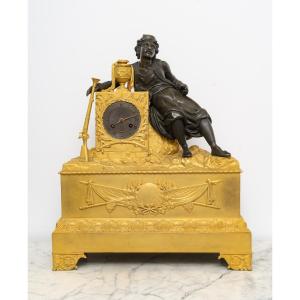
Louis XVI Mantel Signed Ferdinand Berthoud, Circa 1870
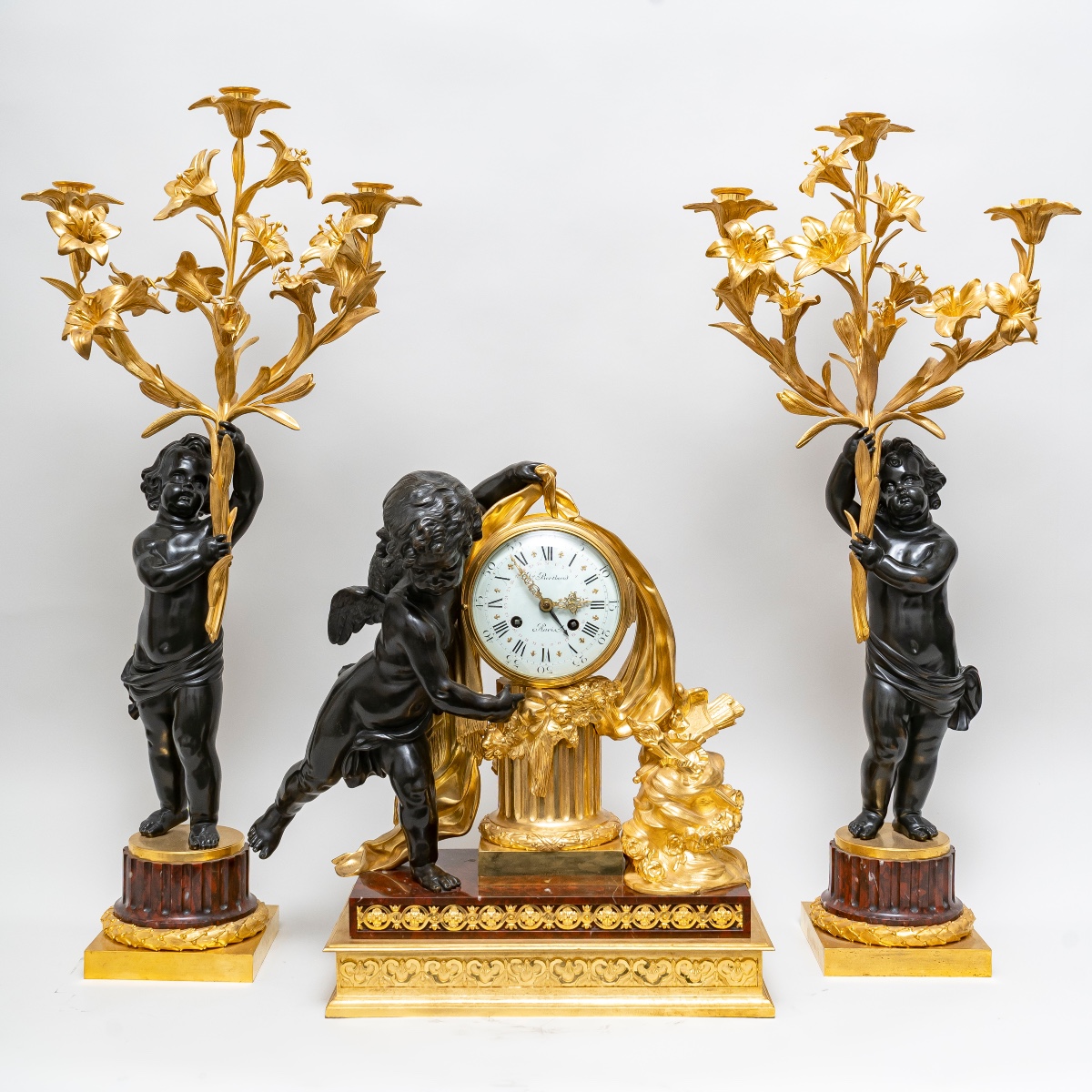





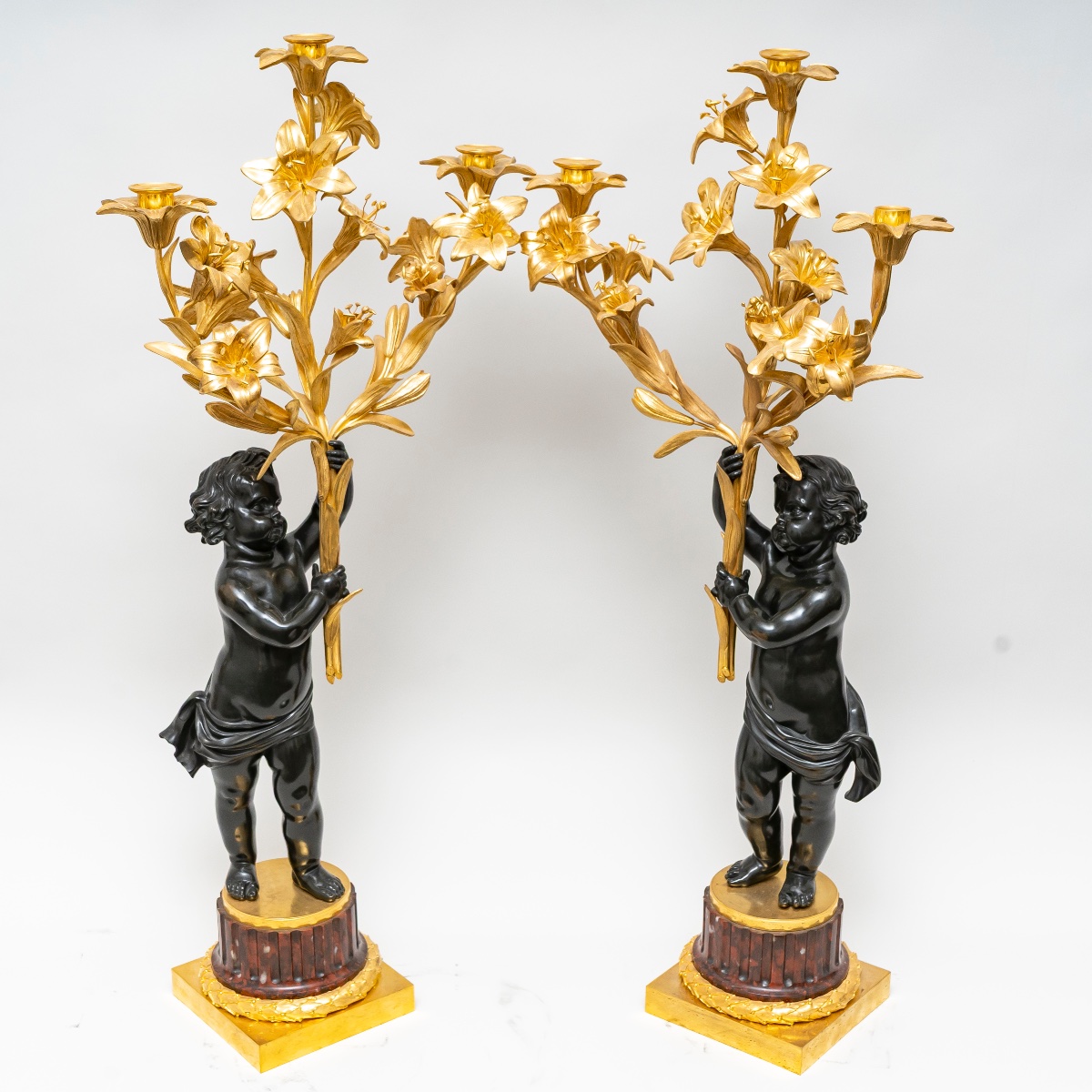

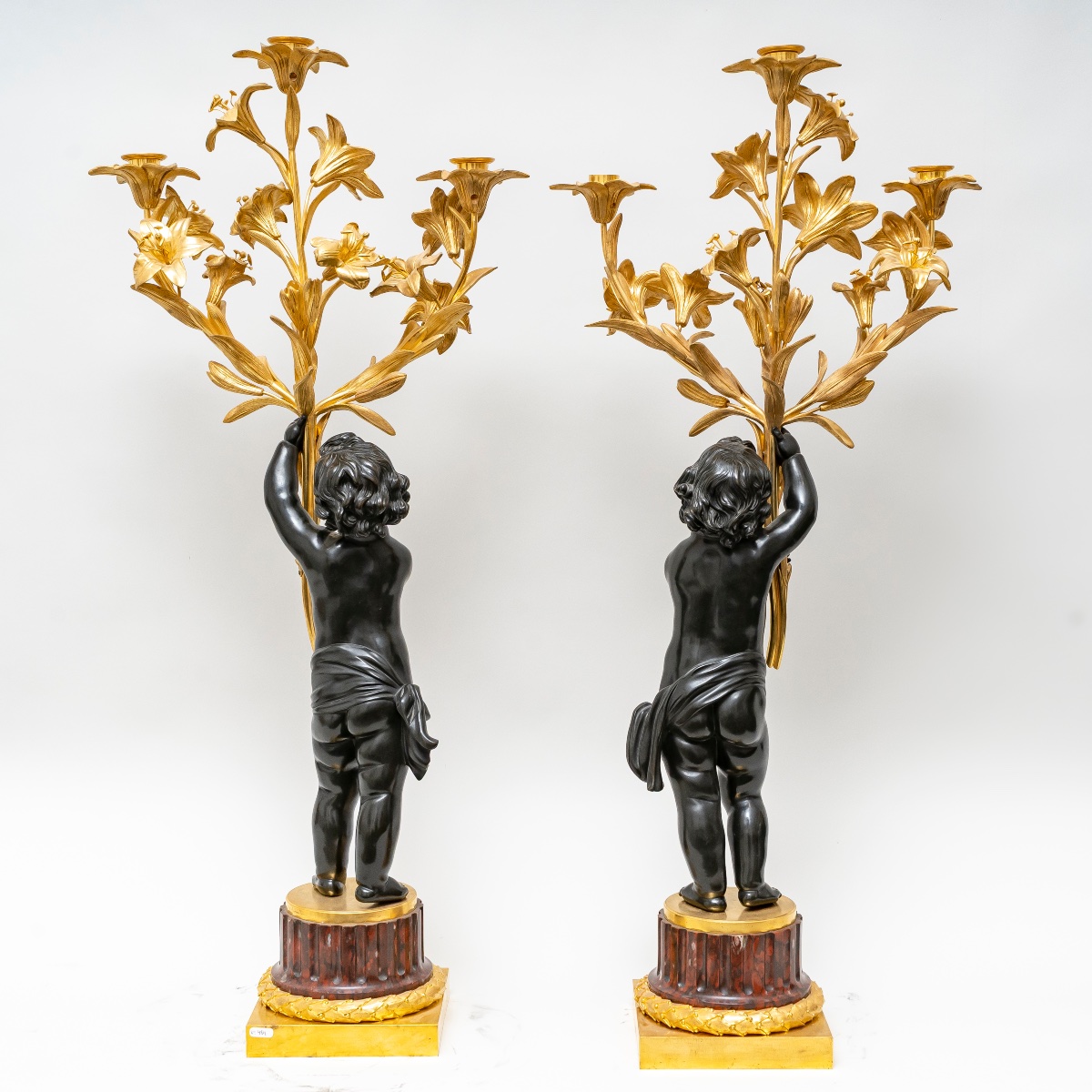
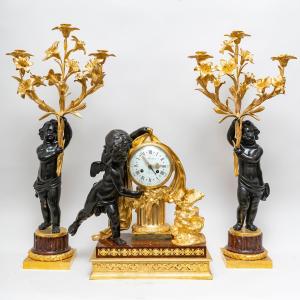


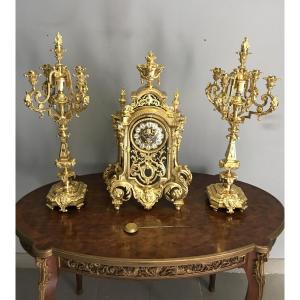
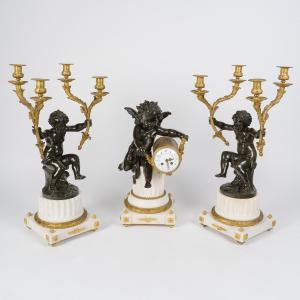
Important mantelpiece, consisting of a clock and two 3-light candelabras.
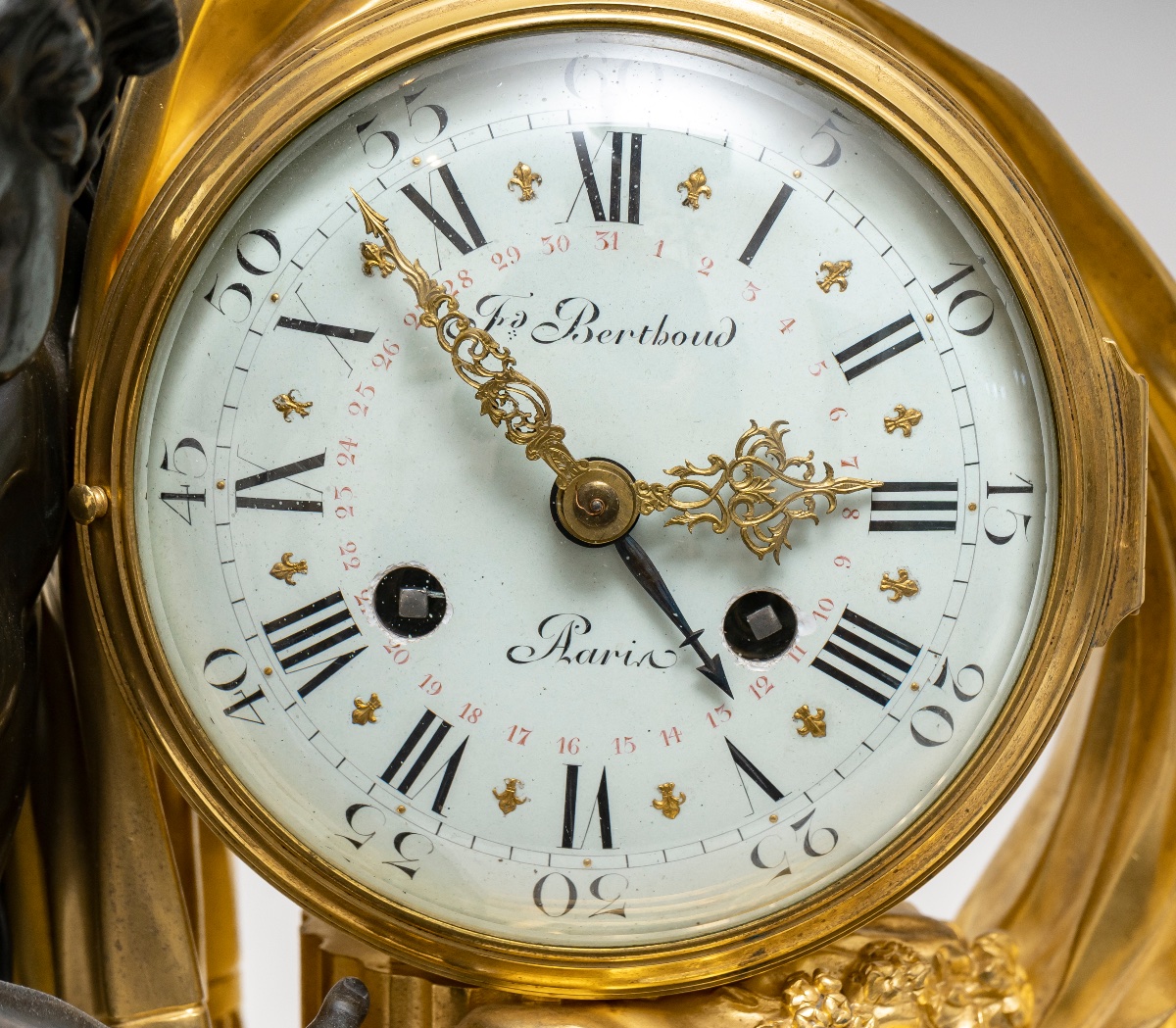
The beautifully enamelled dial is signed by F. Berthoud Paris.
French workmanship.
Circa 1870. Berthoud Paris.
French work.
Circa 1870.
Dimensions
Pendulum
Height 50 cm
Length 54 cm
Depth 22 cm
Candelabra
Height 87 cm
Length 40 cm
Depth 19 cm
Description
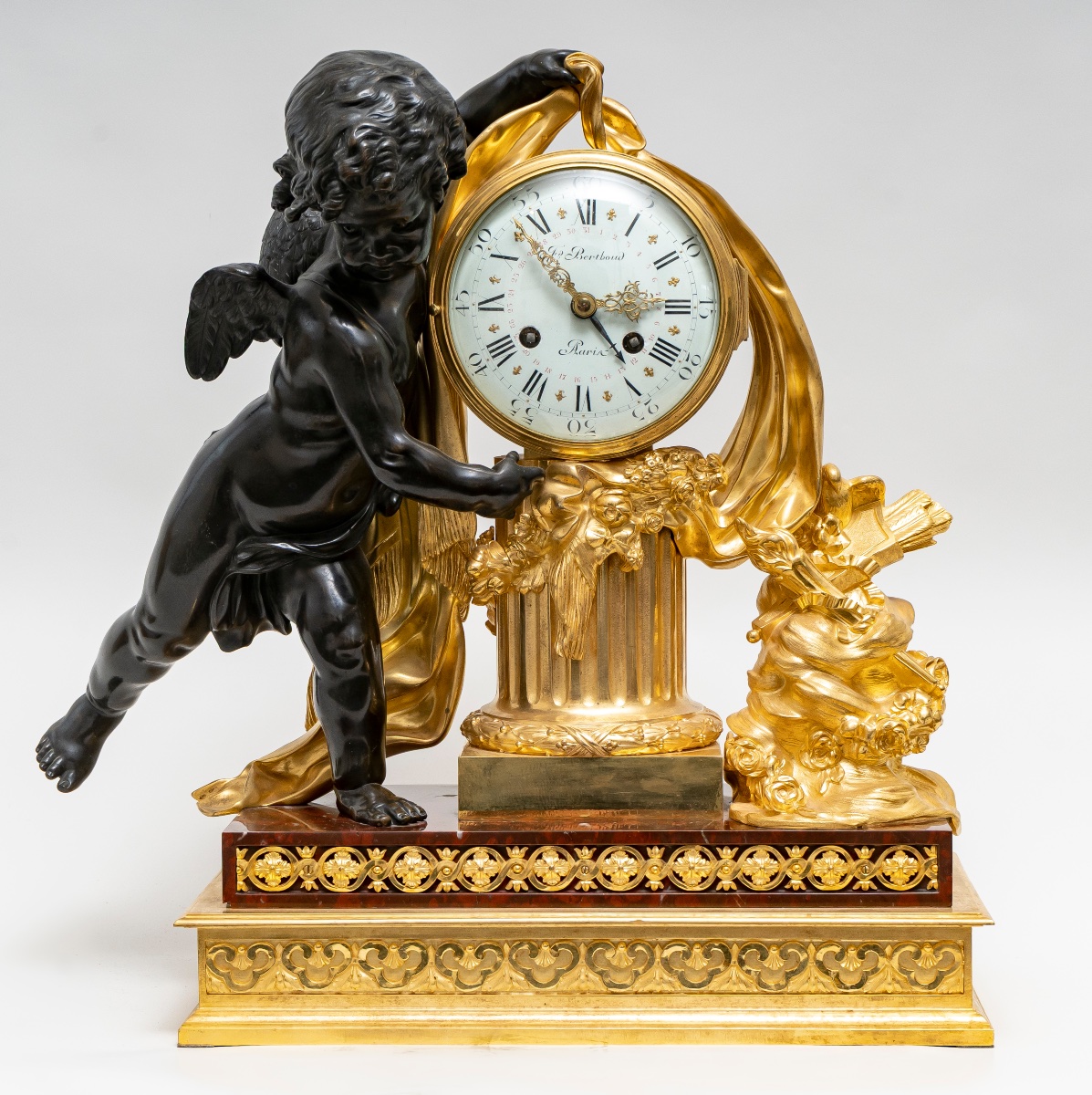
The patinated and gilded bronze clock depicts Cupid veiling the passing of Time. He points to his attributes, aflambeau and quiver, supported by a flowery cloud.
The ensemble rests on a rectangular griotte marble base, underlined at the top by a double gilded bronze frieze with flower and interlace motifs, and at the bottom by a frieze of alternating spandrels and acanthus.
The patinated and gilded bronze candelabra represent two putti holding 3 fleur-de-lys ending in 3 feux de lumières.
The beautifully enamelled dial is signed by F. Berthoud Paris.
French workmanship.
Circa 1870. Berthoud Paris.
French work.
Circa 1870.
Dimensions
Pendulum
Height 50 cm
Length 54 cm
Depth 22 cm
Candelabra
Height 87 cm
Length 40 cm
Depth 19 cm
Description
The patinated and gilded bronze clock depicts Cupid veiling the passing of Time. He points to his attributes, aflambeau and quiver, supported by a flowery cloud.
The ensemble rests on a rectangular griotte marble base, underlined at the top by a double gilded bronze frieze with flower and interlace motifs, and at the bottom by a frieze of alternating spandrels and acanthus.
The patinated and gilded bronze candelabra represent two putti holding 3 fleur-de-lys ending in 3 feux de lumières.
The house of Ferdinand Berthoud
- Foundation: The house of Berthoud was founded in the 18th century by Ferdinand Berthoud (1727-1807), a naturalized French Swiss watchmaker.
- Fame: Ferdinand Berthoud is famous for his extremely accurate marine chronometers, which were used by the French navy. He was also the King's watchmaker, which gave him a prestigious status recognized throughout the country.
- Speciality: The house specialized in precision clocks and enamelled dials. Its timepieces are distinguished by the finesse of the mechanism, the quality of the materials and the elegance of the dials.
- Continuation: After the death of Ferdinand Berthoud in 1807, the company continued its activity throughout the 19th century. The "Berthoud" name continued to be used by its Parisian workshops, which perpetuated the company's know-how, techniques and reputation. Berthoud clocks from the 19th century are still signed Ferdinand Berthoud in homage to the founder.
- Style and influence: Berthoud clocks from the 19th century are part of the classical and neoclassical Parisian style, then of the refined aesthetic of the Second Empire, combining decorative elegance and horological precision.
- Collection and interest: Today, Berthoud clocks, whether from the 18th or 19th century, are highly sought-after by collectors for their mechanical quality, history and artistic value.
Explore similar pieces and discover your ideal find:
Garniture Clock Sets