THIS OBJECT WAS SOLD
Domenico Mossello, Triptych “cycle Of The Arts,” Oil On Canvas, Signed, 1874





Domenico Mossello (Turin, 19th Century)
Oil on canvas, 1874 (one canvas signed and dated)
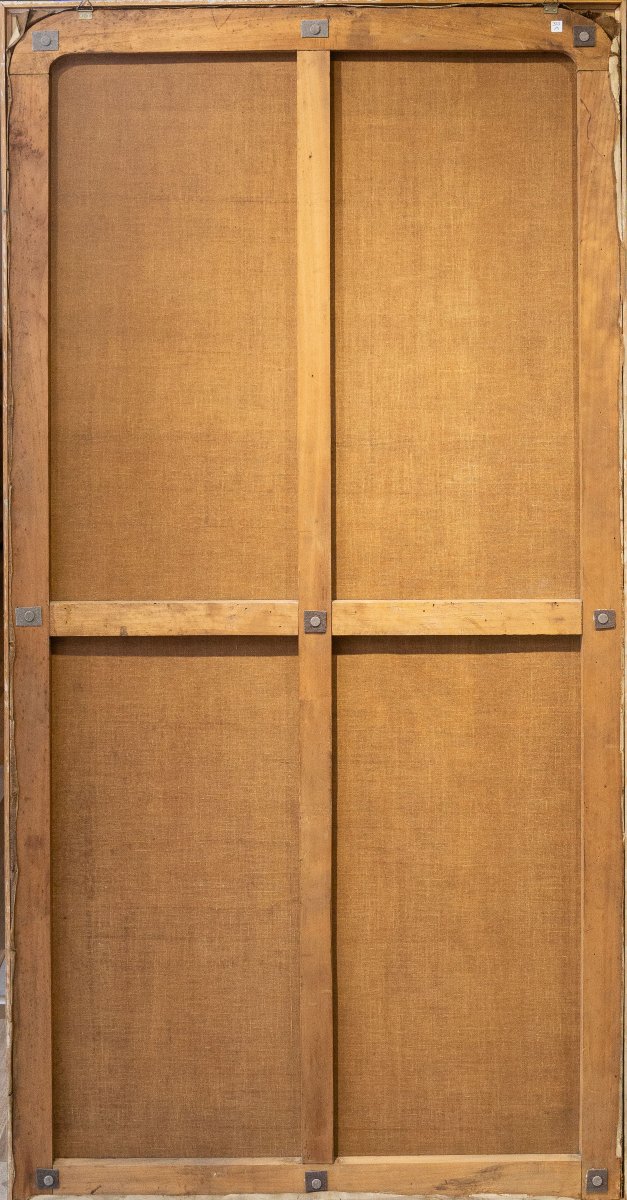
Dimensions: Canvas 197 × 101 cm; Framed 199 × 103 cm
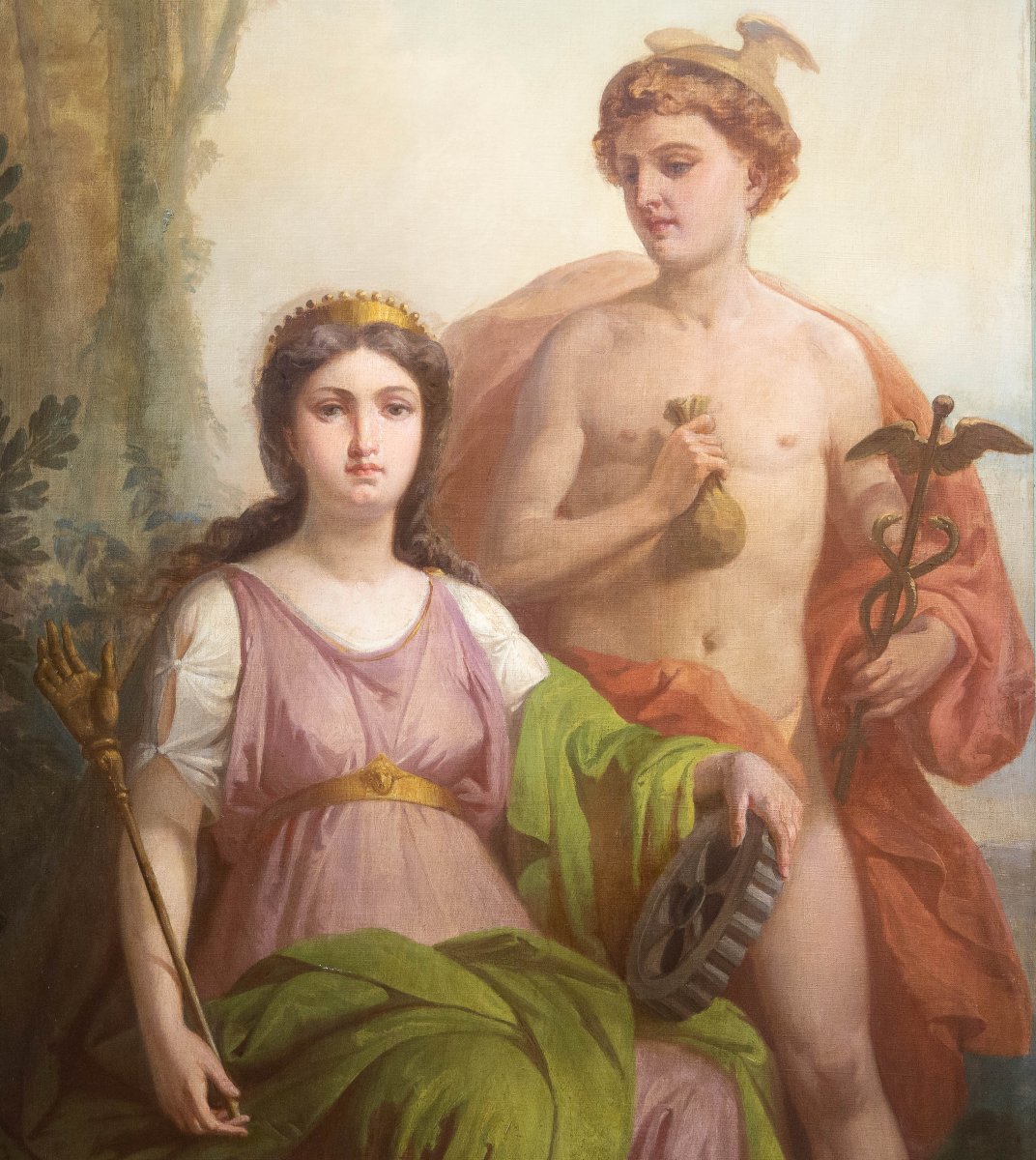
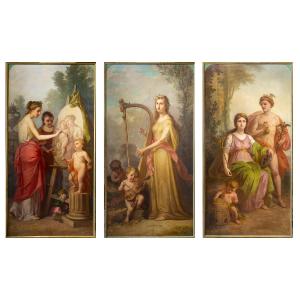
DescriptionThese three vertical and harmoniously coordinated compositions feature elegant, idealized female figures set within classical landscapes, enriched by the presence of cherubs (putti) and symbolic attributes. The scenographic layout and chromatic softness reflect a full adherence to the academic teachings of the Turin school.
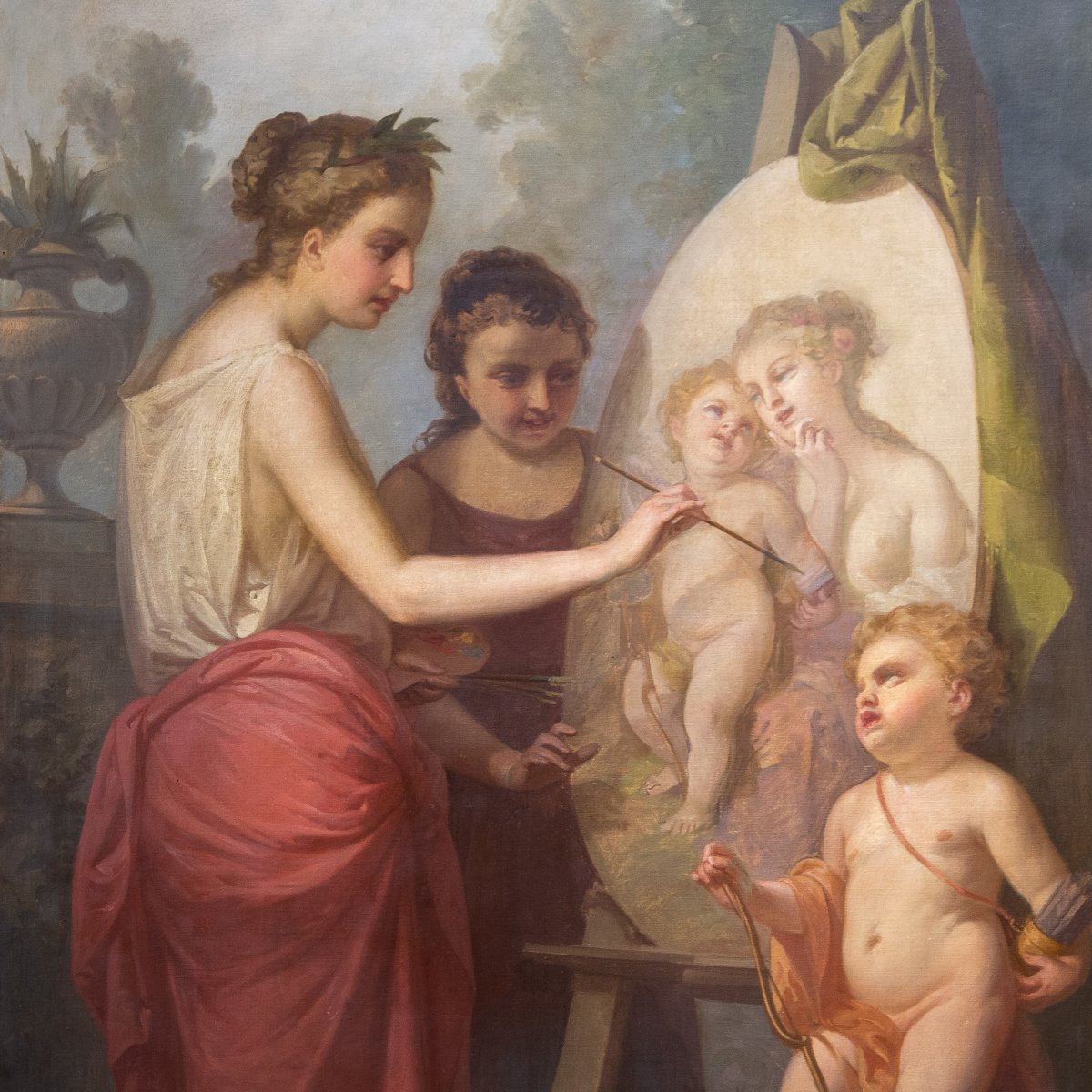
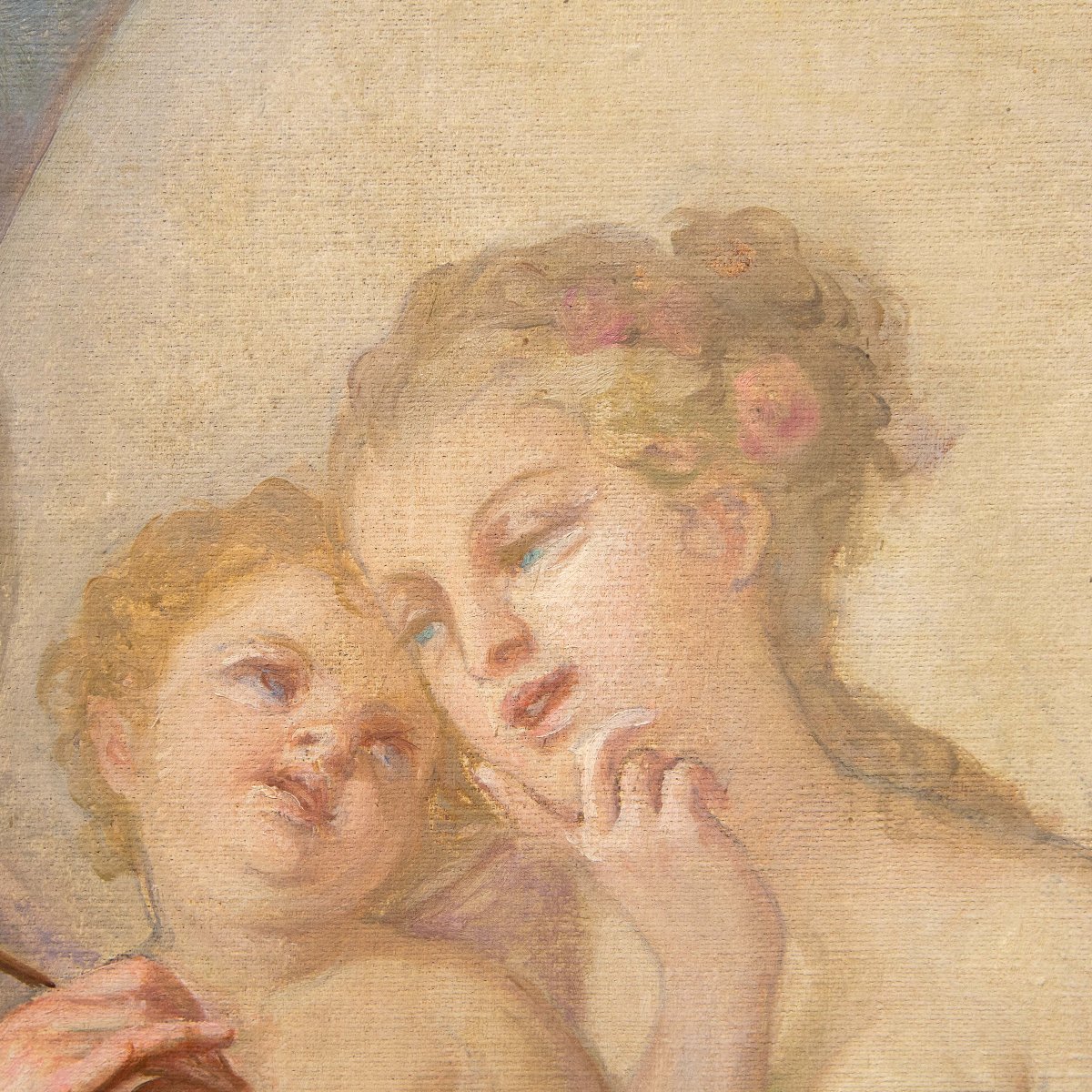
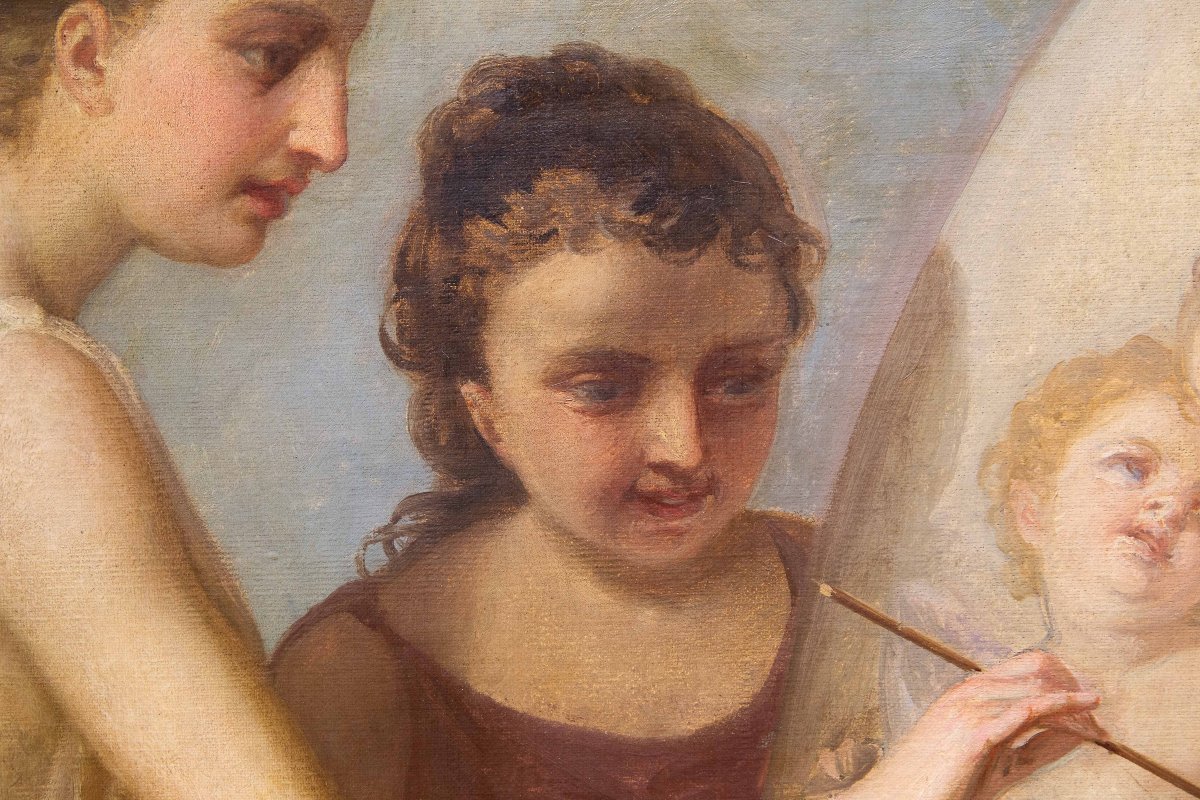
Painting: Signed and dated 1874, this canvas introduces the cycle. A young artist, draped in rich red fabric, is captured while painting a mythological scene on an easel. Beside her, a young girl observes intently, evoking the theme of the transmission of knowledge. A putto on a pedestal serves as a living model, while the luminous rendering and meticulous floral details lend the scene an intimate, scholarly character.
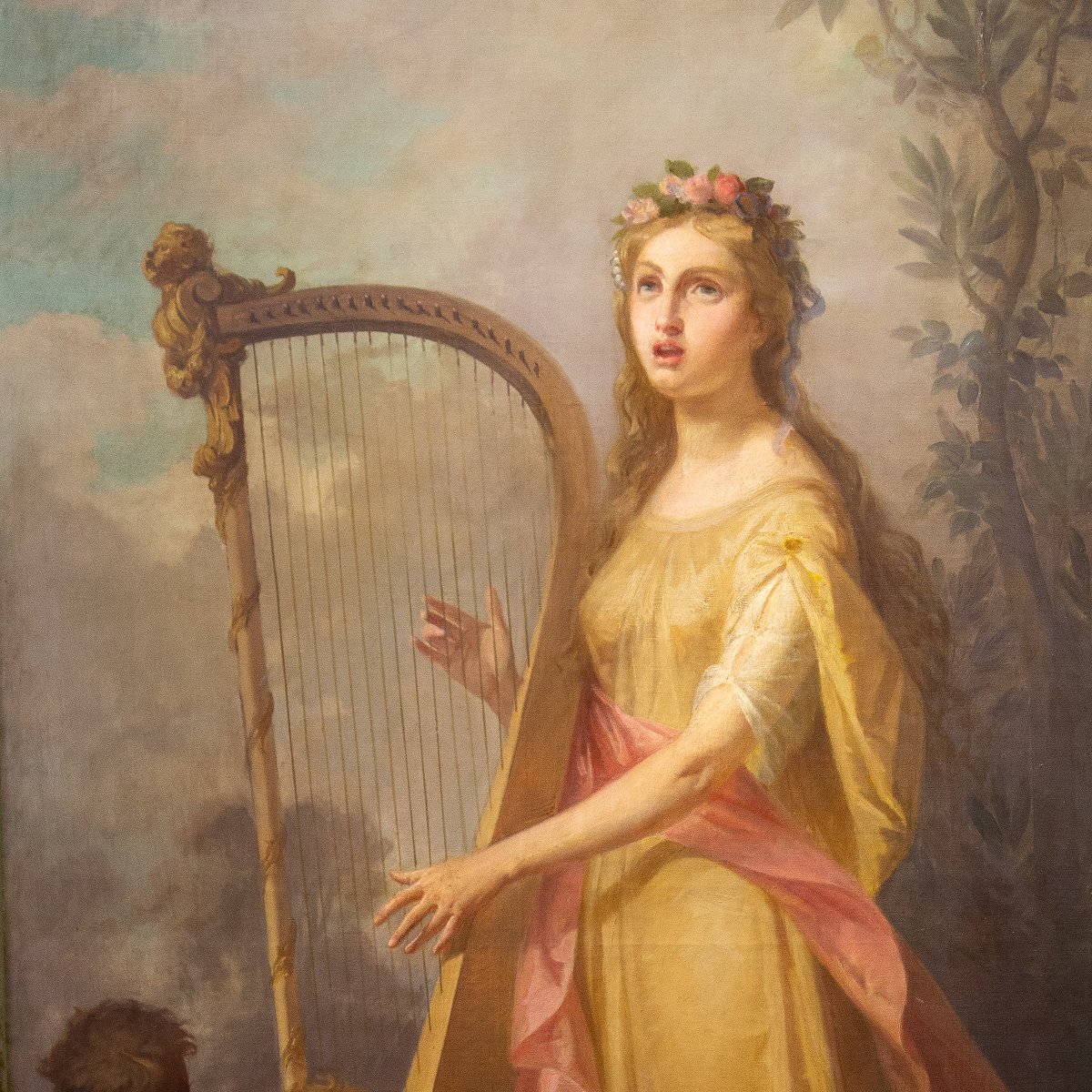
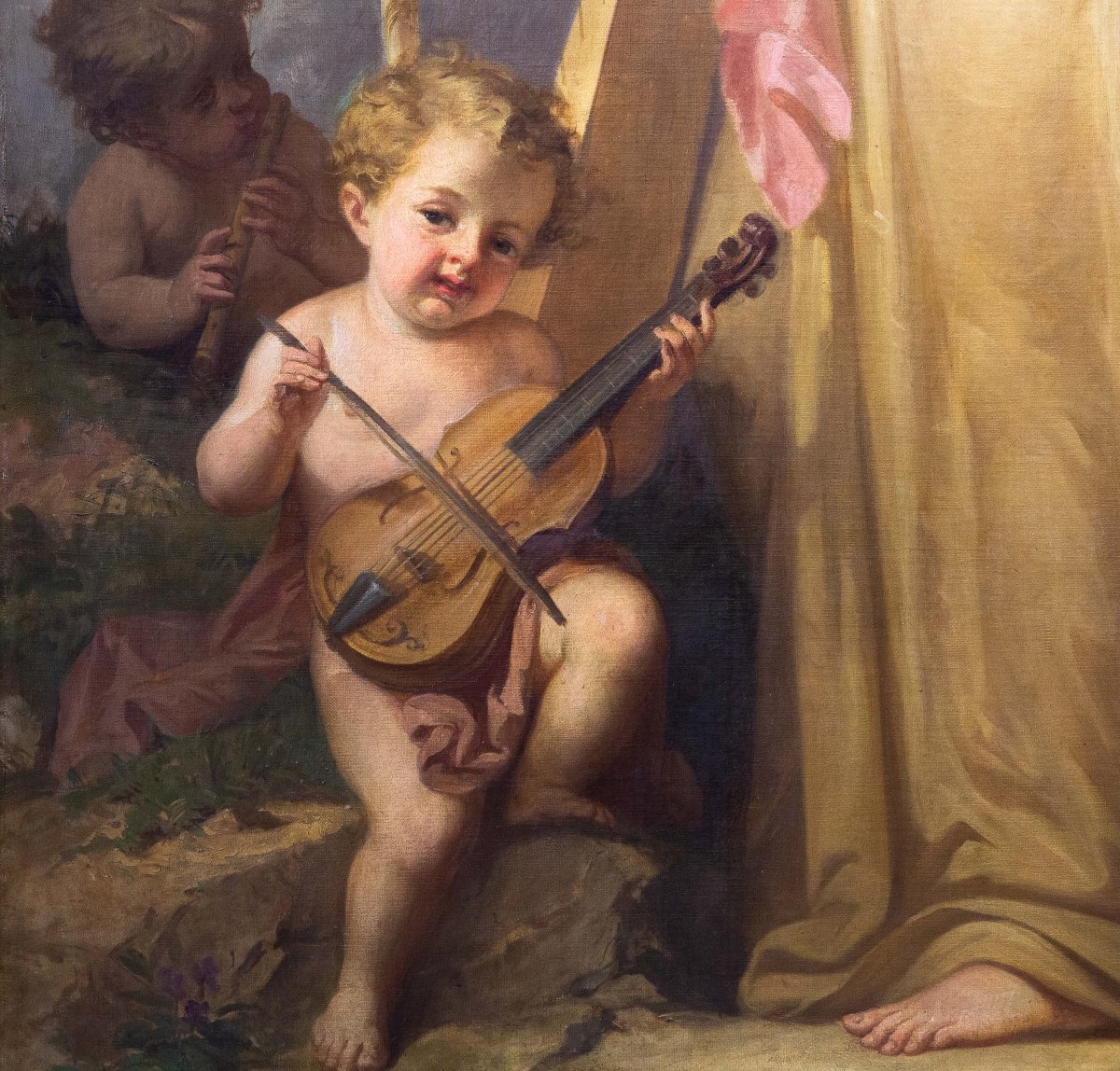
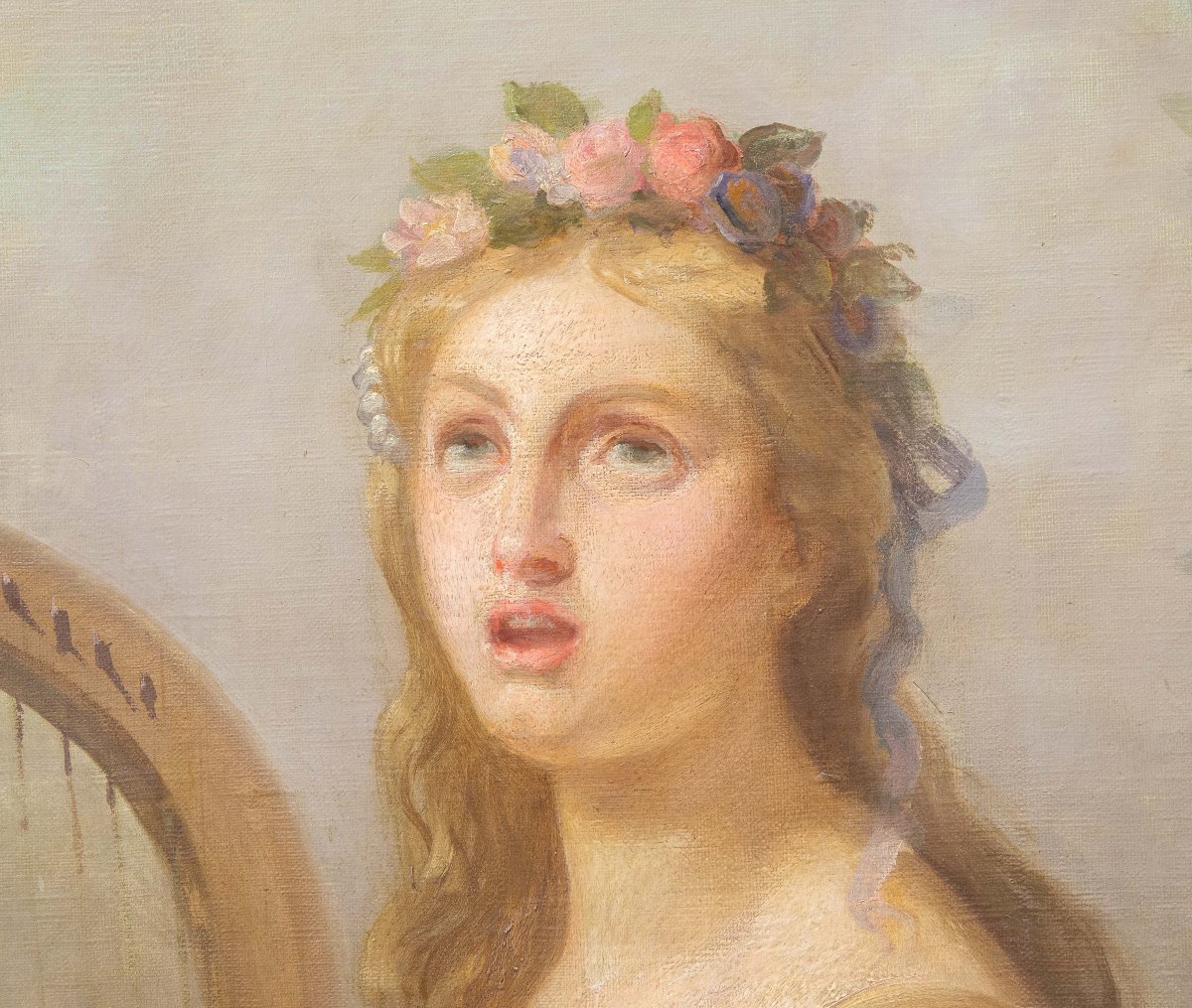
Music: Positioned at the center of the triptych, this piece is distinguished by a greater luminous opening and a suspended atmosphere. The female figure, crowned with flowers and enveloped in a fluid golden gown, stands beside a harp—the ultimate symbol of harmony. At her feet, a putto plays a stringed instrument, reinforcing the musical theme and introducing a delicate rhythmic movement.
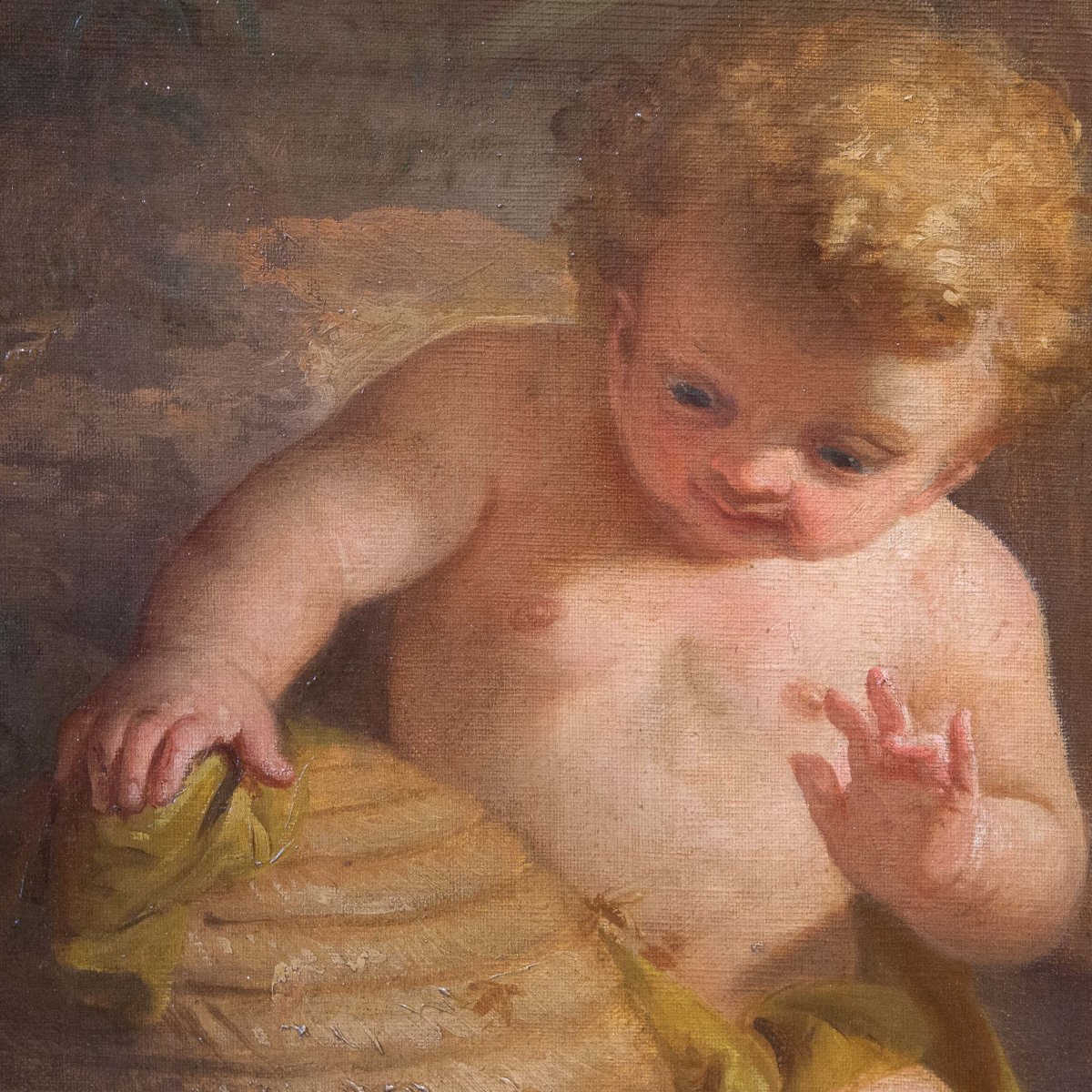
The Third Allegory (Poetry or Theater): Likely representing Poetry or Theater, this canvas depicts a seated female figure flanked by a youth of classical descent. The iconographic attributes—including theatrical elements and symbols of industriousness such as the beehive—suggest a complex meaning tied to the intellectual and moral dimensions of the arts. The composition is more recollected and meditative, featuring a warm, enveloping color palette.
This cycle bears witness to the stylistic maturity of Domenico Mossello, the eldest son of a family of artists and an active figure within the Royal Albertina Academy, where he served on the fresco school commission in 1876. His academic training is evident in the firmness of the draftsmanship, the balanced construction of the figures, and the refined chromatic orchestration.
The work aligns with his decorative career, which includes the large fresco (1861) in Palazzo Carignano (seat of the Subalpine Parliament) and his contributions to the ornamental cycles of the Reggia di Venaria Reale.
Condition and ProvenanceGiven their conception, scale, and executive quality, these three canvases were likely intended for a prestigious setting—noble salons or institutional halls—where the theme of the Arts served a celebratory and cultural purpose. They represent an exquisite example of 19th-century Piedmontese allegorical painting.
Explore similar pieces and discover your ideal find:
Other Paintings