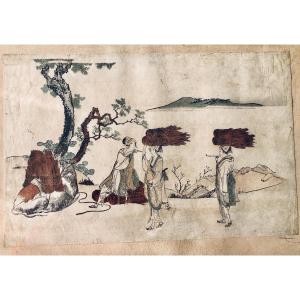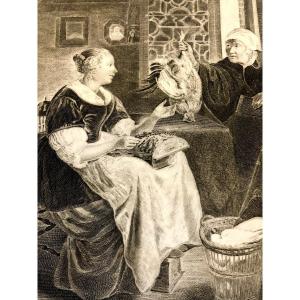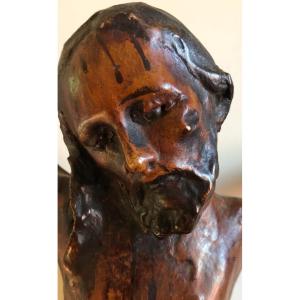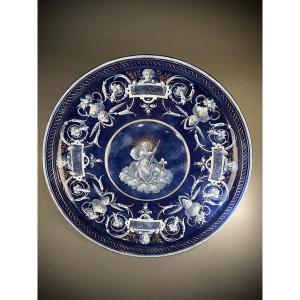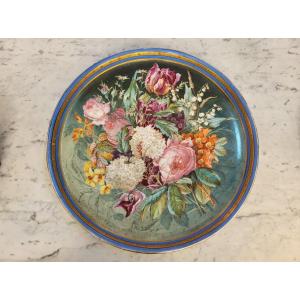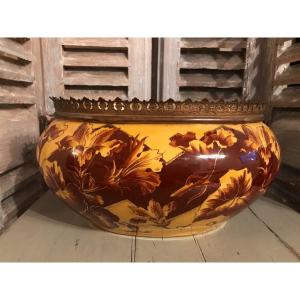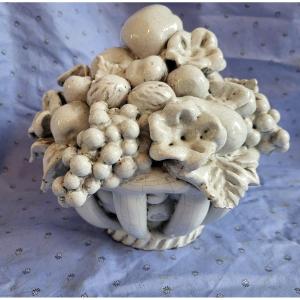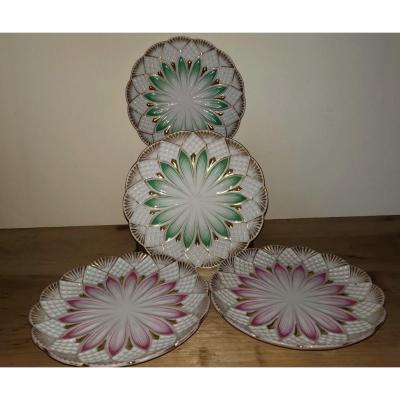

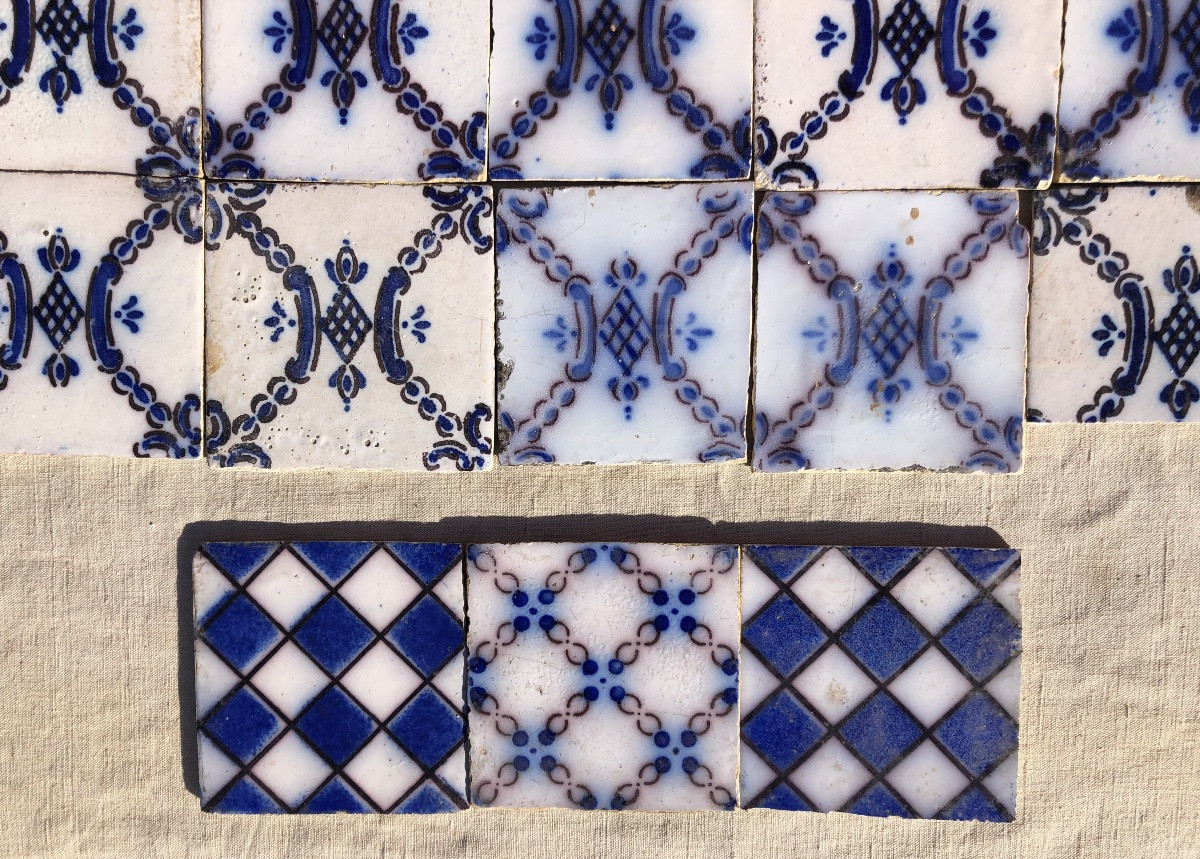
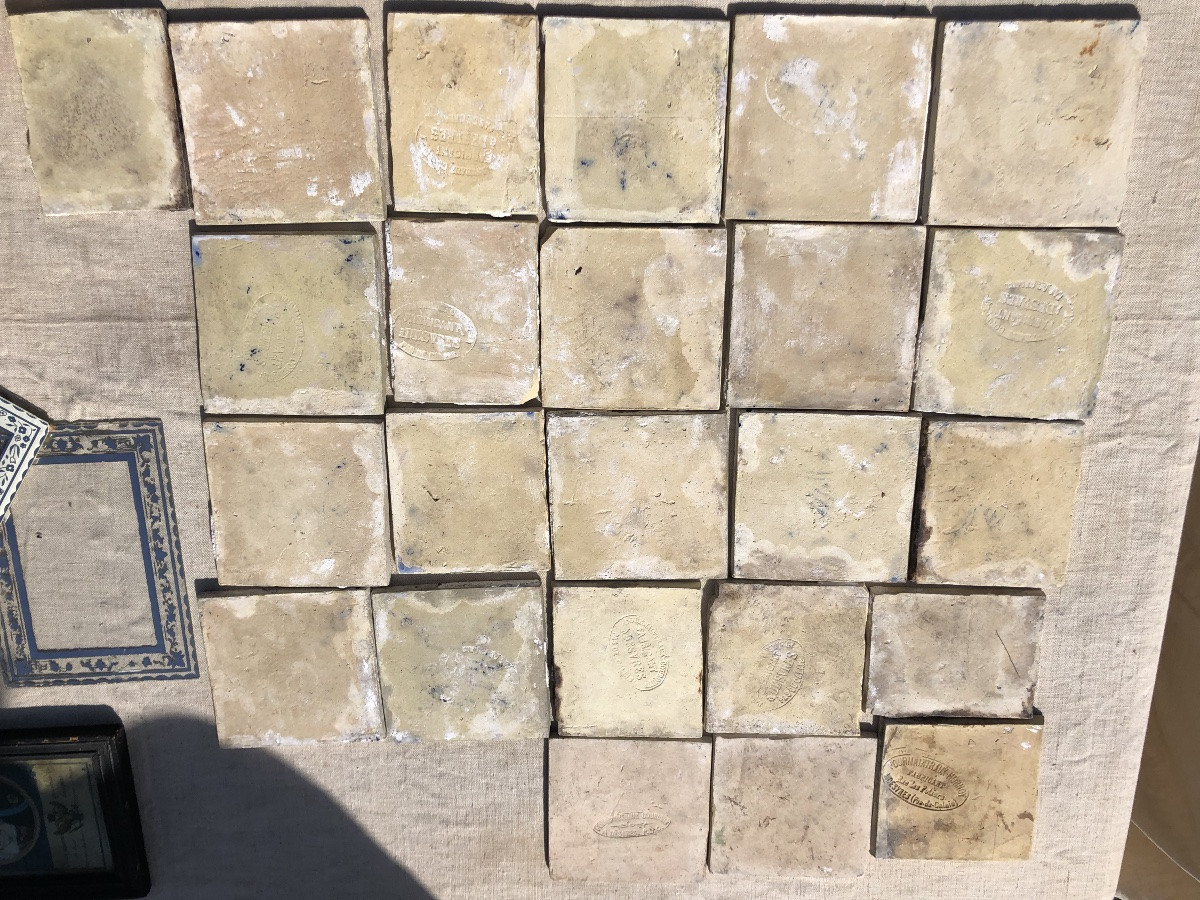

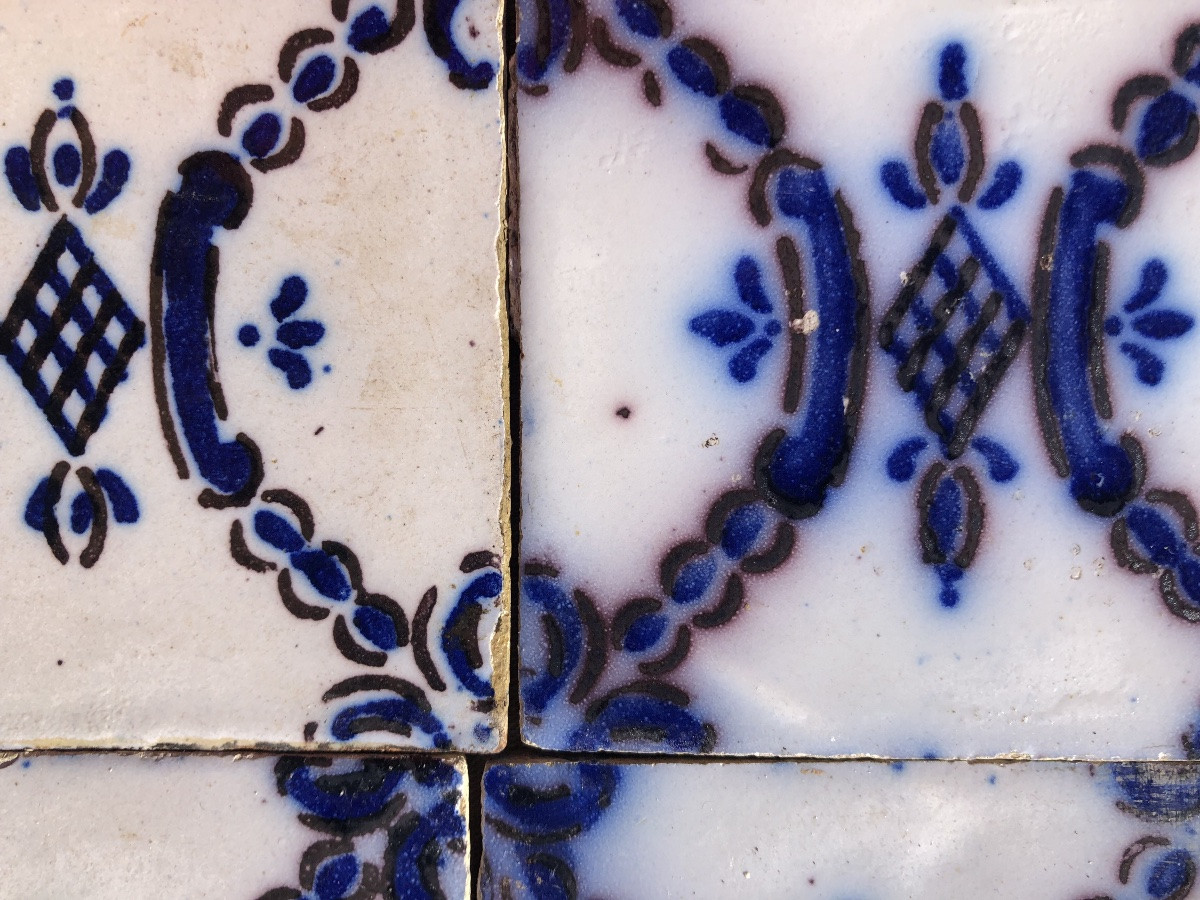
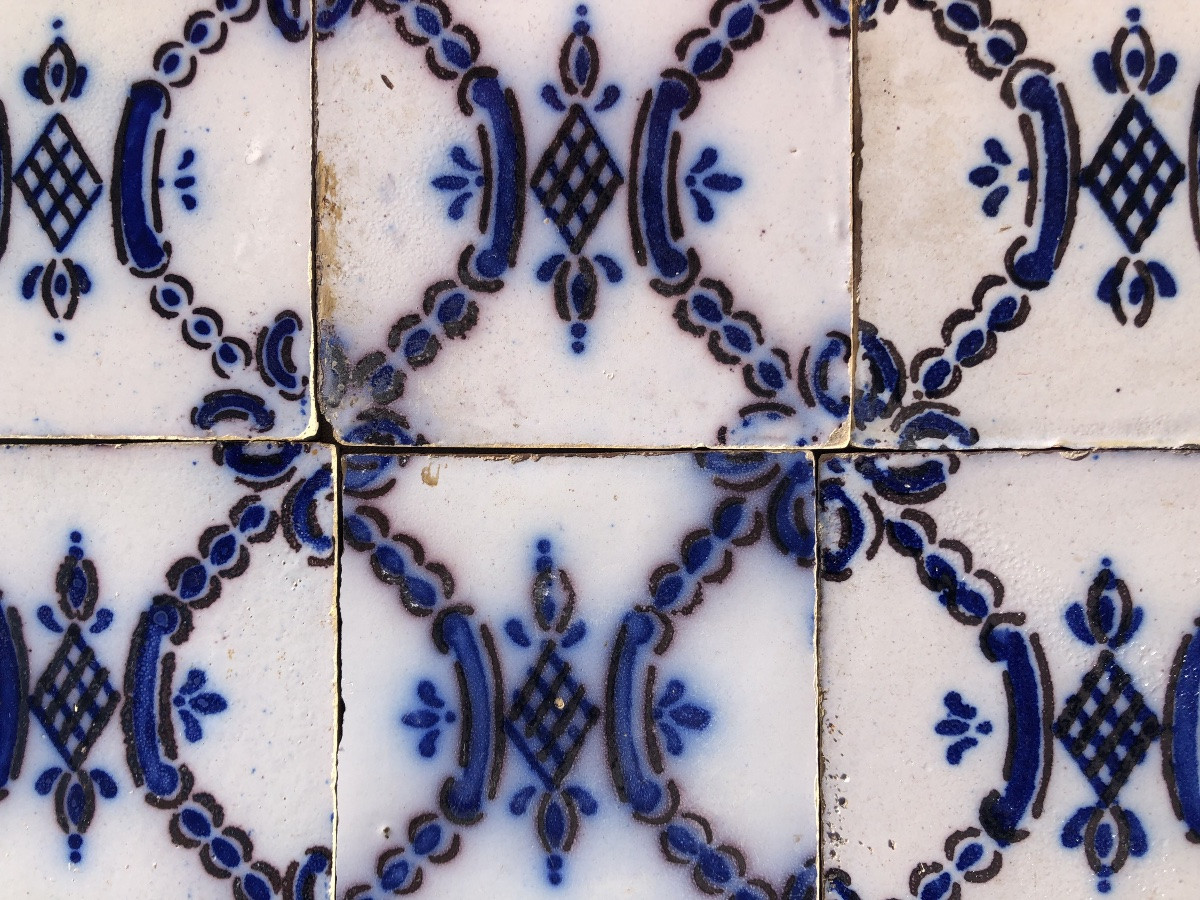


Series Of Stanniferous Tiles XIX Fourmentraux Desvres
Artist: Fourmentraux Desvres
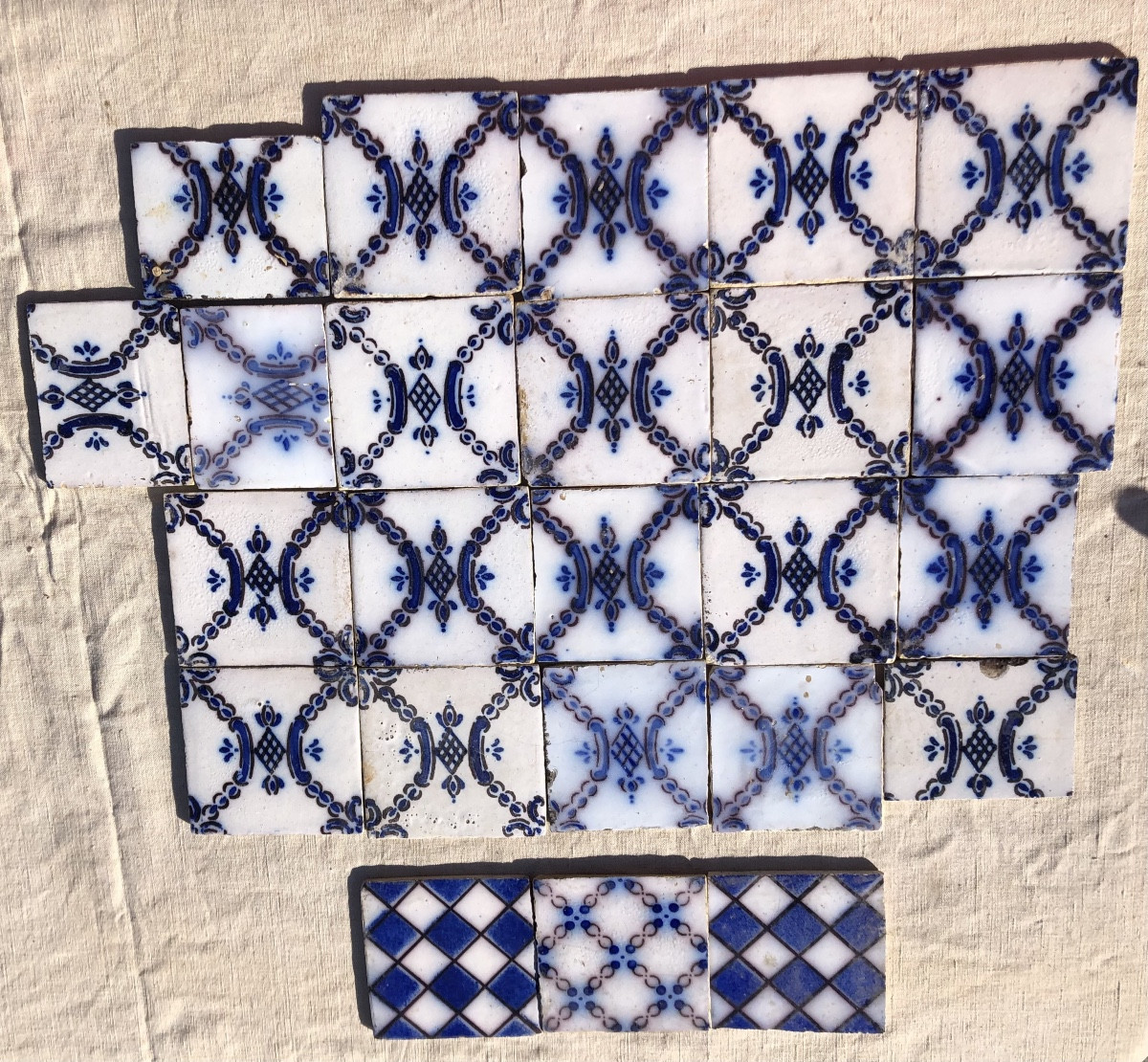
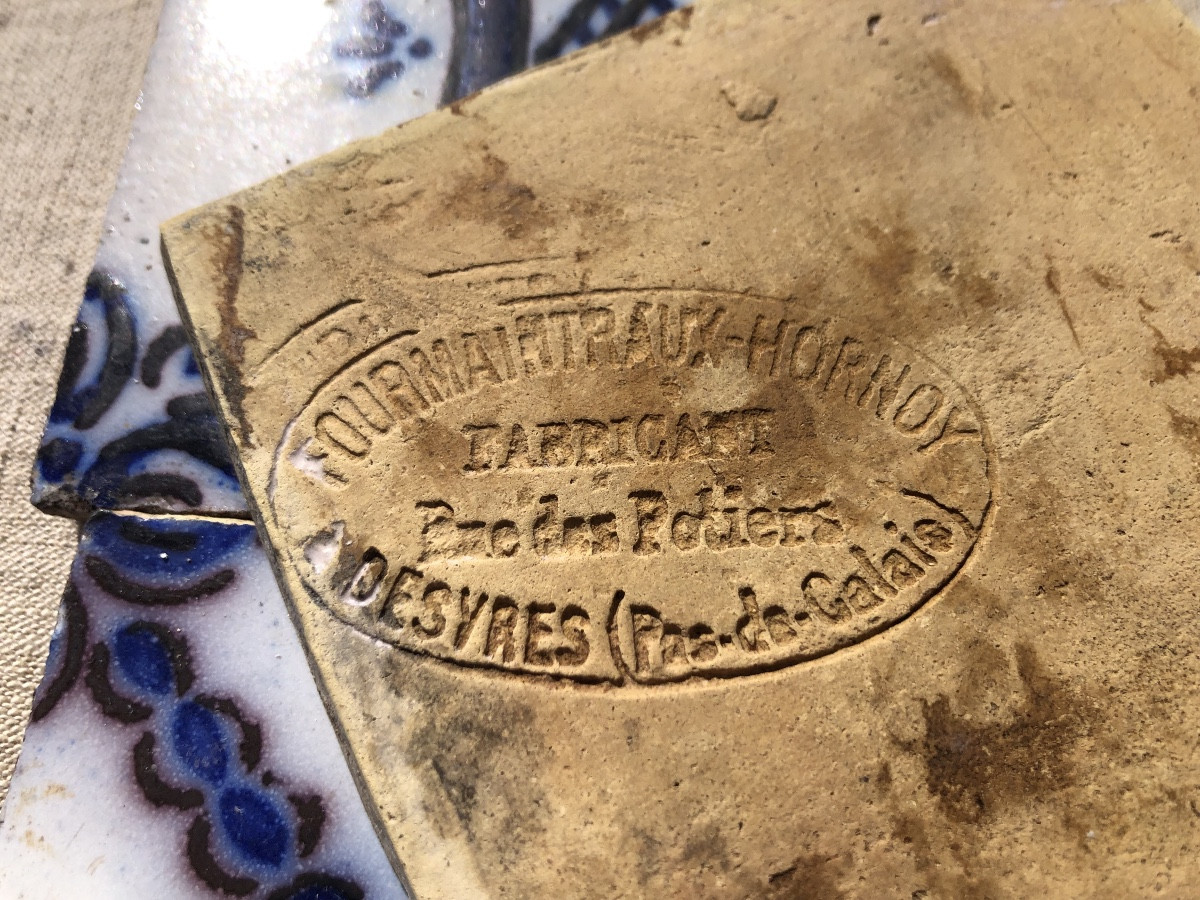
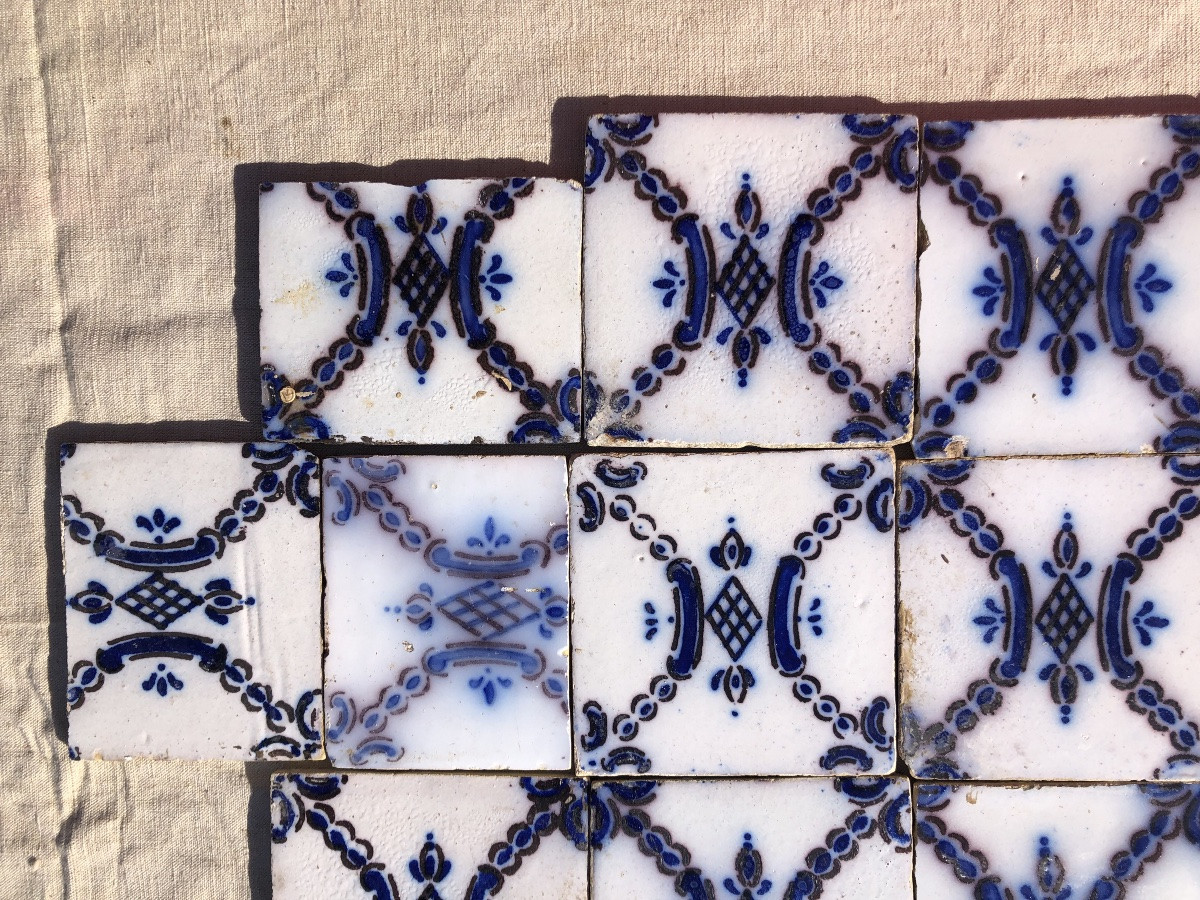
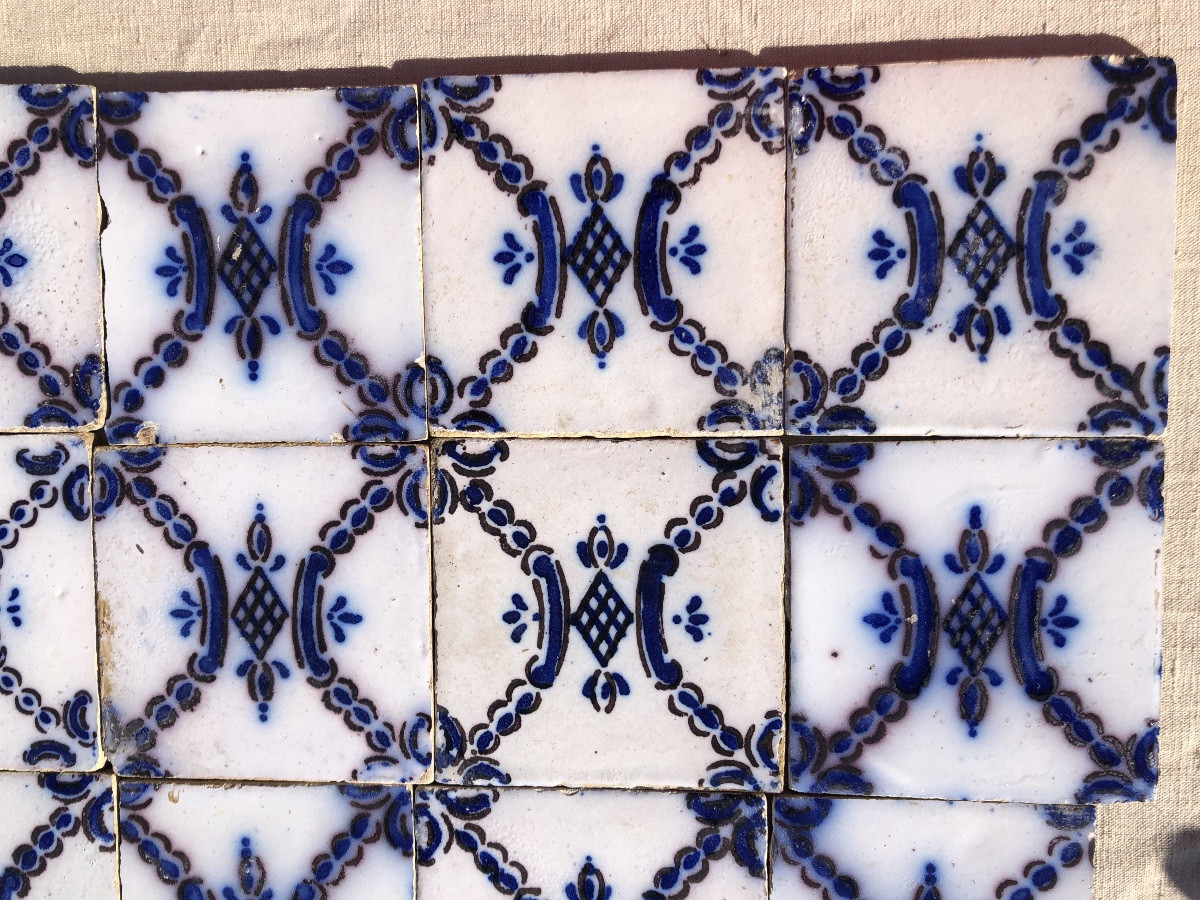
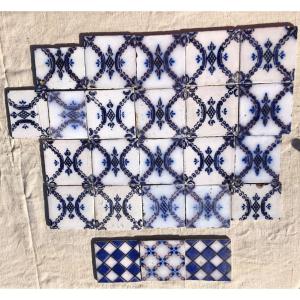
Set of 24 Fourmentraux Desvres Pas de Calais 1870 tin-glazed tiles. Most measure 11 cm x 11 cm.
Founded in 1863, the Fourmaintraux Courquin earthenware factory began manufacturing tin-glazed tiles. In 1872, the factory was enlarged and began manufacturing artistic earthenware, which met with great success, notably at the 1878 Paris Universal Exhibition. Charles Fourmaintraux took over from his father in 1896 and expanded the business considerably. After the First World War, the factory was again enlarged, and Charles Fourmaintraux went into partnership with Maurice Delassus, a lawyer from Lille. Around 1925, the company continued to expand with the construction of a new factory at the back of the plot. Until 1939, the faience factory experienced its golden age with the creation, in particular, of large-fired stoneware; afterwards, it produced simpler, less expensive tiles. In 1958, a new production unit was built on another site in rue Belle-Croix. The old factory was gradually abandoned, and now houses only the laboratory and the paste-making workshop. At present, the buildings are threatened with destruction.£ Originally, the factory was equipped with a hydraulic motor and an enamel mill driven by a 2-hp carousel. In 1878, five round kilns were installed, followed by 13 in 1914. Electric furnaces were installed in the 1950s. Today, continuous gas furnaces are used.£ In 1863, the factory employed just 5 or 6 workers; in 1878, 90 workers were employed, then 148 in 1905 and 126 in 1912.
Founded in 1863, the Fourmaintraux Courquin earthenware factory began manufacturing tin-glazed tiles. In 1872, the factory was enlarged and began manufacturing artistic earthenware, which met with great success, notably at the 1878 Paris Universal Exhibition. Charles Fourmaintraux took over from his father in 1896 and expanded the business considerably. After the First World War, the factory was again enlarged, and Charles Fourmaintraux went into partnership with Maurice Delassus, a lawyer from Lille. Around 1925, the company continued to expand with the construction of a new factory at the back of the plot. Until 1939, the faience factory experienced its golden age with the creation, in particular, of large-fired stoneware; afterwards, it produced simpler, less expensive tiles. In 1958, a new production unit was built on another site in rue Belle-Croix. The old factory was gradually abandoned, and now houses only the laboratory and the paste-making workshop. At present, the buildings are threatened with destruction.£ Originally, the factory was equipped with a hydraulic motor and an enamel mill driven by a 2-hp carousel. In 1878, five round kilns were installed, followed by 13 in 1914. Electric furnaces were installed in the 1950s. Today, continuous gas furnaces are used.£ In 1863, the factory employed just 5 or 6 workers; in 1878, 90 workers were employed, then 148 in 1905 and 126 in 1912.
250 €
Period: 19th century
Style: Napoleon 3rd
Condition: Some scratches and chips
Material: Earthenware
Length: 11 cm
Width: 11 cm
Reference (ID): 1734114
Availability: In stock
Print