

Two Foulbés Portraits / Maroua (cameroon) / Year 1955 / Gustave Hervigo (1896-1993)
Artist: Gustave Hervigo (1896-1993)
École africaniste - Couple foulbé à Maroua (Cameroun), 1955 G. Hervigo (1896-1993)
This remarkable set of two works on paper, produced in 1955 in Maroua (present-day Cameroon), is fully in keeping with the tradition of the French Africanist school of the mid-20th century.
G. Hervigo deploys an approach that is both ethnographic and deeply sensitive, testifying to a direct and lived view of the Sahel's populations.
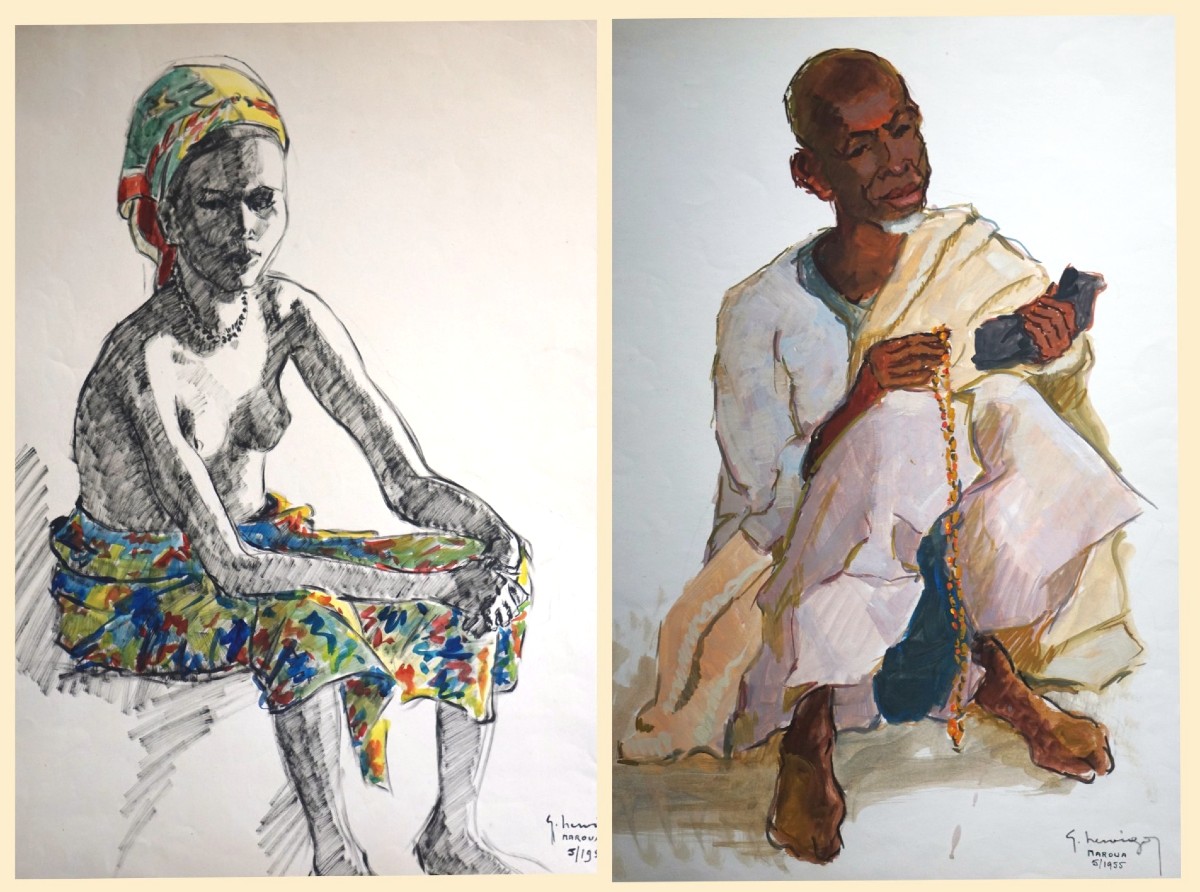
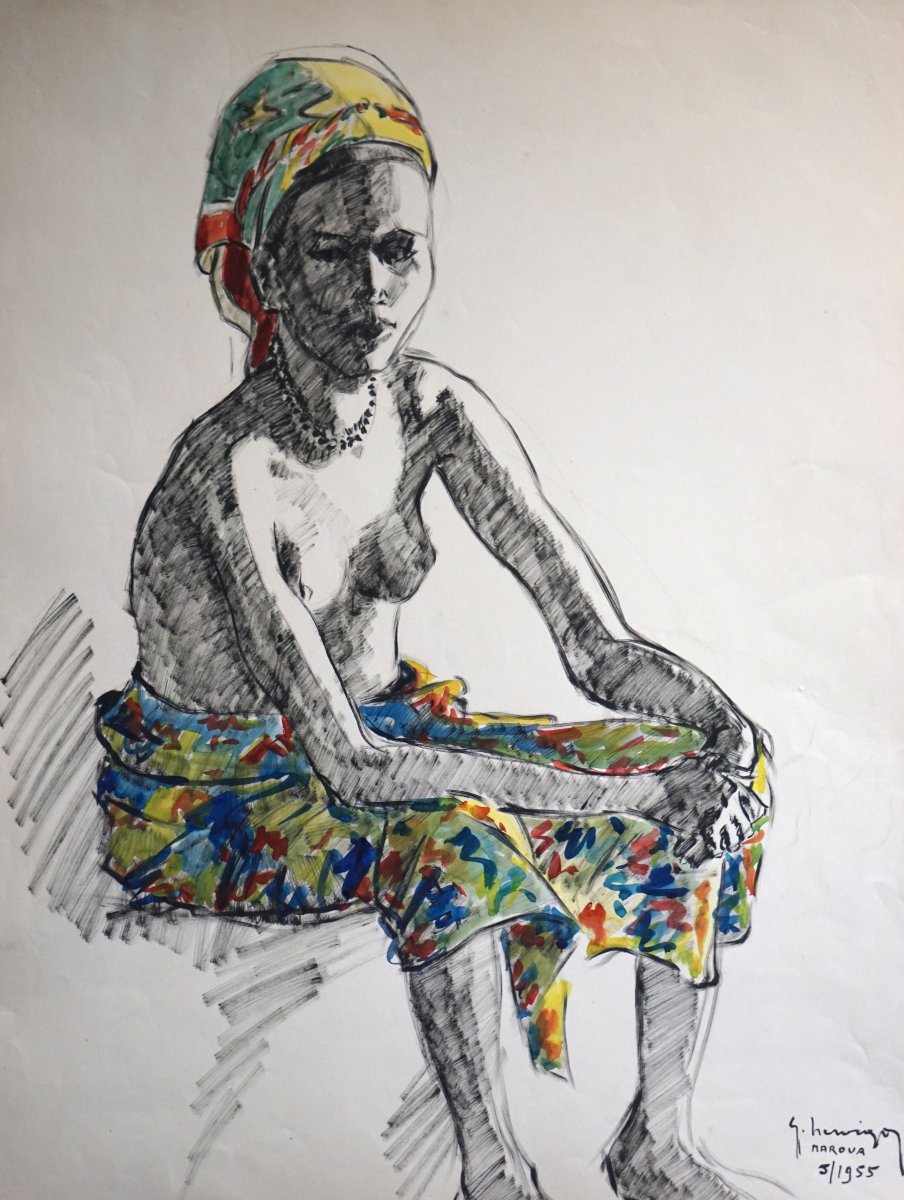
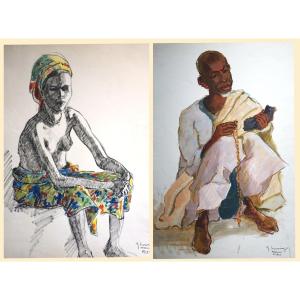
The first drawing depicts a young seated Foulbé woman, treated with a remarkable economy of means: the body is constructed in charcoal or ink, while the textiles - loincloth and headdress - are highlighted in bright colors, creating a striking contrast between graphic structure and chromatic vibrancy. The attitude, both interiorized and dignified, reflects attentive, respectful observation.
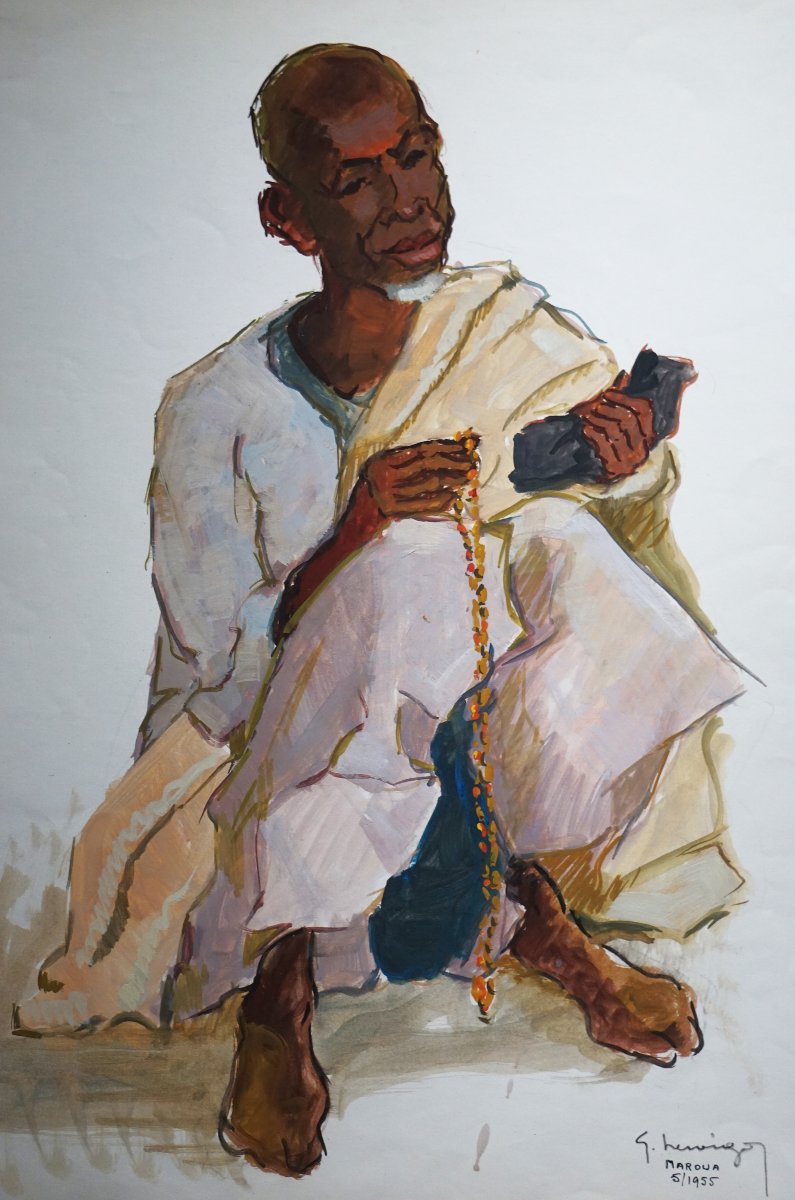
The second, shows a seated foulbé man, dressed in a light boubou, handling a rosary. Here, color takes center stage: the warm tones of the skin tone, the fluidity of the clothing and the subtle light give the whole an almost sculptural presence. The treatment of the face, particularly expressive, reveals a great mastery of portraiture.
These two works are a perfect dialogue: they illustrate two complementary approaches to the artist's work - one more graphic, the other more pictorial - while testifying to the same interest in the Foulbé (Fulani) peoples, emblematic of this region of northern Cameroon.
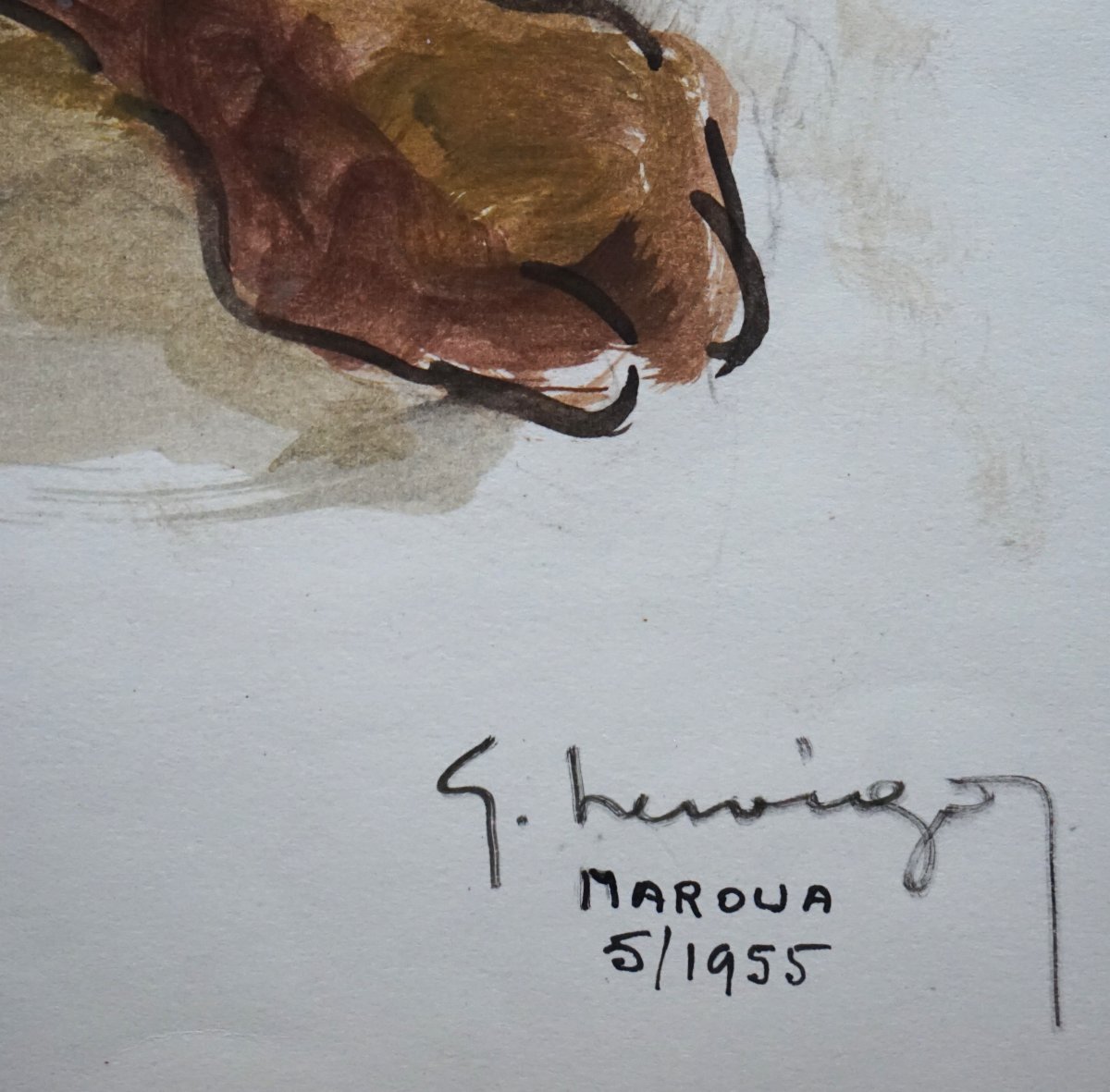
Signed and dated (1955), located in Maroua, they are of real documentary as well as aesthetic interest.
65 x 50 (unframed)
This remarkable set of two works on paper, produced in 1955 in Maroua (present-day Cameroon), is fully in keeping with the tradition of the French Africanist school of the mid-20th century.
G. Hervigo deploys an approach that is both ethnographic and deeply sensitive, testifying to a direct and lived view of the Sahel's populations.
The first drawing depicts a young seated Foulbé woman, treated with a remarkable economy of means: the body is constructed in charcoal or ink, while the textiles - loincloth and headdress - are highlighted in bright colors, creating a striking contrast between graphic structure and chromatic vibrancy. The attitude, both interiorized and dignified, reflects attentive, respectful observation.
The second, shows a seated foulbé man, dressed in a light boubou, handling a rosary. Here, color takes center stage: the warm tones of the skin tone, the fluidity of the clothing and the subtle light give the whole an almost sculptural presence. The treatment of the face, particularly expressive, reveals a great mastery of portraiture.
These two works are a perfect dialogue: they illustrate two complementary approaches to the artist's work - one more graphic, the other more pictorial - while testifying to the same interest in the Foulbé (Fulani) peoples, emblematic of this region of northern Cameroon.
Signed and dated (1955), located in Maroua, they are of real documentary as well as aesthetic interest.
65 x 50 (unframed)
580 €
Period: 20th century
Style: Other Style
Condition: Perfect condition
Material: Paper
Reference (ID): 1733630
Availability: In stock
Print