



Japan, Box, Wajima Lacquer, Nishizuka Chōkō I (1888–1976)
Artist: Nishizuka Chōkō I (1888–1976)
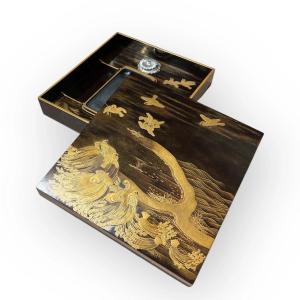
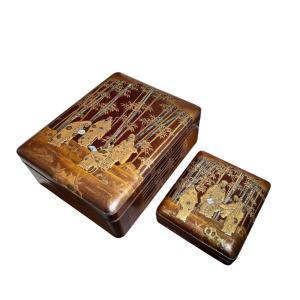
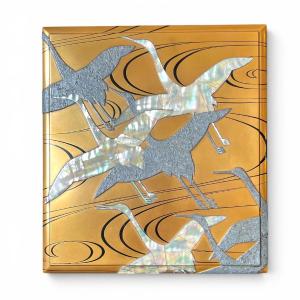
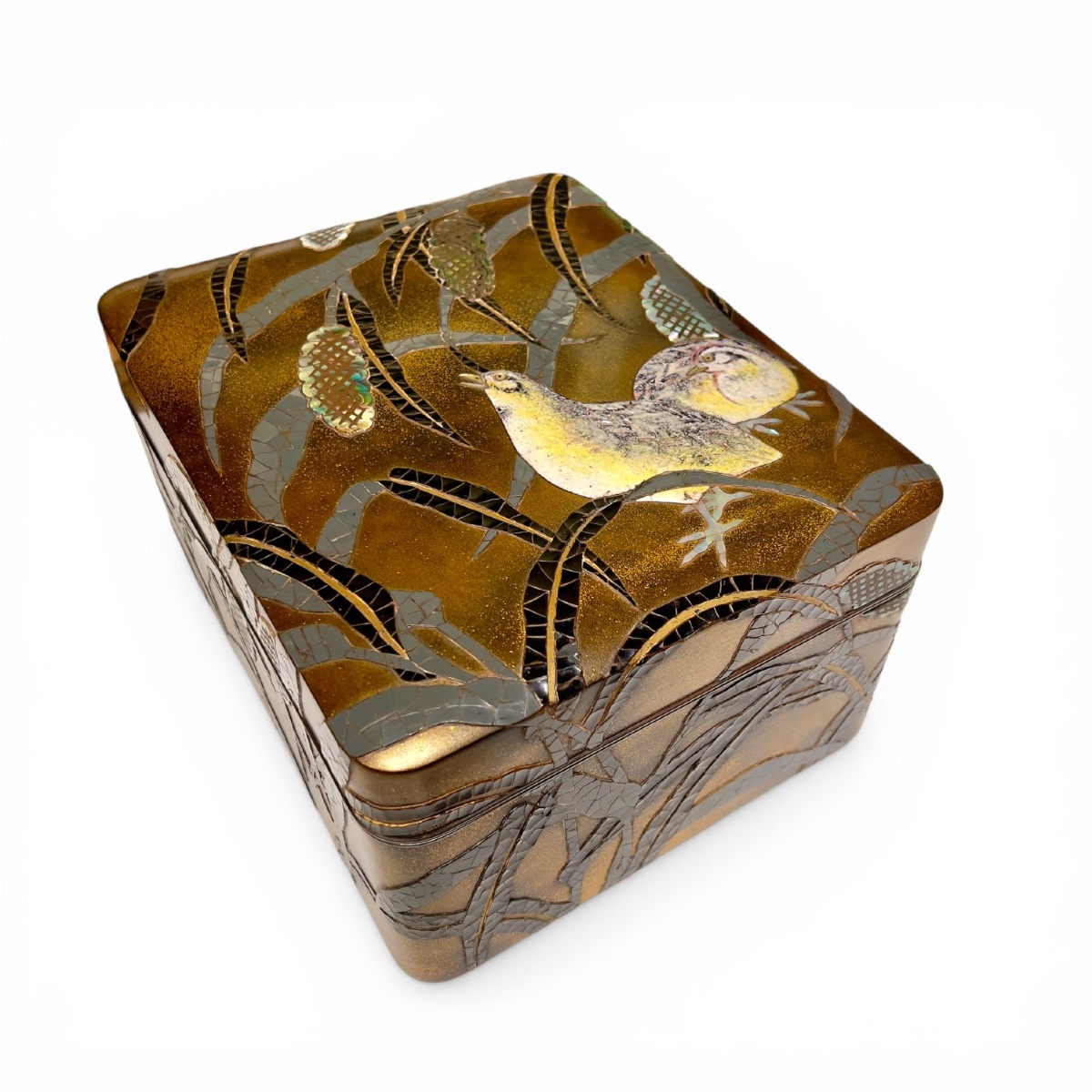
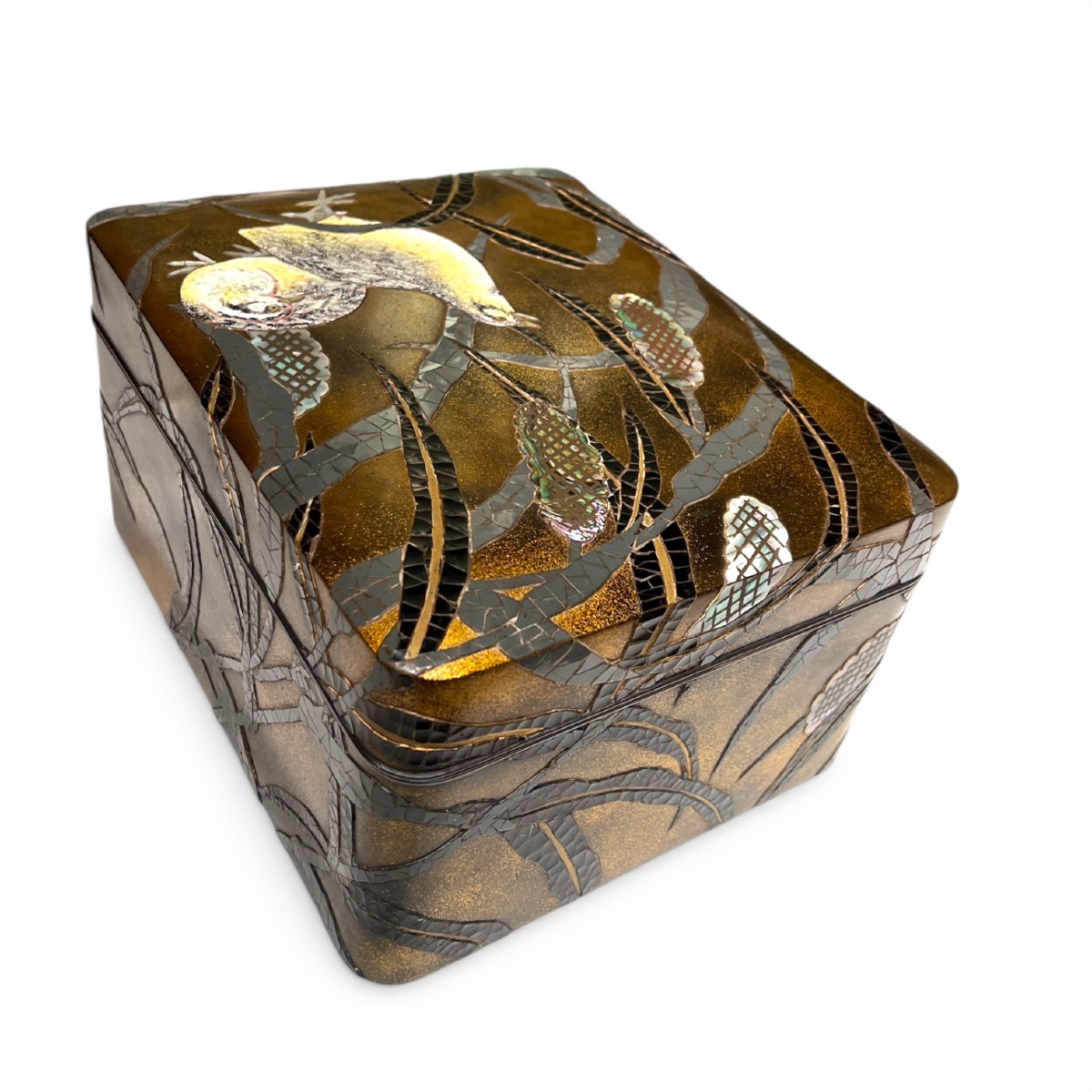
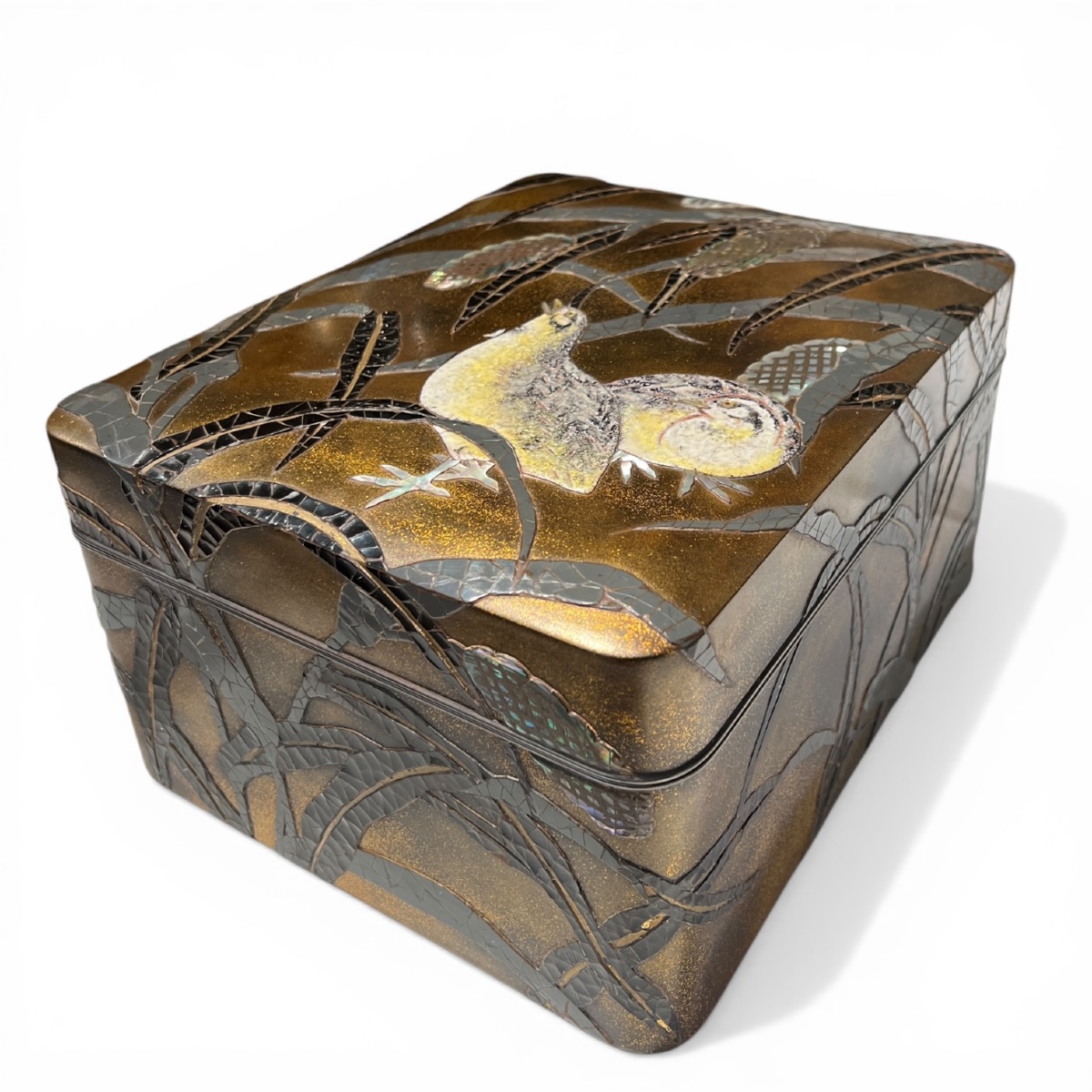
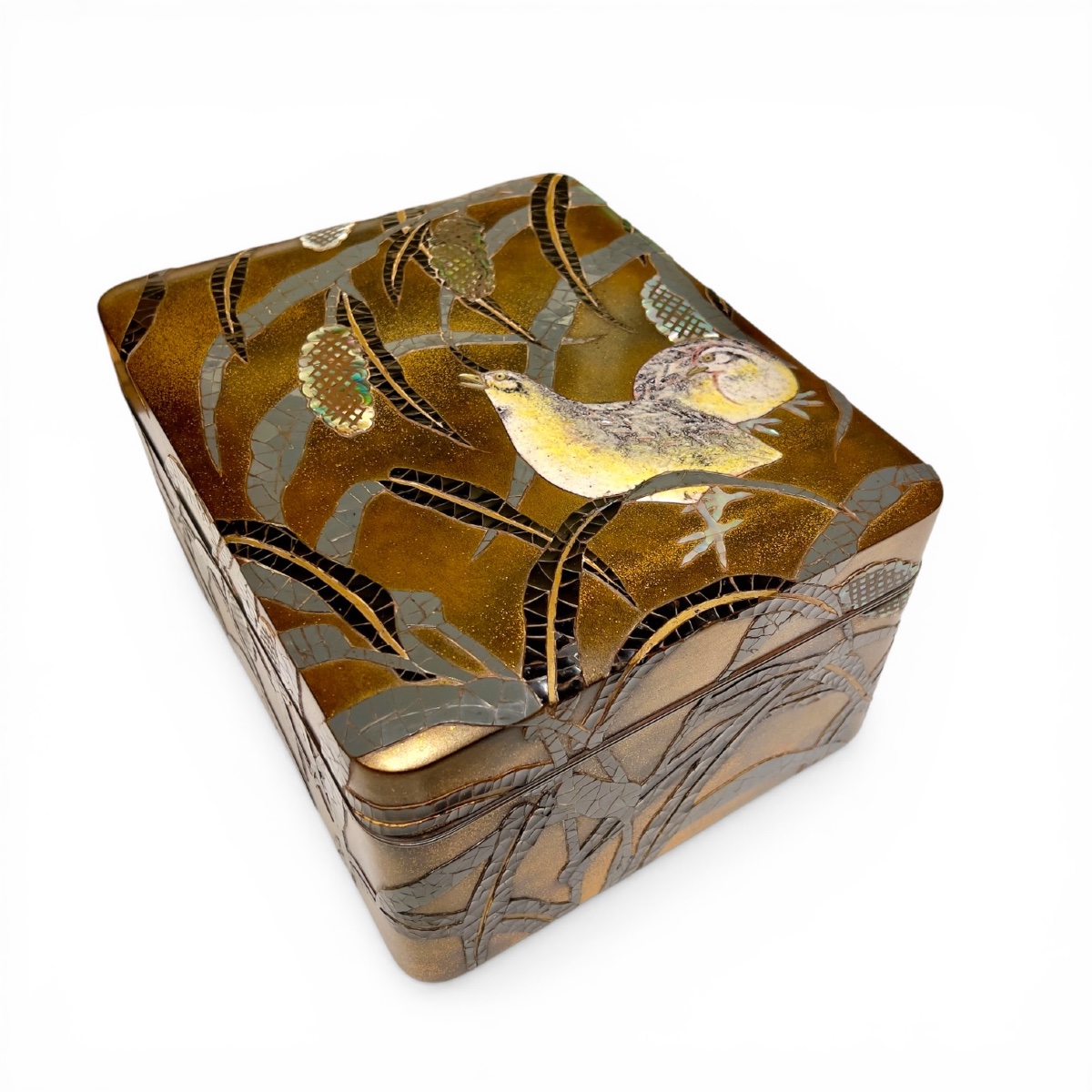
Wajima lacquer box decorated with two quails among millet, by Nishizuka Chōkō I (西塚朝光, 1888–1976).
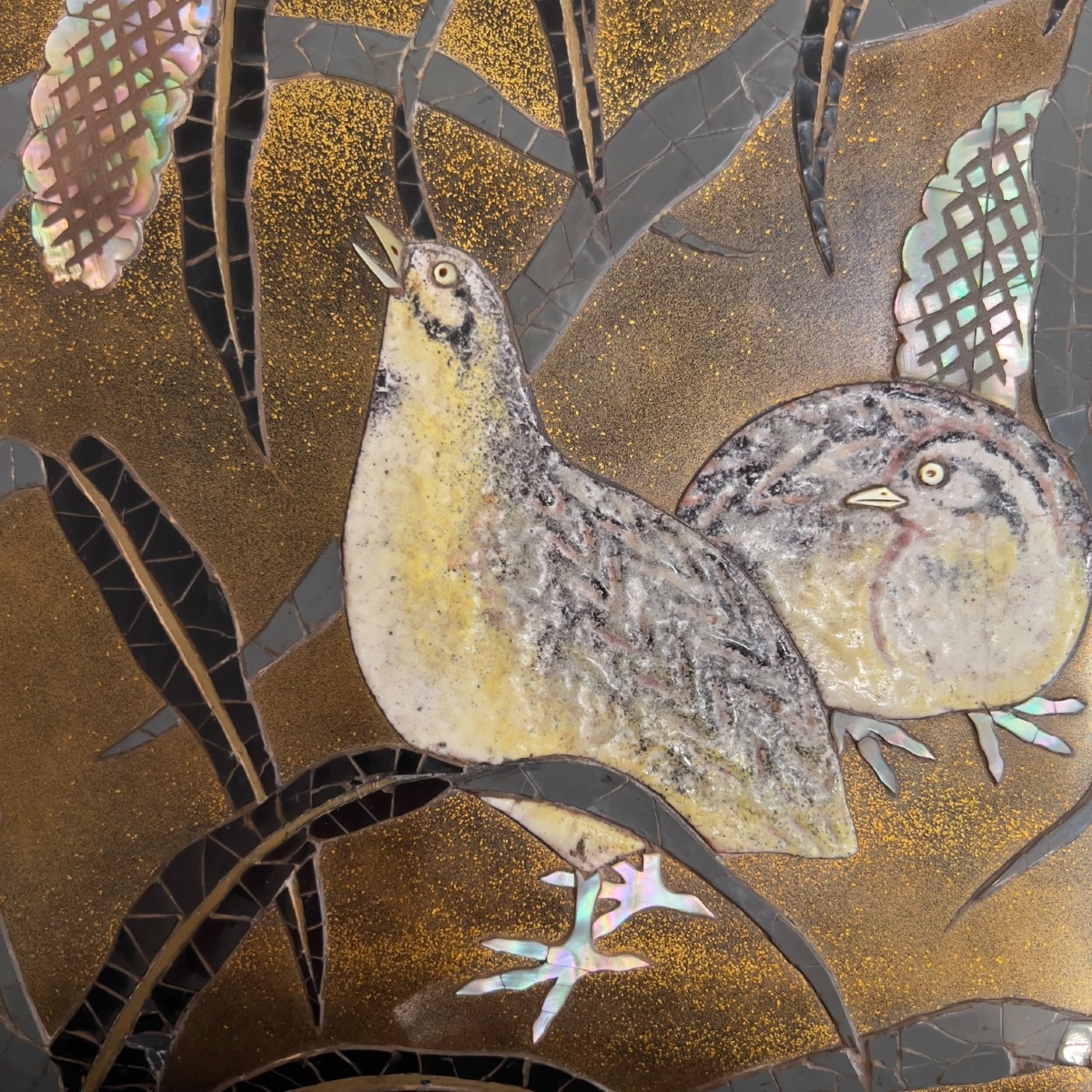
This box, probably intended for storing objects used in the tea ceremony, combines raised maki-e carving, mother-of-pearl inlays, and, much more unusually, two quails rendered in applied glazed ceramic.
It is a particularly interesting example of the 20th-century revival of Japanese lacquer, blending decorative tradition, technical virtuosity, and artistic exploration.
Description
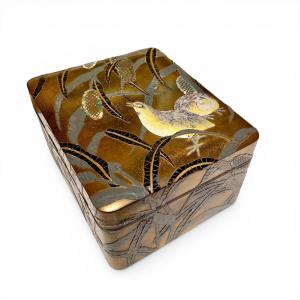
The lid features a refined composition of two quails moving among grasses, likely susuki or millet, a classic autumn theme in Japanese decorative arts. This decoration extends onto the base of the box, creating a continuous design that demonstrates great pictorial mastery.
The background is treated with nashiji lacquer at varying intensities, creating a vibrant, almost atmospheric surface that animates the entire scene. The grasses unfold in a play of textures (lacquer painted with gold lacquer and black and dark gray lacquer with a mosaic effect) and rhythms, while the birds, modeled in glazed ceramic with the addition of mother-of-pearl to give their eyes a luminous quality, lend the composition a sculptural presence rarely seen in Wajima lacquerware.
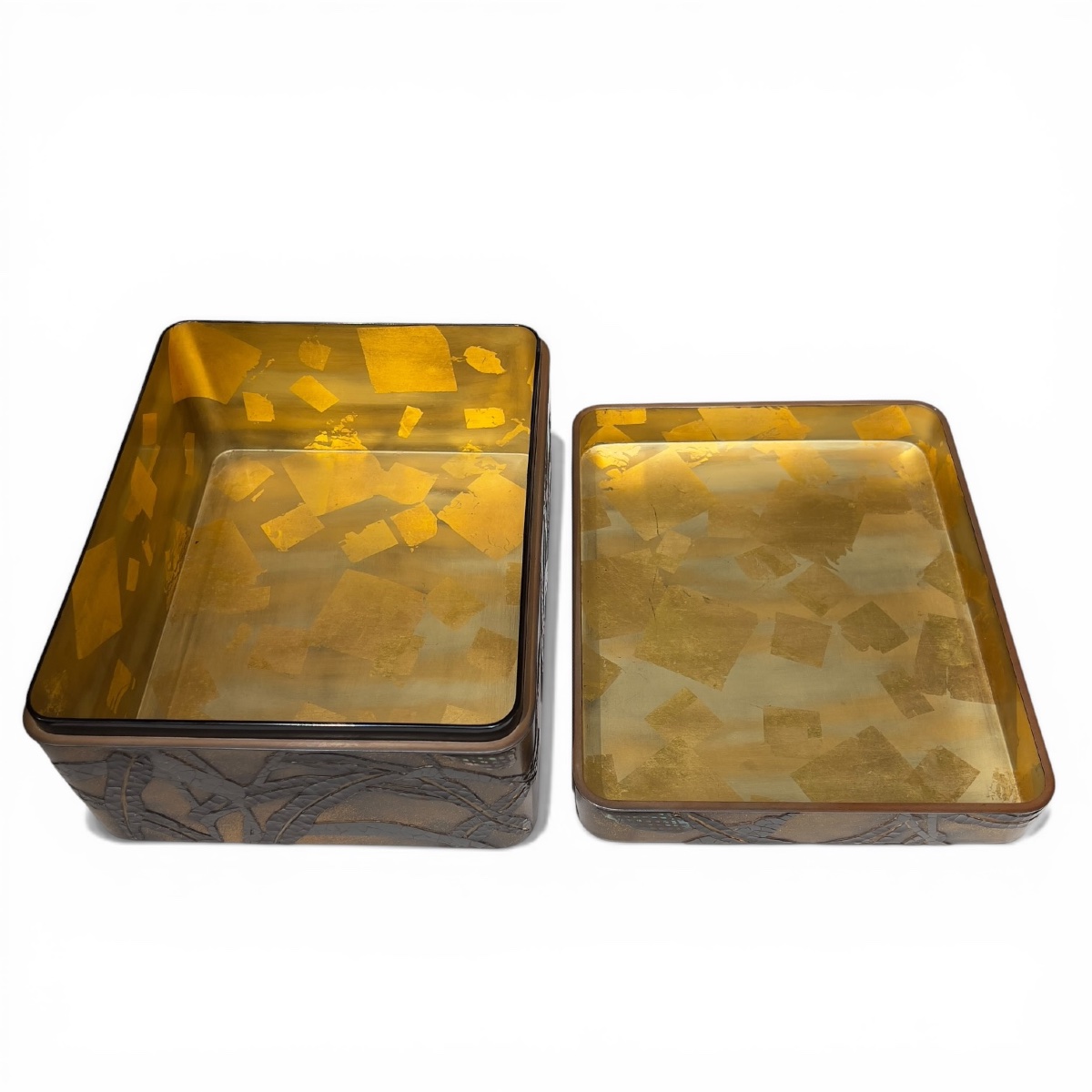
The interior is covered with large, irregular squares of gold leaf, producing a fragmented and precious effect, highly characteristic of an object conceived as both a decorative piece and a functional object.
The entire piece is preserved in its original tomobako (wooden case) signed Chōkō saku (朝光作).
Nishizuka Chōkō I (1888–1976)
Nishizuka Chōkō I, or Nishizuka Chōkō (西塚朝光), was a lacquer artist active in Wajima during the early to mid-20th century. He belonged to that generation of artisans who perpetuated the most demanding technical traditions of Wajima-nuri while adapting their decorative language to a modern sensibility. Works signed 朝光 are known on both the Japanese and Western markets, including suzuribako (tea ceremony objects), tea ceremony items, and decorative pieces with naturalistic themes.
His work is situated within the context of a very high level of craftsmanship, where mastery of maki-e (leaf enameling), inlay work, and surface effects remained fundamental. At Nishizuka Chōkō's studio, this tradition opens itself to a more sculptural approach, evident in the relief, the density of the backgrounds, and the taste for contrasting materials.
The Wajima Lacquer Tradition
Wajima lacquer, produced on the Noto Peninsula, is one of the most renowned in Japan. Wajima-nuri is distinguished by the complexity of its manufacturing process, the use of local clay powder in the preparatory layers, and the successive intervention of several specialists. This technical rigor results in objects of great solidity and remarkable surface depth.
From the late 19th century and especially during the 20th century, Wajima workshops participated in a movement to renew Japanese decorative arts. Without abandoning traditional subjects, they explored new effects of texture, relief, and inlay, producing objects where formal invention became an essential element.
Between Rimpa Heritage and 20th-Century Modernity
This box, in several respects, embodies the aesthetic heritage of the Rinpa school. The taste for seasonal motifs, the emphasis on contrasts between dark areas and light surfaces, as well as the decorative treatment of plant motifs, all reflect this major tradition of Japanese arts. The composition prioritizes visual impact, the stylization of rhythm, and the preciousness of the materials—elements that stem from a profoundly decorative spirit.
But this work is not simply a survival of the Rimpa style. It also manifests the renewal of Japanese lacquer in the 20th century. The pronounced relief, the presence of cut mother-of-pearl, and especially the exceptional integration of glazed ceramic quail demonstrate a willingness to experiment while simultaneously reappropriating ancient techniques. This rare hybridization of tradition and invention places the box at a time when Japanese craftsmanship sought to renew its vocabulary without severing ties with its heritage.
Why This Box Is Important
This unique piece is distinguished by the quality of its craftsmanship, the originality of its technical combination, and the tactile power of its decoration. It is of interest both for the history of Japanese lacquer, for the study of Wajima-nuri in the 20th century, and for collectors who appreciate objects where Japanese decorative tradition continues in a form of understated modernity.
Dimensions: Width 28 cm; Depth 23 cm; Height 15.5 cm.
This box, probably intended for storing objects used in the tea ceremony, combines raised maki-e carving, mother-of-pearl inlays, and, much more unusually, two quails rendered in applied glazed ceramic.
It is a particularly interesting example of the 20th-century revival of Japanese lacquer, blending decorative tradition, technical virtuosity, and artistic exploration.
Description
The lid features a refined composition of two quails moving among grasses, likely susuki or millet, a classic autumn theme in Japanese decorative arts. This decoration extends onto the base of the box, creating a continuous design that demonstrates great pictorial mastery.
The background is treated with nashiji lacquer at varying intensities, creating a vibrant, almost atmospheric surface that animates the entire scene. The grasses unfold in a play of textures (lacquer painted with gold lacquer and black and dark gray lacquer with a mosaic effect) and rhythms, while the birds, modeled in glazed ceramic with the addition of mother-of-pearl to give their eyes a luminous quality, lend the composition a sculptural presence rarely seen in Wajima lacquerware.
The interior is covered with large, irregular squares of gold leaf, producing a fragmented and precious effect, highly characteristic of an object conceived as both a decorative piece and a functional object.
The entire piece is preserved in its original tomobako (wooden case) signed Chōkō saku (朝光作).
Nishizuka Chōkō I (1888–1976)
Nishizuka Chōkō I, or Nishizuka Chōkō (西塚朝光), was a lacquer artist active in Wajima during the early to mid-20th century. He belonged to that generation of artisans who perpetuated the most demanding technical traditions of Wajima-nuri while adapting their decorative language to a modern sensibility. Works signed 朝光 are known on both the Japanese and Western markets, including suzuribako (tea ceremony objects), tea ceremony items, and decorative pieces with naturalistic themes.
His work is situated within the context of a very high level of craftsmanship, where mastery of maki-e (leaf enameling), inlay work, and surface effects remained fundamental. At Nishizuka Chōkō's studio, this tradition opens itself to a more sculptural approach, evident in the relief, the density of the backgrounds, and the taste for contrasting materials.
The Wajima Lacquer Tradition
Wajima lacquer, produced on the Noto Peninsula, is one of the most renowned in Japan. Wajima-nuri is distinguished by the complexity of its manufacturing process, the use of local clay powder in the preparatory layers, and the successive intervention of several specialists. This technical rigor results in objects of great solidity and remarkable surface depth.
From the late 19th century and especially during the 20th century, Wajima workshops participated in a movement to renew Japanese decorative arts. Without abandoning traditional subjects, they explored new effects of texture, relief, and inlay, producing objects where formal invention became an essential element.
Between Rimpa Heritage and 20th-Century Modernity
This box, in several respects, embodies the aesthetic heritage of the Rinpa school. The taste for seasonal motifs, the emphasis on contrasts between dark areas and light surfaces, as well as the decorative treatment of plant motifs, all reflect this major tradition of Japanese arts. The composition prioritizes visual impact, the stylization of rhythm, and the preciousness of the materials—elements that stem from a profoundly decorative spirit.
But this work is not simply a survival of the Rimpa style. It also manifests the renewal of Japanese lacquer in the 20th century. The pronounced relief, the presence of cut mother-of-pearl, and especially the exceptional integration of glazed ceramic quail demonstrate a willingness to experiment while simultaneously reappropriating ancient techniques. This rare hybridization of tradition and invention places the box at a time when Japanese craftsmanship sought to renew its vocabulary without severing ties with its heritage.
Why This Box Is Important
This unique piece is distinguished by the quality of its craftsmanship, the originality of its technical combination, and the tactile power of its decoration. It is of interest both for the history of Japanese lacquer, for the study of Wajima-nuri in the 20th century, and for collectors who appreciate objects where Japanese decorative tradition continues in a form of understated modernity.
Dimensions: Width 28 cm; Depth 23 cm; Height 15.5 cm.
5 600 €
Period: 20th century
Style: Art Deco
Condition: Excellent condition
Material: Lacquer
Width: 23cm
Height: 15,5cm
Depth: 28cm
Reference (ID): 1733009
Availability: In stock
Print