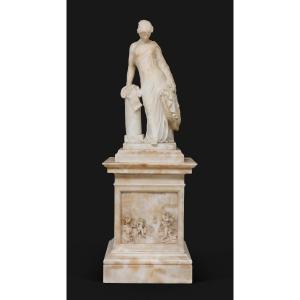


Grand Tour Of Italy, 19th Century – Greek Alabaster Sculpture Of Sappho After James Pradier
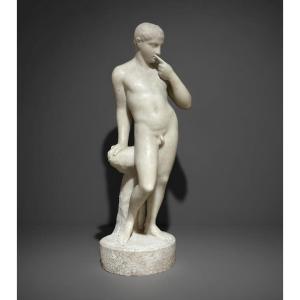
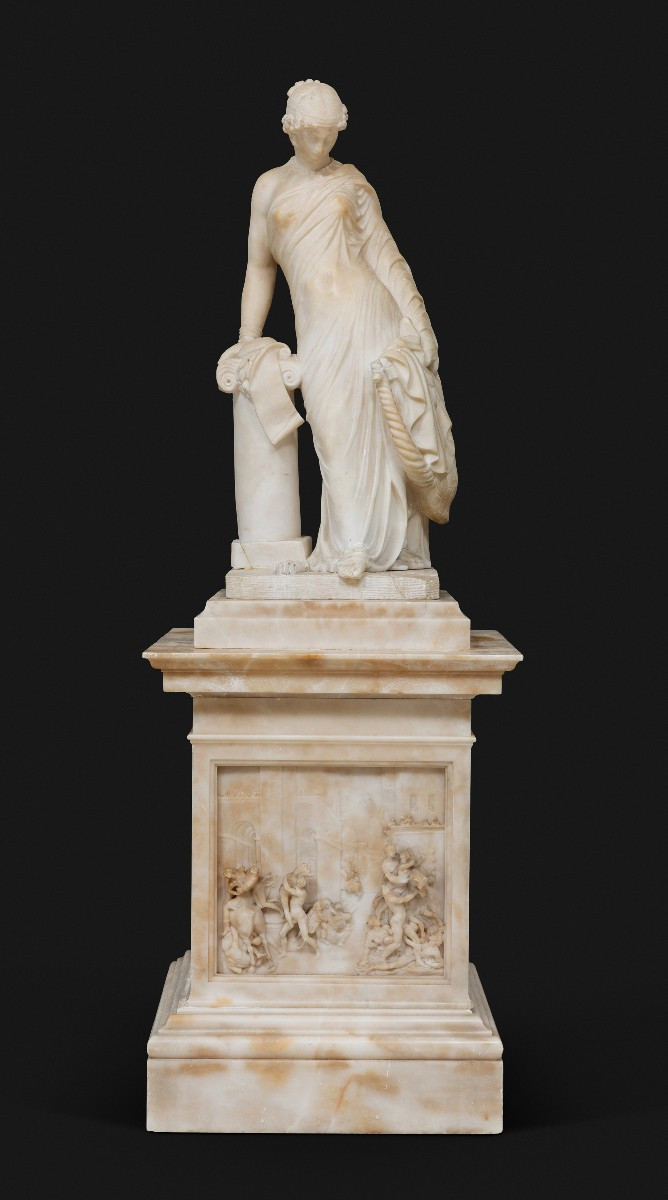
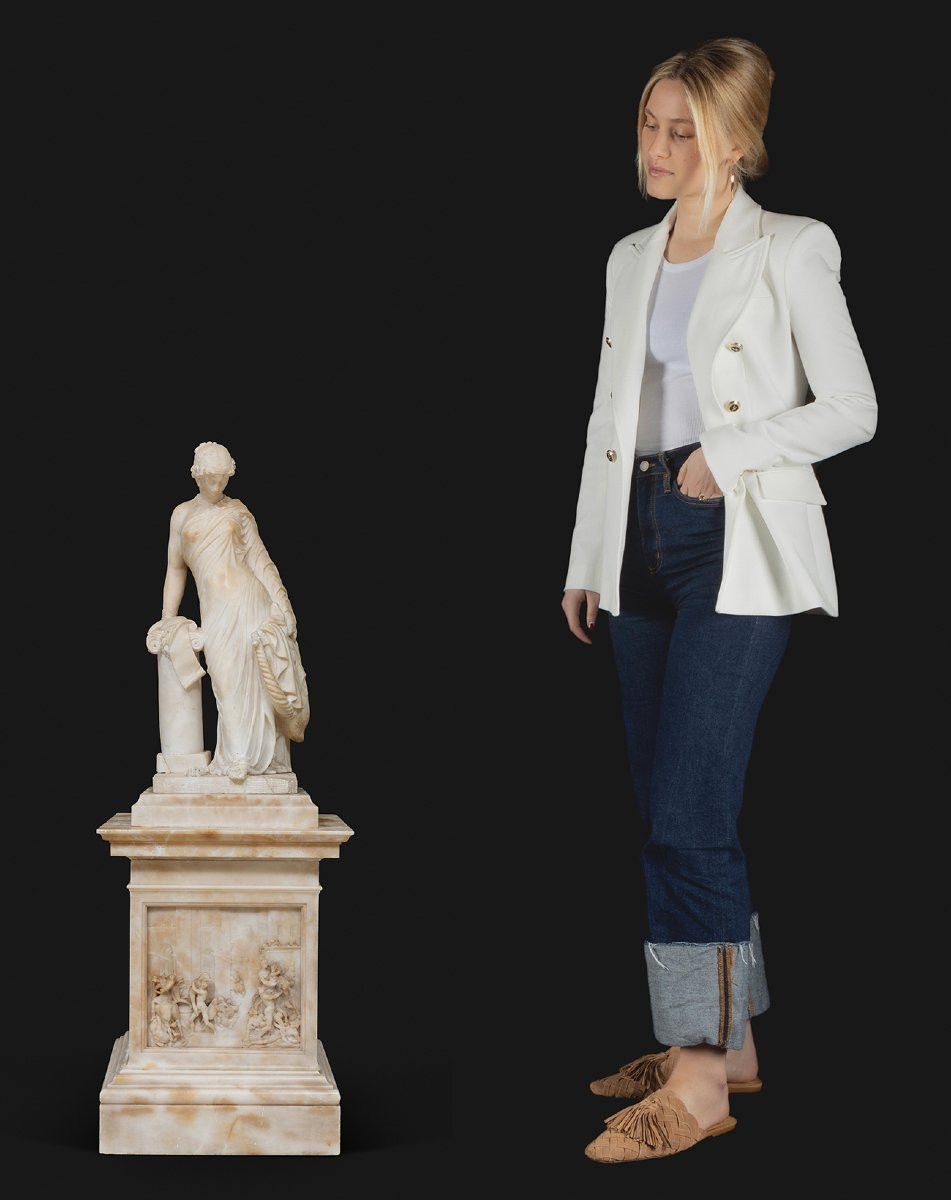
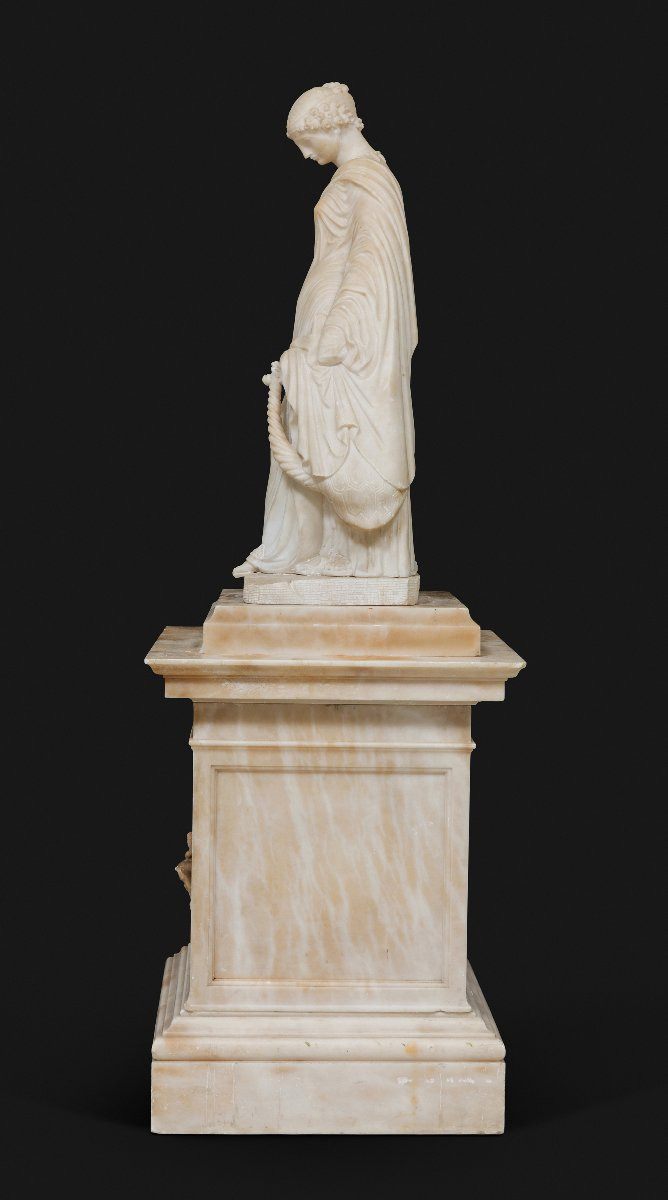
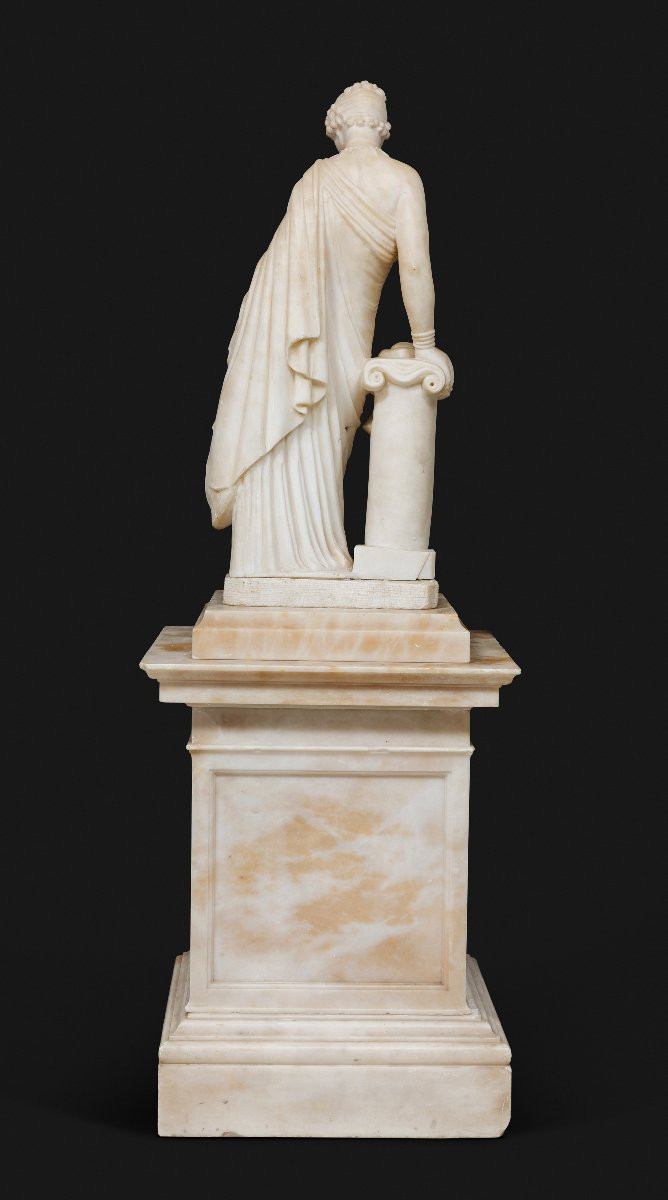
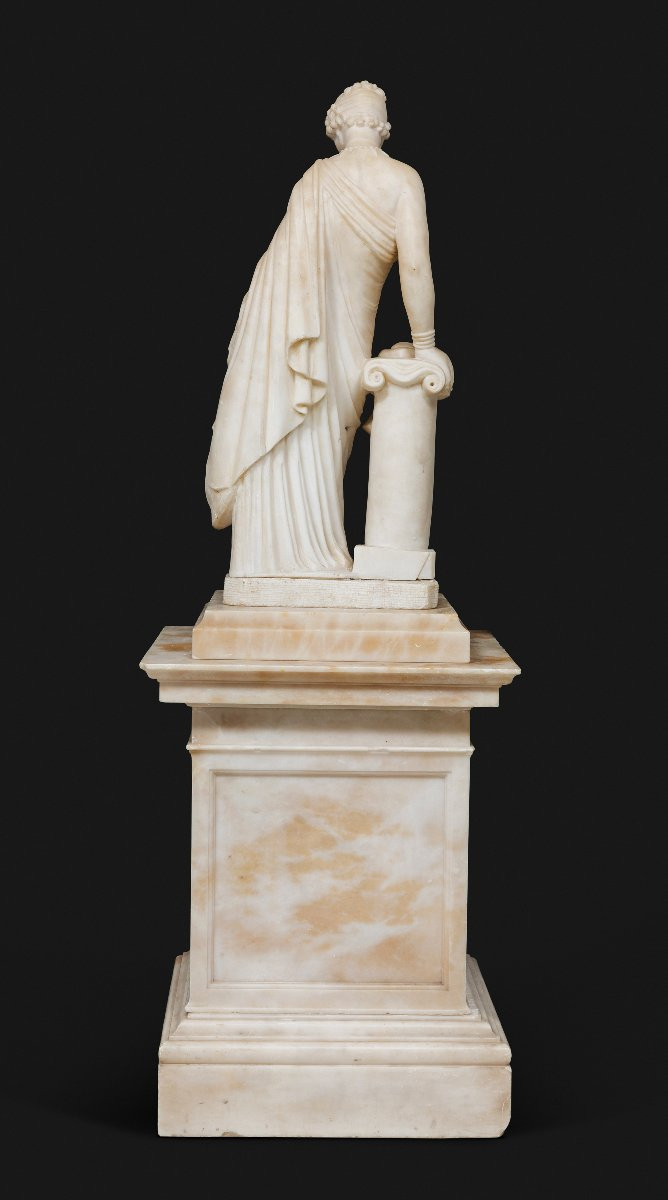
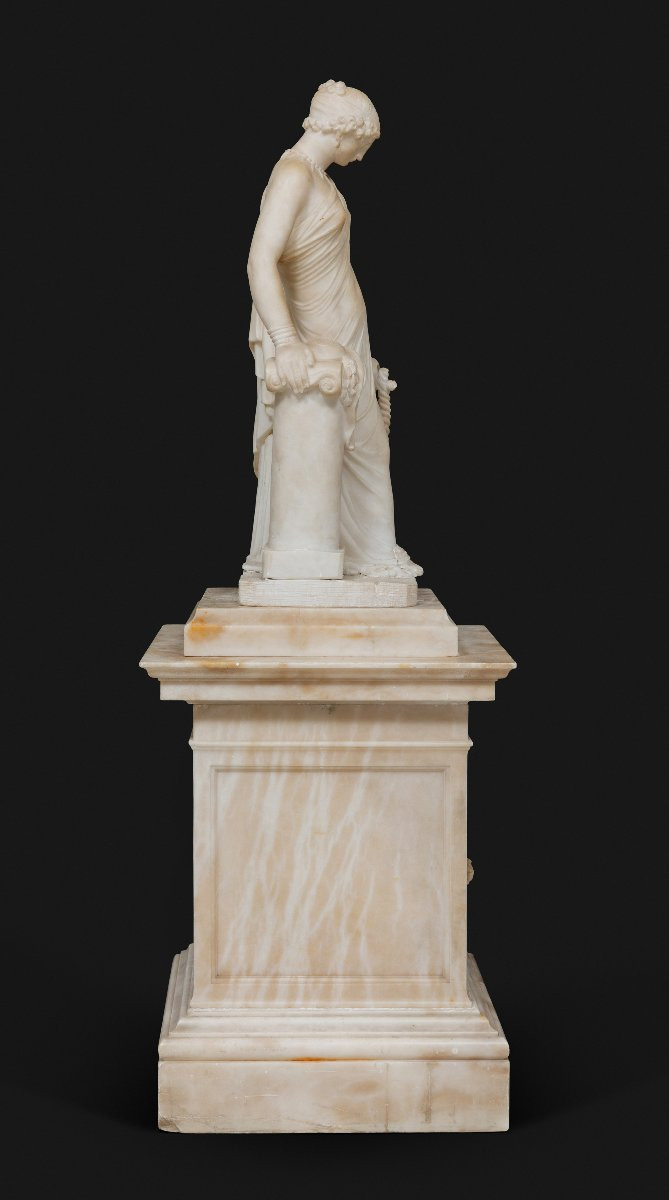
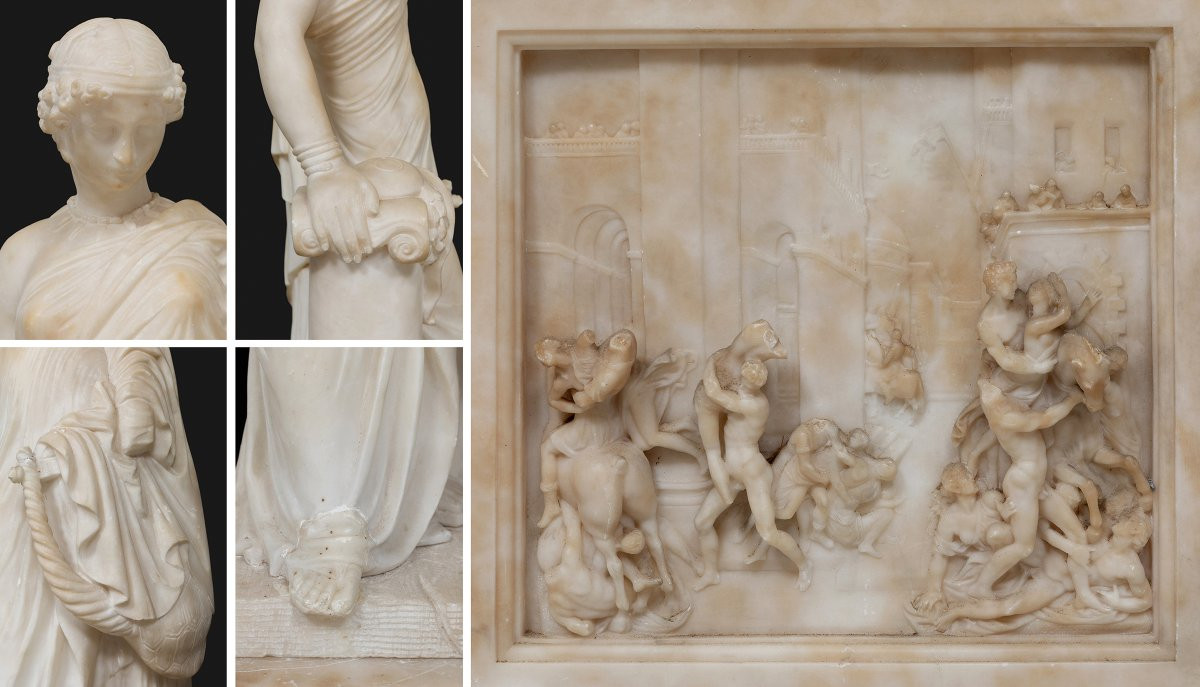
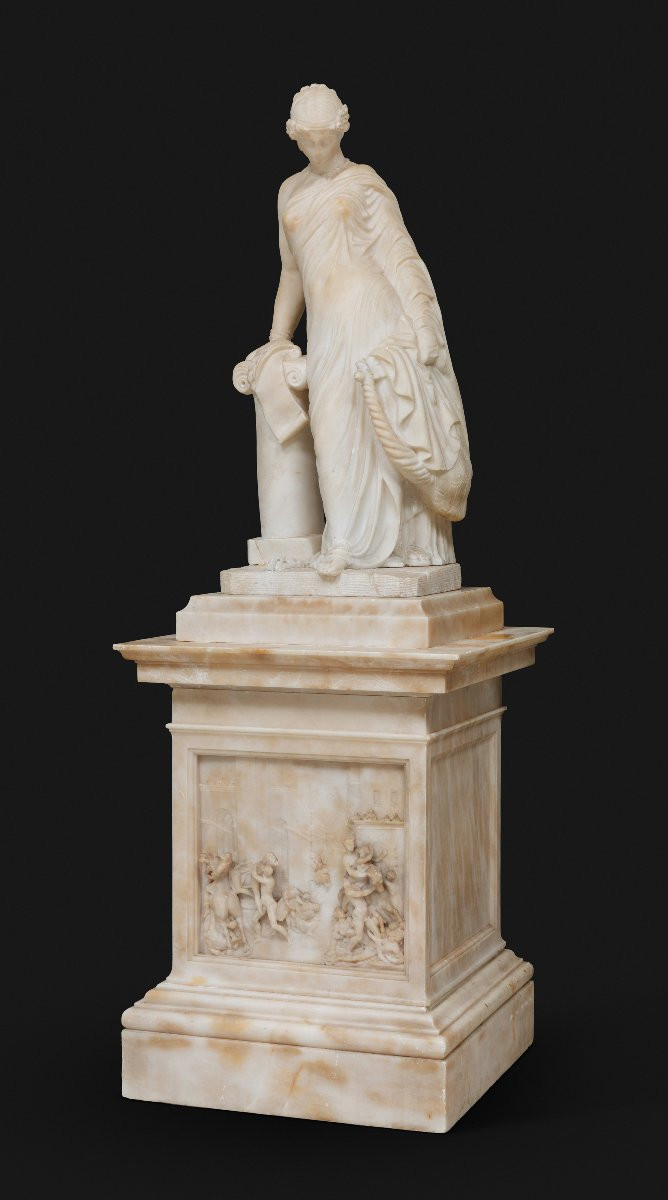
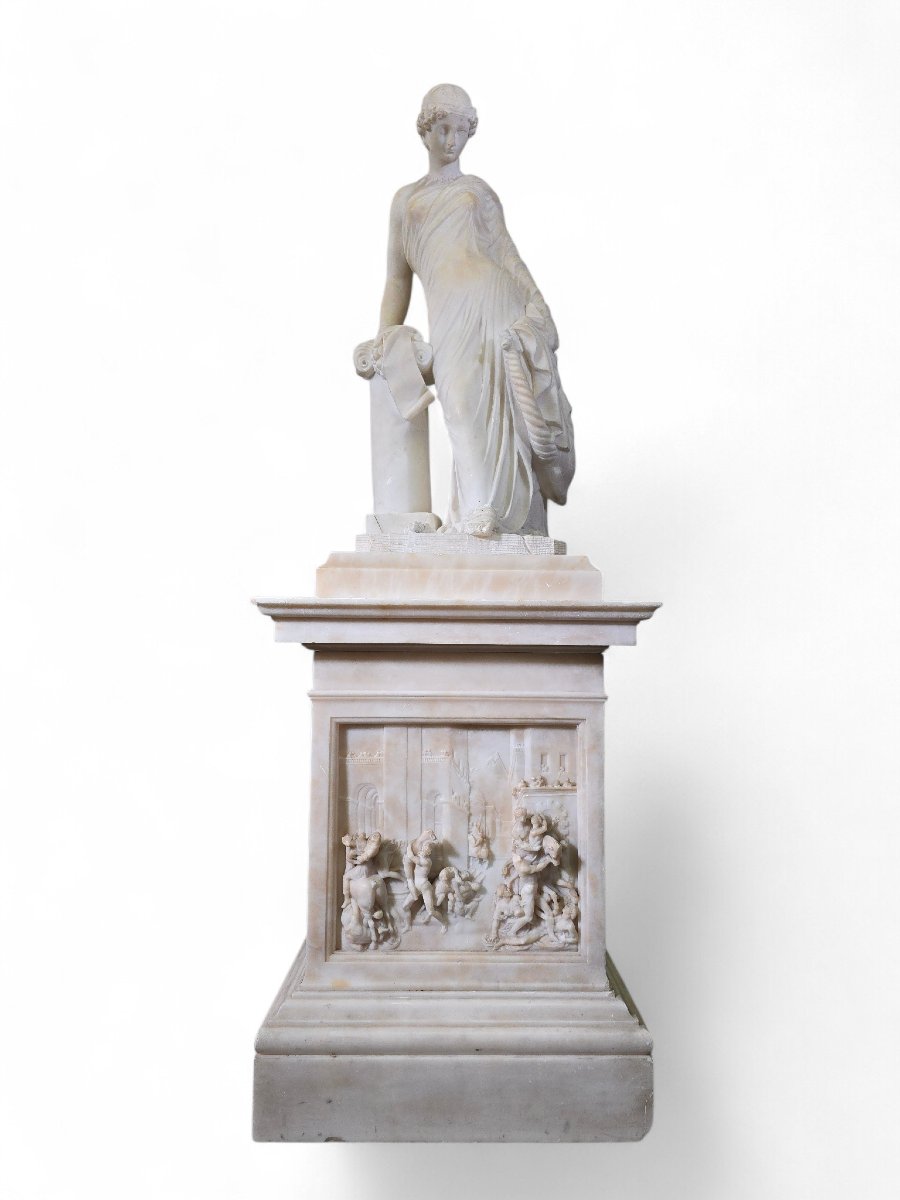
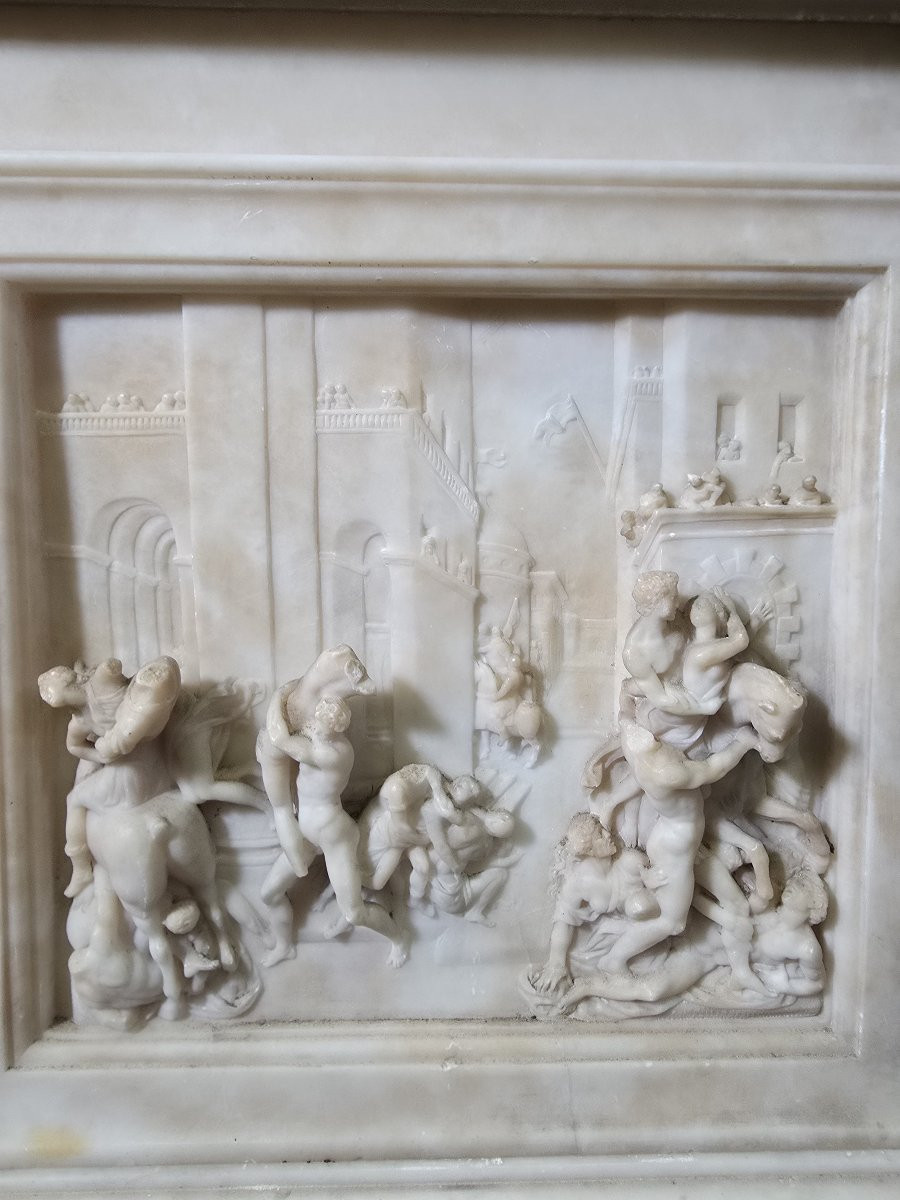
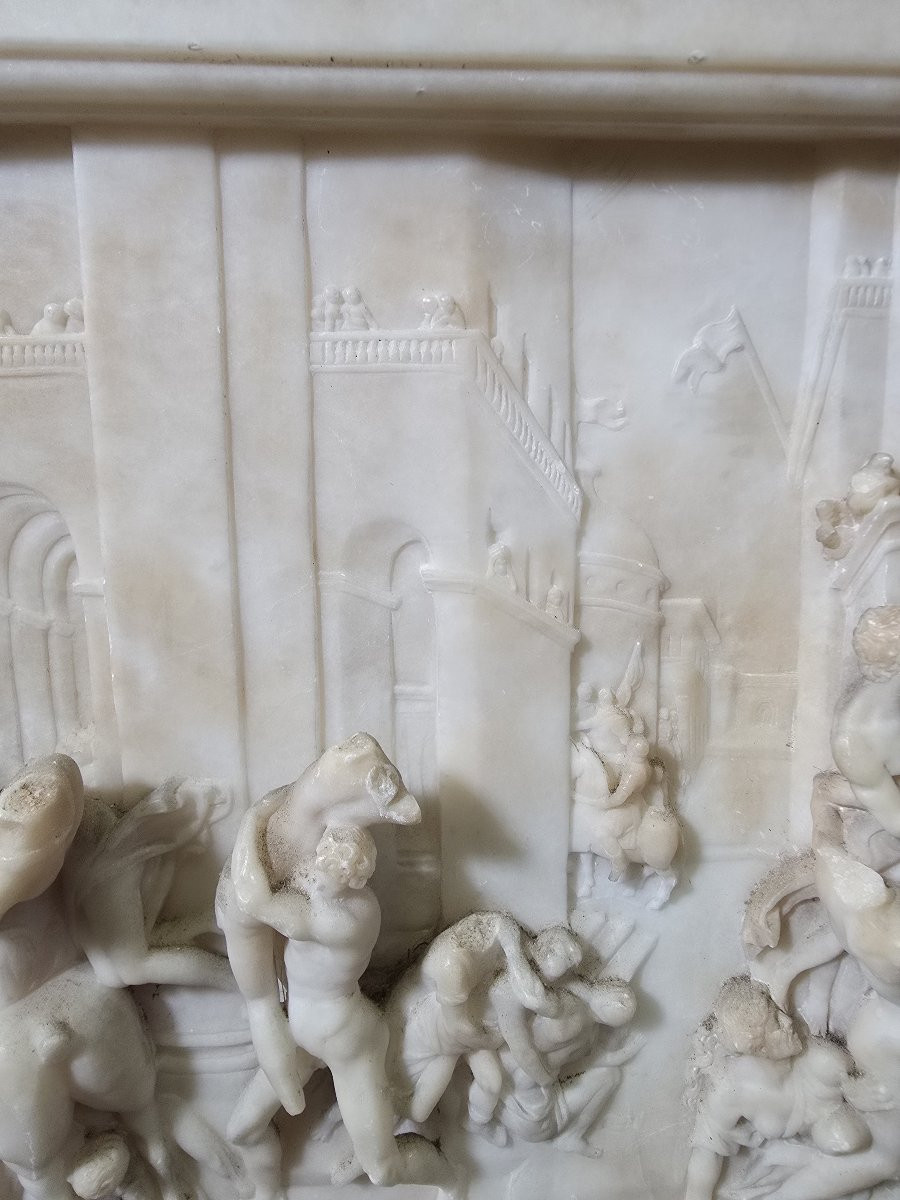
Description: A refined alabaster sculpture of Sappho, created by the Italian School in the 19th century, directly inspired by the famous model by James Pradier, the marble version of which is in the Louvre (inv. RF 2499). The work enjoyed great success throughout the 19th century, particularly after the exhibition of a bronze version at the Salon of 1848, leading to numerous reinterpretations across Europe, in various materials and at different scales. The figure is depicted standing, draped in a finely sculpted peplos whose supple folds hug the body, revealing an idealized conception of female anatomy, rooted in academic classicism. Sappho rests one arm on a fragment of an Ionic column, an iconographic element evoking both classical antiquity and the Romantic notion of ruin and memory. In her other hand, she holds a partially veiled lyre, a traditional attribute of lyric poetry, clearly identifying the subject. Her slightly inclined head and restrained expression convey an introspective melancholy, consistent with the 19th-century interpretation of Sappho as a tragic and poetic figure. The pedestal, adorned with classical moldings, incorporates a finely sculpted relief depicting the Rape of the Sabine Women, adding a historical dimension. This combination reflects the historicist taste of the period, blending references to Greek antiquity with emblematic episodes from Roman legend. Carved from alabaster, a material highly prized in 19th-century Italian workshops for its translucency and luminosity, the sculpture presents a refined surface that accentuates the softness of the volumes and the idealized effect characteristic of late academic production. This work illustrates the role of Italian workshops in disseminating famous sculptural models to an international clientele in the 19th century. A richly decorative piece of great historical importance, it testifies to the enduring influence of Neoclassical ideals within the eclectic taste of the late 19th century. Dimensions: Height: 111 cm Width: 38.5 cm Depth: 38.5 cm Condition: In age-appropriate condition, with minor losses and damage. Structurally sound. Normal surface wear for the material and period.
5 650 €
Period: 19th century
Style: Rome and Antic Greece
Condition: Good condition
Material: Alabaster
Reference (ID): 1731857
Availability: In stock
Print