THIS OBJECT WAS SOLD
Virgin & Child Icon Known As "of Tenderness", Russia, Late 18th Early 19th Cty


RUSSIAN ART, early 19th century
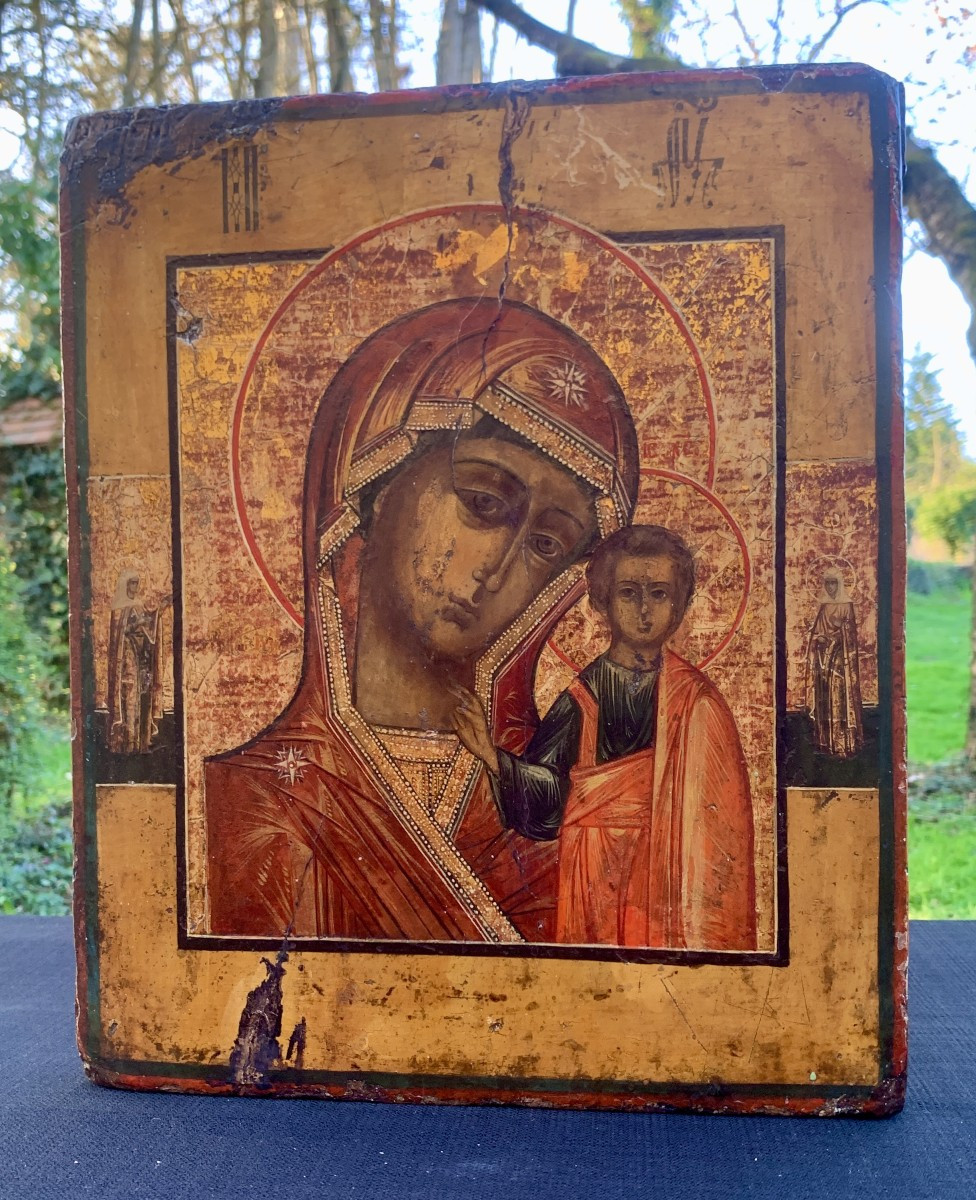
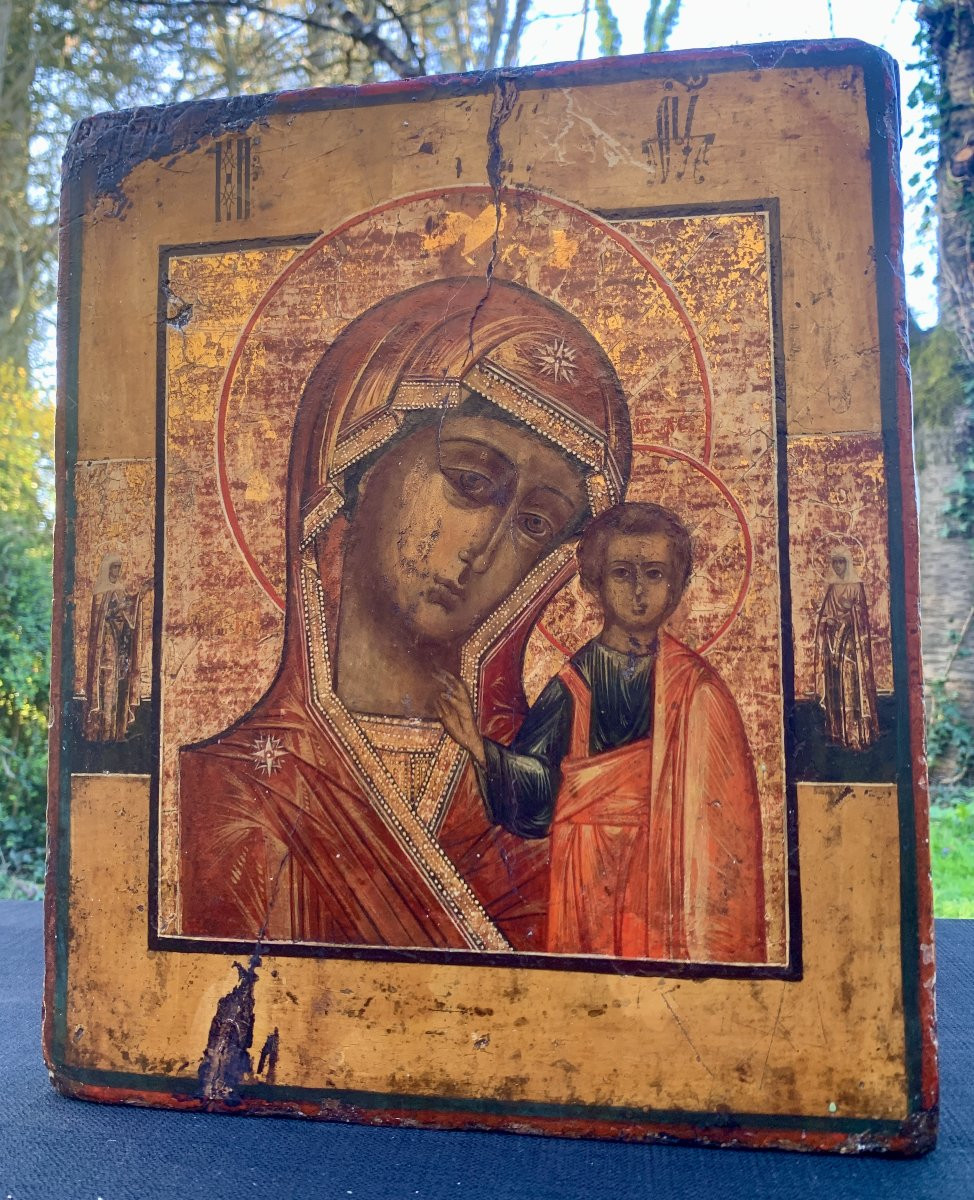
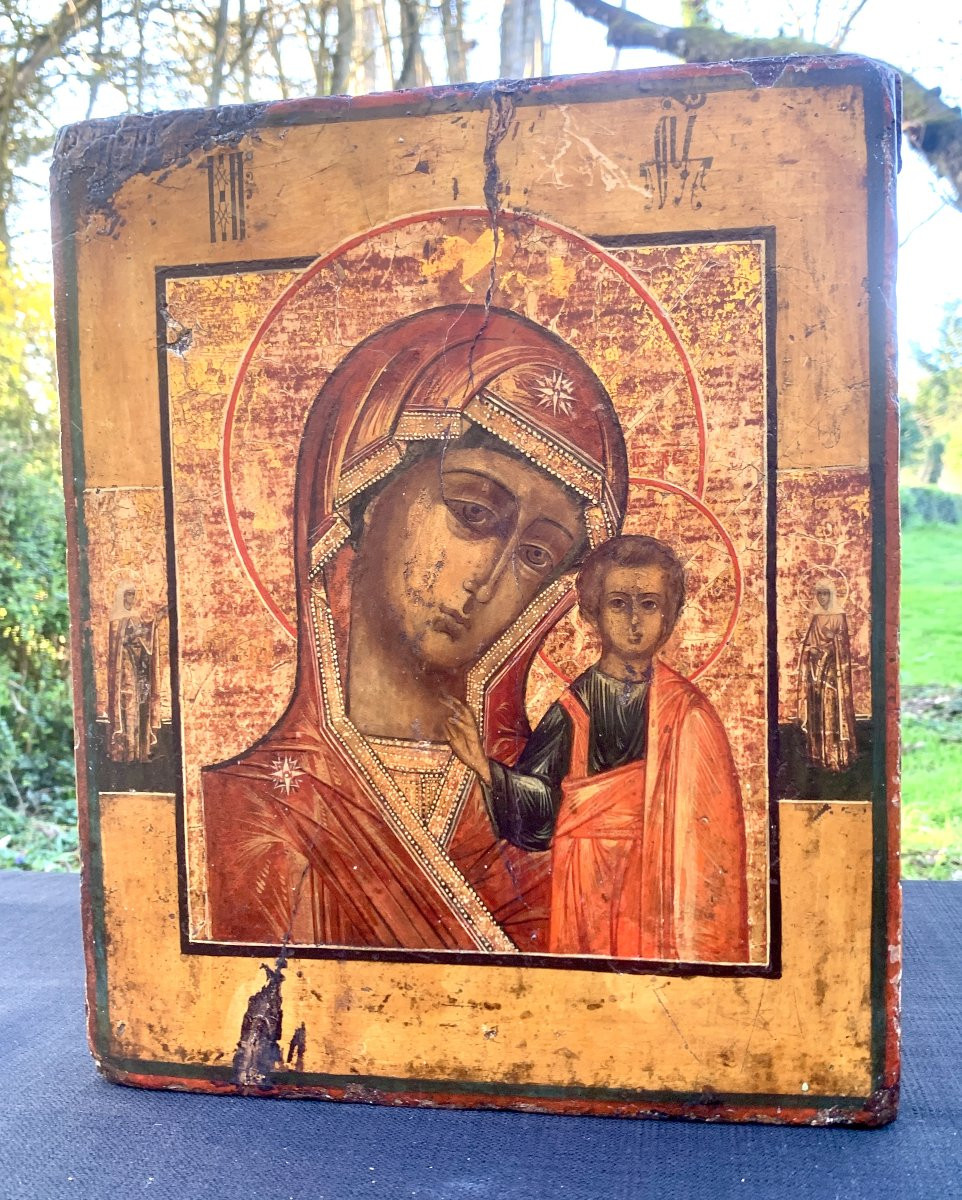
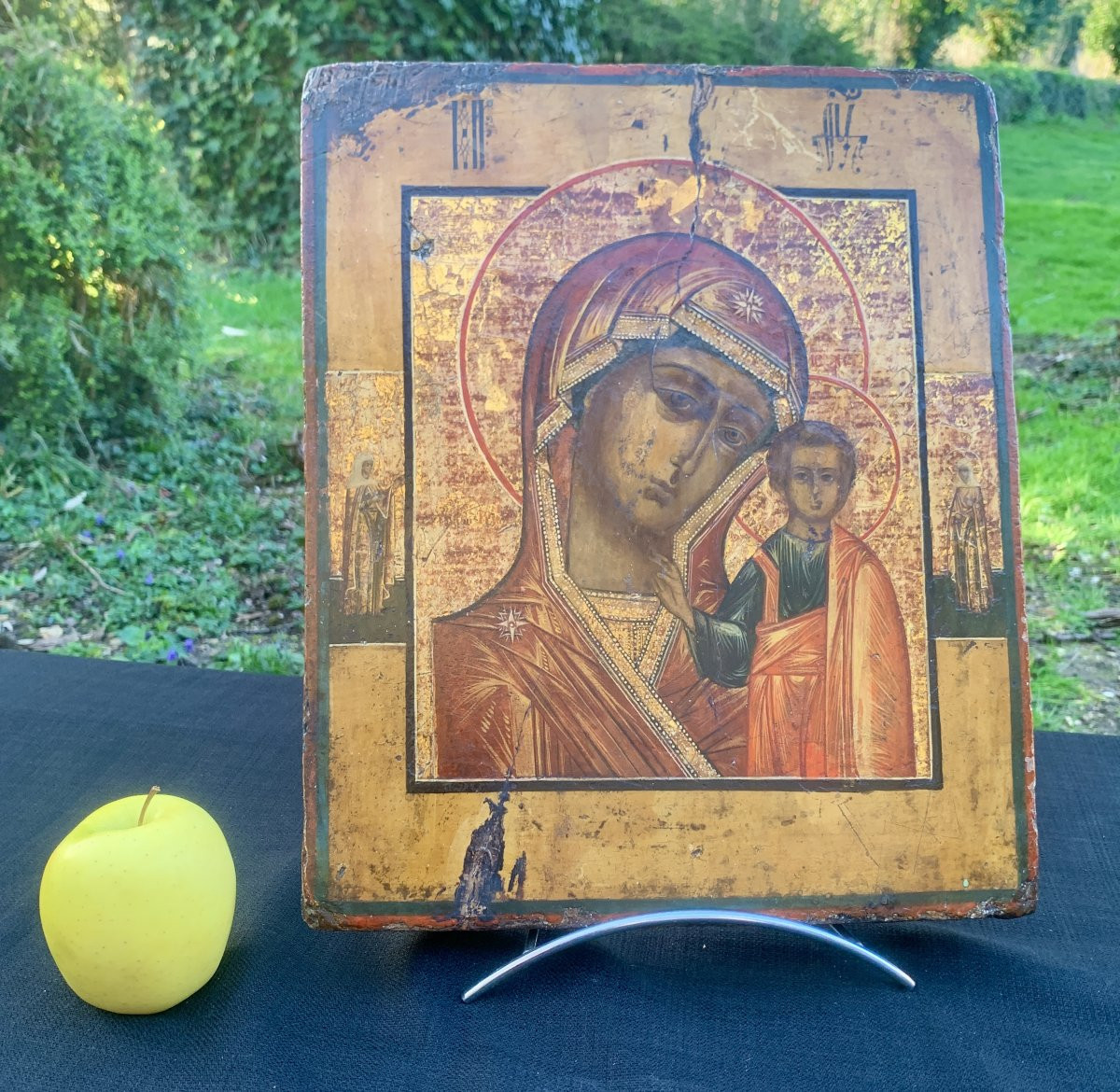
Icon painting depicting the Virgin and Child, called the "Virgin of Tenderness" (ELEOUSA), one of the most common types in Byzantine and Russian iconography.
This icon can be associated with the famous tradition of the Kazan Virgins.
The Virgin is depicted:
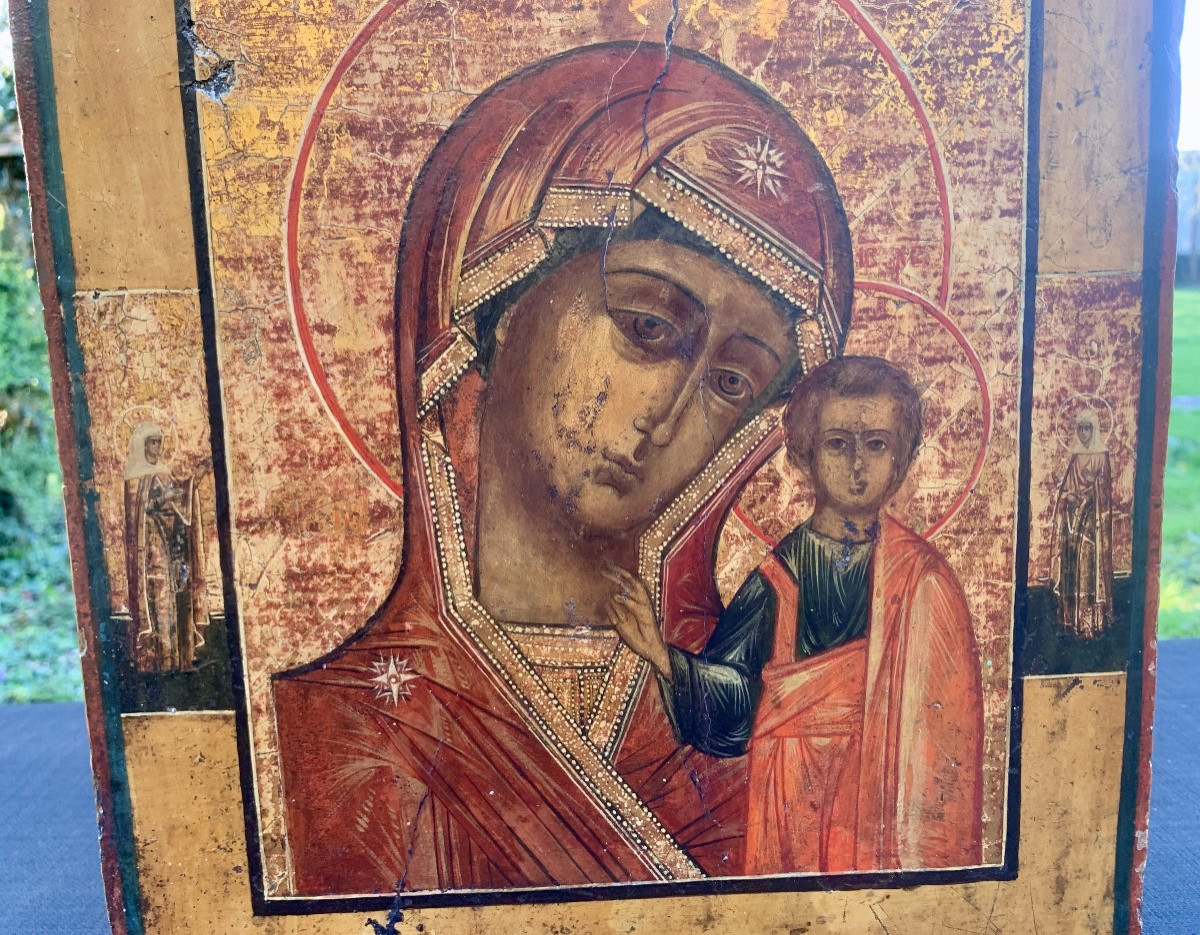
* in bust, slightly inclined toward the Child Jesus whom she touches with her cheek;
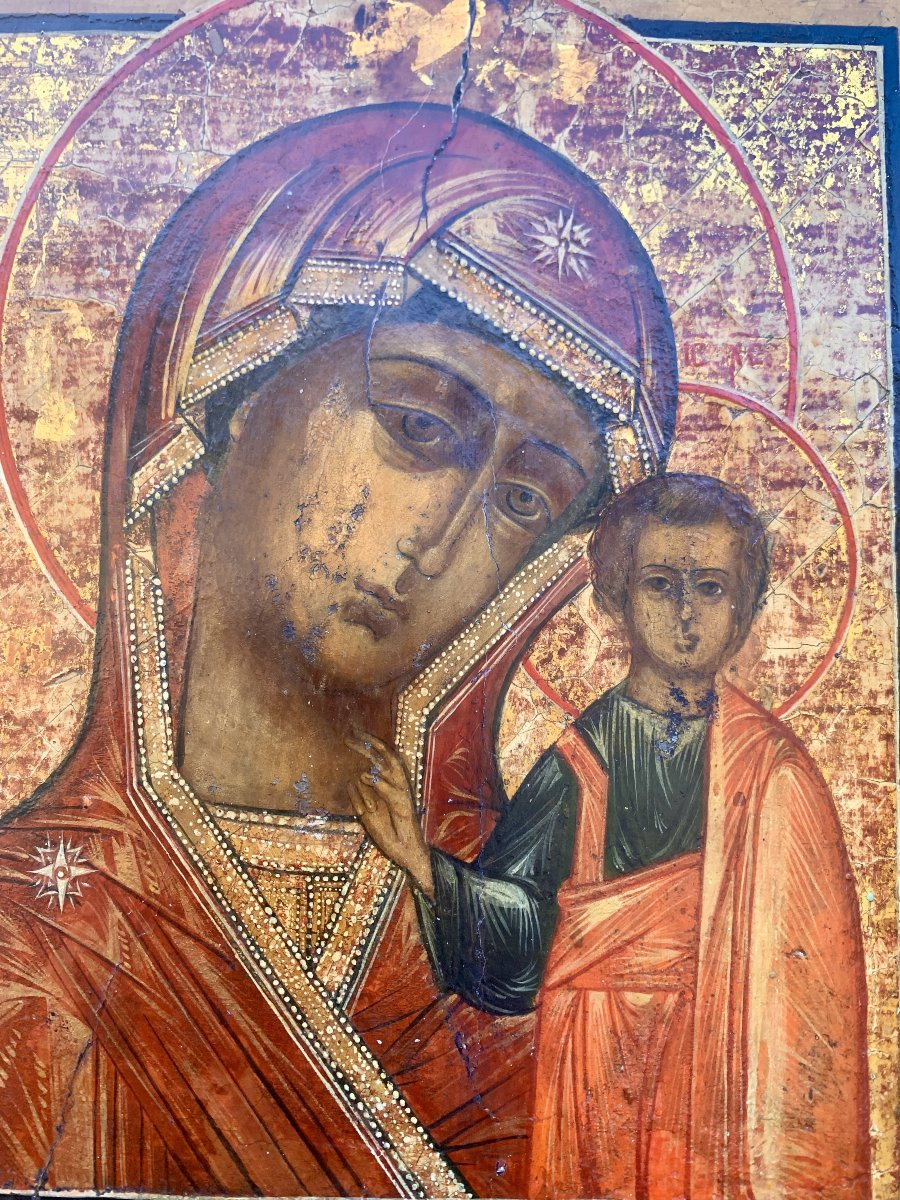
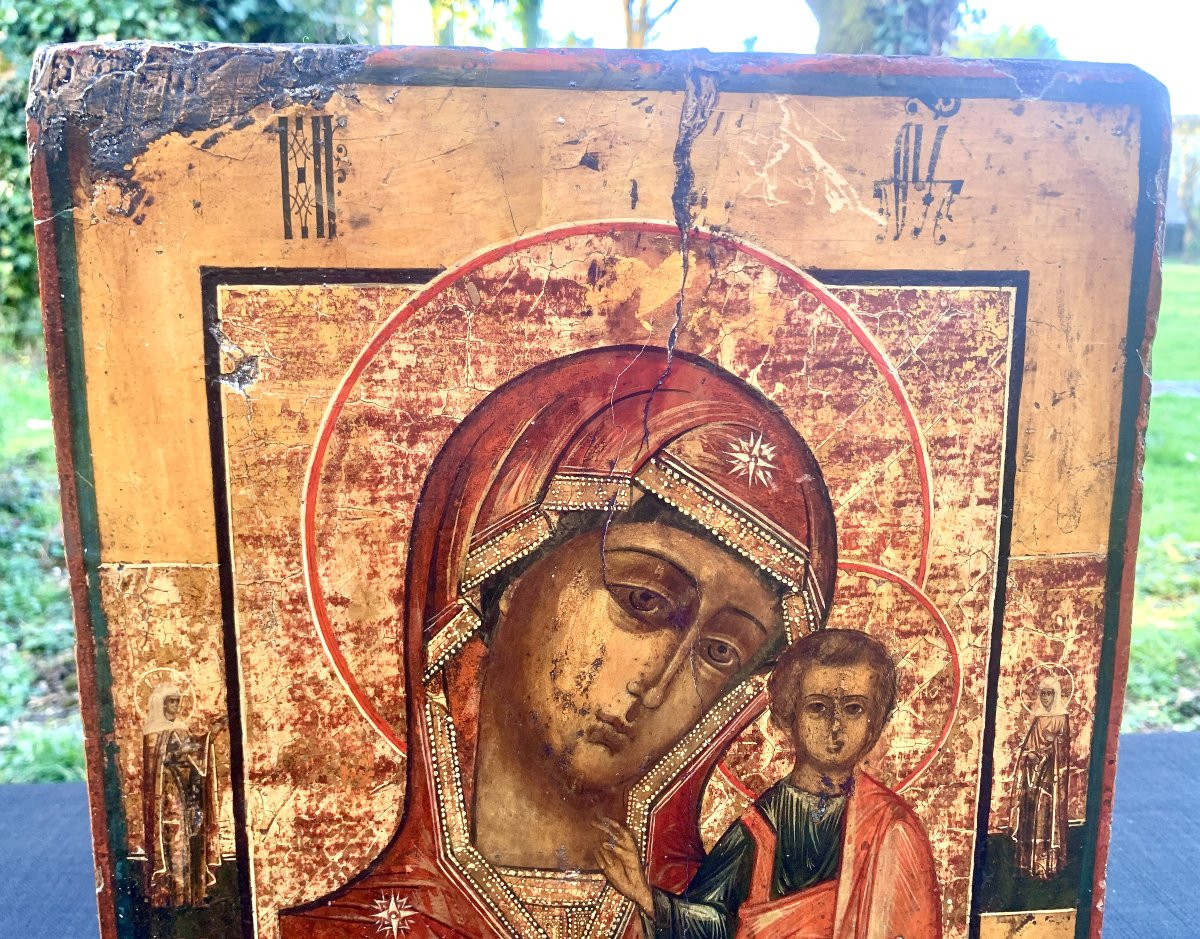
* wearing a dark red-brown maforion adorned with a star on the forehead and shoulder (symbol of virginity before, during, and after the birth of Christ);
* the Child is in a green tunic and orange-red himation, raising the right hand in blessing and holding a scroll in the left (symbol of the Law and Wisdom).
This Byzantine-origin iconographic type spread to Russia from the 12th century via Constantinople and was very popular until the 19th century.
The gold background, deep red, and highlights of light ochre are typical of the color palettes of post-Byzantine Russian icons (17th–19th centuries). The cracked appearance and oxidation of the varnish are consistent with the 19th-century period.
The facial features and modeling show a softened but hieratic style, characteristic once again of Russian schools from the late 18th or early 19th century: The faces are elongated, the eyes almond-shaped with greenish shadows and very precise light highlights.
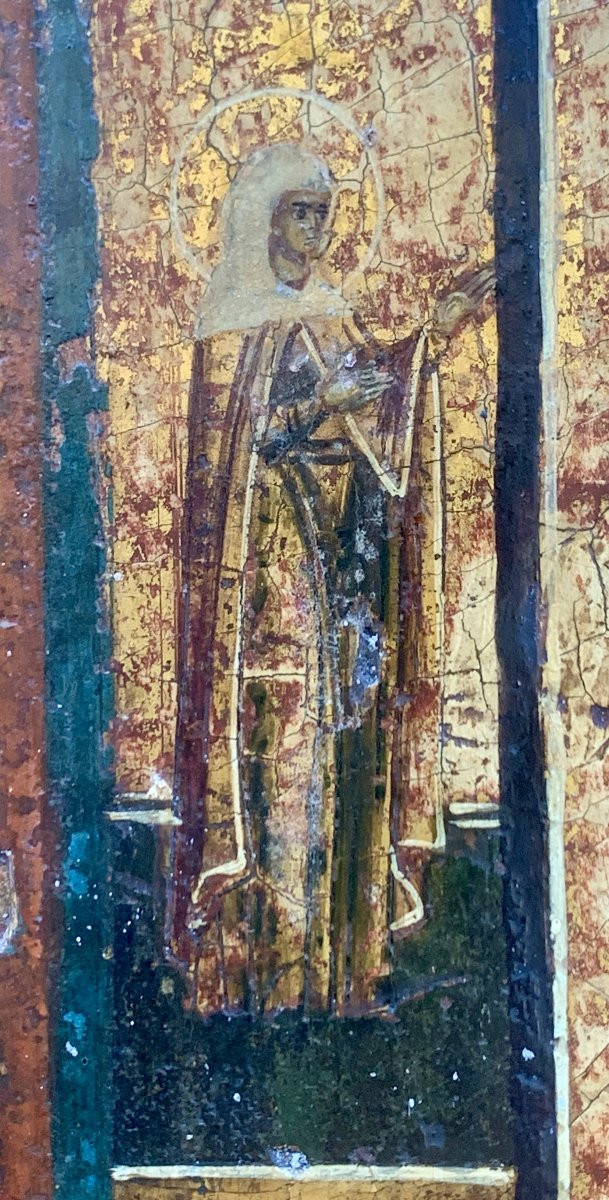
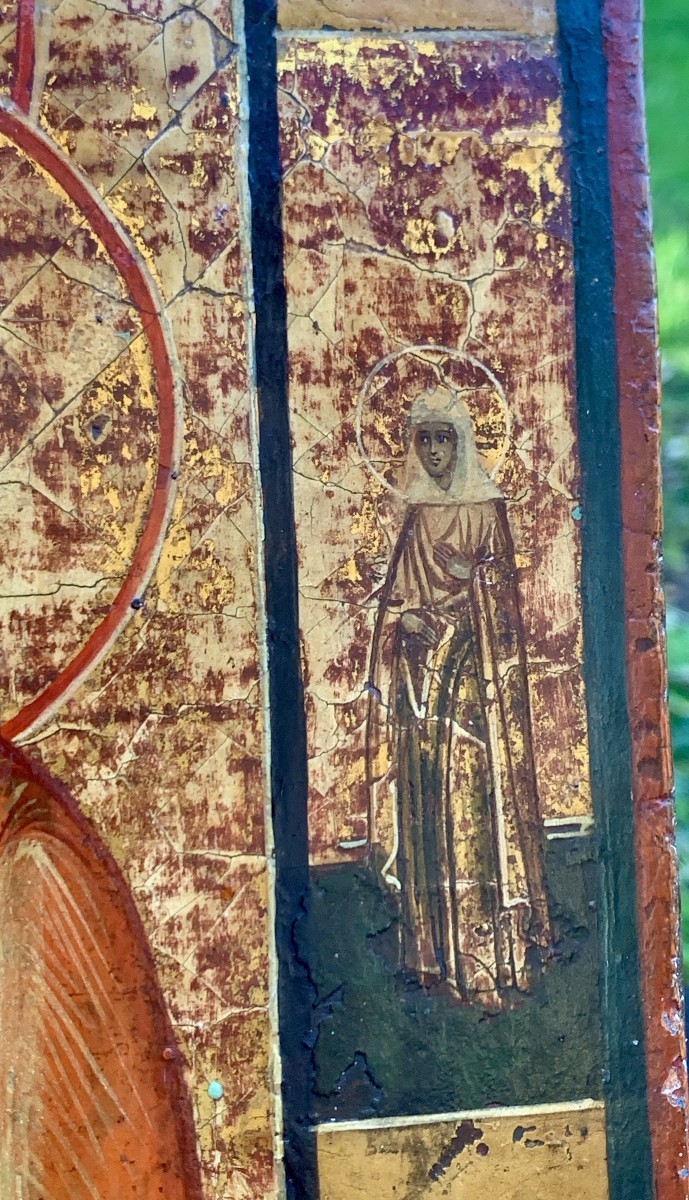
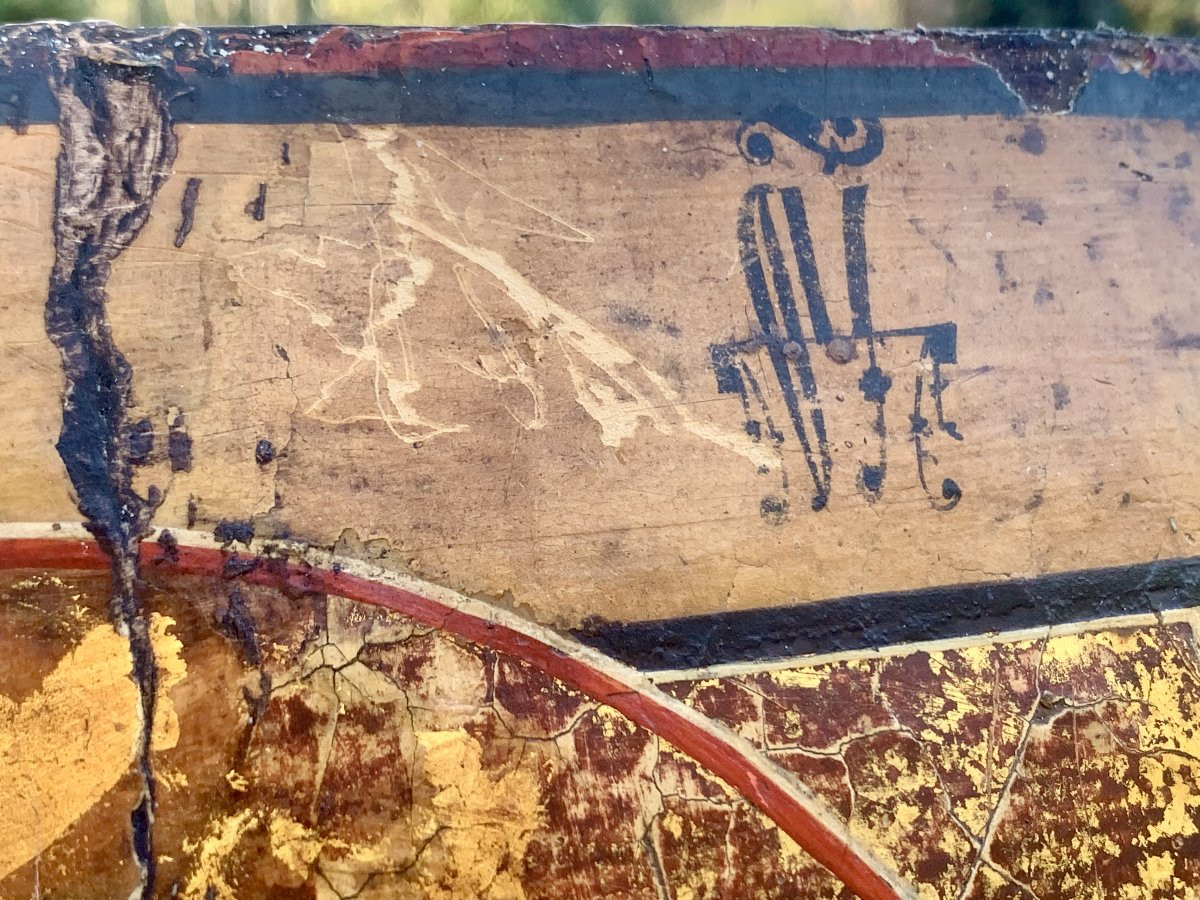
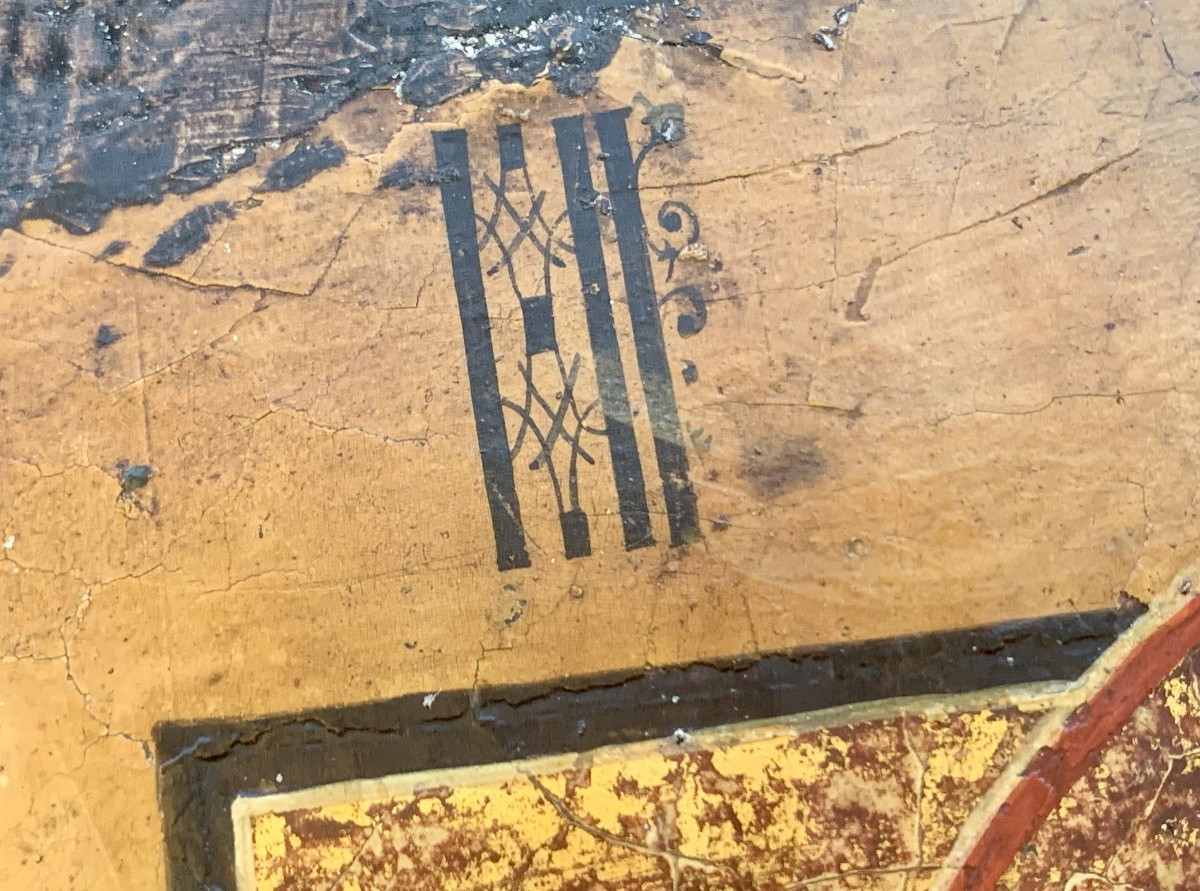
The type of framing and the painted border with figures of saints in the margins, the black inner frame, and the golden background indicate a classical Russian work. Stylized inscriptions on the upper register are abbreviations in Church Slavonic (the liturgical language of Orthodox icons) that can generally be translated as "Jesus Christ".
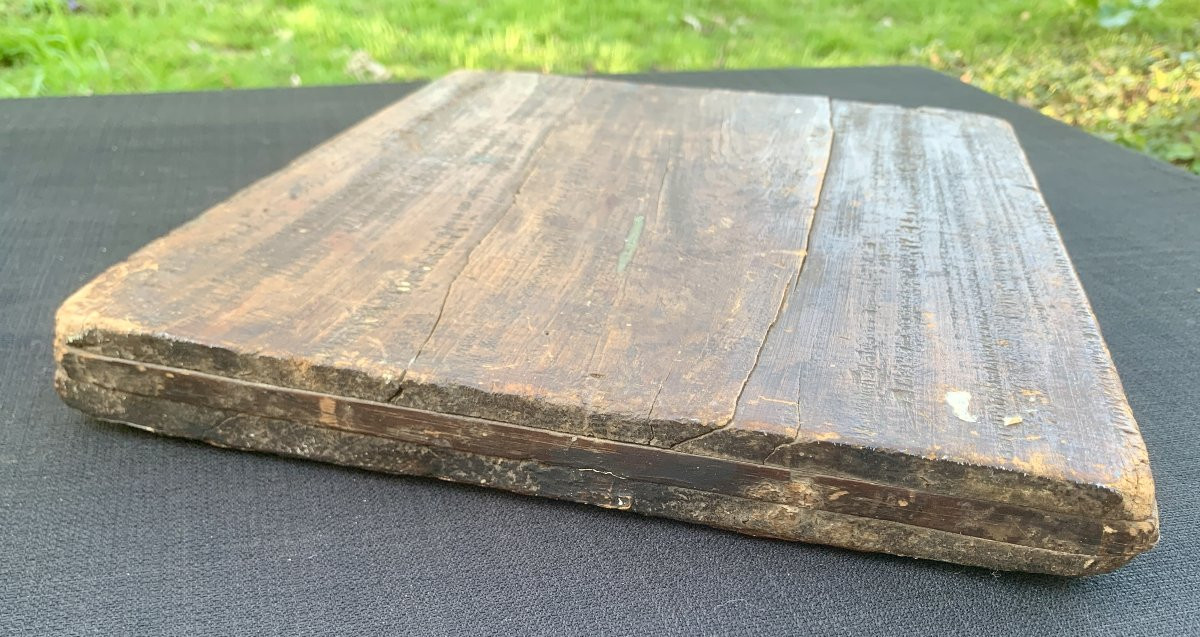
Condition: There is a vertical crack in the wood visible in the photos, wear of the gilding, and small losses of polychromy that do not affect the readability of the work.
Dimensions: 35 cm height * 28.5 cm width * 3.5 cm thickness.
Icon painting depicting the Virgin and Child, called the "Virgin of Tenderness" (ELEOUSA), one of the most common types in Byzantine and Russian iconography.
This icon can be associated with the famous tradition of the Kazan Virgins.
The Virgin is depicted:
* in bust, slightly inclined toward the Child Jesus whom she touches with her cheek;
* wearing a dark red-brown maforion adorned with a star on the forehead and shoulder (symbol of virginity before, during, and after the birth of Christ);
* the Child is in a green tunic and orange-red himation, raising the right hand in blessing and holding a scroll in the left (symbol of the Law and Wisdom).
This Byzantine-origin iconographic type spread to Russia from the 12th century via Constantinople and was very popular until the 19th century.
The gold background, deep red, and highlights of light ochre are typical of the color palettes of post-Byzantine Russian icons (17th–19th centuries). The cracked appearance and oxidation of the varnish are consistent with the 19th-century period.
The facial features and modeling show a softened but hieratic style, characteristic once again of Russian schools from the late 18th or early 19th century: The faces are elongated, the eyes almond-shaped with greenish shadows and very precise light highlights.
The type of framing and the painted border with figures of saints in the margins, the black inner frame, and the golden background indicate a classical Russian work. Stylized inscriptions on the upper register are abbreviations in Church Slavonic (the liturgical language of Orthodox icons) that can generally be translated as "Jesus Christ".
Condition: There is a vertical crack in the wood visible in the photos, wear of the gilding, and small losses of polychromy that do not affect the readability of the work.
Dimensions: 35 cm height * 28.5 cm width * 3.5 cm thickness.
Explore similar pieces and discover your ideal find:
Christian Art