THIS OBJECT WAS SOLD
Archaeology: 1st Cty Bc, Hellenistic Perfume Bottle, Molded Glass With Medallions & Lozenges


ARCHAEOLOGY
Eastern Mediterranean (Syria, Palestine, or Egypt)
or Italy (note that Italian workshops were influenced by Eastern productions circulating throughout the Roman Empire)
Circa 80-50 BC
Hellenistic or Roman glass derived from hellenistic traditions
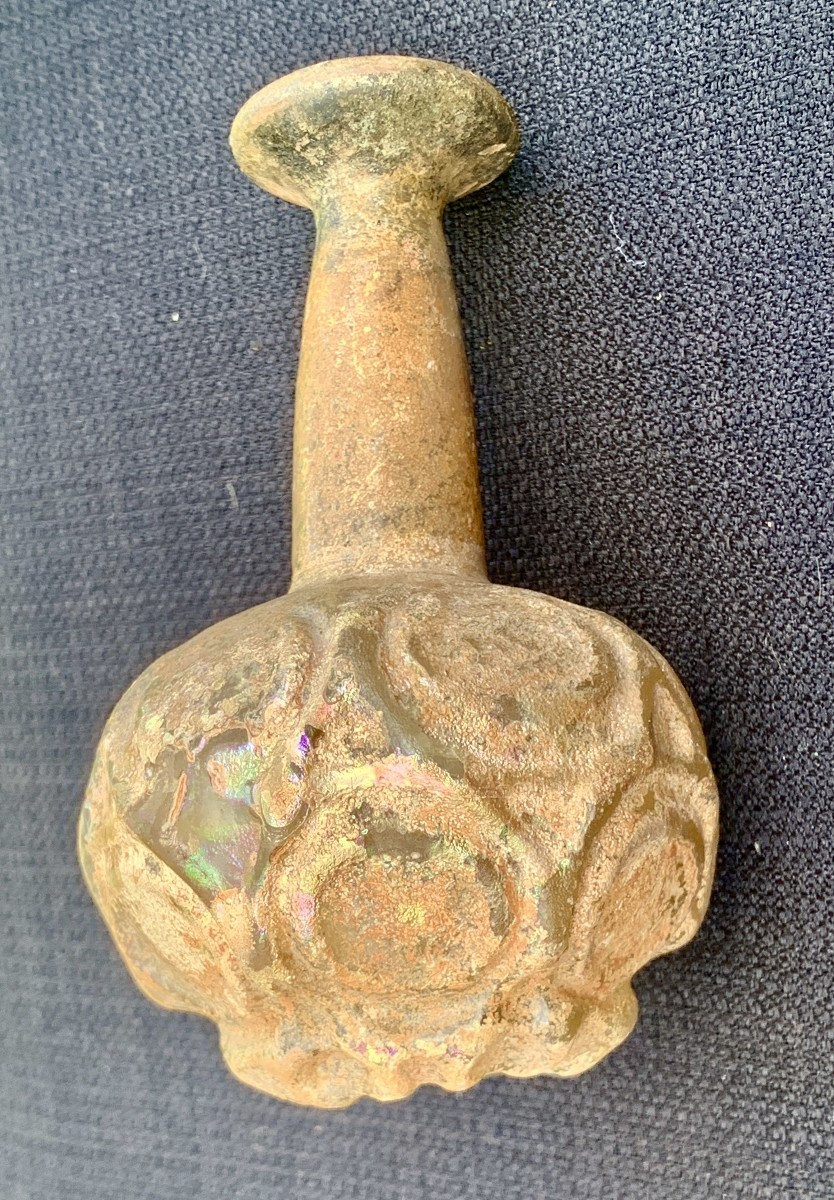
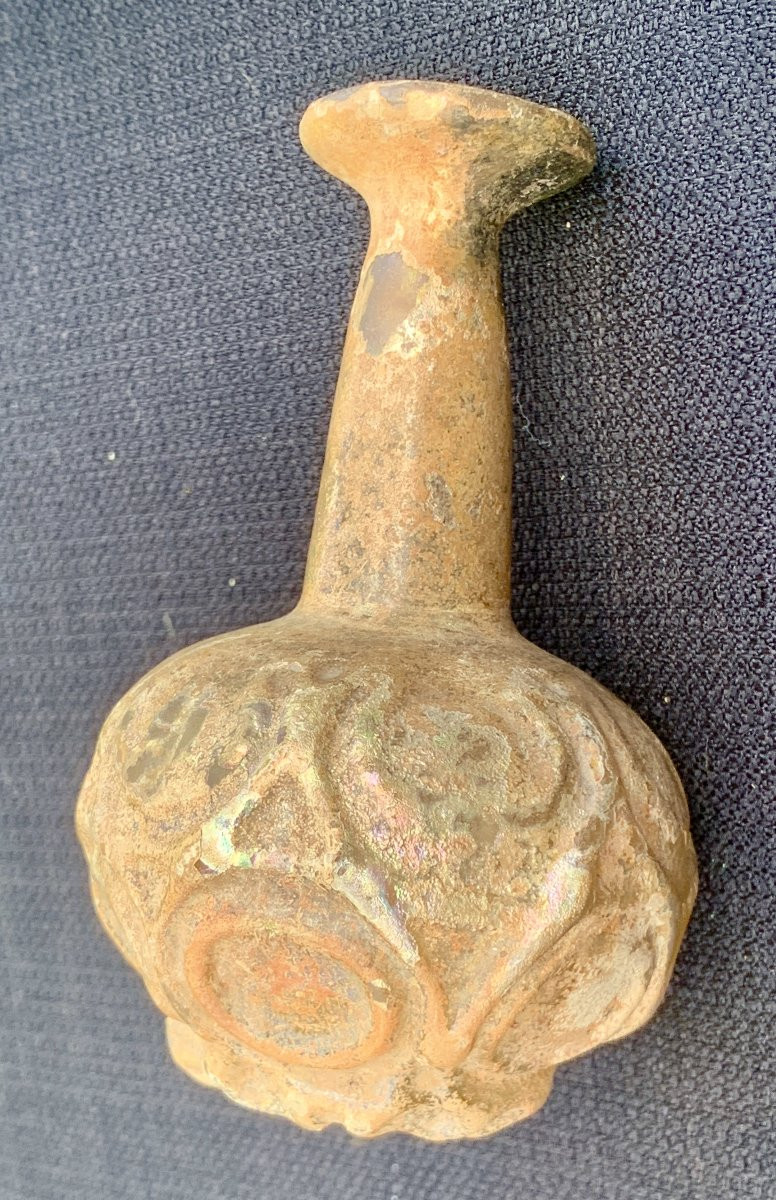
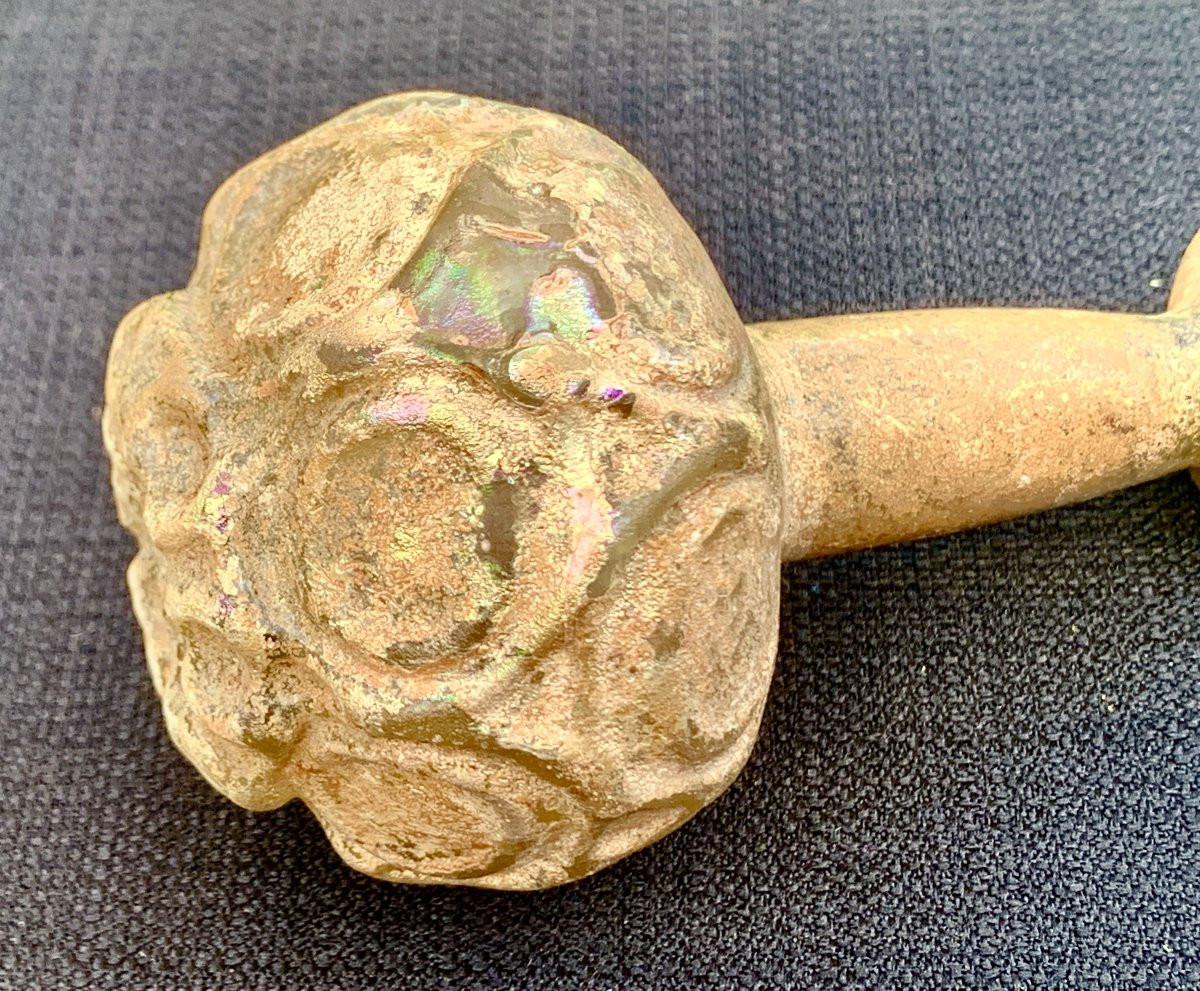
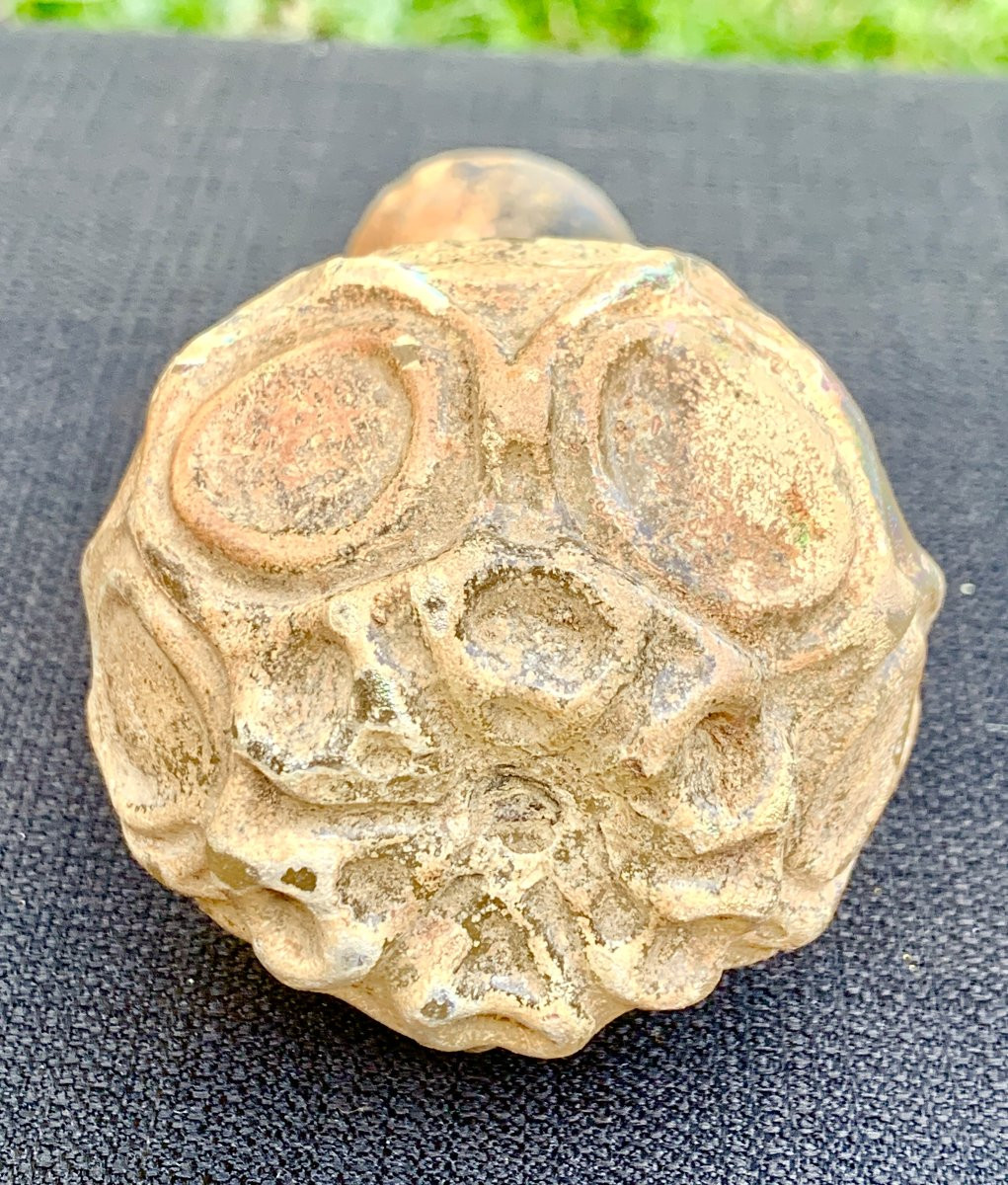
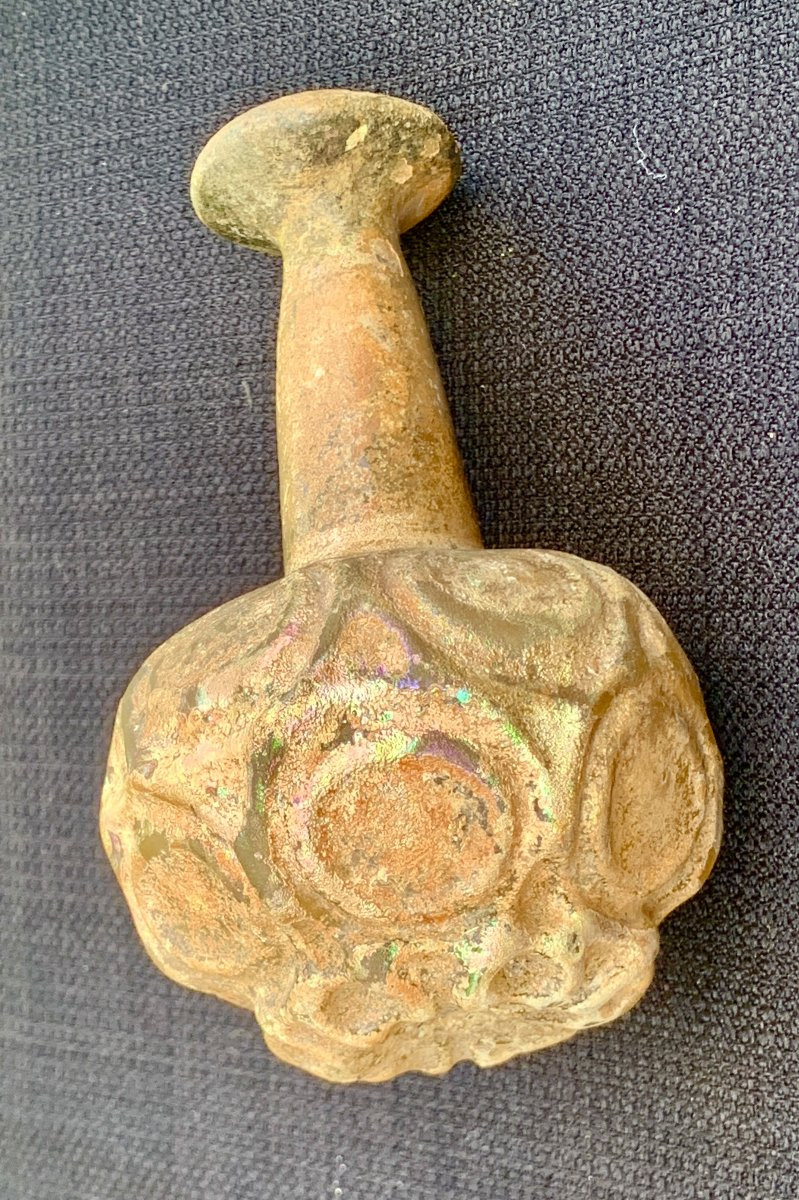
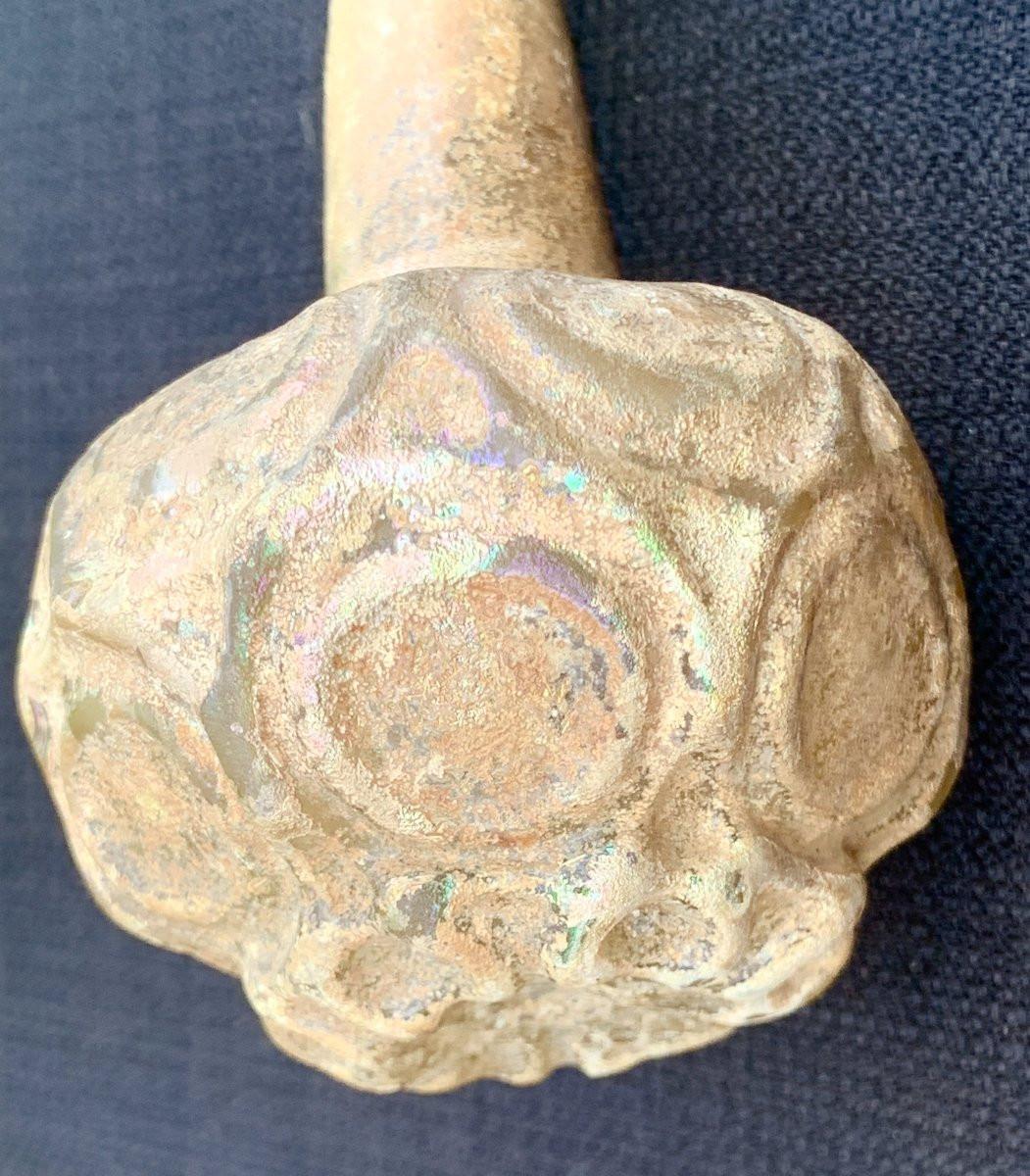
Superb small vase, or rather perfume or ointment bottle (UNGUENTARIUM / ARYBALLOID), in molded glass, with a structured relief decoration of medallions and pellets or umbilicus. The shape, with a flattened globular body and medallions, suggests luxury or semi-luxury productions.
These molded glass pieces are rarer and predate the technique of Roman blown glass (appearing in the 1st century BC).
The glass is then thicker, with a stubby neck and a massive lip. The compact, almost sculptural form, with its radiating and imperfectly geometric decoration (a handcrafted, non-standardized molded piece), is inherited from Hellenistic metal vases.
It displays a very beautiful and elegant multicolored iridescence, primarily in shades of pink to violet, reflecting an alteration of the glass's glaze resulting from a long period of burial and a reaction in damp soil to the oxidation of metallic elements present in the ground.
It is in excellent condition, without any restoration.
Dimensions:
6.5 cm diameter and 11 cm height.
Please check my other listings for another very beautiful Roman-era glass, from same collection.
Eastern Mediterranean (Syria, Palestine, or Egypt)
or Italy (note that Italian workshops were influenced by Eastern productions circulating throughout the Roman Empire)
Circa 80-50 BC
Hellenistic or Roman glass derived from hellenistic traditions
Superb small vase, or rather perfume or ointment bottle (UNGUENTARIUM / ARYBALLOID), in molded glass, with a structured relief decoration of medallions and pellets or umbilicus. The shape, with a flattened globular body and medallions, suggests luxury or semi-luxury productions.
These molded glass pieces are rarer and predate the technique of Roman blown glass (appearing in the 1st century BC).
The glass is then thicker, with a stubby neck and a massive lip. The compact, almost sculptural form, with its radiating and imperfectly geometric decoration (a handcrafted, non-standardized molded piece), is inherited from Hellenistic metal vases.
It displays a very beautiful and elegant multicolored iridescence, primarily in shades of pink to violet, reflecting an alteration of the glass's glaze resulting from a long period of burial and a reaction in damp soil to the oxidation of metallic elements present in the ground.
It is in excellent condition, without any restoration.
Dimensions:
6.5 cm diameter and 11 cm height.
Please check my other listings for another very beautiful Roman-era glass, from same collection.
Explore similar pieces and discover your ideal find:
archeology