THIS OBJECT WAS SOLD
Jean Cocteau - Original Signed Drawing - "oedipus Guided By His Daughters" - 1952 - Mythology


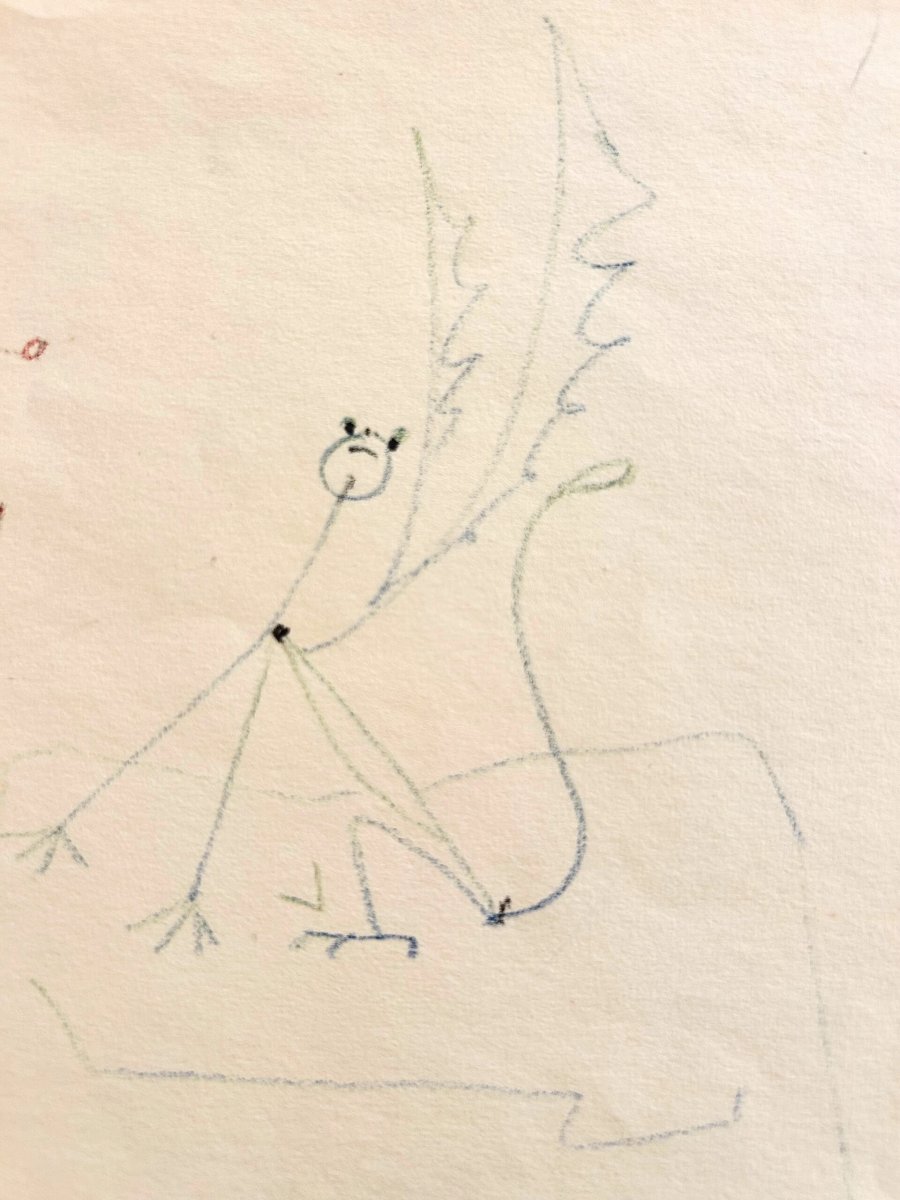
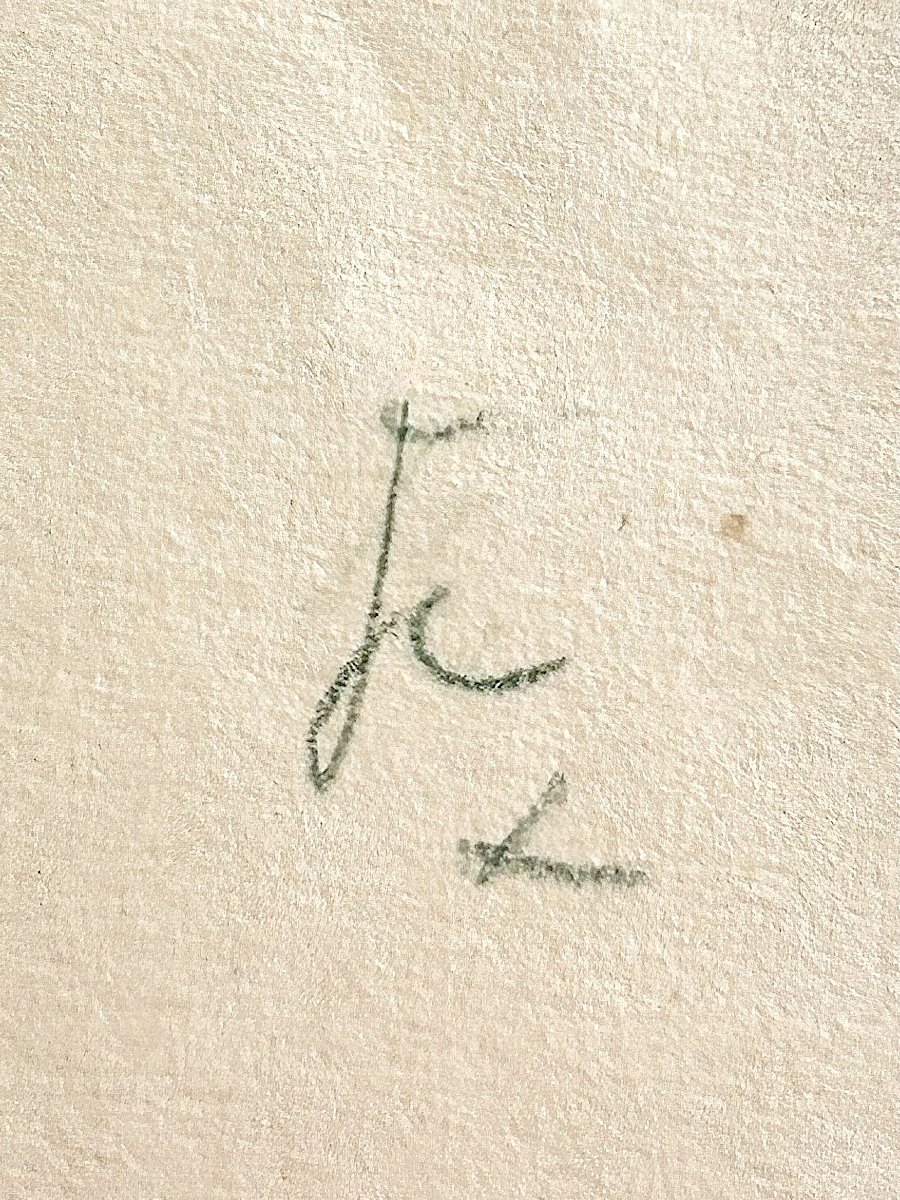
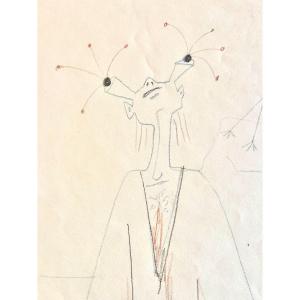


Original drawing signed by Jean Cocteau (1889-1963). "Oedipus Guided by His Daughters."
Circa 1952.
Colored pencils.
Large format: 42 x 29 cm. Signed "JC."
This drawing is listed in the Guédras archives and accompanied by a certificate of authenticity from Annie Guédras, expert on the work of Jean Cocteau.
The theme of Oedipus is the central thread running through Cocteau's work. From The Infernal Machine (1934) to his last film, The Testament of Orpheus (1960), Cocteau constantly reinterpreted the Greek tragedy. In this 1952 drawing, Cocteau explores the melancholic phase of the myth: that of Oedipus, blind and fallen, supported by Antigone and Ismene. A winged creature (sphinx) in the background on its rock (traditionally perched on Mount Phicium, a steep rock overlooking the road to Thebes) accompanies the shadow cast by the past, the embodiment of the tragic destiny that relentlessly pursues this family.
The drawing was created during Cocteau's extended stay at the Villa Santo Sospir in Saint-Jean-Cap-Ferrat. His style became freer, influenced by the frescoes he painted on the villa's walls. We find here that economy of means where "the line is a poem unfolding." A moving drawing with a strong symbolic charge.
Circa 1952.
Colored pencils.
Large format: 42 x 29 cm. Signed "JC."
This drawing is listed in the Guédras archives and accompanied by a certificate of authenticity from Annie Guédras, expert on the work of Jean Cocteau.
The theme of Oedipus is the central thread running through Cocteau's work. From The Infernal Machine (1934) to his last film, The Testament of Orpheus (1960), Cocteau constantly reinterpreted the Greek tragedy. In this 1952 drawing, Cocteau explores the melancholic phase of the myth: that of Oedipus, blind and fallen, supported by Antigone and Ismene. A winged creature (sphinx) in the background on its rock (traditionally perched on Mount Phicium, a steep rock overlooking the road to Thebes) accompanies the shadow cast by the past, the embodiment of the tragic destiny that relentlessly pursues this family.
The drawing was created during Cocteau's extended stay at the Villa Santo Sospir in Saint-Jean-Cap-Ferrat. His style became freer, influenced by the frescoes he painted on the villa's walls. We find here that economy of means where "the line is a poem unfolding." A moving drawing with a strong symbolic charge.
Explore similar pieces and discover your ideal find:
drawings