


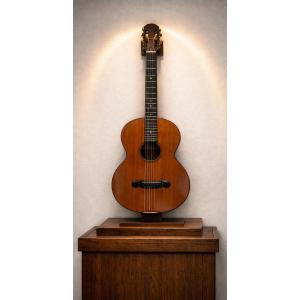


Italian Romantic Guitar Made By Gaetano Guadagnini In Turin In 1839
Artist: Guadagnini
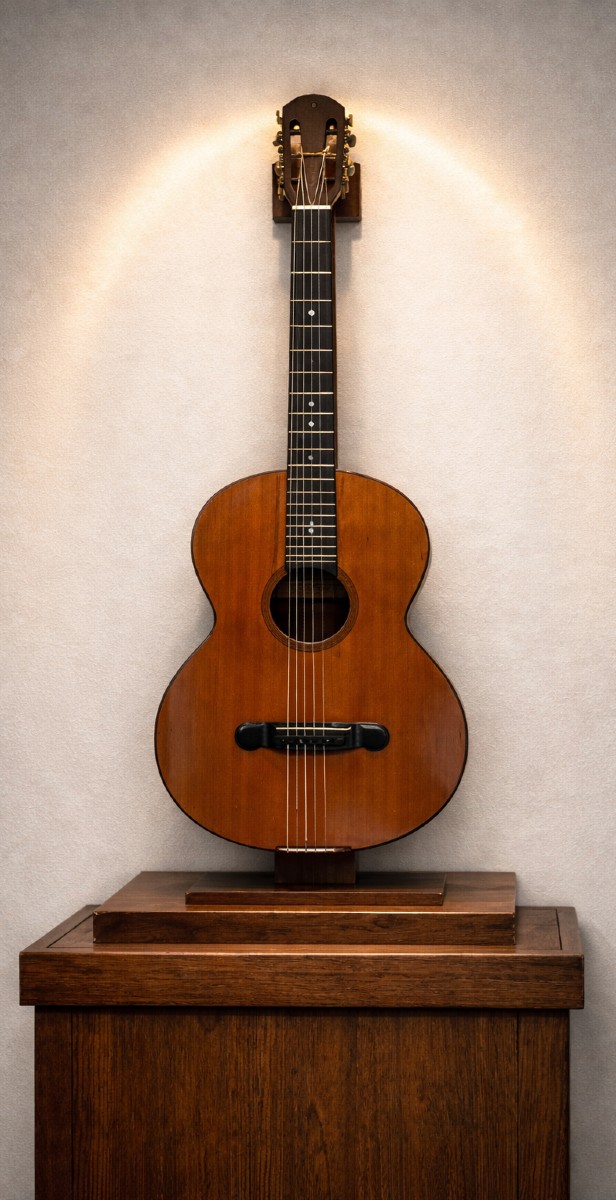
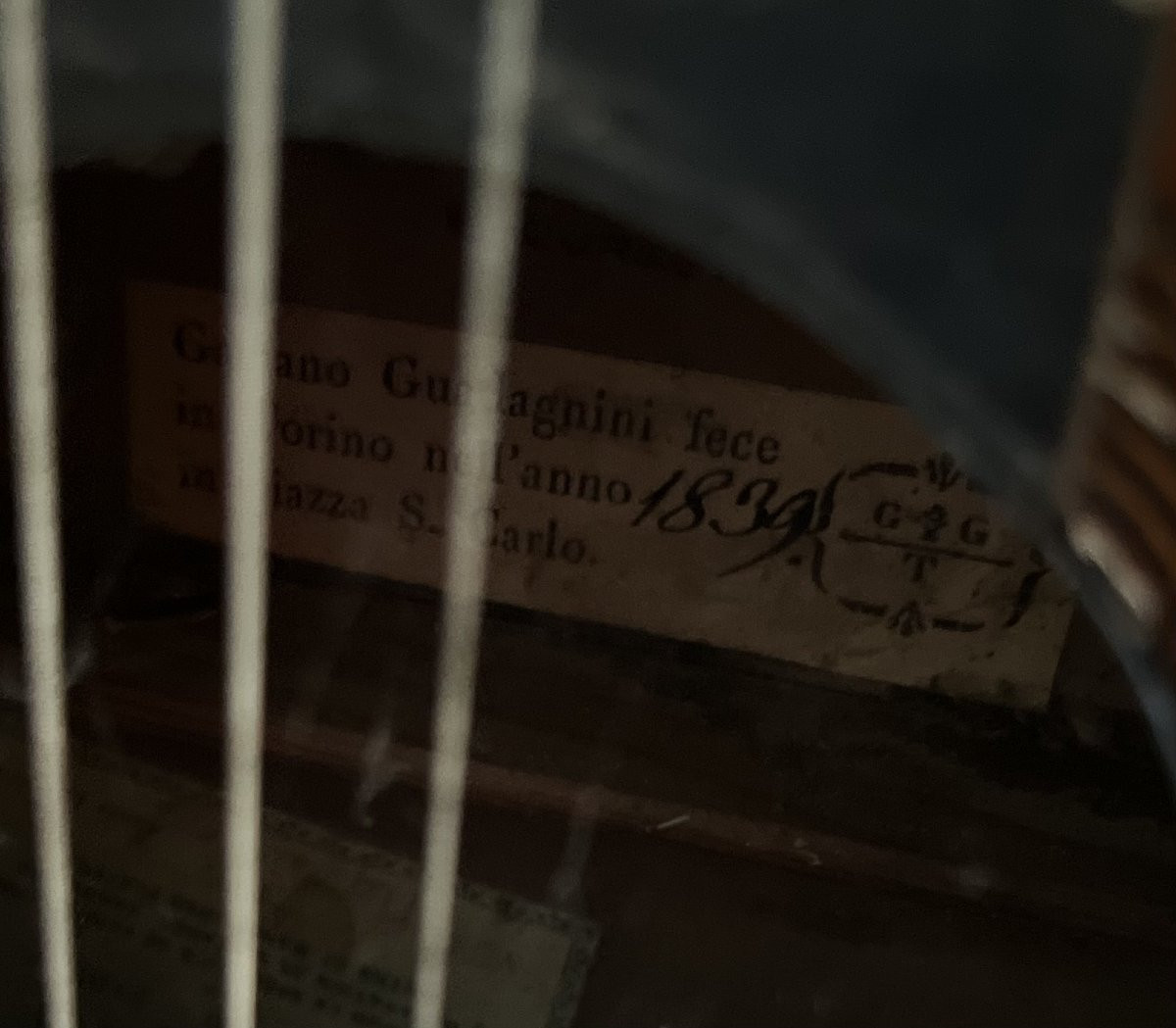
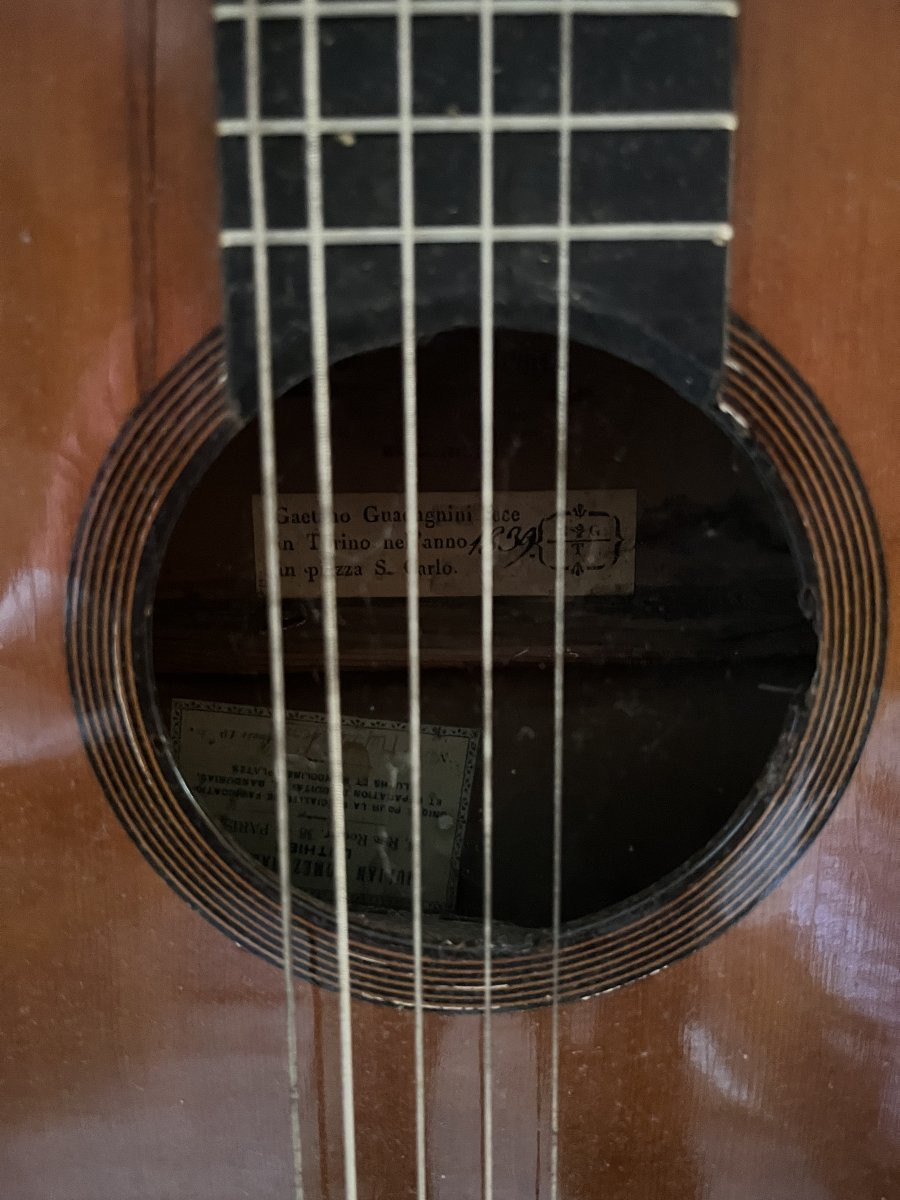
An exceptional Italian Romantic guitar made by Gaetano Guadagnini in Turin in 1839,
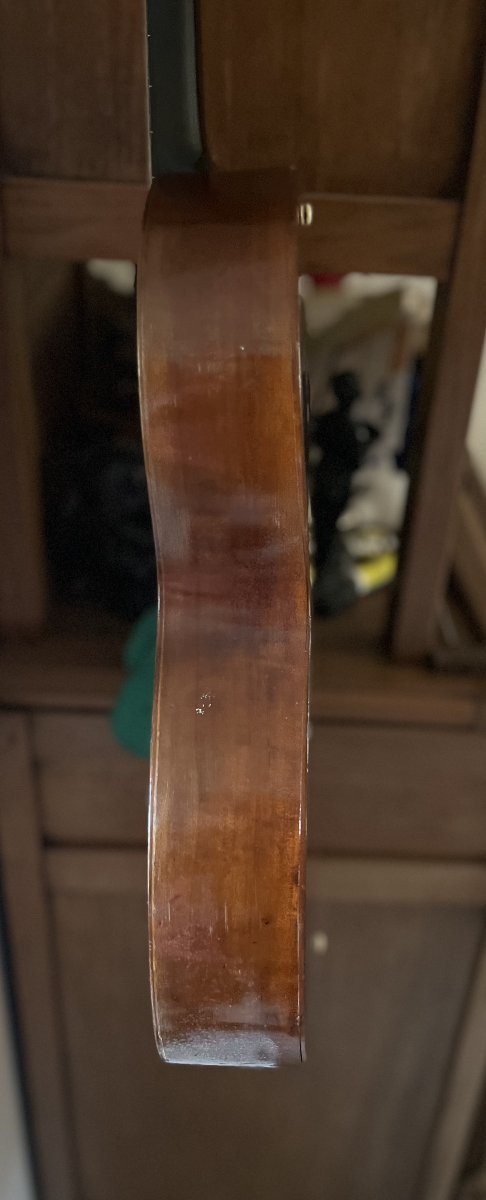
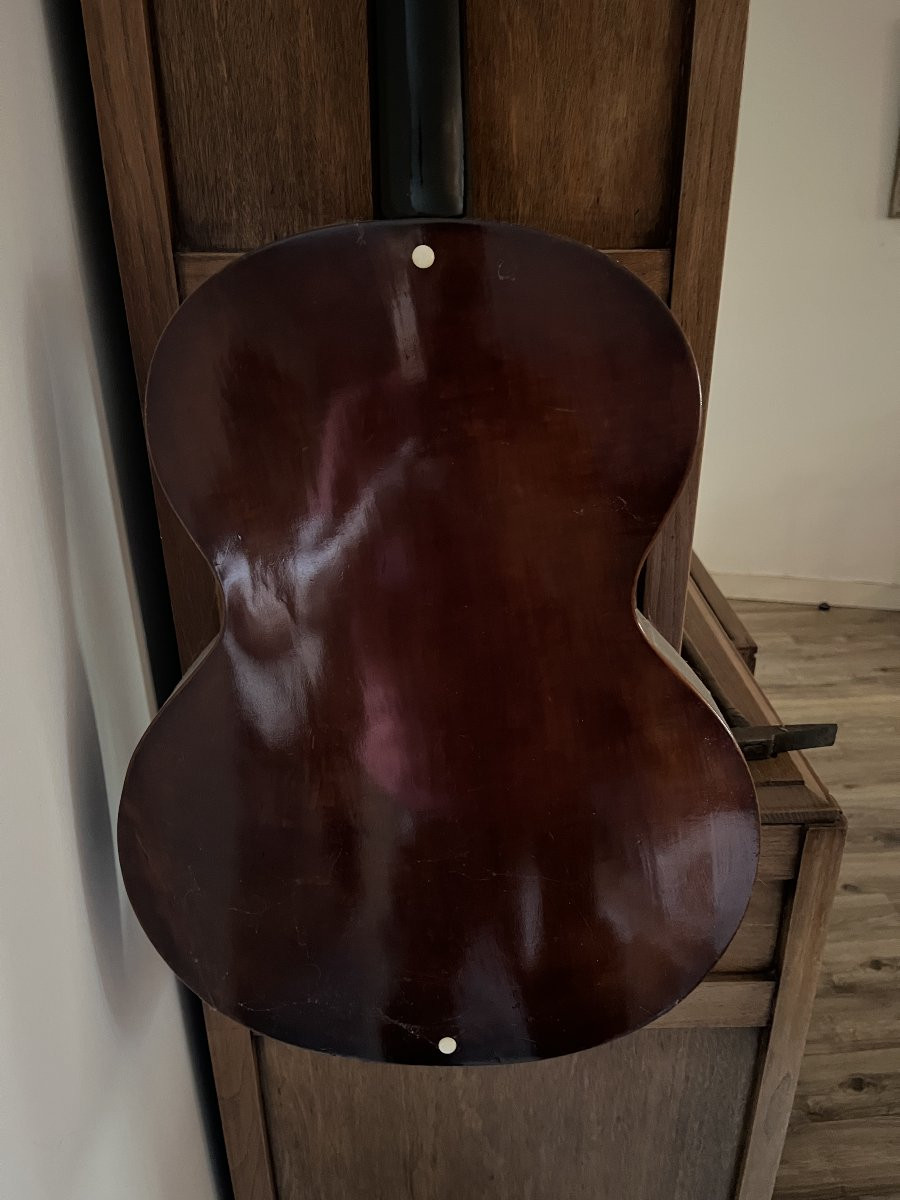
belonging to one of the most illustrious dynasties of European violin makers. This rare instrument testifies to the continuity of a craftsmanship tradition which, from the 18th to the 19th century, placed the Guadagnini family among the great names of Italian instrument making. The Guadagnini Dynasty: The Guadagnini family constitutes one of the major lineages of European violin making. It is particularly distinguished by Giovanni Battista Guadagnini (1711–1786), considered one of the greatest violin makers in history, whose violins rival those of the most celebrated Italian masters today. Originally from the Piacenza region, Giovanni Battista worked successively in Piacenza, Milan, Parma, and then Turin, where he settled in 1771 and dominated the local violin production for many years. His work, influenced by Stradivari's models and encouraged by the renowned collector Count Cozio di Salabue, marks the pinnacle of the Turin school of violin making. His legacy was continued by several generations: his sons, then his grandsons, perpetuated the family tradition in the Piedmontese capital. Gaetano Guadagnini (1796–1852) The present instrument is the work of Gaetano Guadagnini II (1796–1852), grandson of the great Giovanni Battista and son of the luthier Carlo Guadagnini. Born in Turin on November 30, 1796, he took over the family workshop in 1817, at only twenty-one years old. Under his guidance, the Guadagnini firm continued its flourishing activity and distinguished itself particularly in the manufacture of plucked string instruments, especially guitars, of which he became one of the most outstanding representatives of Romantic Italian instrument making. His instruments, produced in Turin during the first half of the 19th century, are distinguished by the quality of the woods used, the precision of the carving, and the elegance of the design, characteristics of the great Turin school. This guitar, dated 1839, belongs to the luthier's mature period. It perfectly illustrates the aesthetics of Italian Romantic guitars, instruments prized in European salons during the first half of the 19th century. The elegant body shape, the refined proportions, and the understated elegance of the craftsmanship testify to workshop work of a particularly high standard. The instrument is entirely original, preserving the authenticity and integrity of its initial design. Due to its rarity and provenance, this guitar is a remarkable testament to the Turin lutherie tradition and the transmission of family expertise dating back to the greatest masters of Italian guitar making. Significance: Instruments signed by Guadagnini are sought after today by collectors, musicians, and institutions for their historical importance as much as for their acoustic qualities. The production of guitars by Gaetano Guadagnini remains relatively rare, which gives this example particular interest. Gaetano Guadagnini, Turin, 1839. Romantic guitar. Entirely original instrument.
belonging to one of the most illustrious dynasties of European violin makers. This rare instrument testifies to the continuity of a craftsmanship tradition which, from the 18th to the 19th century, placed the Guadagnini family among the great names of Italian instrument making. The Guadagnini Dynasty: The Guadagnini family constitutes one of the major lineages of European violin making. It is particularly distinguished by Giovanni Battista Guadagnini (1711–1786), considered one of the greatest violin makers in history, whose violins rival those of the most celebrated Italian masters today. Originally from the Piacenza region, Giovanni Battista worked successively in Piacenza, Milan, Parma, and then Turin, where he settled in 1771 and dominated the local violin production for many years. His work, influenced by Stradivari's models and encouraged by the renowned collector Count Cozio di Salabue, marks the pinnacle of the Turin school of violin making. His legacy was continued by several generations: his sons, then his grandsons, perpetuated the family tradition in the Piedmontese capital. Gaetano Guadagnini (1796–1852) The present instrument is the work of Gaetano Guadagnini II (1796–1852), grandson of the great Giovanni Battista and son of the luthier Carlo Guadagnini. Born in Turin on November 30, 1796, he took over the family workshop in 1817, at only twenty-one years old. Under his guidance, the Guadagnini firm continued its flourishing activity and distinguished itself particularly in the manufacture of plucked string instruments, especially guitars, of which he became one of the most outstanding representatives of Romantic Italian instrument making. His instruments, produced in Turin during the first half of the 19th century, are distinguished by the quality of the woods used, the precision of the carving, and the elegance of the design, characteristics of the great Turin school. This guitar, dated 1839, belongs to the luthier's mature period. It perfectly illustrates the aesthetics of Italian Romantic guitars, instruments prized in European salons during the first half of the 19th century. The elegant body shape, the refined proportions, and the understated elegance of the craftsmanship testify to workshop work of a particularly high standard. The instrument is entirely original, preserving the authenticity and integrity of its initial design. Due to its rarity and provenance, this guitar is a remarkable testament to the Turin lutherie tradition and the transmission of family expertise dating back to the greatest masters of Italian guitar making. Significance: Instruments signed by Guadagnini are sought after today by collectors, musicians, and institutions for their historical importance as much as for their acoustic qualities. The production of guitars by Gaetano Guadagnini remains relatively rare, which gives this example particular interest. Gaetano Guadagnini, Turin, 1839. Romantic guitar. Entirely original instrument.
8 900 €
Period: 19th century
Style: Other Style
Condition: Good condition
Reference (ID): 1726055
Availability: In stock
Print