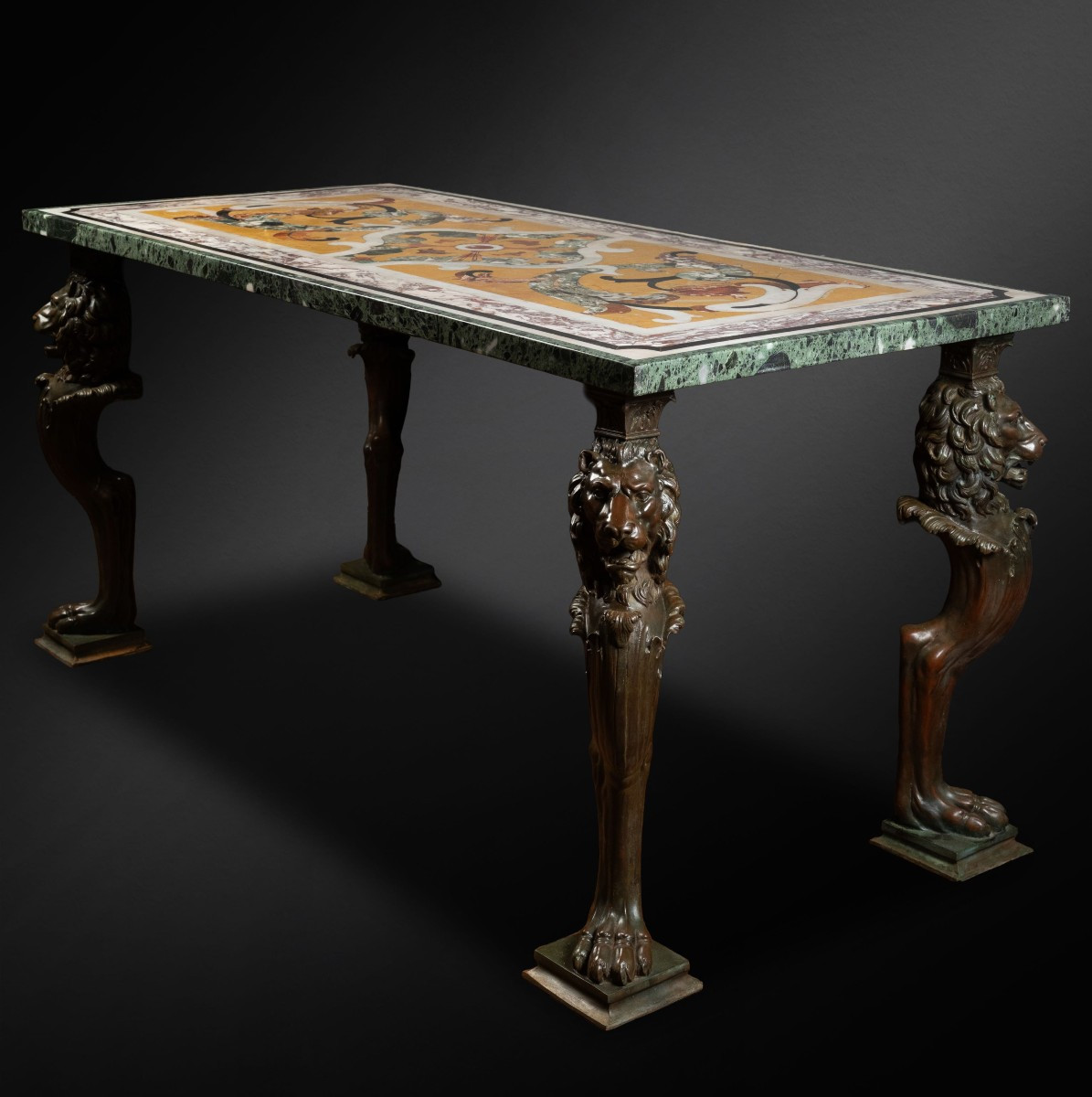

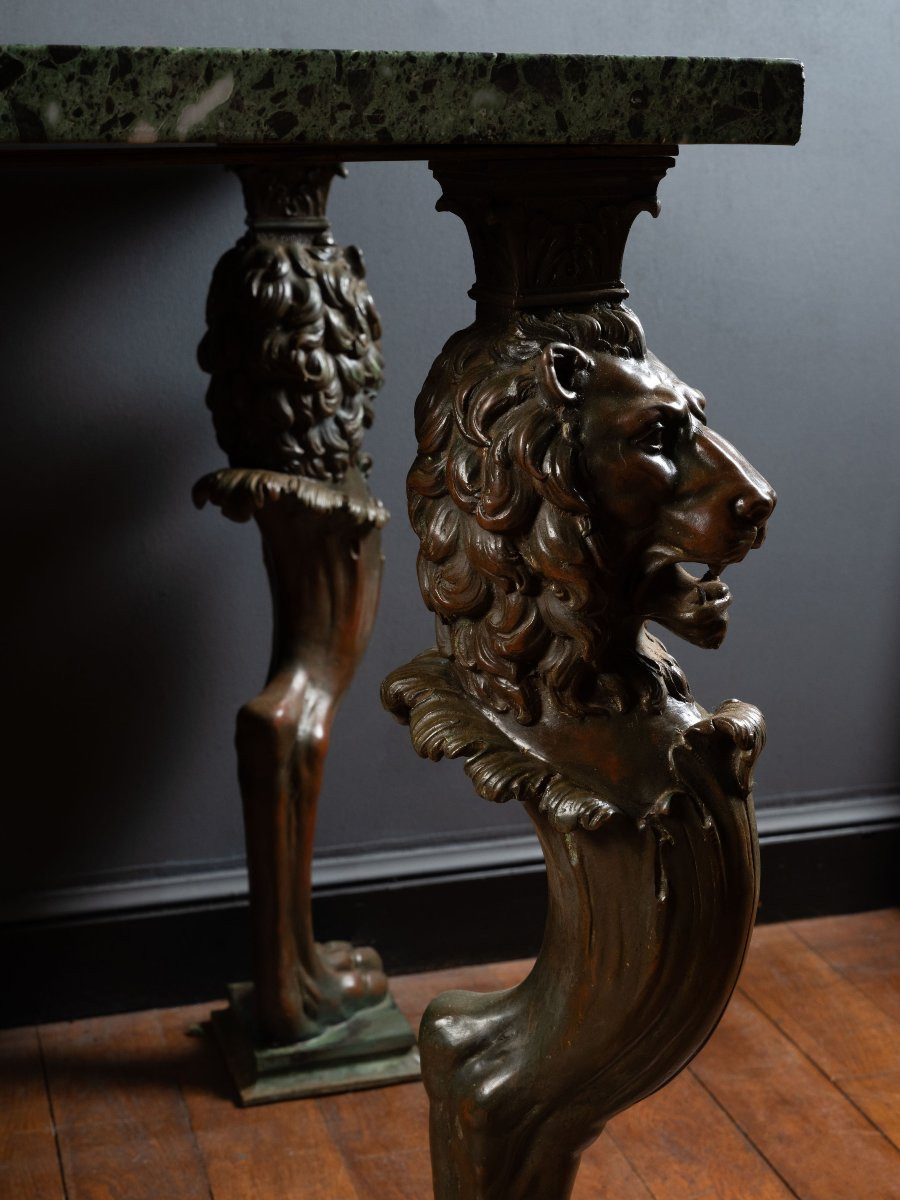


A Polychrome Marble Intarsia Table With Bronze Trapezophoroi
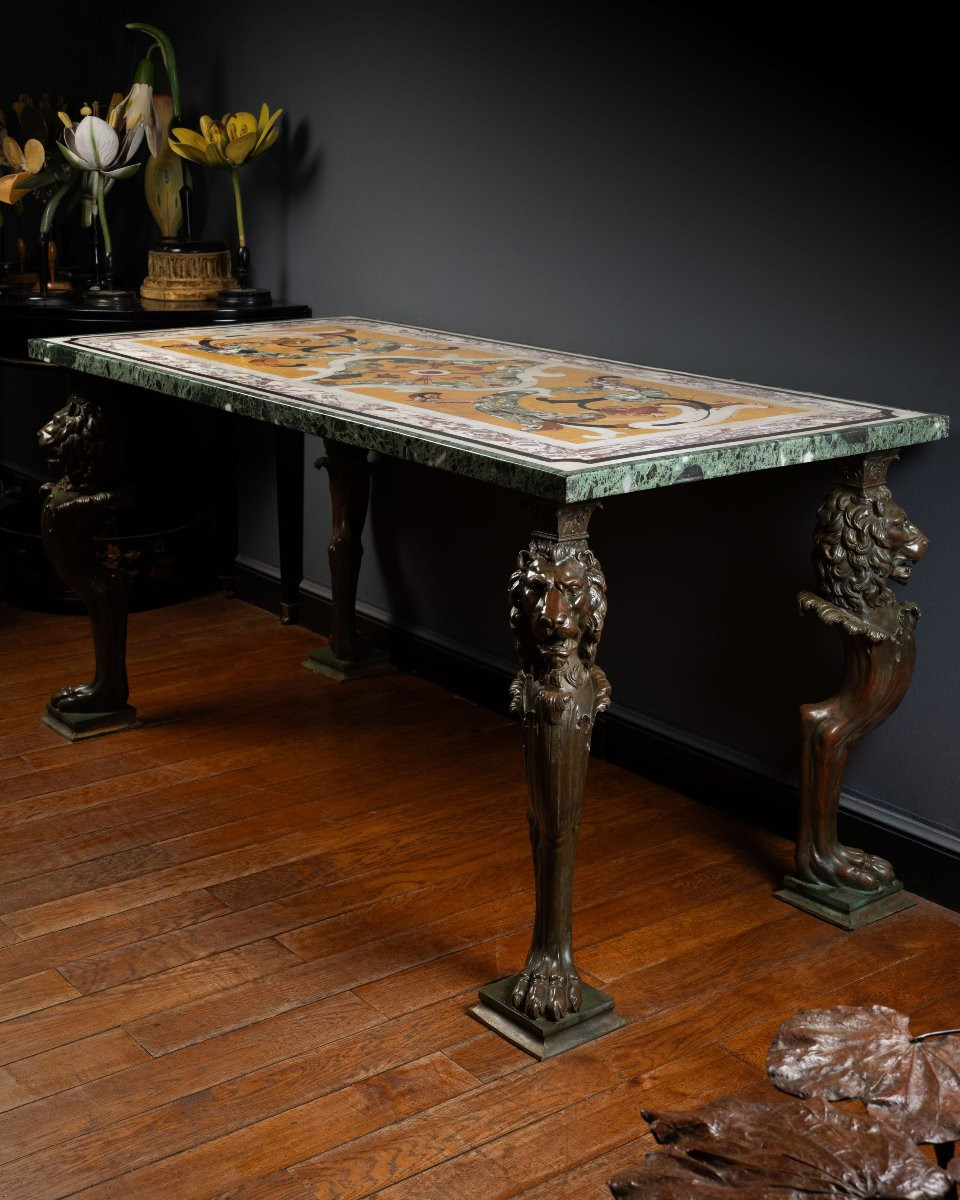
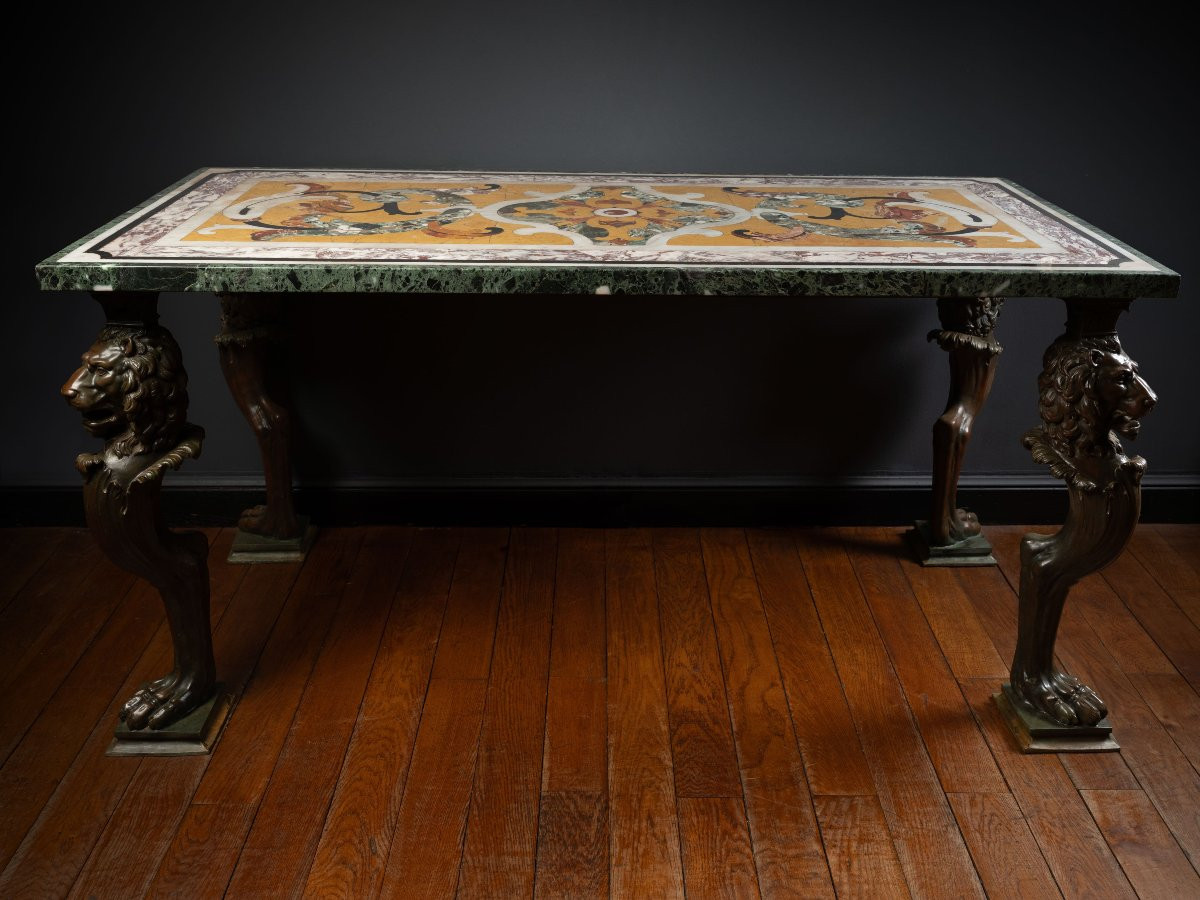
A bronze trapezophoroi table, with polychrome intarsia tabletop
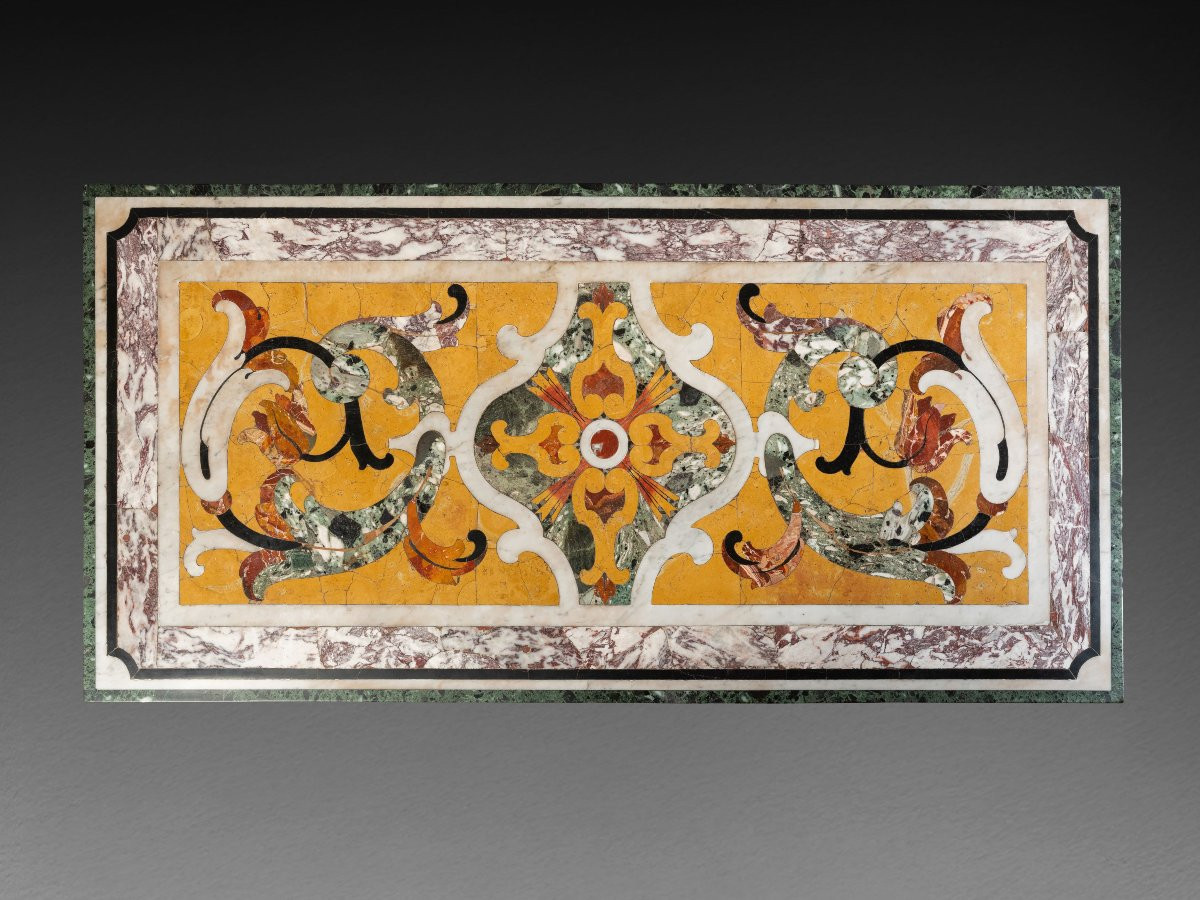
Intarsia of Sicilian jasper, nero di Belgio, giallo di Siena, Carrara white, pavonazzetto, and verde antico; bronze base
Naples (tabletop) and Rome (base)
Early 18th century (tabletop) and late 19th century (base)
78 × 155 × 75 cm (30¾ × 61 × 29½ in.)
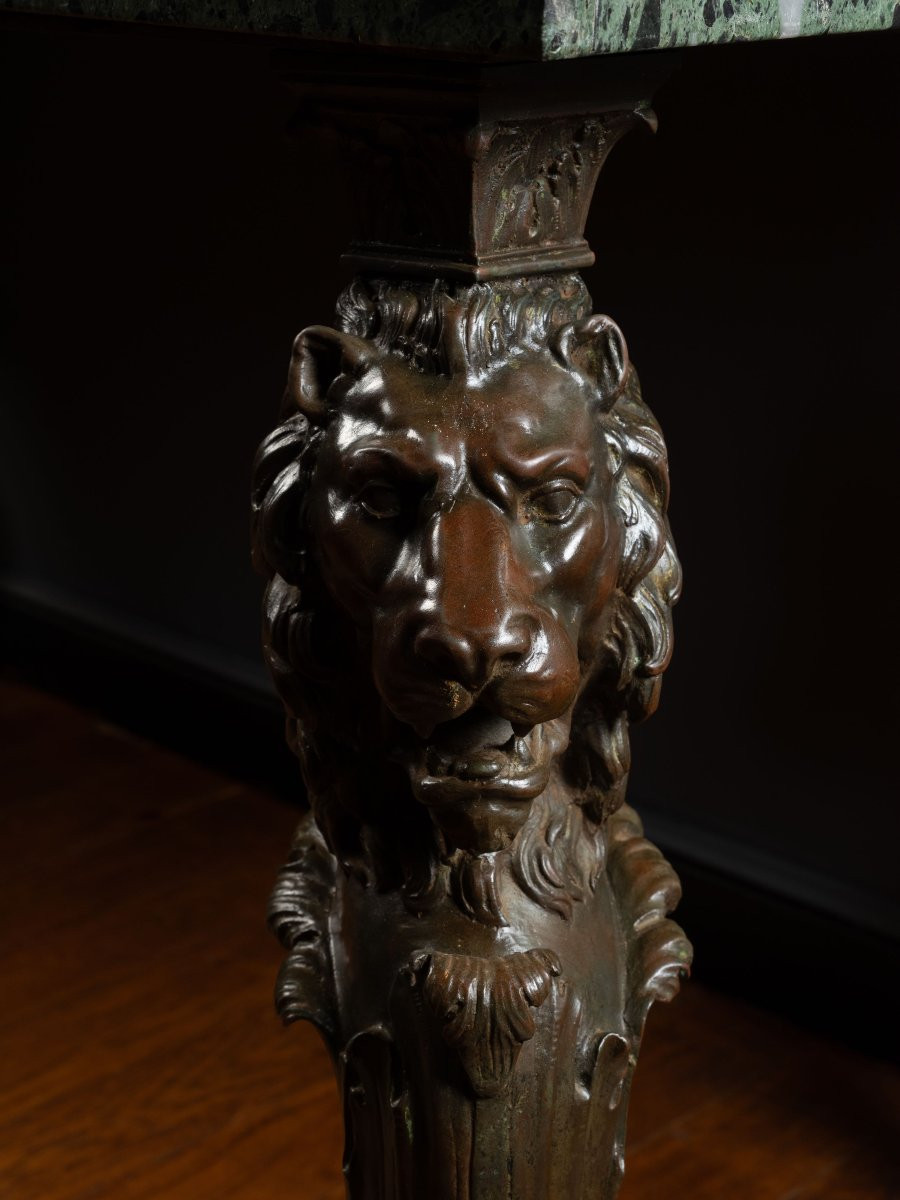
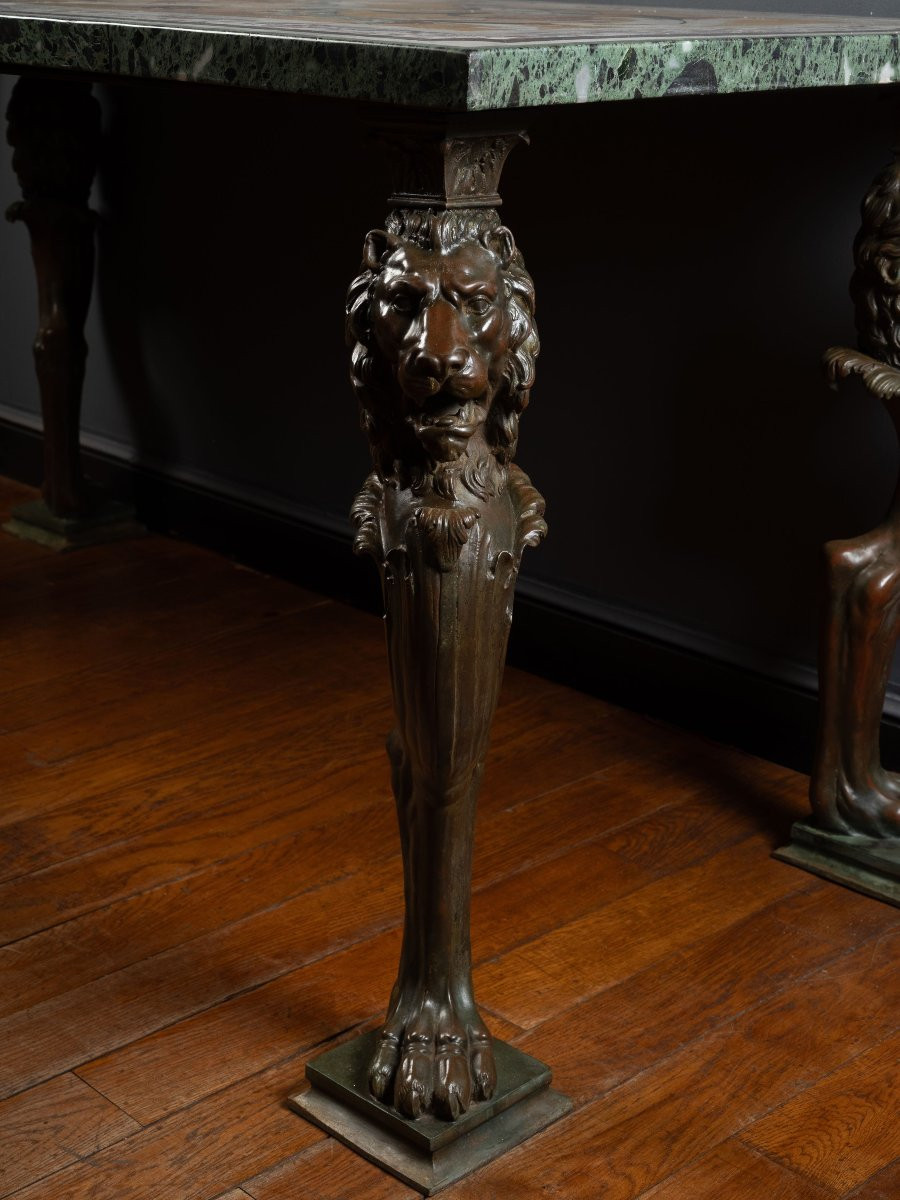
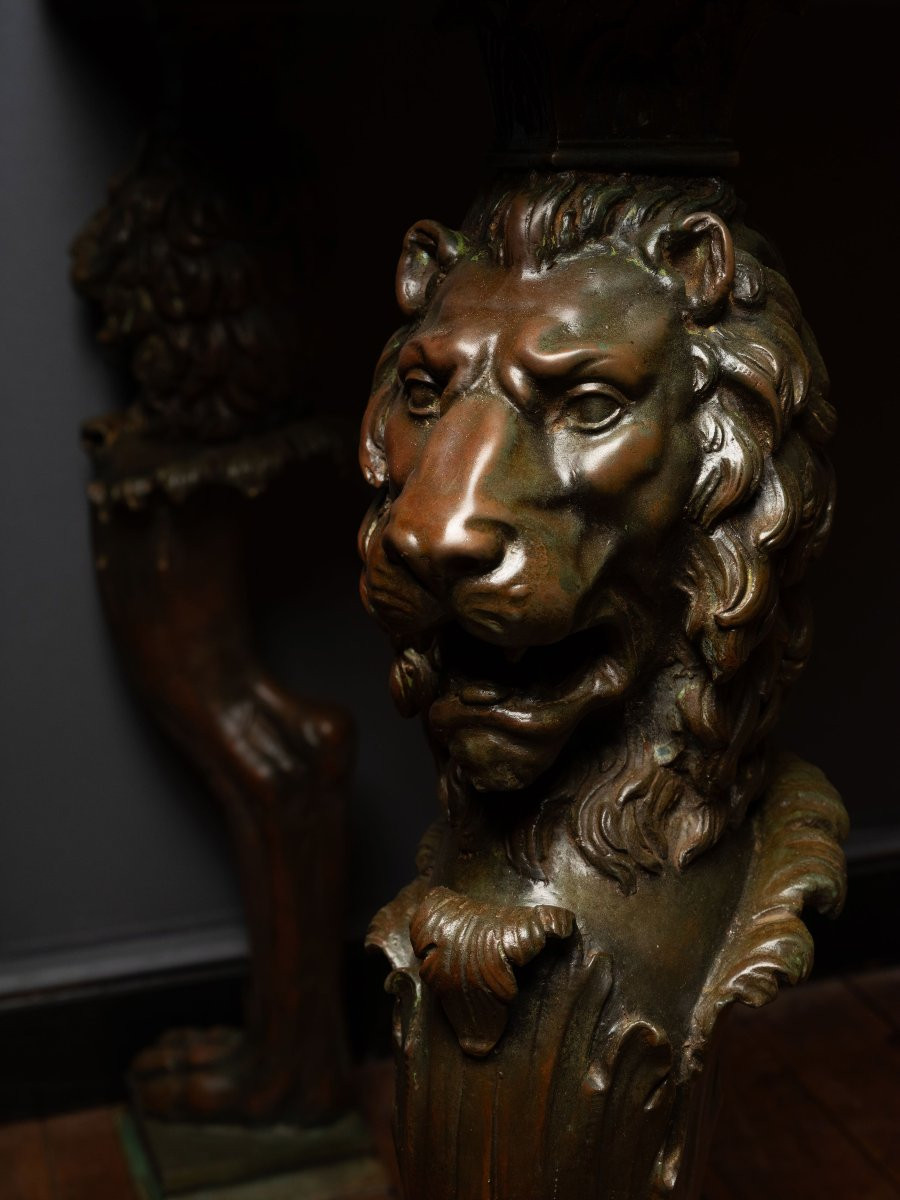
The word trapezophoron, literally “table-bearer,” from the Greek τράπεζα (table) and φέρειν (to carry), is said of a table leg, most often in marble or bronze, carved in the form of a lion, panther, or griffin head. Among the Romans, these tables with theriomorphic — that is, whose support takes the form of an animal, from the Greek θηρίον (wild beast) and μορφή (form) — trapezophoroi were frequently used to display vases and were accordingly known as mensae vasariae (vase tables).
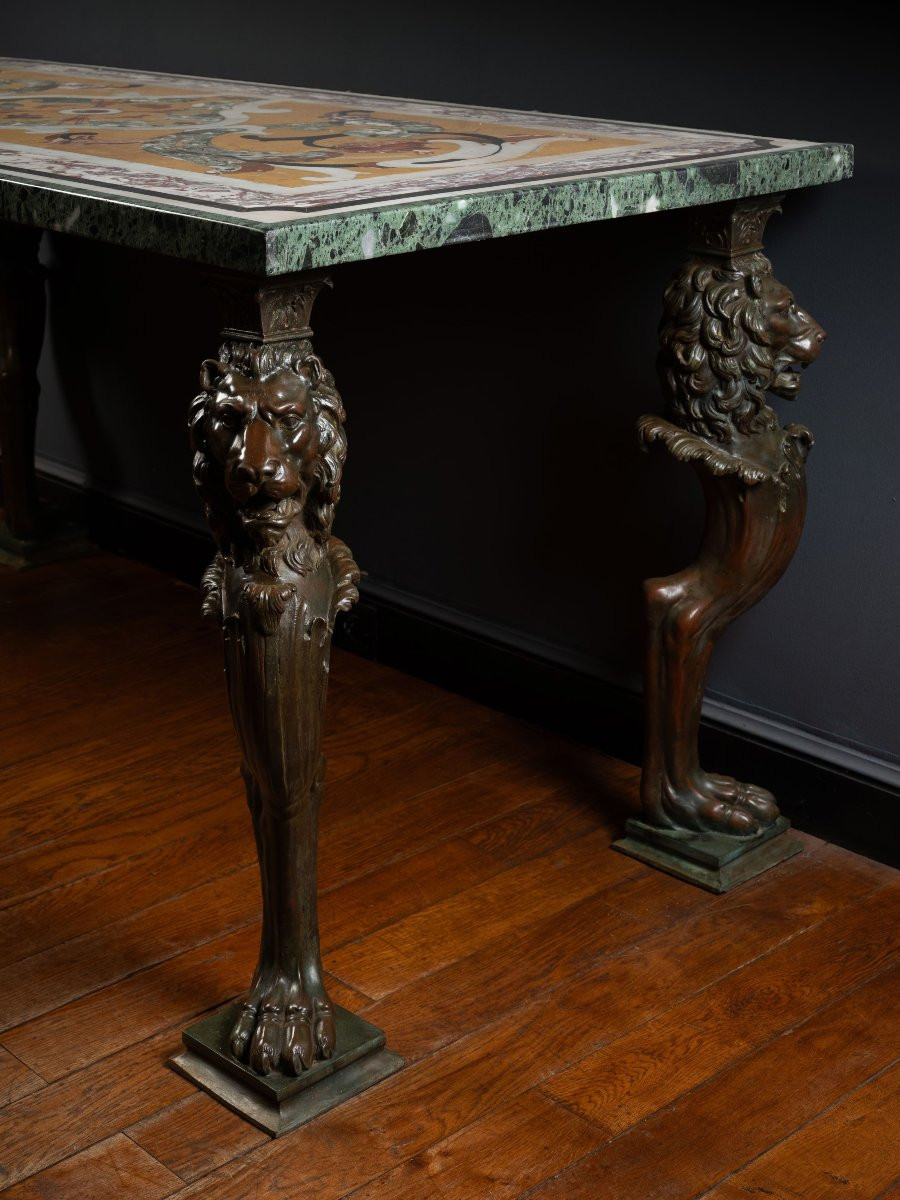
The mensa vasaria with winged lion protomes, found behind the impluvium of the domus Cornelia, the house of Cornelius Rufus at Pompeii, is among the finest examples of the type. The bronze base of the present table, however, replicates the trapezophoroi of yet another antique model, a tripod held in the Naples Archaeological Museum, whose expressive, shaggy lion heads spring from a powerful paw, the skin of which curls away in a pattern reminiscent of the acanthus leaf. This tripod — itself a mensa vasaria, and one of the finest of its kind, according to Overbeck — was likewise discovered at Pompeii, this time in the triclinium of the Haus des kleinen Mosaikbrunnens, the Casa degli Scienziati, excavated between 1839 and 1845. The casting of this base is almost certainly Italian work of the late nineteenth or early twentieth century; it reproduces the antique faithfully, though with a slight elongation in height.
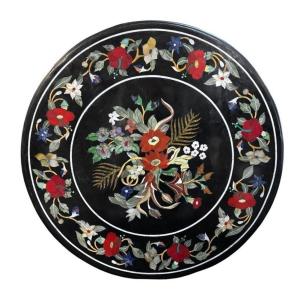
These bronze trapezophoroi support a marble top of considerably earlier date, predating both their casting and the discovery of the Pompeian mensae. It is a reuse of an antependium with intarsia of flowers and foliated scrolls combining Sicilian jasper, nero di Belgio, giallo di Siena and Carrara marble as well as pavonazzetto, the whole framed in verde antico. The intarsia is in all likelihood an early eighteenth-century work and has undergone some discreet restoration.
See Overbeck, Pompeji in seinen Gebäuden, Leipzig, 1884. On the use, in the eighteenth century, of verde antico frames for piani di tavolo, see Roettgen and Gonzàlez-Palacios, The Art of Mosaics: Selections from the Gilbert Collection, Los Angeles, 1984. On nero di Belgio and the other marbles, see Borghini, Marmi antichi, Rome, 2004.
Period: 18th century
Style: Rome and Antic Greece
Condition: Good condition
Material: Marble
Length: 155 cm
Height: 78 cm
Depth: 75 cm
Reference (ID): 1725922
Availability: In stock