THIS OBJECT WAS SOLD
Frederick Kerseboom (1632-1690) - Portrait Of A Noble (1)
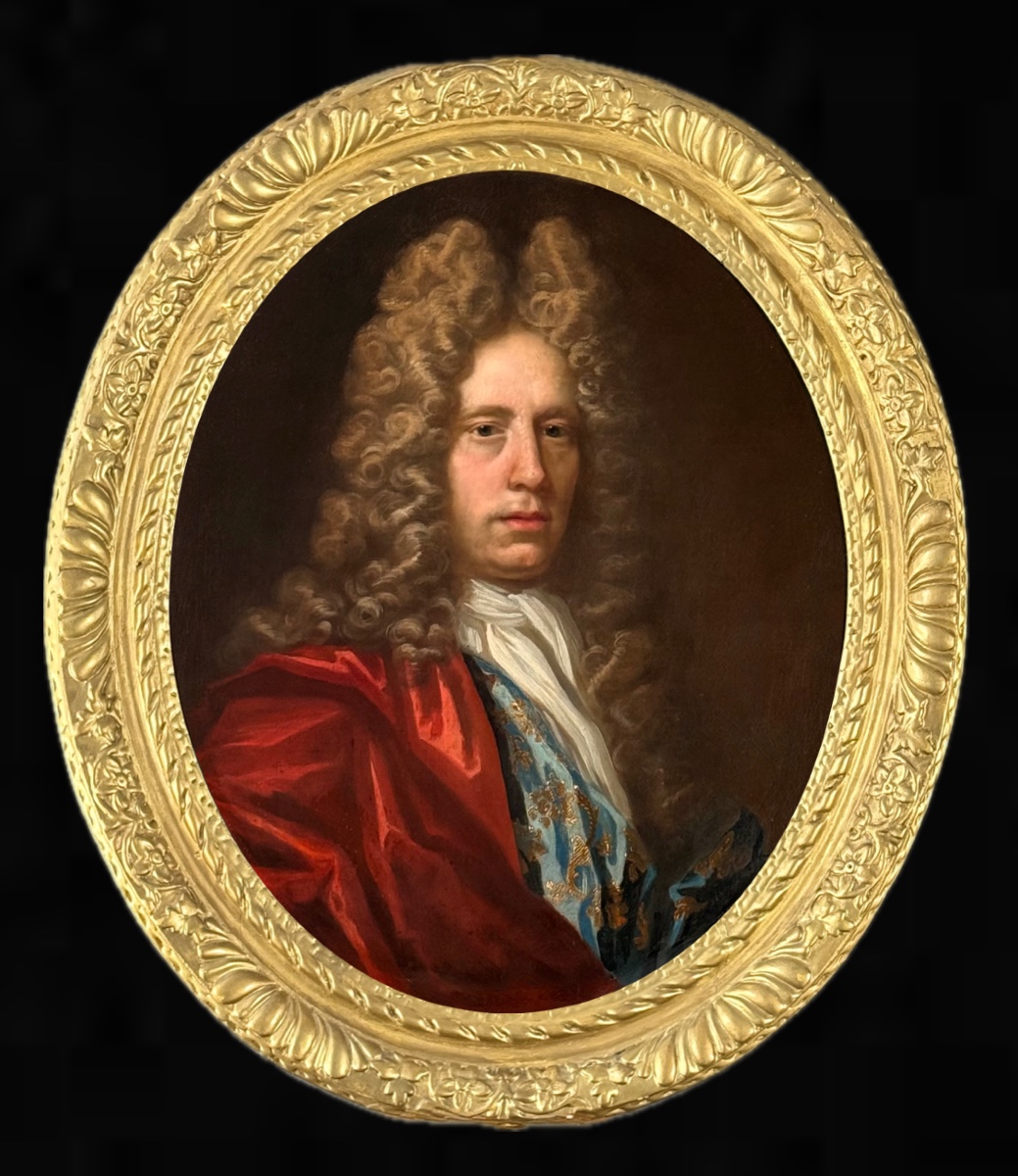
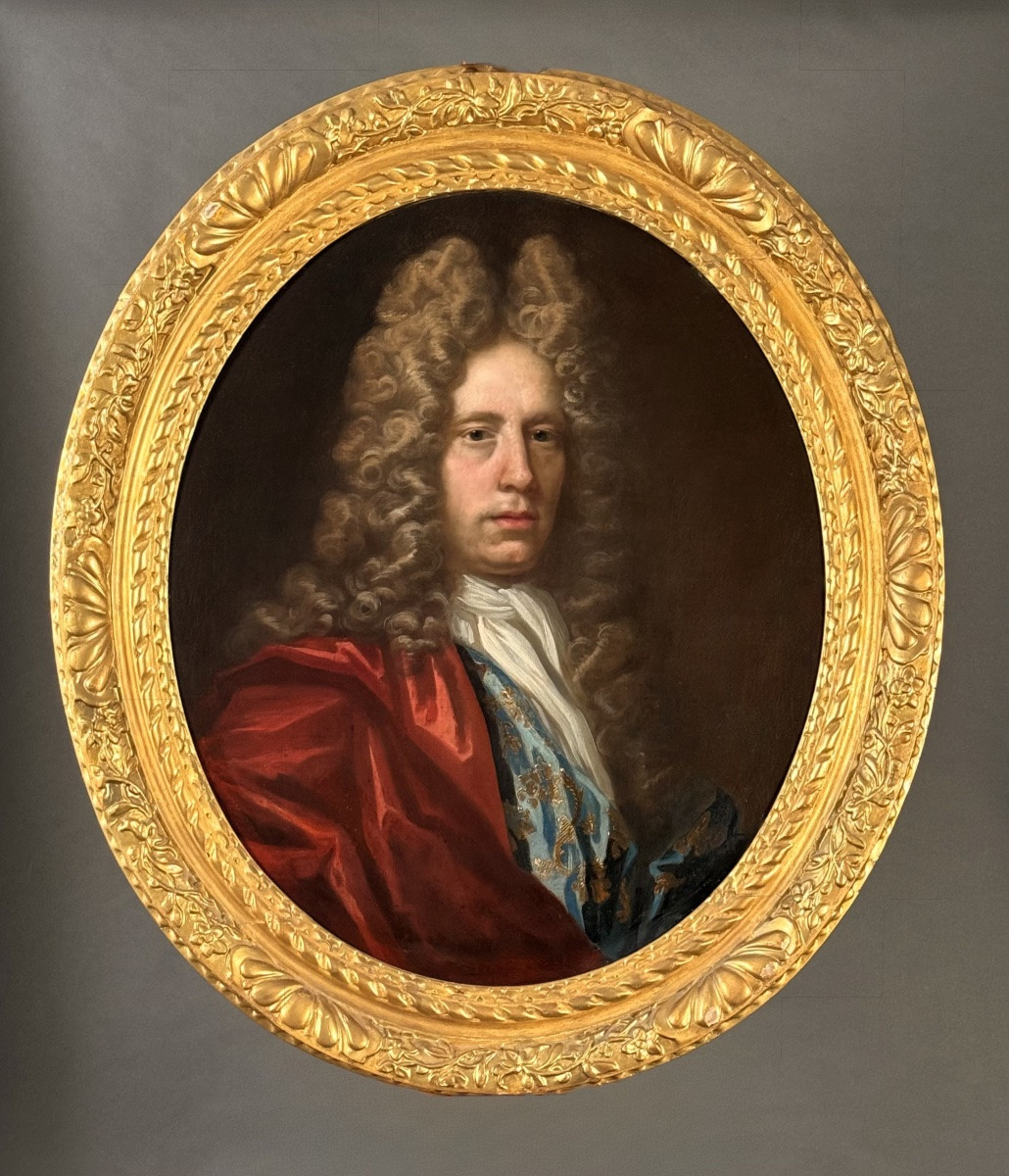


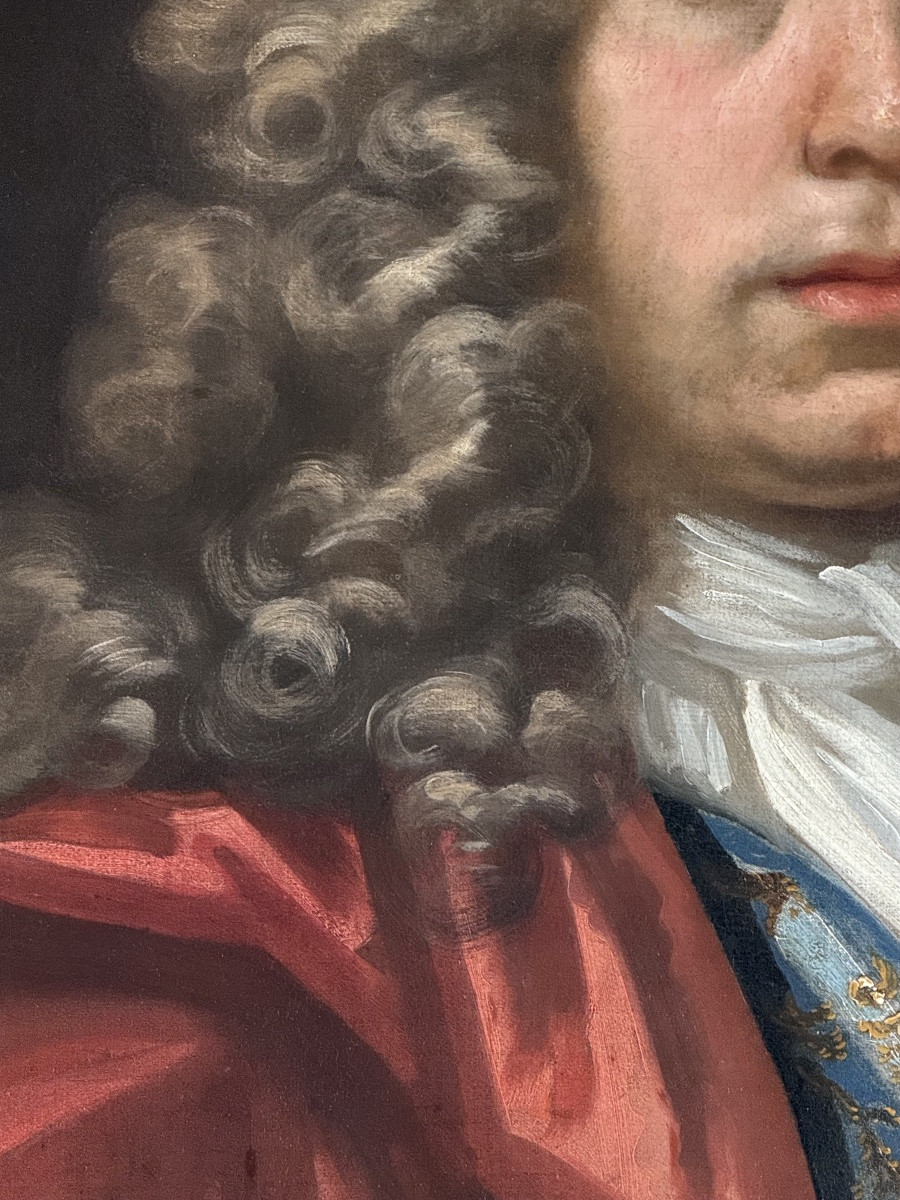
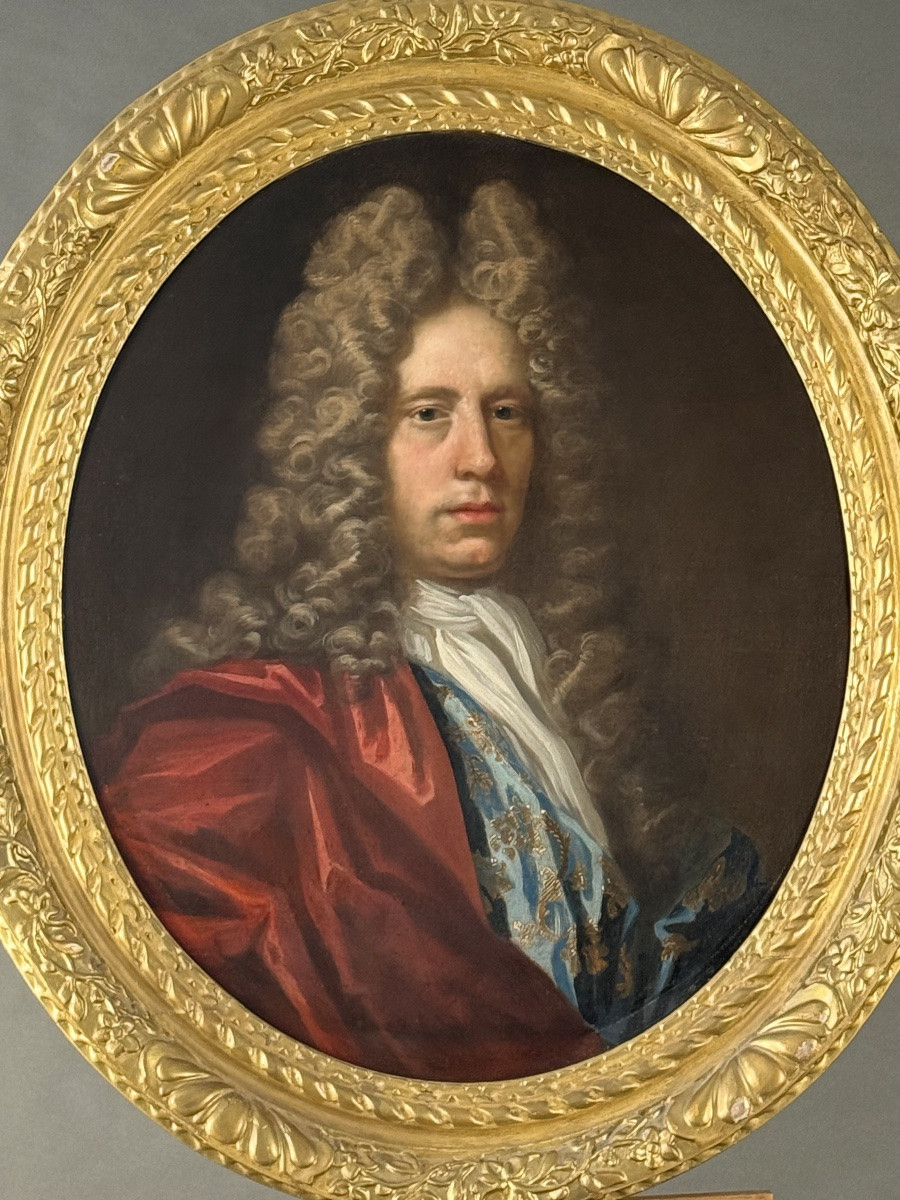
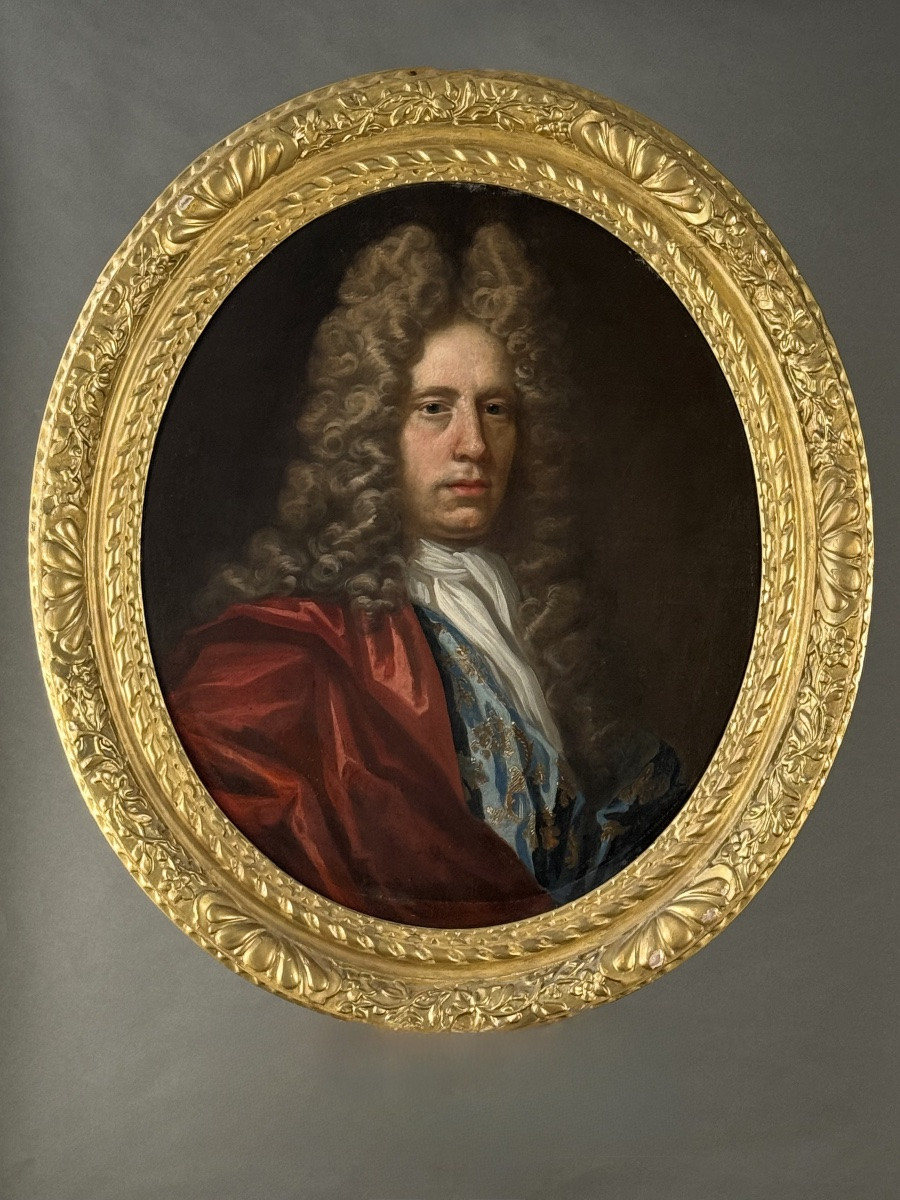
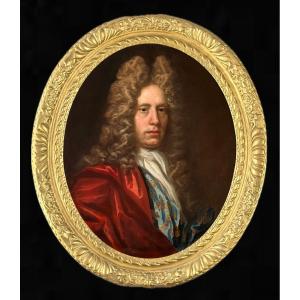


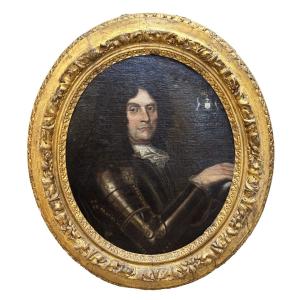
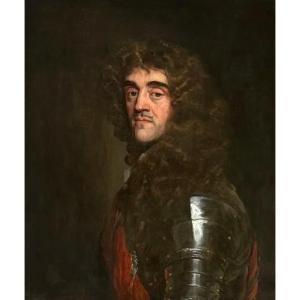
A fine British portrait from the late 17th century, depicting a Norfolk nobleman, attributed to Frederick Kerseboom (1632-1690). The elegant sitter is shown half-length in an oval, wearing an imposing powdered wig and aristocratic attire including a crimson silk stole, a pale blue silk robe (entirely embroidered with floral motifs in silver thread), and a pristine white cravat. While the gentleman's attire leaves no doubt as to his status, beyond its sumptuous appearance, the artist's soft lighting and the sitter's smooth, delicately modeled face, with its relatively serene expression, create a portrait that stands apart from the lofty Baroque style. It is a warm and inviting work, a portrait of an engaging and well-characterized man. Frederick Kerseboom (1632-1690) was a German painter renowned for his portraits. After artistic training throughout Europe, he successfully established himself in England at the end of the 17th century, where he painted portraits of prominent figures such as aristocrats and scholars. Born in Solingen, Germany, Kerseboom came from a family of artists. He initially devoted himself to history painting and portraiture, but noticed a growing demand for these types of works among the aristocracy and the bourgeoisie upon his arrival in London in the 1680s. Early in his career, Kerseboom studied in Amsterdam, then in Paris in 1650, where he apprenticed with the renowned court painter Charles Le Brun. He then spent fourteen years in Rome, including two under the tutelage of Nicolas Poussin, producing history paintings in the latter's style. In the 1680s, he settled in Covent Garden, London, with his nephew, the painter Johann Kerseboom, and adapted his style to English taste, producing works with rigid poses, influenced by contemporaries such as Willem Wissing. Among Kerseboom's known works are portraits such as those of Theophilus Leigh (1683) and the Honorable Mary Leigh, as well as experiments in glass painting; his historical scenes are now known mainly through engravings. He was mistakenly referred to as "Casaubon" in correspondence and burial records of the period. Kerseboom died in London and was buried in St. Paul's, Covent Garden, on 30 March 1693. This portrait, of high quality, is in excellent condition. It echoes another portrait (that of the sitter's brother), also shown here. Both are ready to hang and can be admired separately or together, in their original carved and gilded oval frames in the "Lely" style. High-resolution images are available upon request. International shipping. Canvas: 86 cm x 67 cm. Frame: 105 cm x 85 cm.
Explore similar pieces and discover your ideal find:
Portraits