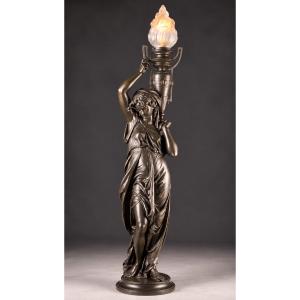
THIS OBJECT WAS SOLD
Life-size Sculpture Of A Classical Female Figure, Signe A. Carrier
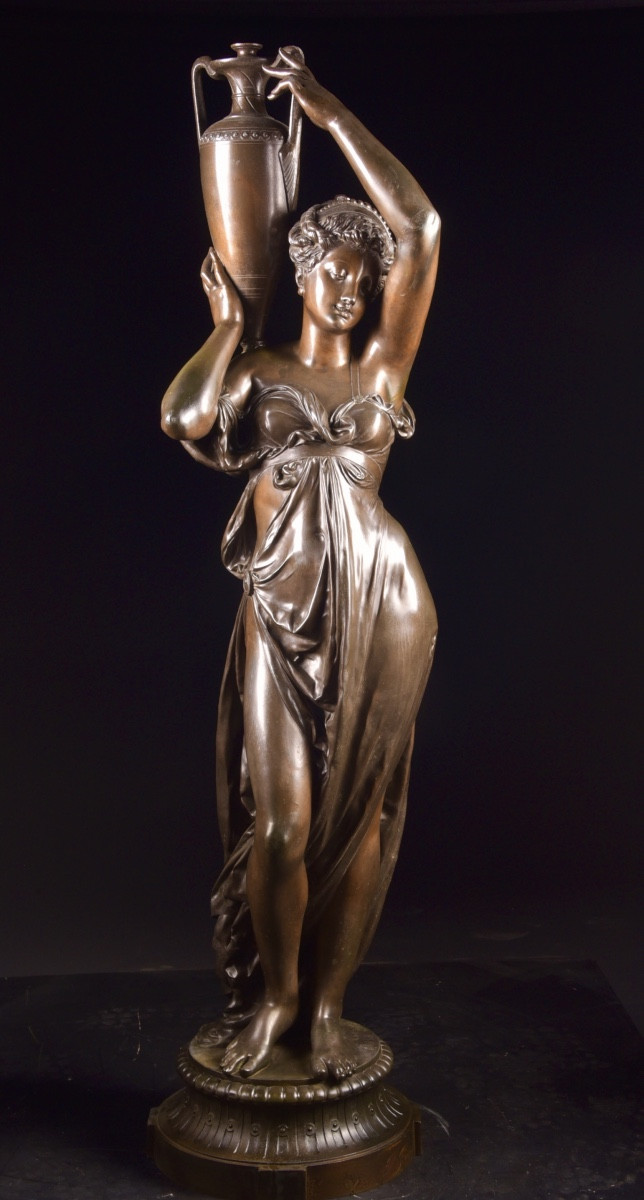
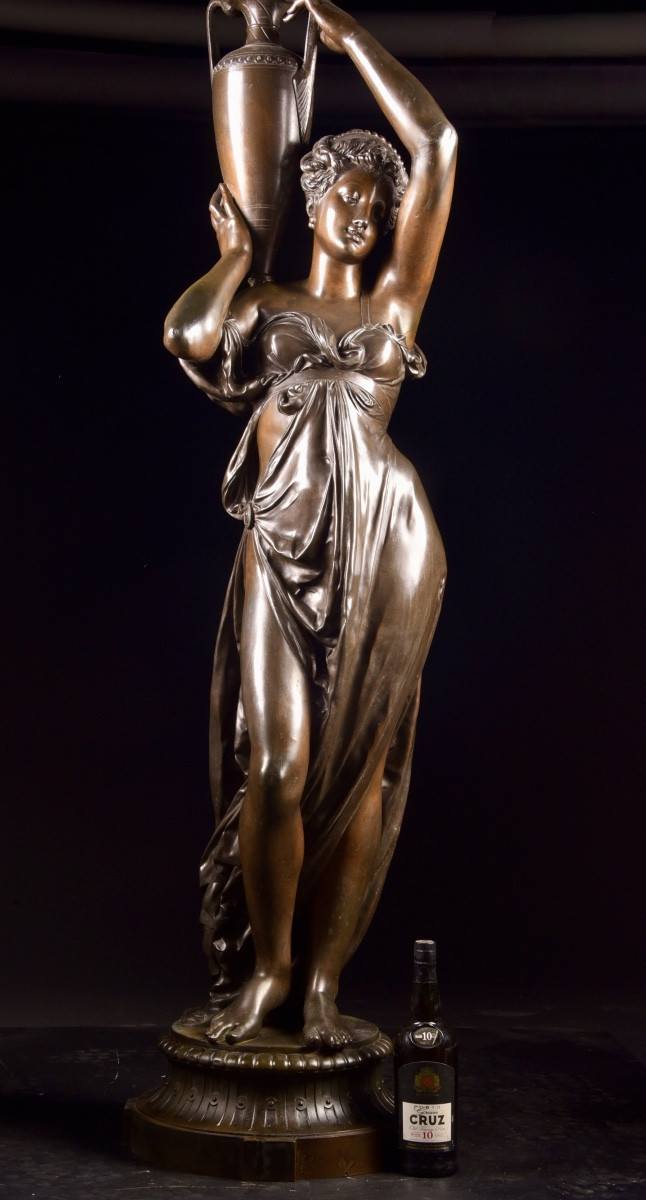
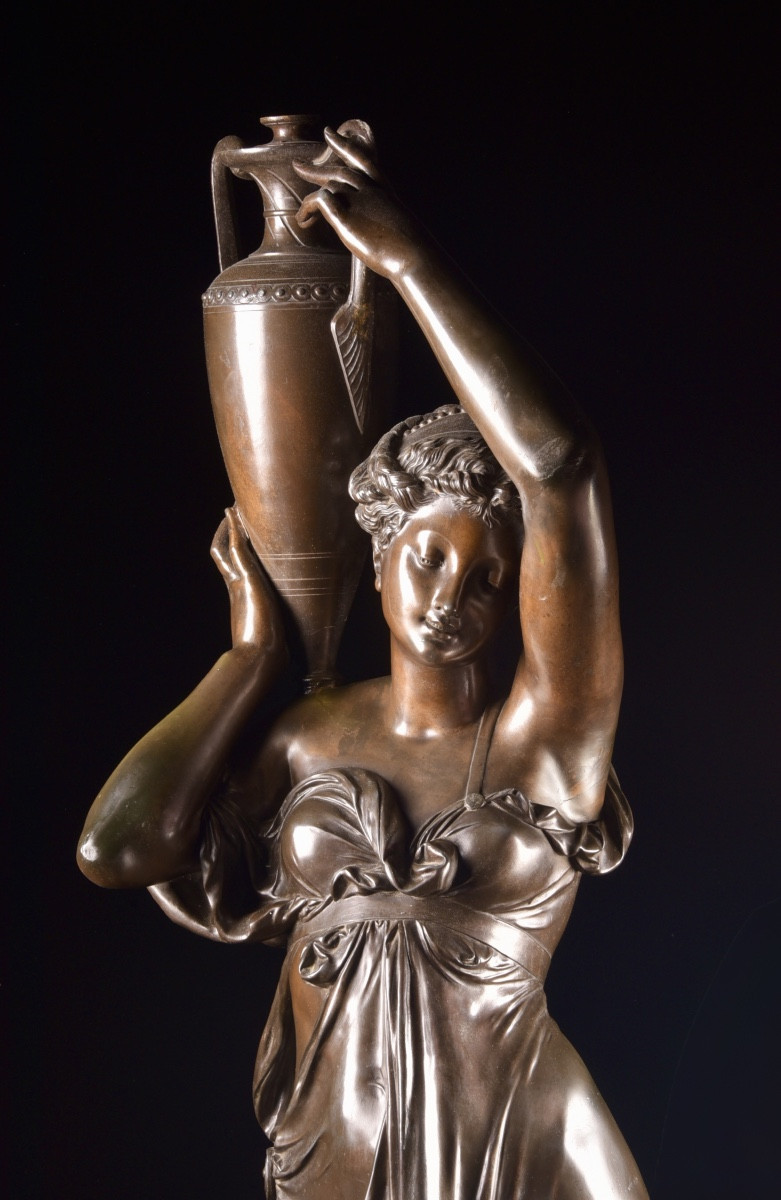
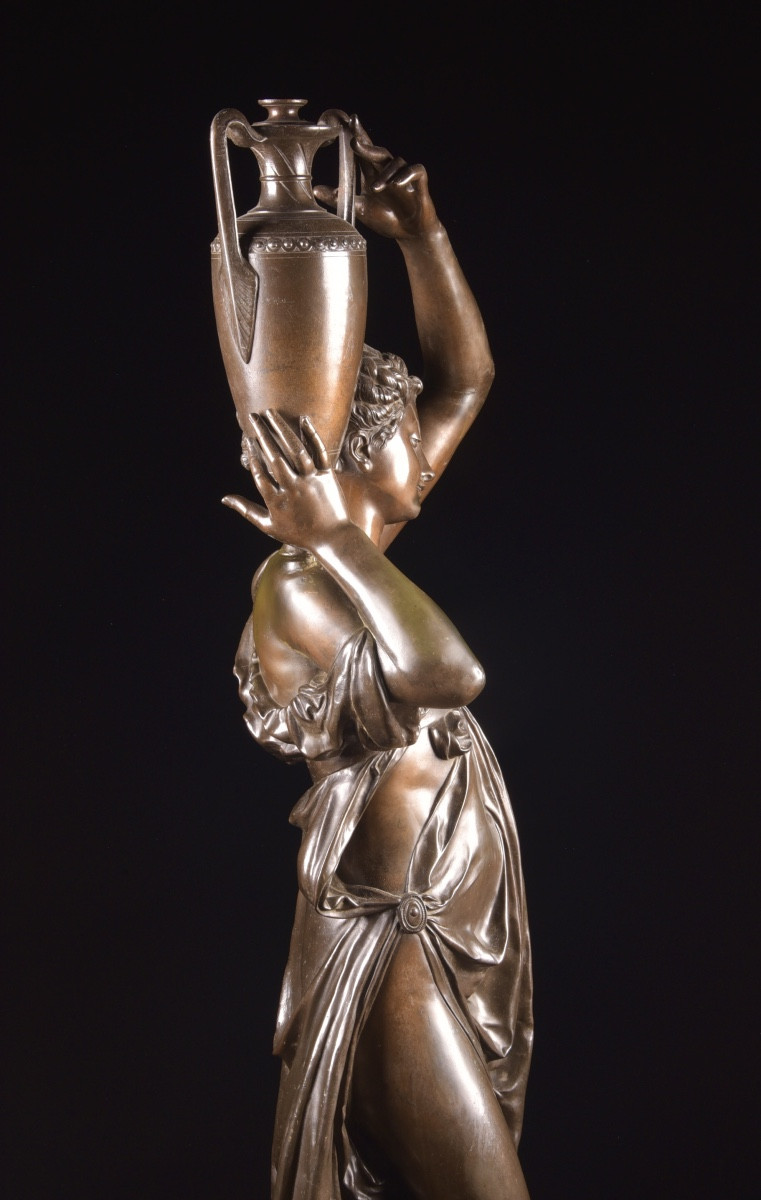
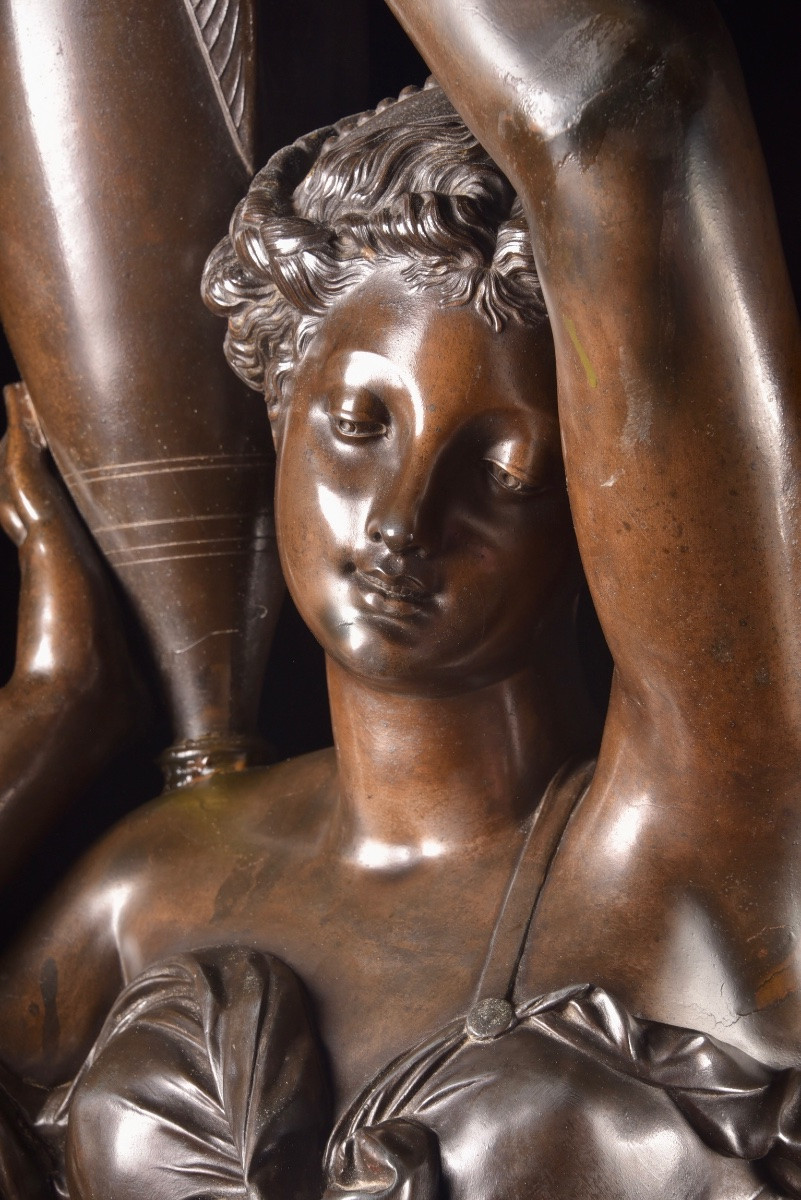

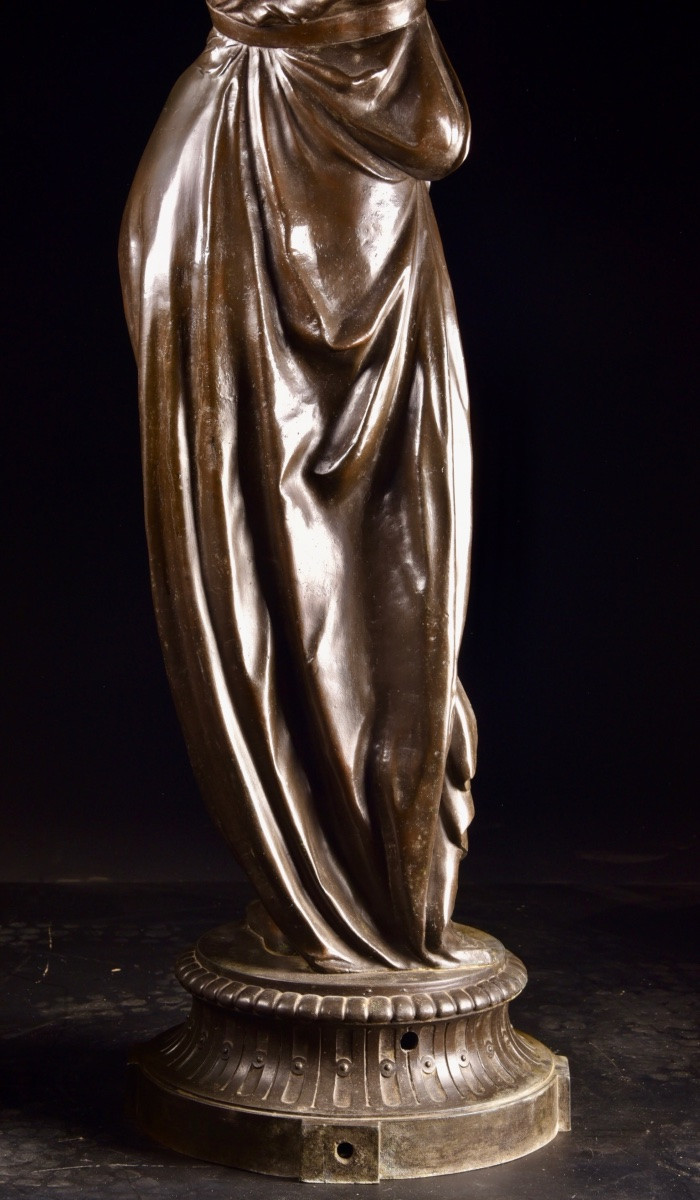
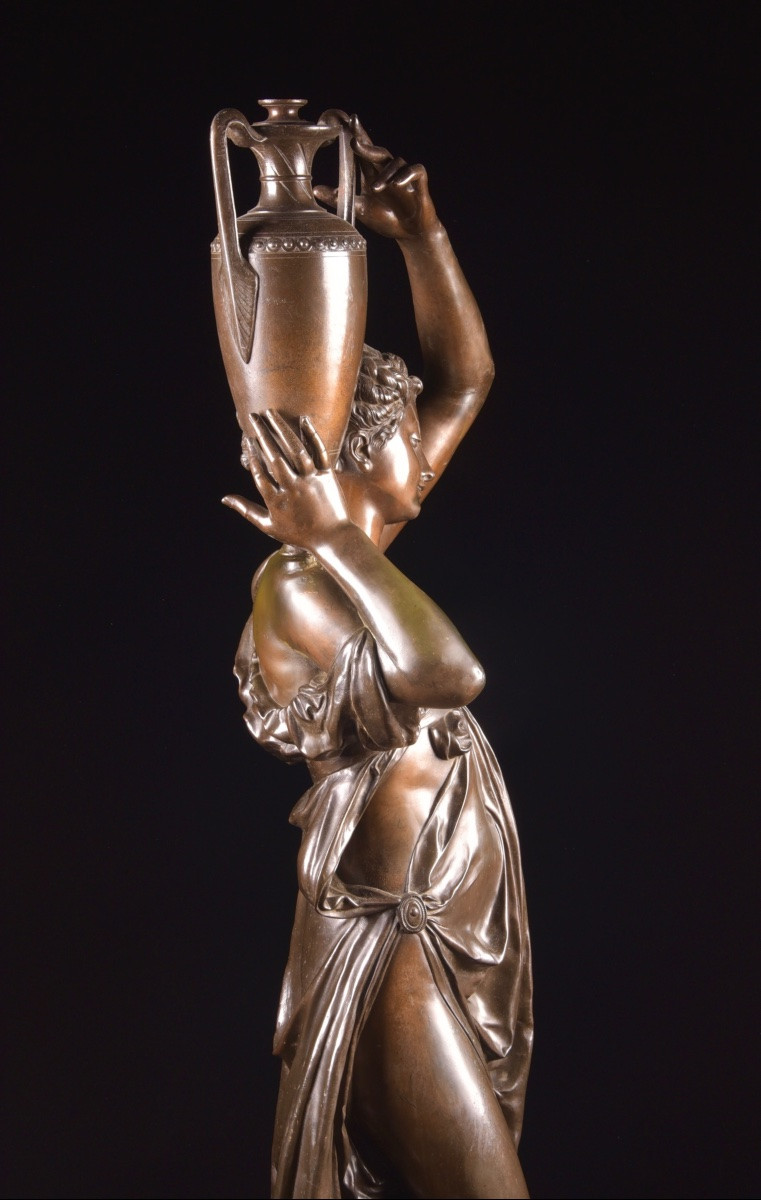
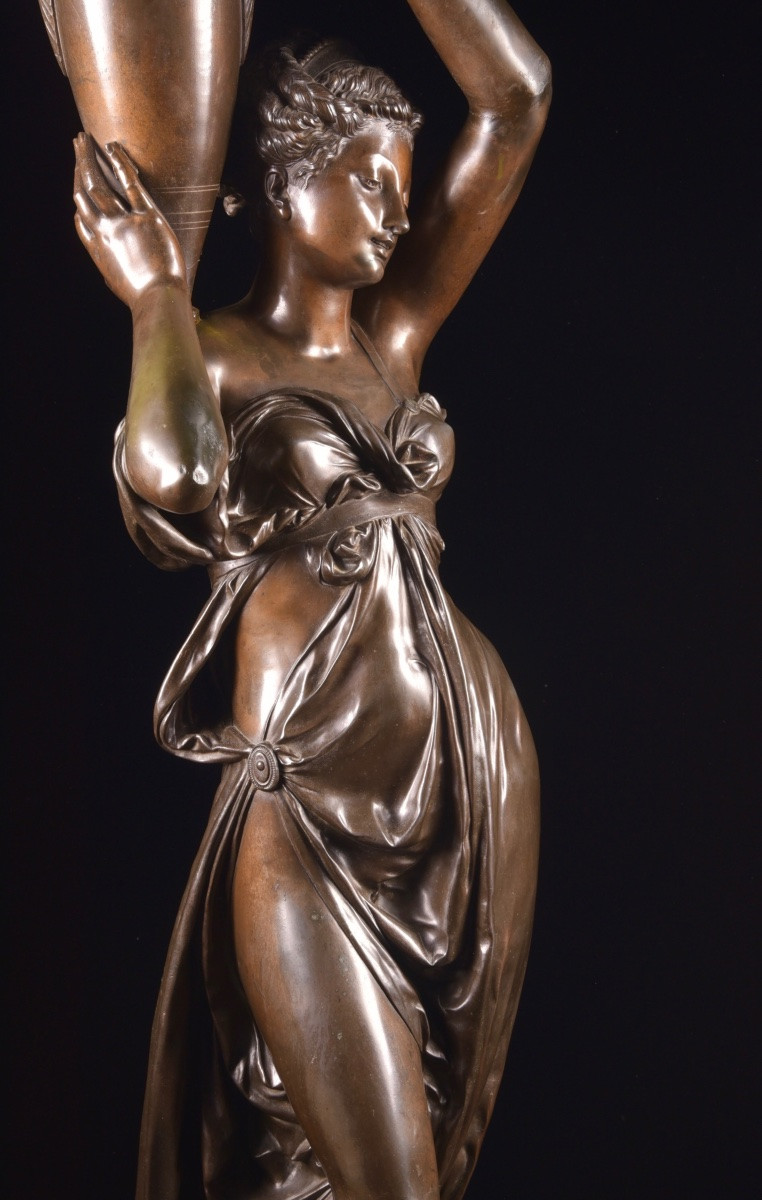
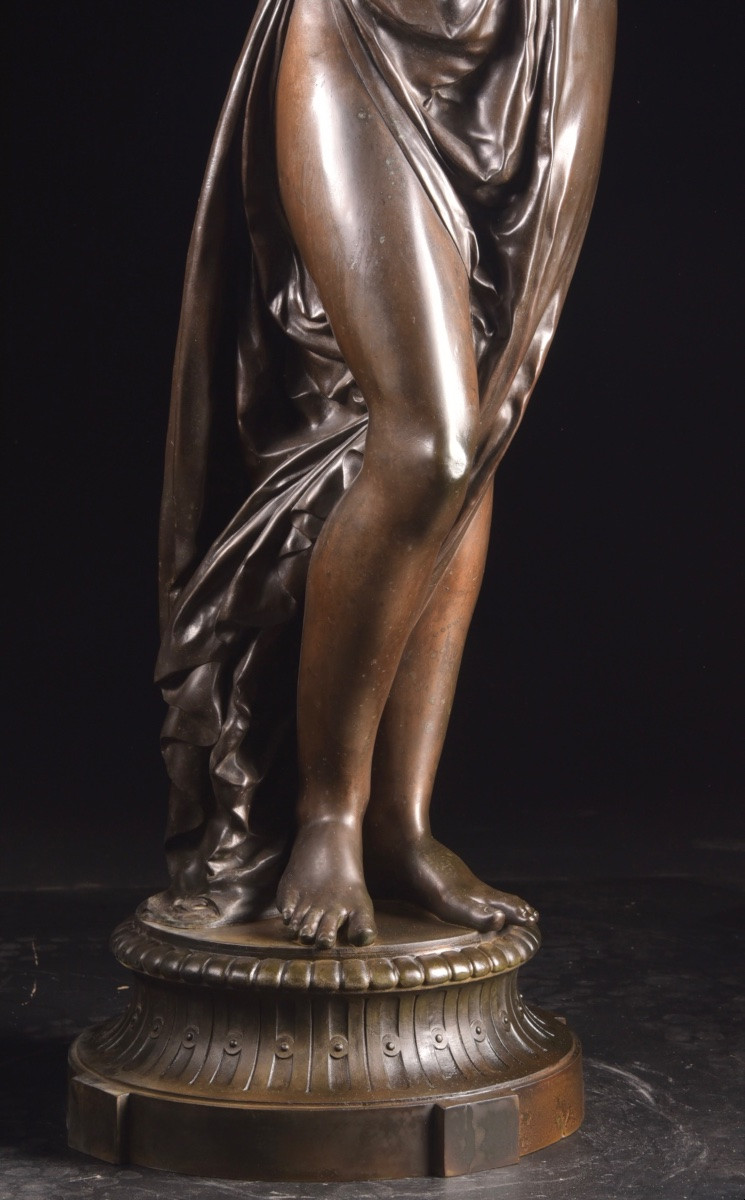
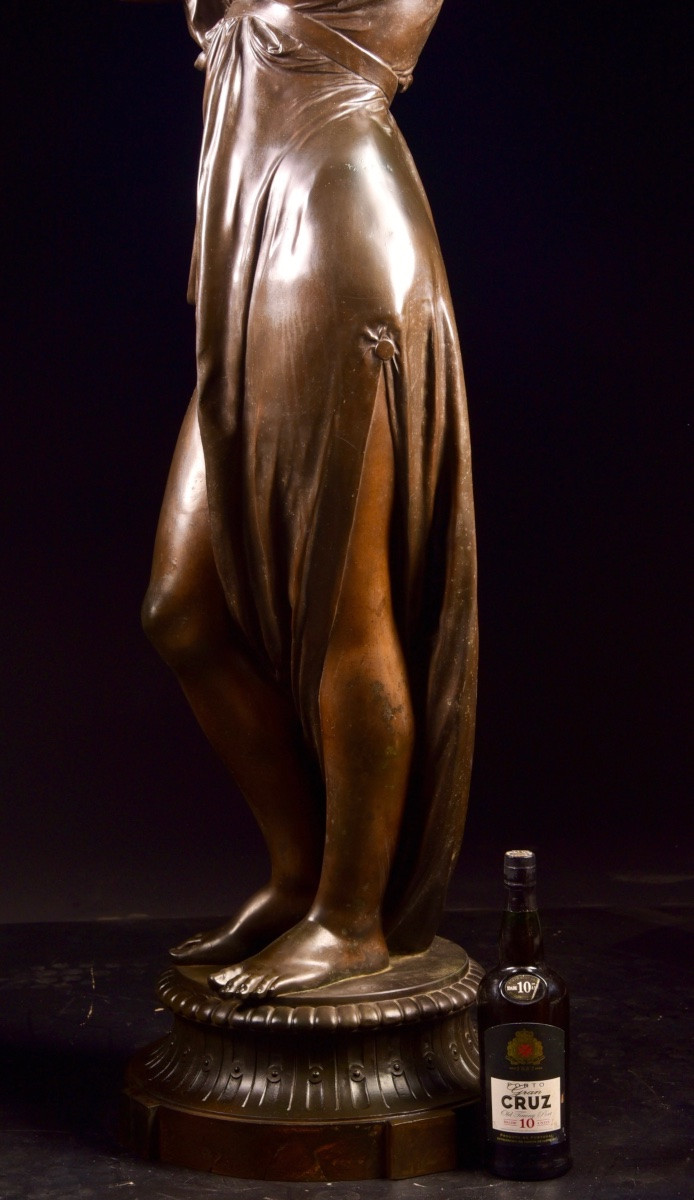
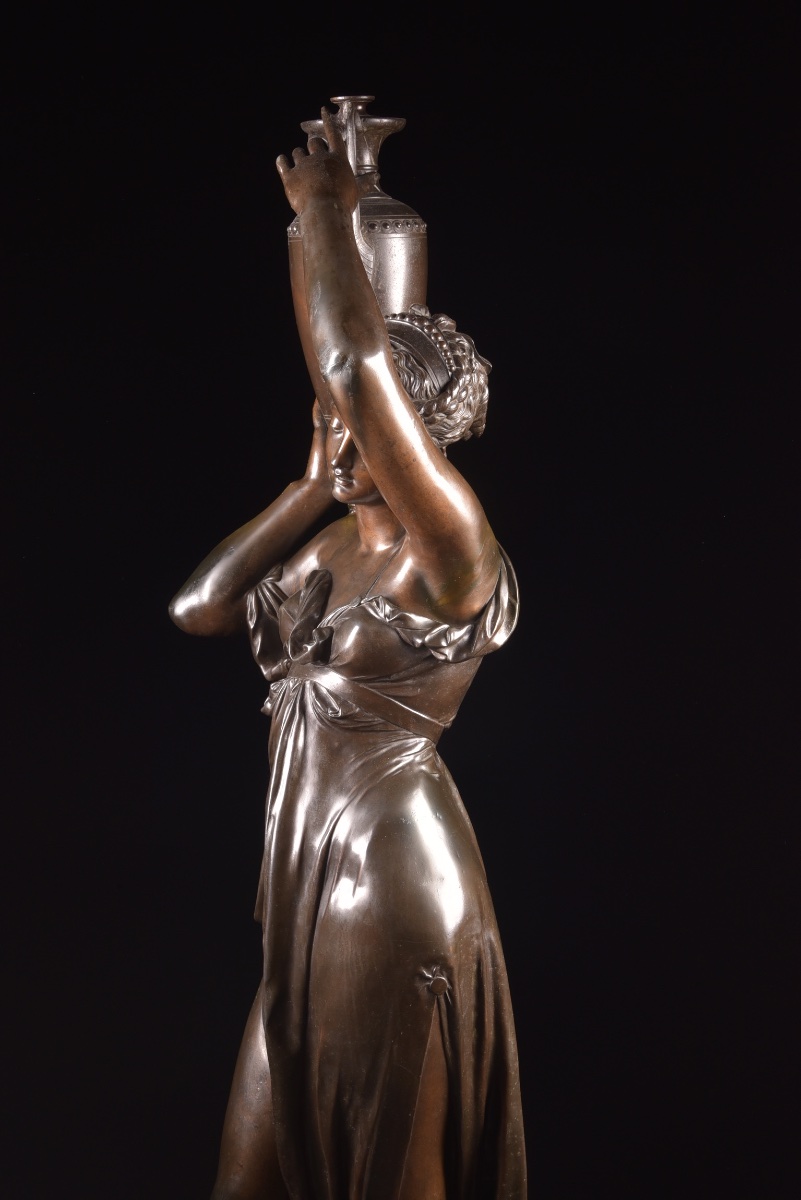


This elegant sculpture depicts a graceful young woman in classical dress, carrying an amphora over her shoulder. The figure is rendered with refined modeling and harmonious proportions, adopting a natural contrapposto pose that emphasizes both balance and movement. The delicately sculpted drapery enhances the elegance of the composition and reflects the refined aesthetic characteristic of 19th-century French decorative sculpture. The base is signed "A. Carrier," referring to the renowned French sculptor Albert-Ernest Carrier-Belleuse (1824–1887), a major figure of the Second Empire whose work profoundly influenced the decorative arts of his time. Carrier-Belleuse achieved international acclaim for his classically inspired and highly decorative sculpted models. He is also known for having collaborated with the young Auguste Rodin early in the latter's career. The sculpture is made of spelter, a metal alloy widely used in 19th-century decorative sculpture. This material allowed for precise molding and the rendering of very fine details, often enhanced by a patina intended to evoke the appearance of bronze. The composition was also designed with a practical function: the amphora at the top was intended to allow the sculpture to be mounted as a lamp, a feature frequently found in high-quality decorative objects from the Napoleon III period. This association between sculpture and lighting reflects the refined taste and opulent interiors of the late 19th century. The delicate modeling of the face, the naturalistic pose, and the flowing drapery give the work a strong decorative presence, making this sculpture a remarkable example of the classical revival in French sculpture of the second half of the 19th century.
Explore similar pieces and discover your ideal find:
Other Sculptures