THIS OBJECT WAS SOLD
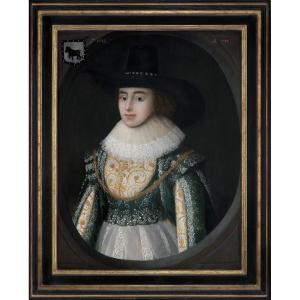
Portrait Of Jacqueline De Bueil (1589–1651), Countess Of Moret, C. 1630–1635, Attributed To Jean Ducayer
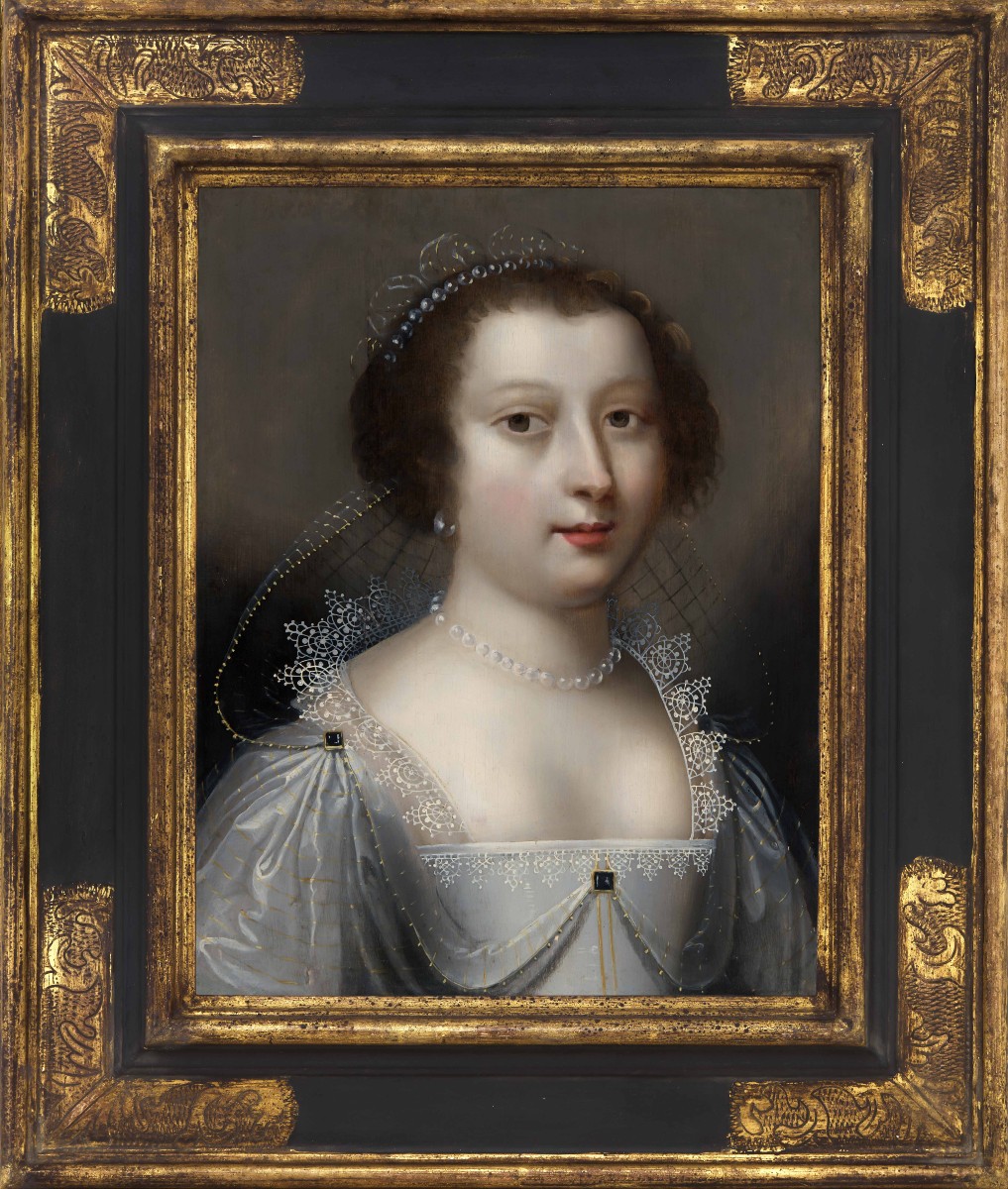

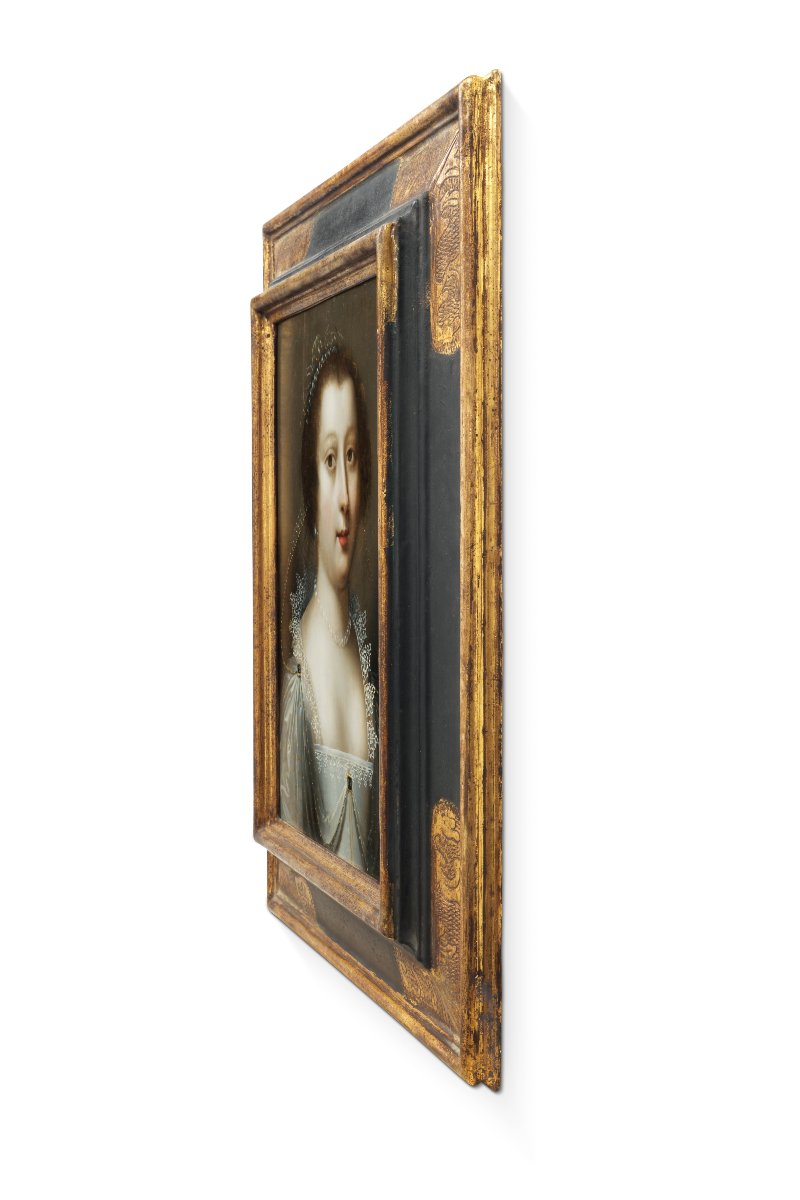
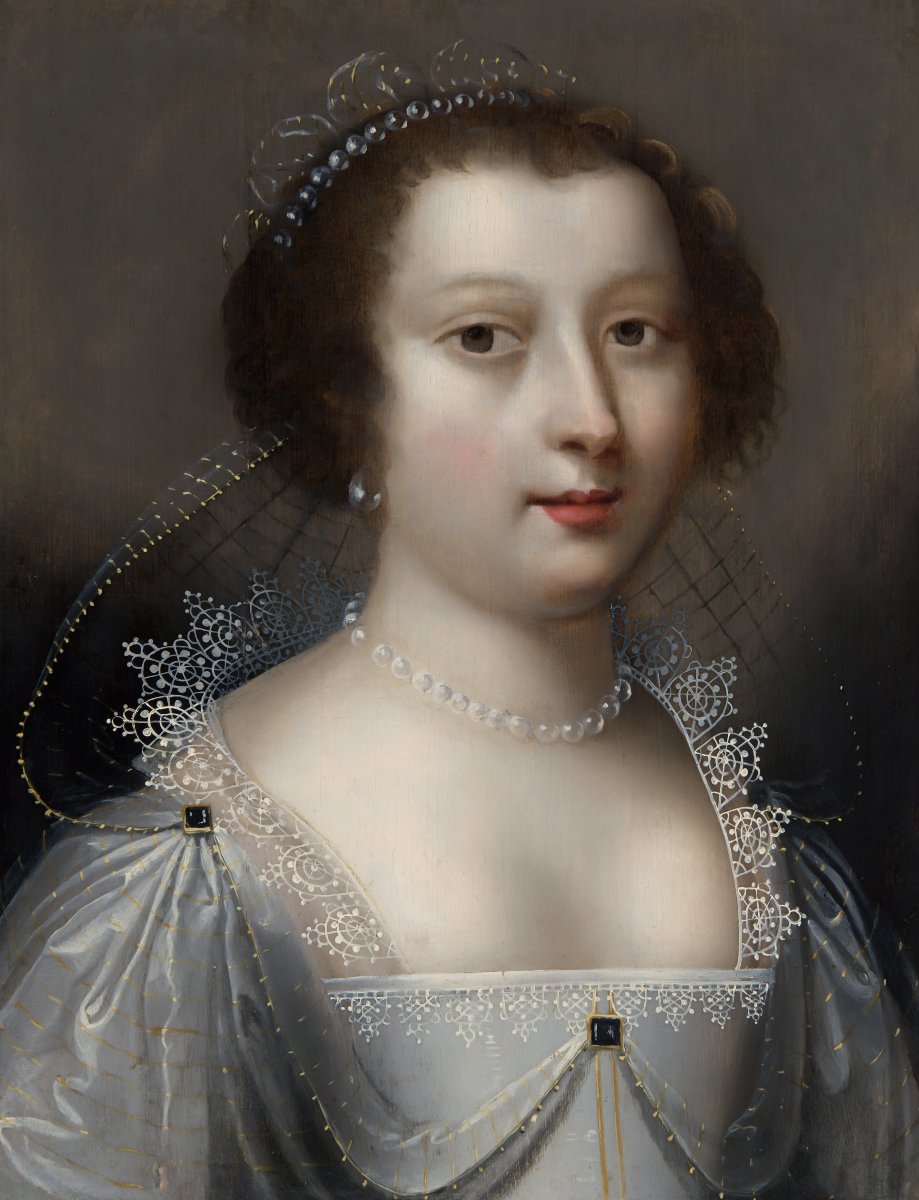


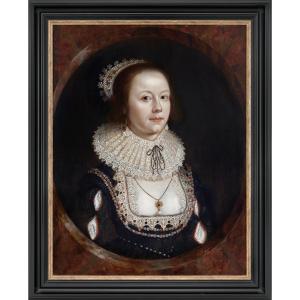
This refined and intimate portrait depicts a noblewoman of the French court in the mature elegance of the reign of Louis XIII. Painted with exceptional delicacy on panel and recently conserved, the work is best understood as a representation of Jacqueline de Bueil (1589–1651), Comtesse de Moret, a figure whose life intersected directly with the Bourbon monarchy and the political world of early seventeenth-century France. The painting can plausibly be associated with the rare French portraitist Jean Ducayer, whose work during the 1630s reflects the restrained elegance and meticulous finish characteristic of aristocratic portraiture of the period.
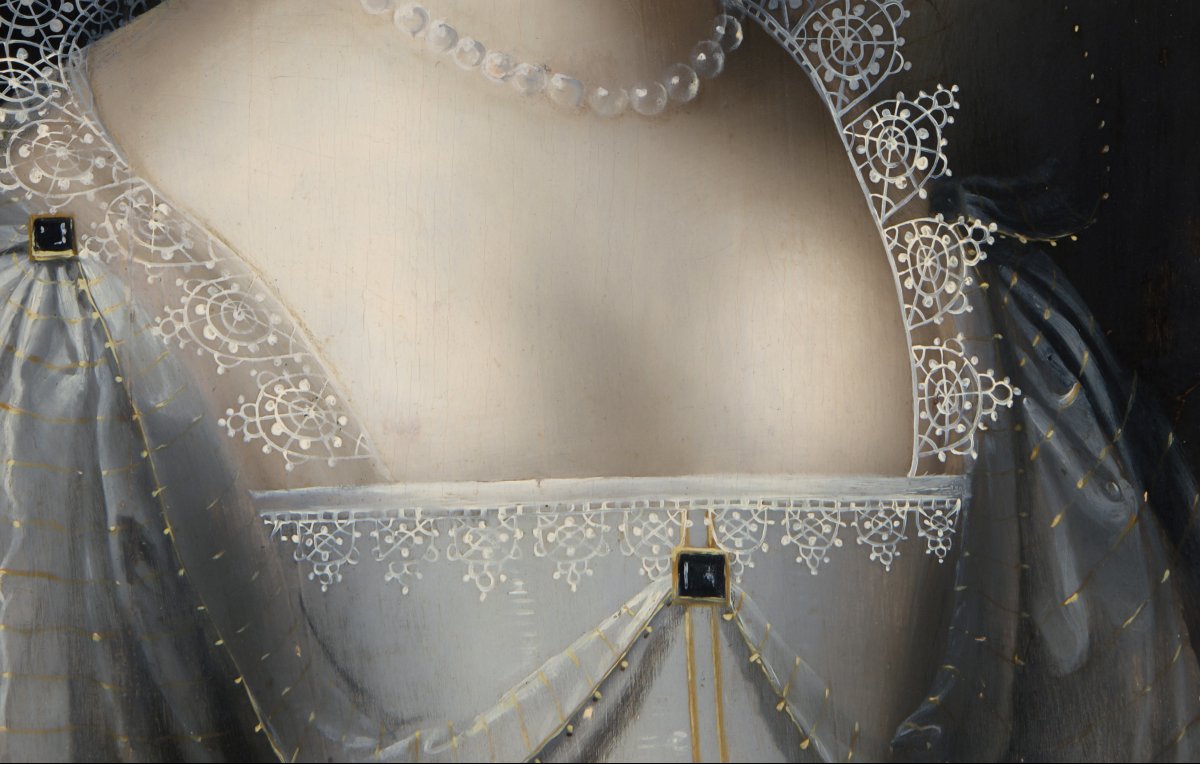
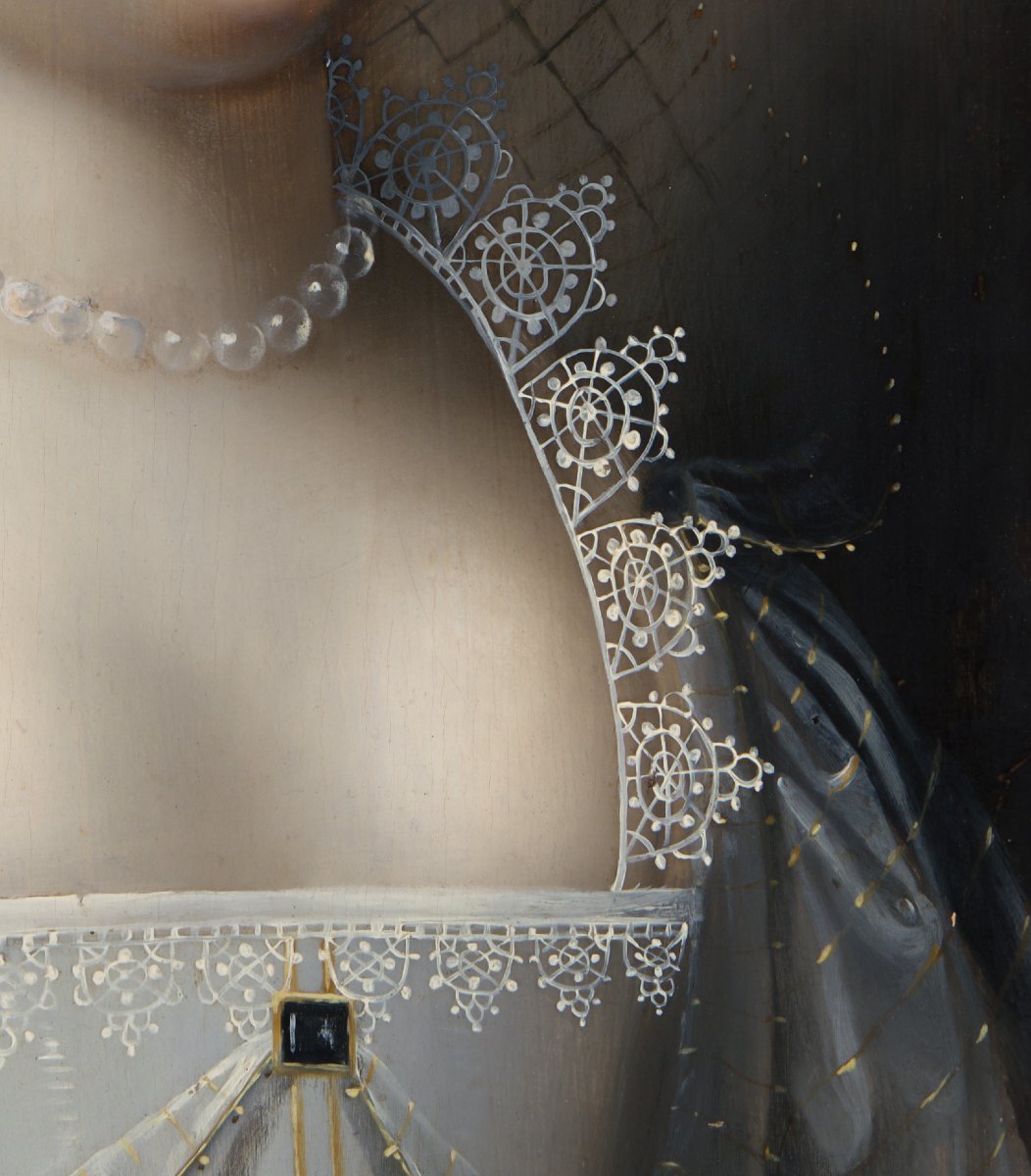
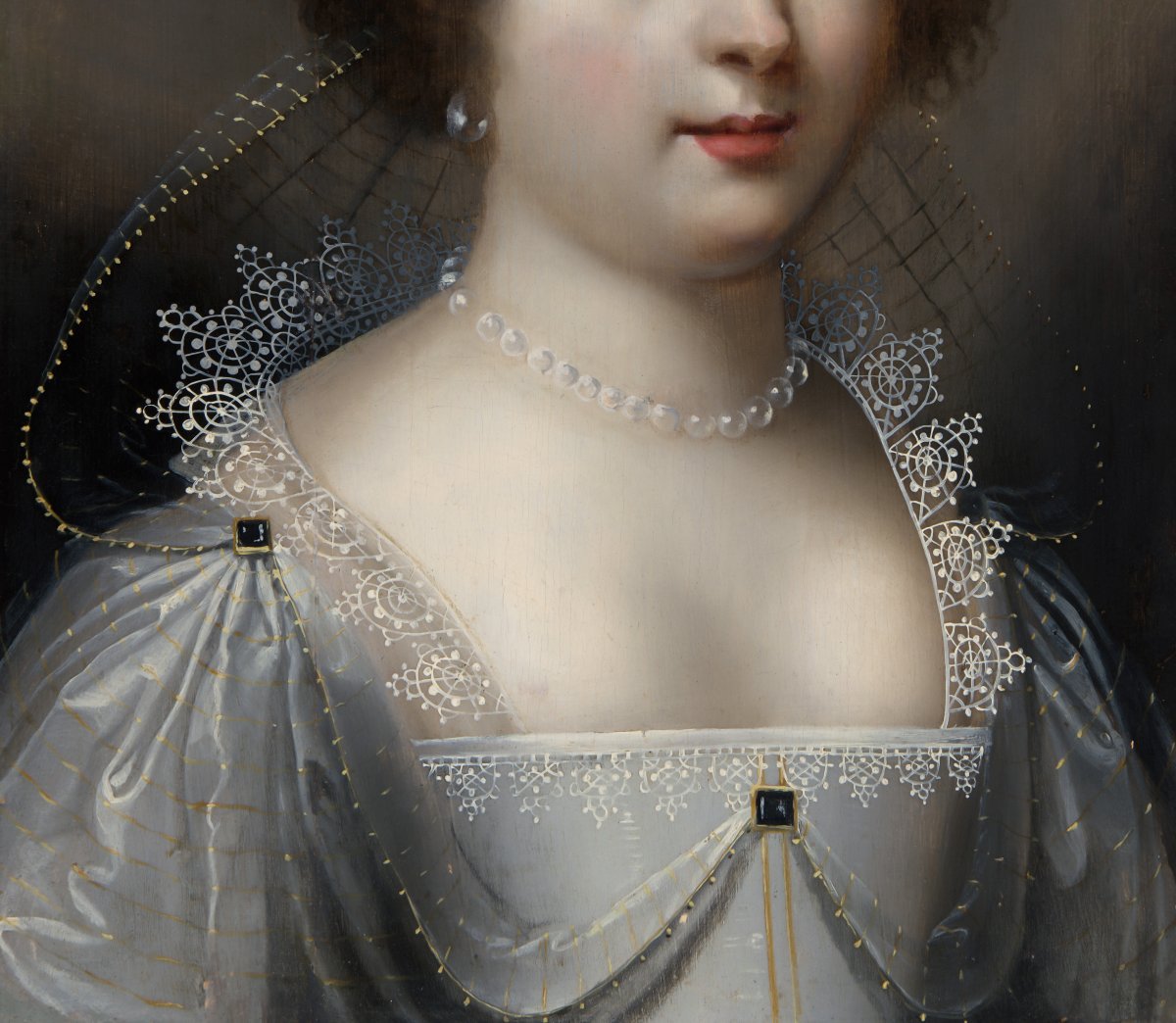
The sitter appears at approximately forty years of age, a chronology entirely consistent with Jacqueline de Bueil if the portrait is dated to around 1630–1635. Her attire strongly supports this date. She wears a gown with a broad, low neckline edged with exquisitely rendered lace of geometric radiating design, a form typical of high-status French needle lace of the early 1630s. The sleeves are covered by translucent gauze oversleeves delicately ornamented with gold thread lines, while a dark veil or mantle, dotted with gold highlights, falls softly behind her shoulders. Jewellery is understated but unmistakably aristocratic: a single strand of pearls and drop pearl earrings, emblems of refined status and courtly propriety. The costume belongs to the sophisticated visual language of noble portraiture in France during the final years of the reign of Louis XIII (r.1610–1643).
Jacqueline de Bueil herself was born into the old noble family of Bueil, daughter of Claude de Bueil, seigneur de Courcillon, and Catherine de Montecler. Her life became historically significant through her relationship with King Henri IV of France. As the king’s mistress she gave birth in 1607 to Antoine de Bourbon, comte de Moret, one of Henri IV’s legitimised natural sons. In connection with this relationship, Jacqueline received the seigneurie of Moret-sur-Loing, from which derived her enduring title Comtesse de Moret. The town of Moret, situated southeast of Paris near Fontainebleau, was centred on an imposing medieval donjon that became closely associated with her household.
After the assassination of Henri IV in 1610 Jacqueline remained part of the extended aristocratic world surrounding the Bourbon dynasty. In 1617 she married René du Bec-Crespin, marquis de Vardes, linking the Moret estate to the Vardes family. Through this marriage the seigneurial rights of Moret eventually passed into the du Bec-Crespin lineage. Jacqueline’s son Antoine, the comte de Moret, grew to adulthood within this milieu but died in 1632 during the turbulent conflicts surrounding the rebellion of Gaston d’Orléans against the powerful royal minister Cardinal Richelieu.
The political climate of the period lends additional resonance to the portrait. During the early 1630s Jacqueline and her husband became entangled in the factional struggles of the French court, supporting the queen mother Marie de Médicis and the rebellious Gaston d’Orléans in opposition to Richelieu. Their temporary fall from favour led to exile in Brussels and the confiscation of the Moret estate between 1631 and 1637. The property was later restored when the couple regained royal favour. Such events underscore the precarious balance of power and patronage that shaped aristocratic life in seventeenth-century France.
The portrait itself belongs to the tradition of small-scale cabinet portraiture that flourished among the French nobility during this period. Rather than the grand theatricality of royal state portraits, these works were intended for private interiors—family residences, galleries, or intimate apartments—where they functioned as visual affirmations of lineage, alliances, and social identity. The careful modelling of the sitter’s features, the luminous treatment of flesh, and the extraordinary precision with which the lace collar is rendered reflect the refined aesthetic of this genre.
Stylistically, the painting corresponds well with the work attributed to Jean Ducayer, an artist active in France during the second quarter of the seventeenth century. Ducayer’s portraits are characterised by their smooth, porcelain-like flesh tones, restrained compositions, and meticulous attention to lace and textile detail. The calm dignity of the sitter, the dark neutral background, and the finely dotted technique used in the lace are consistent with this artistic milieu, itself influenced by earlier Franco-Flemish portrait traditions associated with Frans Pourbus the Younger and the emerging naturalism of artists such as Philippe de Champaigne.
Today the portrait stands as a compelling survival from the aristocratic culture of Bourbon France. If the identification is correct, it preserves the likeness of a woman who moved at the very centre of dynastic politics: mistress to Henri IV, mother of a legitimised Bourbon son, and later marquise de Vardes and lady of the seigneurie of Moret. Even beyond the historical associations of the sitter, the painting remains a beautifully preserved example of the restrained elegance and psychological immediacy that define the finest French portraiture of the early seventeenth century.
Provenance:
Possibly commissioned for the household of Jacqueline de Bueil at Moret-sur-Loing, France, early 17th century;
Later in a private European collection;
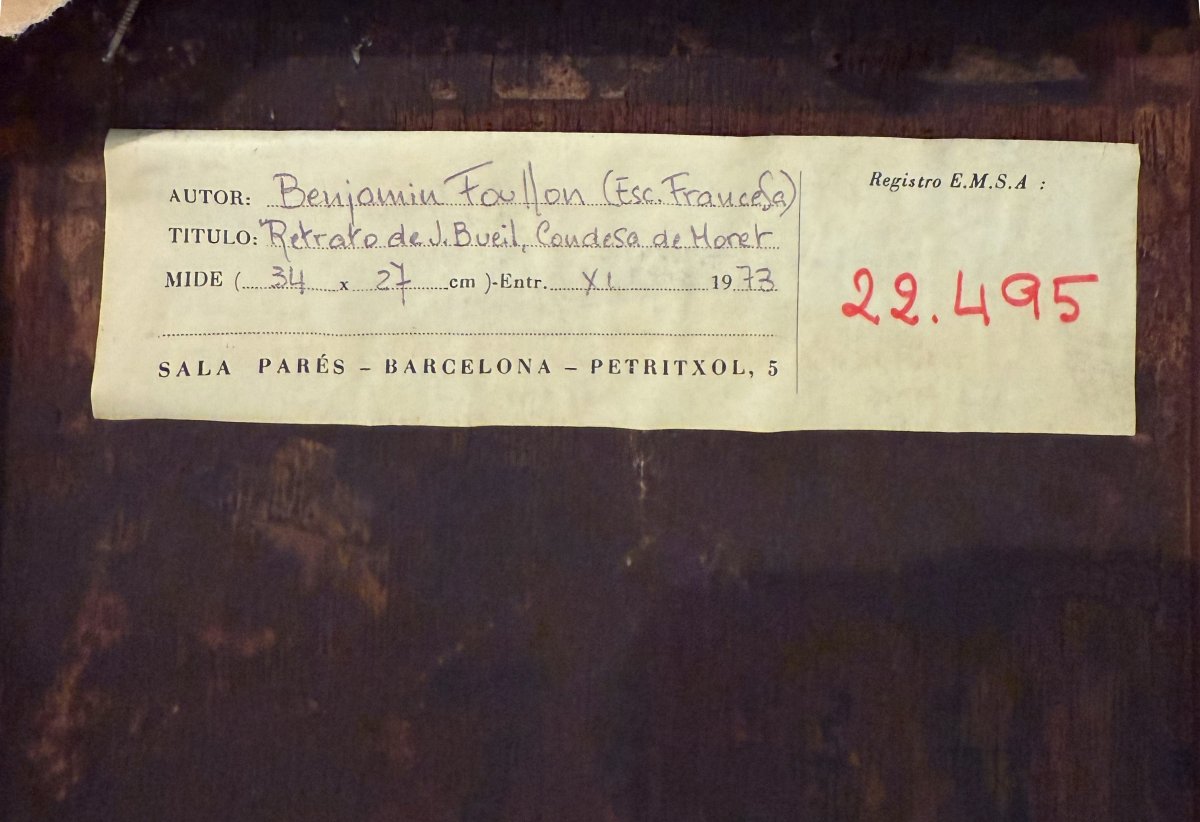
Sala Parés, Barcelona (inventory label verso, no. 22.495), recorded 1973(one of Spain’s oldest galleries)
Measurements:
Height 52cm, Width 44cm framed (Height 20.5”, Width 17.25” framed)
The sitter appears at approximately forty years of age, a chronology entirely consistent with Jacqueline de Bueil if the portrait is dated to around 1630–1635. Her attire strongly supports this date. She wears a gown with a broad, low neckline edged with exquisitely rendered lace of geometric radiating design, a form typical of high-status French needle lace of the early 1630s. The sleeves are covered by translucent gauze oversleeves delicately ornamented with gold thread lines, while a dark veil or mantle, dotted with gold highlights, falls softly behind her shoulders. Jewellery is understated but unmistakably aristocratic: a single strand of pearls and drop pearl earrings, emblems of refined status and courtly propriety. The costume belongs to the sophisticated visual language of noble portraiture in France during the final years of the reign of Louis XIII (r.1610–1643).
Jacqueline de Bueil herself was born into the old noble family of Bueil, daughter of Claude de Bueil, seigneur de Courcillon, and Catherine de Montecler. Her life became historically significant through her relationship with King Henri IV of France. As the king’s mistress she gave birth in 1607 to Antoine de Bourbon, comte de Moret, one of Henri IV’s legitimised natural sons. In connection with this relationship, Jacqueline received the seigneurie of Moret-sur-Loing, from which derived her enduring title Comtesse de Moret. The town of Moret, situated southeast of Paris near Fontainebleau, was centred on an imposing medieval donjon that became closely associated with her household.
After the assassination of Henri IV in 1610 Jacqueline remained part of the extended aristocratic world surrounding the Bourbon dynasty. In 1617 she married René du Bec-Crespin, marquis de Vardes, linking the Moret estate to the Vardes family. Through this marriage the seigneurial rights of Moret eventually passed into the du Bec-Crespin lineage. Jacqueline’s son Antoine, the comte de Moret, grew to adulthood within this milieu but died in 1632 during the turbulent conflicts surrounding the rebellion of Gaston d’Orléans against the powerful royal minister Cardinal Richelieu.
The political climate of the period lends additional resonance to the portrait. During the early 1630s Jacqueline and her husband became entangled in the factional struggles of the French court, supporting the queen mother Marie de Médicis and the rebellious Gaston d’Orléans in opposition to Richelieu. Their temporary fall from favour led to exile in Brussels and the confiscation of the Moret estate between 1631 and 1637. The property was later restored when the couple regained royal favour. Such events underscore the precarious balance of power and patronage that shaped aristocratic life in seventeenth-century France.
The portrait itself belongs to the tradition of small-scale cabinet portraiture that flourished among the French nobility during this period. Rather than the grand theatricality of royal state portraits, these works were intended for private interiors—family residences, galleries, or intimate apartments—where they functioned as visual affirmations of lineage, alliances, and social identity. The careful modelling of the sitter’s features, the luminous treatment of flesh, and the extraordinary precision with which the lace collar is rendered reflect the refined aesthetic of this genre.
Stylistically, the painting corresponds well with the work attributed to Jean Ducayer, an artist active in France during the second quarter of the seventeenth century. Ducayer’s portraits are characterised by their smooth, porcelain-like flesh tones, restrained compositions, and meticulous attention to lace and textile detail. The calm dignity of the sitter, the dark neutral background, and the finely dotted technique used in the lace are consistent with this artistic milieu, itself influenced by earlier Franco-Flemish portrait traditions associated with Frans Pourbus the Younger and the emerging naturalism of artists such as Philippe de Champaigne.
Today the portrait stands as a compelling survival from the aristocratic culture of Bourbon France. If the identification is correct, it preserves the likeness of a woman who moved at the very centre of dynastic politics: mistress to Henri IV, mother of a legitimised Bourbon son, and later marquise de Vardes and lady of the seigneurie of Moret. Even beyond the historical associations of the sitter, the painting remains a beautifully preserved example of the restrained elegance and psychological immediacy that define the finest French portraiture of the early seventeenth century.
Provenance:
Possibly commissioned for the household of Jacqueline de Bueil at Moret-sur-Loing, France, early 17th century;
Later in a private European collection;
Sala Parés, Barcelona (inventory label verso, no. 22.495), recorded 1973(one of Spain’s oldest galleries)
Measurements:
Height 52cm, Width 44cm framed (Height 20.5”, Width 17.25” framed)
Explore similar pieces and discover your ideal find:
Portraits