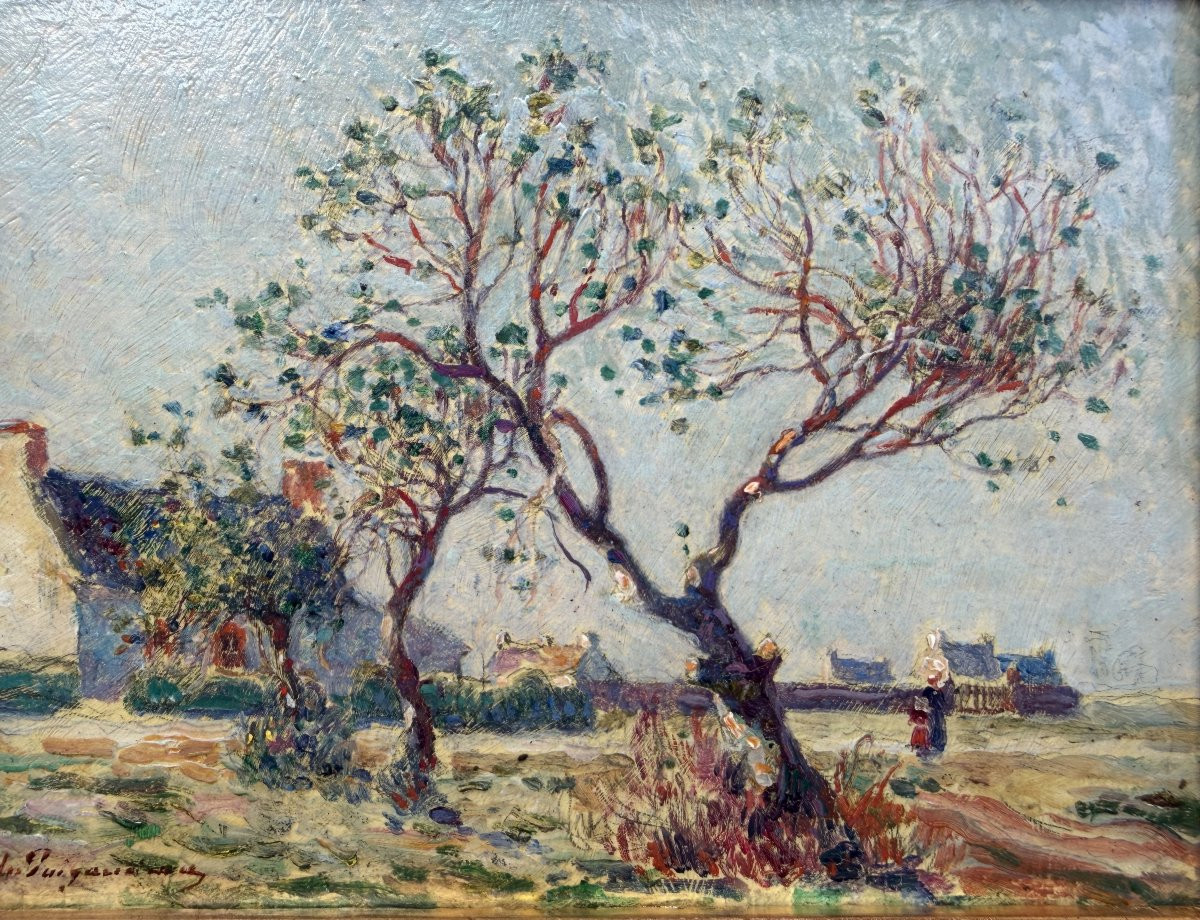
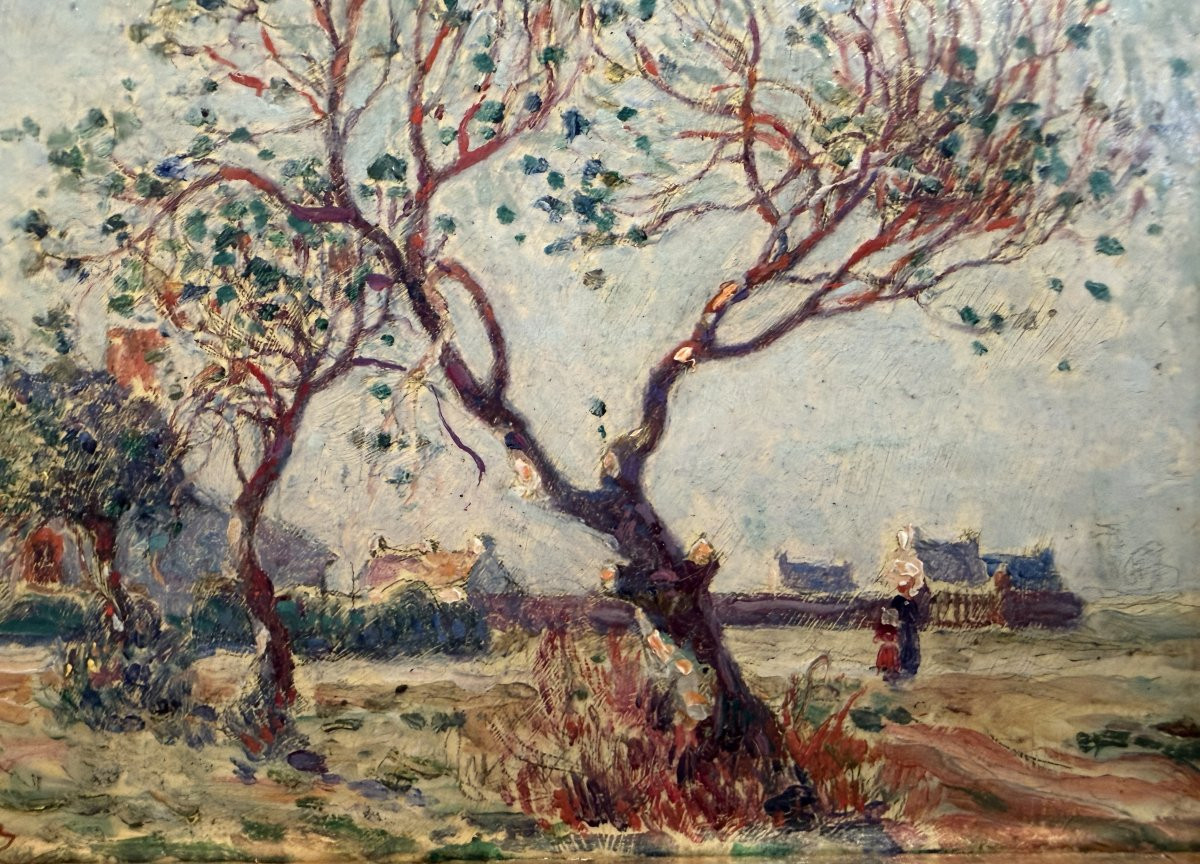
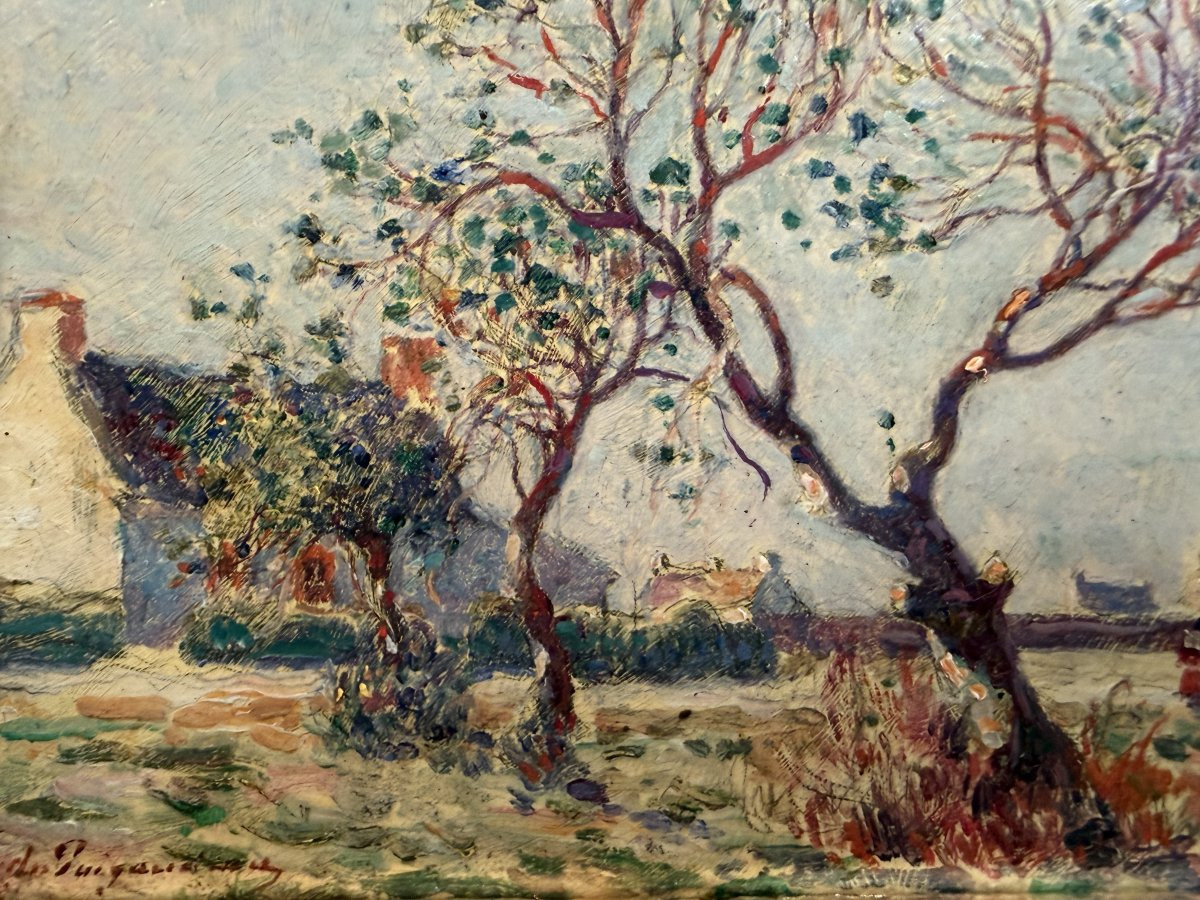
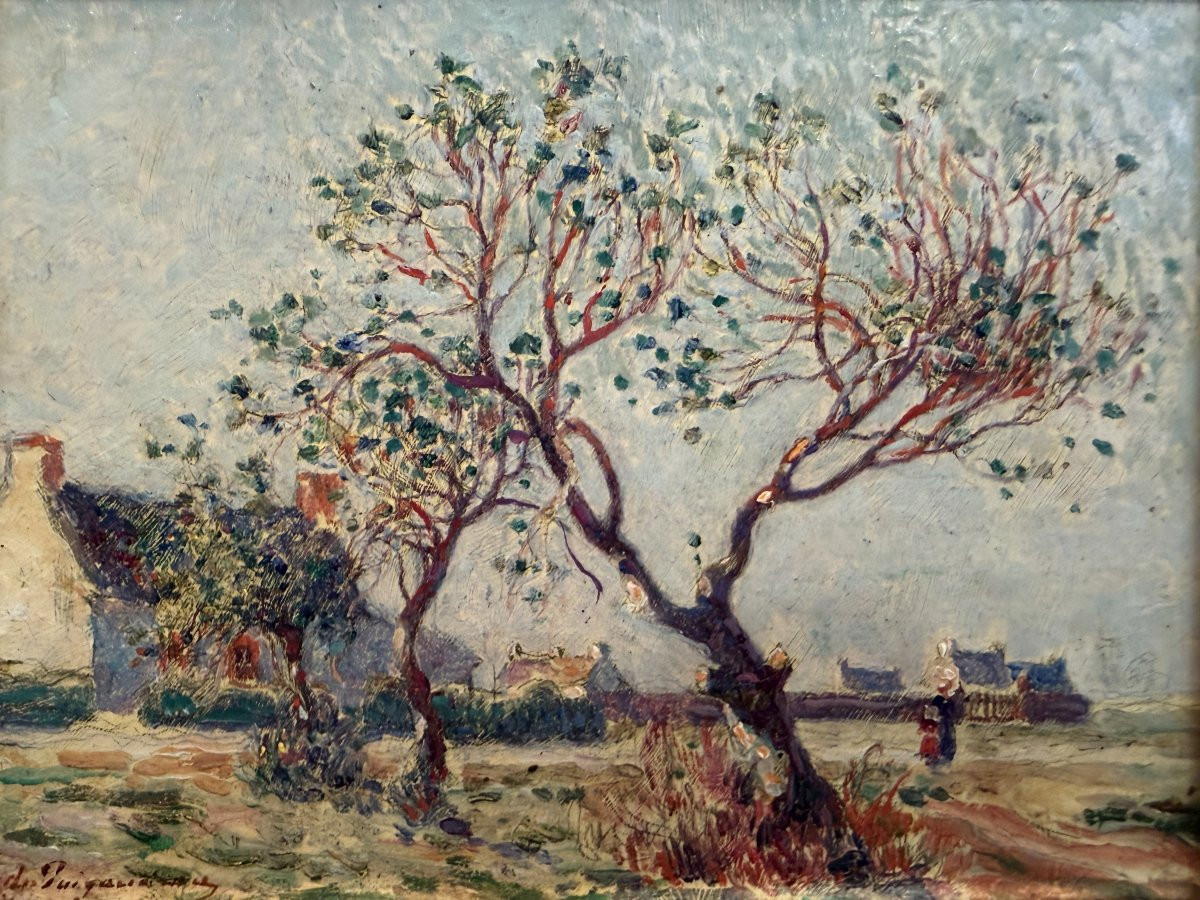
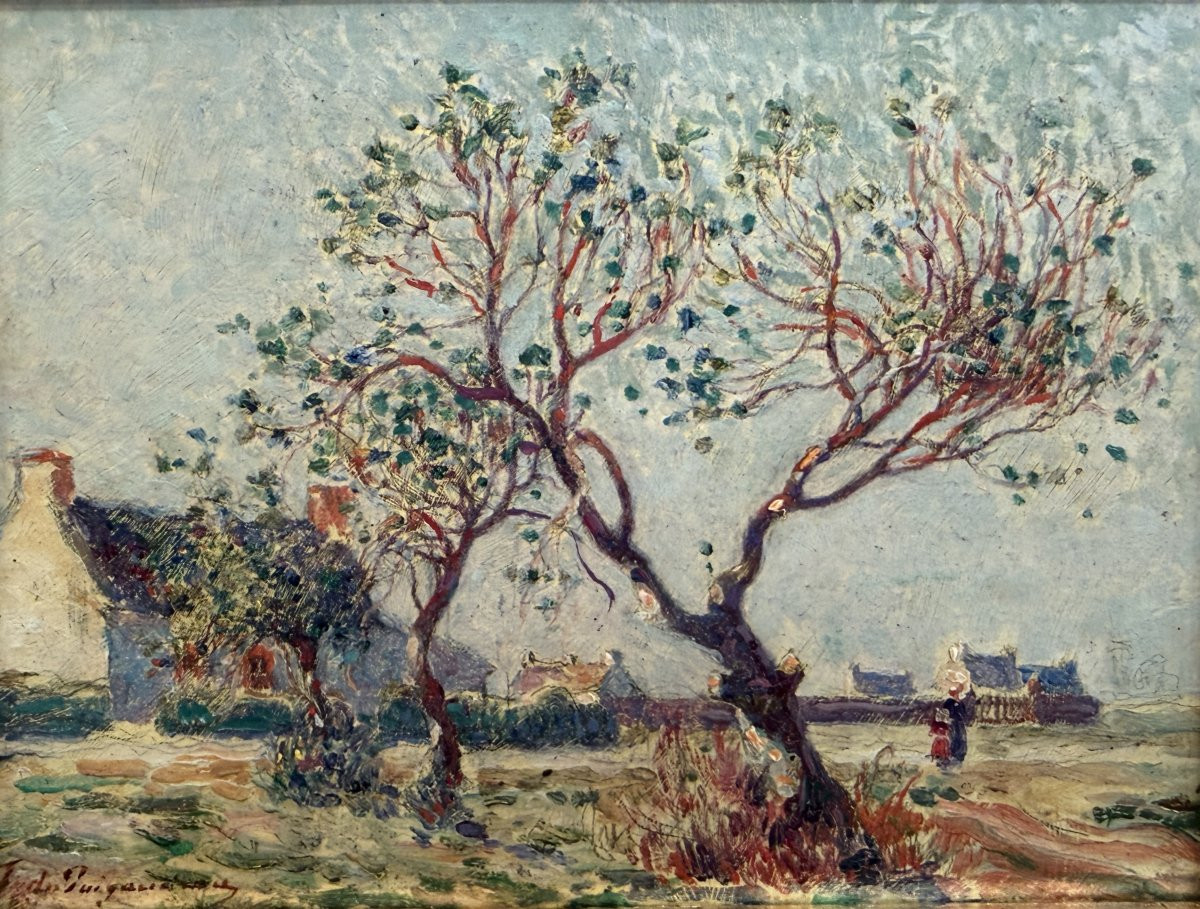
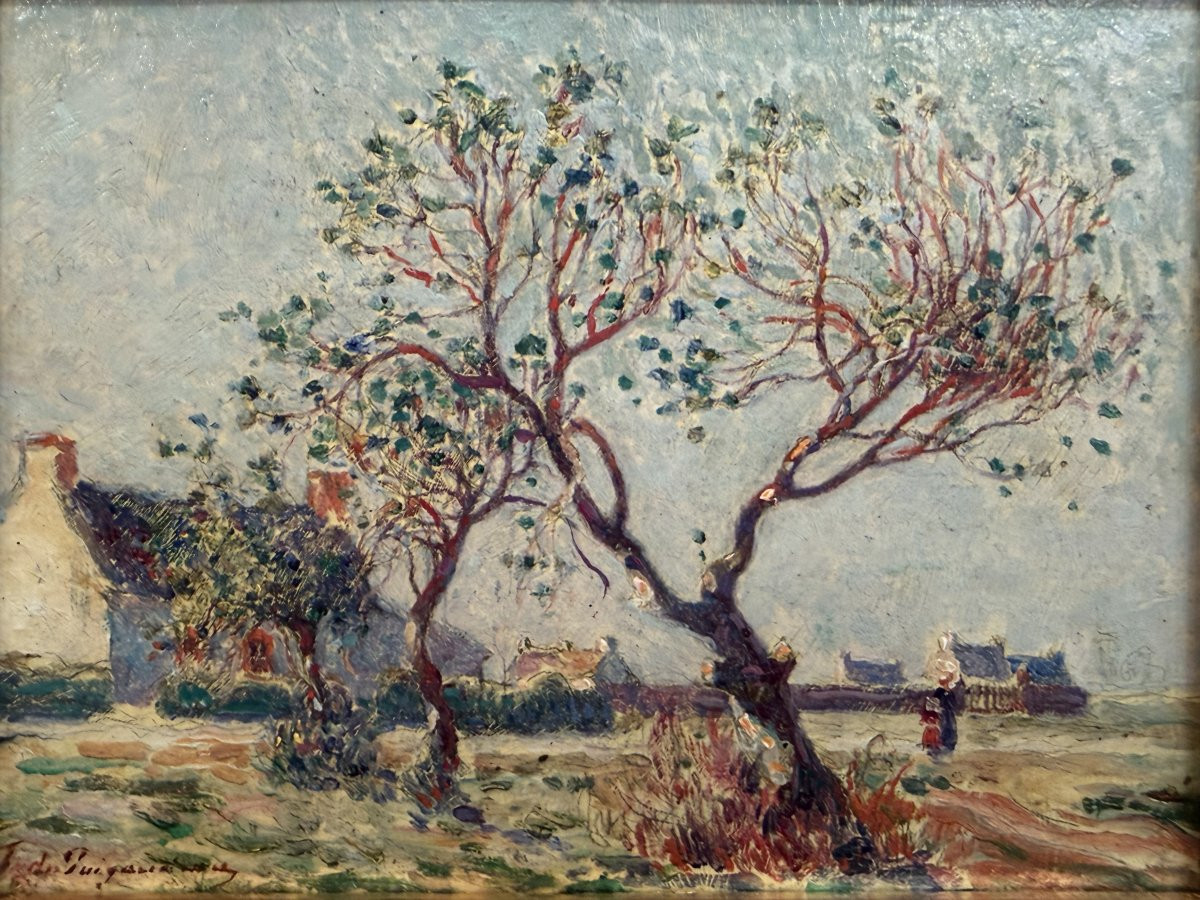
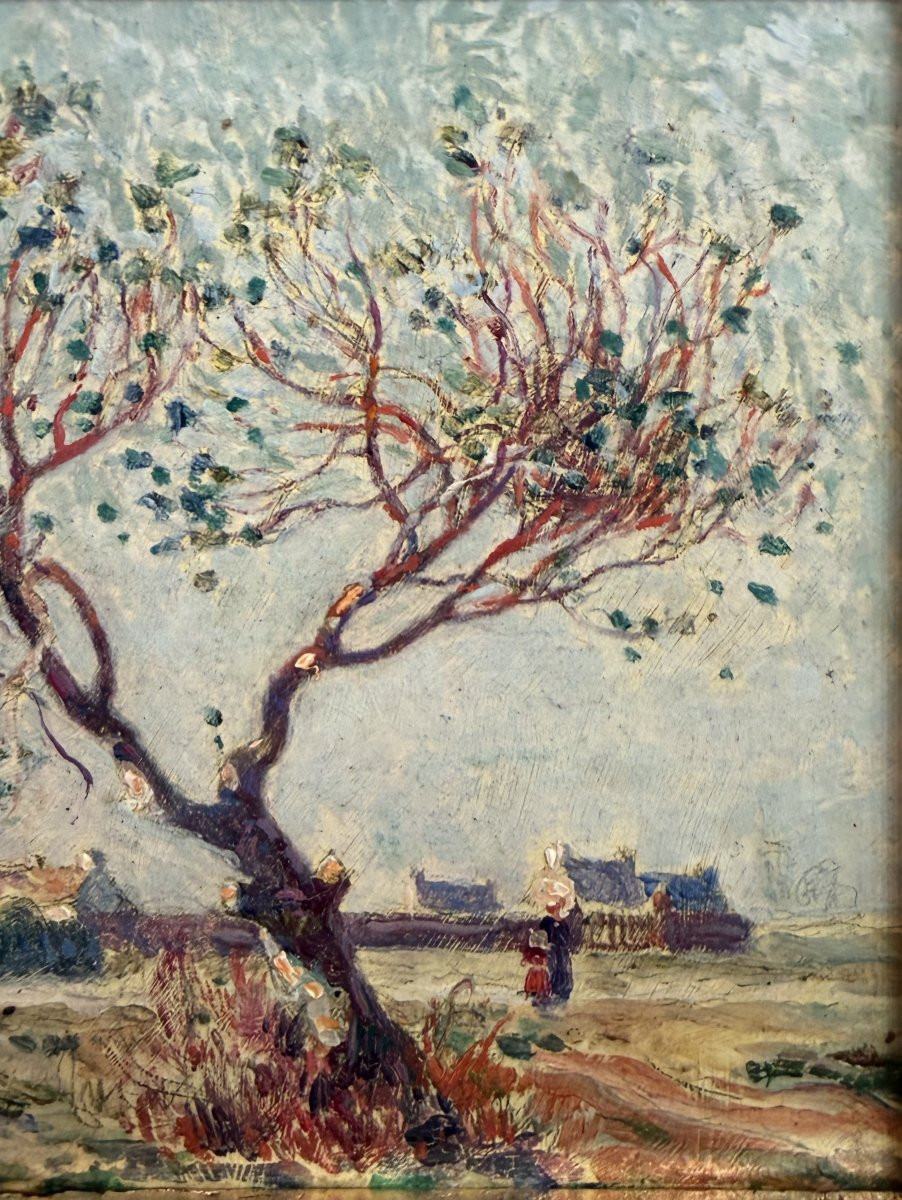
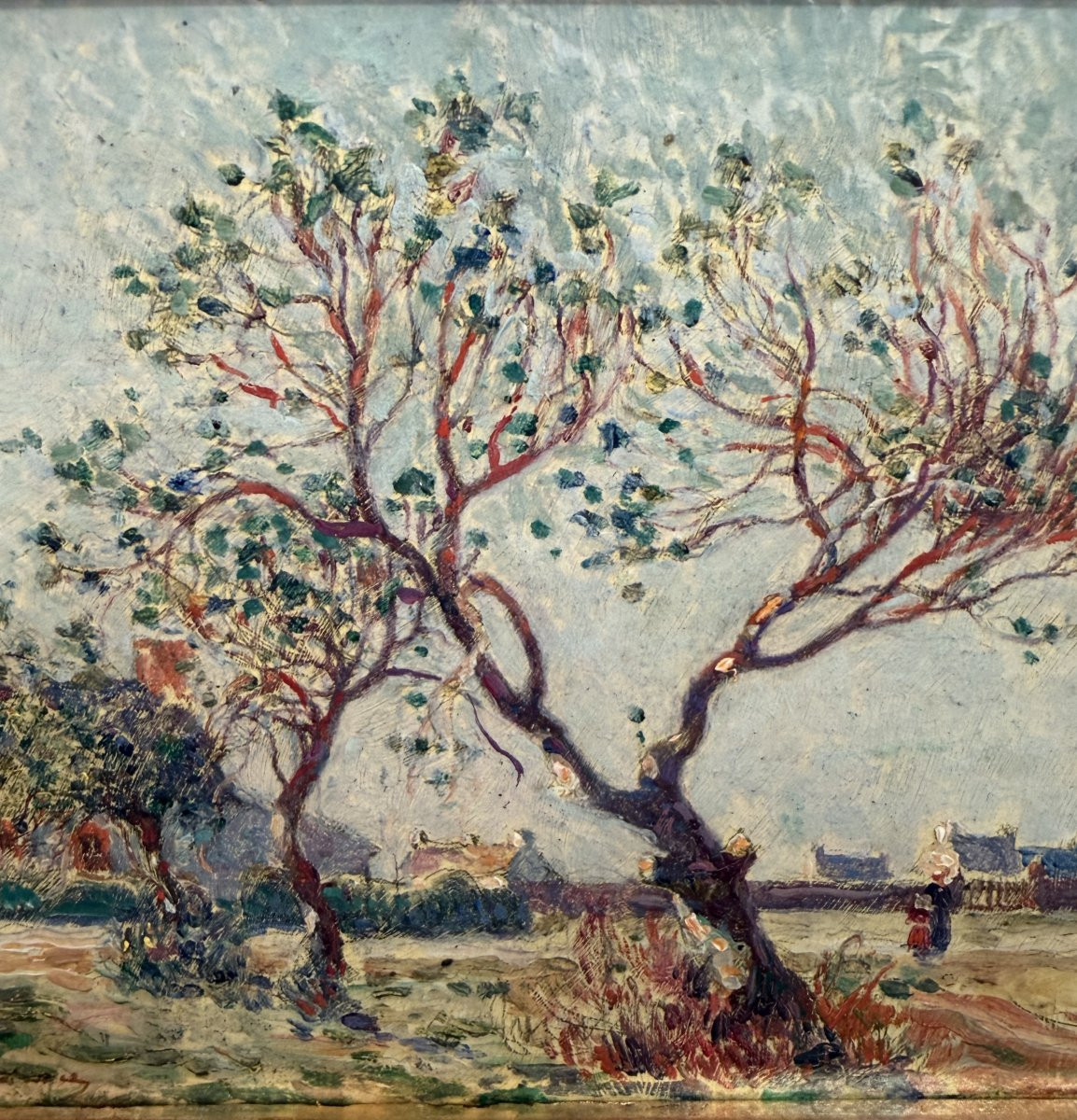


Ferdinand Du Puigaudeau, Painting Of Brittany, Houses In Brière, Oil On Canvas, Signed, Certificate Of Authenticity
Artist: Du Puigaudeau Ferdinand ( 1864 / 1930 )
DU PUIGAUDEAU Ferdinand (1864–1930)
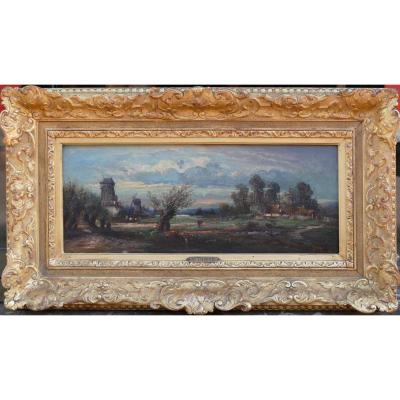
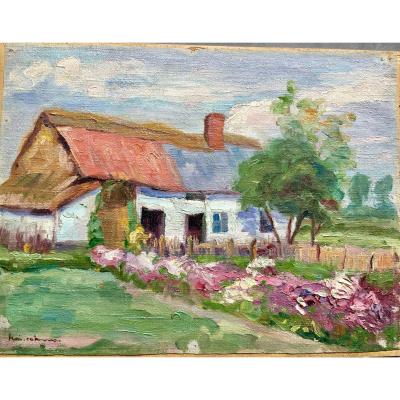
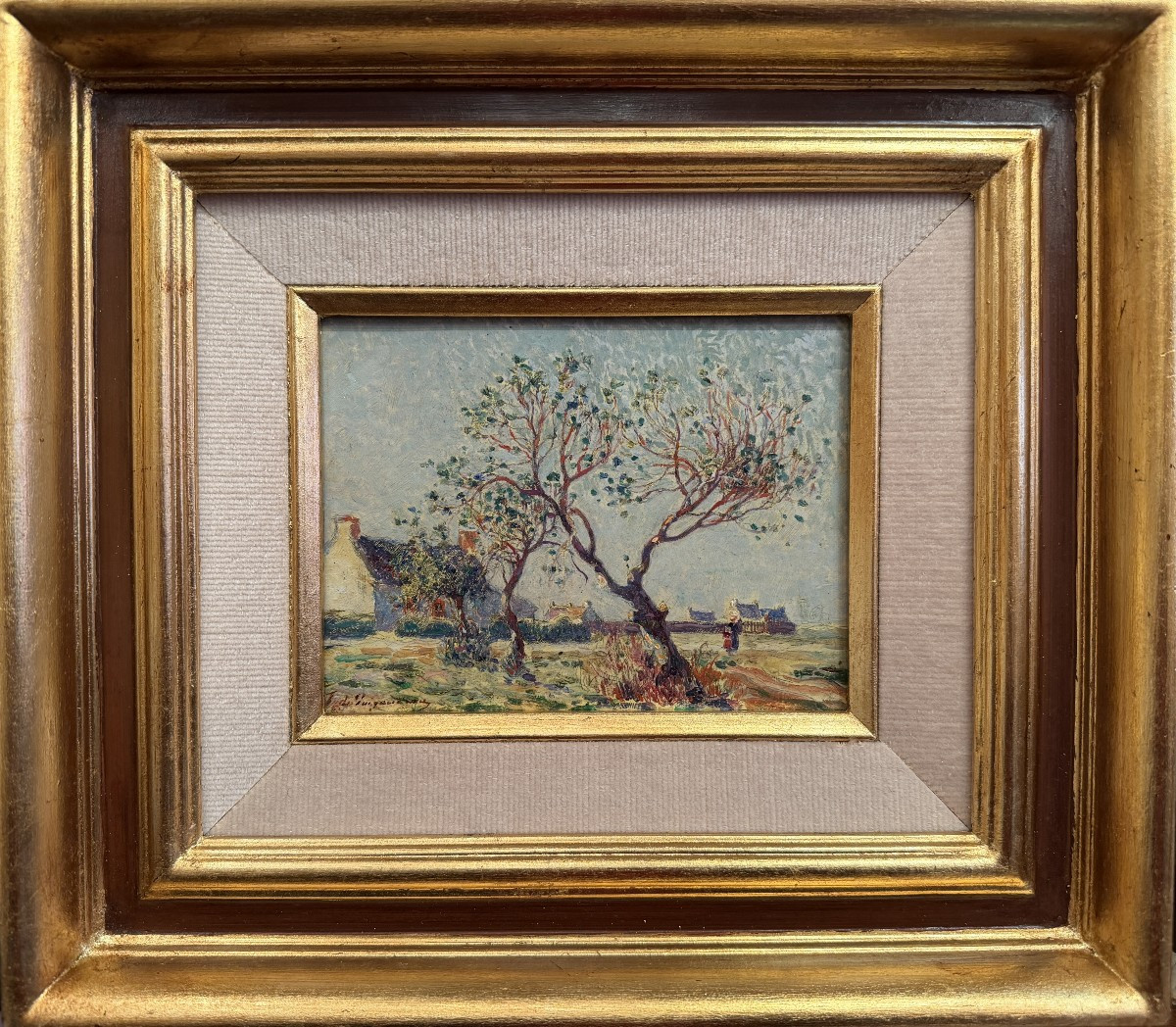
Houses in Brière.
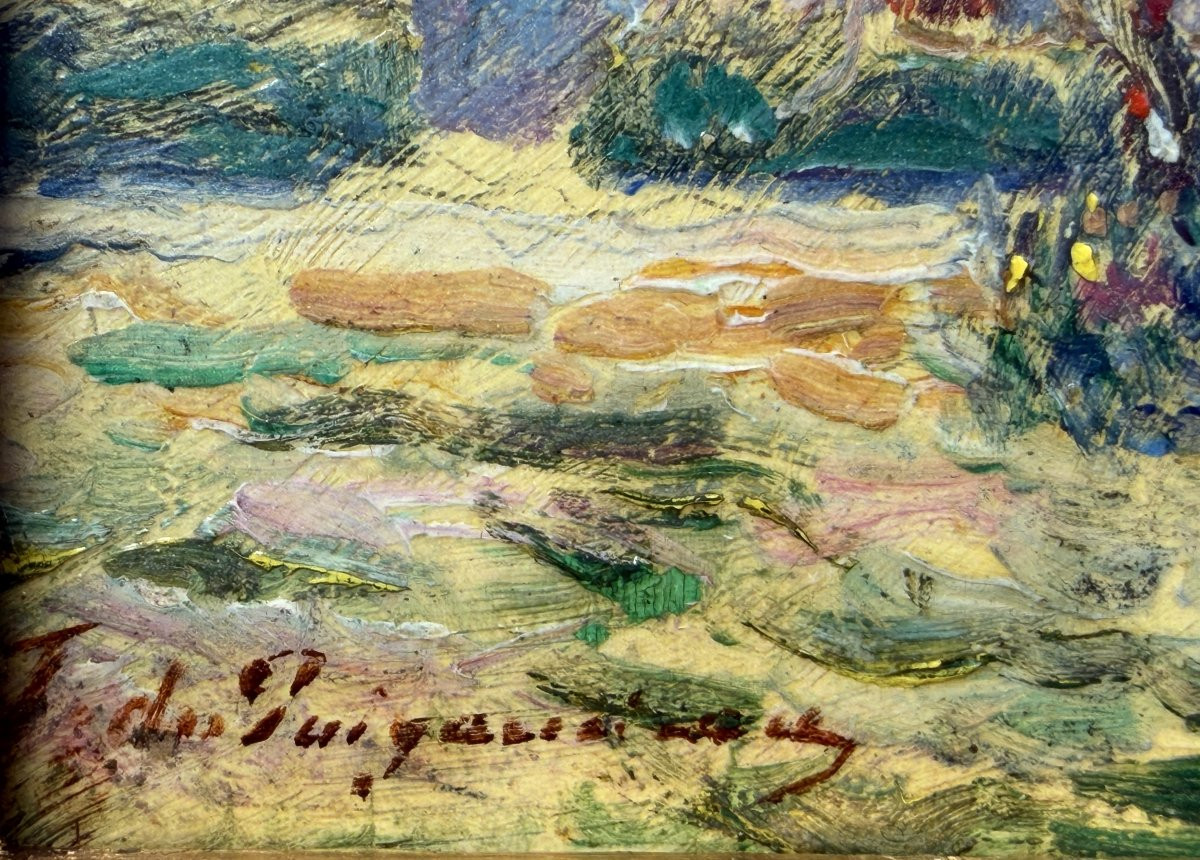
Oil on panel signed lower left.
5,51 x 7,08 in
Certificat of authenticity.
Ferdinand du Puigaudeau, or Ferdinand Loyen du Puigaudeau, was a Breton post-impressionist painter born in Nantes on April 4, 1864, and died in Le Croisic on September 19, 1930.
He was the son of Émile Loyen du Puigaudeau, a merchant, and Clotilde van Bredenbeck de Châteaubriant, and the grandson of landowners, descendants of a family of shipowners who had become wealthy through colonial trade but had since fallen into ruin, and who had produced several mayors of Couëron. After studying classics, he perfected his artistic talents by traveling to Italy and Tunisia.
He showed an early talent for drawing. He left for Paris, where he attended the Académie Julian, an important center for artistic training in the late 19th century. There he met the Nabi painter Paul Gauguin, with whom he maintained a lasting friendship.
In 1886, the date of his first known work, while staying with Marie Gloanec in Pont-Aven, he met Paul Gauguin, Émile Bernard, and Charles Laval again, witnessing the beginnings of what would become the Pont-Aven School two years later.
In 1889, during a trip to Belgium, he became friends with the Group of XX, notably Guillaume Vogels, Jan Toorop, and James Ensor. He also met the realist painter and sculptor Constantin Meunier.
He exhibited his first work at the Salon de la Société nationale des beaux-arts in 1890 and initially painted conventional genre scenes. However, he was gradually influenced by the new aesthetic propagated by the painters of the Pont-Aven School, while continuing to follow his own path and remaining primarily a Post-Impressionist painter. Nicknamed Picolo by his friends, he was fond of nocturnal scenes and twilight atmospheres. He was the painter of fireworks, rockets, sunshine, and cheerful landscapes, wrote the New York Herald in 1903. He was also the painter of popular festivals, especially those held at night.
He was particularly interested in the play of artificial light in the darkness, which sometimes earned him the nickname “painter of the night.”
After a short stay in Venice in 1904, where he produced fifty paintings, he returned to Batz-sur-Mer in the Loire-Atlantique region, plagued by serious financial worries.
In 1907, he moved to Le Croisic, renting the Kervaudu manor house, where he gathered his painter friends Jean Émile Laboureur, Émile Dezaunay, and Ernest de Chamaillard, as well as his cousin, the writer Alphonse de Châteaubriant, and the poet José-Maria de Heredia.
For 25 years, he tirelessly devoted himself to painting the flowers in his garden, the marshes and mills of Brière, sunsets over the sea, and fields of poppies.
Brittany was a great source of inspiration, with its seascapes, dunes, and rural scenes becoming major themes in his work.
He ended his life there, suffering from depression and alcoholism, and died on September 19, 1930.
Museums:
Morlaix, Nantes, Quimper, Pont-Aven, Paris (Musée d'Orsay), New York, Nantes, Vannes, Thyssen-Bornemisza Museum in Madrid.
violondingres.fr
Houses in Brière.
Oil on panel signed lower left.
5,51 x 7,08 in
Certificat of authenticity.
Ferdinand du Puigaudeau, or Ferdinand Loyen du Puigaudeau, was a Breton post-impressionist painter born in Nantes on April 4, 1864, and died in Le Croisic on September 19, 1930.
He was the son of Émile Loyen du Puigaudeau, a merchant, and Clotilde van Bredenbeck de Châteaubriant, and the grandson of landowners, descendants of a family of shipowners who had become wealthy through colonial trade but had since fallen into ruin, and who had produced several mayors of Couëron. After studying classics, he perfected his artistic talents by traveling to Italy and Tunisia.
He showed an early talent for drawing. He left for Paris, where he attended the Académie Julian, an important center for artistic training in the late 19th century. There he met the Nabi painter Paul Gauguin, with whom he maintained a lasting friendship.
In 1886, the date of his first known work, while staying with Marie Gloanec in Pont-Aven, he met Paul Gauguin, Émile Bernard, and Charles Laval again, witnessing the beginnings of what would become the Pont-Aven School two years later.
In 1889, during a trip to Belgium, he became friends with the Group of XX, notably Guillaume Vogels, Jan Toorop, and James Ensor. He also met the realist painter and sculptor Constantin Meunier.
He exhibited his first work at the Salon de la Société nationale des beaux-arts in 1890 and initially painted conventional genre scenes. However, he was gradually influenced by the new aesthetic propagated by the painters of the Pont-Aven School, while continuing to follow his own path and remaining primarily a Post-Impressionist painter. Nicknamed Picolo by his friends, he was fond of nocturnal scenes and twilight atmospheres. He was the painter of fireworks, rockets, sunshine, and cheerful landscapes, wrote the New York Herald in 1903. He was also the painter of popular festivals, especially those held at night.
He was particularly interested in the play of artificial light in the darkness, which sometimes earned him the nickname “painter of the night.”
After a short stay in Venice in 1904, where he produced fifty paintings, he returned to Batz-sur-Mer in the Loire-Atlantique region, plagued by serious financial worries.
In 1907, he moved to Le Croisic, renting the Kervaudu manor house, where he gathered his painter friends Jean Émile Laboureur, Émile Dezaunay, and Ernest de Chamaillard, as well as his cousin, the writer Alphonse de Châteaubriant, and the poet José-Maria de Heredia.
For 25 years, he tirelessly devoted himself to painting the flowers in his garden, the marshes and mills of Brière, sunsets over the sea, and fields of poppies.
Brittany was a great source of inspiration, with its seascapes, dunes, and rural scenes becoming major themes in his work.
He ended his life there, suffering from depression and alcoholism, and died on September 19, 1930.
Museums:
Morlaix, Nantes, Quimper, Pont-Aven, Paris (Musée d'Orsay), New York, Nantes, Vannes, Thyssen-Bornemisza Museum in Madrid.
violondingres.fr
12 500 €
Period: 20th century
Style: Modern Art
Condition: Perfect condition
Material: Oil painting on wood
Width: 18 cm
Height: 14 cm
Reference (ID): 1715997
Availability: In stock
Print