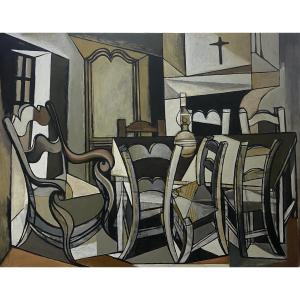
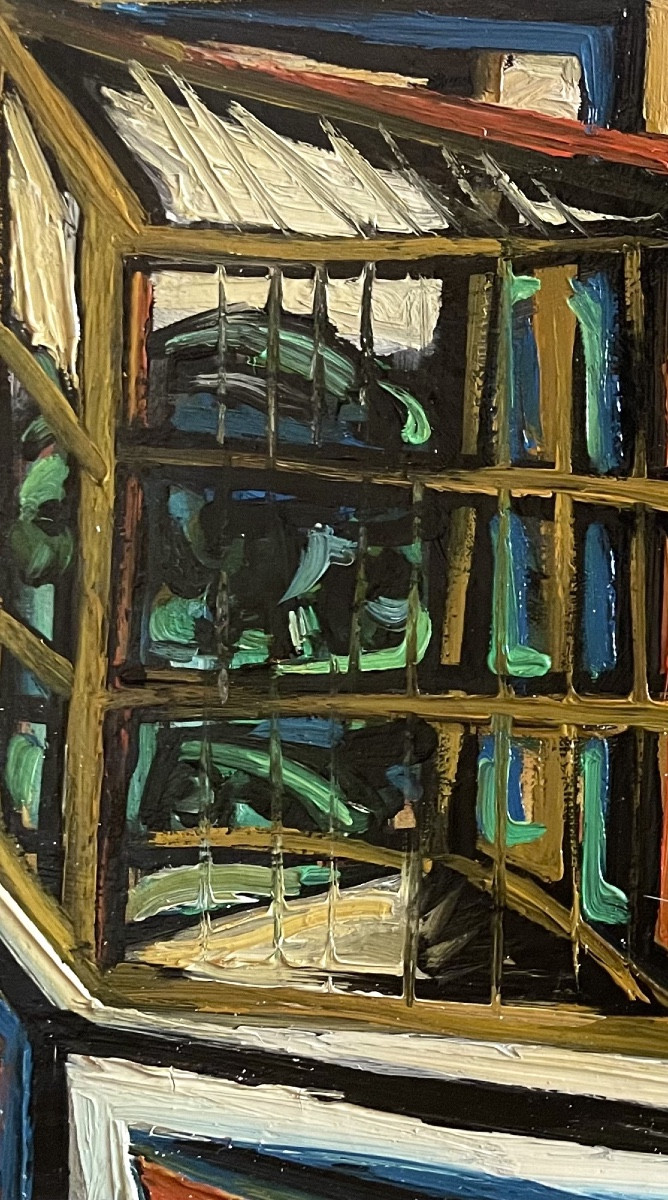
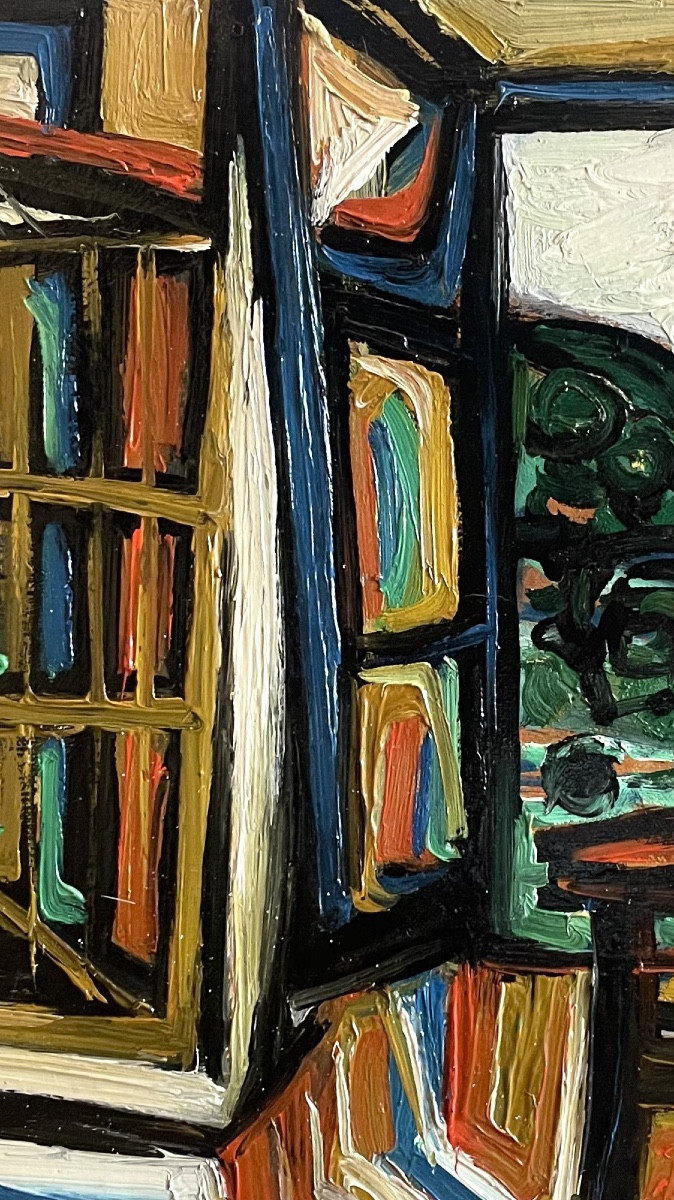
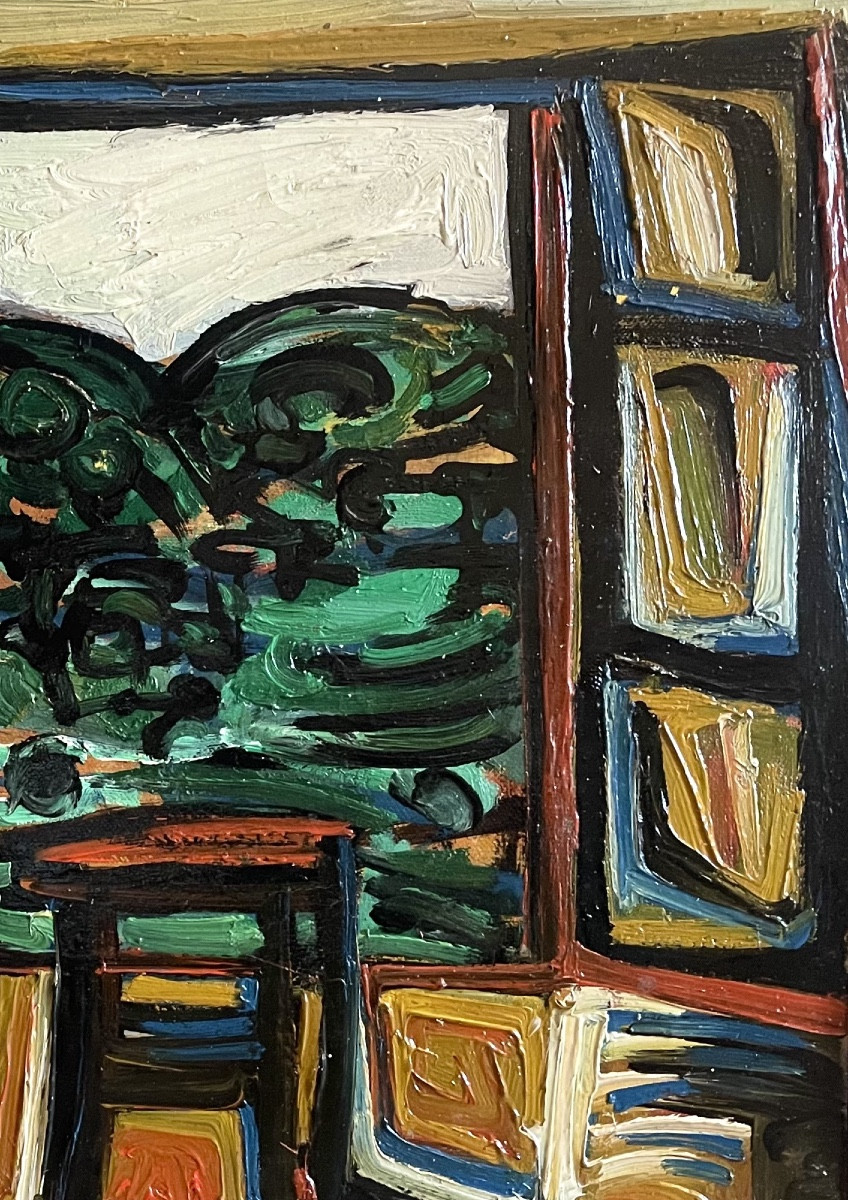


Georges-henri Pescadère (1915 - 2003) — Cage, Open Window
Artist: Georges-henri Pescadère
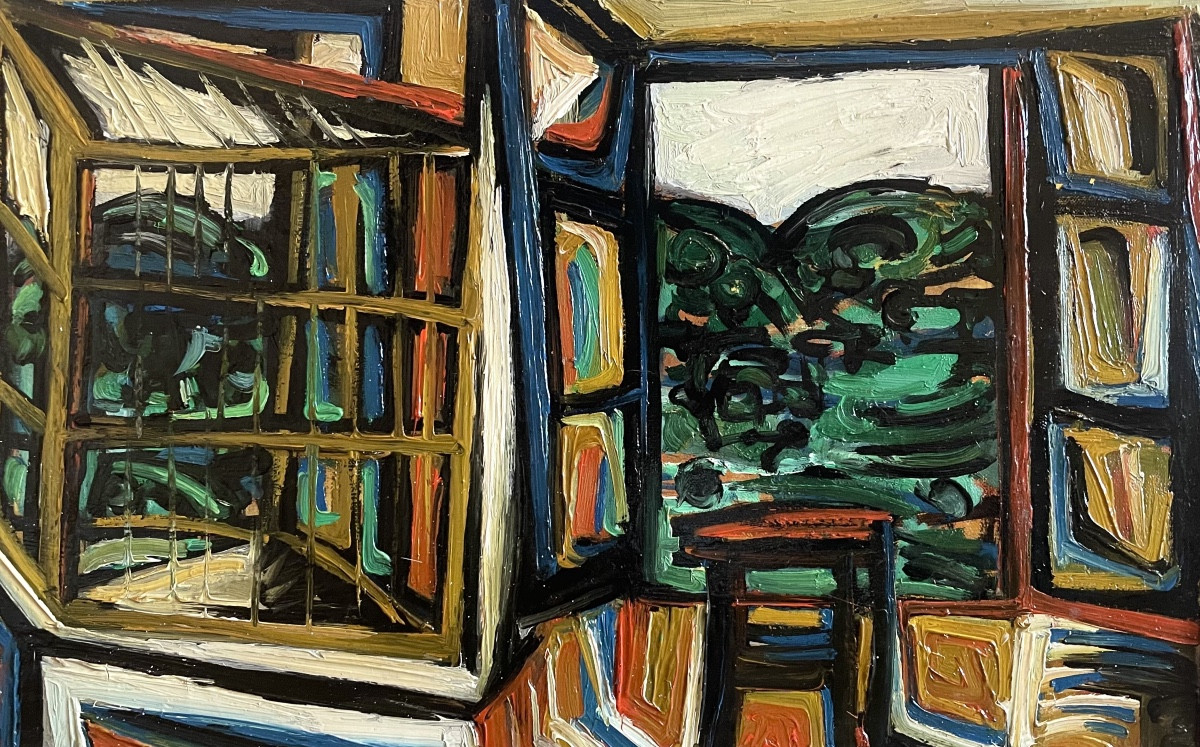
Cage, Open Window
Oil on canvas, signed on the back
25.5 x 40 cm.
Georges-Henri Pescadère (1915-2003) – A Secret Painter Between Paris and the Light of the South
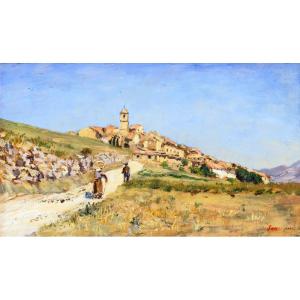
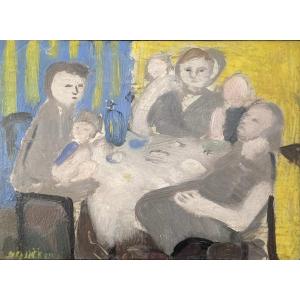
Georges-Henri Pescadère was born on May 7, 1915, in Neuilly-sur-Seine. Drawn to drawing from a young age, he entered the Germain-Pilon School of Applied Arts at the age of fourteen, where he received a multidisciplinary education combining visual arts, decoration, architecture, and advertising. He then continued his studies at the École Nationale Supérieure des Beaux-Arts in Lucien Simon's studio, while also attending Adolphe Cassandre's classes and working in set design for theater and film. The Second World War interrupted this trajectory: involved in the Resistance, Pescadère was arrested by the Gestapo in July 1944 and deported to Germany, notably to the Dora concentration camp. He survived the war and, in 1946, returned to civilian life, which he rebuilt by marrying Anne Wemaëre. Two sons were born from this union, Marc in 1947 and Roch in 1949. That same year, he founded the company "Alliance d'Arts Graphiques," working as a graphic designer and advertising professional for nearly three decades. From the 1950s onward, Pescadère divided his time between Paris and southeastern France. In Bormes-les-Mimosas, where he acquired a house and studio, and in Curel, in the Alpes-de-Haute-Provence region, he found an environment conducive to intimate painting, far removed from social life. He then produced a considerable body of work—more than six hundred paintings—which he exhibited very little, claiming to paint out of inner necessity rather than public ambition. His pictorial world unfolded around a few favored themes: the silent streets of 1950s Paris, luminous landscapes of the South of France or the Alps, rigorously composed still lifes, and numerous female nudes. Although influenced by Cézanne and Picasso, whom he had admired since his youth, Pescadère developed a personal style, marked by structure, simplified forms, and a deliberate use of light. He rarely signed his canvases on the front, preferring to annotate the backs, as if he wanted to preserve their intimate character. Georges-Henri Pescadère died on November 7, 2003, in Bormes-les-Mimosas. It was only after his death that his work began to reach a wider audience, thanks to several exhibitions and the gradual rediscovery of his studio.
Discover more works by this artist on the gallery's website: https://www.galeriepentcheff.fr/fr/peintre-georges-henri-pescadere
Oil on canvas, signed on the back
25.5 x 40 cm.
Georges-Henri Pescadère (1915-2003) – A Secret Painter Between Paris and the Light of the South
Georges-Henri Pescadère was born on May 7, 1915, in Neuilly-sur-Seine. Drawn to drawing from a young age, he entered the Germain-Pilon School of Applied Arts at the age of fourteen, where he received a multidisciplinary education combining visual arts, decoration, architecture, and advertising. He then continued his studies at the École Nationale Supérieure des Beaux-Arts in Lucien Simon's studio, while also attending Adolphe Cassandre's classes and working in set design for theater and film. The Second World War interrupted this trajectory: involved in the Resistance, Pescadère was arrested by the Gestapo in July 1944 and deported to Germany, notably to the Dora concentration camp. He survived the war and, in 1946, returned to civilian life, which he rebuilt by marrying Anne Wemaëre. Two sons were born from this union, Marc in 1947 and Roch in 1949. That same year, he founded the company "Alliance d'Arts Graphiques," working as a graphic designer and advertising professional for nearly three decades. From the 1950s onward, Pescadère divided his time between Paris and southeastern France. In Bormes-les-Mimosas, where he acquired a house and studio, and in Curel, in the Alpes-de-Haute-Provence region, he found an environment conducive to intimate painting, far removed from social life. He then produced a considerable body of work—more than six hundred paintings—which he exhibited very little, claiming to paint out of inner necessity rather than public ambition. His pictorial world unfolded around a few favored themes: the silent streets of 1950s Paris, luminous landscapes of the South of France or the Alps, rigorously composed still lifes, and numerous female nudes. Although influenced by Cézanne and Picasso, whom he had admired since his youth, Pescadère developed a personal style, marked by structure, simplified forms, and a deliberate use of light. He rarely signed his canvases on the front, preferring to annotate the backs, as if he wanted to preserve their intimate character. Georges-Henri Pescadère died on November 7, 2003, in Bormes-les-Mimosas. It was only after his death that his work began to reach a wider audience, thanks to several exhibitions and the gradual rediscovery of his studio.
Discover more works by this artist on the gallery's website: https://www.galeriepentcheff.fr/fr/peintre-georges-henri-pescadere
700 €
Period: 20th century
Style: Other Style
Condition: Good condition
Material: Oil painting
Reference (ID): 1713662
Availability: In stock
Print