THIS OBJECT WAS SOLD
Earthenware Planter, Slip-decorated, Late 19th Century
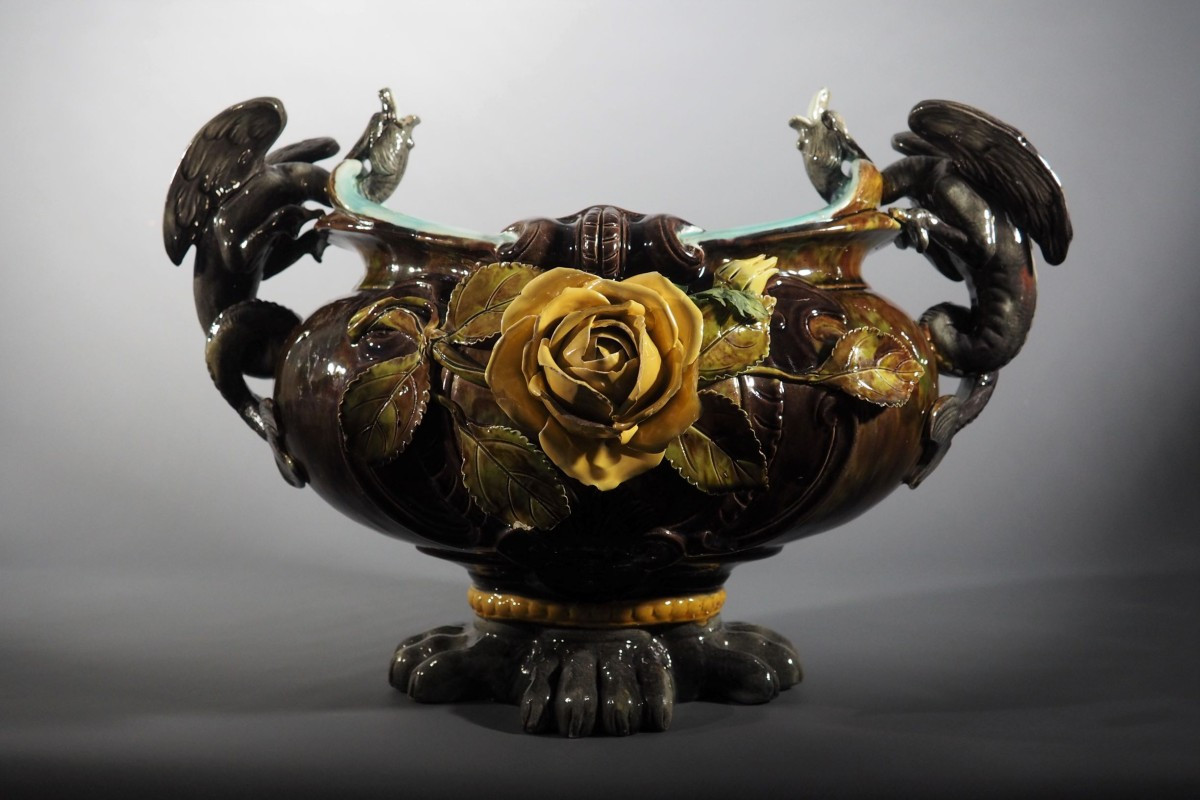
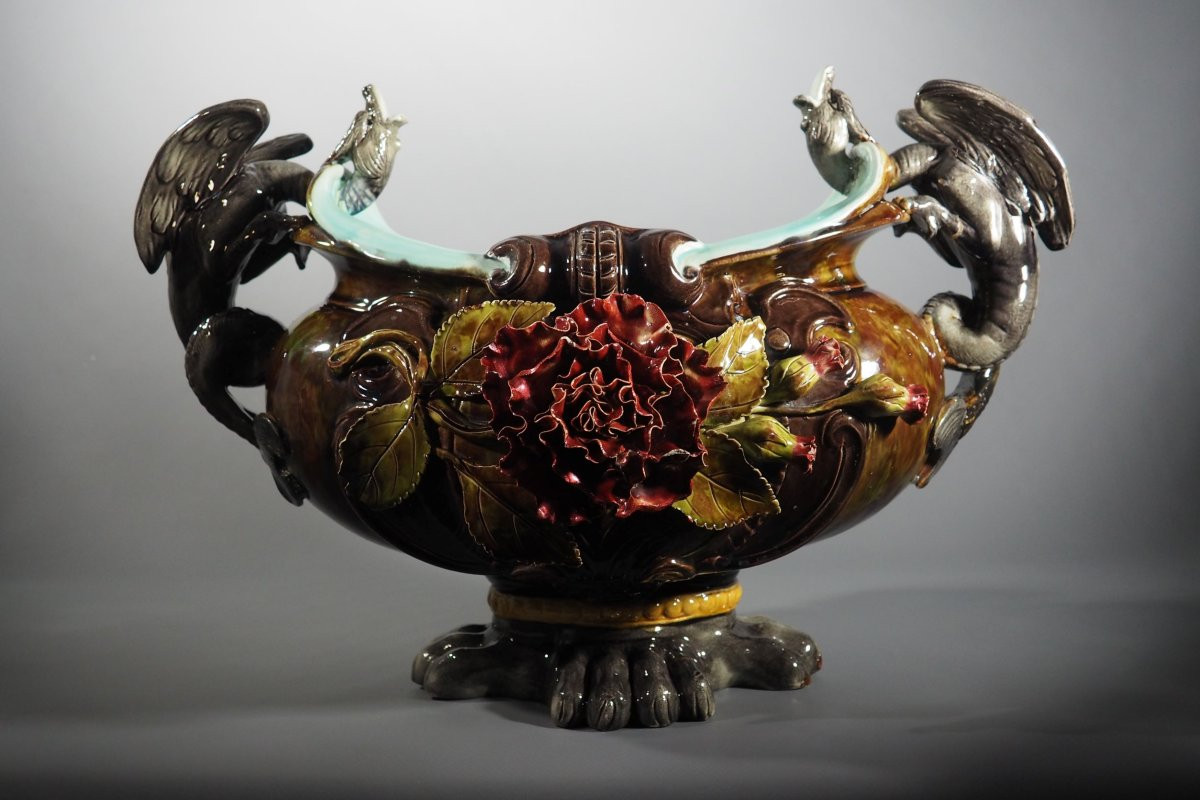
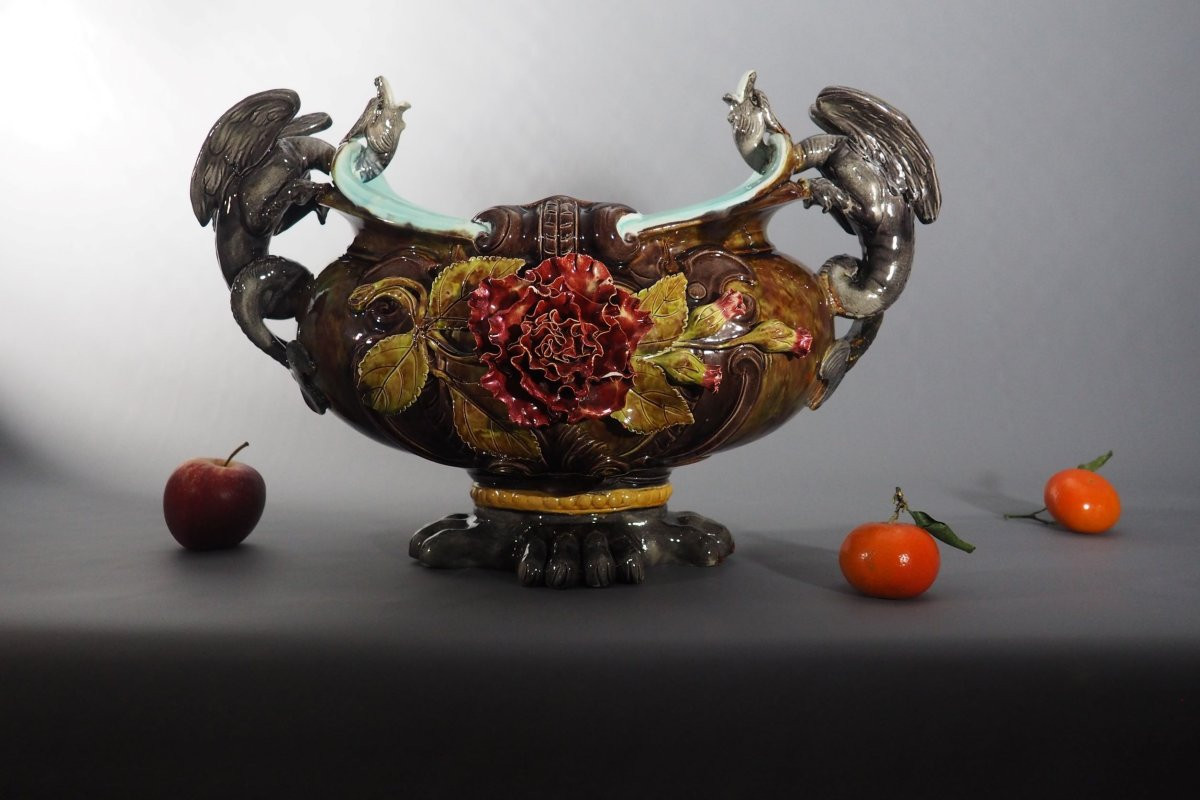
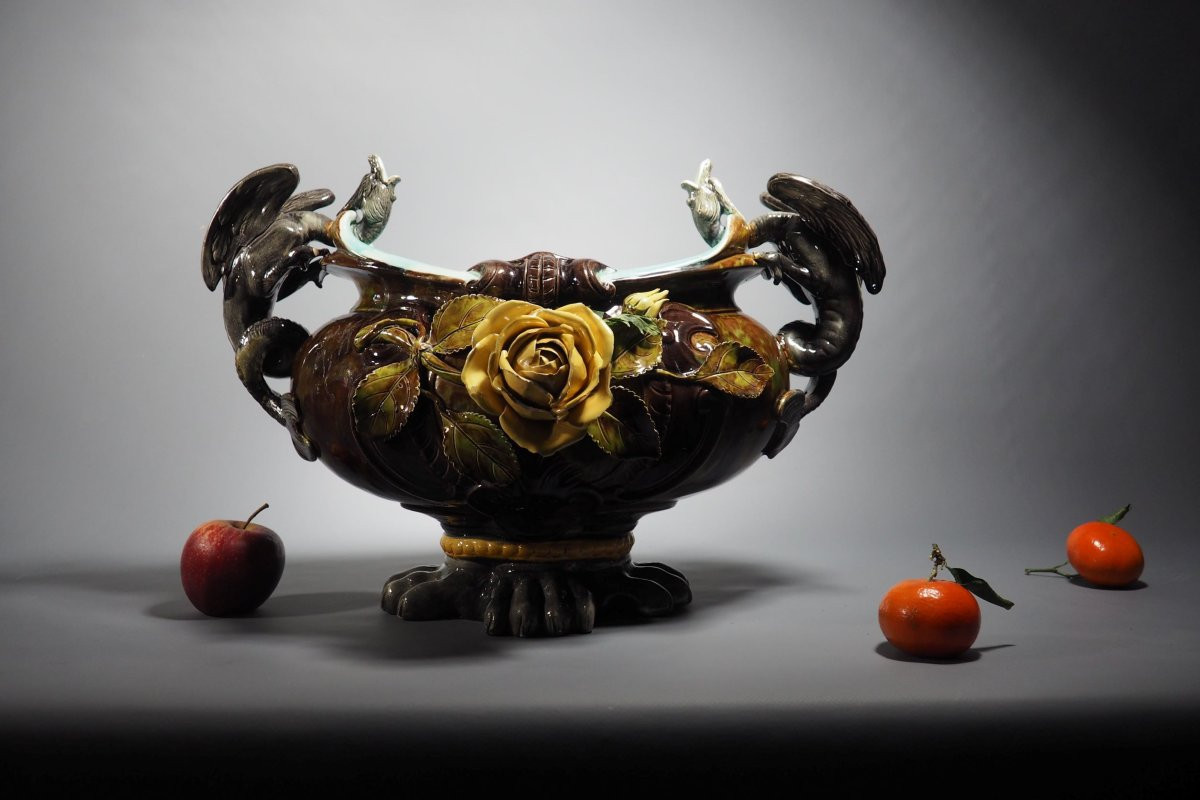
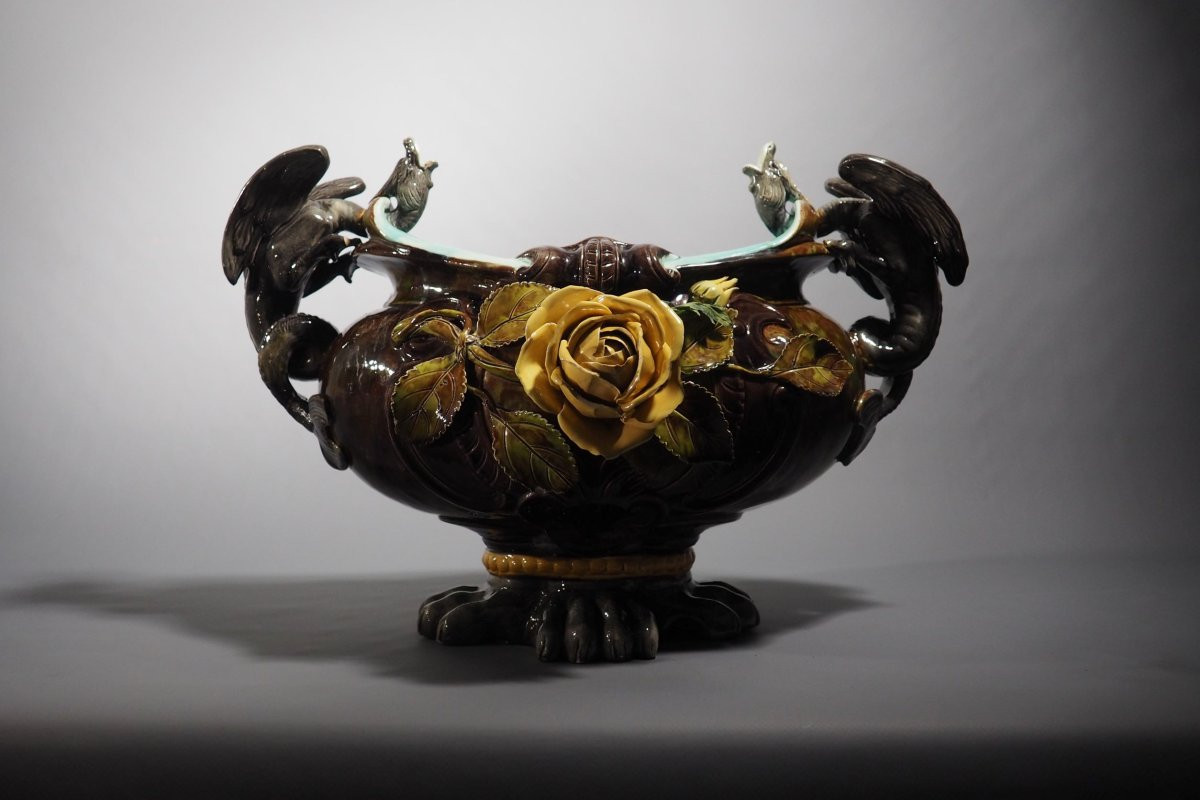
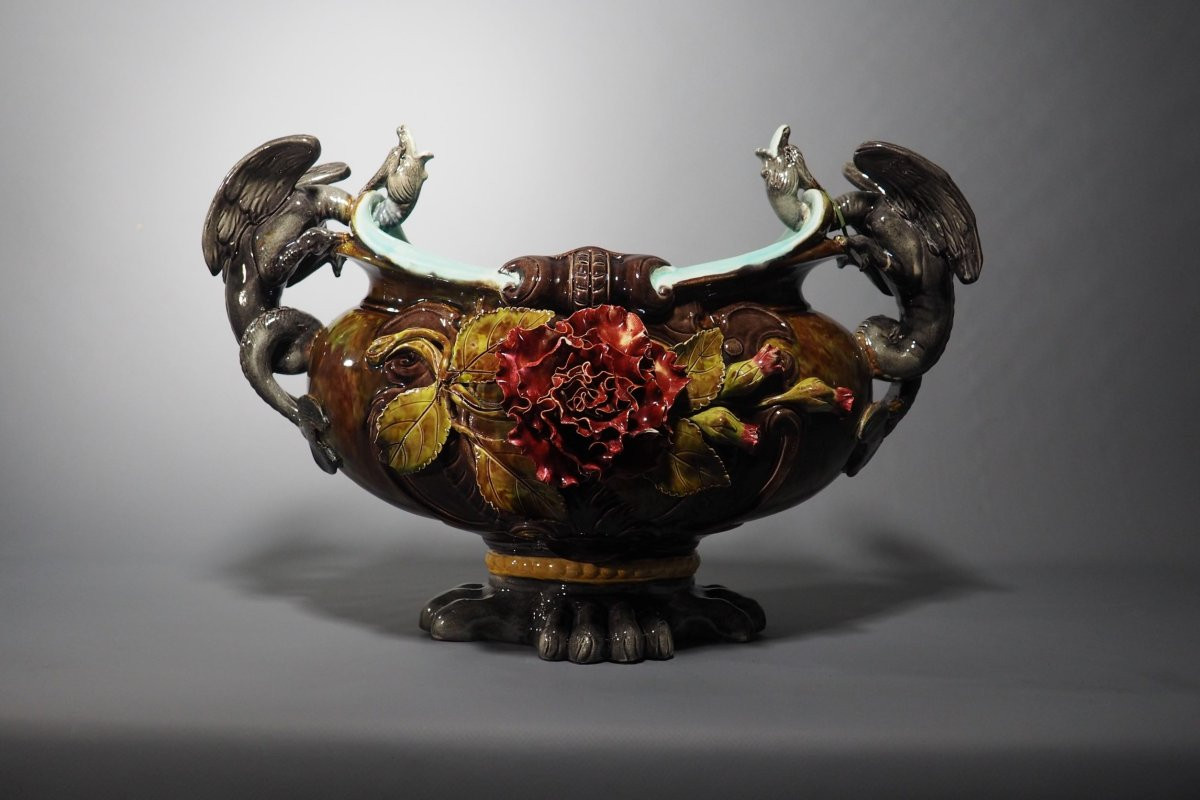
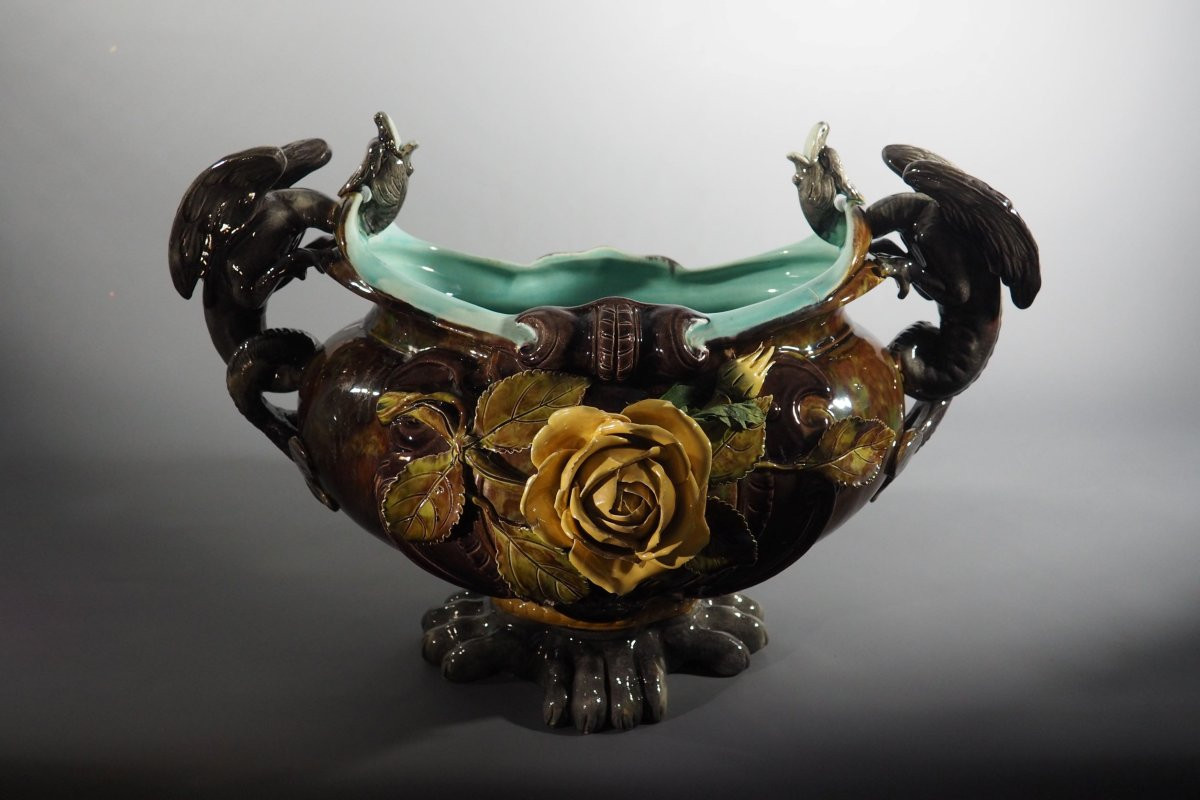
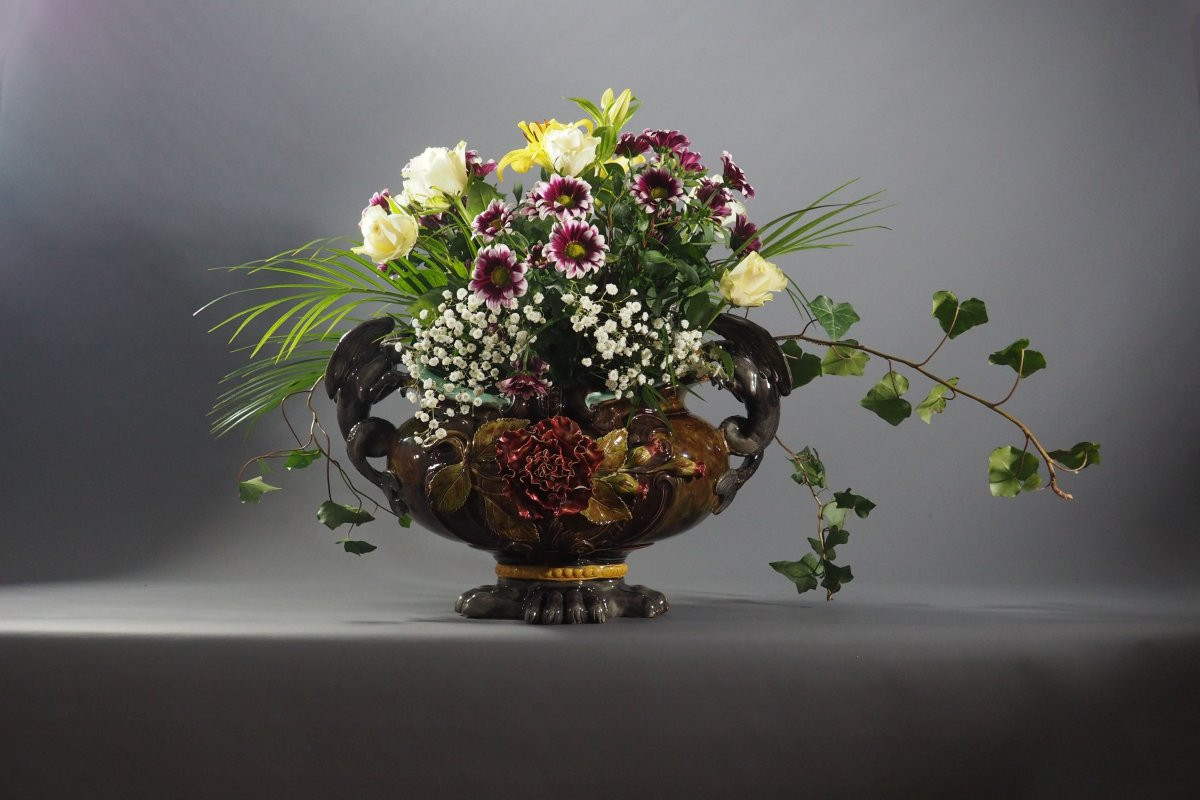
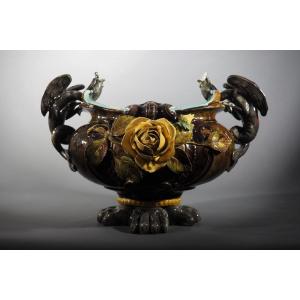


"Songs for Roses" jardinière.
Earthenware, relief decoration (slipware technique), polychrome glazes.
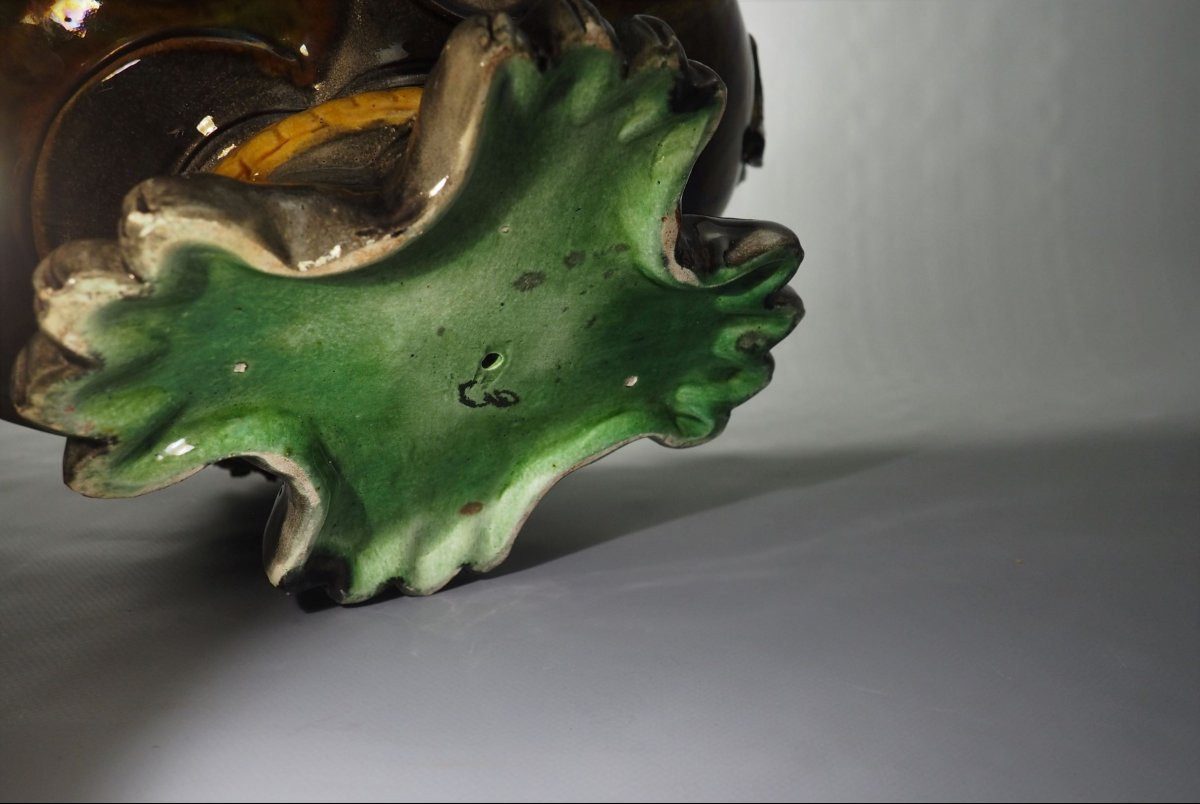
Handwritten mark under the glaze.
France, late 19th century.
Dimensions: length 47 cm, height 30 cm.
Condition: very good.
This French jardinière from the late 19th century, made in a Neo-Renaissance style, is a characteristic example of artistic earthenware from the Historicist period. The piece is made of earthenware using the slipware technique, a relief modeling process that allows for a rich, sculptural quality.
The polychrome glazes offer deep nuances and textural effects typical of French production in the second half of the 19th century. The presence of a handwritten mark under the glaze confirms its high-quality craftsmanship. The composition takes the form of a sculptural bowl resting on a figurative foot.
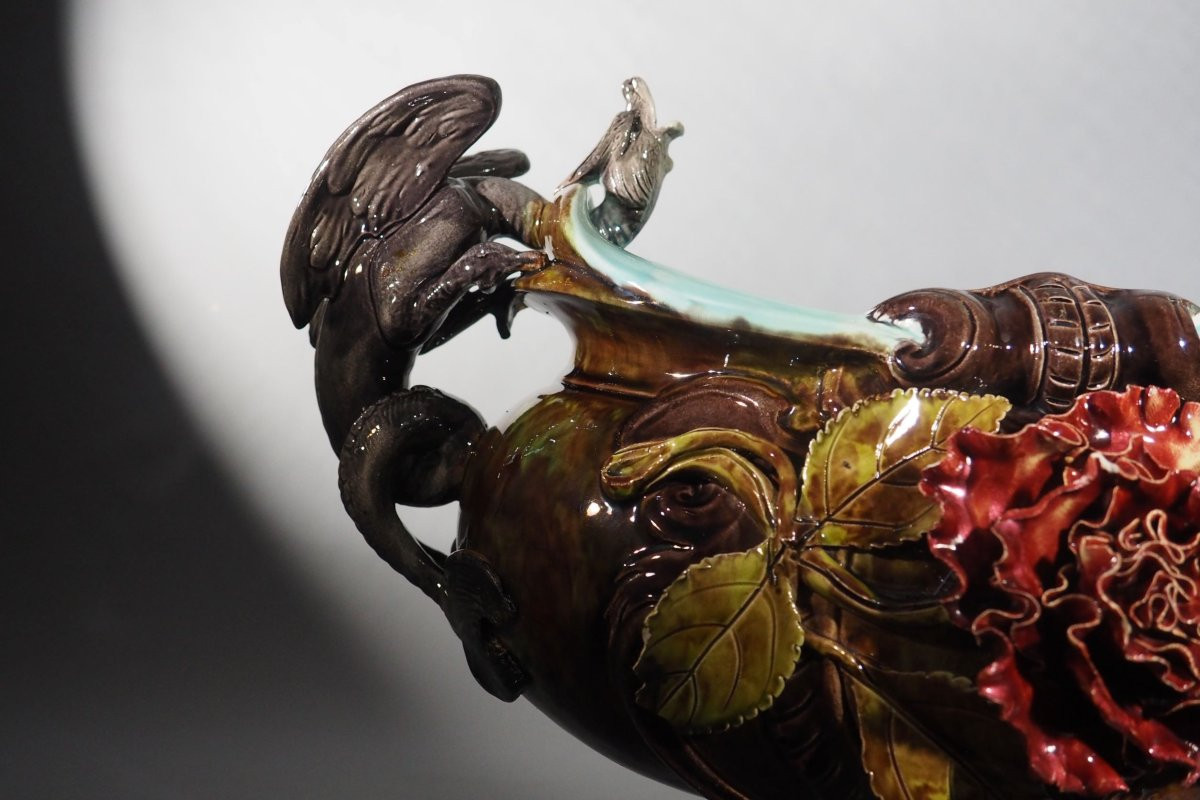
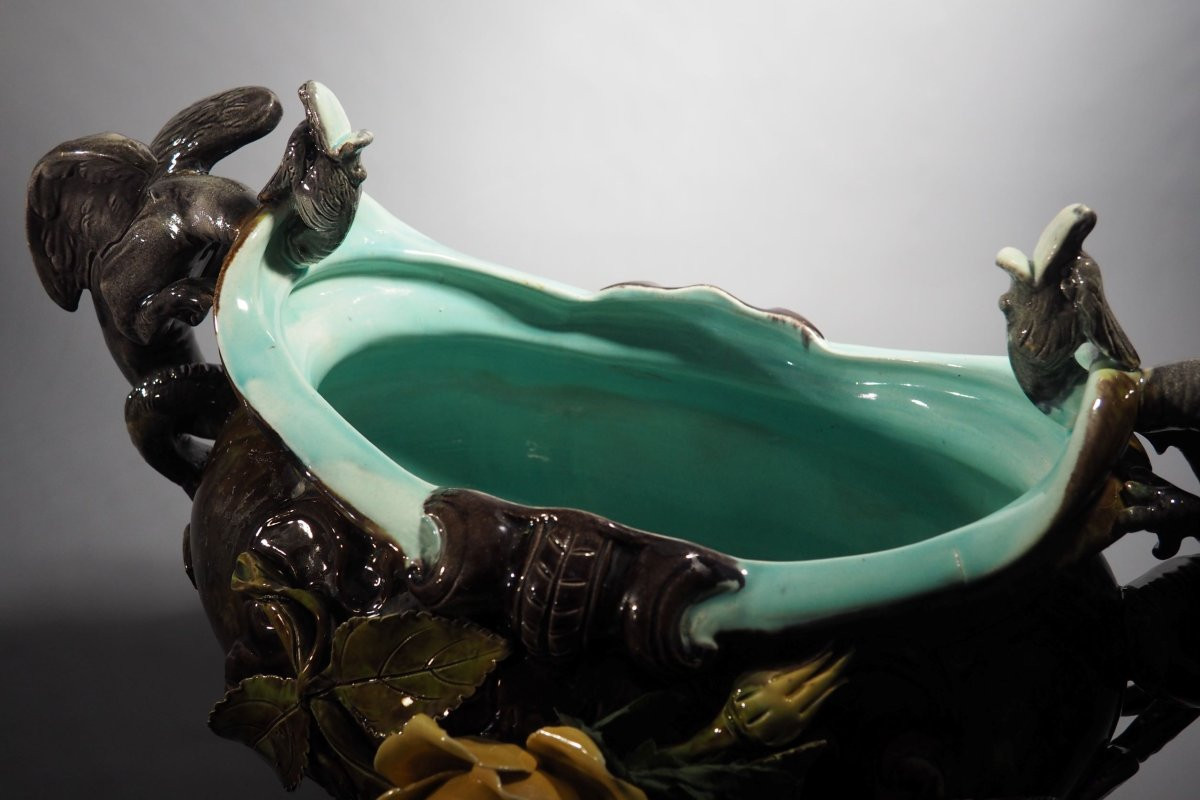
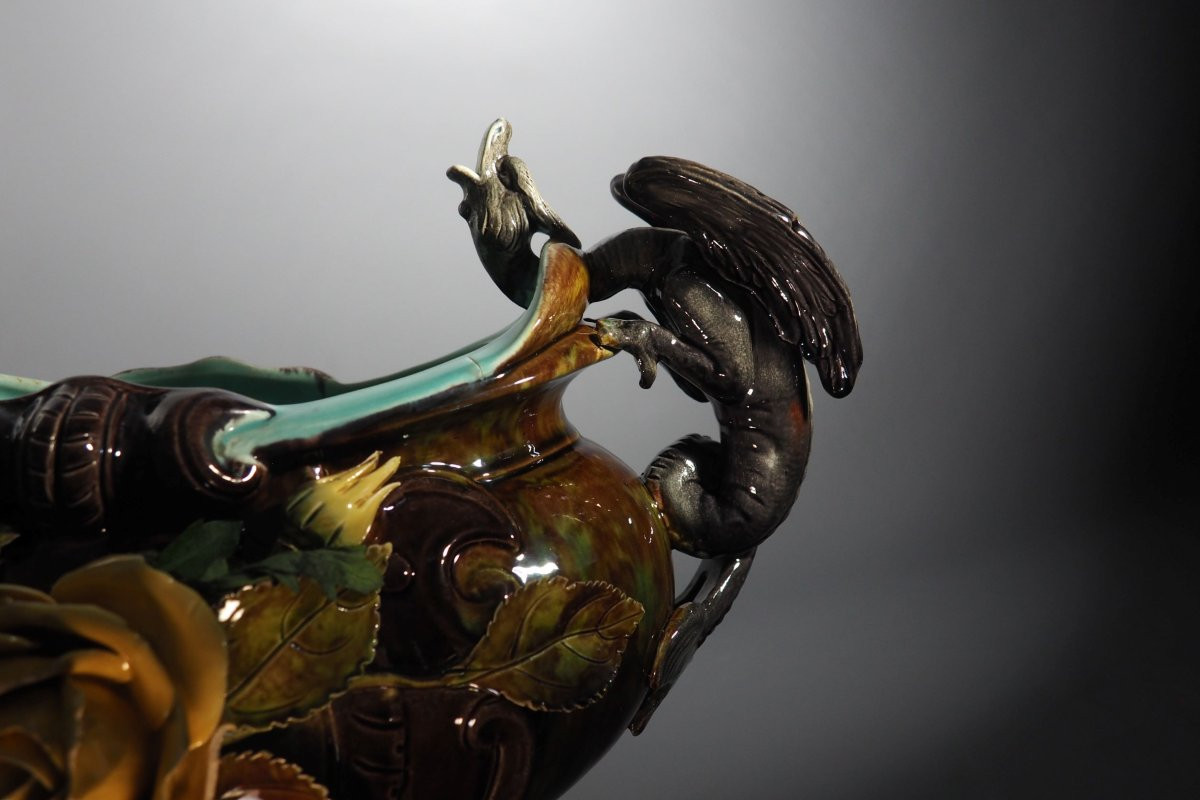
The handles are shaped like winged chimeras, fantastical creatures supporting the rim of the basin—a motif inspired by medieval and Renaissance ornamentation, widely reinterpreted by French workshops at the end of the 19th century.
The body is adorned with roses in relief, modeled with great attention to detail.
The contrast between the deep brown tones, nuanced greens, and turquoise interior accentuates the decorative effect and the sculptural dimension of the piece. The stylized, paw-shaped base reinforces its monumental presence.
A decorative object intended for bourgeois interiors and conservatories, this jardinière is now a sought-after example of early French slipware and a representative collector's item of late 19th-century decorative art.
Ref: 4983
Earthenware, relief decoration (slipware technique), polychrome glazes.
Handwritten mark under the glaze.
France, late 19th century.
Dimensions: length 47 cm, height 30 cm.
Condition: very good.
This French jardinière from the late 19th century, made in a Neo-Renaissance style, is a characteristic example of artistic earthenware from the Historicist period. The piece is made of earthenware using the slipware technique, a relief modeling process that allows for a rich, sculptural quality.
The polychrome glazes offer deep nuances and textural effects typical of French production in the second half of the 19th century. The presence of a handwritten mark under the glaze confirms its high-quality craftsmanship. The composition takes the form of a sculptural bowl resting on a figurative foot.
The handles are shaped like winged chimeras, fantastical creatures supporting the rim of the basin—a motif inspired by medieval and Renaissance ornamentation, widely reinterpreted by French workshops at the end of the 19th century.
The body is adorned with roses in relief, modeled with great attention to detail.
The contrast between the deep brown tones, nuanced greens, and turquoise interior accentuates the decorative effect and the sculptural dimension of the piece. The stylized, paw-shaped base reinforces its monumental presence.
A decorative object intended for bourgeois interiors and conservatories, this jardinière is now a sought-after example of early French slipware and a representative collector's item of late 19th-century decorative art.
Ref: 4983
Explore similar pieces and discover your ideal find:
Barbotine Majolica