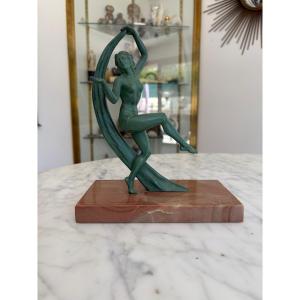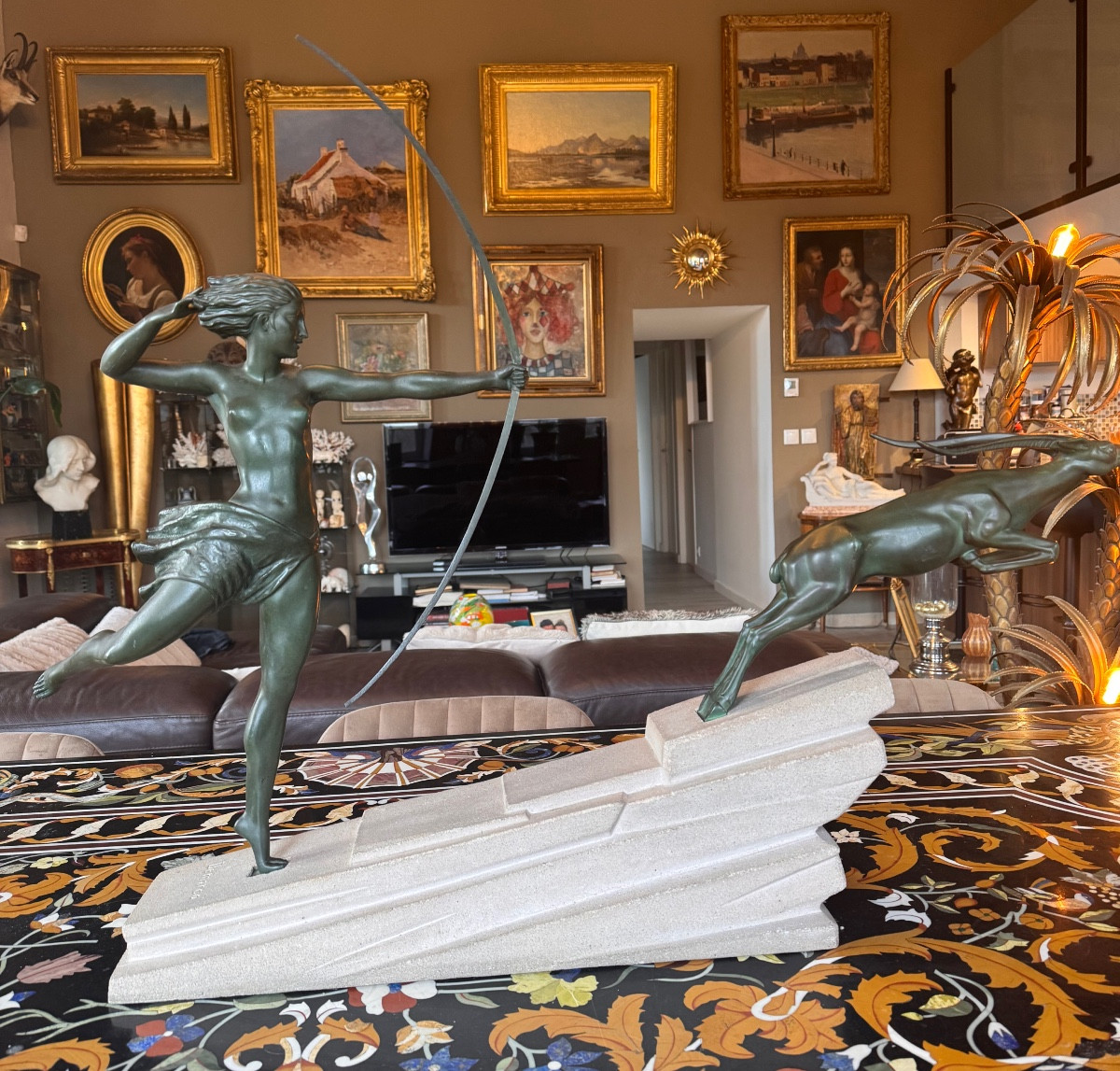
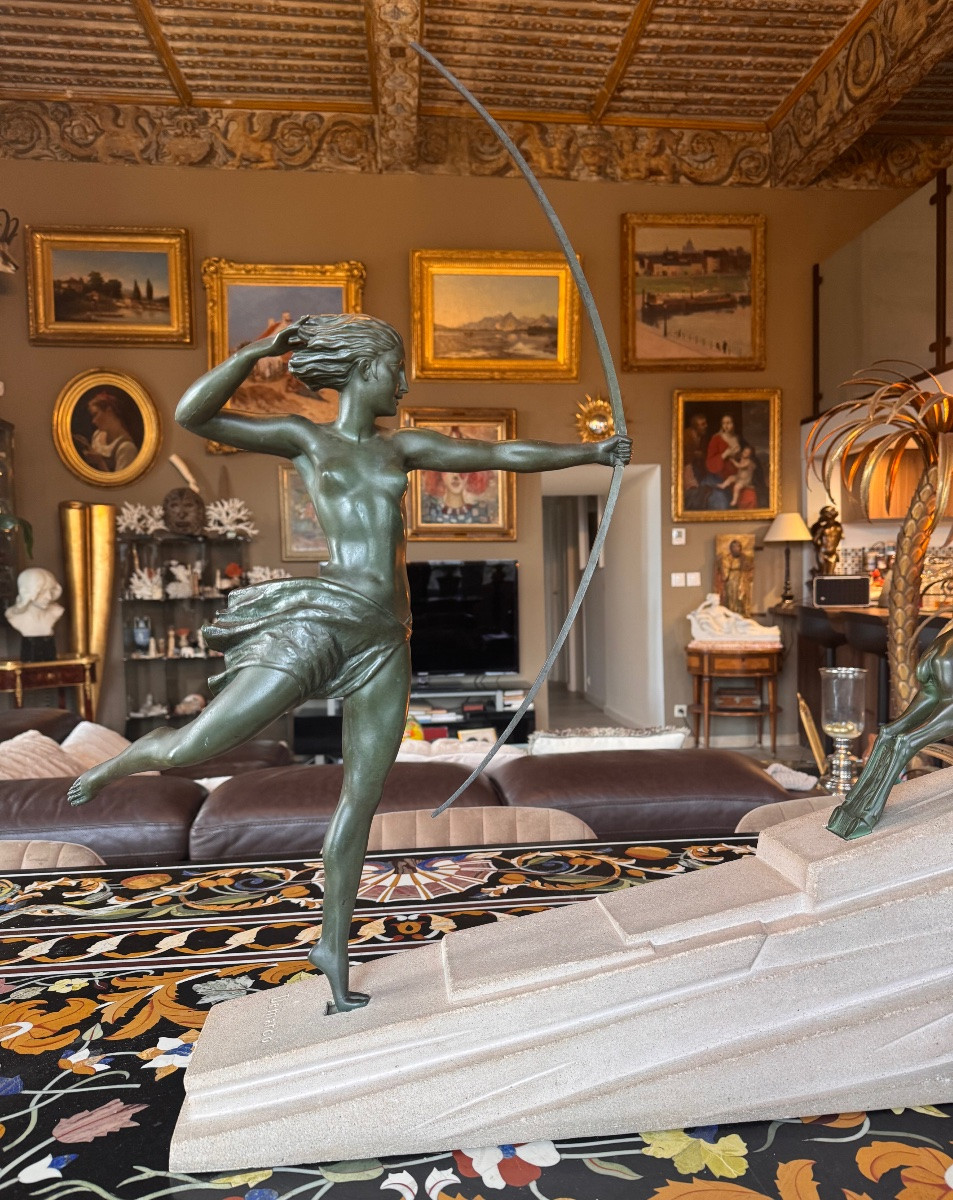
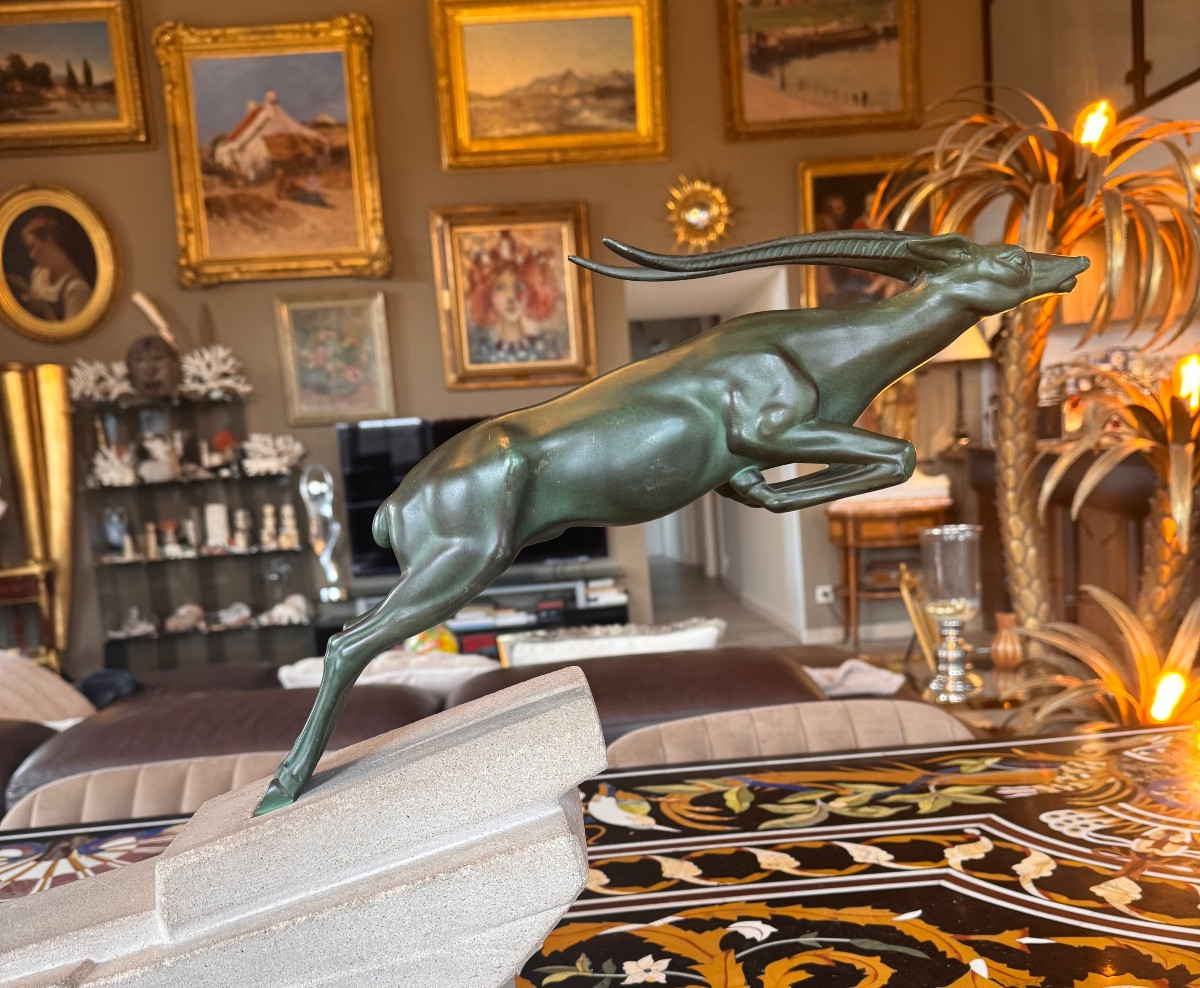
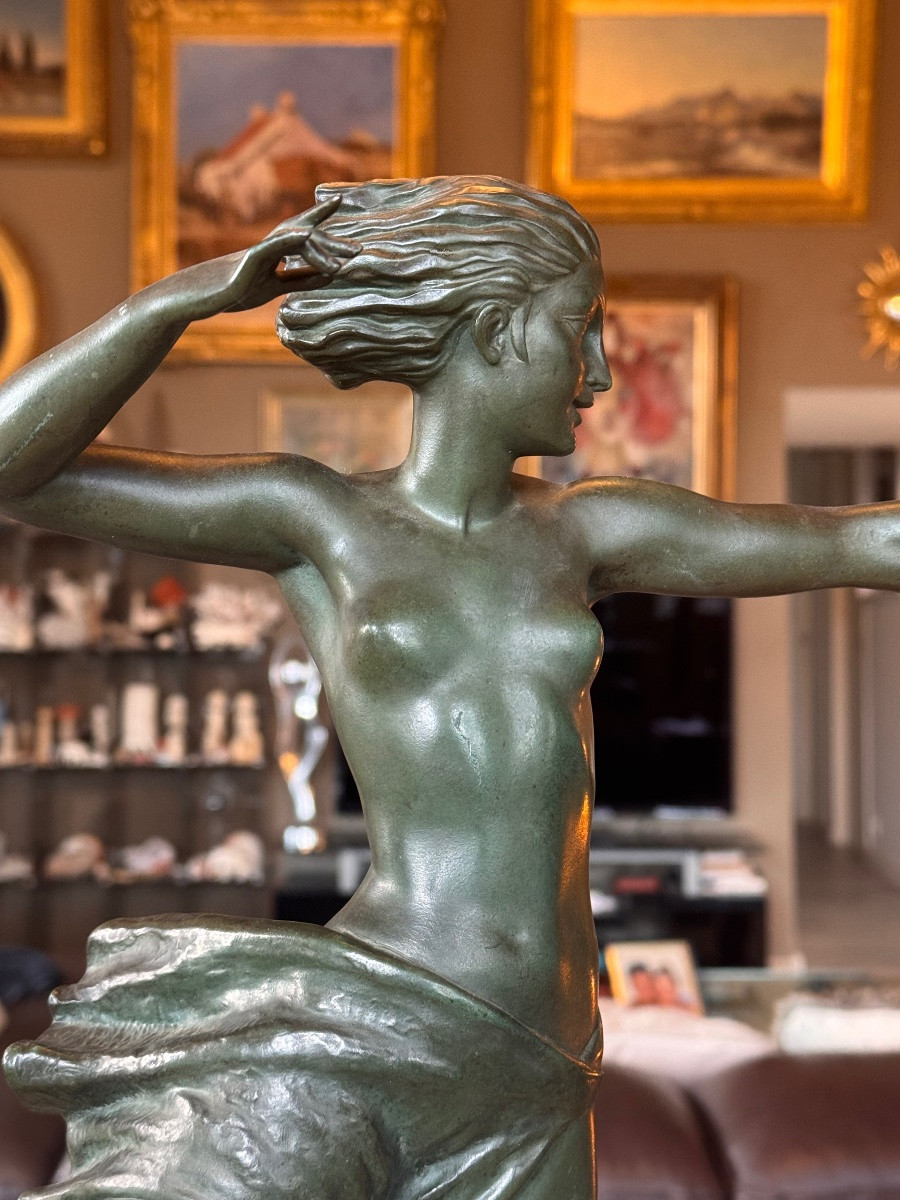
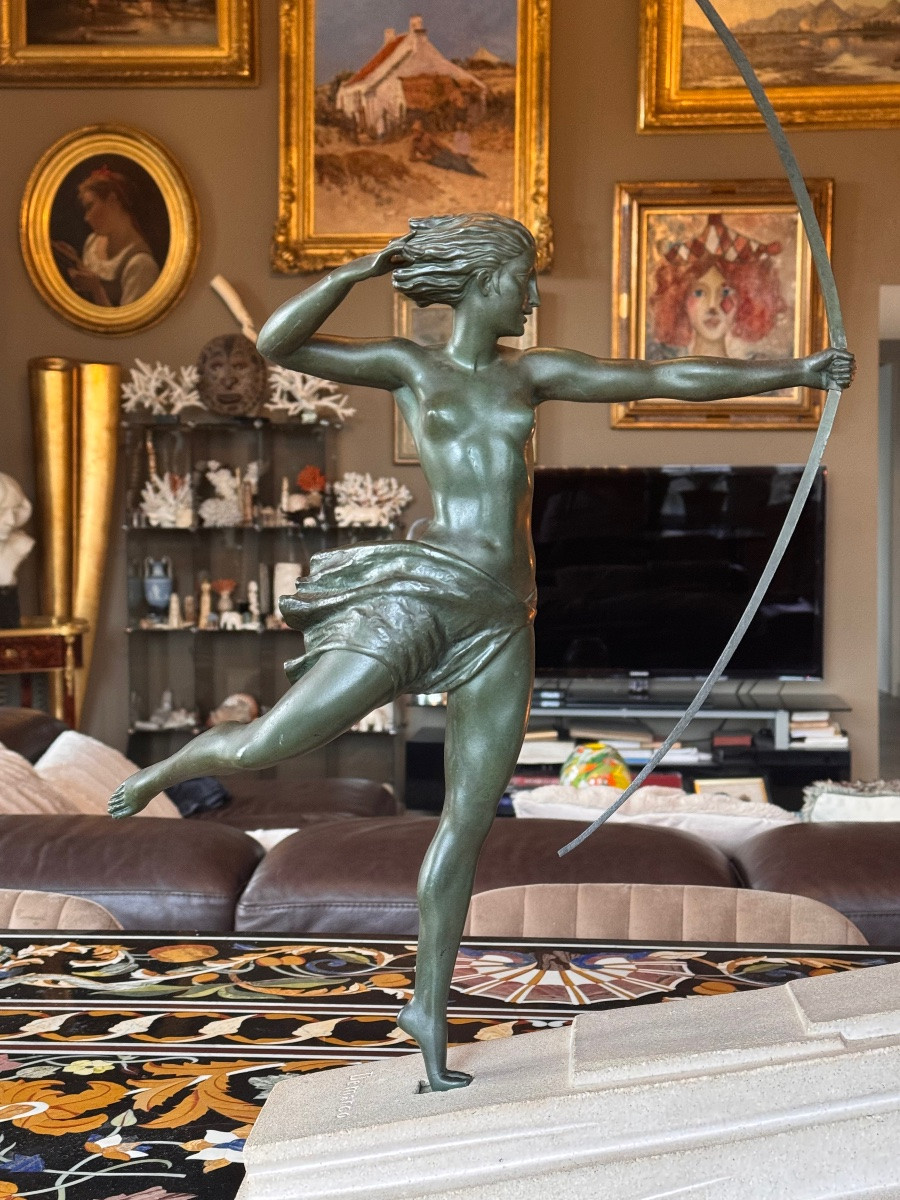
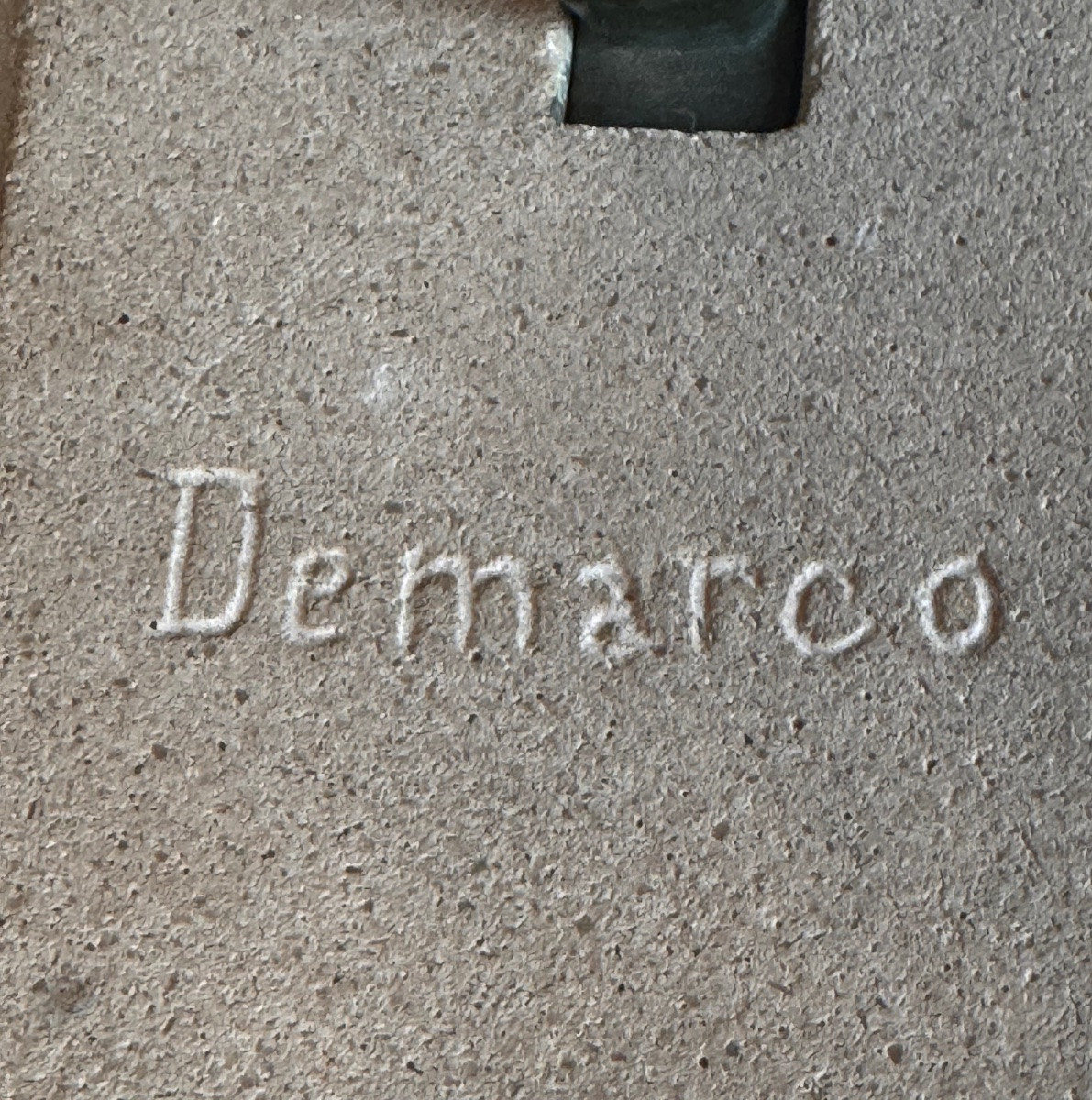
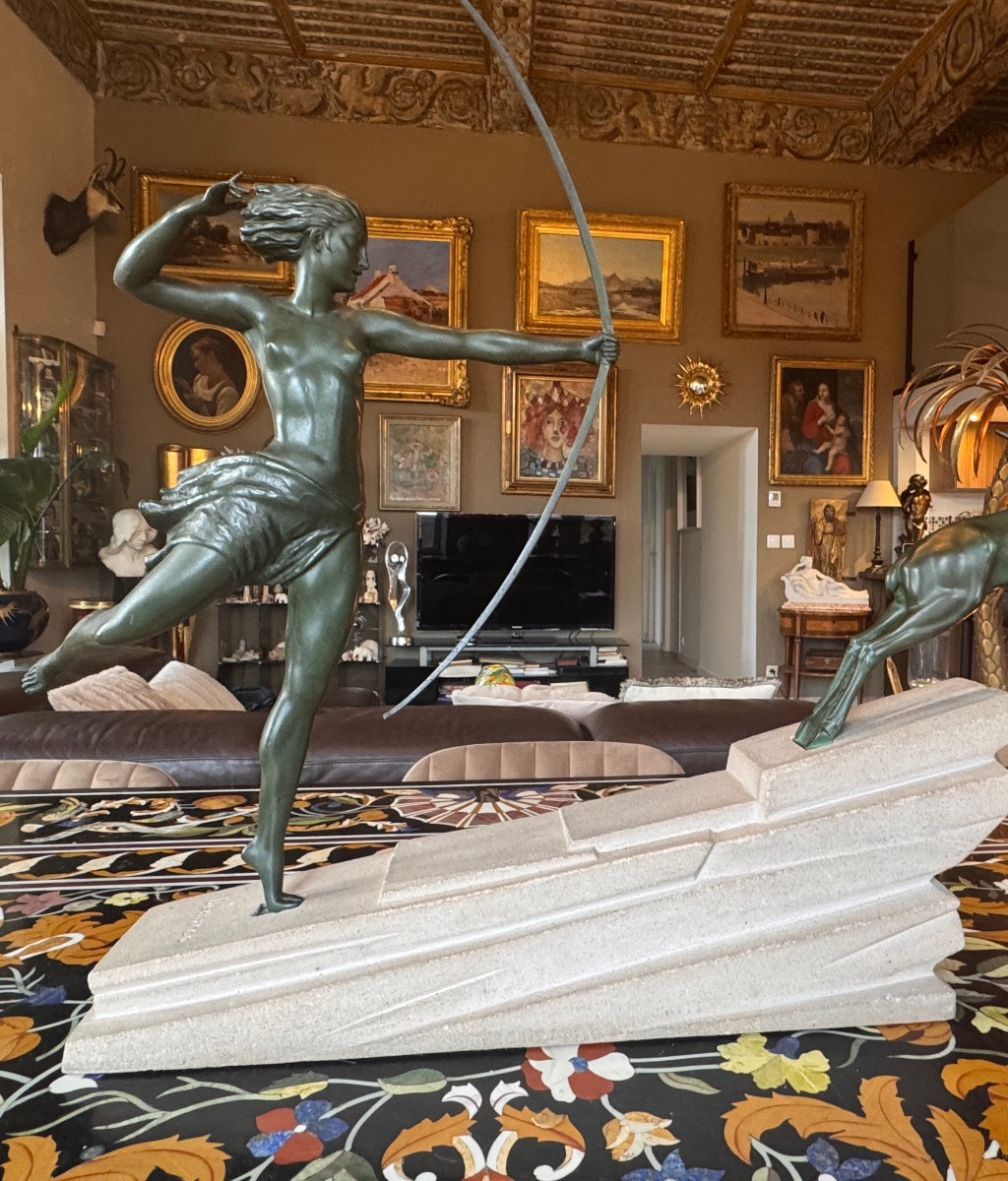
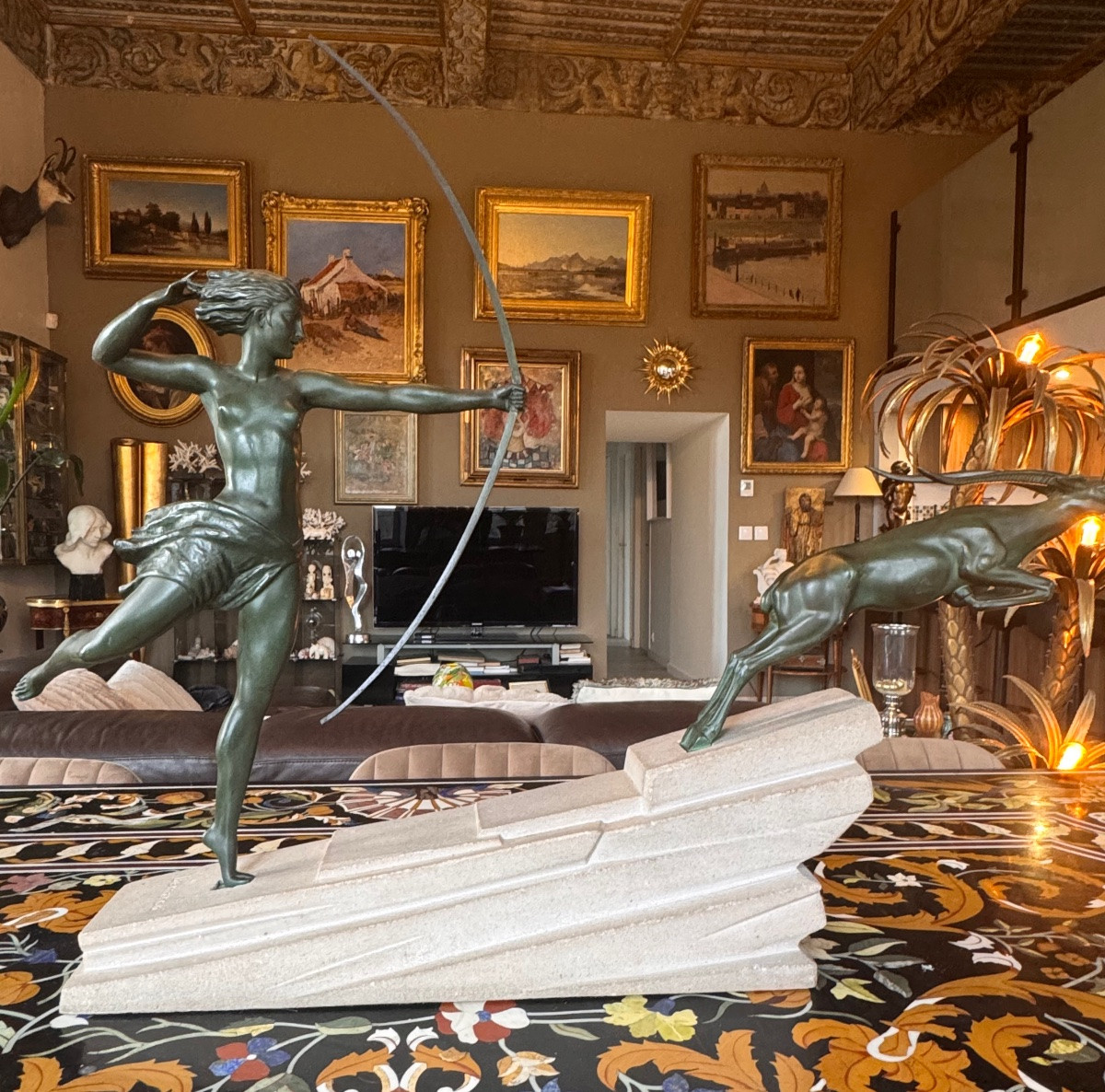
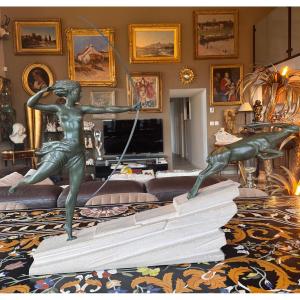


Jean Demarco, Diana The Huntress With The Antelope, Max Le Verrier Edition
Artist: Jean Demarco
Jean Demarco (active in the 1920s-1930s) Diana the Huntress with Antelope, Max Le Verrier Edition, Art Cast with Green Patina, France, circa 1930. This sculpture is fully in keeping with the aesthetics of French Art Deco of the interwar period, a time when the representation of the female body underwent a major stylistic renewal. The figure of Diana, goddess of the hunt in ancient mythology, is treated here according to a modernized formal vocabulary: slender proportions, taut lines, simplified volumes, and a search for suspended movement. The drawn bow and the pose of controlled imbalance convey a restrained dynamism, typical of sculpted compositions of the 1930s. The leaping antelope, stylized and refined, extends the diagonal of the scene and contributes to this search for architectural momentum, characteristic of Art Deco decorative sculpture. The piece rests on a geometric base of reconstituted stone, whose stepped lines reinforce the modernity of the composition. The model is attributed to the sculptor Jean Demarco, an artist who collaborated with the Max Le Verrier company, founded in 1919 in Paris. This art publisher occupied a central place in French sculptural production between the two World Wars. It distinguished itself through the quality of its edition castings, the finesse of its patinas, and the dissemination of models that became emblematic of the Art Deco style. This particular work is made of art edition casting with a green patina, a process favored by the Max Le Verrier workshops to accurately reproduce the modeling and offer subtle chromatic nuances. The patina, preserved here in its original state, highlights the muscular tension of the female figure and the fluidity of the animal's movement. With its mythological subject revisited through a modern aesthetic, this sculpture perfectly illustrates the synthesis achieved in the 1920s and 1930s between classical tradition and decorative modernity. It also reflects the era's taste for dynamic scenes, athletic female figures, and architectural compositions intended to adorn bourgeois interiors and refined settings. In very good condition. Original patina well preserved.
2 800 €
Period: 20th century
Style: Art Deco
Condition: Excellent condition
Material: Cast iron
Length: 100 cm
Width: 20 cm
Height: 72 cm à l’arc
Reference (ID): 1709856
Availability: In stock
Print