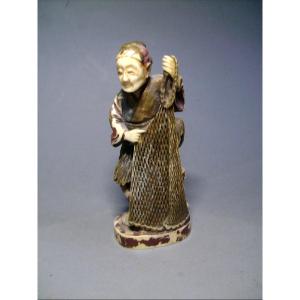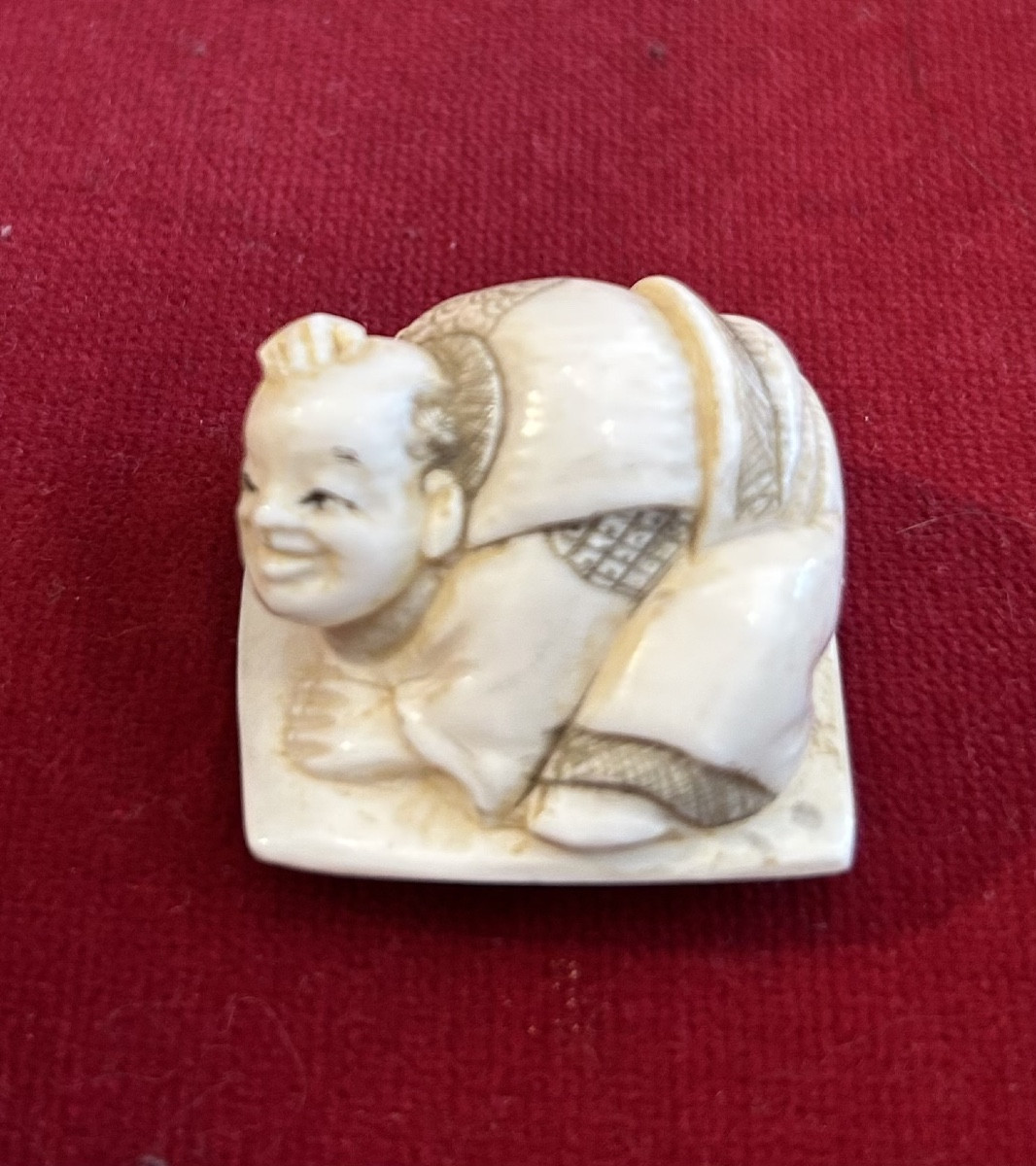
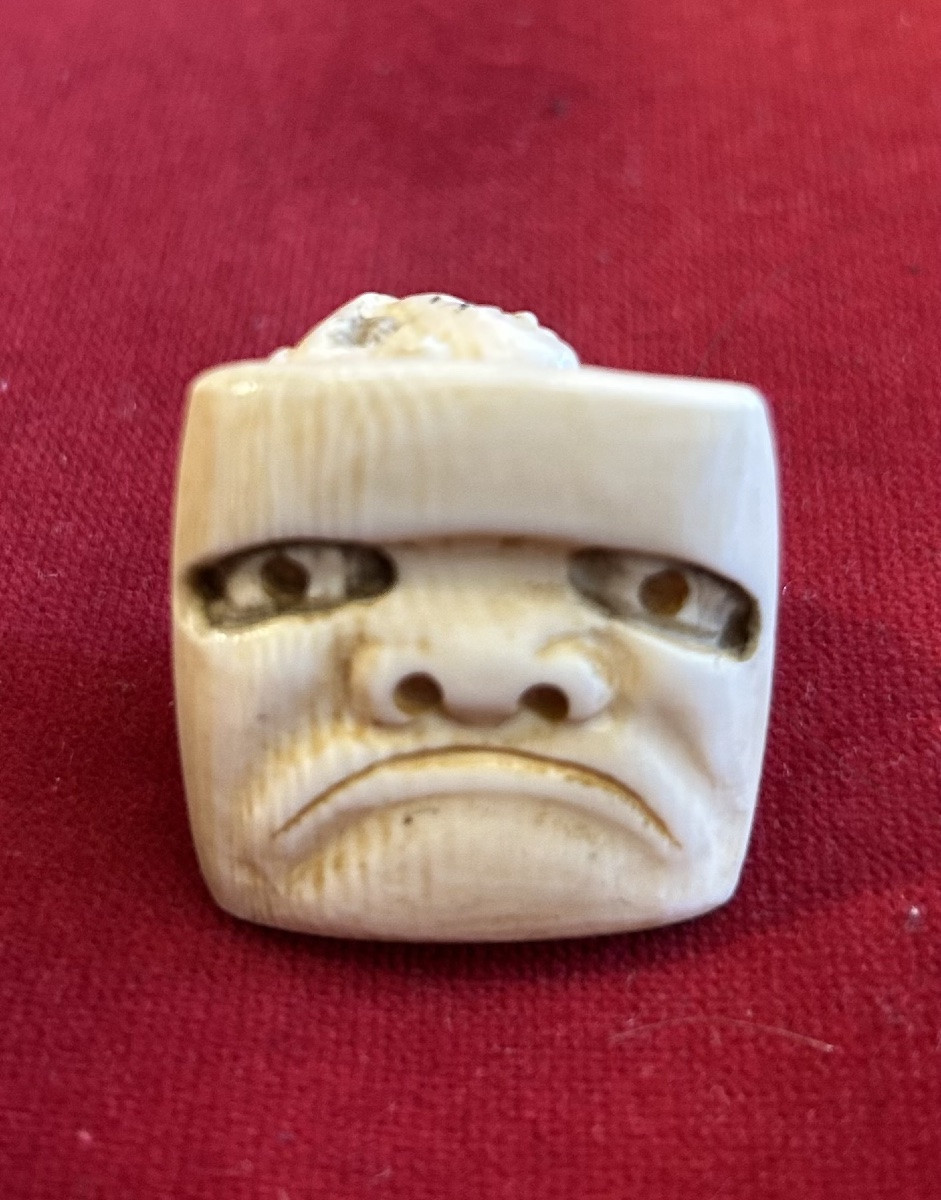


Netsuke, Japan, Late 19th Century. Smiling Character Wearing A Stern Mask. Noh Theatre.
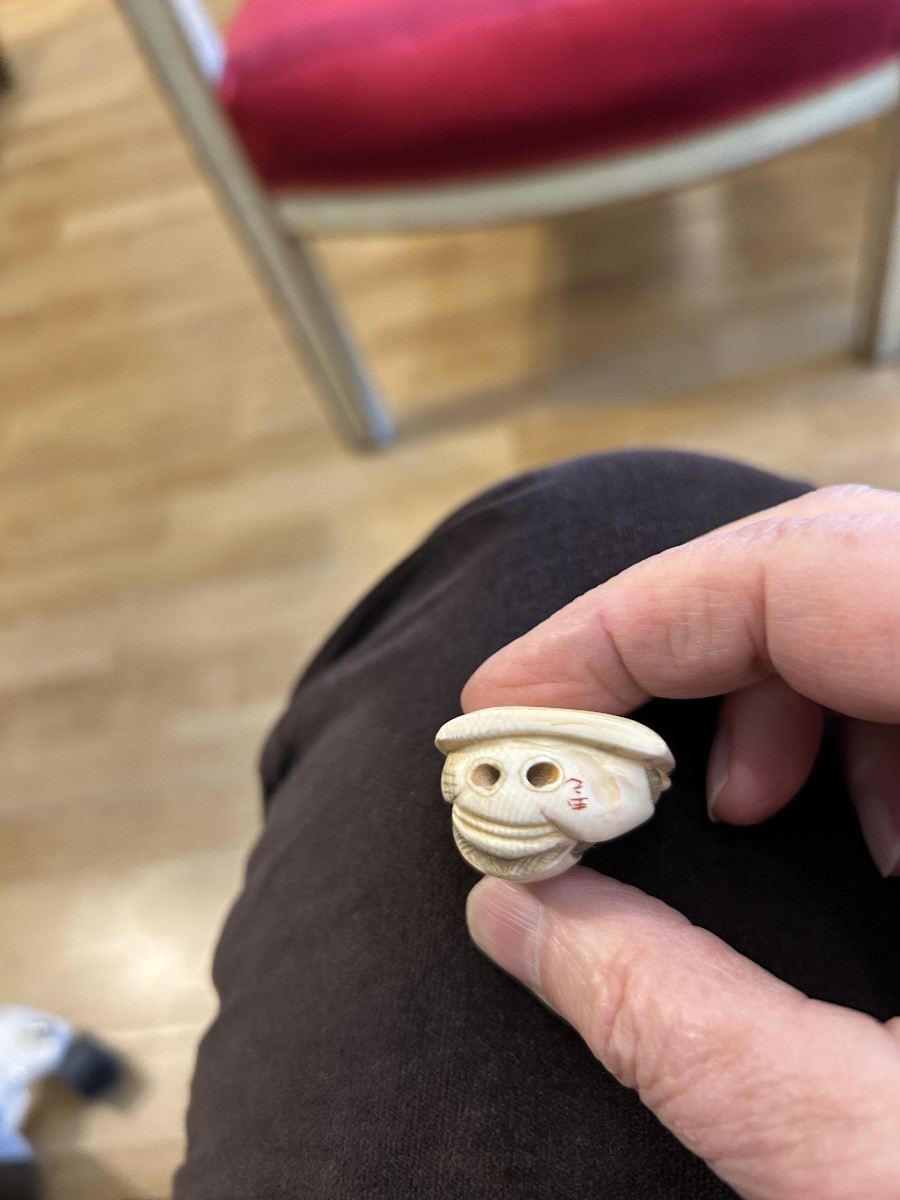
This carved Japanese netsuke depicts a crouching figure carrying a Noh theater mask on its back. The contrast between the figure's smiling face and the mask's stern expression creates an expressive and symbolic scene, typical of Edo-period Japanese aesthetics. The mask's theme evokes the interplay of appearances and the duality of emotions. The carving is finely crafted, with beautifully modeled volumes and engraved details on the garment. The two himotoshi (cord holes) are functionally drilled, confirming its original purpose as a utilitarian object worn on the belt. The soft, slightly amber-toned natural patina suggests a late 19th- or early 20th-century (Meiji period) production. A small painted red inscription appears on the side, likely a workshop or export mark. A refined decorative and collectible object, this netsuke exemplifies Japanese miniature art and its penchant for three-dimensional storytelling.
250 €
Period: 19th century
Style: Asian art
Condition: Excellent condition
Material: Bone
Length: 3cm
Width: 2cm
Height: 2cm
Reference (ID): 1709237
Availability: In stock
Print