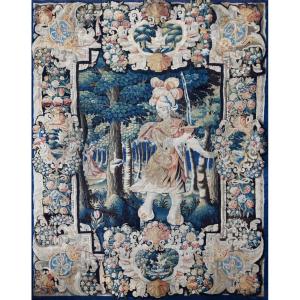


Tapestry, Brussels Manufactory, Late 17th Century, Country Scene - No. 882
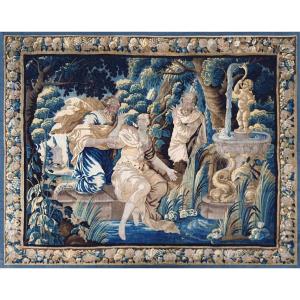
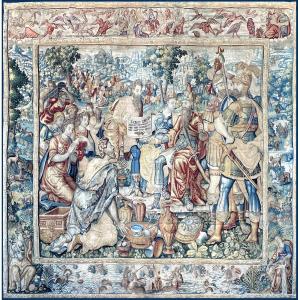
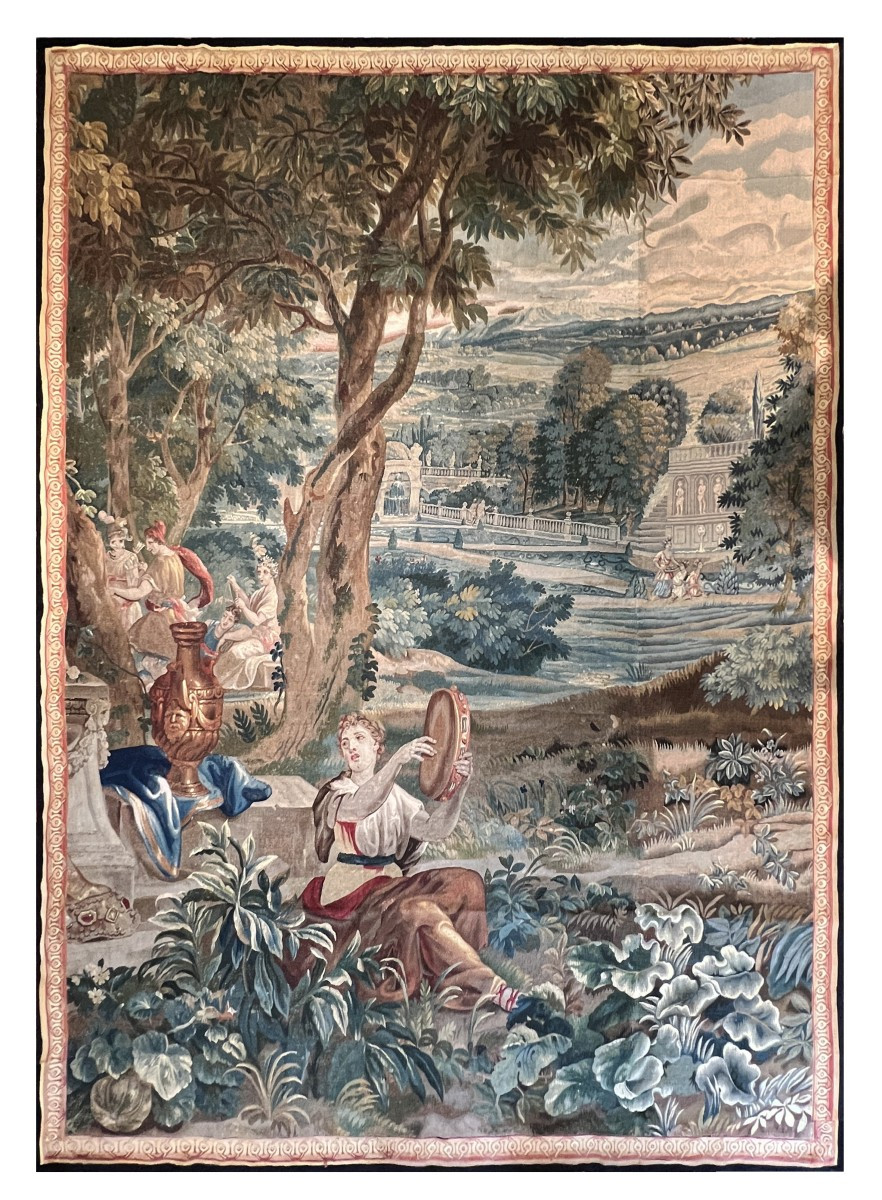
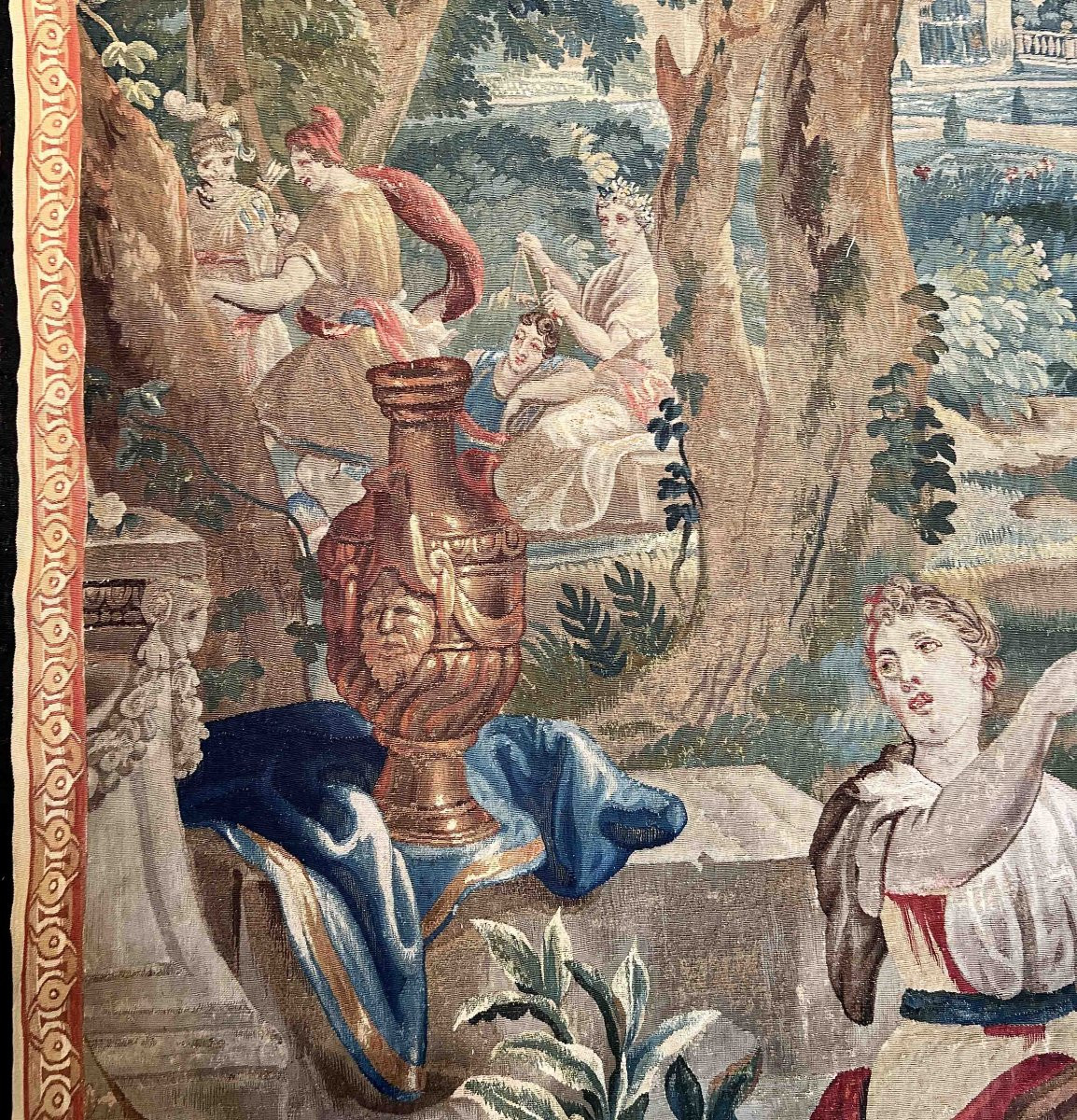
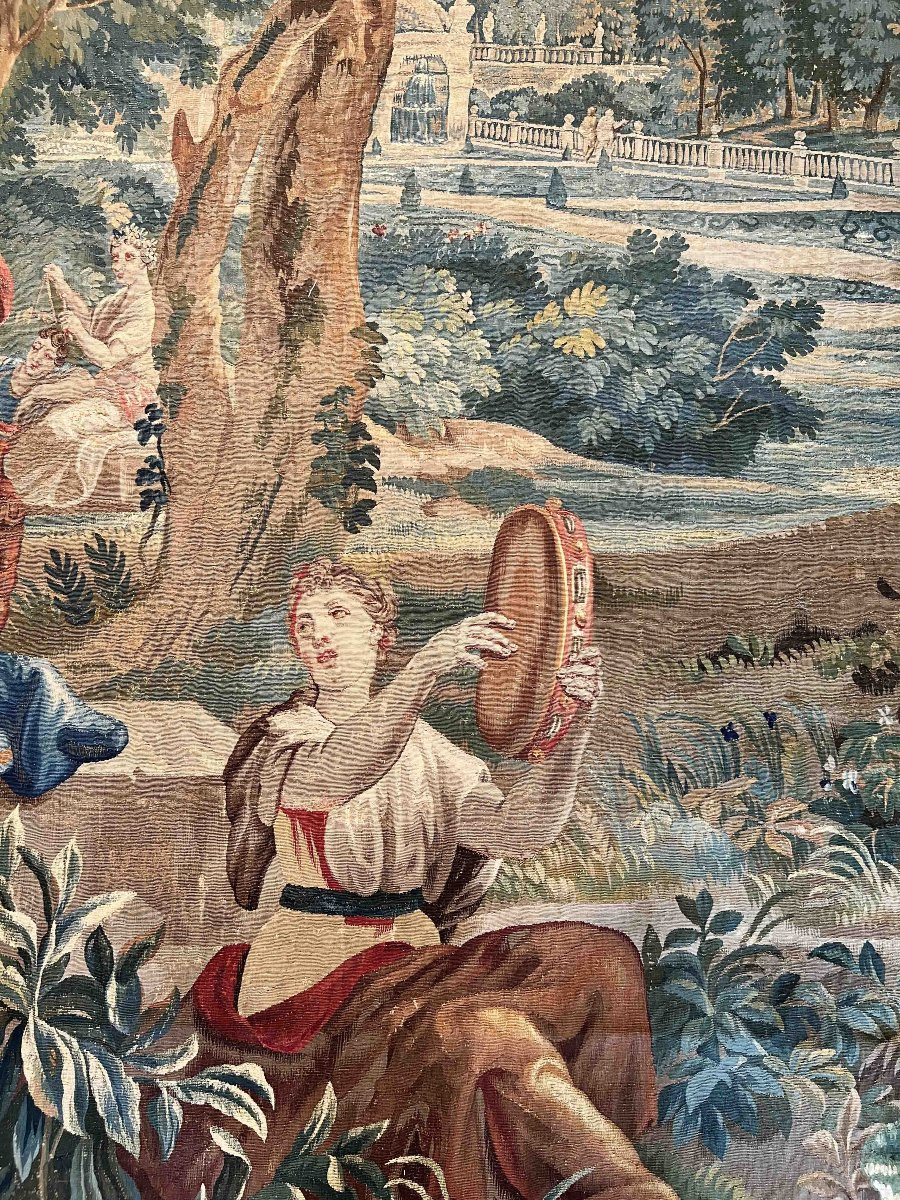
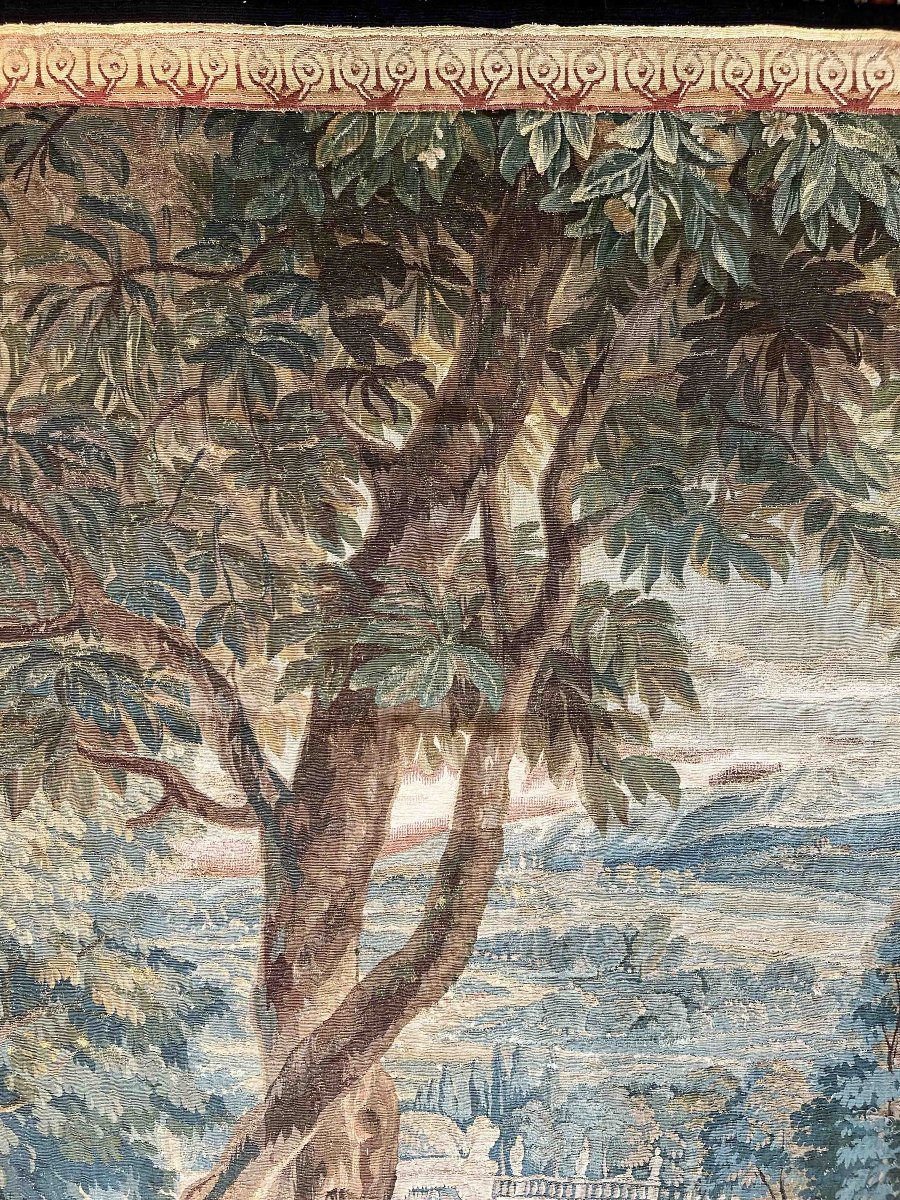
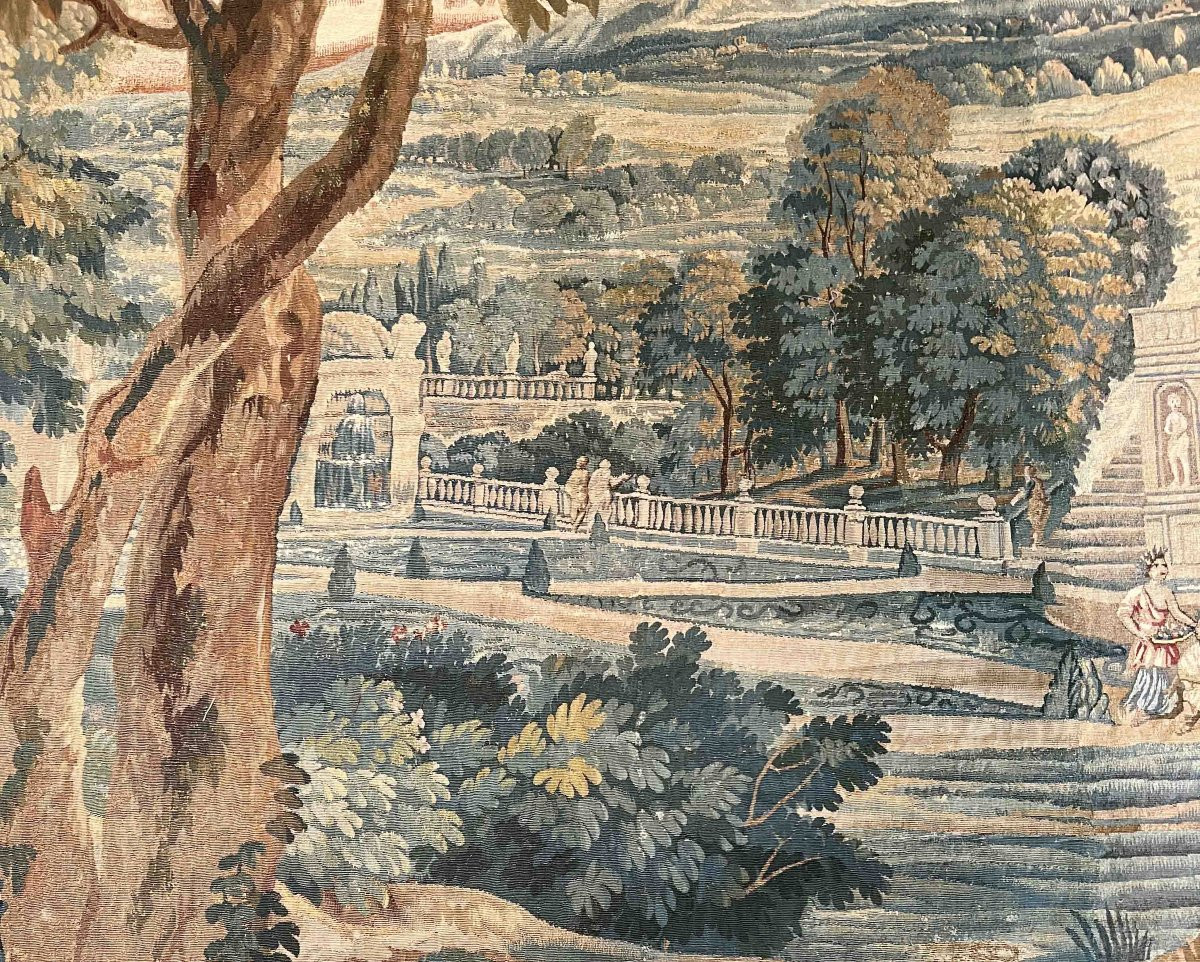
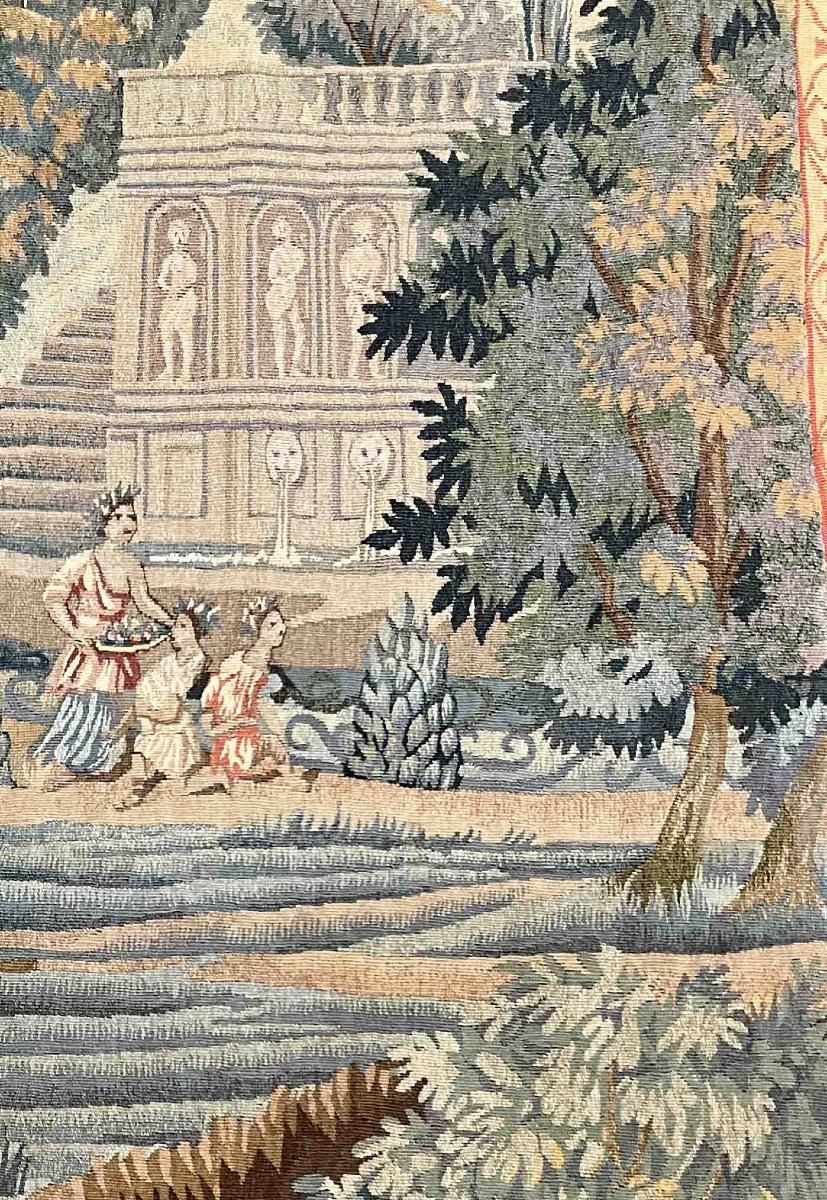
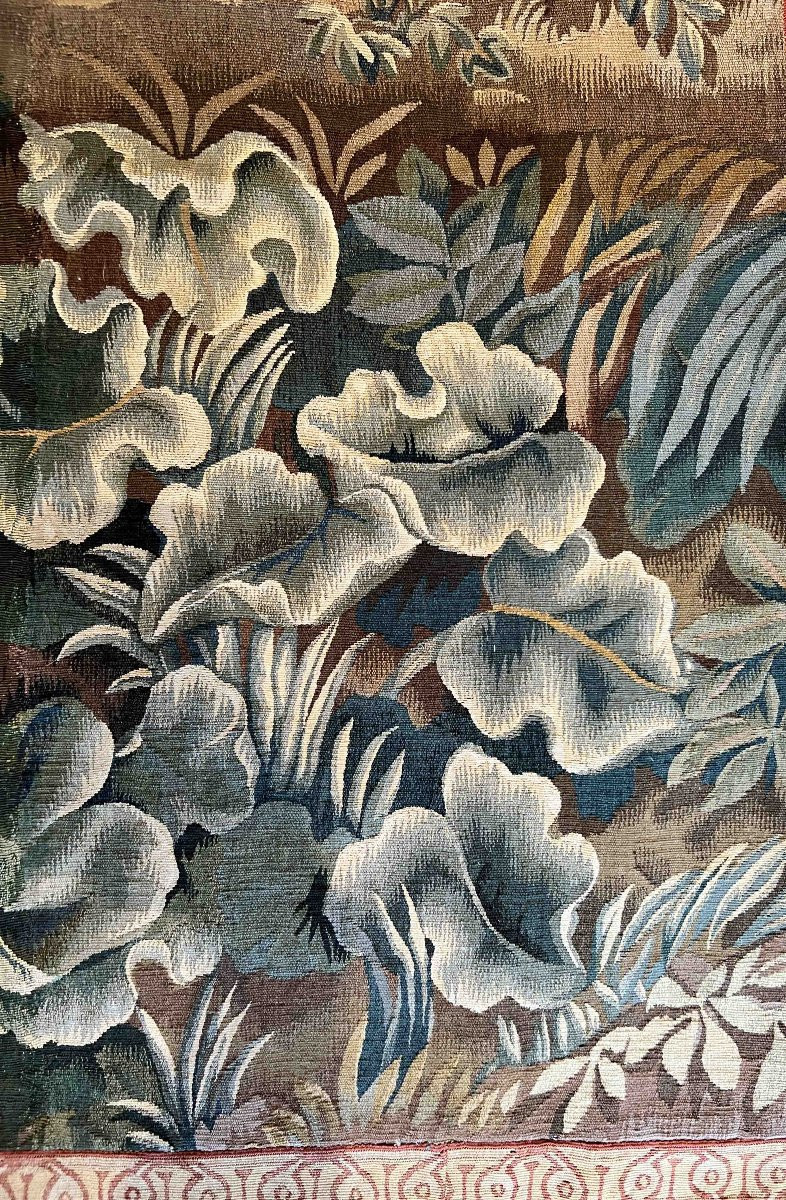
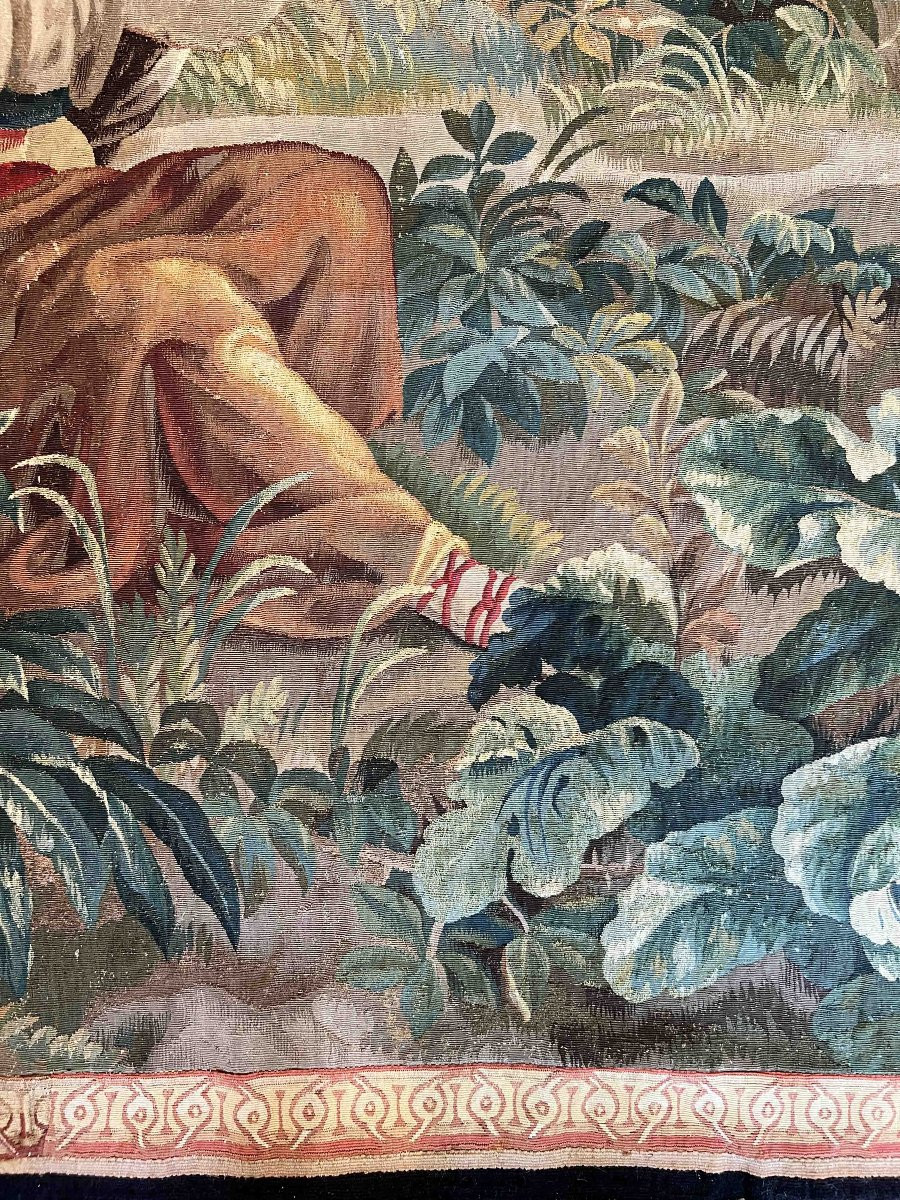
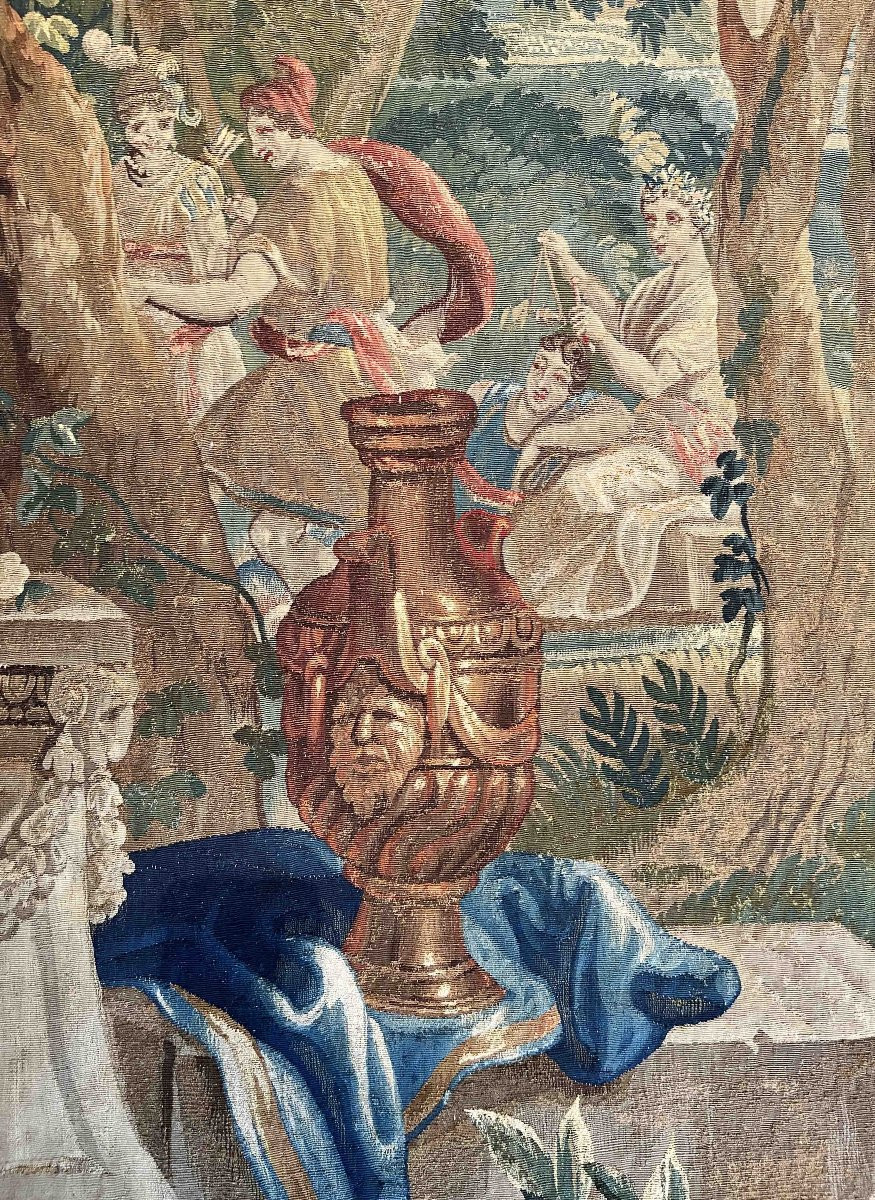
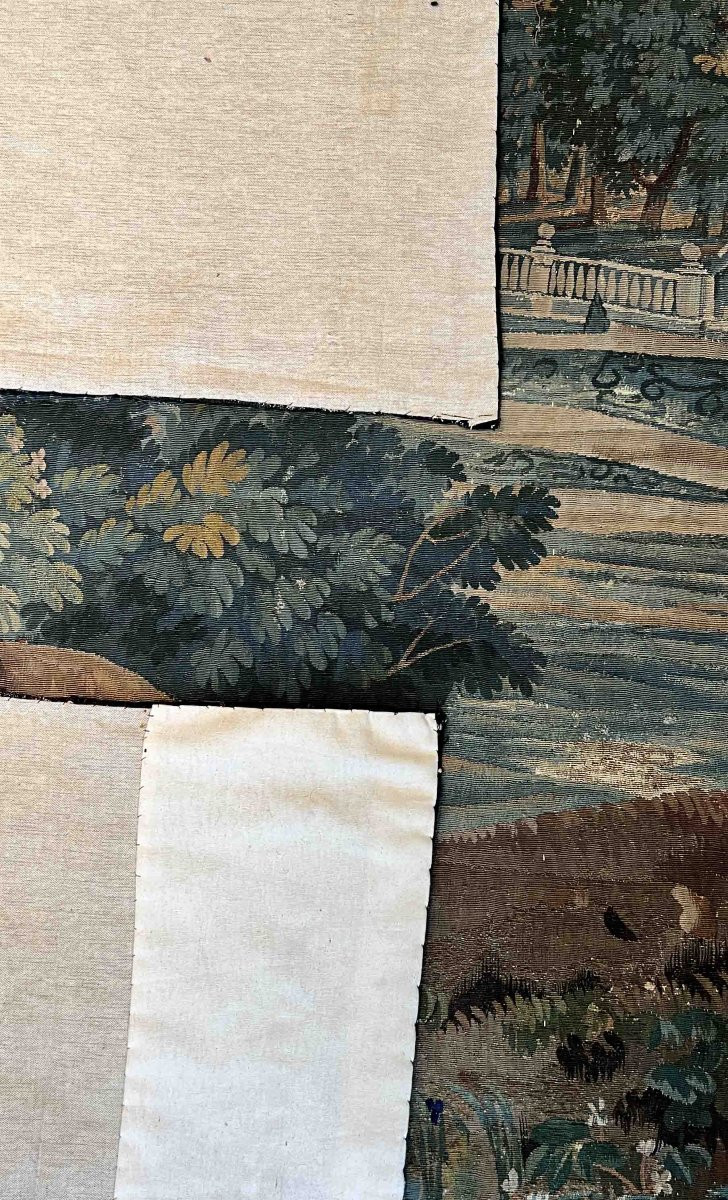
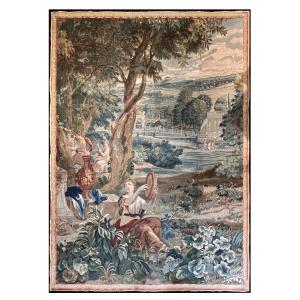
Period: 17th century Origin: Flanders Materials: Wool and silk Dimensions: W. 195 cm x H. 275 cm x D. 1 cm Weight: 15 kg This late 17th-century tapestry from the Brussels Manufactory depicts a pastoral and bucolic scene, influenced by both the "Verdure" tradition and the representation of genre or mythological scenes. Subject and Composition Foreground: In the center, a woman sits on lush ground, surrounded by dense and detailed vegetation. She holds a tambourine in her hands, suggesting a musical or festive scene. A large, ornate vase, with an antique appearance, rests beside her. On the left, another group of figures can be seen, including a seated woman and other figures in a rocky setting, creating a sense of depth. Background: The landscape stretches towards the horizon, with a perspective opening onto a formal French garden, characterized by symmetrical paths, statues, and classical architecture. Figures stroll through it, adding animation to the scene. In the distance, a town or castle surrounded by hills can be seen, with a bright, cloudy sky. Vegetation: The weaving highlights the lush, abundant greenery in the foreground, typical of Flemish production. The leaves are broad, the plants are detailed, and majestic trees frame the scene, creating a natural and theatrical setting. Style and Technique: Materials and Weave: The tapestry is made of wool and silk, which lends a fineness and chromatic richness to the details. Colors: The dominant colors are greens and blues, representing nature and the sky. Touches of bright colors, such as the red and blue of the figures' clothing, contrast with the background and draw the eye. Border: The tapestry is framed by a decorative border, typical of the period. Floral motifs and scrolls are visible, reinforcing the precious aspect of the work. At the end of the 17th century, the Brussels Manufactory was one of the most renowned tapestry centers in Europe. It was distinguished by the quality of its weaving and the richness of its creations, often based on cartoons by famous painters. The themes included mythological scenes, genre scenes (as seen here, with a "greenery" setting and elegant figures), and landscapes. This tapestry perfectly illustrates the technical mastery and artistic refinement of this period, marking the transition from purely narrative tapestry to more decorative and picturesque compositions.
12 000 €
Period: 17th century
Style: Rome and Antic Greece
Condition: Perfect condition
Material: Wool
Width: 195 cm
Height: 275 cm
Depth: 0.5 cm
Reference (ID): 1708345
Availability: In stock
Print