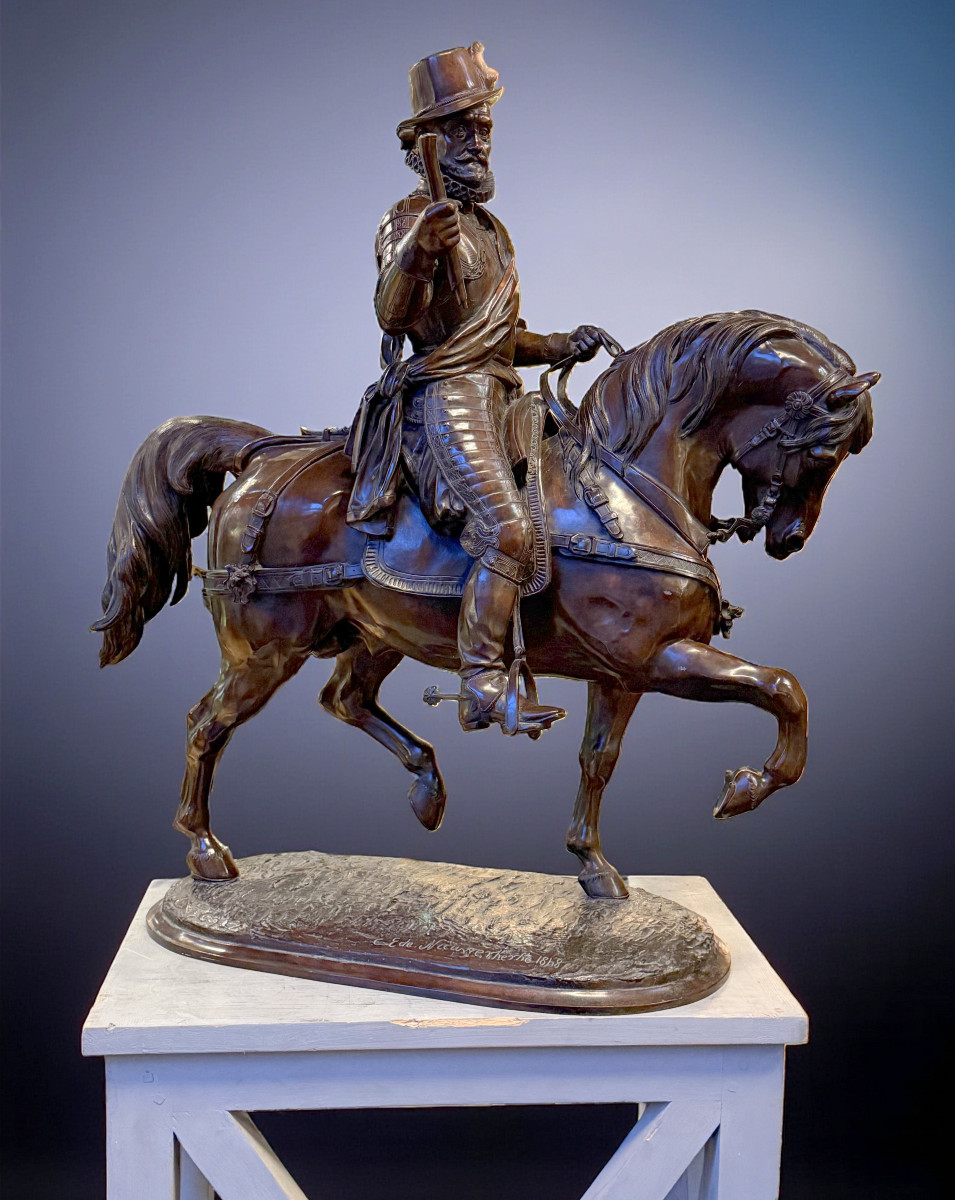
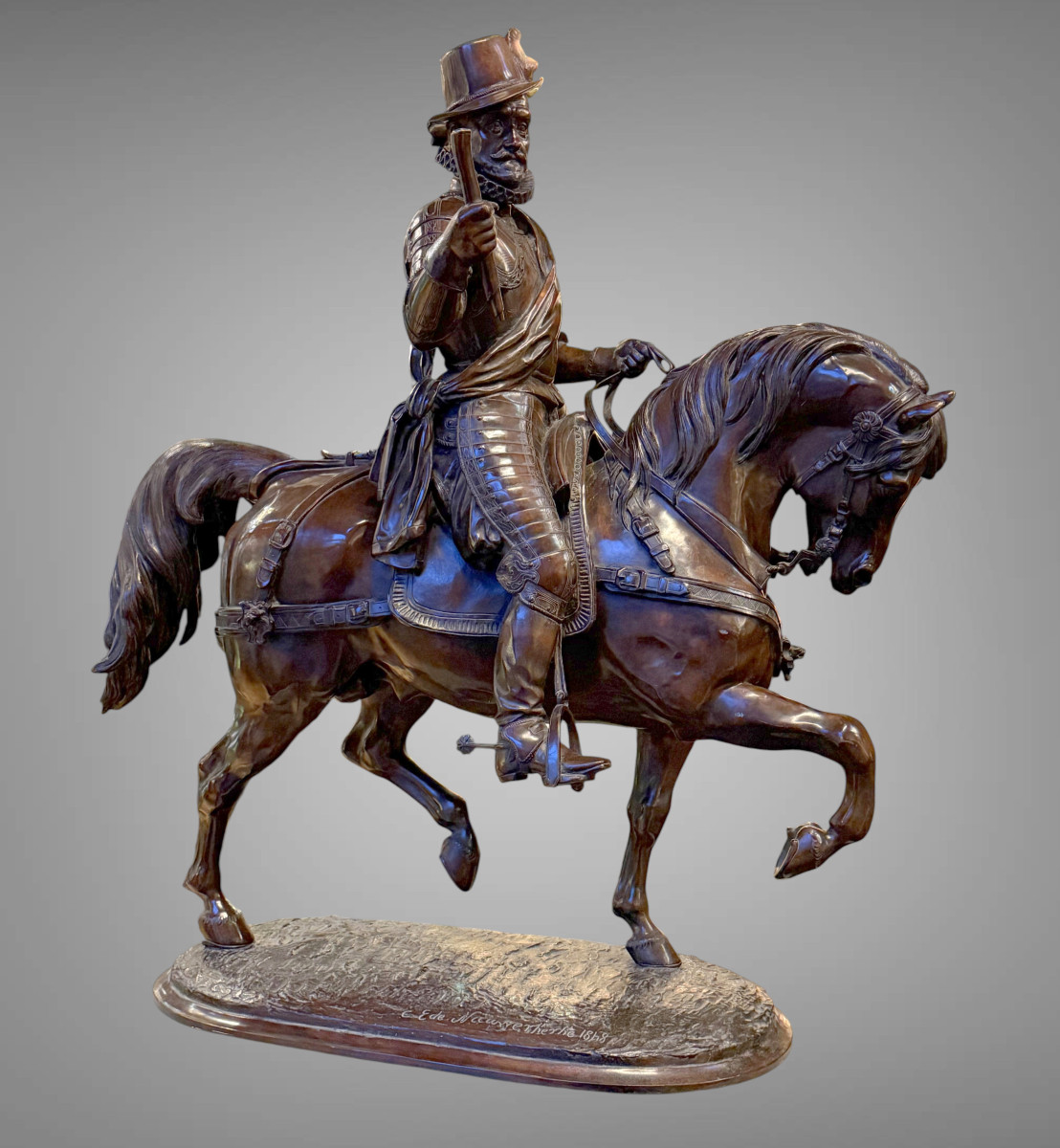
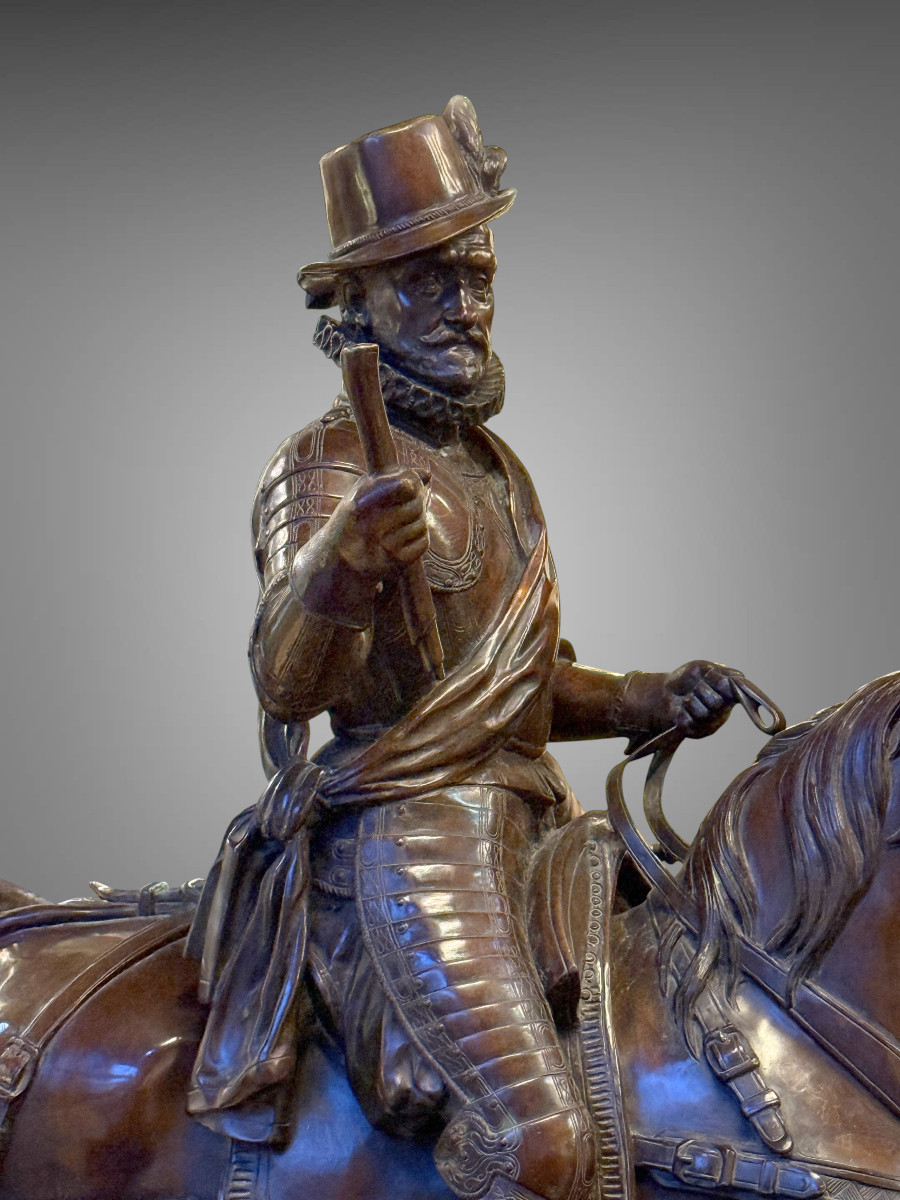
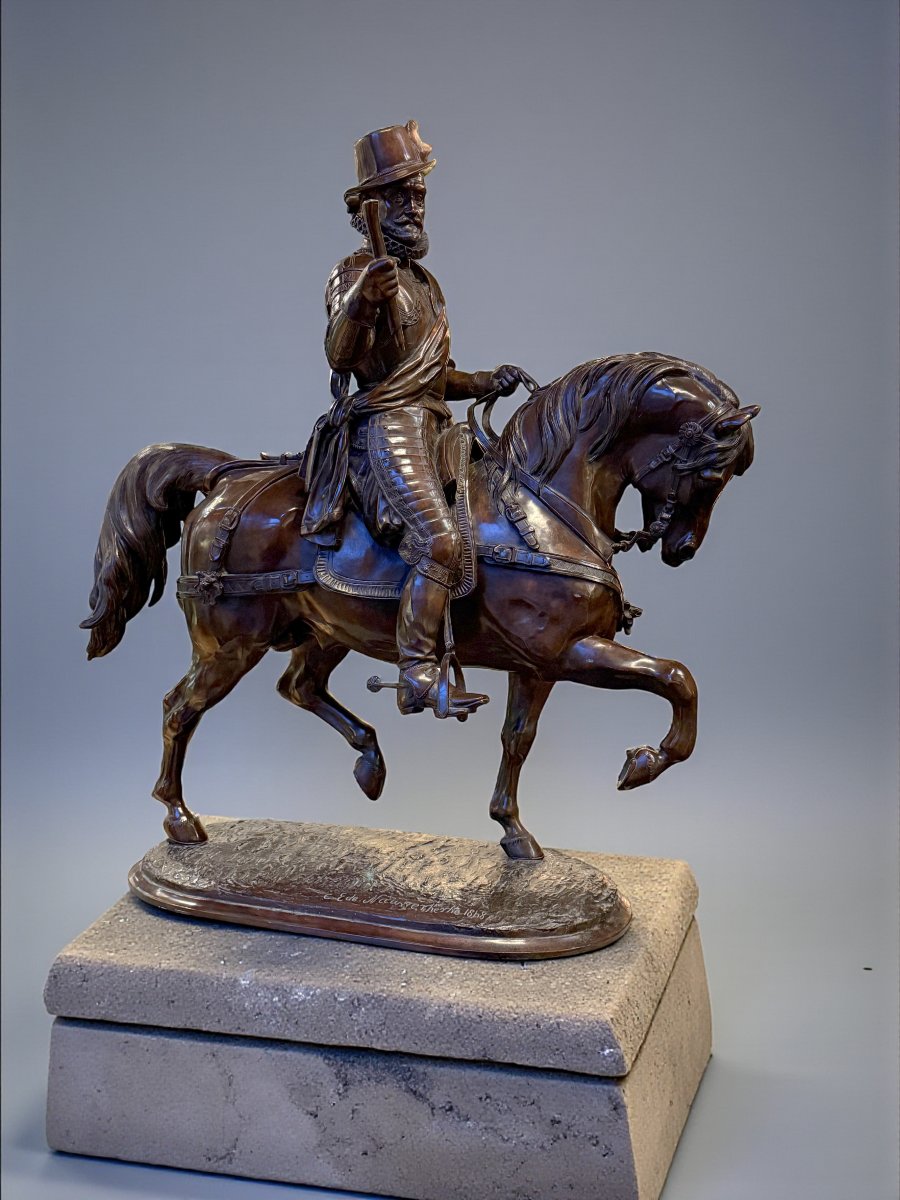
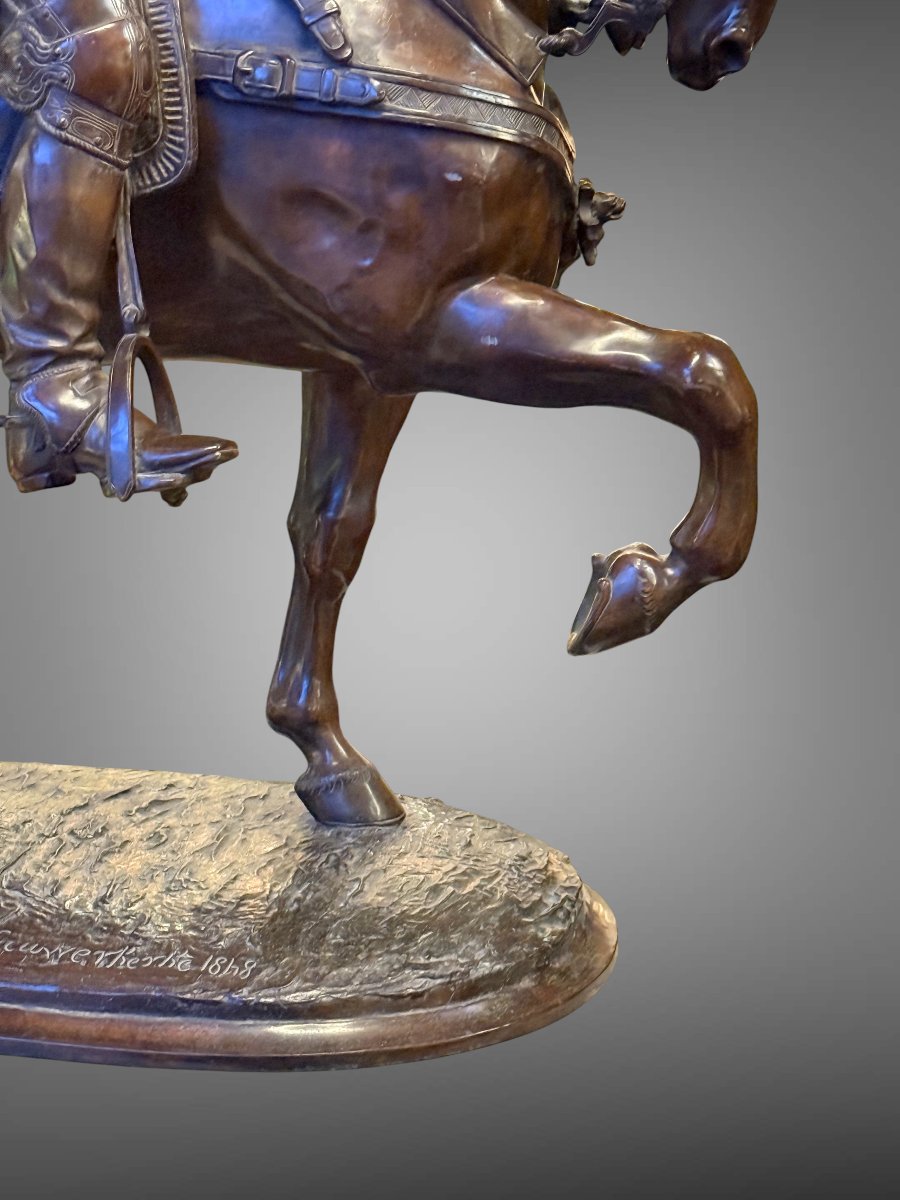
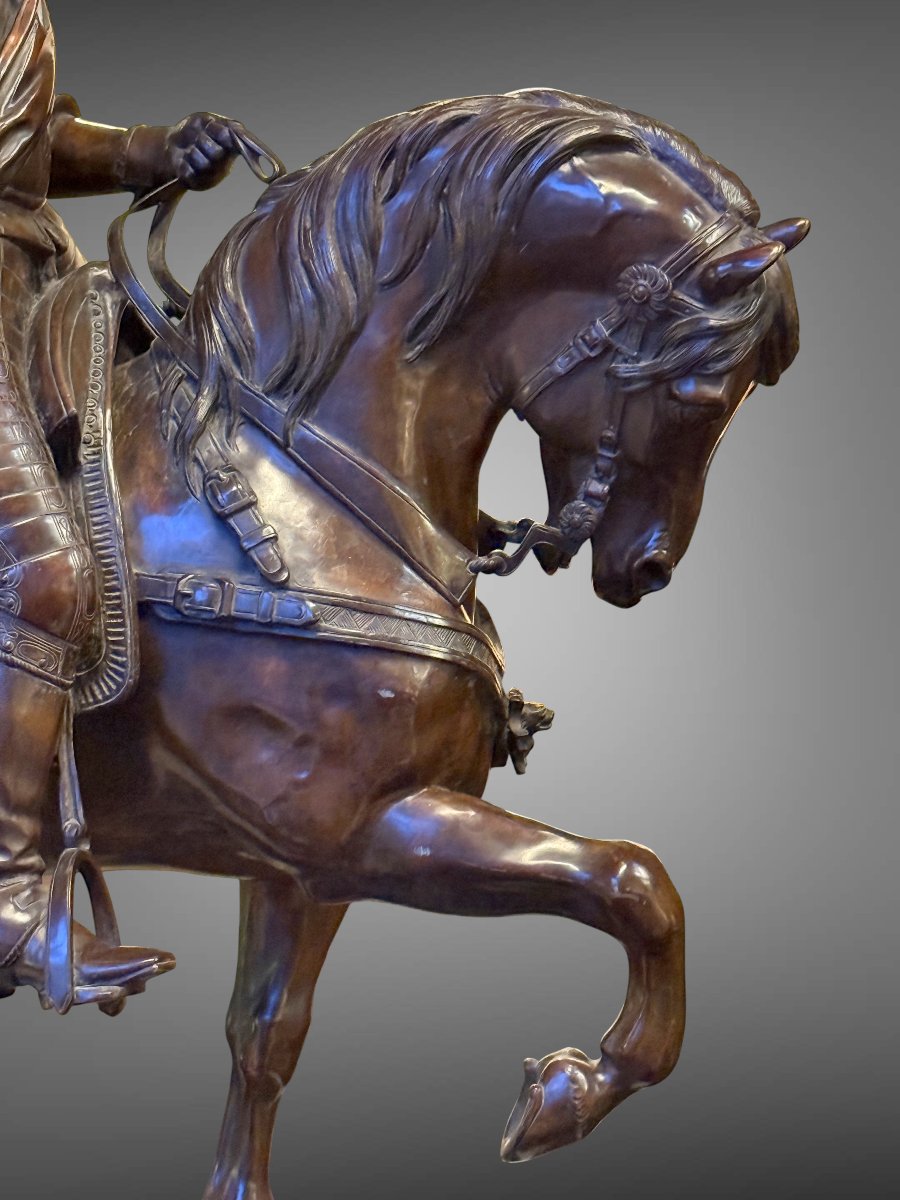
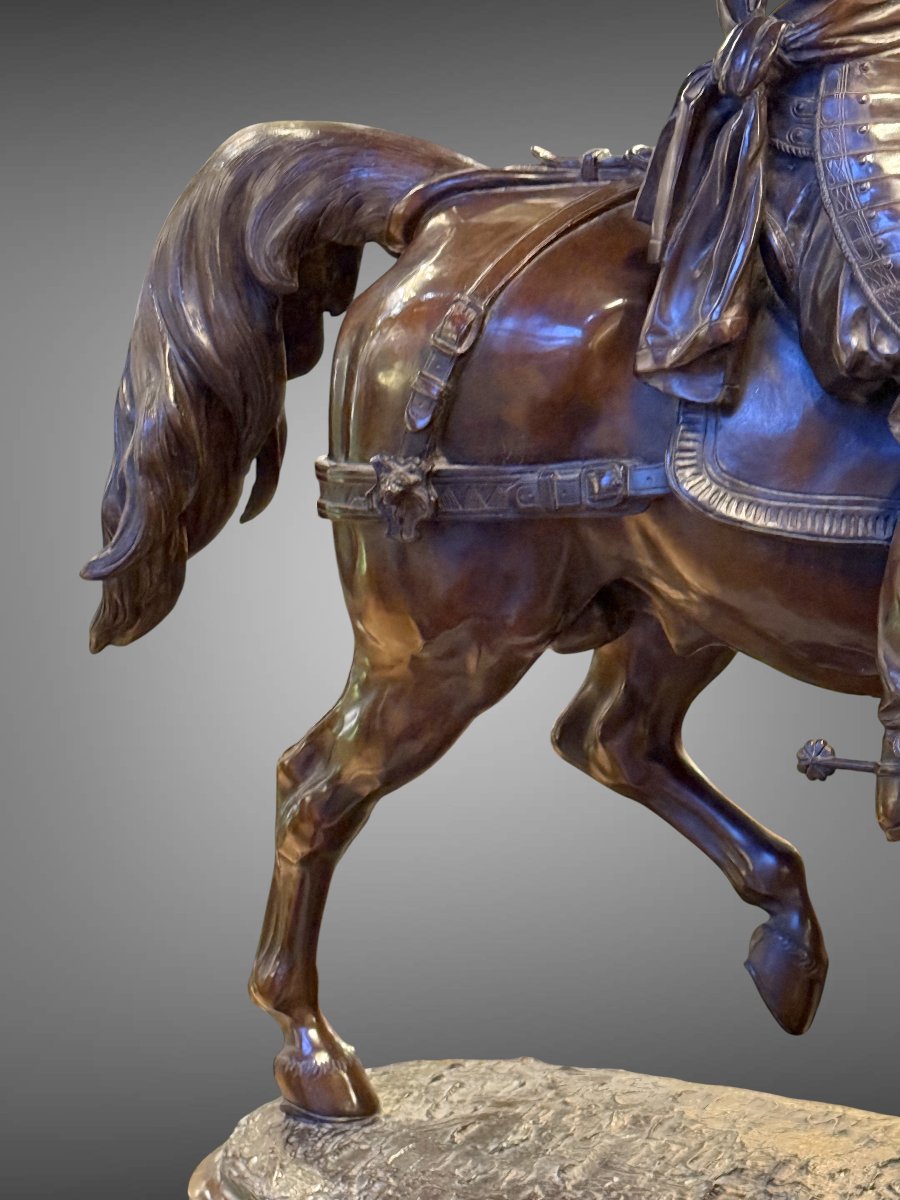
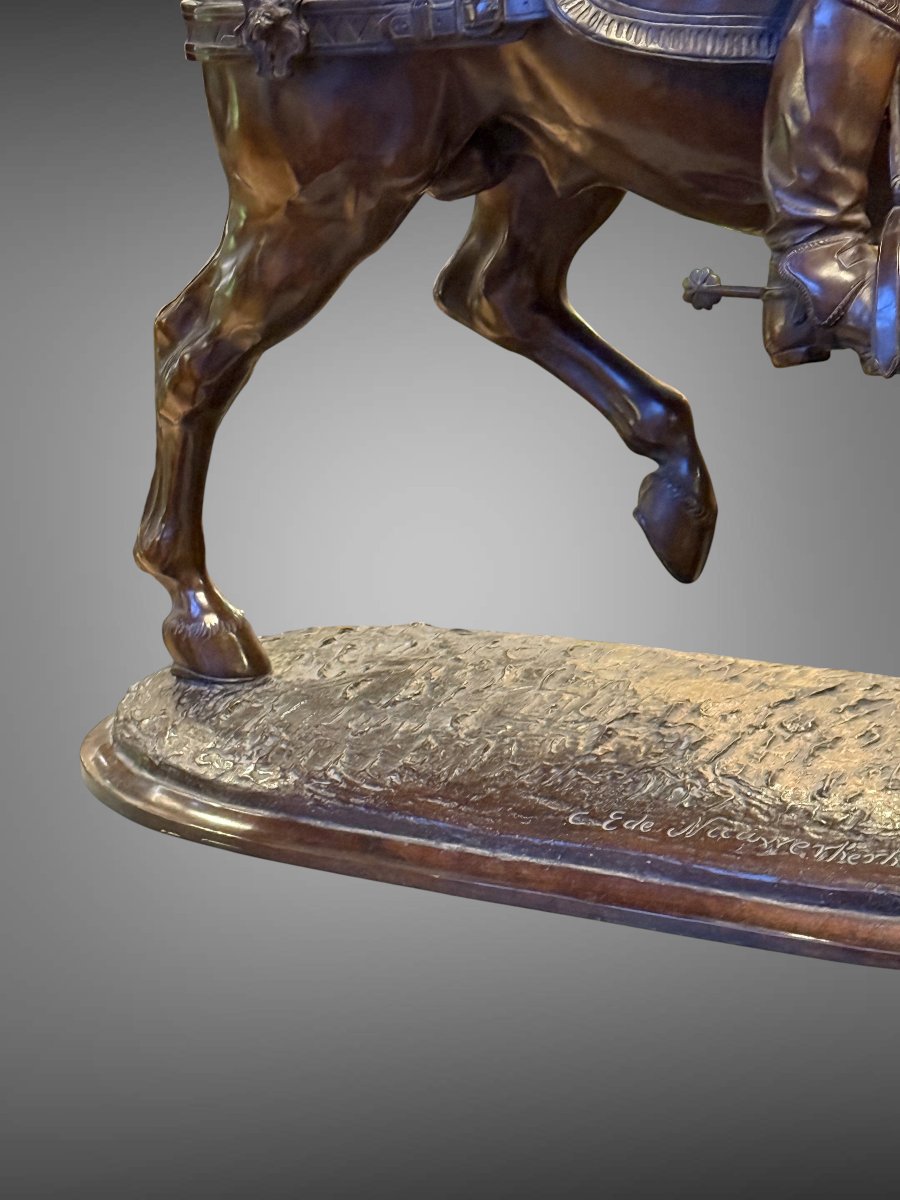
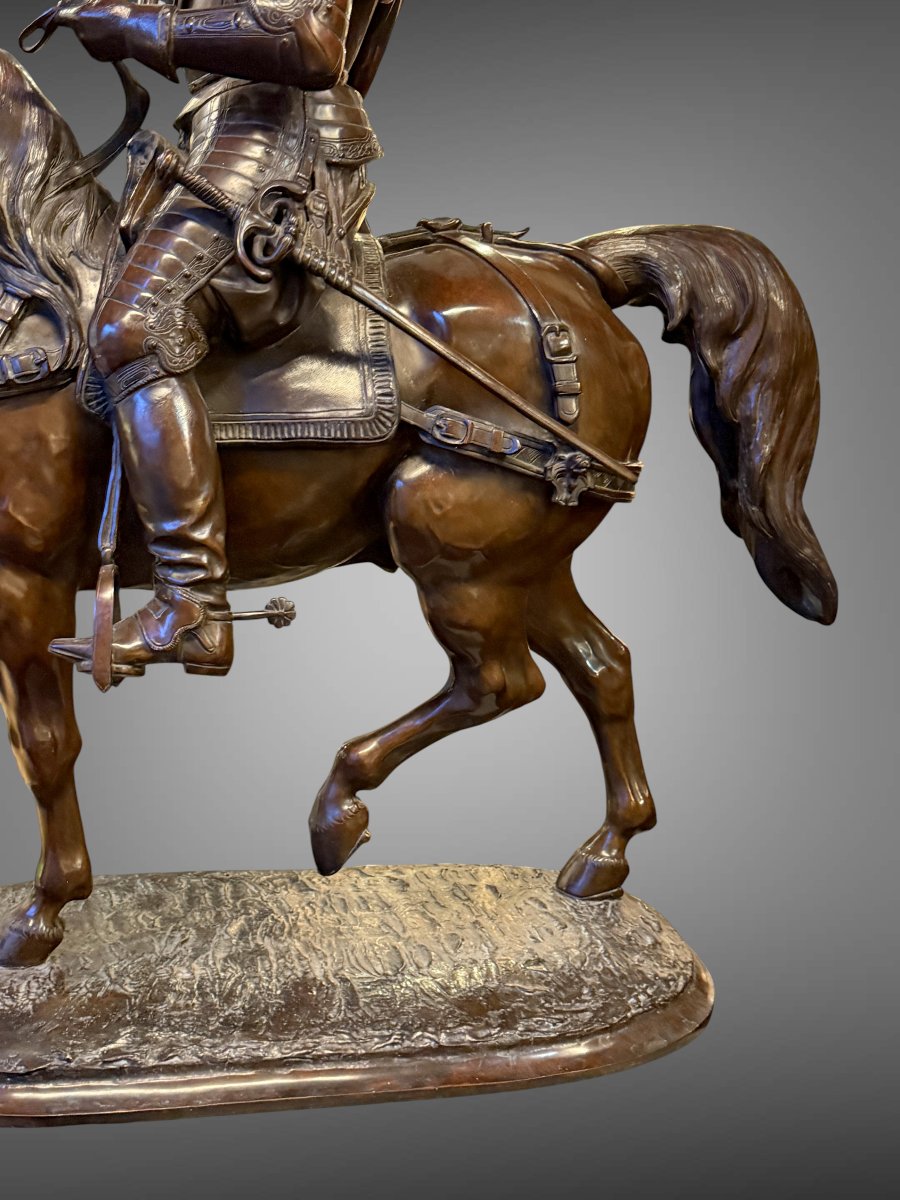
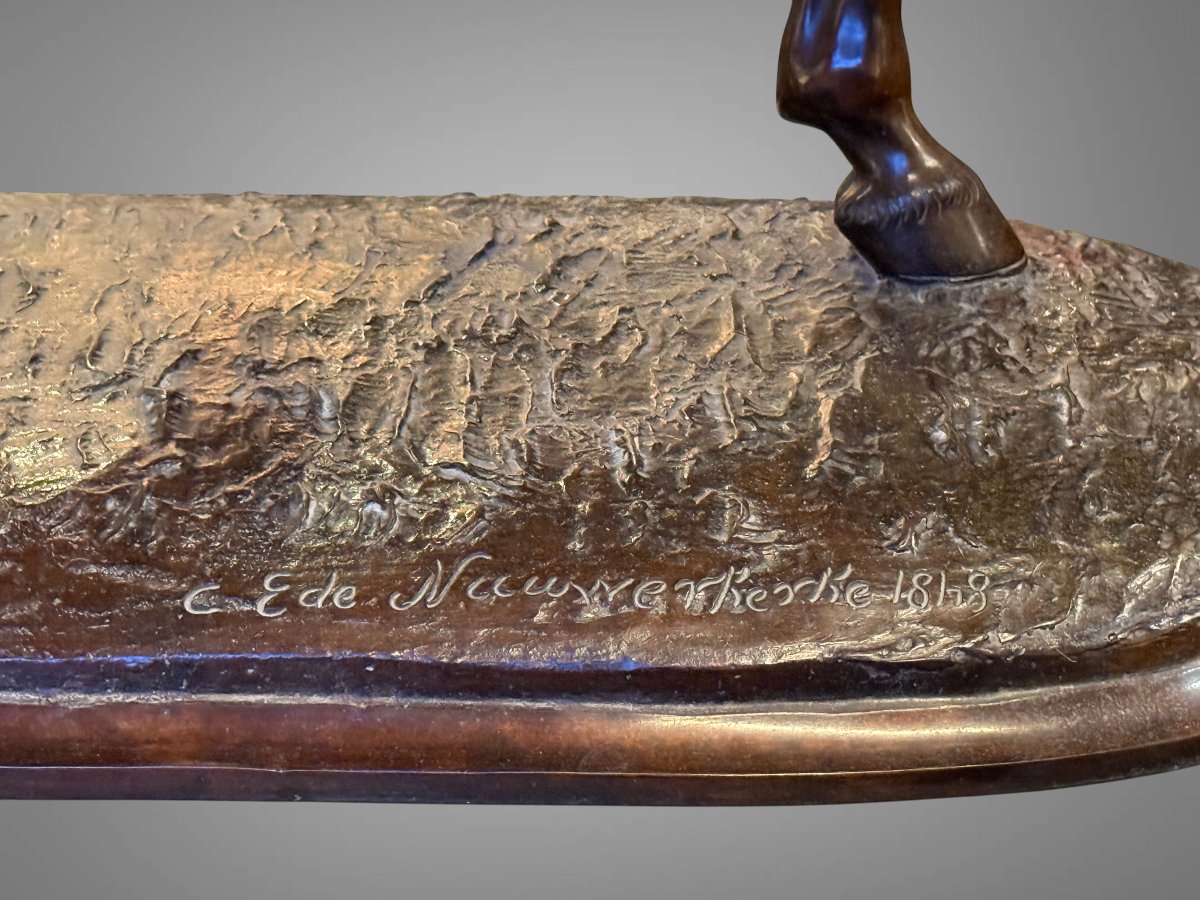
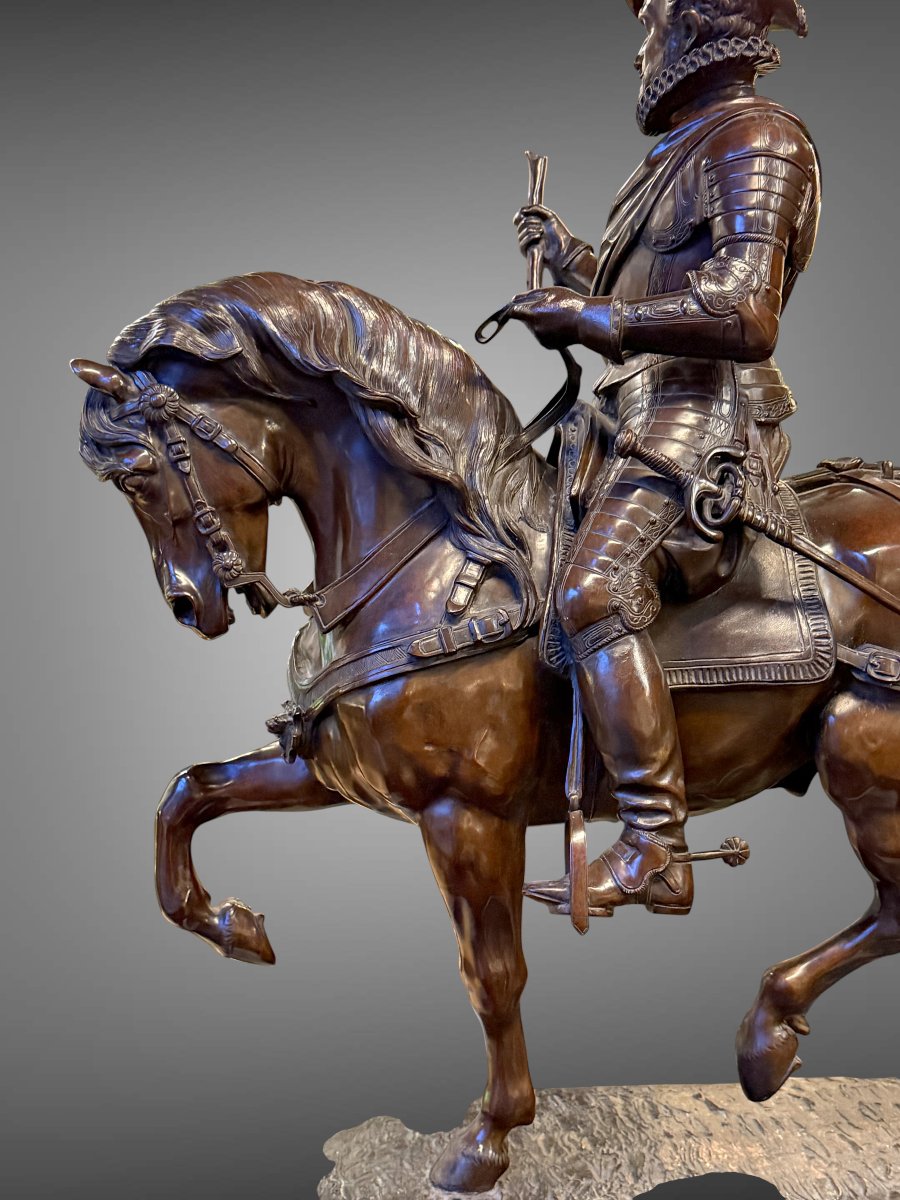
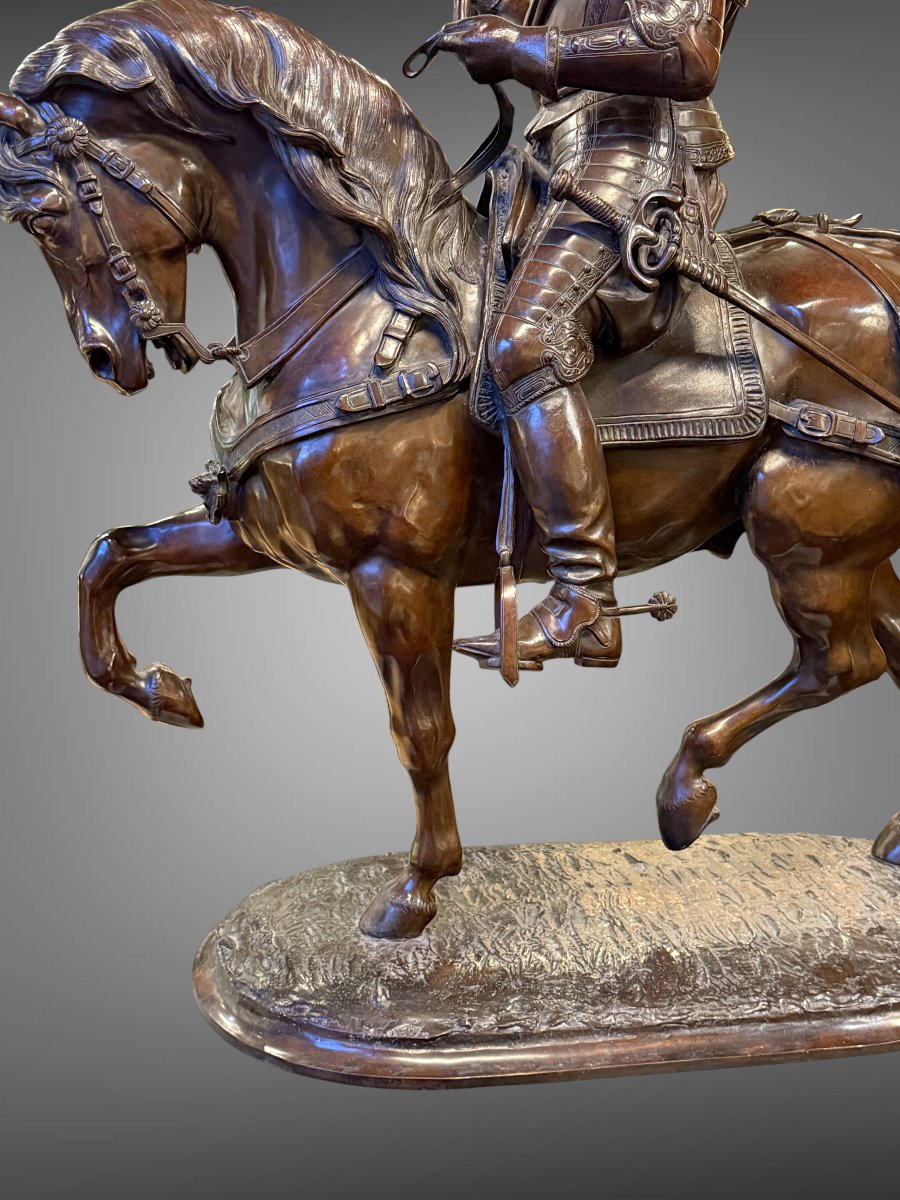


Large Bronze Equestrian Statue Of William I / Signed Ae Comte Nieuwerkerke 1848
Artist: Alfred-émilien O’hara, Comte De Nieuwerkerke
Large equestrian bronze statue (superb chocolate patina) of William I, signed on the base AE Count Nieuwerkerke 1848. Alfred-Émilien O'Hara, Count of Nieuwerkerke (1811-1892), a prominent figure in the Second Empire, also practiced sculpture, having studied under James Pradier. Here he presents an equestrian statue of William I, known as William the Silent, Prince of Orange (1533-1584), a bronze with a brown patina, dimensions: 85 cm high x 78 cm long x 33 cm deep. A new biography of William the Silent, considered the father of the Netherlands, was awarded a prestigious historical book prize on Sunday in Arnhem. Dutch historian René van Stipriaan has been awarded the 2022 Libris History Prize for his book *De zwijger: Het leven van Willem van Oranje* (The Silent One: The Life of William of Orange), described by the jury as "the definitive work on the father of the nation for the next thirty years." The book reveals "the image of an ambitious nobleman who defended his dynastic interests and overcame profound difficulties to achieve his goal," according to the jury, who consider the work superior to all previous biographies of William the Silent. In the second half of the 16th century, the revolt of the Prince of Orange and the Protestants against the absolutism of the King of Spain, the very Catholic Philip II, led to the secession of the United Provinces from the Southern Netherlands, where the Duke of Aerschot and Prince of Chimay, Philip de Croÿ, remained, willingly or unwillingly, loyal to the eldest son of Charles V.
6 800 €
Period: 19th century
Style: Louis Philippe, Charles 10th
Condition: Excellent condition
Material: Bronze
Reference (ID): 1708236
Availability: In stock
Print