THIS OBJECT WAS SOLD
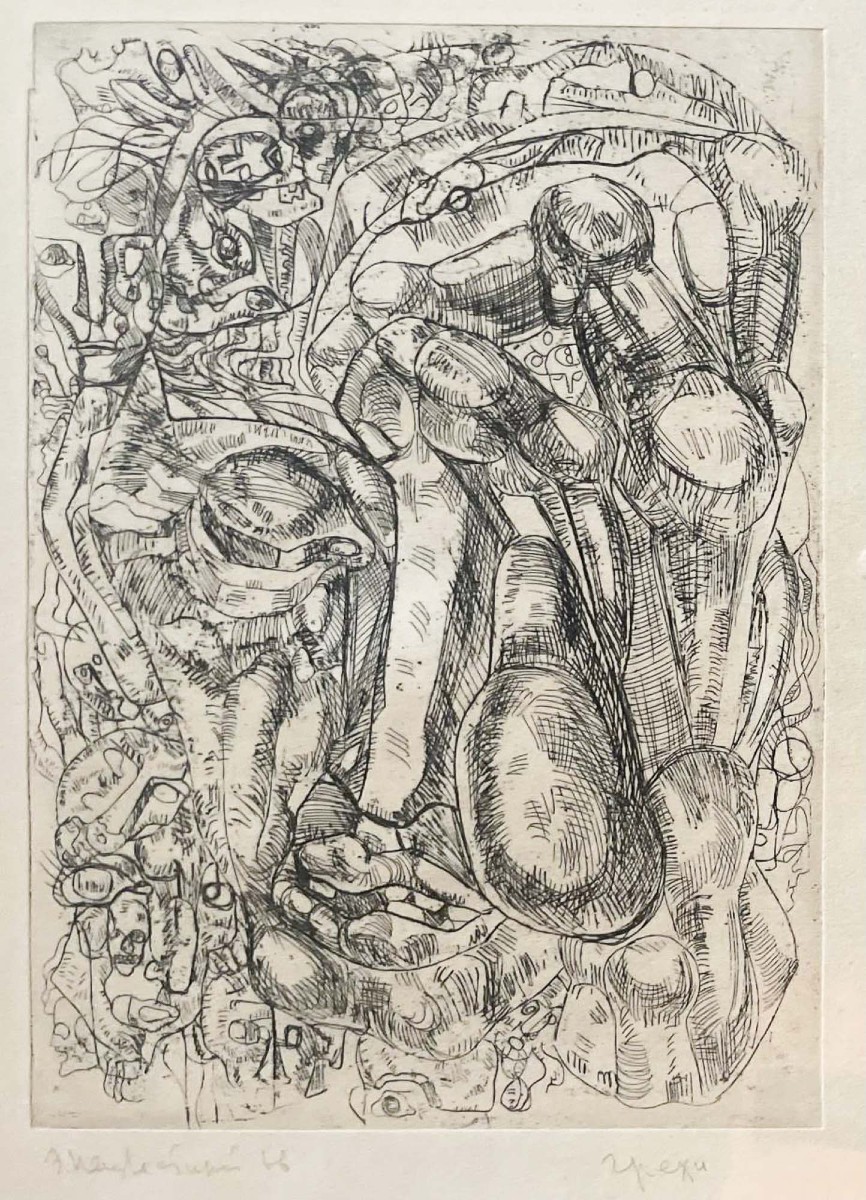
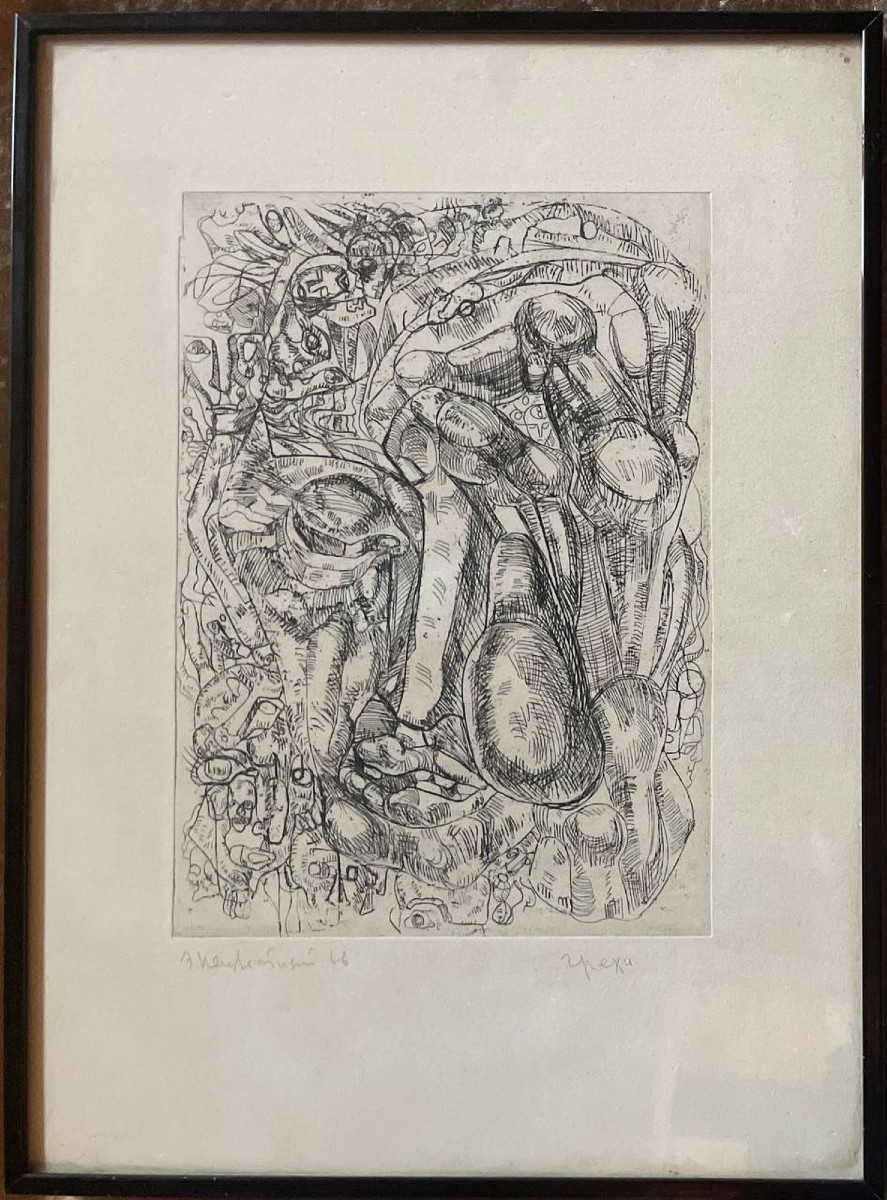
Ernst Neizvestny (1925–2016) The Sins (grekhi), 1966







Etching on paper
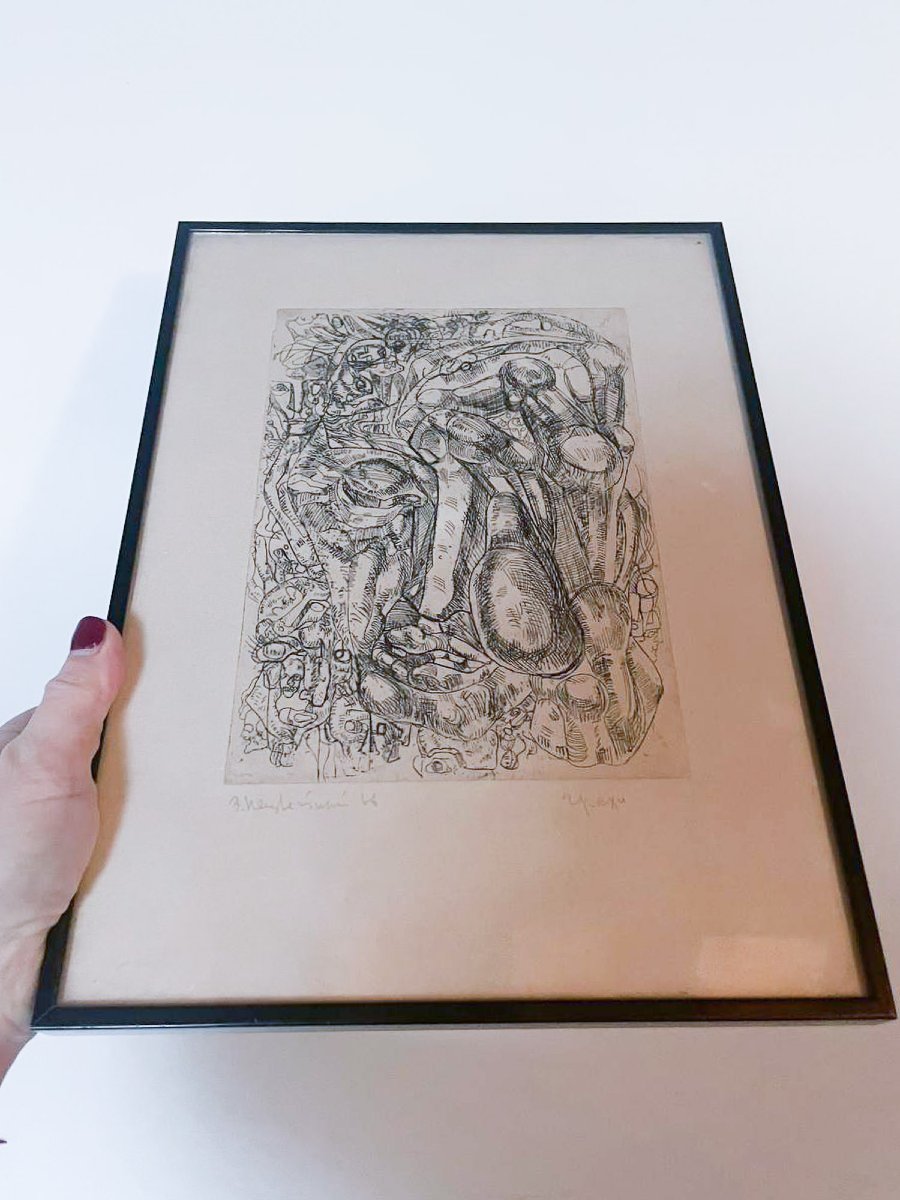
Sheet size: 31.3 × 23 cm
Plate mark: 20.2 × 14.4 cm
Signed, dated and titled in pencil by the artist.
This work belongs to the early and highly significant graphic production of Ernst Neizvestny in the mid-1960s, a decisive period in Soviet cultural history. After decades of strict ideological control and the dominance of Socialist Realism as the only officially accepted artistic language, a generation of artists developed an independent artistic practice outside institutional structures. This movement is now widely defined as Soviet nonconformist or non-official art.
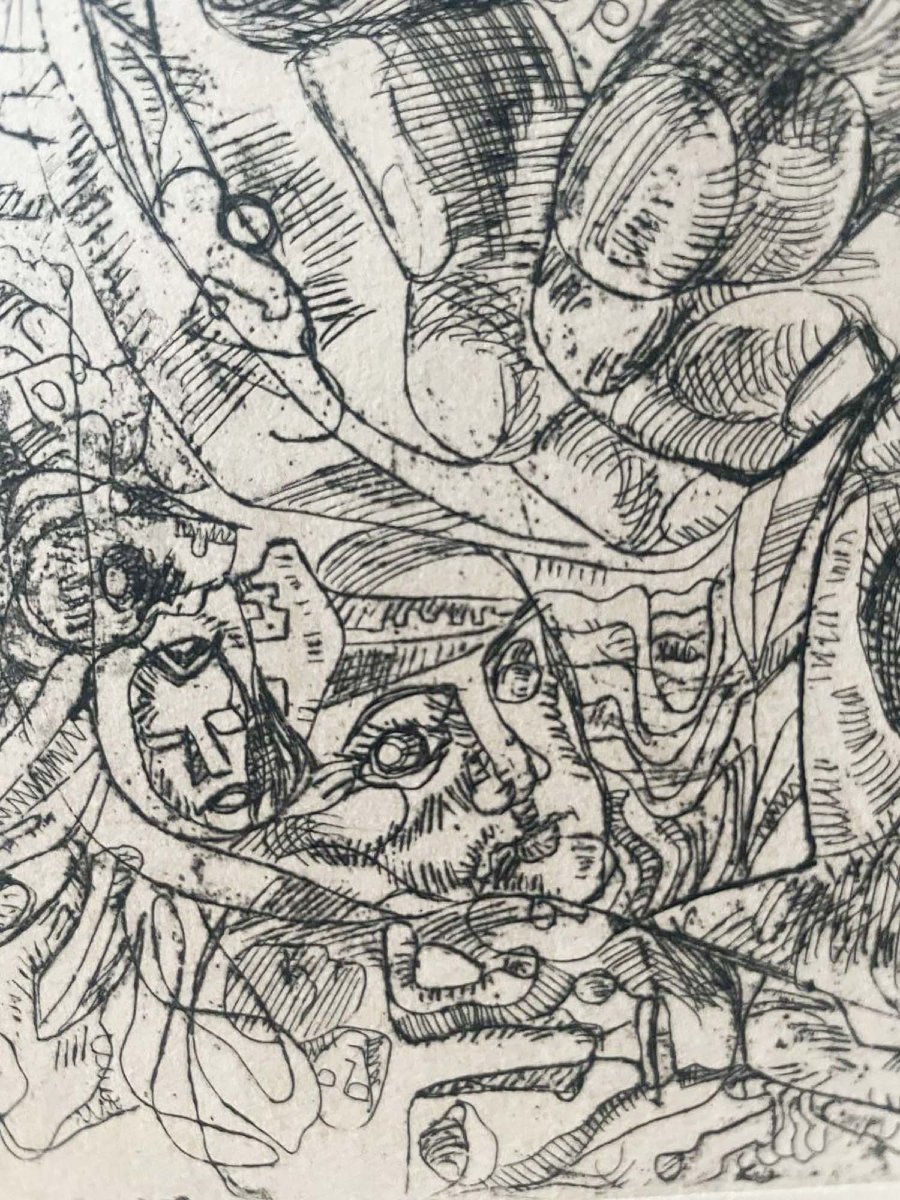
Ernst Neizvestny became one of the most important figures of this artistic opposition. His graphic and sculptural work focuses on the human condition, moral tension and the drama of modern consciousness. In The Sins, the composition is dense and complex, built through fragmented bodies, enlarged hands, mask-like faces and hybrid forms. The incisive, layered line suggests an etching worked with great intensity, possibly including passages close to drypoint.
Hybrid figures, often recalling the image of the man-centaur, as well as the recurring motif of the mask, form a leitmotif throughout Neizvestny’s work. These elements reflect his personal symbolic language, developed in parallel with his monumental sculpture and his profound interest in the spiritual and existential conflicts of the twentieth century.
The years 1965–1967 were also marked by Neizvestny’s close dialogue with literature. During this time, he worked on graphic projects inspired by major European and Russian authors, notably Dante Alighieri and the Divine Comedy, as well as Fyodor Dostoevsky, in particular Crime and Punishment, whose illustrations were published in 1969. In 1966, he also produced drawings and prints connected to Lyrical Etudes by the poet Eduardas Mieželaitis. By its date and imagery, The Sins may therefore be considered an autonomous sheet, possibly linked to this wider context of literary illustration, even if not necessarily published within a book.
In December 1962, during the well-known scandal of the Manege exhibition in Moscow, Neizvestny confronted Nikita Khrushchev directly, an episode that became emblematic of the tension between independent artistic creation and Soviet political authority.
In 1976 Neizvestny left the Soviet Union, settling first in Switzerland and later in the United States, where he developed an international career and produced important monumental works. After perestroika, he also took part in public and political life in Russia during the 1990s.
His works are held today in major international museum collections, including the Museum of Modern Art and the Metropolitan Museum of Art in New York, the Tate Gallery in London, the Centre Pompidou in Paris, as well as the Tretyakov Gallery and the Russian Museum. A museum dedicated to his work was established in Yekaterinburg.
Autograph etchings by Ernst Neizvestny from the 1960s are rare collectors’ objects, often printed in small editions or preserved as independent proofs. This sheet is particularly interesting as an early example of his nonconformist graphic language, already showing the main symbolic motifs that would define his later production.
Sheet size: 31.3 × 23 cm
Plate mark: 20.2 × 14.4 cm
Signed, dated and titled in pencil by the artist.
This work belongs to the early and highly significant graphic production of Ernst Neizvestny in the mid-1960s, a decisive period in Soviet cultural history. After decades of strict ideological control and the dominance of Socialist Realism as the only officially accepted artistic language, a generation of artists developed an independent artistic practice outside institutional structures. This movement is now widely defined as Soviet nonconformist or non-official art.
Ernst Neizvestny became one of the most important figures of this artistic opposition. His graphic and sculptural work focuses on the human condition, moral tension and the drama of modern consciousness. In The Sins, the composition is dense and complex, built through fragmented bodies, enlarged hands, mask-like faces and hybrid forms. The incisive, layered line suggests an etching worked with great intensity, possibly including passages close to drypoint.
Hybrid figures, often recalling the image of the man-centaur, as well as the recurring motif of the mask, form a leitmotif throughout Neizvestny’s work. These elements reflect his personal symbolic language, developed in parallel with his monumental sculpture and his profound interest in the spiritual and existential conflicts of the twentieth century.
The years 1965–1967 were also marked by Neizvestny’s close dialogue with literature. During this time, he worked on graphic projects inspired by major European and Russian authors, notably Dante Alighieri and the Divine Comedy, as well as Fyodor Dostoevsky, in particular Crime and Punishment, whose illustrations were published in 1969. In 1966, he also produced drawings and prints connected to Lyrical Etudes by the poet Eduardas Mieželaitis. By its date and imagery, The Sins may therefore be considered an autonomous sheet, possibly linked to this wider context of literary illustration, even if not necessarily published within a book.
In December 1962, during the well-known scandal of the Manege exhibition in Moscow, Neizvestny confronted Nikita Khrushchev directly, an episode that became emblematic of the tension between independent artistic creation and Soviet political authority.
In 1976 Neizvestny left the Soviet Union, settling first in Switzerland and later in the United States, where he developed an international career and produced important monumental works. After perestroika, he also took part in public and political life in Russia during the 1990s.
His works are held today in major international museum collections, including the Museum of Modern Art and the Metropolitan Museum of Art in New York, the Tate Gallery in London, the Centre Pompidou in Paris, as well as the Tretyakov Gallery and the Russian Museum. A museum dedicated to his work was established in Yekaterinburg.
Autograph etchings by Ernst Neizvestny from the 1960s are rare collectors’ objects, often printed in small editions or preserved as independent proofs. This sheet is particularly interesting as an early example of his nonconformist graphic language, already showing the main symbolic motifs that would define his later production.
Explore similar pieces and discover your ideal find:
drawings